
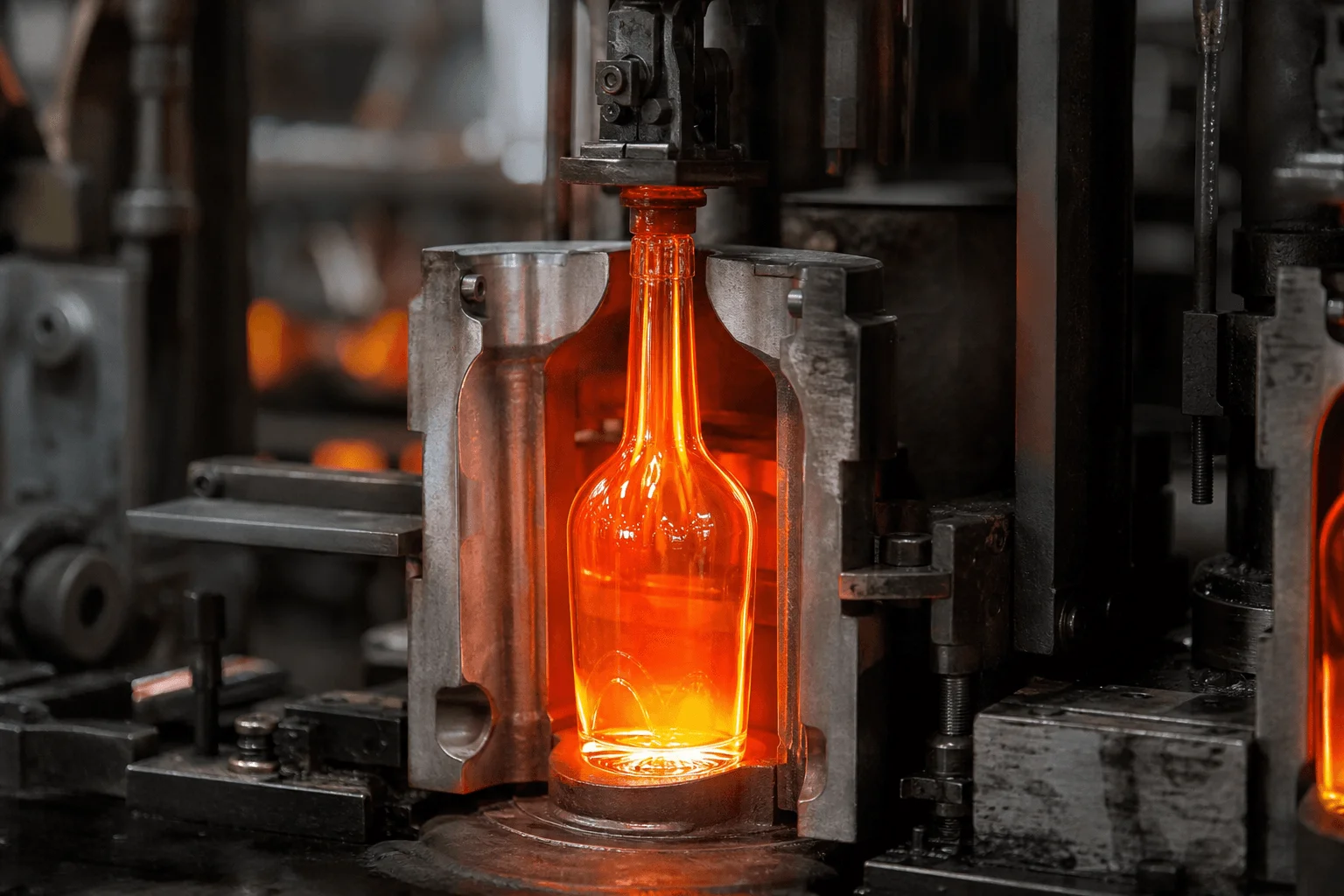
Blow & Blow
The gob is settle-blown then counter-blown in the blank mold, inverted, and blown to its final shape.
Best for Narrow-neck bottles — droppers, beverages, pharma.
In-house melting, IS-machine forming, annealing, decoration, lab-grade QC and export packing. Running the full chain on one site means consistent neck finishes, stable color, repeatable specs and low-breakage delivery — order after order.
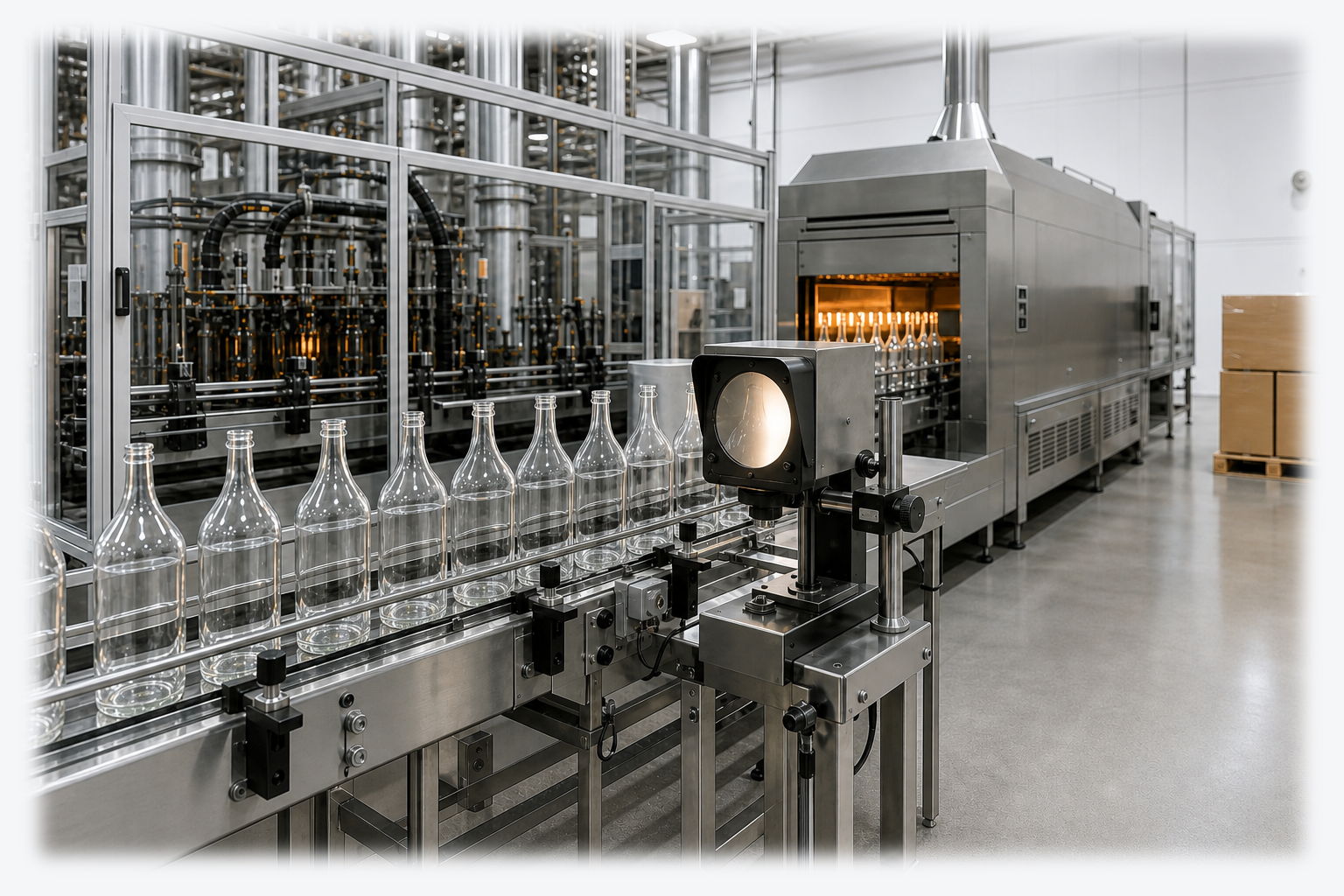
End-to-end process
Eight controlled stages from raw batch to export carton — each with its own checkpoints and target temperatures.
Silica sand, soda ash, limestone and recycled cullet are weighed and melted into homogeneous molten glass.
Conditioned glass is sheared into precise-weight gobs and delivered to each forming section.
A parison is shaped in the blank mold, then transferred and blown to final form on the IS machine.
Ware is reheated and slowly cooled to relieve internal stress and build mechanical strength.
Hot- and cold-end coatings are applied for scratch resistance and smooth line lubricity.
In-line machines scan dimensions and detect defects on every single piece at full line speed.
Frosting, printing, spray coating, hot stamping and labeling are run to your specification.
AQL sampling, lab tests, export cartoning, palletizing and documents complete the order.
Forming methods
We run all three container-forming routes, chosen by mouth width, wall distribution and production volume.
The gob is settle-blown then counter-blown in the blank mold, inverted, and blown to its final shape.
Best for Narrow-neck bottles — droppers, beverages, pharma.
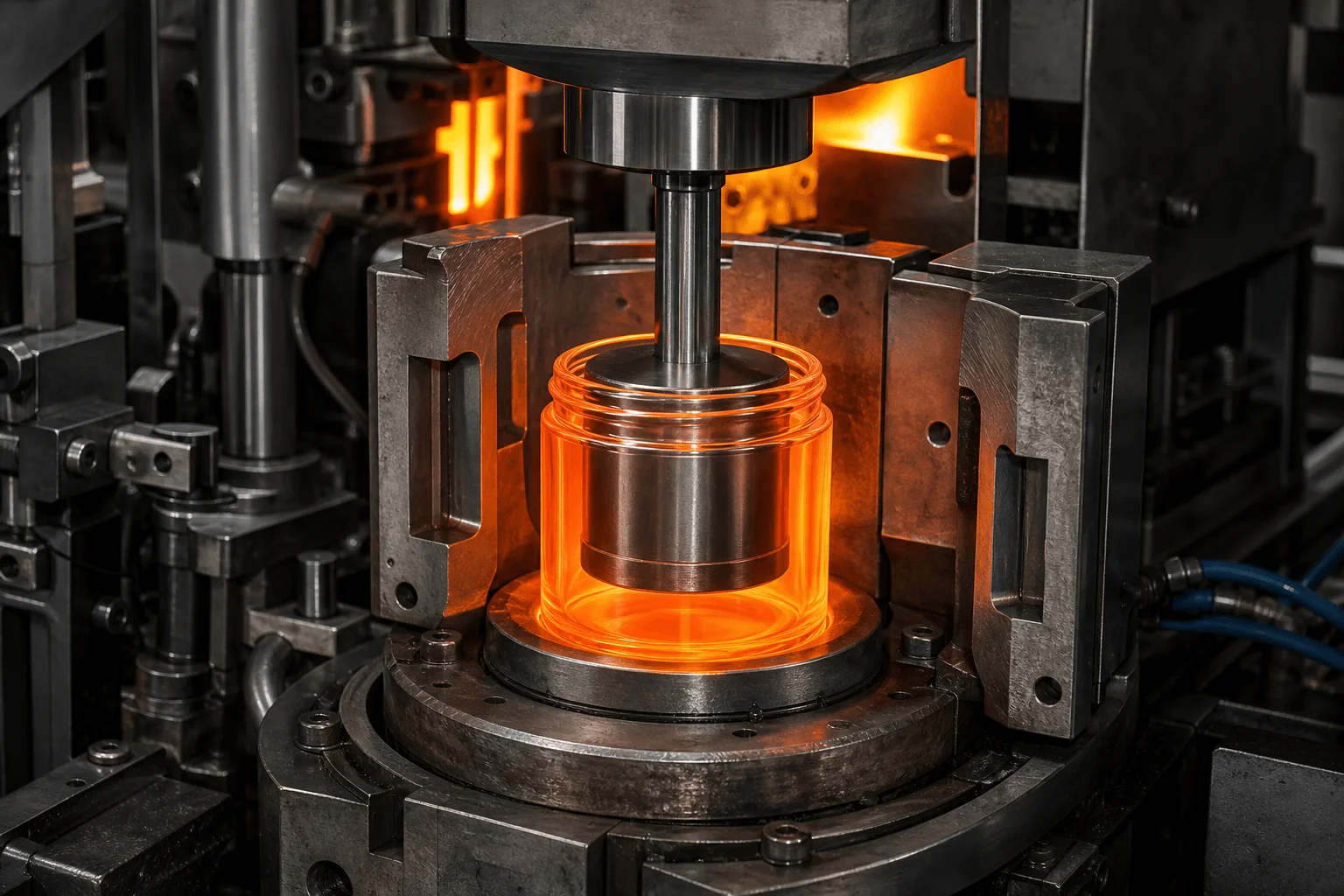
A plunger presses the parison for tighter, more even glass distribution before the final blow.
Best for Wide-mouth jars — food, cosmetic, candle.
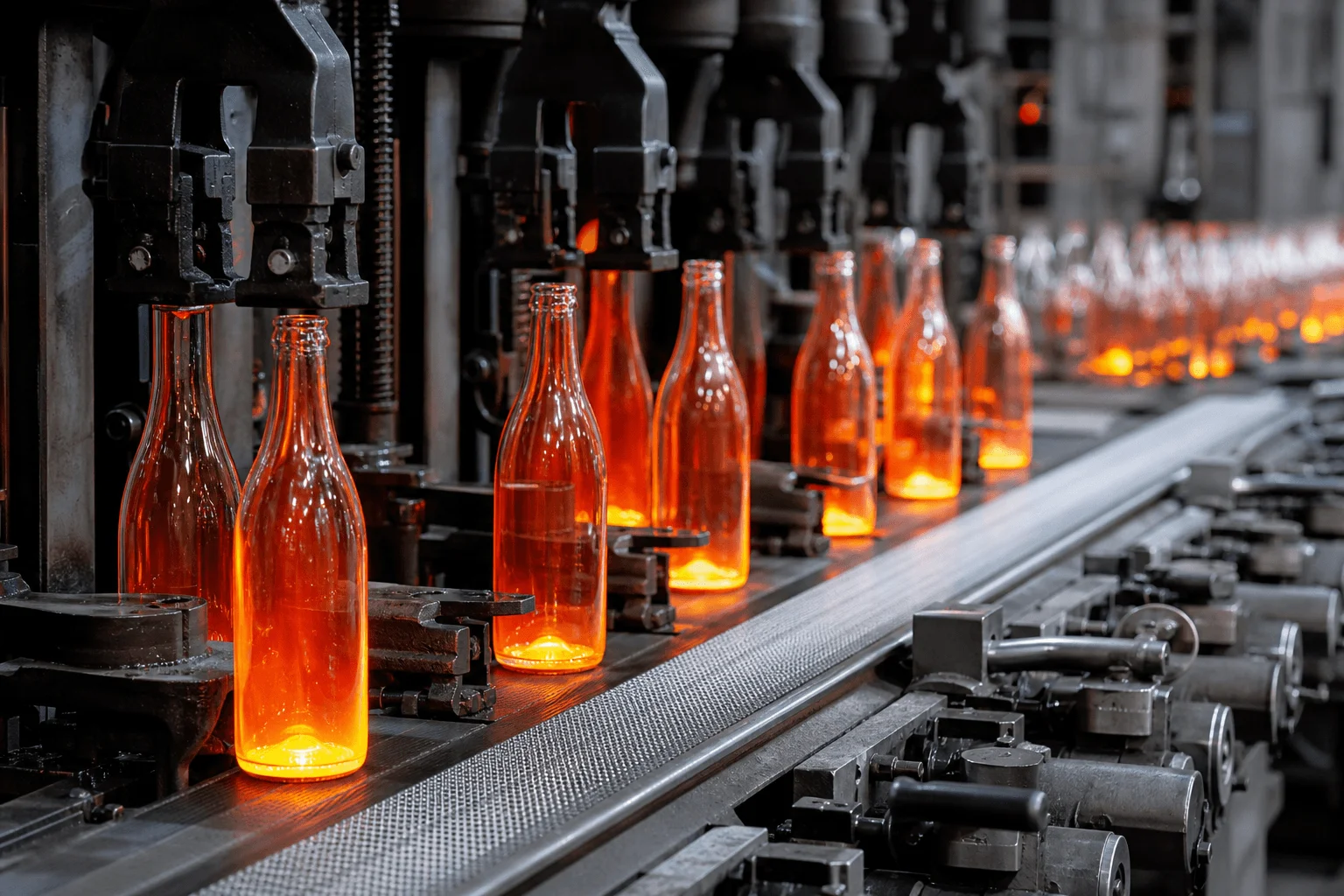
Narrow-neck press-and-blow uses a pressed parison on narrow necks for lighter, stronger walls.
Best for Lightweight bottles at high volume.
Materials & color
Choose the glass composition and color that fit your product, sterilization route and brand look.
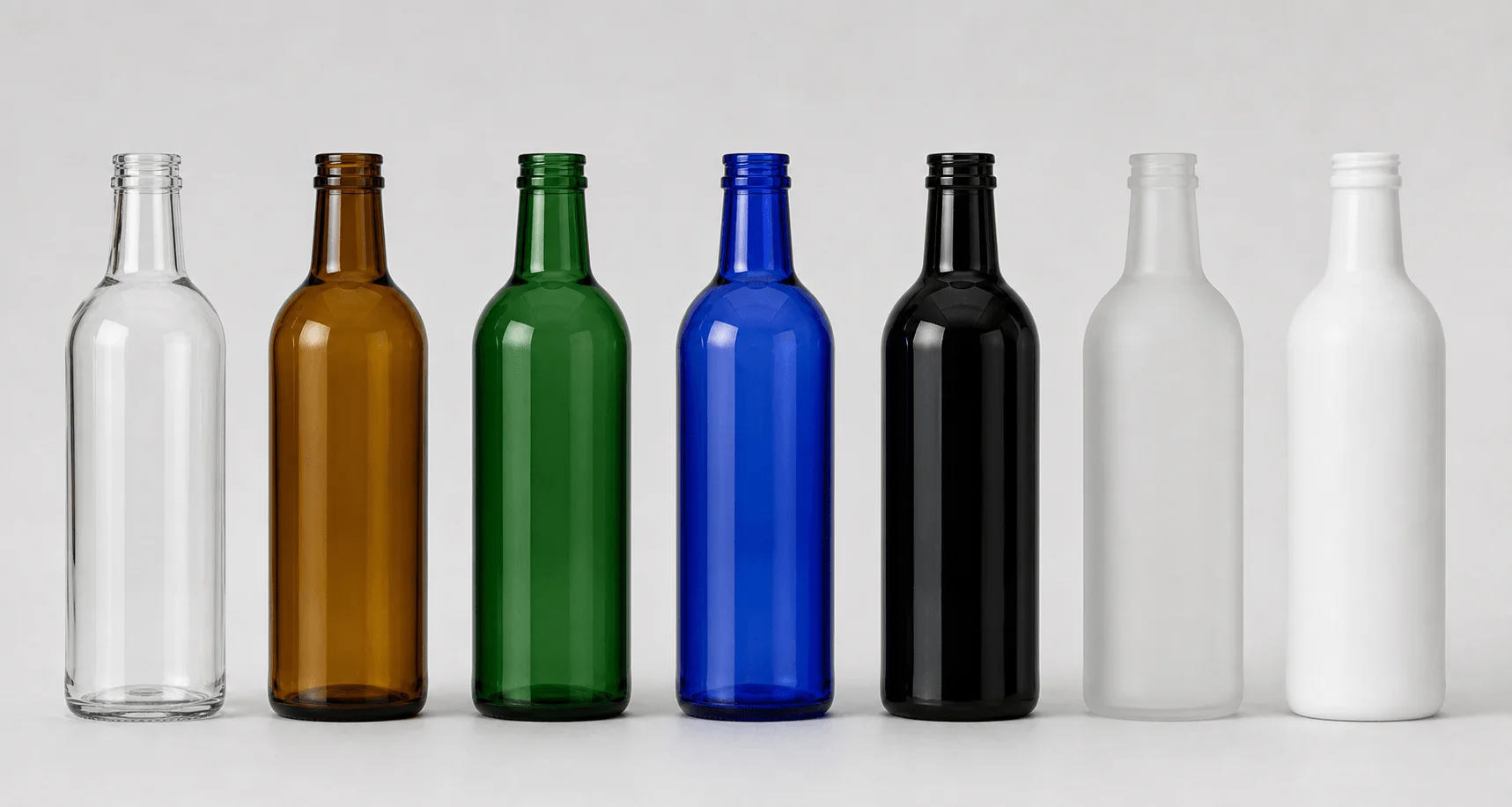
Pharma glass grades
For healthcare and lab packaging we supply USP / EP Type I borosilicate and Type III soda-lime, selected to your sterilization route and chemical compatibility. Amber options provide light protection for sensitive contents.
Equipment & lines
A vertically integrated plant — forming, finishing, inspection, tooling and packing all in the same facility.
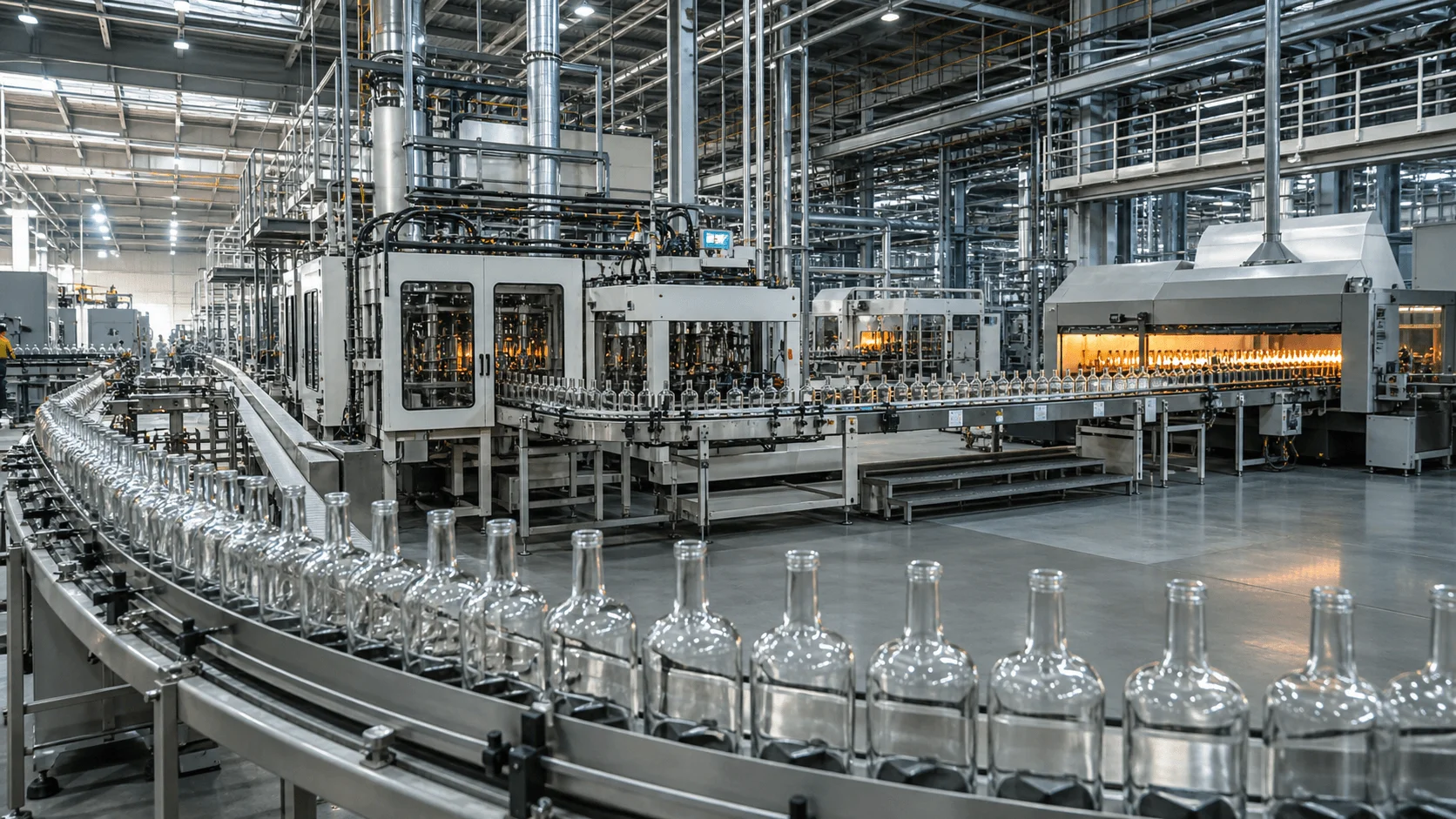
6S–10S sections running blow-blow, press-blow and NNPB.
Controlled cooling for stress-free, stronger ware.
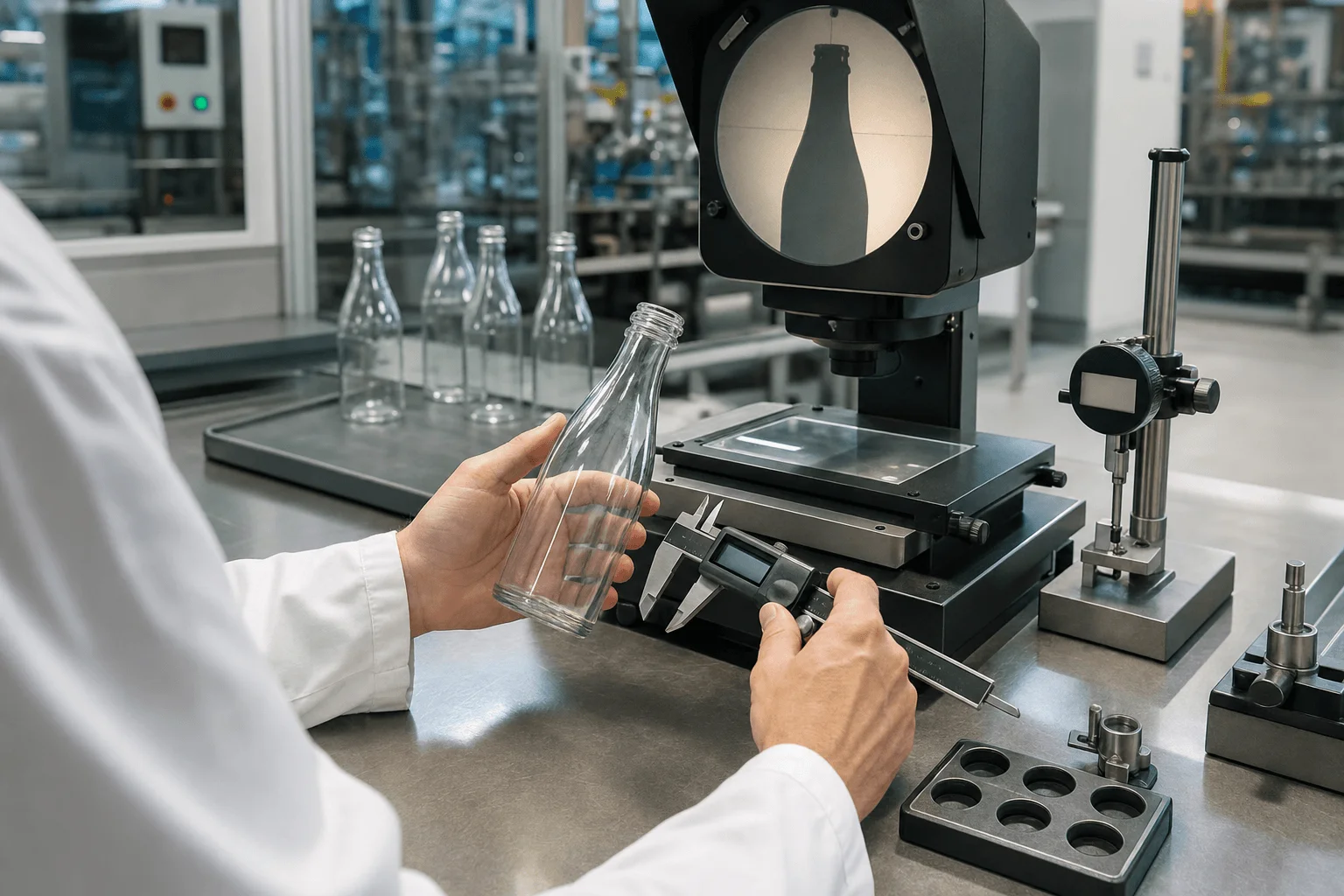
In-line dimensional and defect detection.
Screen print, spray, frosting, stamping, electroplating.
CNC tooling, 3D design and rapid prototyping.
Pressure, load, thermal and chemical test rigs.
Cartoning, partitioning and palletizing.
Buffer stock for repeat orders and fast dispatch.
Quality control & laboratory
Every order is inspected in-line and lab-sampled across five test families before it ships — referencing the standards your own buyers and auditors expect.
Standards & compliance
Test reports and declarations are supplied on request for your own regulatory and retail requirements; ask us for copies of current certificates.
Quality management system.
Environmental management.
Food safety for food-contact glass.
Third-party testing on request.
Test reports against FDA 21 CFR food-contact requirements on request.
LFGB and EU 1935/2004 migration test reports on request.
SVHC declarations on request.
Packing & export
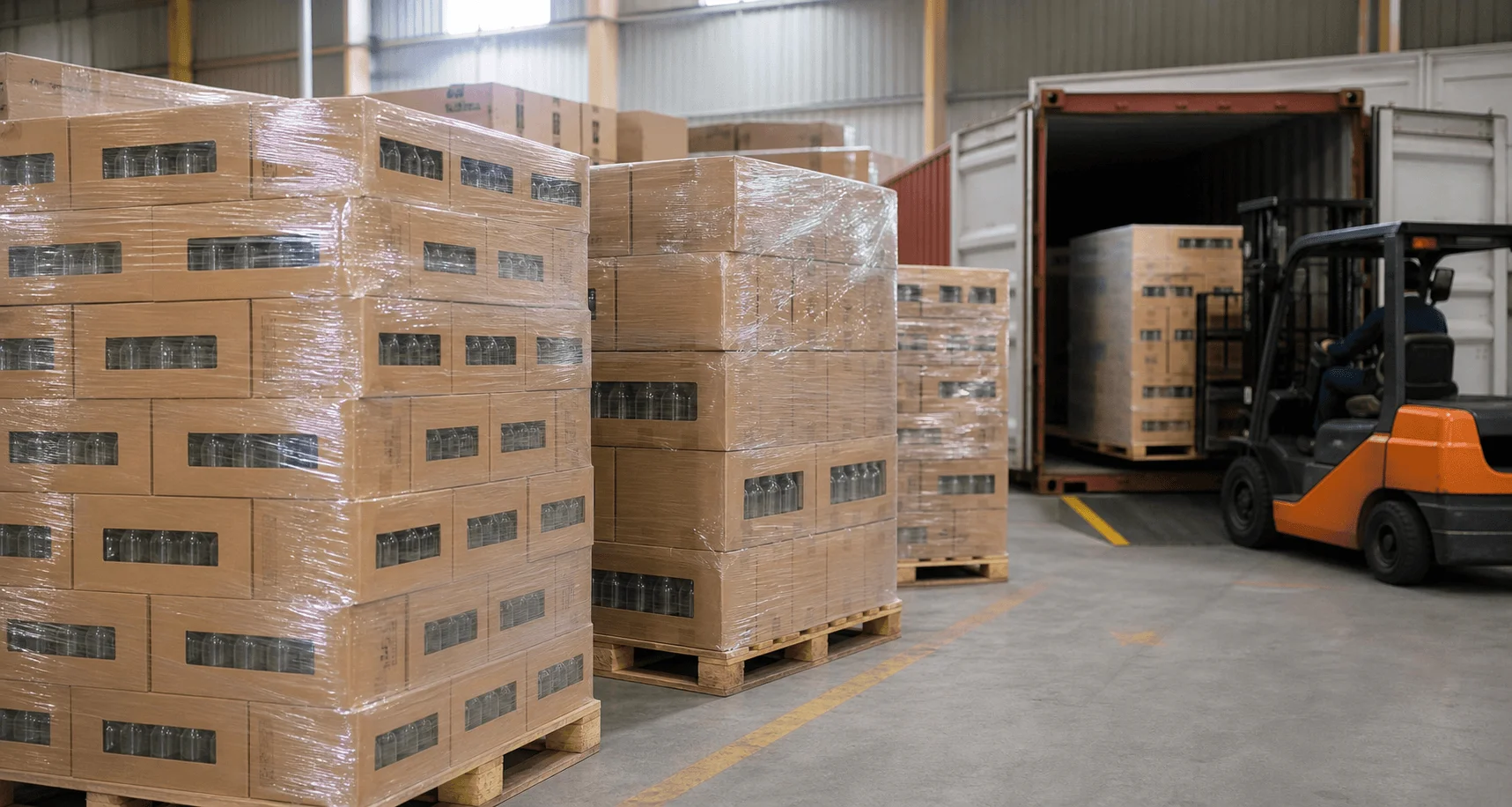
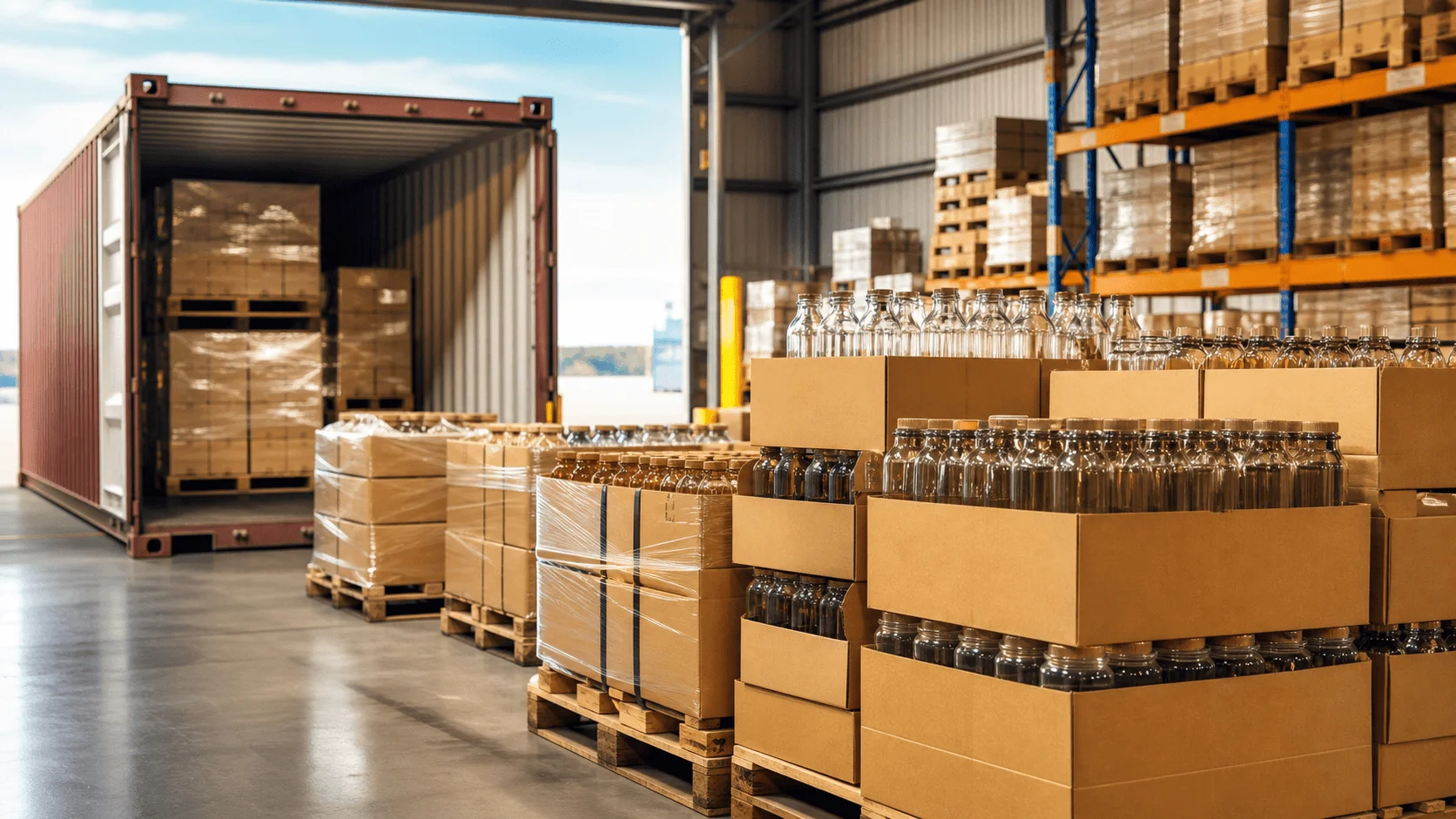
Packing is treated as part of the spec, not an afterthought — because breakage in transit is the most expensive defect of all.
Corrugated cartons with partitions and dividers, plus foam or molded pulp for fragile shapes.
Stretch-wrapped, strapped pallets with paper-divider configurations for flint and wine ware.
Load plans for 20' / 40' / 40'HQ to maximize fill and minimize movement in transit.
CI, PL, CO / FORM, MSDS and test reports prepared to clear customs smoothly.
Sustainability
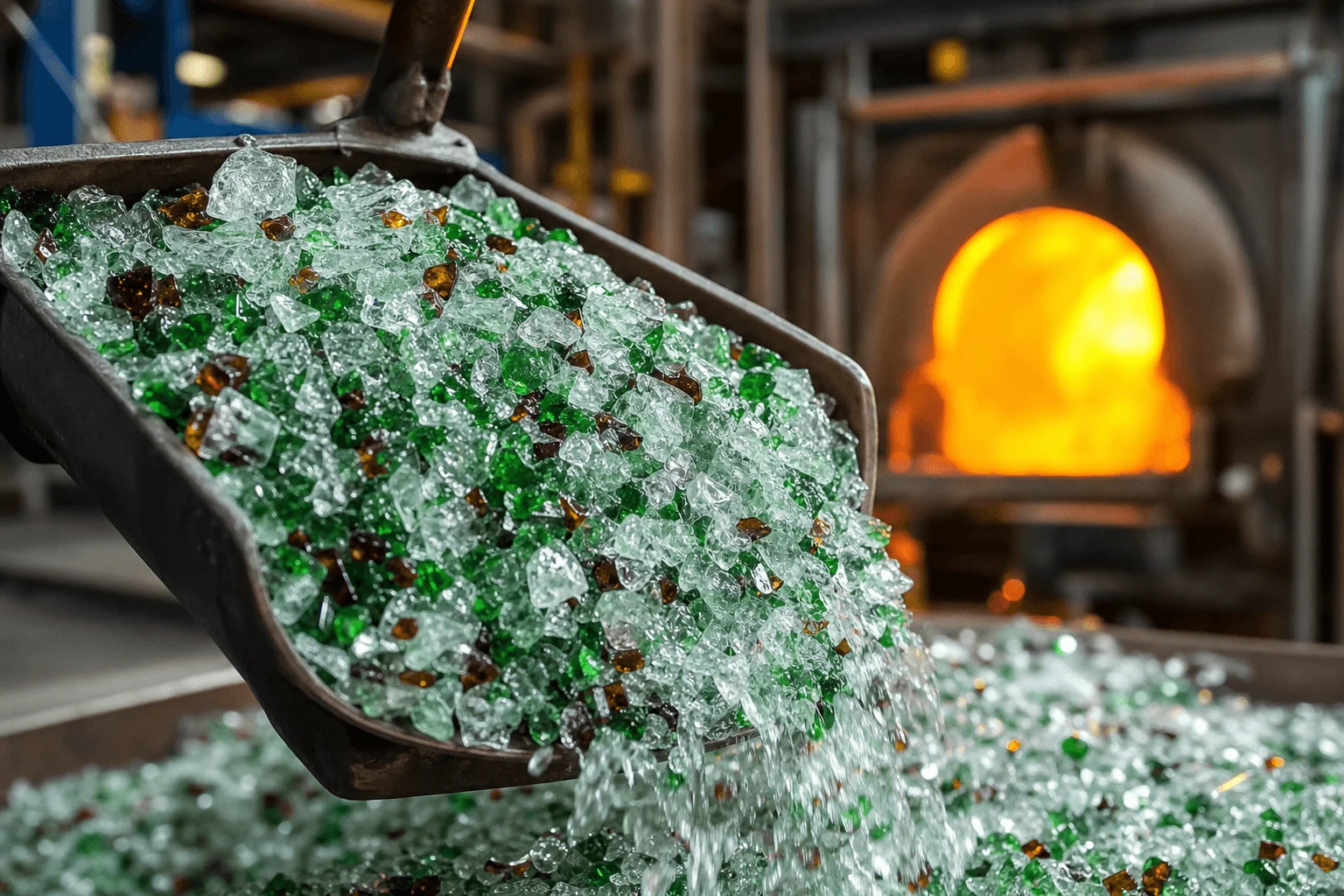
Endlessly recyclable by nature — we make it more so, with measures that also give your brand a cleaner story.
Post-consumer cullet is charged into the batch to cut energy use and raw-material demand.
Continuous melting with heat recovery lowers fuel consumption per ton of glass produced.
Inert, infinitely recyclable glass with no loss of quality — a clean story for your brand.
Tell us your container types, decoration needs, and order volumes — our team will respond with pricing, lead times, and sample availability within 24 hours. We ship to importers and brands in over 40 countries.