
On this page
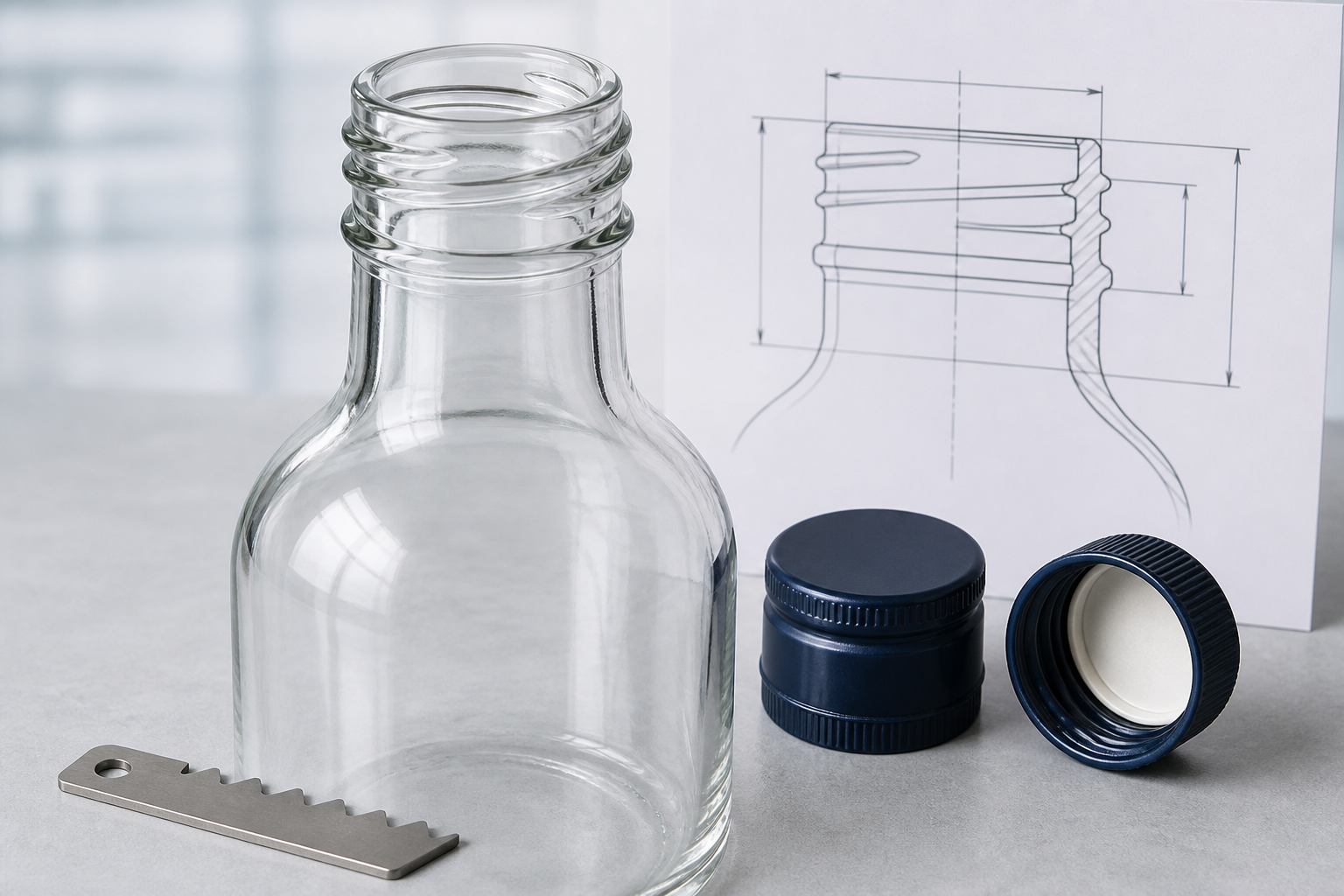
A neck finish code like “24-410” is the handshake between a bottle and its cap. Get it right and closures seat and seal first time. Get it wrong and caps back off, cross-thread or leak in transit. The code looks cryptic, but it’s just two numbers.
What the two numbers mean
The first number is the outside diameter of the neck in millimeters — 24 means a 24 mm neck. The second is a GPI/SPI code describing the thread style and finish height: 400 has about one full turn of thread on a short finish, 410 about one and a half turns, and 415 about two turns on a taller finish.
Why the second number matters
Two necks can share the same 24 mm diameter and thread pitch but differ in the number of thread turns and the finish height. A 24-410 cap will not tighten correctly onto a 24-415 neck. The diameter tells you the cap size; the finish code tells you whether it will actually thread on.
Common finishes you’ll meet
- 400 — about one turn on a short finish; economical, general purpose.
- 410 — about one and a half turns; more thread engagement on a slightly taller finish.
- 415 — about two turns on a taller finish; favored where a tight seal matters.
- 425 — about two turns of continuous thread on small diameters, mainly small vials (it is not a buttress finish).
- Continuous thread (CT) vs. snap-on, dropper and pump necks each pair with their own closures.
Before you order
- Match the neck code to the closure supplier’s spec, not just the diameter.
- Confirm the liner or sealing type for your product (oil, alcohol, food).
- For droppers and pumps, confirm the dip-tube length to the bottle base.
- Ask for a neck-finish drawing so nothing is assumed.
Specify the neck finish and the closure together — glass and cap are one system, never two separate line items.
Not sure of your code? Send the bottle, or a caliper reading of the neck outside diameter, and we’ll identify the finish and the closures that fit it.
Sourcing glass for your brand?
Tell us your product, capacity and target quantity and we'll reply within one business day with specs, MOQ, lead time and factory-direct pricing.