On this page
FOB and CIF are Incoterms® 2020 rules — they define who arranges and pays for which leg of a shipment, and where risk passes from seller to buyer. For glass, which is heavy and fragile, that choice shapes your landed cost and your exposure if something breaks.
FOB — Free On Board
Under FOB, the supplier delivers the goods onto the vessel at the origin port. From that point the ocean freight, insurance and risk are yours. You — or your freight forwarder — control the sea leg, which usually means better rates and more visibility if you already have a forwarder.
CIF — Cost, Insurance and Freight
Under CIF, the supplier arranges and pays the ocean freight to your destination port and buys minimum insurance cover (Institute Cargo Clauses C, 110% of the contract value) in your favor. Risk, however, passes to you once the goods are loaded on board at the origin port — exactly as under FOB — so any breakage at sea is claimed on that policy, not from the seller. You pay one bundled price and coordinate less. It’s simpler for first-time importers, at the cost of some control over carrier and rate.
Which should a first-time importer pick?
- New to importing with no forwarder yet → CIF, for simplicity.
- You have an established forwarder and want freight control → FOB.
- Consolidating several suppliers into one shipment → FOB into your consolidation point.
- Testing a small first order → CIF keeps the moving parts to a minimum.
Glass-specific notes
- Glass is heavy, so freight is a real share of landed cost — get quotes both ways and compare.
- CIF only requires minimum cover (Institute Cargo Clauses C, 110% of value), which usually excludes breakage — ask for ICC (A) all-risks cover for glass.
- For containerized cargo, the ICC recommends FCA or CIP rather than FOB or CIF — ask your forwarder which fits your shipment.
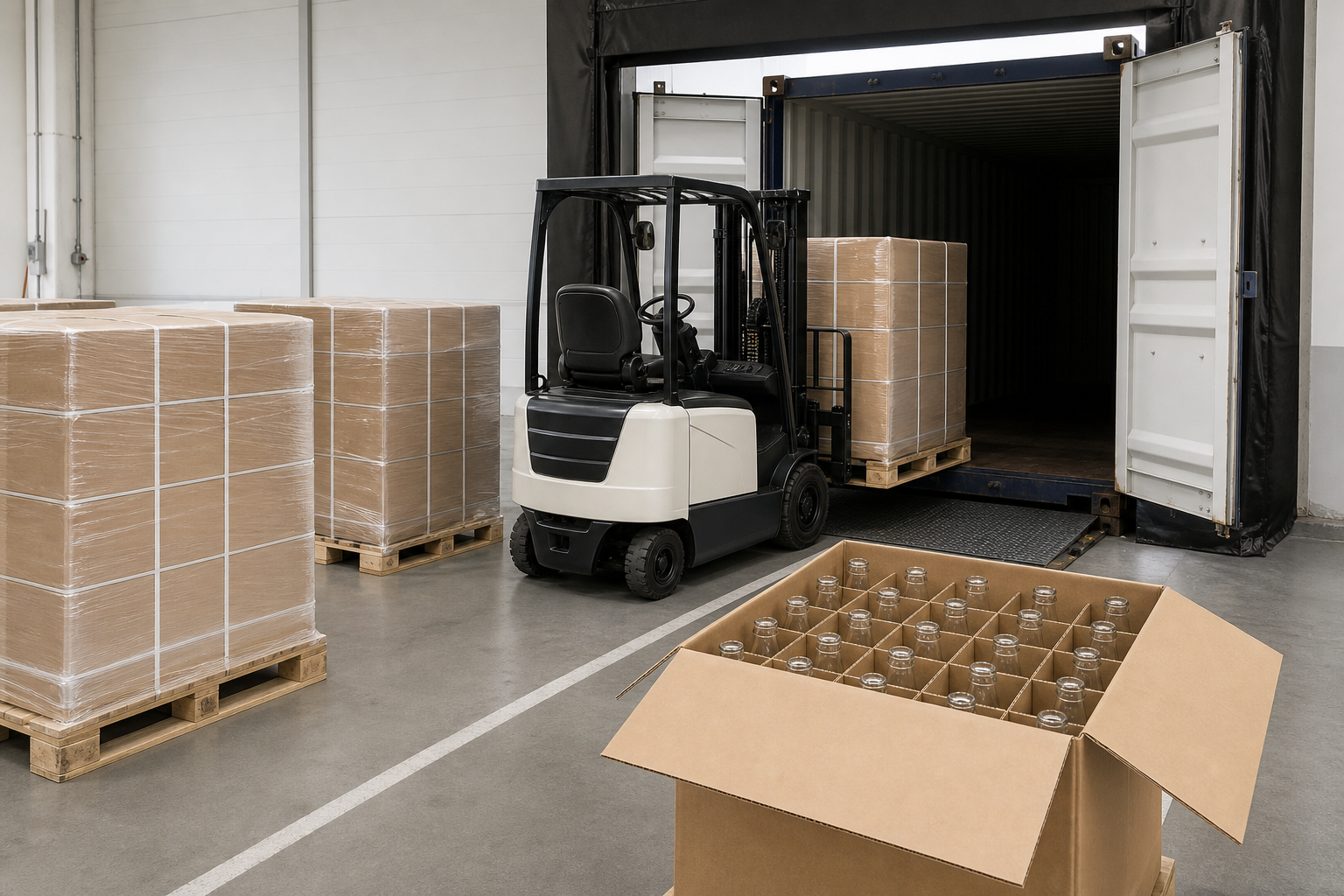
- Confirm palletization and carton spec so the goods survive handling, whoever books the freight.
- Clarify who pays destination charges and customs clearance before you sign.
With glass, the landed cost — not the FOB price — is the number that matters. Compare door-to-door under both Incoterms.
Tell us your destination port and target quantity, and we’ll quote FOB and CIF side by side so you can compare true landed cost.
Sourcing glass for your brand?
Tell us your product, capacity and target quantity and we'll reply within one business day with specs, MOQ, lead time and factory-direct pricing.