Abrasion, separation & wet handling
Six considerations for scrub formulas and their intended use environment.
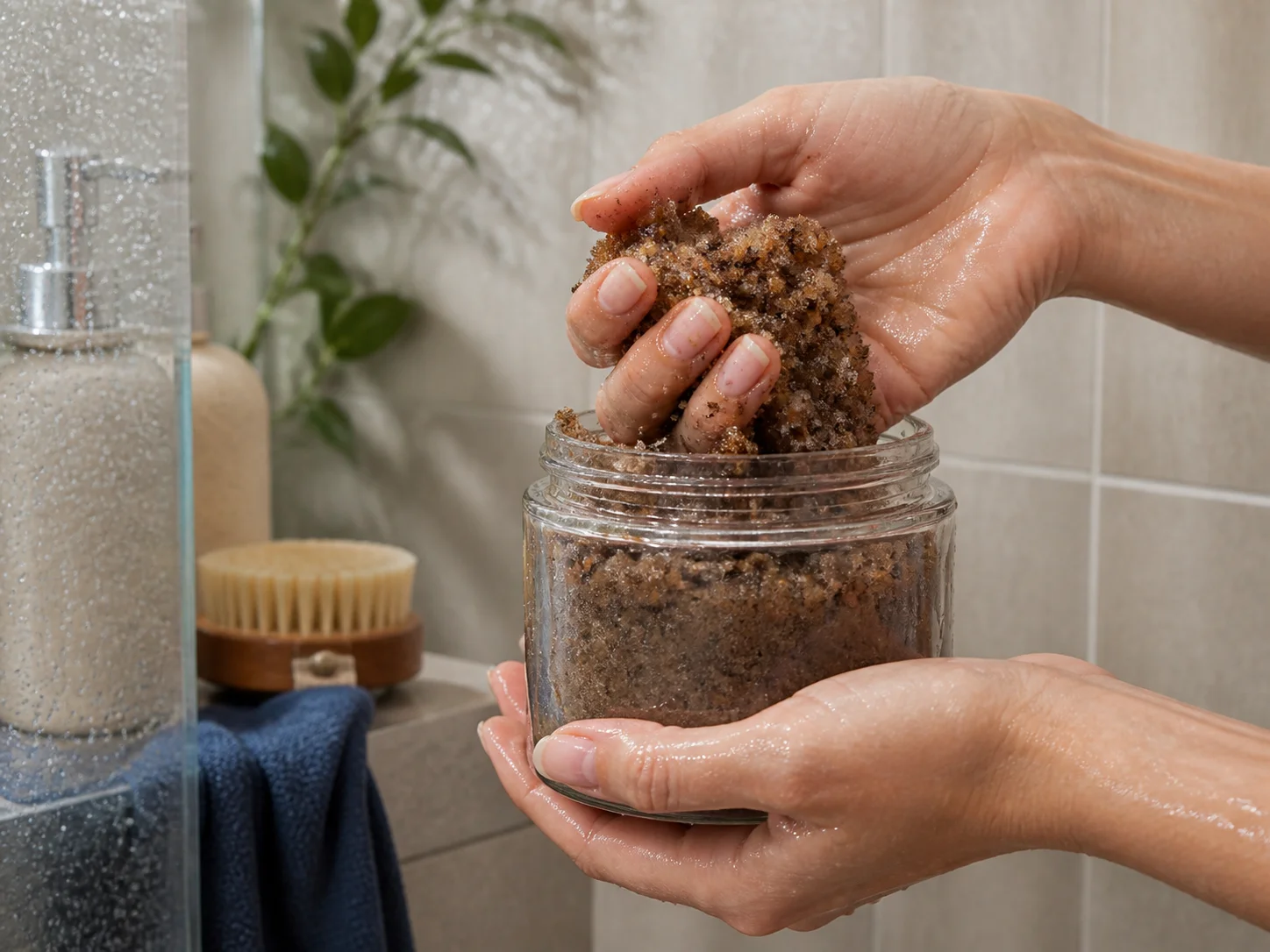
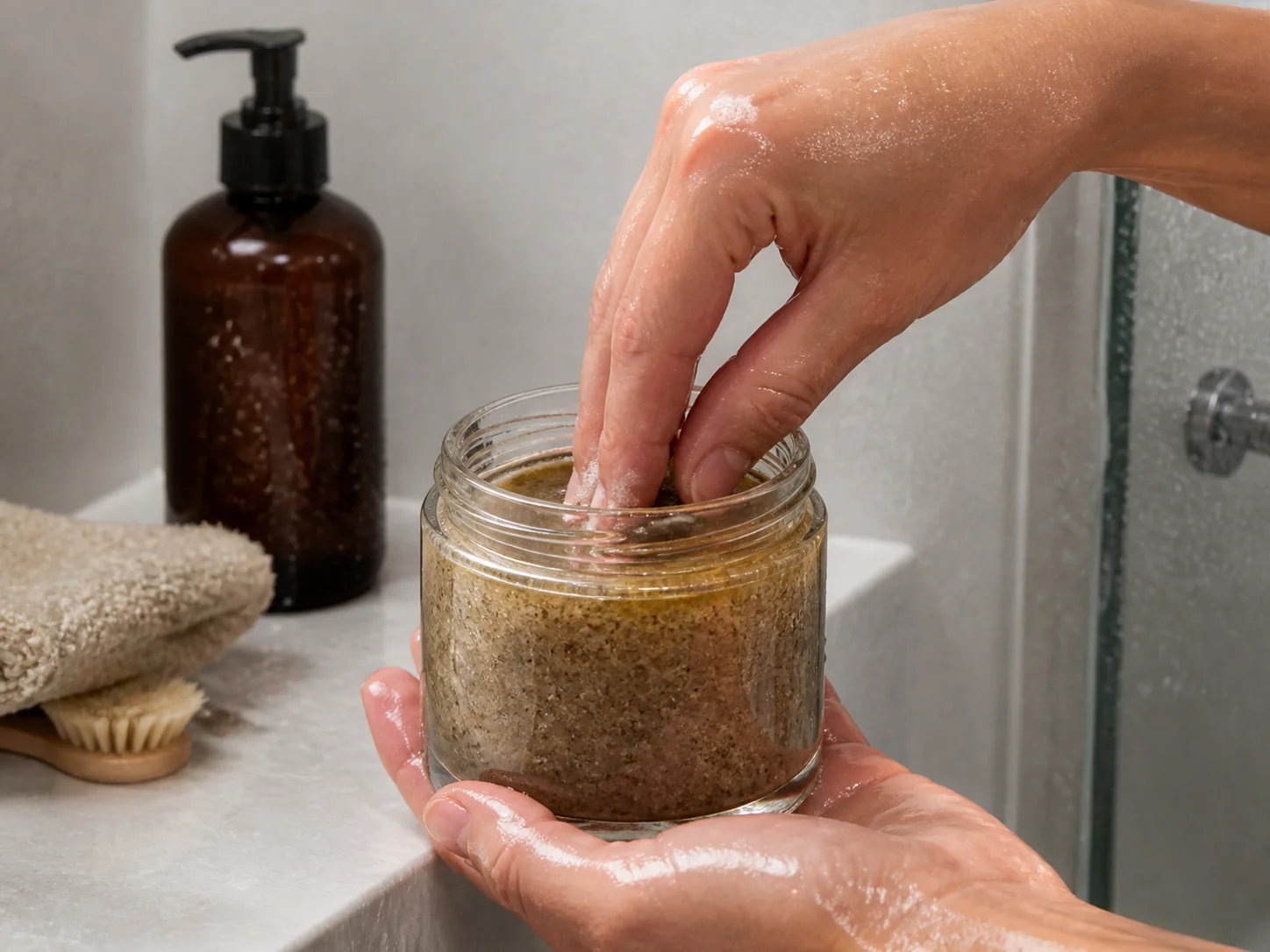
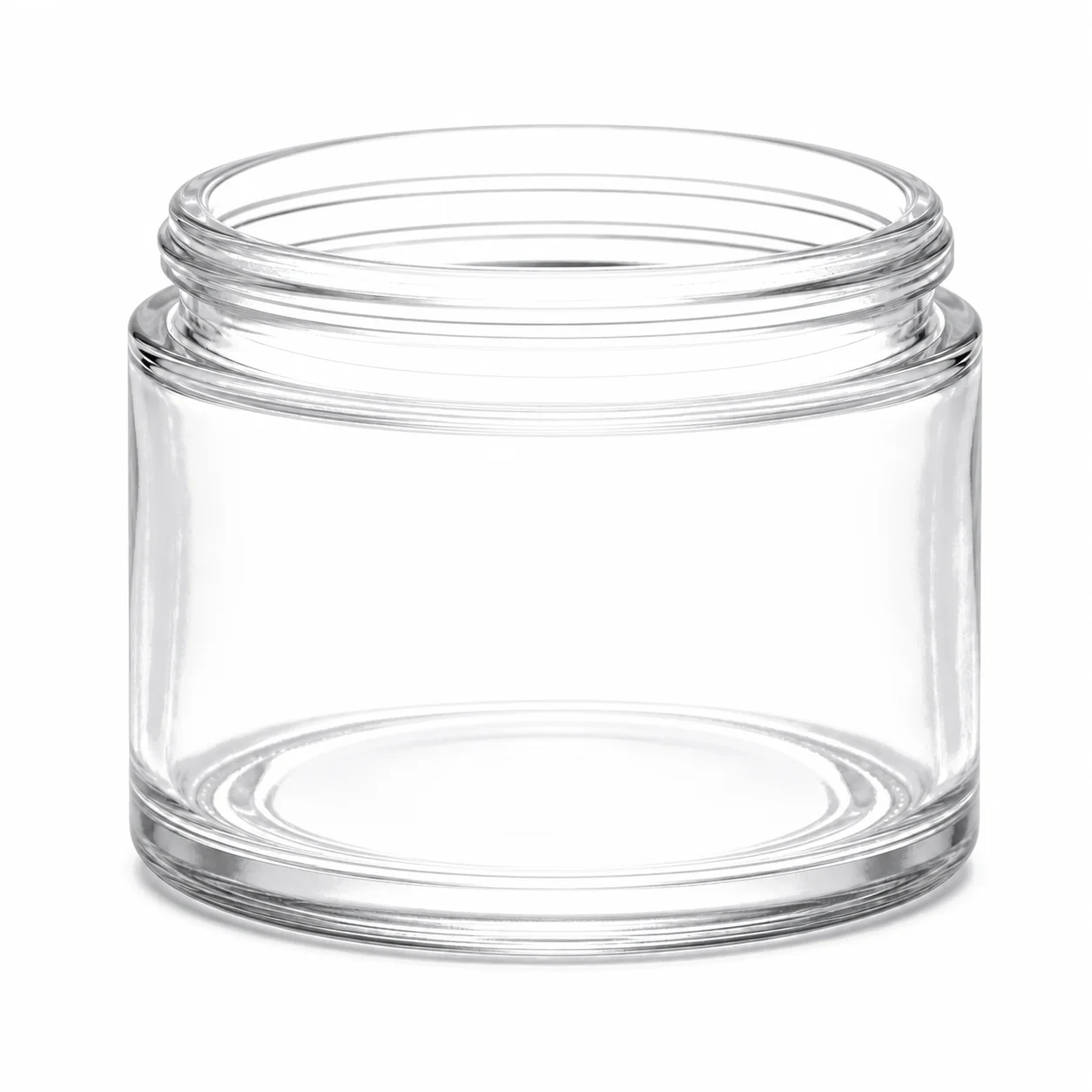
Scrub particles can collect in the thread and affect the liner during repeated opening and closing. Oil-based formulas may also separate or leave residue on the jar. Assess opening size, access to the remaining product, grip and closure wear with the actual formula, including the consequences of handling filled glass in a wet environment.
Assess closure wear through repeated use
Scrub particles can collect on the rim and in the thread, affecting the liner and sealing surfaces during recapping. Evaluate the closure with the actual formula through repeated opening and closing, rather than checking only the initial seal.
Explain expected formula behavior
Some oil-based scrubs separate during storage. Confirm whether separation is expected for the formulation and provide appropriate use instructions based on the product assessment, rather than assuming every separated scrub should be stirred.
Evaluate grip on the filled jar
Wet or oily hands can make a glass jar difficult to hold. Assess diameter, texture, ribs or a waisted profile with the filled pack, and include the intended storage and use environment in the handling review.
Check access to the remaining product
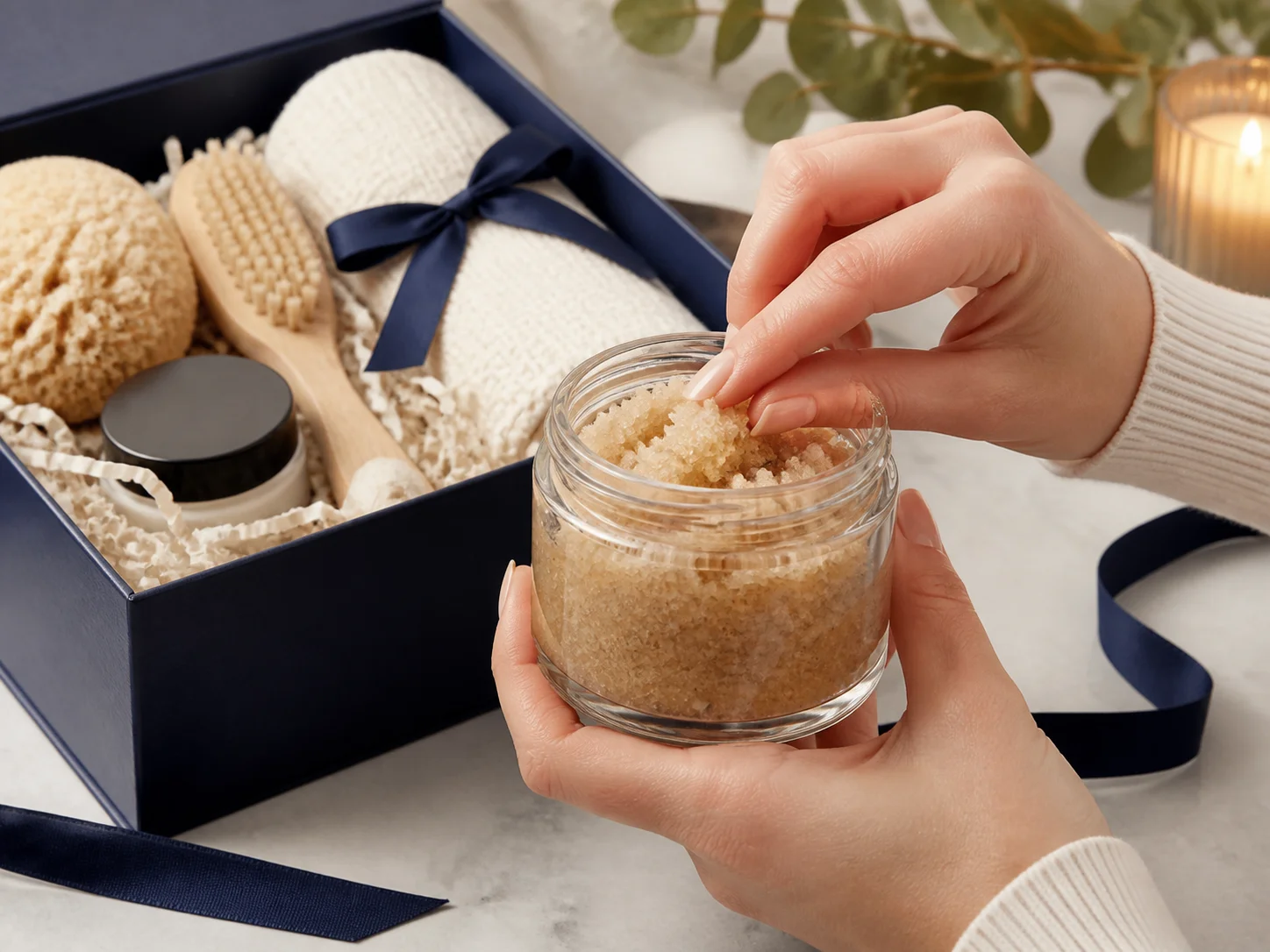
The opening and body depth should allow the intended amount of scrub to be removed comfortably. Test access with the intended dispensing method through to the end of use rather than selecting by nominal mouth size alone.
Choose labels for water and oil exposure
Labels may contact both water and oil during use. Evaluate synthetic stock, suitable print and oil-resistant adhesive on filled jars under representative handling conditions.
Review glass handling in the use environment
Consider the weight of the filled jar, slippery hands and the consequences of a drop onto a hard surface. Assess grip, storage position and handling instructions alongside closure performance.