Neck width, venting & formula dependency
Six requirements that the pump imposes on the bottle.
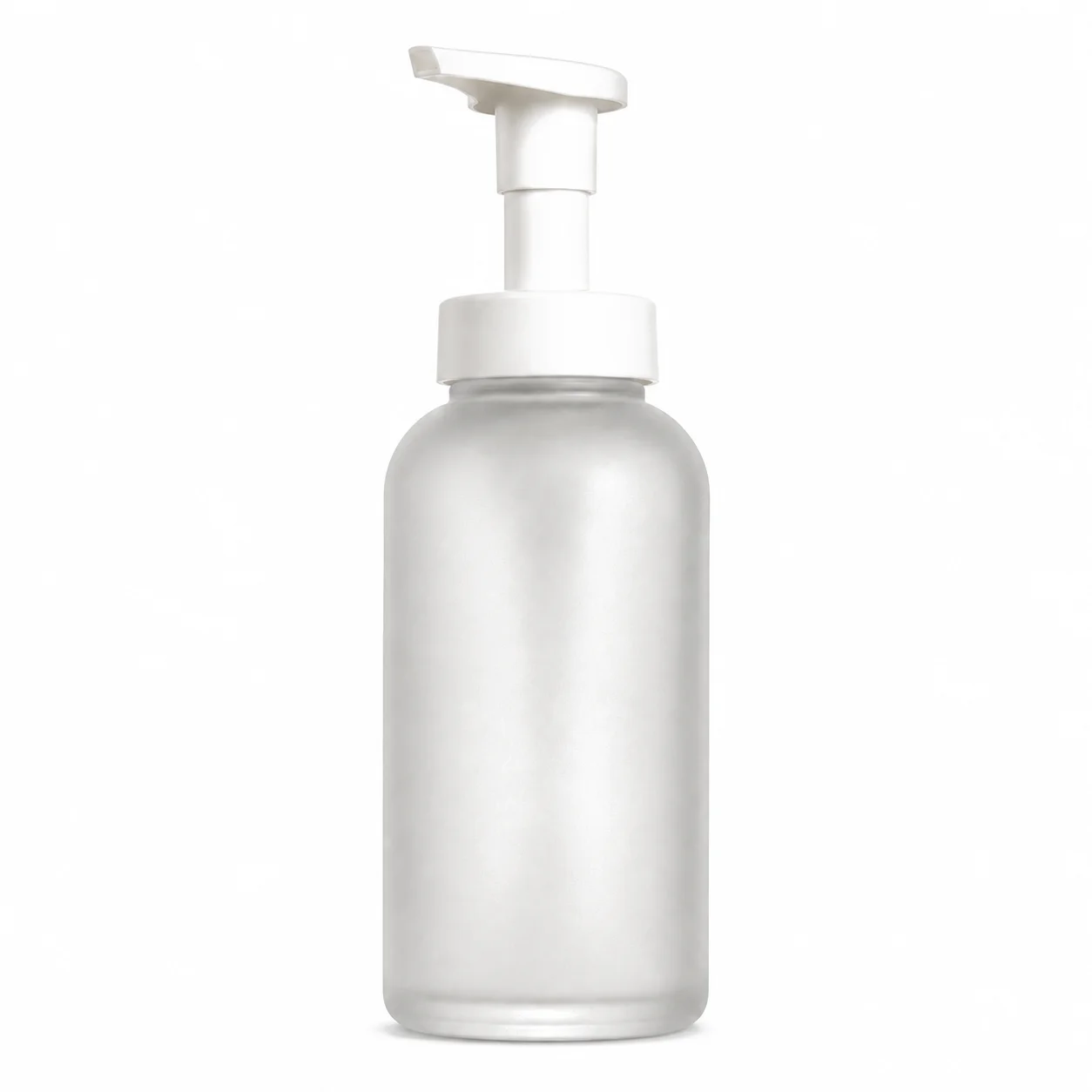
A foamer works by shearing air into a thin liquid through a mesh. That needs a wide neck to house the mechanism, a body that admits replacement air as it empties, and a formula dilute enough to pass the screen. A bottle chosen on appearance and fitted with a foamer afterwards fails on at least one of the three.
The neck has to be wide because the mechanism is
Two chambers and a mixing stack will not fit down a 24 mm or 28 mm throat, so foamers run on 40-410 and 43-410. That decision reaches into the bottle's shoulder geometry, its label panel and often its mold, which is why the pump is chosen before the bottle rather than fitted to one already selected.
The bottle has to breathe
The pump draws air as well as liquid, so the body must admit replacement air as the level falls. A rigid bottle with a tight closure starves the air chamber and the foam thins out as it empties. Foamer packs are specified as a bottle-and-pump pair, and substituting a standard bottle of matching neck size is a common failure.
The formula decides whether it works at all
Foamers shear air into a thin liquid. A concentrated hand soap or a rich cleanser blocks the mesh and produces a wheeze of air. Working practice is a substantially diluted formula, and the dilution belongs in the filling instruction and on the label rather than being left to the customer to guess at.
Mesh choice sets the foam quality
Aperture size and screen count decide bubble size and how dense the foam feels. A coarse single screen gives a wet lather that collapses; a finer or doubled stack gives the tight texture premium cleansers are sold on, at a slightly heavier stroke. That is the lever to pull when foam quality disappoints, not the formula.
Residue in the stack changes performance over weeks
The last of each dose dries in the mesh, and a formula with a high solids load leaves deposits that restrict the screen progressively. The pump feels stiffer and the foam thinner after a month on a basin. Testing means cycling a filled pump over days with pauses rather than firing a hundred strokes in a row.
Foam quality falls as the bottle empties unless the air path is right
The pump draws air as well as liquid, and as headspace grows the ratio drifts and the foam turns wet. A vent and a dip tube positioned for the whole range of fill levels are what keep the last third of the bottle performing like the first.