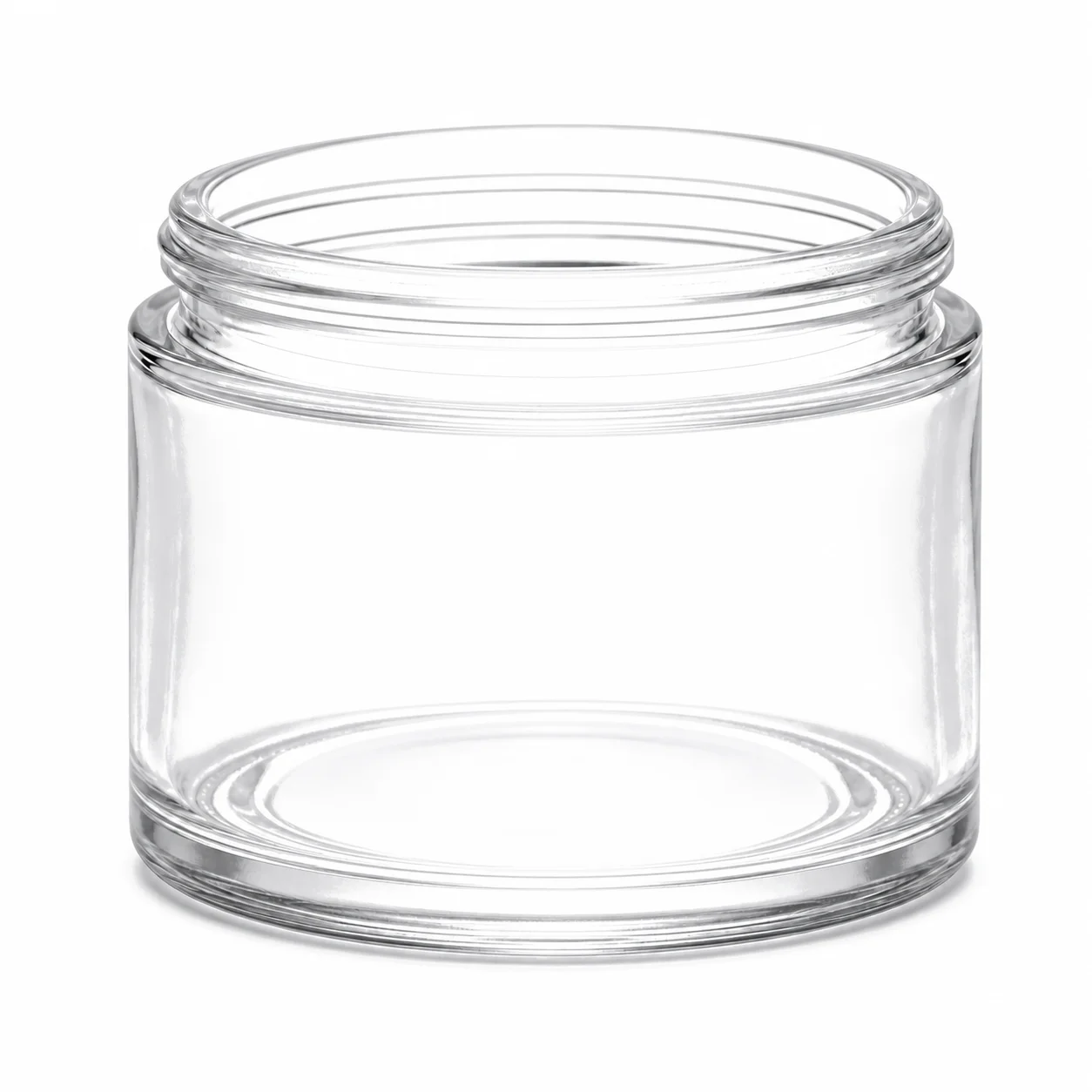
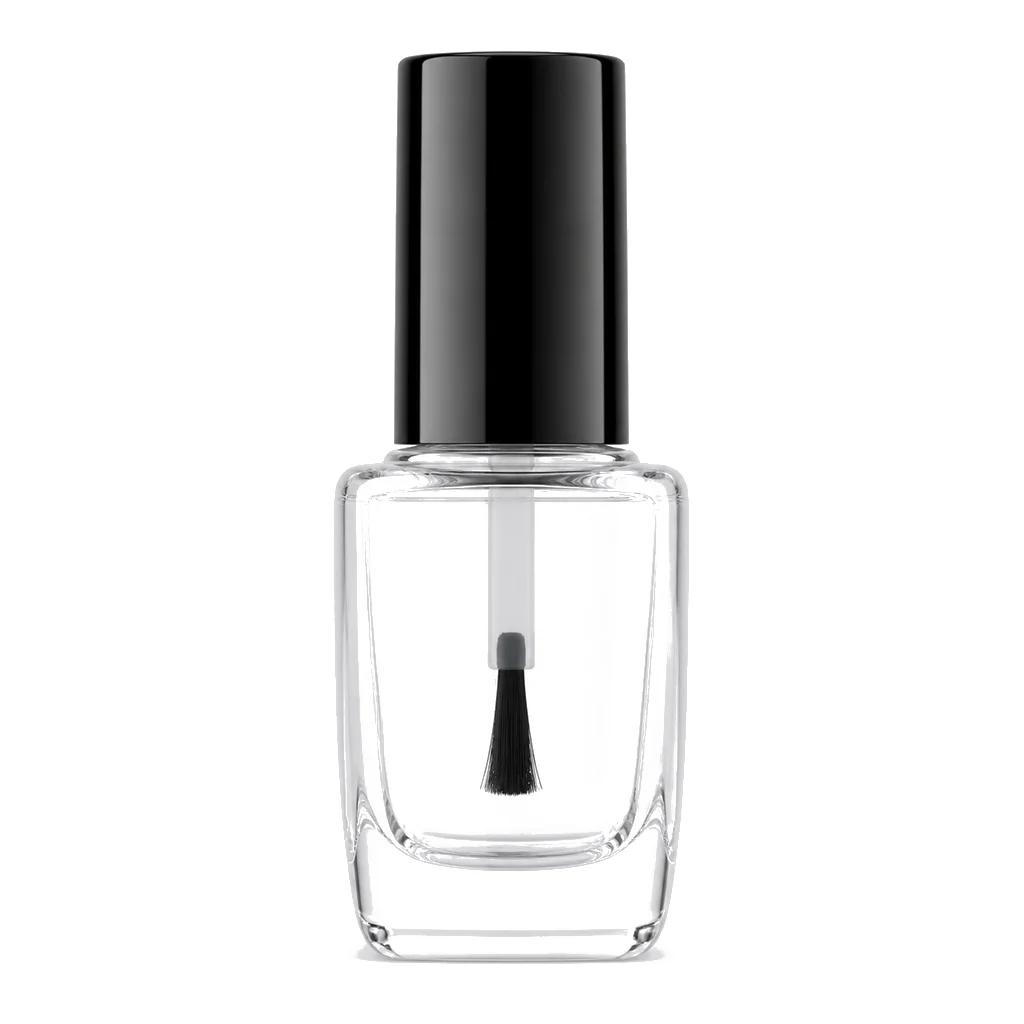
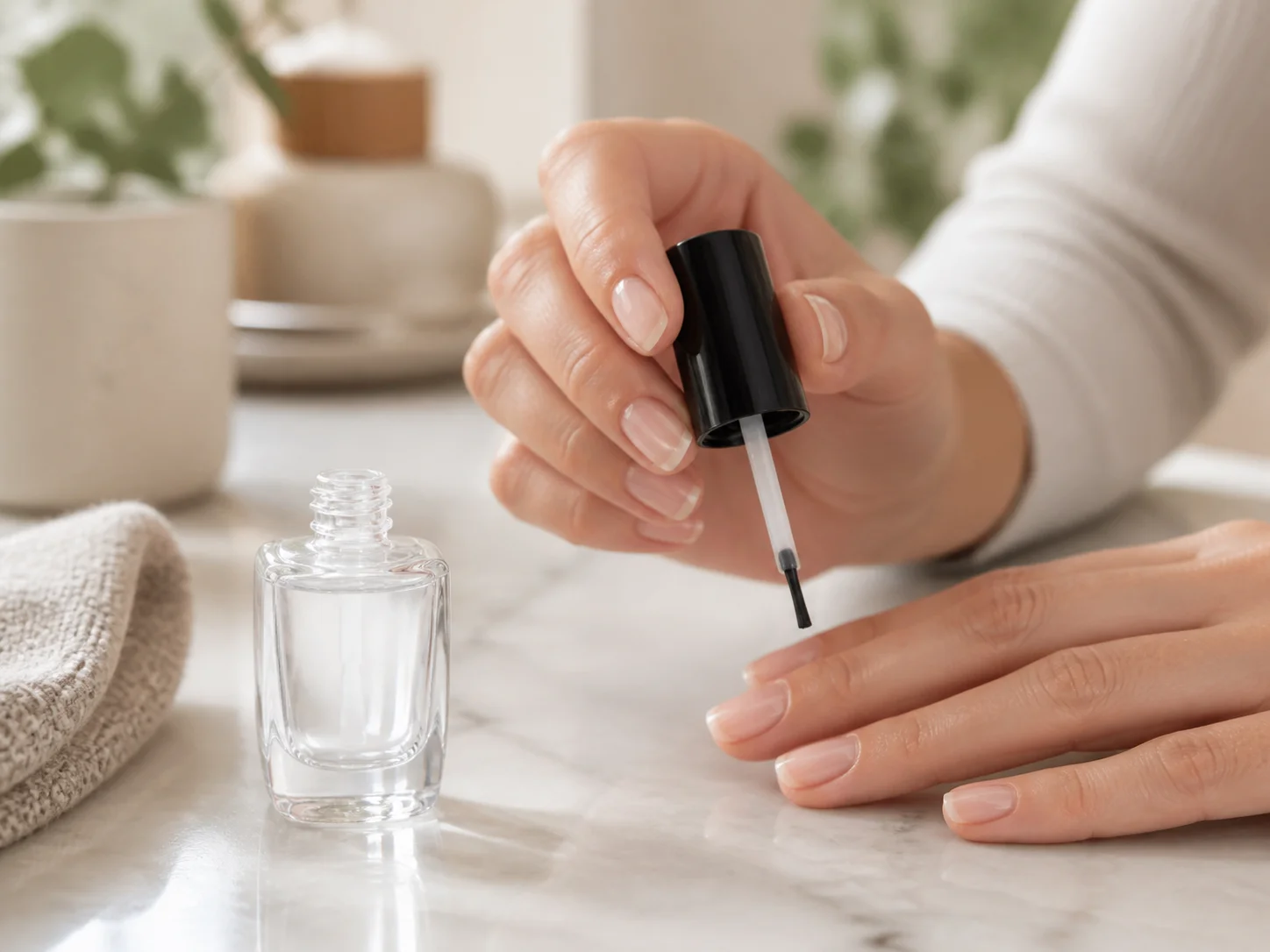
Small clear glass polish bottle with a wide flat base and a narrow neck
Shown configuration · bare bottle / polish, brush, wiper, cap and label not shown

Color cosmetics

Nail Polish Bottle

A nail polish bottle sold as a complete system — glass, brush, wiper and cap — where the brush and the neck wiper decide the application far more than the bottle does.

Brush, wiper and cap as oneSolvent attacks everythingSmall fills, wide bases
Stock status
In stock
Lead time
2–3 weeks
FOB price / pc
$0.30 - $0.75
MOQ
10,000 pcs

Final availability, dimensions, materials, assembled components and commercial terms are confirmed against the selected drawing and approved sample.

Wiper meters the load

How much polish stays on the brush

Base is a stability feature

Knocked bottles ruin a manicure

Solvent-resistant everything

Cap liner, wiper and label alike

Nail Polish Bottle profile

The glass is the least interesting part of a nail polish pack.

Brush and wiper, solvent resistance & stability

Five components that matter more than the bottle they sit in.

A polish bottle is bought as an assembly. The brush shape decides how the polish lays down, the neck wiper decides how much is on the brush, the cap has to seal against a strong solvent for a year on a shelf, and the base has to stop a half-open bottle going over. The glass mostly holds the volume and carries the color.

01

The wiper meters what reaches the nail

A press-in wiper strips excess polish from the brush as it is withdrawn, and its aperture and material determine whether the brush arrives loaded, dripping or nearly dry. Two identical polishes in identical bottles apply completely differently through different wipers, which is why the wiper is specified as carefully as the formula.

02

Brush shape is an application decision

Width, length, bristle count and whether the tip is rounded, flat or fanned all change how a stroke lays down and how many strokes a nail takes. It is the component customers actually judge the product on, and it is chosen by painting with the real polish rather than from a specification sheet describing filament counts.

03

Solvent attacks every non-glass component

Polish solvents are aggressive to liner materials, wiper elastomers, cap coatings and label adhesives, and they evaporate through any imperfect seal. Every one of those components is chosen against the formula rather than by default, and a pack that seals well when new can be tacky and half-thickened after a year on a shelf.

04

The base exists to stop disasters

A polish bottle spends its working life open next to a hand that is moving, and a knocked bottle empties across whatever is below it. Wide, heavy bases are not a styling convention but a practical response, and a tall narrow bottle in this category buys elegance at a cost the customer eventually pays for.

05

Thickening in use is a closure problem

Polish that has thickened is usually polish that lost solvent through the cap between uses. Liner selection and closure fit therefore determine how the product performs in month six, and a customer who has to add thinner blames the formula. It is one of the clearest cases of a packaging decision being read as a formulation fault.

06

Evaporation between uses is what actually ends the bottle's life

Polish thickens because solvent escapes past the wiper and the closure each time it is opened, long before the pigment or resin is exhausted. Closure fit and wiper seal decide the usable life of the product, and they are tested by cycling rather than by a single leak check.
Application guide

The brush and the wiper do the work, not the bottle.

A polish bottle is a brush delivery system with a reservoir attached. Bristle shape and how the neck wipes the brush determine whether a coat goes on evenly, and both are decided long before decoration. These are development directions confirmed with the actual lacquer.

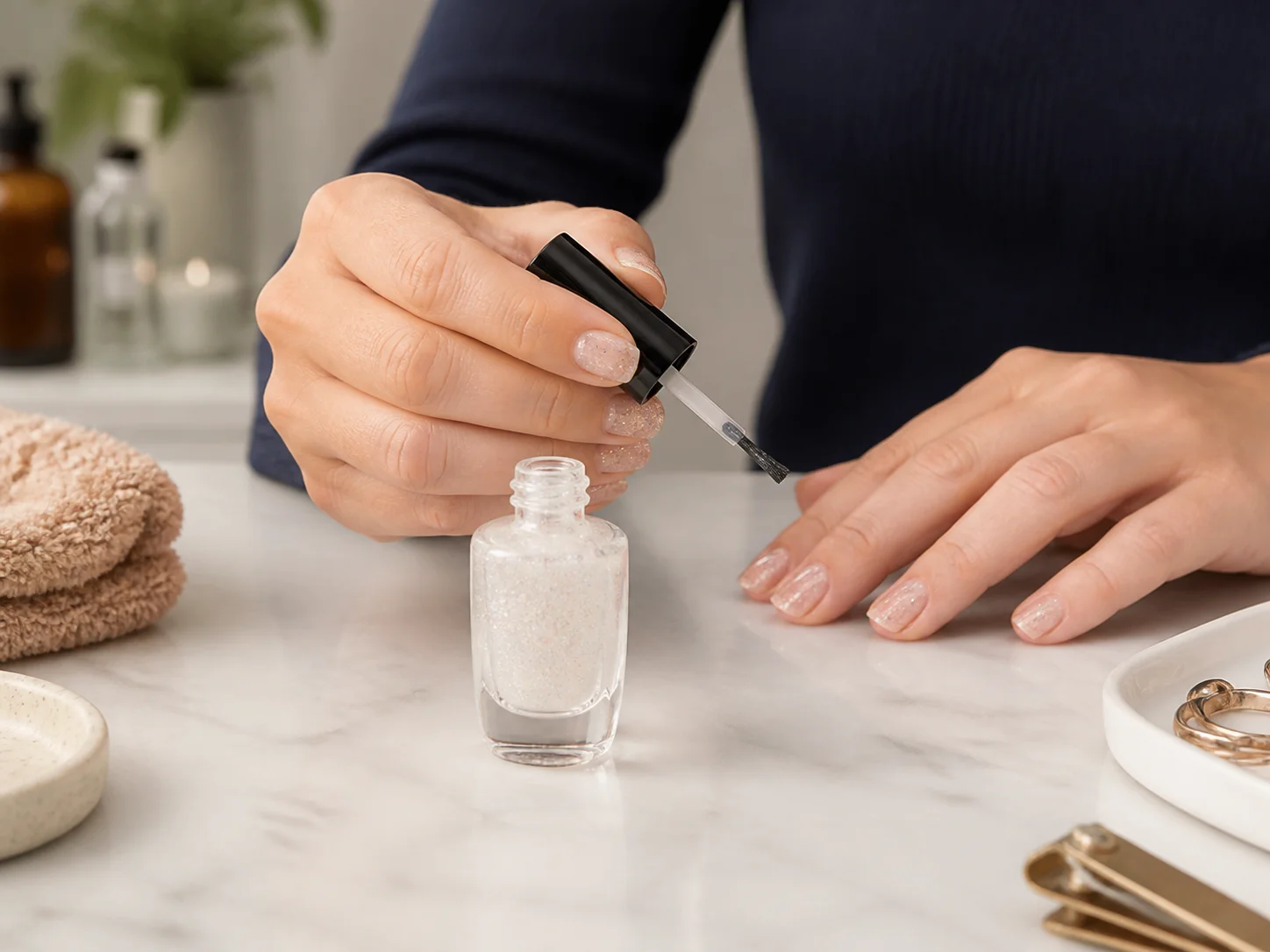
Nail Polish Bottle used for cream, sheer and glitter lacquers in a home manicures setting

Home manicures

Cream, sheer and glitter lacquers

For someone painting ten nails in a sitting and expecting each stroke to lay flat. Brush width, bristle stiffness and how much the neck wipes off decide whether one coat covers or three are needed, and glitter-loaded formulas behave differently again through the same brush.

  • Match brush width to a nail
  • Set the wipe for one-coat coverage
  • Trial glitter loads separately
Nail Polish Bottle used for base coats, top coats & strengtheners in a treatments setting

Treatments

Base coats, top coats & strengtheners

Treatments are applied by the same gesture but carry thinner, faster-drying formulas that skin over in the neck if the cap does not seal. A clear bottle also puts any separation or thickening on display, which becomes a returns issue long before the stated shelf life ends.

  • Confirm the cap seals against skinning
  • Watch for thickening in clear glass
  • Check flow of a thin formula
Nail Polish Bottle used for color ranges on a display stand in a shade merchandising setting

Shade merchandising

Color ranges on a display stand

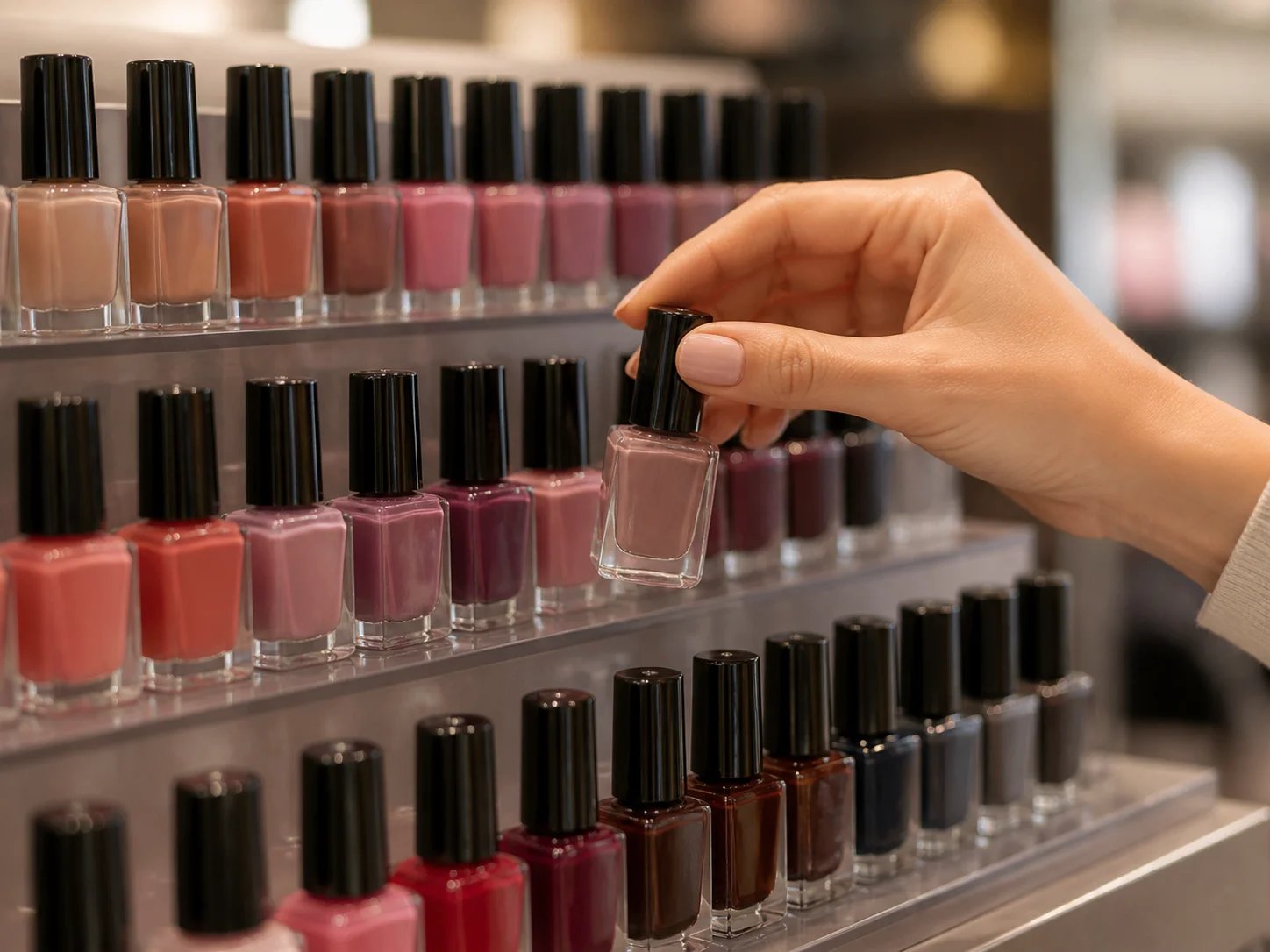
Polish is chosen by looking at the bottle itself, usually from a rack of forty shades under retail lighting. The square shoulder gives a flat facing that stands squarely on a tester rack, and the base label has to identify a shade that customers judge by eye, not by name.

  • Confirm the bottle faces square on a rack
  • Make base shade codes readable
  • Review shades under retail lighting

Formula compatibility, claims, brush and wiper system, filling, stability and distribution are confirmed for the selected program.

Common questions

Nail Polish Bottle questions

The bottle is the simplest part of this pack. These are the parts that matter.

How should we choose the brush?

By painting with your actual polish. Width, length, bristle count and tip form all change how a stroke lays down and how many strokes a nail needs, and it is the component customers judge the product on. A specification sheet describing filament counts tells you far less than five minutes with a real bottle.

Why does polish thicken before it is finished?

Solvent loss through the closure between uses. Liner selection and closure fit determine how the product performs in month six, and a customer forced to add thinner blames the formula rather than the cap. It is one of the clearest cases in cosmetics of a packaging decision being read as a formulation fault.

Does the base shape really matter?

It prevents a specific, expensive accident. A polish bottle spends its working life open beside a moving hand, and a knock empties it across whatever is below. Wide heavy bases are a practical response rather than a styling convention, and a tall elegant bottle in this category buys its looks at the customer's expense.

What actually ends the life of a polish bottle?

Evaporation between uses, not the polish itself. Solvent escapes past a tired closure every time the bottle is opened and closed, and the formula thickens until it stops laying down properly. The closure's seal over dozens of cycles is what decides how much of the bottle gets used.

Next step

Send us the Nail Polish Bottle brief.

Tell us the product, fill volume, closure preference and destination market. We will come back with the matching drawings, available configurations and a sample plan before anything is quoted.

  • 01Send the briefProduct, volume, closure and market
  • 02Get the optionsMatching drawings and configurations
  • 03Approve the sampleConfirm the pack before production