Grip, viscous dispensing & label survival
Six requirements that come from the basin rather than the brief.
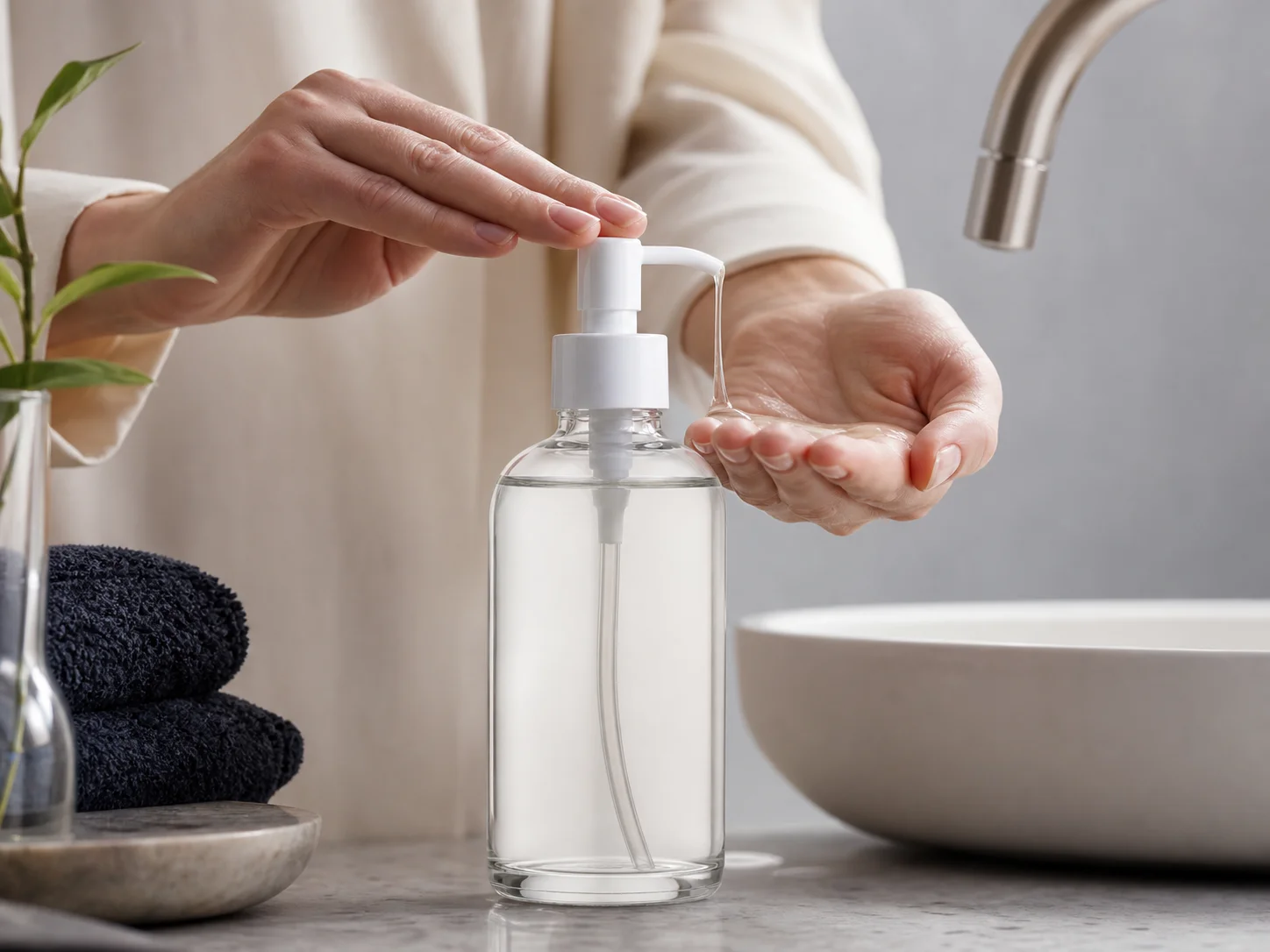
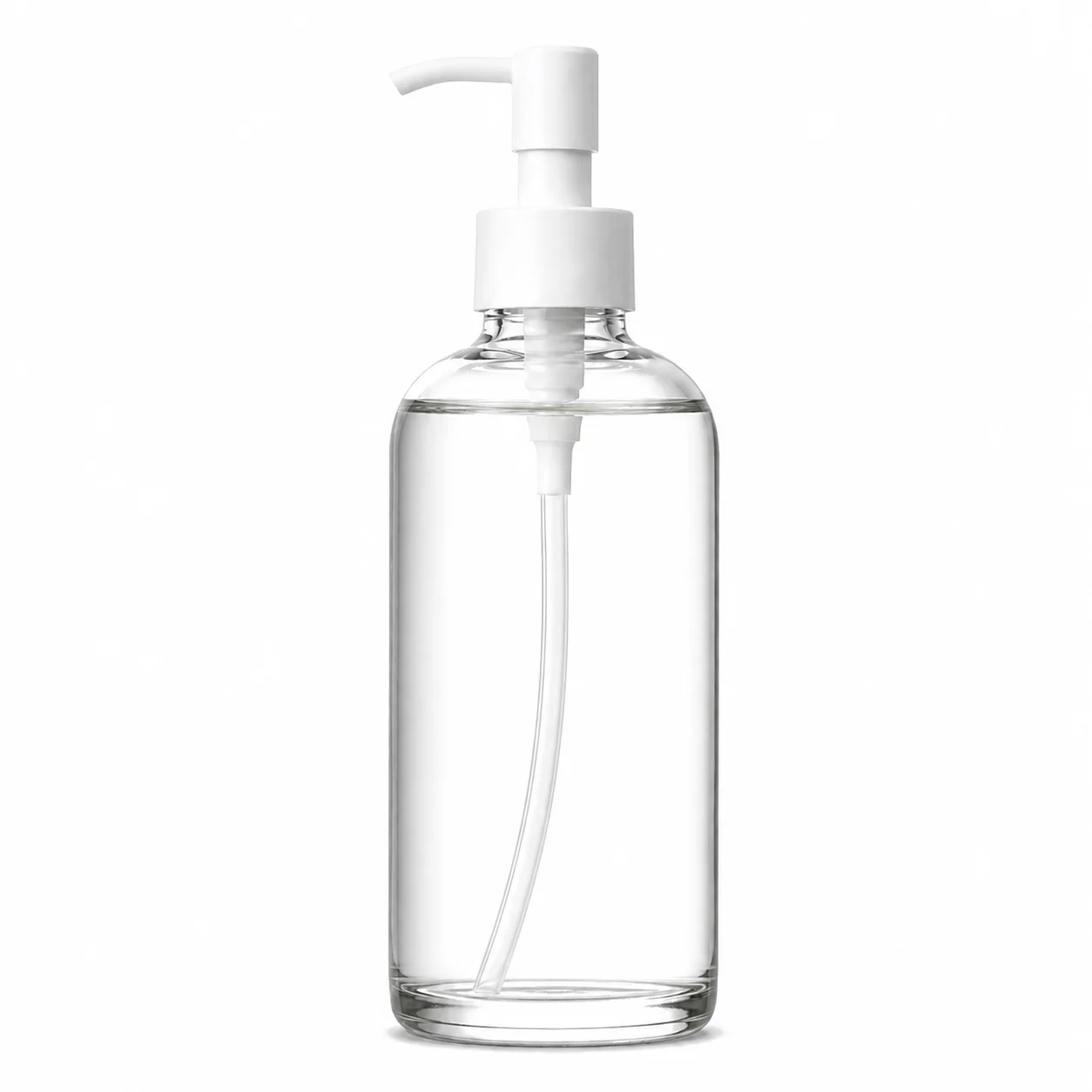
Cleansing oil is dispensed at a basin, into a palm, usually onto dry hands, before the face is rinsed and the bottle is picked up again with wet, oily fingers. The pack is therefore judged on grip, on a pump that moves a viscous liquid without stalling, and on whether the label survives constant contact with the product it holds. Capacity is almost the least of it.
The bottle is picked up with slippery hands
A smooth cylinder is exactly the wrong shape for a hand covered in cleansing oil. Ribs, a waist, a flattened panel or a textured coating all give purchase, and a dropped glass bottle on a bathroom floor is the failure being designed against. Grip is a safety feature here rather than a styling flourish.
Viscosity sets the pump, not the aesthetics
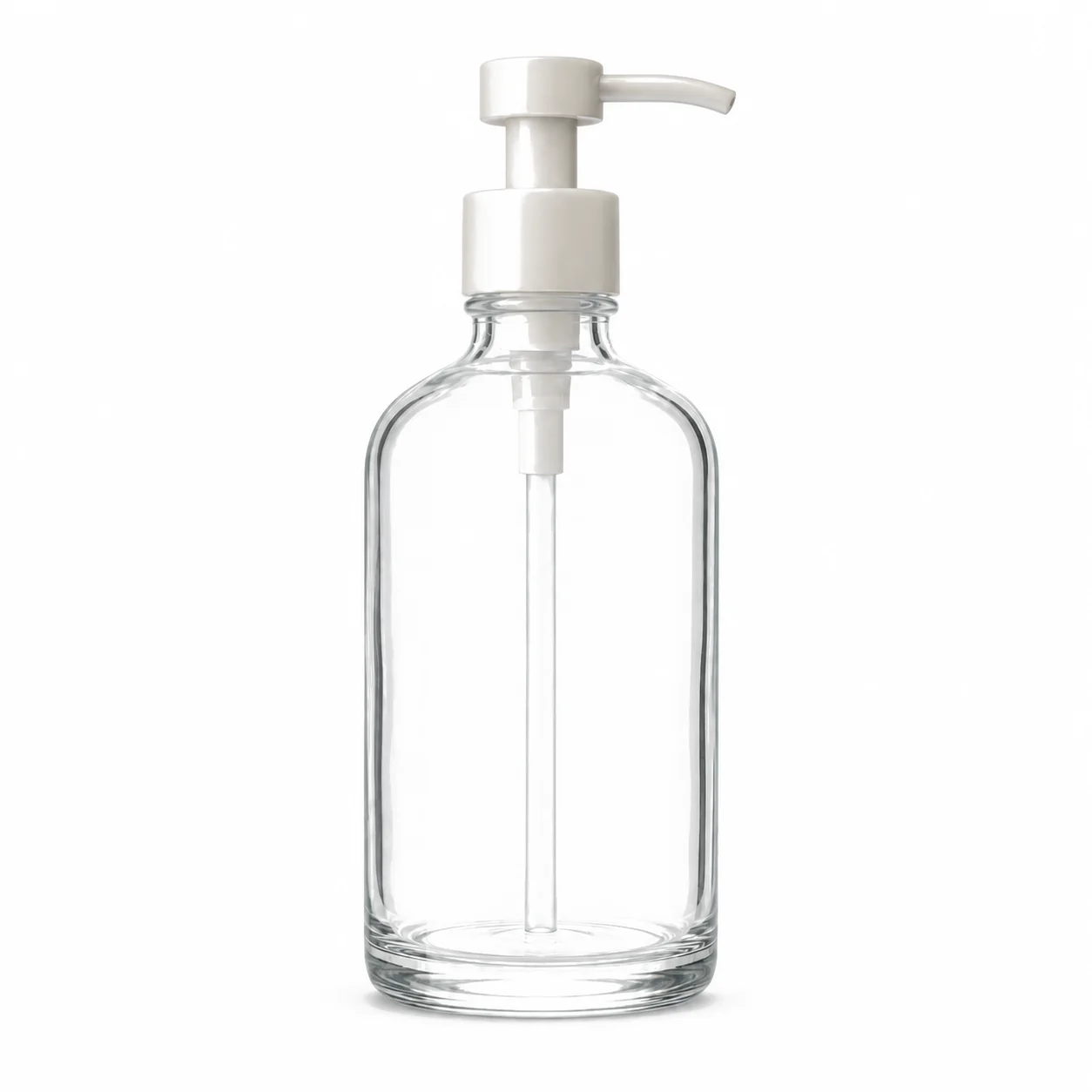
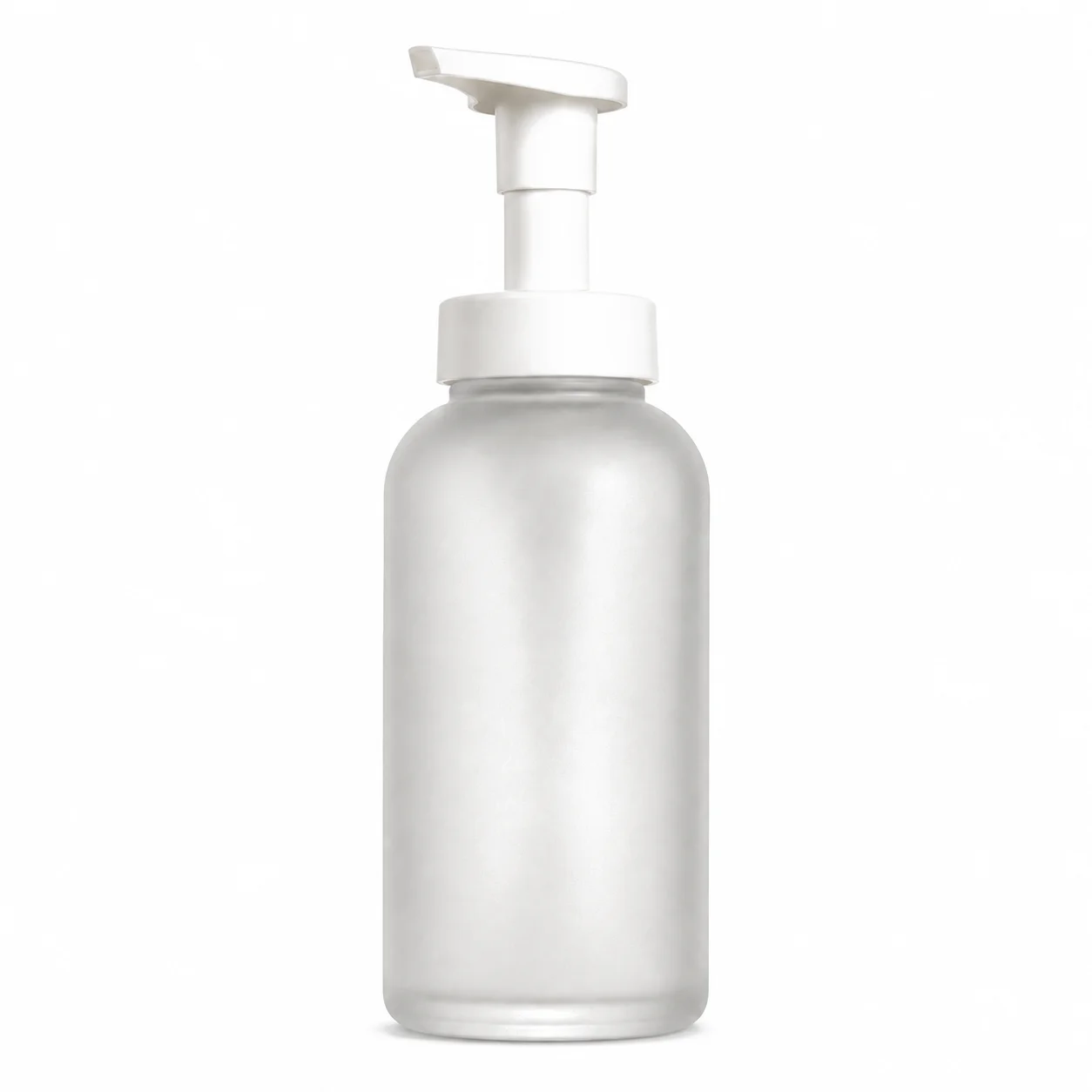
Cleansing oils are thicker than toners and thinner than balms, and a pump specified for a watery product stalls or delivers a dribble. Output per stroke, spring force and dip tube bore all follow the actual formula at the temperature the customer uses it — which in a cold bathroom is lower than in a laboratory.
Oil runs down the outside and reaches the label
Some product always runs down the neck, so the label spends its life in contact with the oil rather than merely near it. Chemical-resistant stock and an oil-resistant adhesive stop the edges lifting and the print smearing within weeks, and it is the single change that most improves how a returning customer perceives the pack.
Glass in a bathroom is a considered choice
Cleansing oil is used at a hard basin over a tiled floor, so glass carries a genuine breakage risk that a plastic pack does not. Brands choose it for weight and perceived quality, and the honest response is a shape that grips well, a base that resists tipping and packaging that says something about handling.
Dispensing accuracy hardly matters here
Unlike a serum, cleansing oil is used by feel — a couple of pumps into a palm. That means dose consistency is a low priority and stroke smoothness a high one, which points at a different pump specification than a treatment product would use. Buying a precision pump for this application spends money the customer cannot perceive.
The oil emulsifies in use, and so does the film on the outside of the bottle
Cleansing oils turn milky on contact with water, and the film that runs down the outside does the same thing on the label. Label materials and adhesives are chosen against that behavior specifically, because a laminate that survives plain oil can lift under an emulsion.