Applicator, wiper metering & sticky closures
Six things that decide how a gloss performs on the lips.
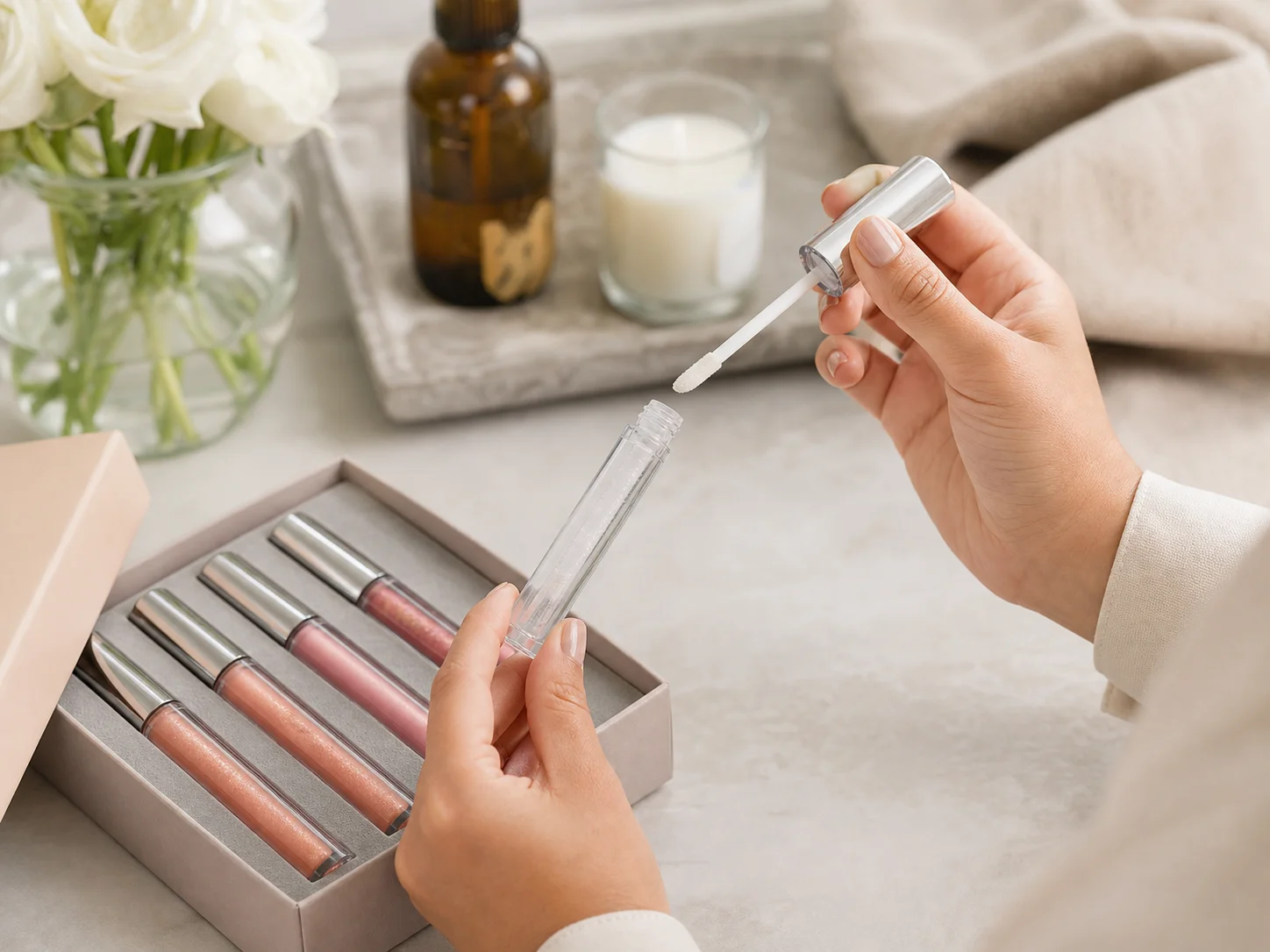
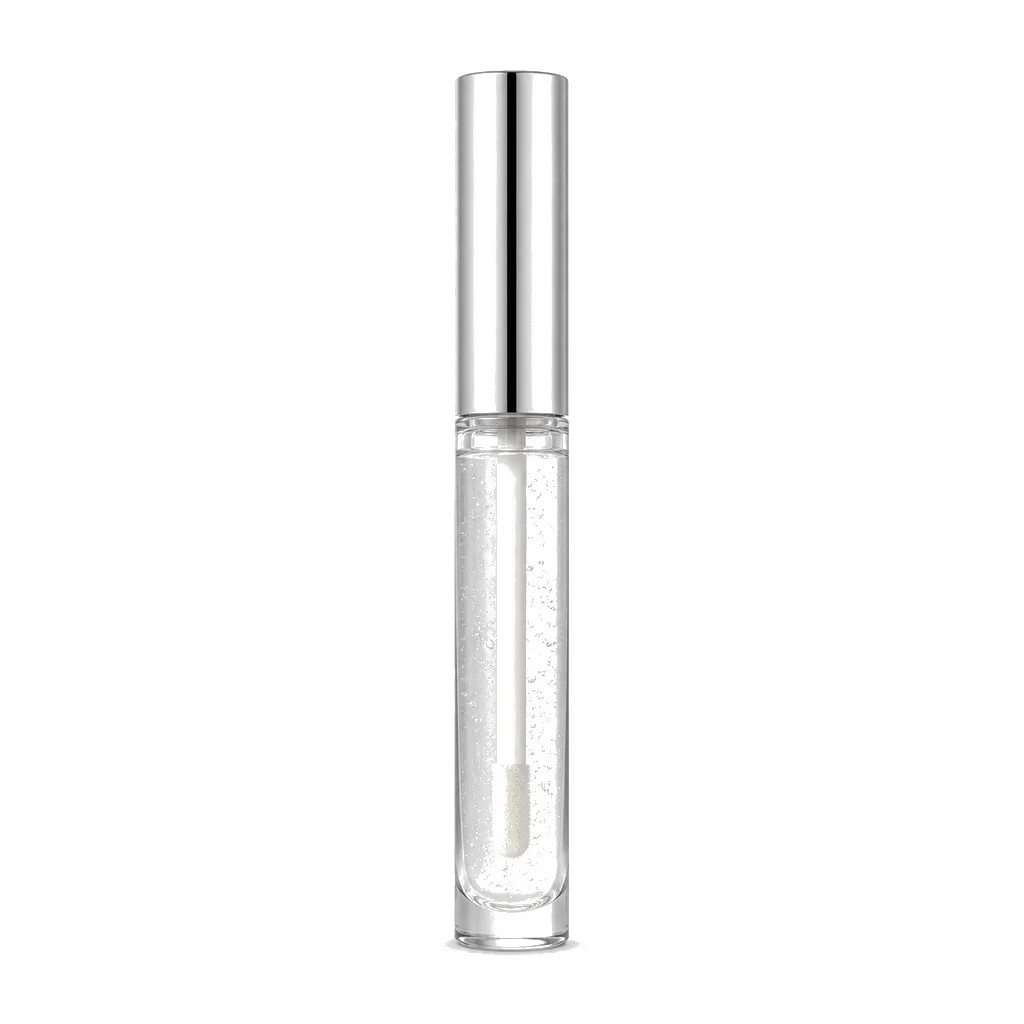
A customer experiences lip gloss through the applicator: how much it carries, how it spreads and how it feels. The bottle contributes the wiper that meters that load, a closure that survives a sticky formula reaching the thread, and a body slim enough to live in a pocket. Very little else about the glass matters.
The wiper decides the load
A press-in wiper strips gloss from the wand as it is withdrawn, and its aperture sets whether the applicator arrives loaded, correct or nearly bare. Two identical formulas apply completely differently through different wipers, and it is the cheapest component in the pack with the largest effect on the experience.
Applicator type is a formulation partner
A doe-foot carries a lot and lays down a thick film; a flocked tip carries less and spreads more evenly; a brush suits precision and a thinner product. Matching the applicator to the gloss viscosity is what makes an application feel controlled, and it is judged by applying rather than by comparing specifications.
Sticky formulas make the closure a working problem
Gloss reaching the thread dries and makes the cap progressively harder to turn, and a customer with a cap they have to wrestle open in a car will not repurchase. Thread clearance, wiper fit and how cleanly the neck sheds product all feed into this, and it is a design question rather than a formulation one.
The bottle lives in a pocket, not on a shelf
A gloss is carried loose in a bag or pocket and opened one-handed dozens of times, so a slim body, a cap that closes positively and a shape that does not roll off a surface all matter. Those are ordinary requirements, but they outrank almost every aesthetic consideration in the format.
Glass sets the format's weight and its risk
Glass gives a gloss weight and clarity that plastic cannot match, and it also breaks when dropped on a hard floor, which is where it lives. Brands choose it for the impression at the point of use, and the trade is worth stating rather than assumed, particularly on a product carried everywhere.
The wand seals the bottle as much as the closure does
On a wand applicator the shaft passes through the wiper every time, and it is that interface rather than the thread that limits evaporation between uses. Wiper fit is therefore specified against the wand diameter as a pair, not selected from a range afterwards.