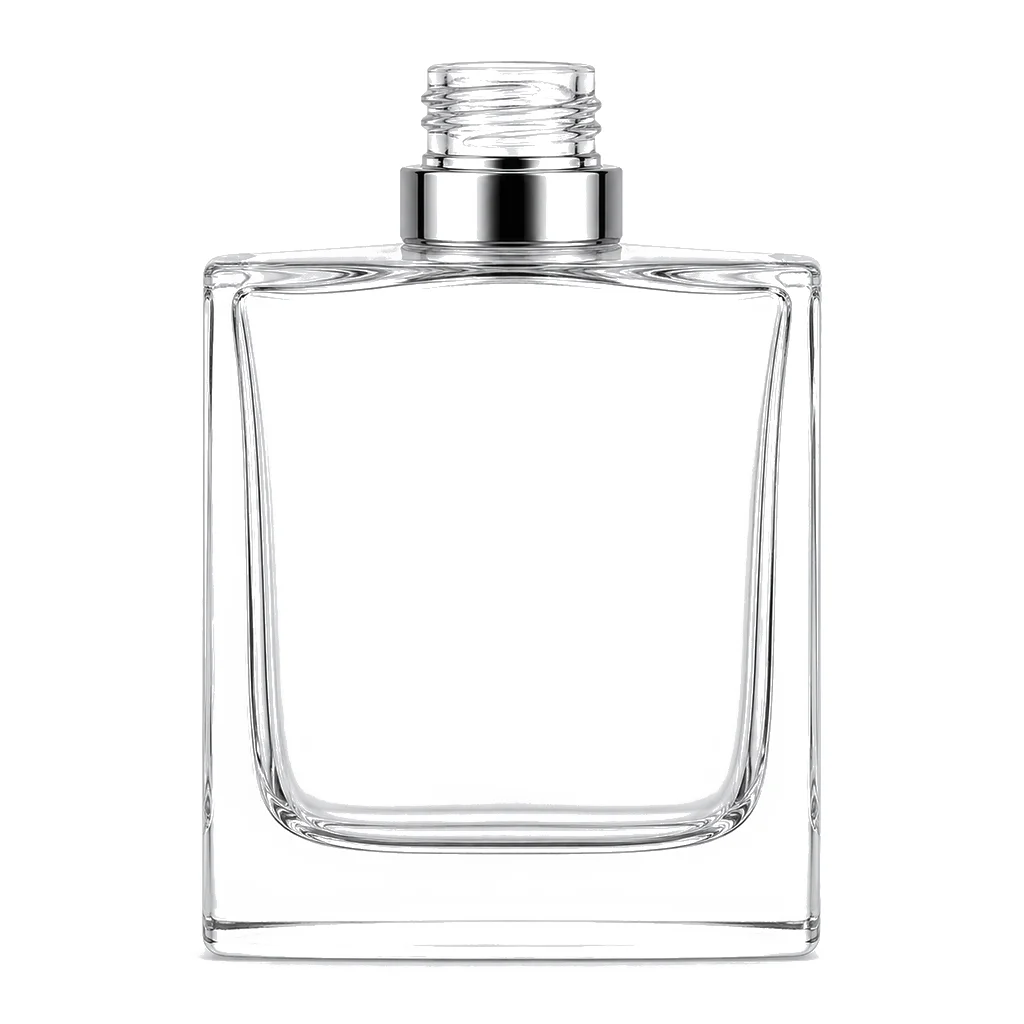
FEA sizes, crimp control & glass quality at the neck
Finish geometry, crimp settings and assembly quality
An FEA crimp finish uses a formed glass bead gripped by the pump’s aluminum ferrule. Specify the bead, ferrule and pump together, then validate the permanent assembly on the selected glass and filling equipment.
Specify the full FEA finish
FEA 13, 15, 18 and 20 identify specific fragrance finish profiles, not diameter alone. The reference collar dimension is around 16.3 mm for FEA 15; confirm the complete bead profile and tolerances with us before selecting the pump. Describing the interface only as a 15 mm neck is insufficient for component matching.
Inspect the crimping interface
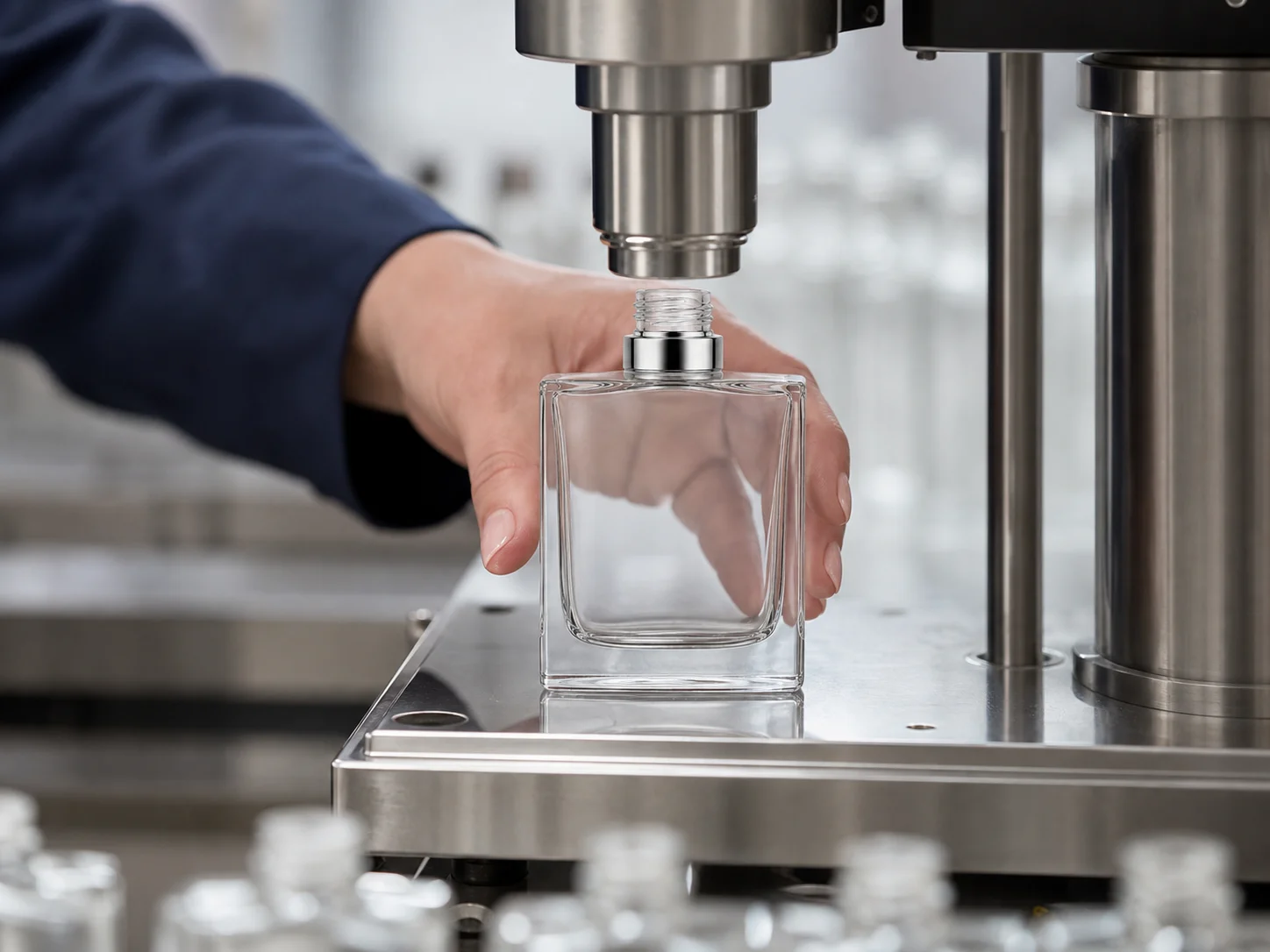
Crimping concentrates force around the glass finish. Heavy seams, an out-of-round bead or uneven glass distribution may contribute to cracks during assembly or subsequent handling. Set inspection criteria for the neck as well as the decorative body.
Validate settings on the selected glass
Insufficient crimping can leave the pump loose or poorly sealed; excessive force can damage the glass. Establish settings on the selected bottle, ferrule and equipment. Revalidate the assembly when the component source, mold or relevant dimensions change.
Control quality before permanent assembly
A crimped assembly is intended to be permanent, so faults found after filling can be difficult or uneconomical to rework. Agree on the disposition of defective units before production. Control filling, crimping and inspection to reduce rejects.
Approve the overcap and collar together
The overcap contributes to the appearance and protects the actuator against accidental operation. Metal, wood or resin caps should be assessed for weight, retention and handling. Confirm their fit against the collar or other retaining feature rather than the glass neck alone.
Approve the fragrance before crimping
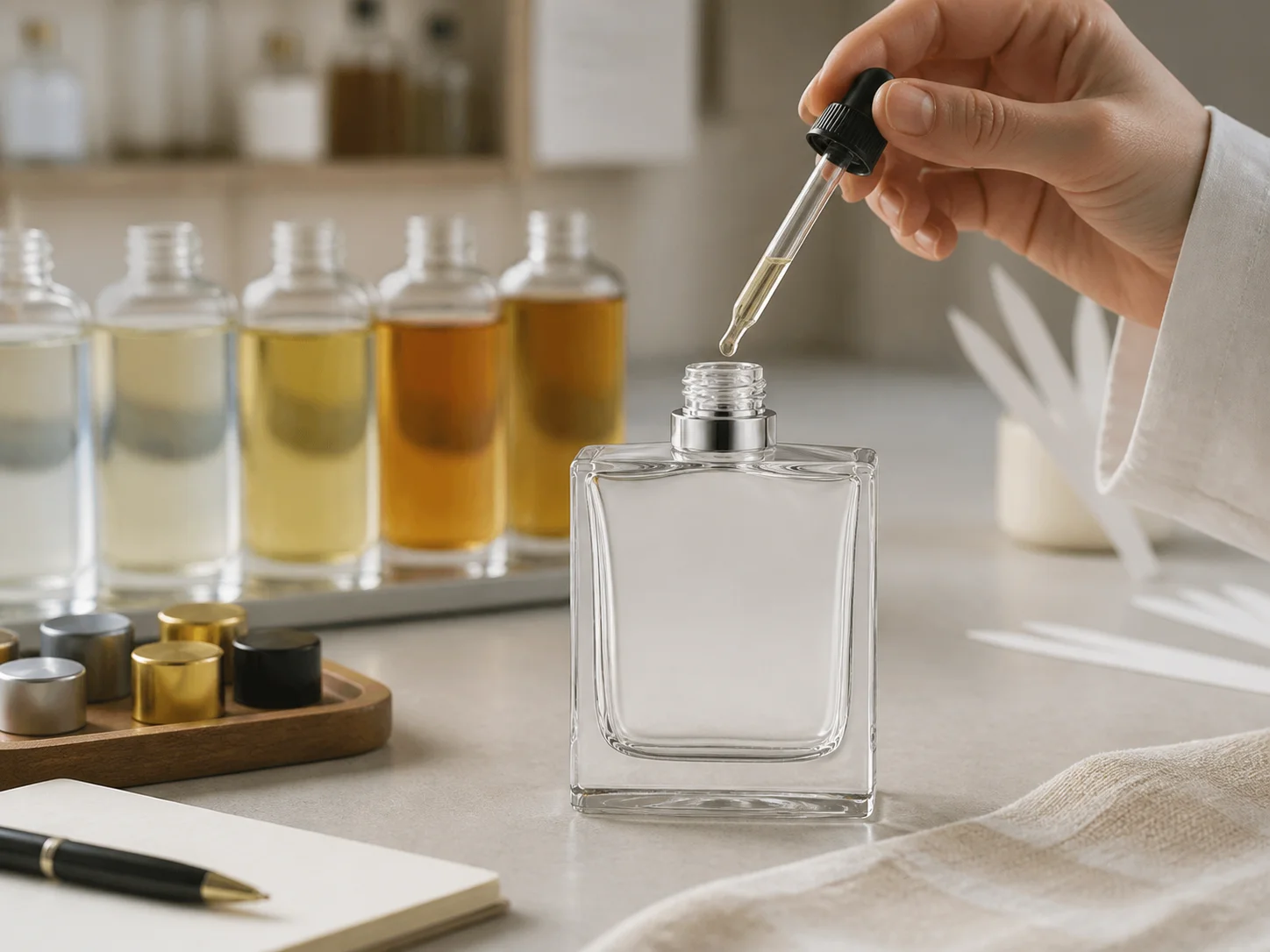
Approve the fragrance, fill volume and complete pack before production crimping. Opening a crimped assembly generally damages the closure and may make rework impractical. Establish any approved rework procedure with the filler before production begins.