Mass, optics & annealing thick sections
Six consequences of putting most of the glass under the fill.
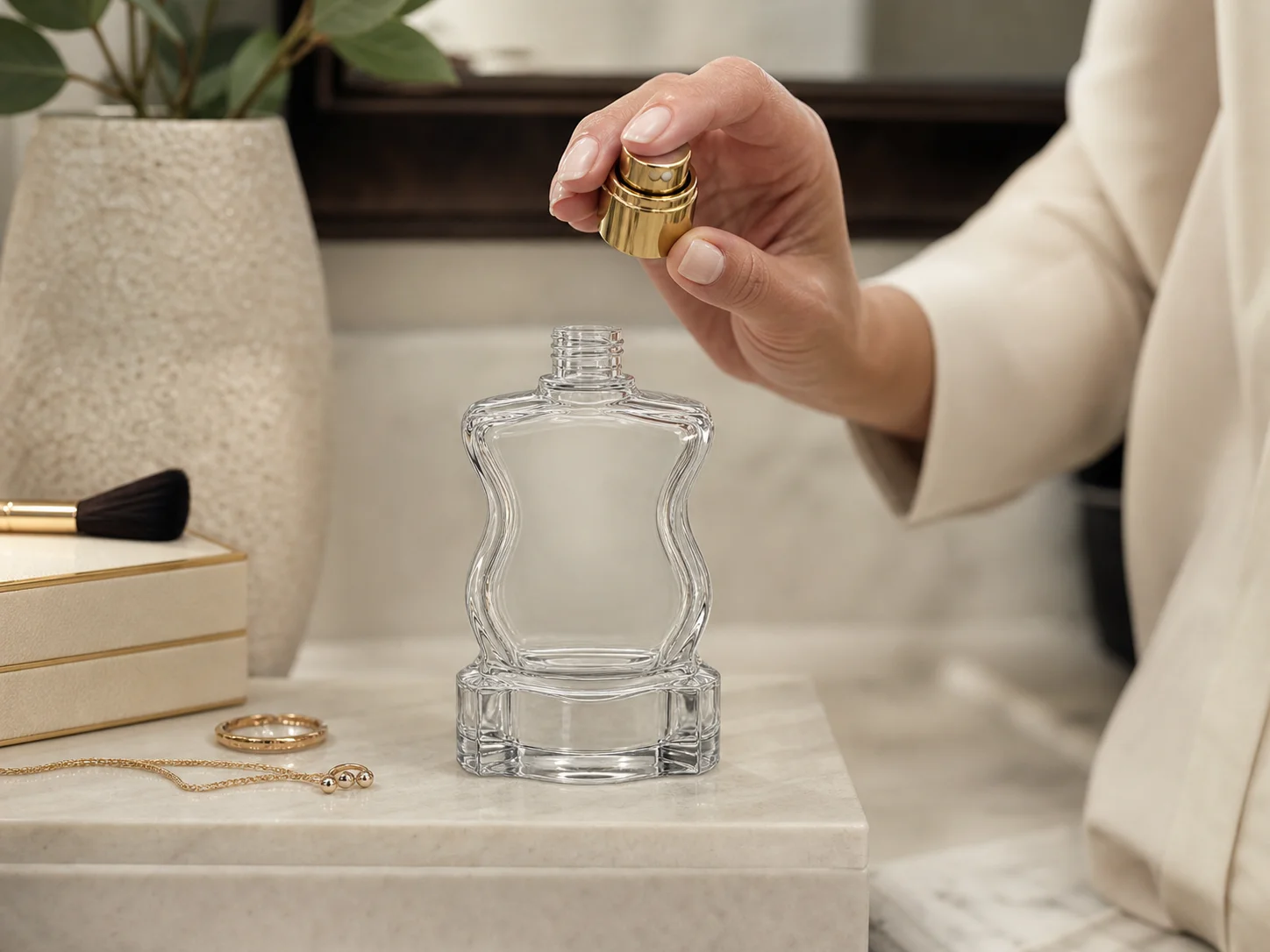
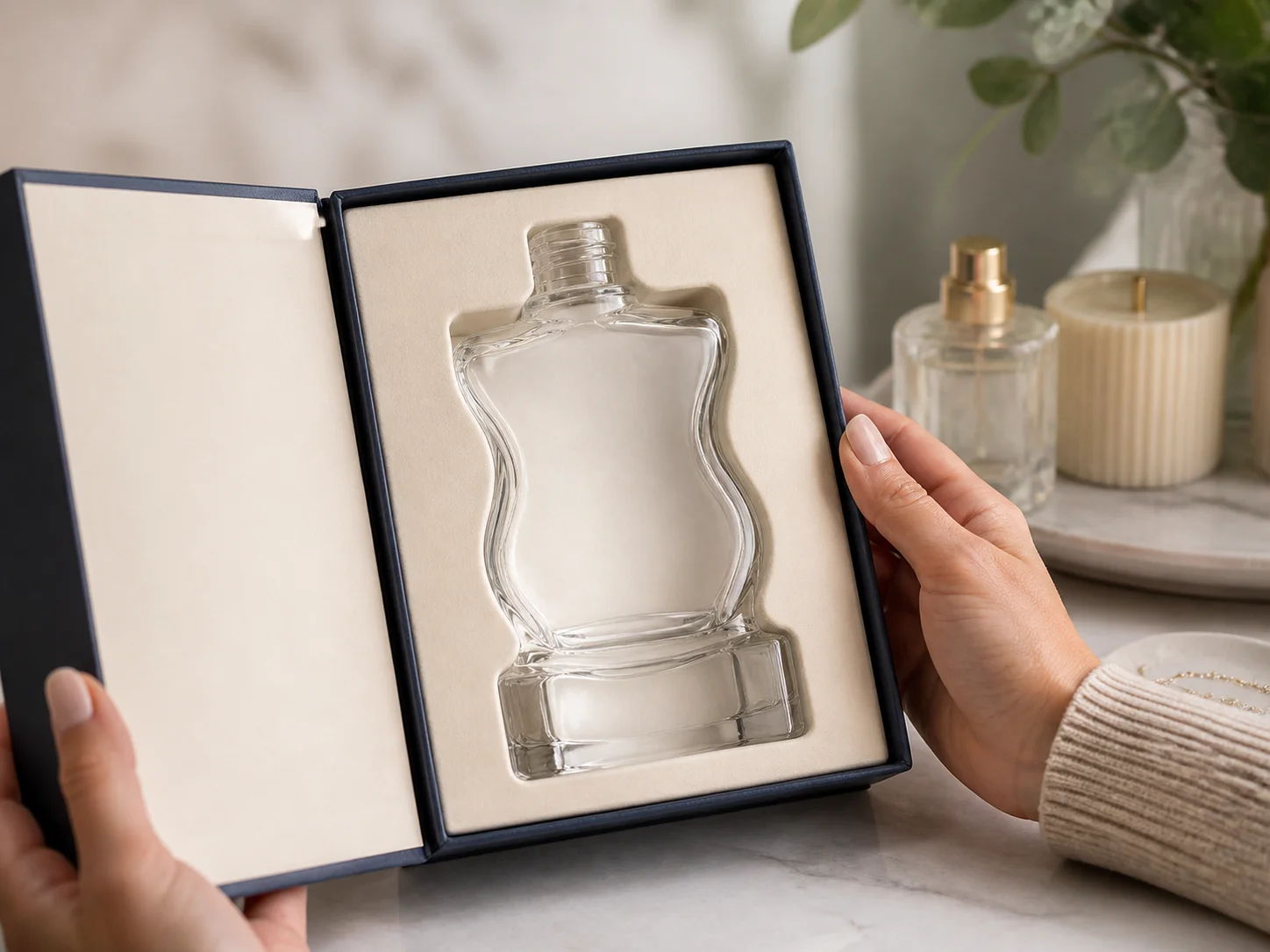
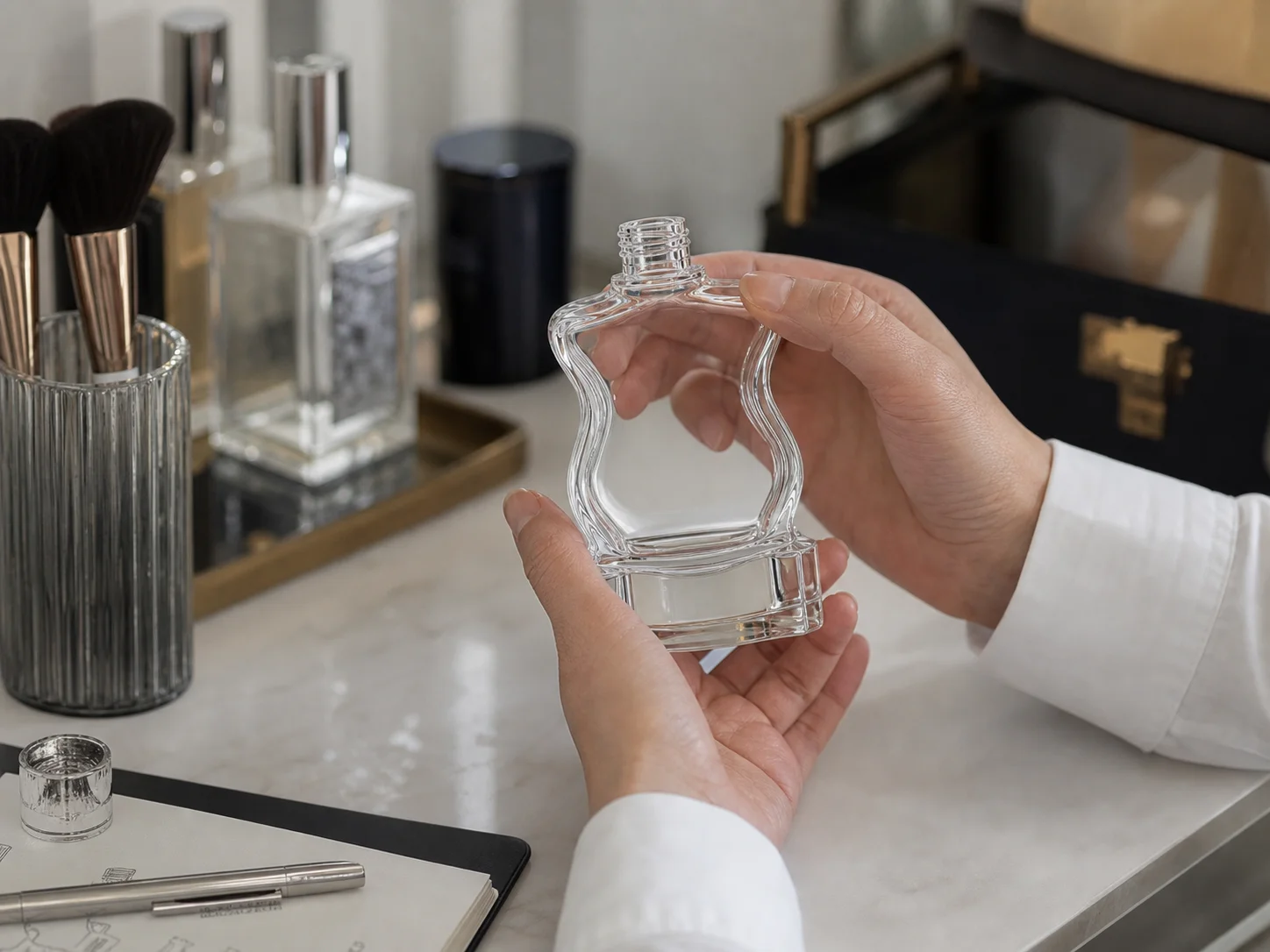
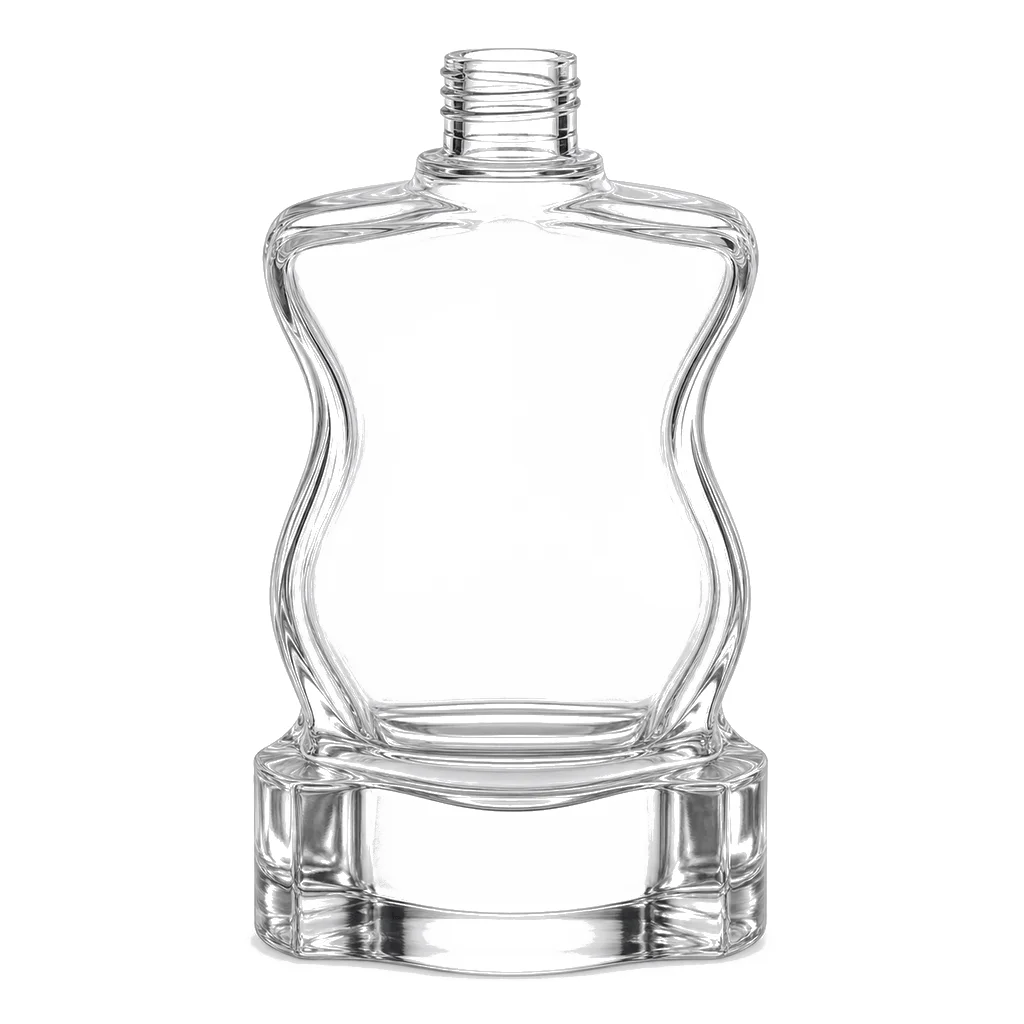
A heavy-based fragrance bottle puts a substantial block of solid glass under a shaped body. It gives weight in the hand, a lens that magnifies the juice and the light passing through it, and a stability no thin-walled bottle achieves. It also creates a thick section that has to be annealed properly, which is the manufacturing constraint the format lives with.
Weight is the fastest signal a bottle can send
A customer lifting a fragrance bottle forms a judgment before looking closely, and mass is most of it. A heavy base delivers that at a fraction of the cost of making the whole bottle thick, which is why the format is so widespread at the premium end and why so many designs concentrate glass at the foot.
The base works as a lens
Thick glass magnifies whatever is above it and refracts light entering from the side, so the juice appears deeper in color and the bottle catches light in a way a flat base cannot. Facets, domes or a punt cut into that block change the effect considerably, and it is worth judging with the bottle filled rather than empty.
Thick sections have to be annealed slowly
Glass cools from the outside in, and a heavy base develops internal stress if it is cooled too quickly. Annealing a thick-based bottle takes longer than a thin one and cannot be rushed, which affects lead time and cost. A poorly annealed heavy base is also the section most likely to fail under thermal or impact stress.
The internal cavity is smaller than the bottle suggests
Because so much glass sits below the fill, a substantial-looking bottle can hold surprisingly little. Customers increasingly compare stated volume against apparent size, so the capacity should be stated clearly and the design should not be built to imply more fragrance than it contains.
Freight and breakage both scale with the mass
A heavy bottle costs more to ship and does more damage to its neighbors when it breaks in a carton. Partition packing and individual boxing are usually required, and those costs belong in the format decision rather than appearing later as a packing surprise on the first full container.
A thick base takes longer to cool, and that lengthens the whole cycle
The heaviest section governs the annealing time for the entire bottle, so a substantial base slows production and raises unit cost well beyond the extra glass it contains. That is the real economics of weight in this format, and it is worth knowing before the section is drawn.