Dose sufficiency, transit survival & unit economics
Six constraints on a product designed to be given away.
A sample vial has to hold enough fragrance for a real wearing, survive a mail sorting machine, open easily for someone who has never seen one before, and cost almost nothing because millions are given away. Those requirements pull against each other, and every decision in the format is a compromise between them.
The fill has to allow a real wearing
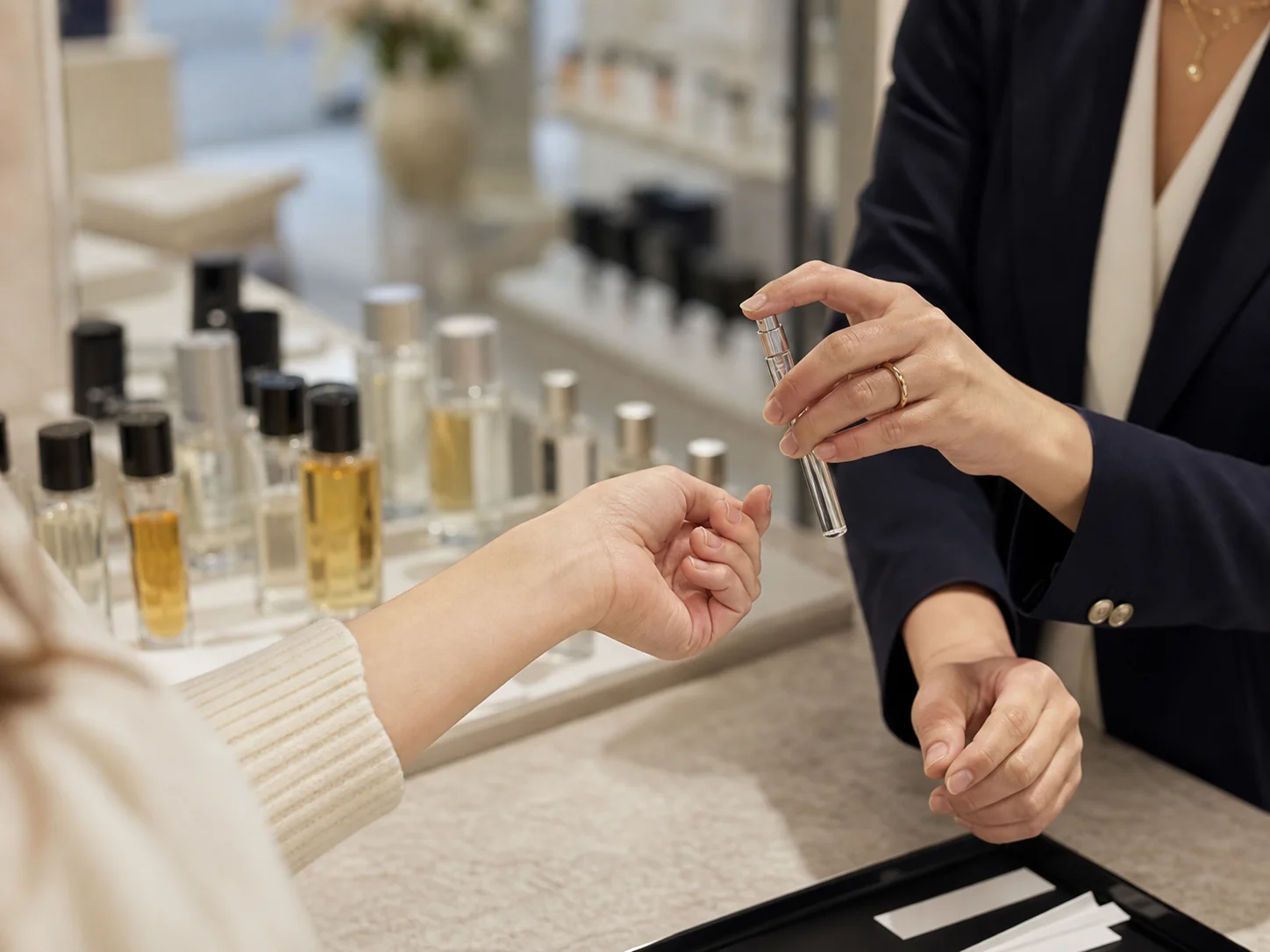
A sample that only permits one wrist dab tests the top notes and nothing else, and fragrance is bought on the dry-down. Around 1.5 to 2 mL allows two or three applications over a day or two, which is what it takes to judge a fragrance honestly. Undersizing the sample undermines the entire exercise.
Mail is the transit environment
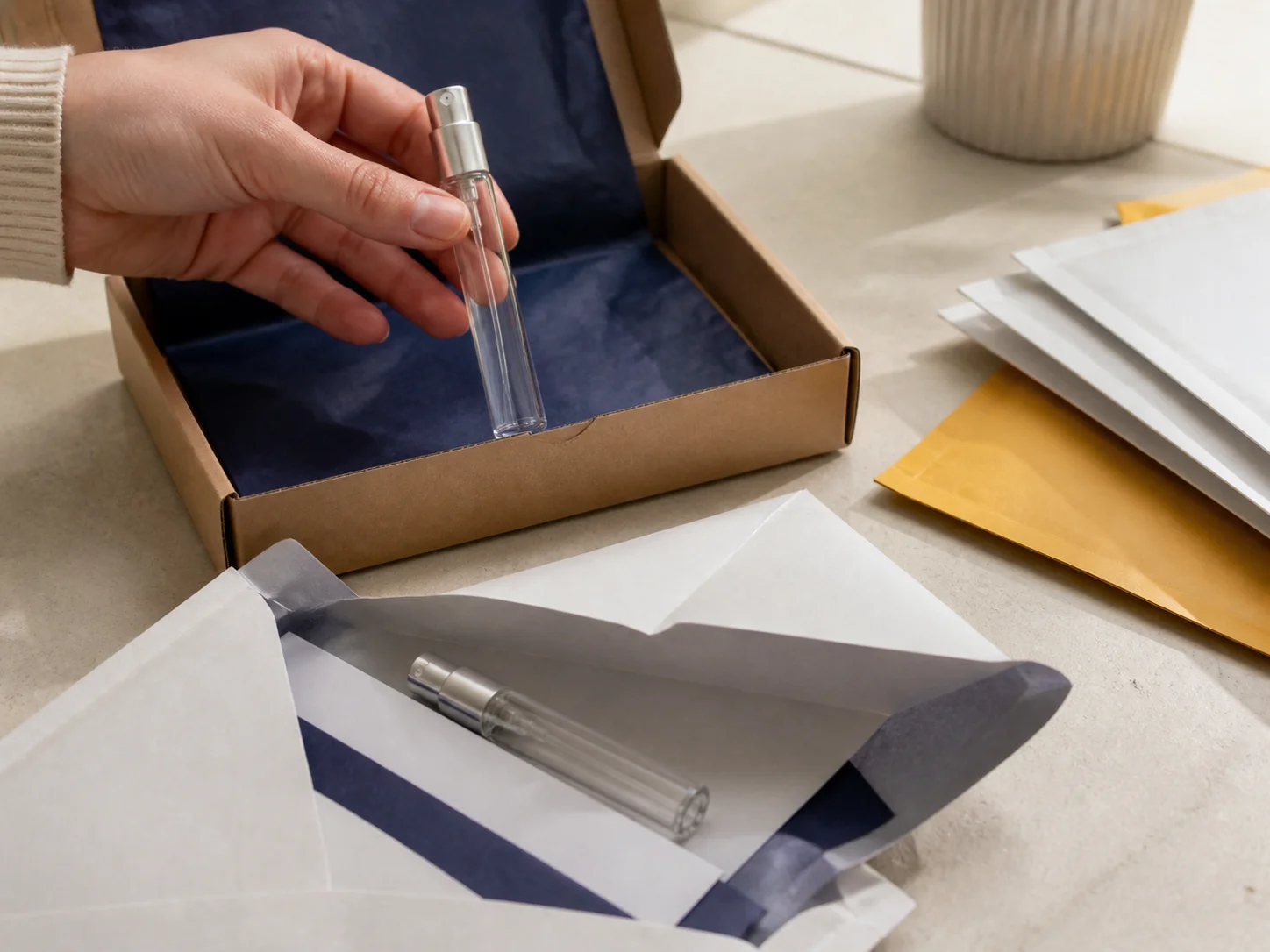
Samples travel in envelopes through automated sorting, which means rollers, drops and pressure. Glass has to be protected by a card sleeve or a blister, and the closure has to hold under a compression a boxed product never sees. Testing means posting samples to yourself rather than shaking a carton.
The customer has never used one before
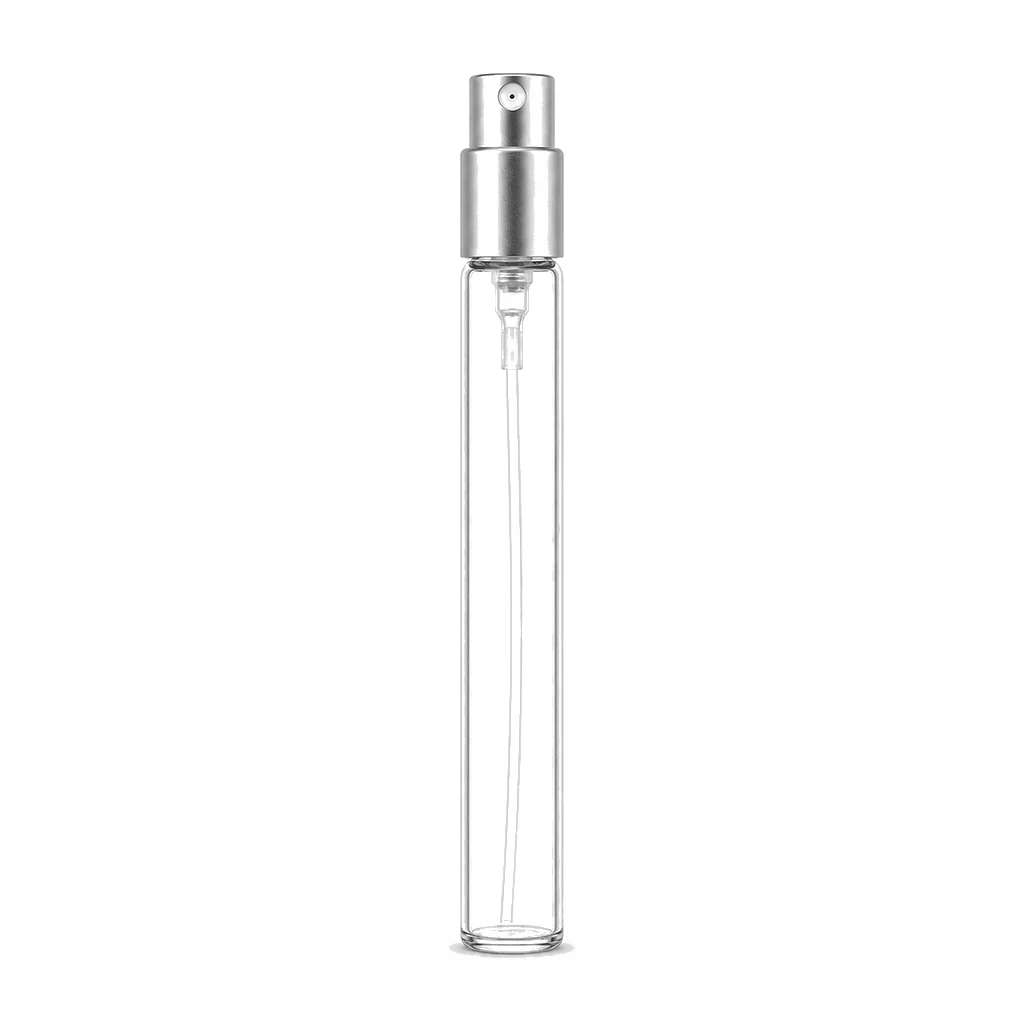
Sample vials with dab wands, crimped micro-sprayers and plug closures all open differently, and a recipient who cannot work it out simply throws it away. Whatever mechanism is chosen, the sleeve or card should say in a few words how to open it. That instruction is cheaper than the sample it protects.
Unit cost governs every other choice
Because samples are produced in millions and given away, a fraction of a cent per piece is a real budget line. That rules out much of the decoration and closure sophistication used elsewhere in a fragrance range, and it is why sample formats look so consistent across brands that otherwise share nothing.
It carries the brand at its least controlled moment
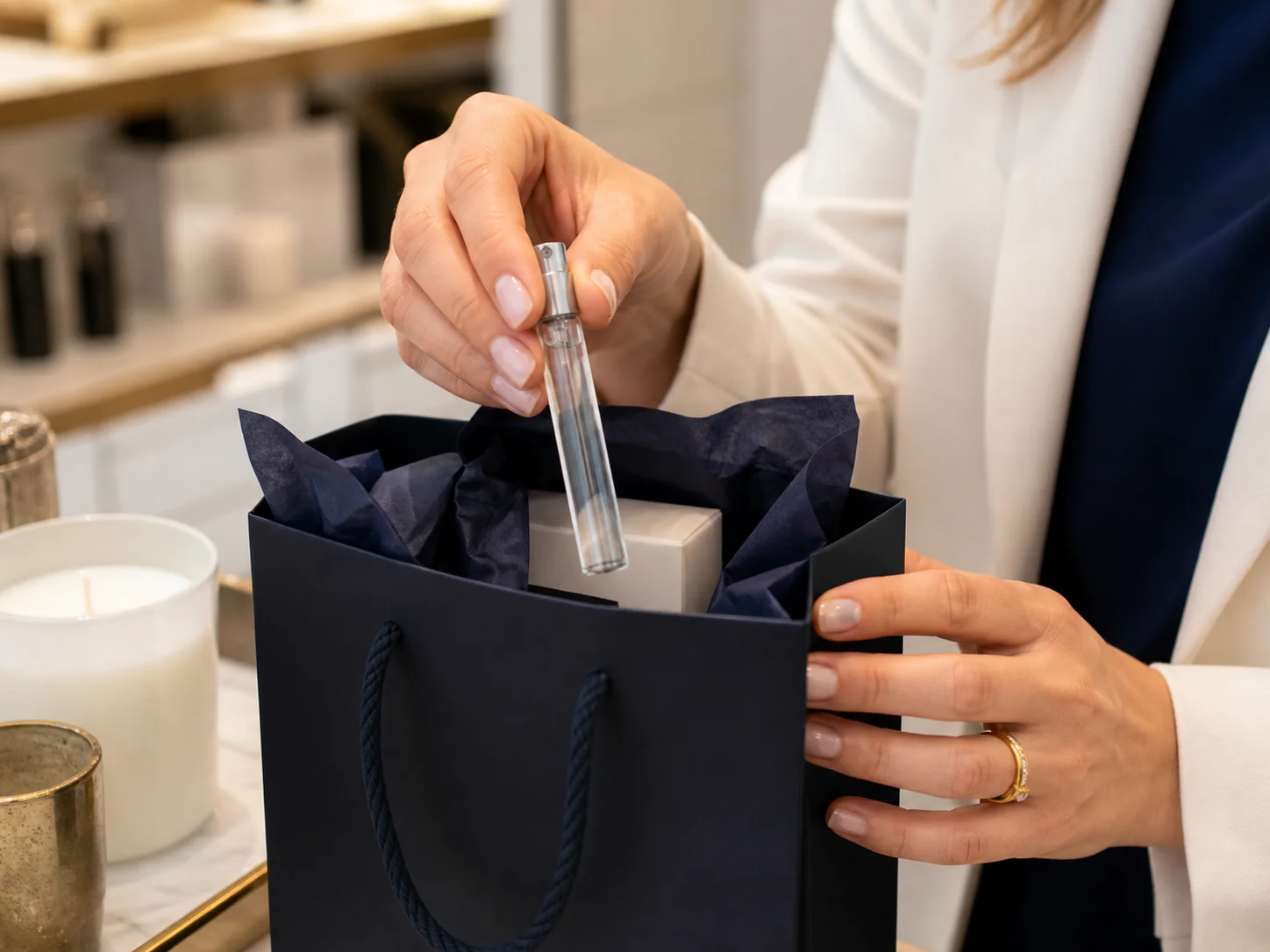
A sample is opened in a kitchen, a car or a shop doorway rather than on a counter, and it is often the first physical contact a customer has with the brand. A leaking, unopenable or clearly cheap sample undoes a great deal of advertising, which is the argument for spending slightly more than the cost model suggests.
It is opened once by someone who does not know how it works
A first-time user meets a tiny closure, often a plug or a dab applicator, with no instructions and no prior experience. Whether that opening is obvious and clean decides the entire impression the brand makes, and it is worth testing on people who have never seen one.