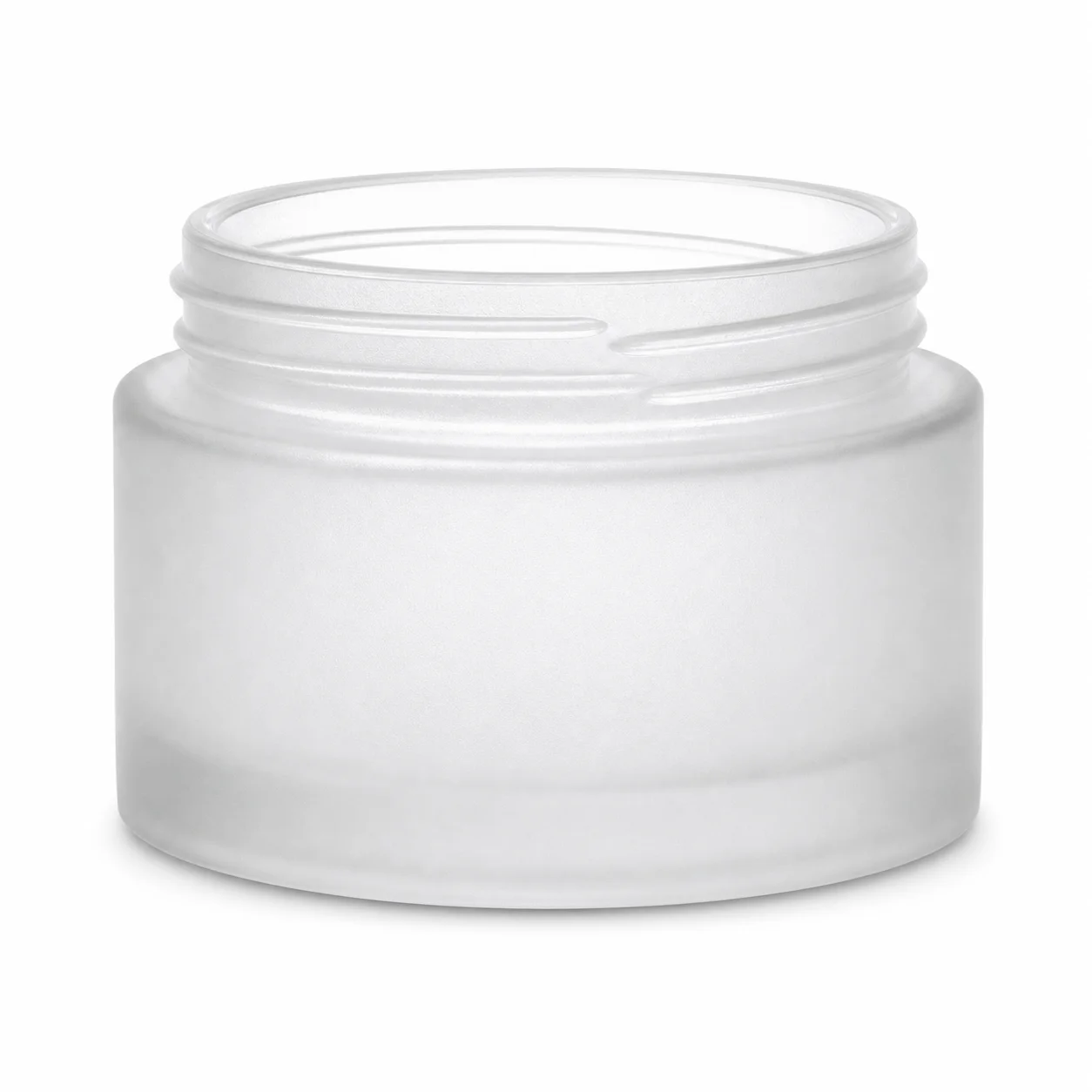
Squat jar with a matte velvet-look surface and a matching cap
Shown configuration · jar with cap / cream, liner and label not shown

Decorated skincare jars

Soft-touch Frosted Jar

A jar finished with a soft-touch coating over frosted glass, giving a velvet surface that customers notice immediately and that wears in a specific, predictable way.

Soft-touch over frostVelvet feel, marked easilyCoating durability is the spec
Stock status
In stock
Lead time
2–3 weeks
FOB price / pc
$0.35 - $0.70
MOQ
3,000 pcs

Final availability, dimensions, materials, assembled components and commercial terms are confirmed against the selected drawing and approved sample.

Touch is the differentiator

Nothing else in a range feels like it

Oil and grease mark it

Hand cream is its worst enemy

Coating life is finite

It ages visibly with handling

Soft-touch Frosted Jar profile

A finish sold on how it feels, in a category where hands are always greasy.

Tactile appeal, marking behavior & coating life

Five things to weigh before a range commits to soft touch.

A soft-touch coating gives glass a velvet, slightly grippy surface that reads as expensive the moment it is picked up. It is also the most easily marked finish in cosmetic packaging: oils, creams and repeated handling change its appearance, and the coating has a service life measured in months of use rather than years.

01

Touch is a genuine differentiator

Almost nothing else in a cosmetic range feels like a soft-touch surface, and customers register it before they have read the label. On a shelf where every competitor is smooth glass, that half-second of tactile difference is a real advantage and it is the entire reason the finish costs what it does.

02

Oil and cream mark it, and they are always present

The surface is microscopically textured, so oils from hands and any product that reaches it soak in and darken it. In a category where the customer's fingers have just been in a cream, that is not an edge case. Marking is inevitable, and the useful question is how quickly it becomes visible rather than whether it does.

03

The coating has a service life

Soft-touch layers wear at the points that are handled most — the rim of a cap, the widest part of a jar — and eventually thin to reveal the surface below. That is a coating property rather than a defect, and a program should know roughly how long it takes so that it matches the product's own life rather than outlasting or undershooting it.

04

Frost underneath changes the recovery

Applying soft touch over frosted rather than clear glass means that where the coating eventually wears, the surface beneath is matte rather than glossy, so the transition is far less obvious. It is a small specification decision that materially changes how a jar looks at the end of its life.

05

Print and labels behave differently on it

A soft-touch surface has low surface energy, so adhesives and inks bond less readily than on plain glass. Labels lift at the edges and printed decoration can be scratched off if the stack is not right. Any decoration over soft touch is tested on coated samples rather than assumed from a plain-glass trial.

06

Soft-touch coatings can turn tacky with age and with certain oils

The polymer that gives the surface its feel is the same one that softens under prolonged contact with some emollients and in warm humid storage. Accelerated storage on the filled pack, not on empty samples, is what reveals whether that will happen within the shelf life.
Application guide

A jar is judged by the hand before the eye.

Soft-touch surfaces are chosen for how they feel when someone lifts the jar off a shelf and unscrews the lid. That tactile promise has to survive daily handling with damp hands. These are development directions confirmed on approved samples.

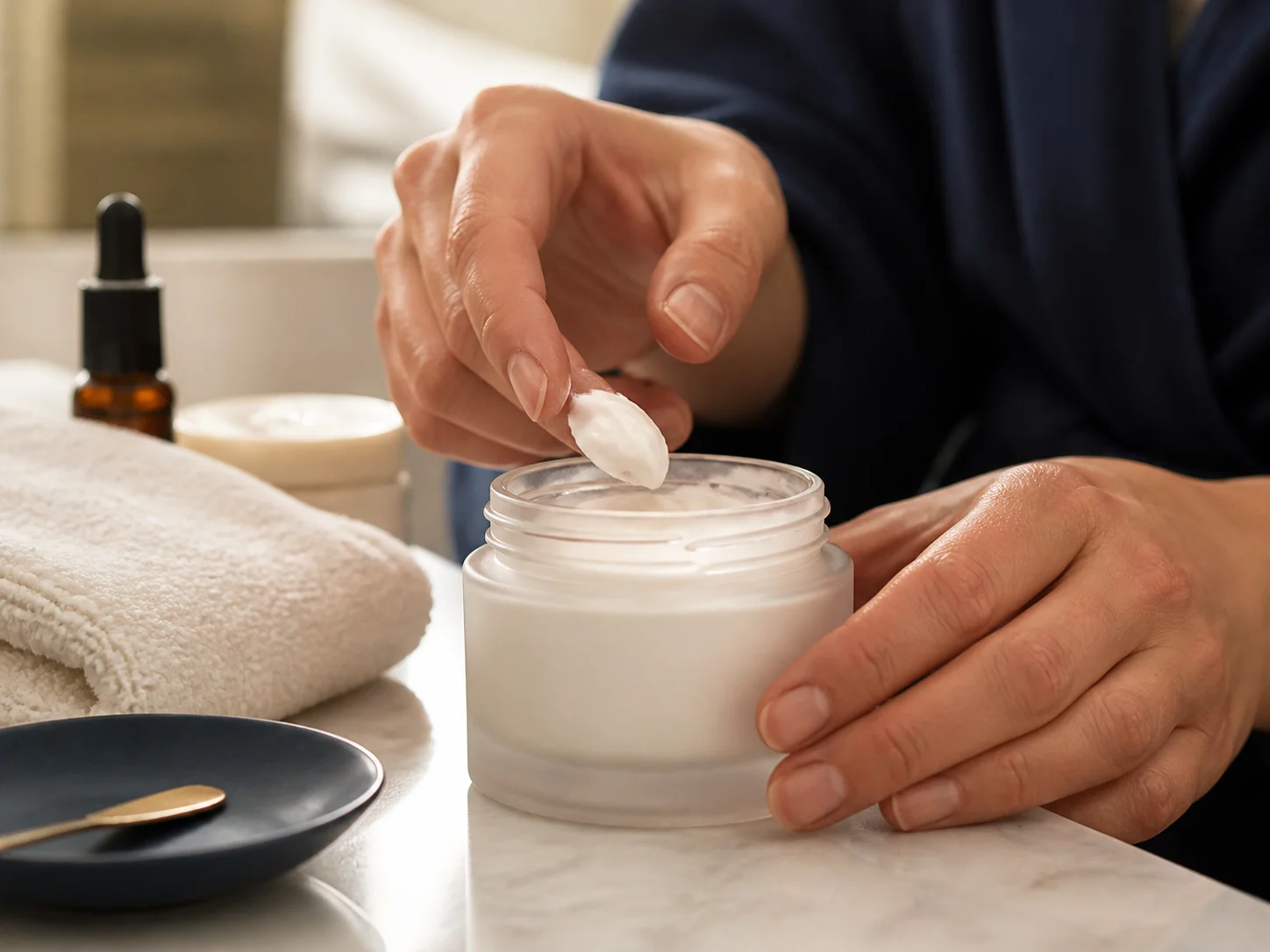
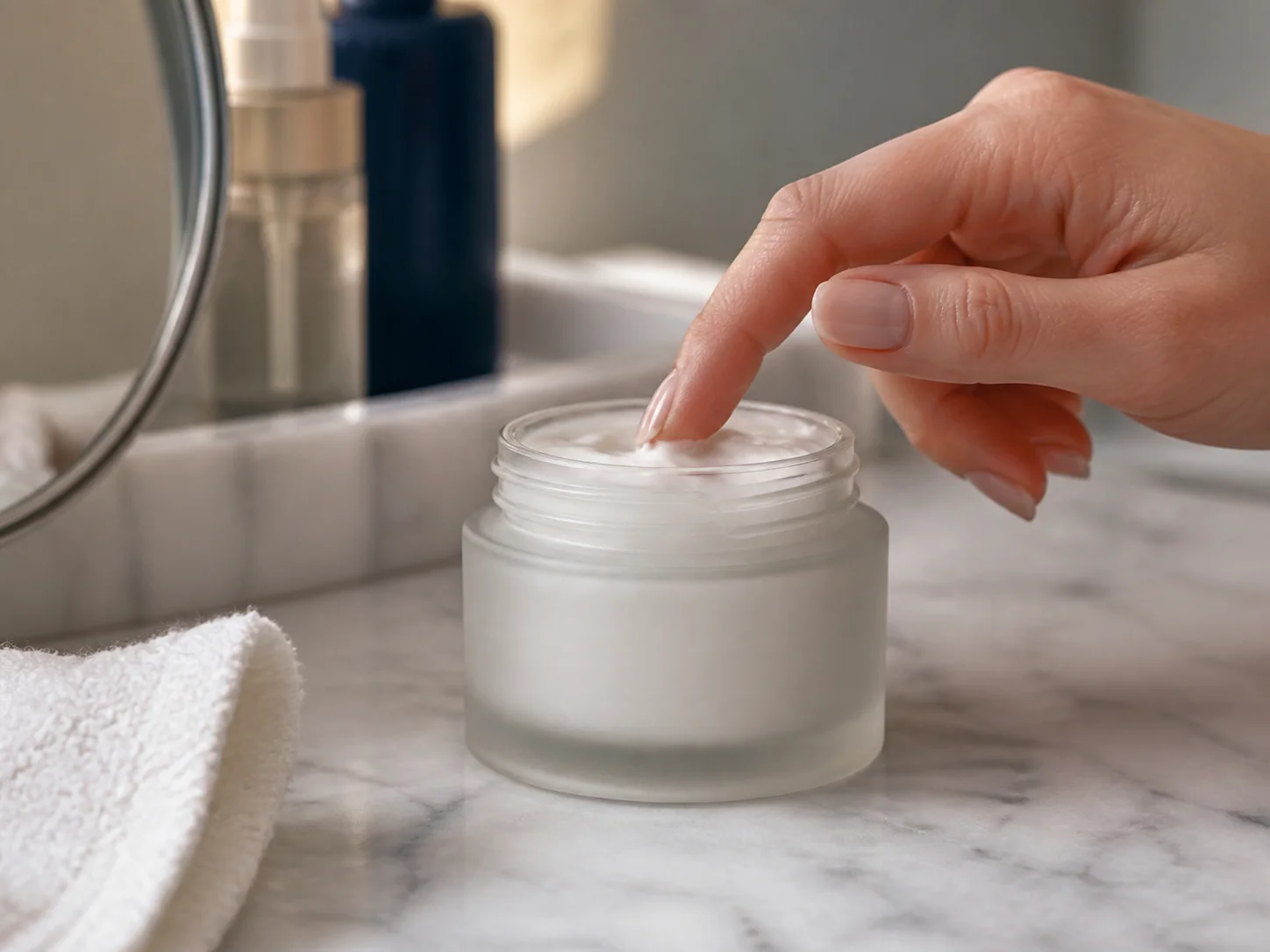
Soft-touch Frosted Jar used for rich creams & night treatments in a face care setting

Face care

Rich creams & night treatments

For thicker creams a customer scoops with a fingertip or spatula, where a wide mouth is the reason to choose a jar over a tube. Opening happens every night with damp hands, so lid grip, how far the thread turns and whether the rim stays clean matter more than any shelf consideration.

  • Check lid grip with damp hands
  • Count the turns to open
  • Confirm the rim wipes clean
Soft-touch Frosted Jar used for luxury skincare ranges in a premium positioning setting

Premium positioning

Luxury skincare ranges

Soft-touch coatings sit between the customer and the glass, and they are the first thing noticed at the counter. The same coating shows fingerprints, cosmetic oils and cabinet scuffs more readily than gloss, so durability testing under realistic bathroom conditions decides whether the premium impression lasts past week one.

  • Test the coating against cosmetic oils
  • Check scuffing from cabinet handling
  • Confirm color consistency between runs
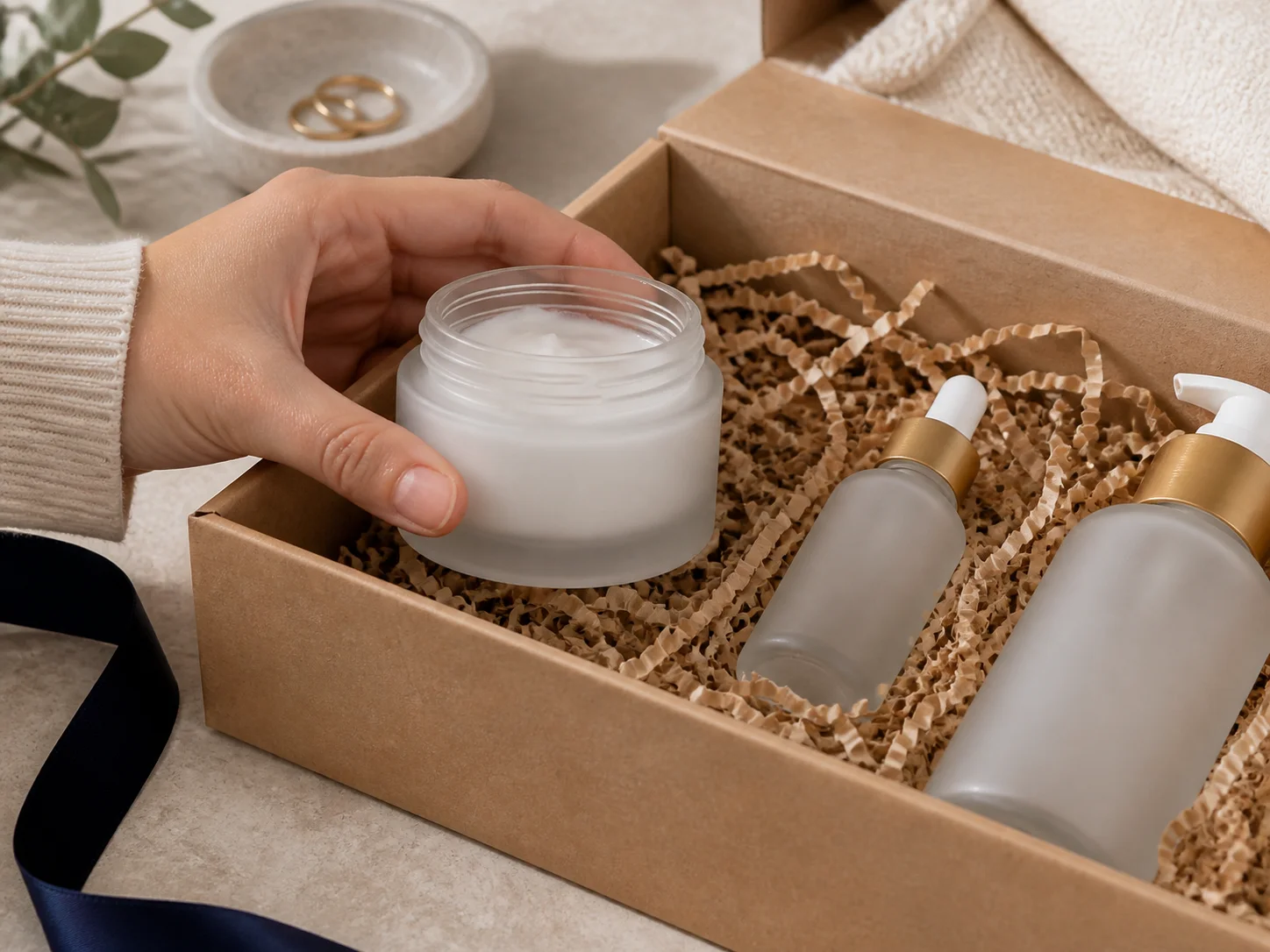
Soft-touch Frosted Jar used for ritual sets & seasonal boxes in a gifting setting

Gifting

Ritual sets & seasonal boxes

Cream jars anchor gift sets where a heavier piece sits alongside lighter bottles and the ensemble is unwrapped in one go. A coated jar rubbing against its insert marks quickly, so the carton has to hold each piece apart, and the finish should match across every format in the set.

  • Keep coated surfaces off the insert
  • Match finish across the whole set
  • Review the unboxing sequence

Formula compatibility, surface specification, closure fit, stability and distribution are confirmed for the selected program.

Common questions

Soft-touch Frosted Jar questions

A finish bought for how it feels, used by hands covered in cream.

Is soft touch worth the premium?

For differentiation, often. Almost nothing else in a cosmetic range feels like it, and customers register the difference before reading the label. On a shelf of smooth glass competitors, that half-second of tactile contrast is a genuine advantage — and it is the entire justification for what the finish costs.

How long does the coating last?

Months of handling rather than years, wearing first at the cap rim and the widest part of the jar. That is a coating property rather than a defect. A program should know roughly how long so the finish matches the product's own life instead of failing early or outlasting a jar nobody keeps.

Why apply it over frosted glass?

Because of what happens when it wears. Over frost, the surface revealed as the coating thins is matte rather than glossy, so the transition is far less noticeable. It is a small specification decision that materially changes how the jar looks at the end of its life, and it costs nothing to make.

Can a soft-touch coating go tacky?

It can, with age and with certain oils. The finish that makes the jar feel expensive is a polymer layer, and prolonged contact with some formulations or simply time can leave it sticky rather than soft. Confirm the coating against the actual product over the intended shelf life.

Next step

Send us the Soft-touch Frosted Jar brief.

Tell us the product, fill volume, closure preference and destination market. We will come back with the matching drawings, available configurations and a sample plan before anything is quoted.

  • 01Send the briefProduct, volume, closure and market
  • 02Get the optionsMatching drawings and configurations
  • 03Approve the sampleConfirm the pack before production