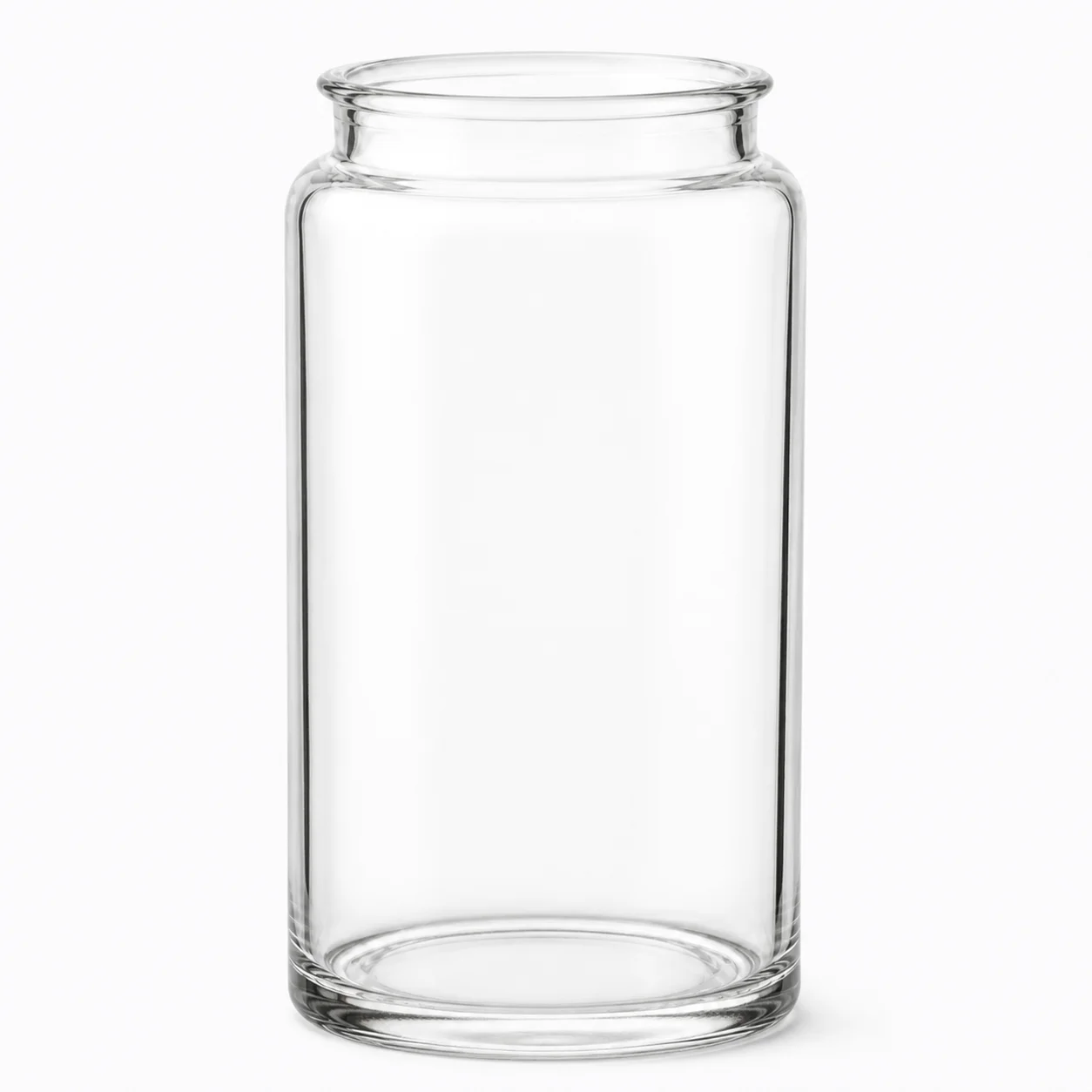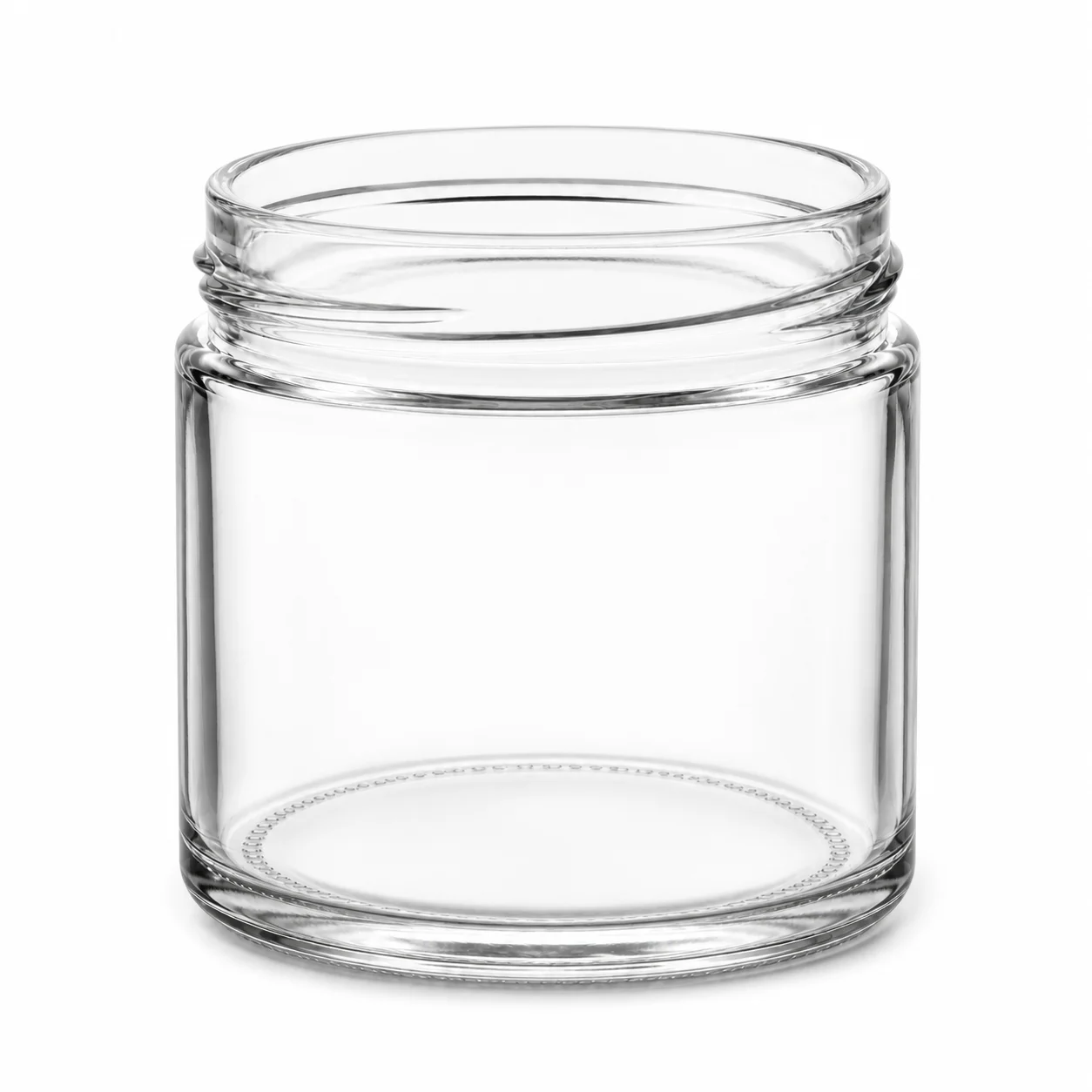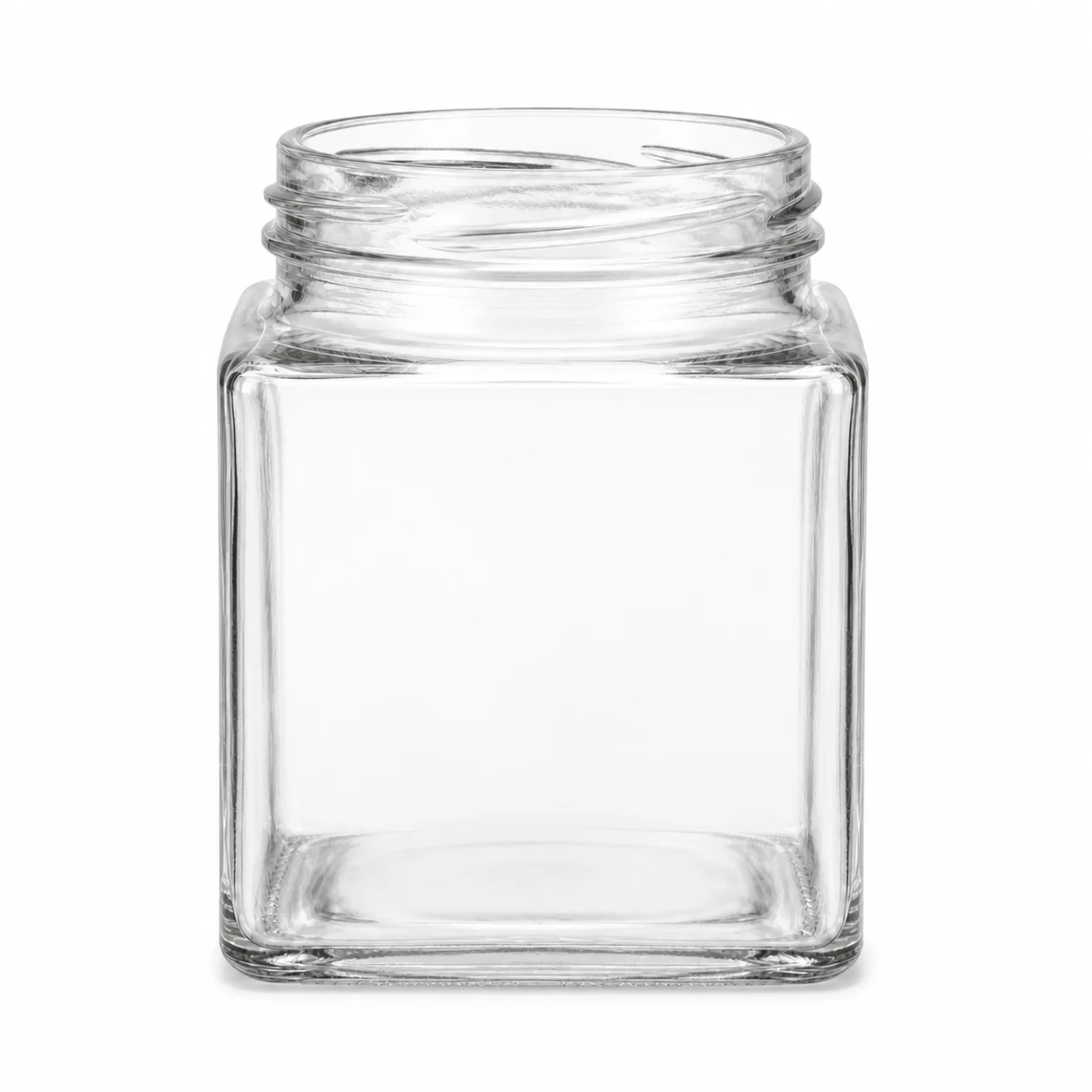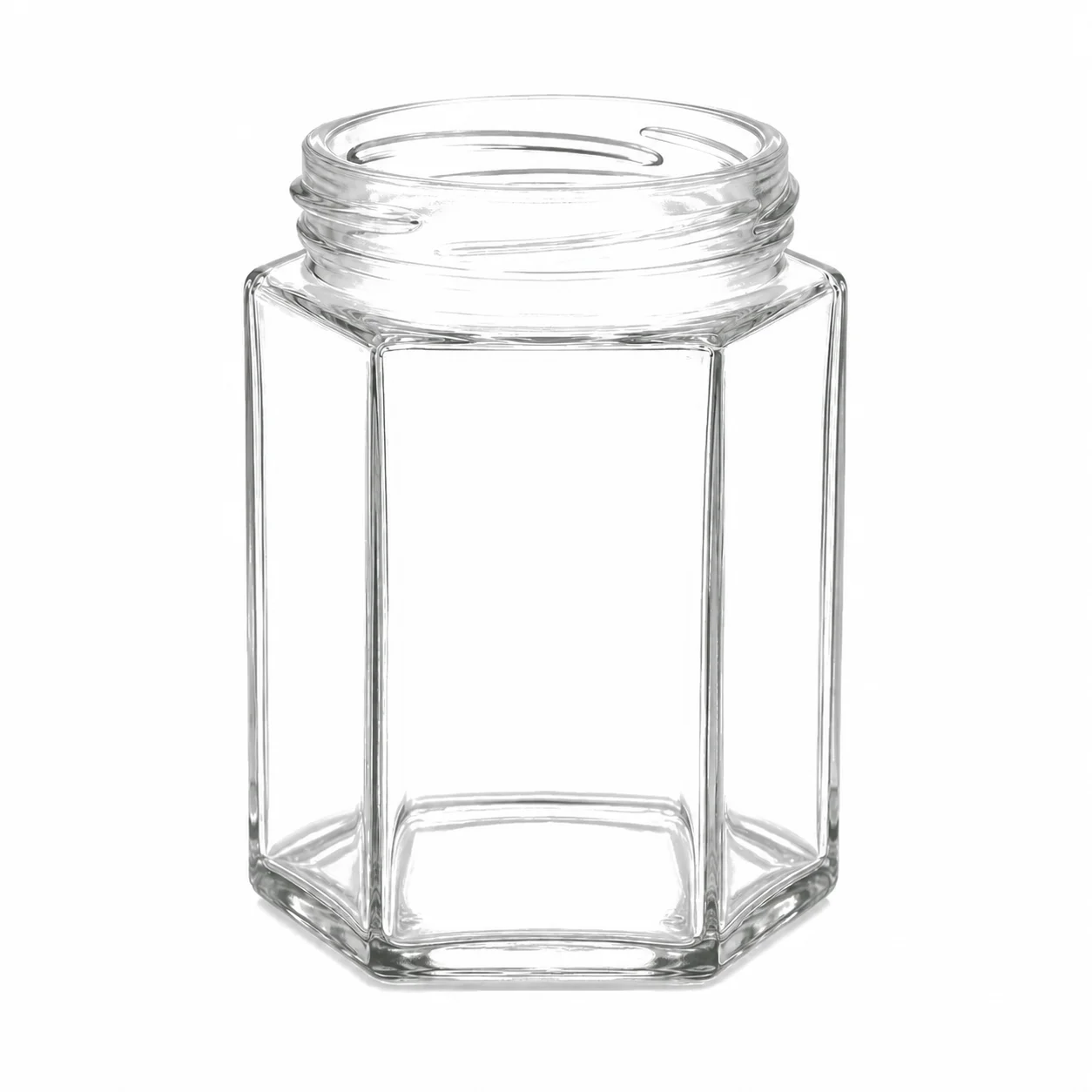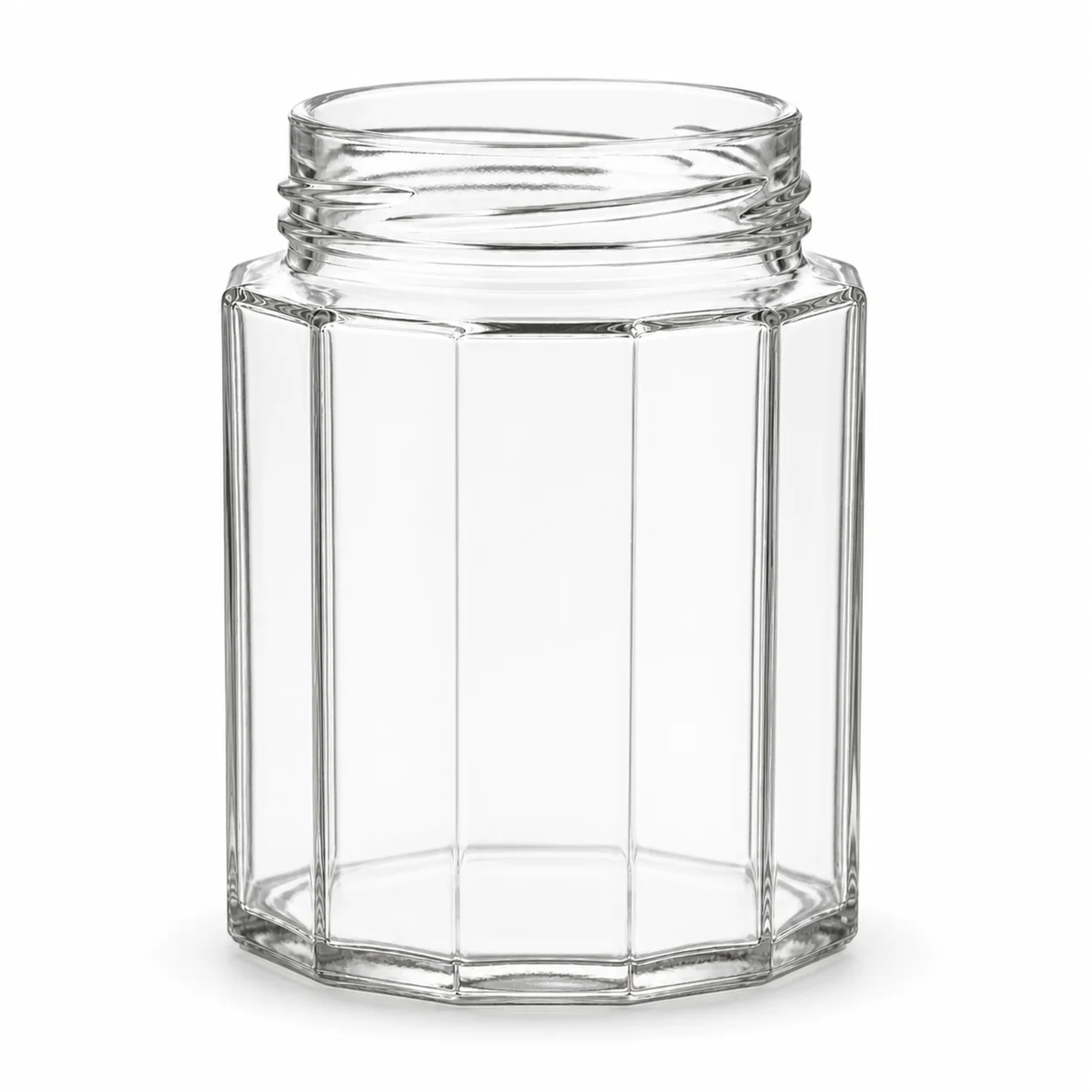
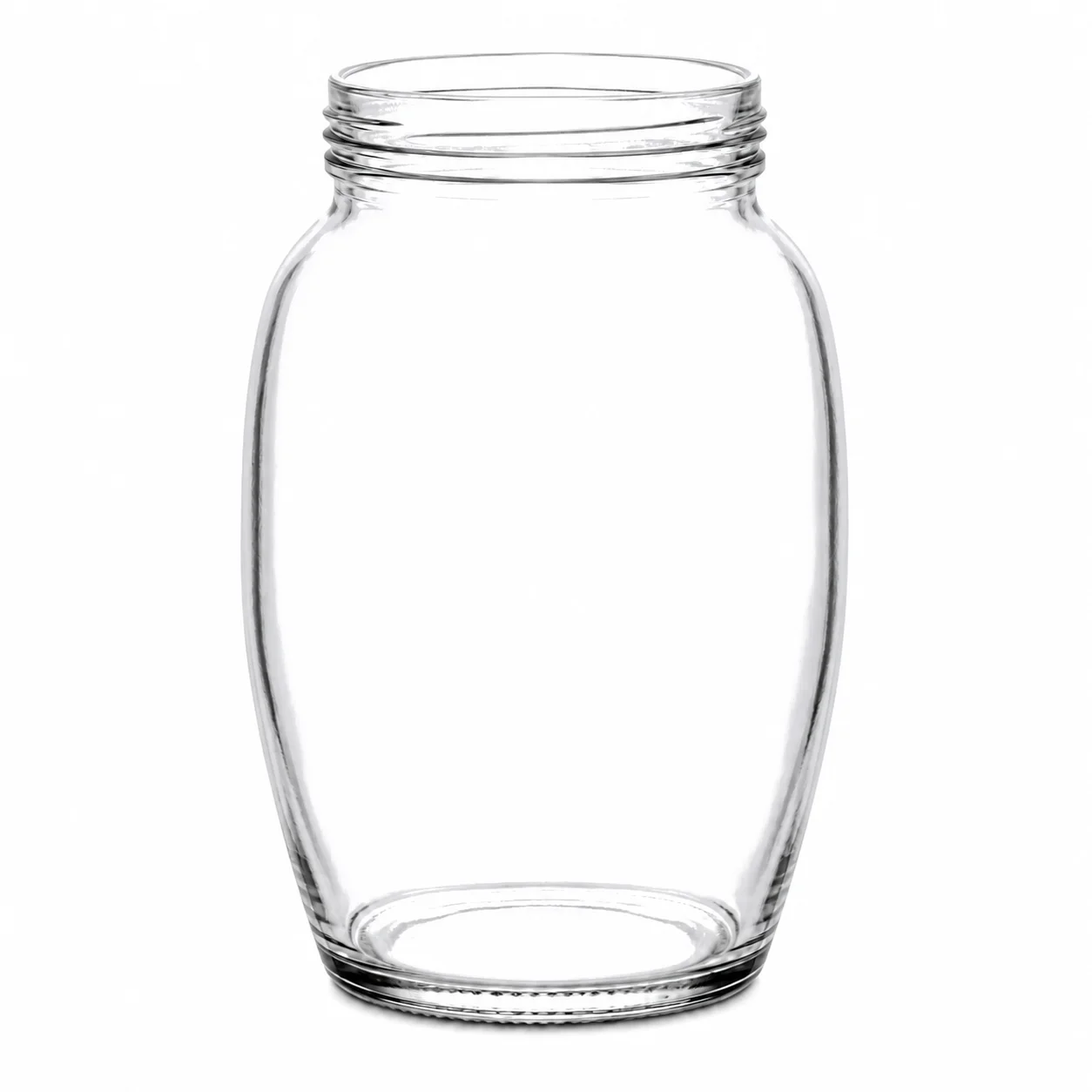
Clear glass honey jar shown empty and without its selected closure
Shown configuration · clear glass jar shown empty and without closure / selected cap and liner confirmed separately

Viscous food & honey packaging

Honey Jar

A classic one-pound honey jar with approximately 12 fl oz of internal volume, clear curved shoulders and a 63-400 finish for a matched screw closure.

16 oz honey weight63-400 finishClear product view
Stock status
In stock
Lead time
2–3 weeks
FOB price / pc
$0.40 - $0.65
MOQ
3,000 pcs

Final availability, dimensions, materials, assembled components and commercial terms are confirmed against the selected drawing and approved sample.

Honey-specific sizing

One-pound claim is based on net weight, not fluid volume

Visible provenance

Color and clarity stay central to the presentation

Curved grip profile

Rounded shoulders soften the pack and aid handling

Honey Jar profile

A honey jar should be specified by weight, flow and access.

Net weight, flow & shelf presentation

What makes a classic one-pound honey pack work.

Unlike most food jars, the familiar one-pound honey format is named for the net weight of honey it carries, not for a 16 fl oz liquid volume. The reference body holds roughly 12 fl oz, using honey's greater density to deliver a compact 454 g retail pack.

01

Honey weight is not fluid capacity

A jar marketed for 16 oz of honey typically contains about 12 US fluid ounces because honey is denser than water. Filling targets should therefore be set on calibrated net weight and verified fill height, never by assuming the product will occupy the same volume as a 16 fl oz beverage.

02

The curved body signals the category

Rounded shoulders and a gently tapered lower wall distinguish the classic honey jar from a general-purpose straight cylinder. The form feels familiar at farm shops and markets while leaving a central panel for varietal, apiary and origin information.

03

Viscosity changes with temperature

Warm honey moves and fills more readily than cool honey, while naturally crystallized product behaves more like a spread. Mouth access, filling speed and consumer serving method should be reviewed across the realistic temperature and texture range for the specific honey.

04

Clear glass carries the provenance

Pale acacia, amber wildflower and darker forest honeys can look materially different before a label is read. Keeping a generous clear window helps customers compare color and clarity, while batch details explain the floral source and natural variation.

05

A 63 mm finish balances access and control

The opening is broad enough for many spoons and honey dippers without making the neck dominate the silhouette. A compatible 63-400 cap can be metal or plastic, but its liner and application setting should suit the product contact and desired opening feel.

06

Plan labels around the shoulders

The body is not a full-height straight panel: both shoulder and heel begin to curve. A front-and-back label pair often preserves more visibility than a tall wrap, and physical samples are essential for checking edge lift on the changing radius.
Application guide

Use a jar where honey is meant to be seen and served.

Clear glass and a considered opening suit honey programs when product flow, texture, label direction and closure validation are treated as linked decisions. The scenes below are starting points, not process approvals.

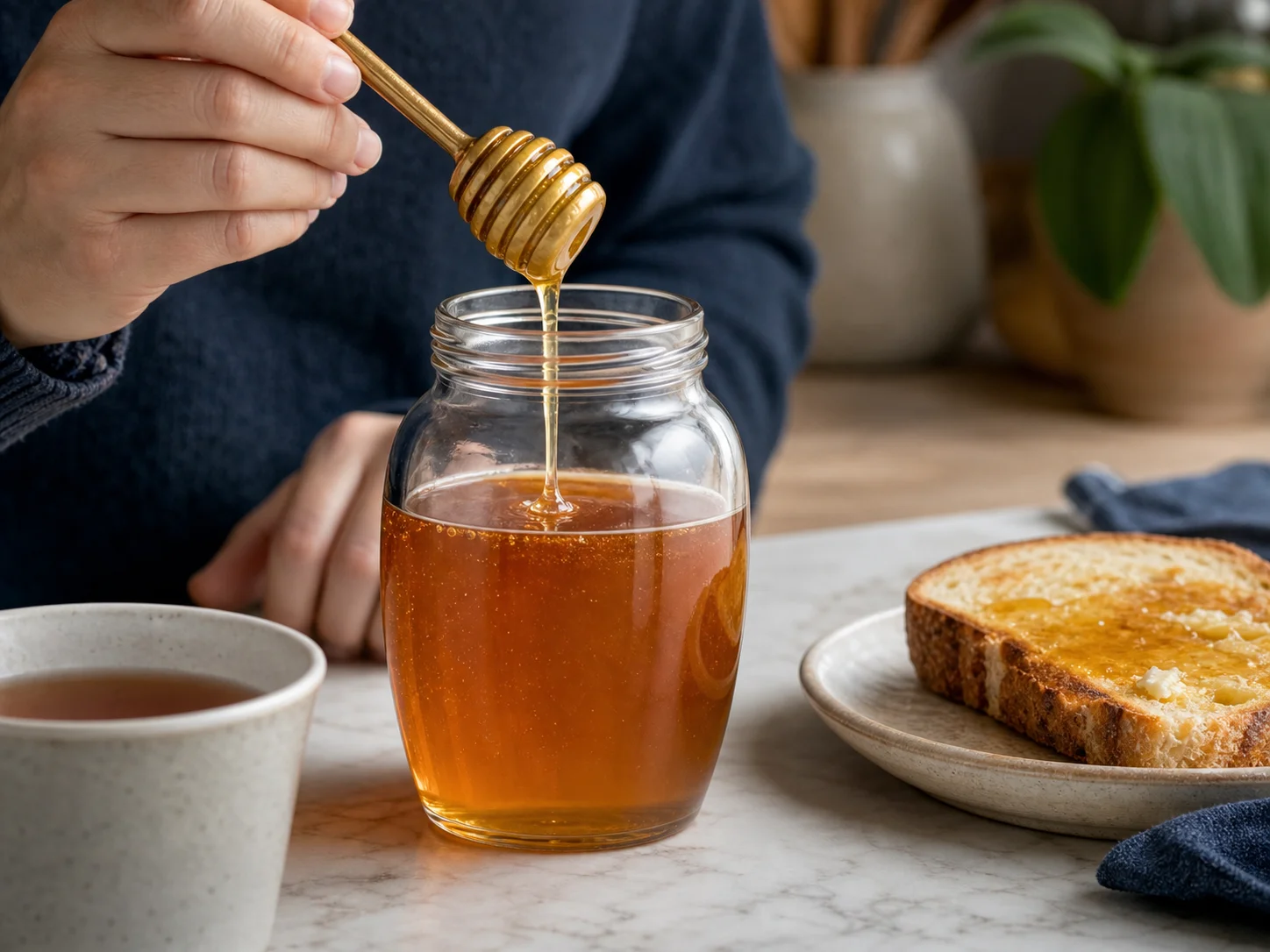
Honey Jar used for everyday table honey in a core retail setting

Core retail

Everyday table honey

For retail honey a household keeps in a cupboard and returns to most mornings, spooning it onto toast or into tea. The selected mouth has to support a spoon, a dipper or whatever serving method the brand intends, while the clear body keeps the color and the remaining level visible at a glance.

  • Match access to serving ritual
  • Review cap and liner with the fill
  • Keep label information readable
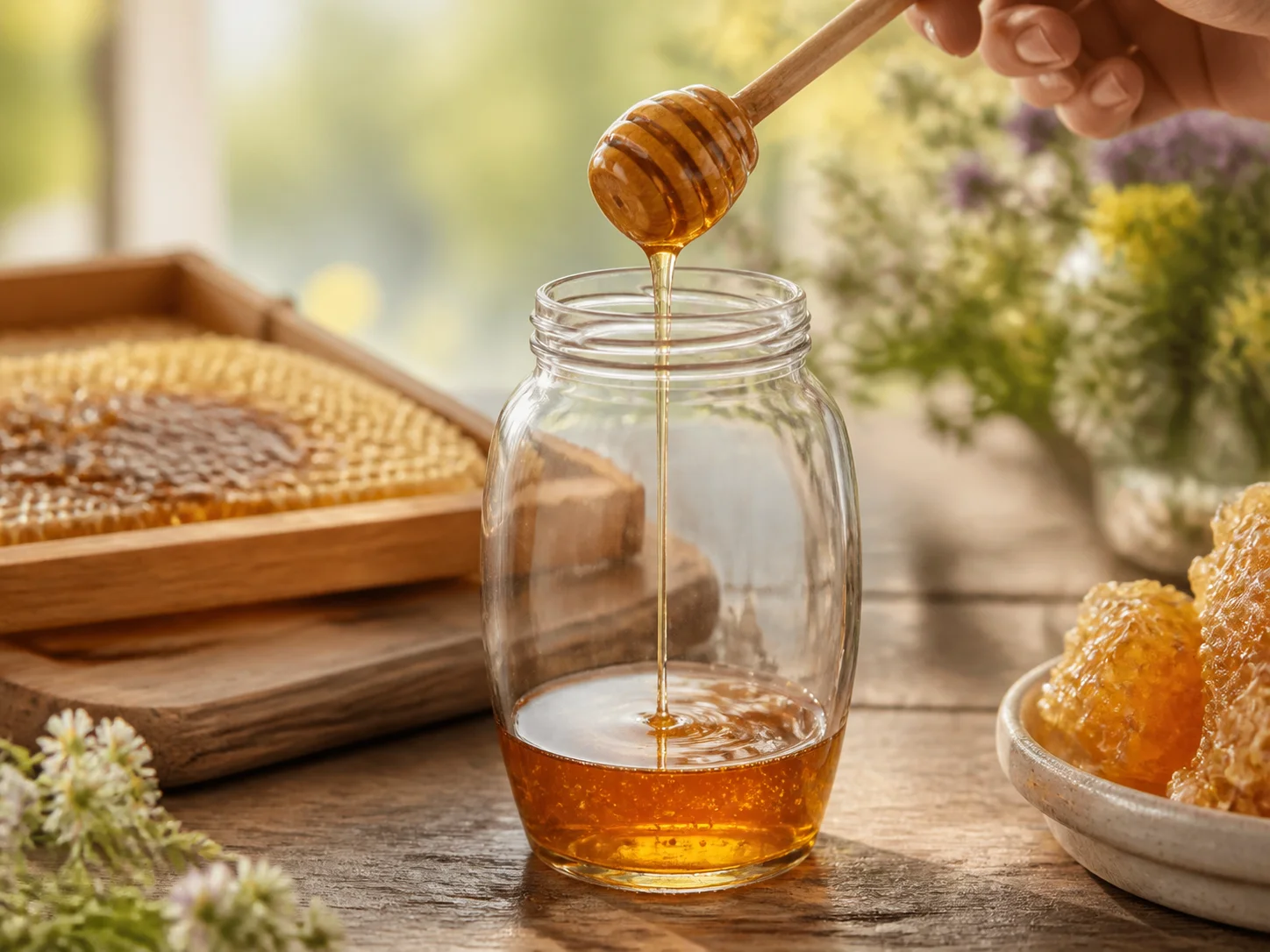
Honey Jar used for varietal, raw & local honey in a origin-led range setting

Origin-led range

Varietal, raw & local honey

For honeys sold on floral source and harvest, where color varies genuinely between batches and that variation is evidence rather than inconsistency. The jar, the label and the secondary packaging together have to preserve a clear hierarchy so origin reads first, without letting unverified storage claims become the message on the pack.

  • Reserve a clear viewing area
  • Plan origin and batch information
  • Protect decorated jars in transit
Honey Jar used for gift packs & farm-shop selections in a premium presentation setting

Premium presentation

Gift packs & farm-shop selections

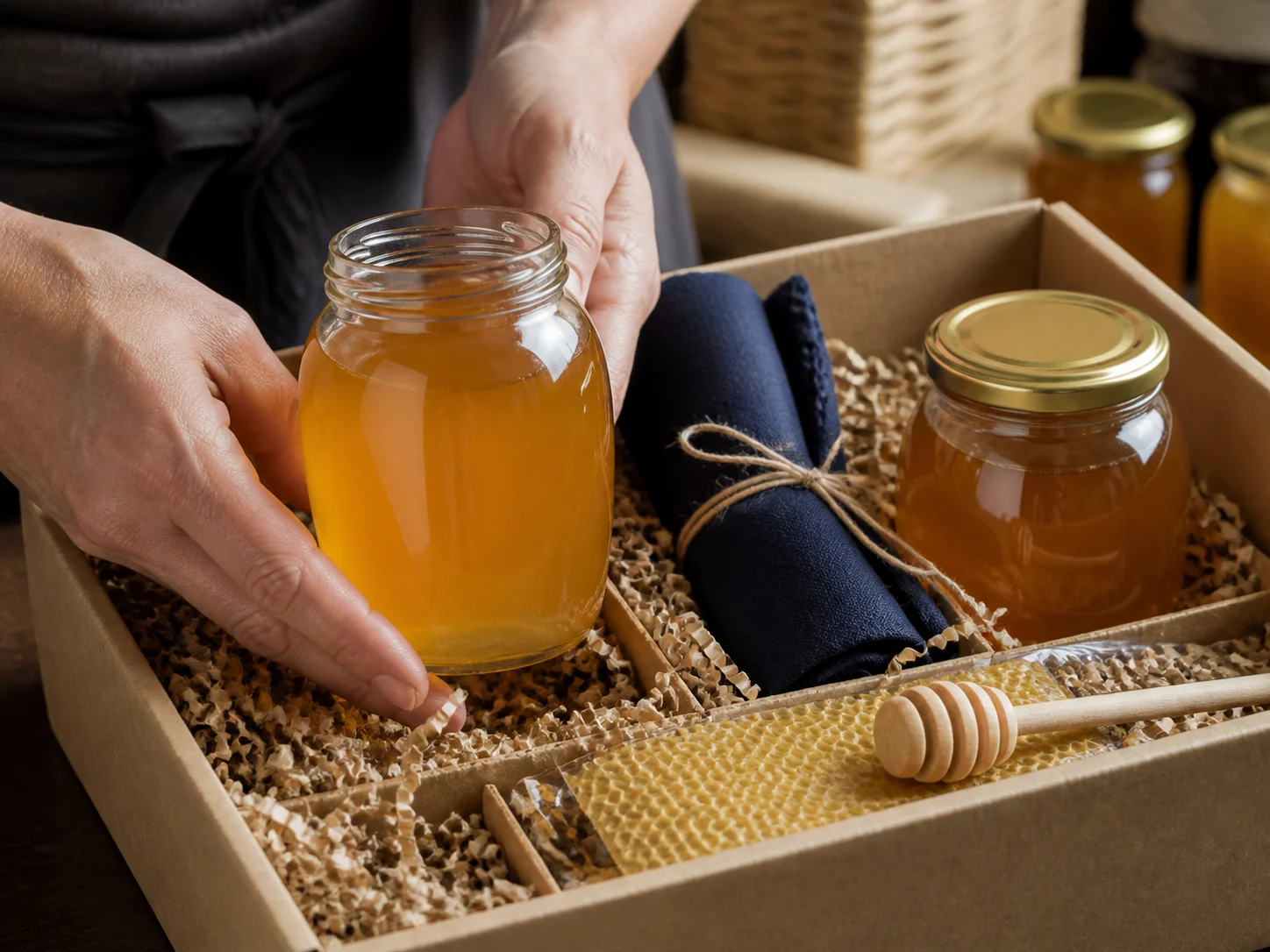
For curated sets and gift honey where the jar itself is part of what the recipient is given and is frequently kept afterward. Closure finish, label material, carton construction and handling protection all have to be planned around the final filled jar rather than around an empty sample on a desk.

  • Coordinate cap and label
  • Trial the carton with filled jars
  • Confirm shelf-facing orientation

Set net weight by scale and verify the resulting fill height with the actual honey; floral source, moisture content and temperature can change density and flow between batches.

Honey Jar FAQ

Practical questions about the one-pound honey format.

Answers for apiaries and honey brands evaluating the BGP-FS-3110 reference body, 63-400 closure and weight-based fill.

Why does a one-pound honey jar hold only about 12 fl oz?

Sixteen ounces describes the net weight of honey. Because honey is substantially denser than water, 454 g occupies roughly 355 mL rather than the 473 mL associated with 16 US fluid ounces. The final fill level should always be established with the actual batch.

Is the mouth suitable for crystallized or creamed honey?

The 63 mm opening supports spoon or dipper access for many set and creamed honeys. Test the actual texture at the temperature it will be stored at: creamed honey stiffens enough by 15 °C to change whether a dipper reaches the base and whether the filling method still works.

How should the label handle natural color variation?

Keep part of the glass unobstructed and use the label to explain floral source, harvest or batch. This lets genuine color variation support provenance instead of being mistaken for an inconsistent product.

Why is a full wrap label risky on this body?

Because the body is not a straight panel. Both the shoulder and the heel begin to curve, so a tall wrap has to stay down over a changing radius and lifts at the edges first. A front-and-back pair usually preserves more of the clear window, and either route should be proved on filled glass.

Next step

Send us the Honey Jar brief.

Tell us the product, fill volume, closure preference and destination market. We will come back with the matching drawings, available configurations and a sample plan before anything is quoted.

  • 01Send the briefProduct, volume, closure and market
  • 02Get the optionsMatching drawings and configurations
  • 03Approve the sampleConfirm the pack before production