
Flow, closure & hot-sauce merchandising
Why a narrow 5 oz bottle remains the benchmark for table hot sauce.
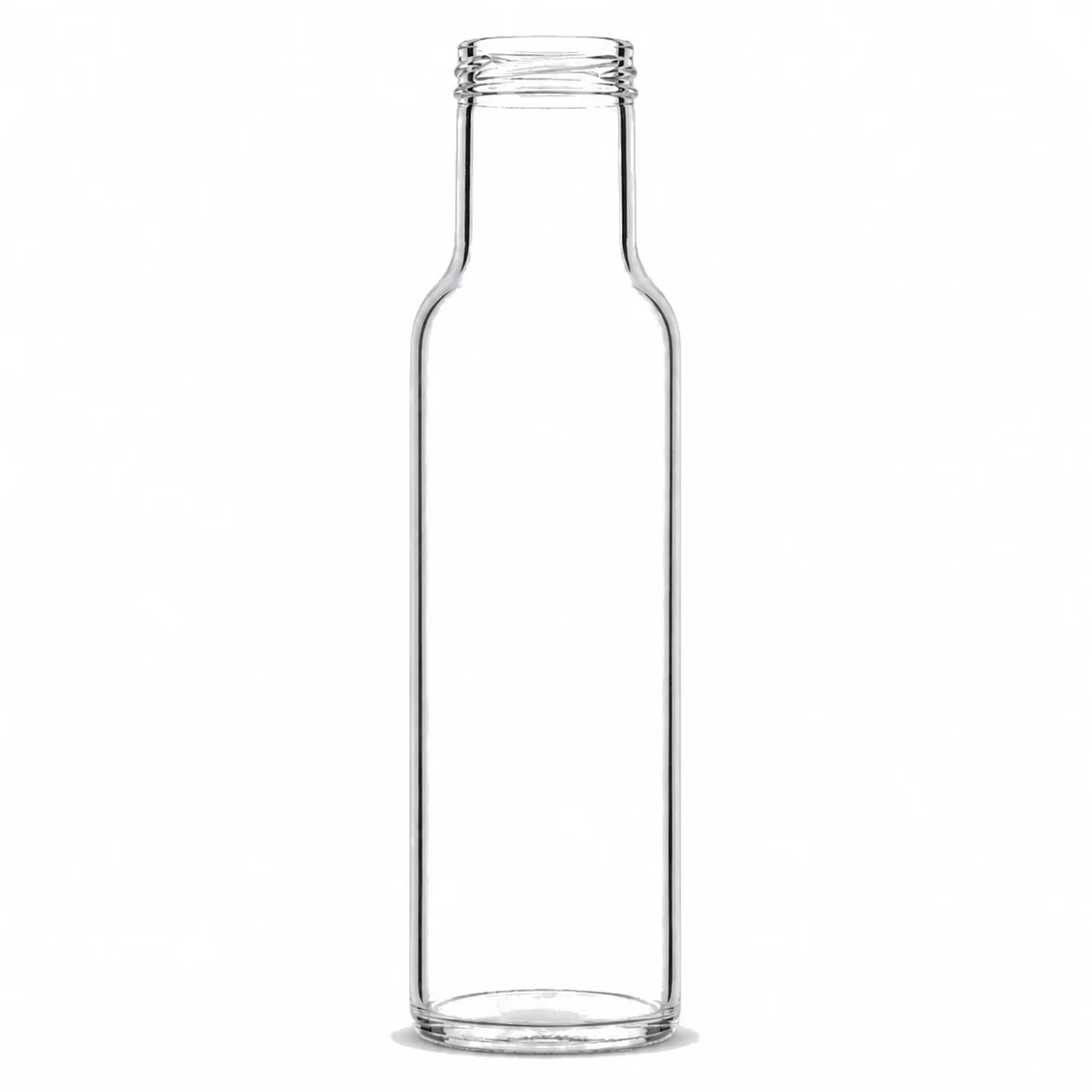
BGP-FS-8504 follows the familiar North American Woozy bottle: a small cylindrical reservoir, flowing shoulder and long narrow neck. Its value lies in serving concentrated sauce in controlled amounts, not in accommodating every product that happens to contain chili.
The silhouette signals heat
The Woozy's slim body and long neck have become strongly associated with hot sauce. That recognition lets an unfamiliar brand establish the category before the label is read, while bottle height gives a 148 mL pack enough vertical presence to stand beside larger condiments.
Five ounces suits concentrated flavor
A 5 fl oz bottle works for sauces used in drops, dashes or short pours rather than ladled portions. It keeps high-heat recipes accessible at retail, supports multi-flavor sets and reduces the time an opened specialty sauce occupies the table or refrigerator.
The neck is a recipe filter
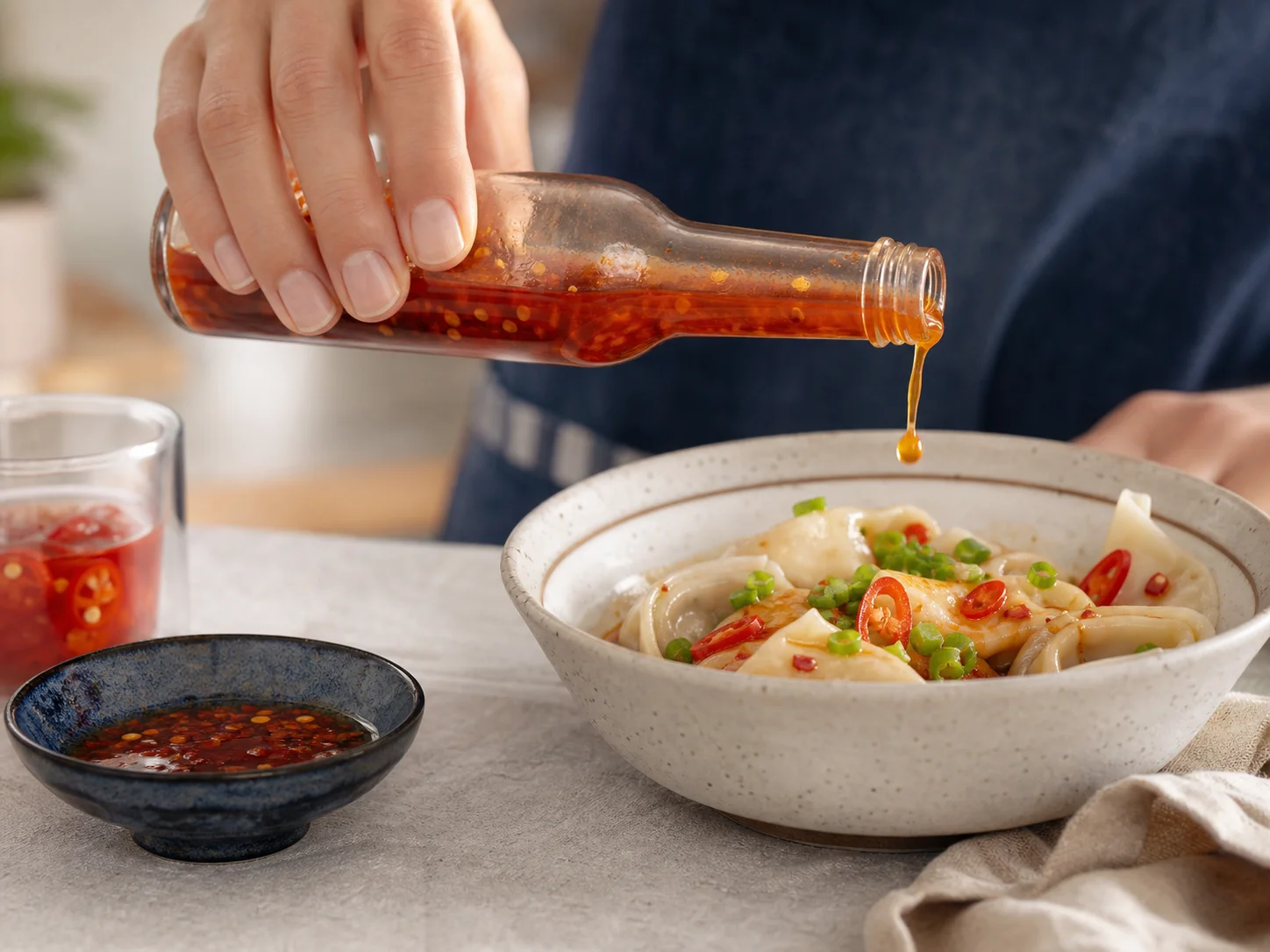
A bore around 14 mm favors smooth, pourable sauces and finely milled suspensions. Large pepper flakes, seeds, fruit pieces or oil-heavy chili crisp can bridge in the neck and produce an uneven pour; those recipes belong in a wider-mouth package unless milling and flow trials demonstrate otherwise.
24-414 defines the cap interface
The finish uses a 24 mm nominal diameter and 414 continuous-thread profile. Closures must match the full 24-414 specification, not only the nominal diameter. A lined screw cap is the basic route, with material and liner chosen around the recipe and filling conditions.
A reducer changes the dose
An orifice reducer can turn a free pour into a narrower drizzle or drop pattern, which is useful for thin, particle-free sauces. Its hole size must be trialed with the actual viscosity: too small creates pulsing and blockage, while too large adds complexity without meaningful control.
Tall proportions affect labeling and cases
The straight body provides roughly 79–93 mm of usable label height across published 5 oz Woozy variants. Artwork should remain below the shoulder transition, and case partitions should restrain the narrow bodies so labels and necks do not take repeated contact in transit.