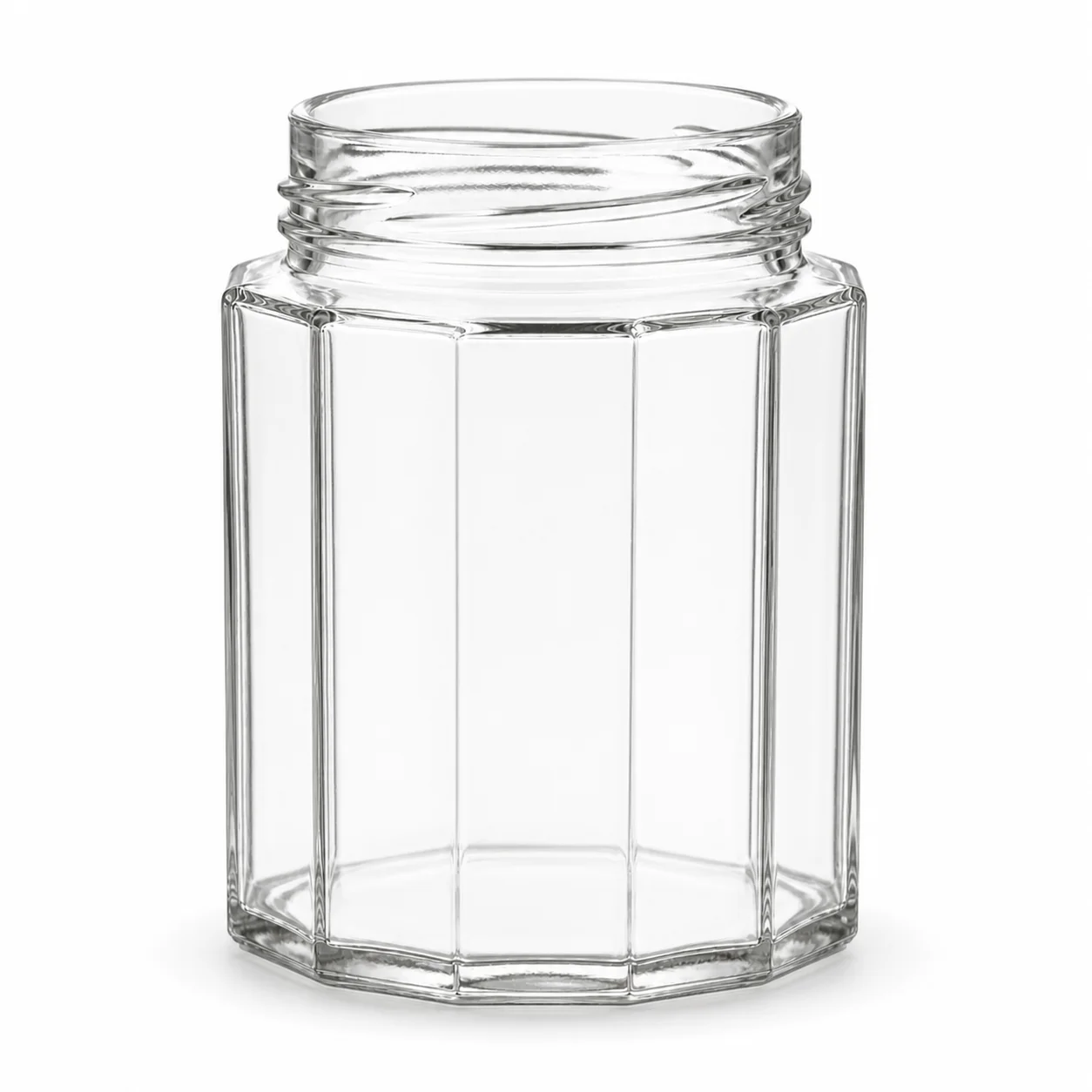
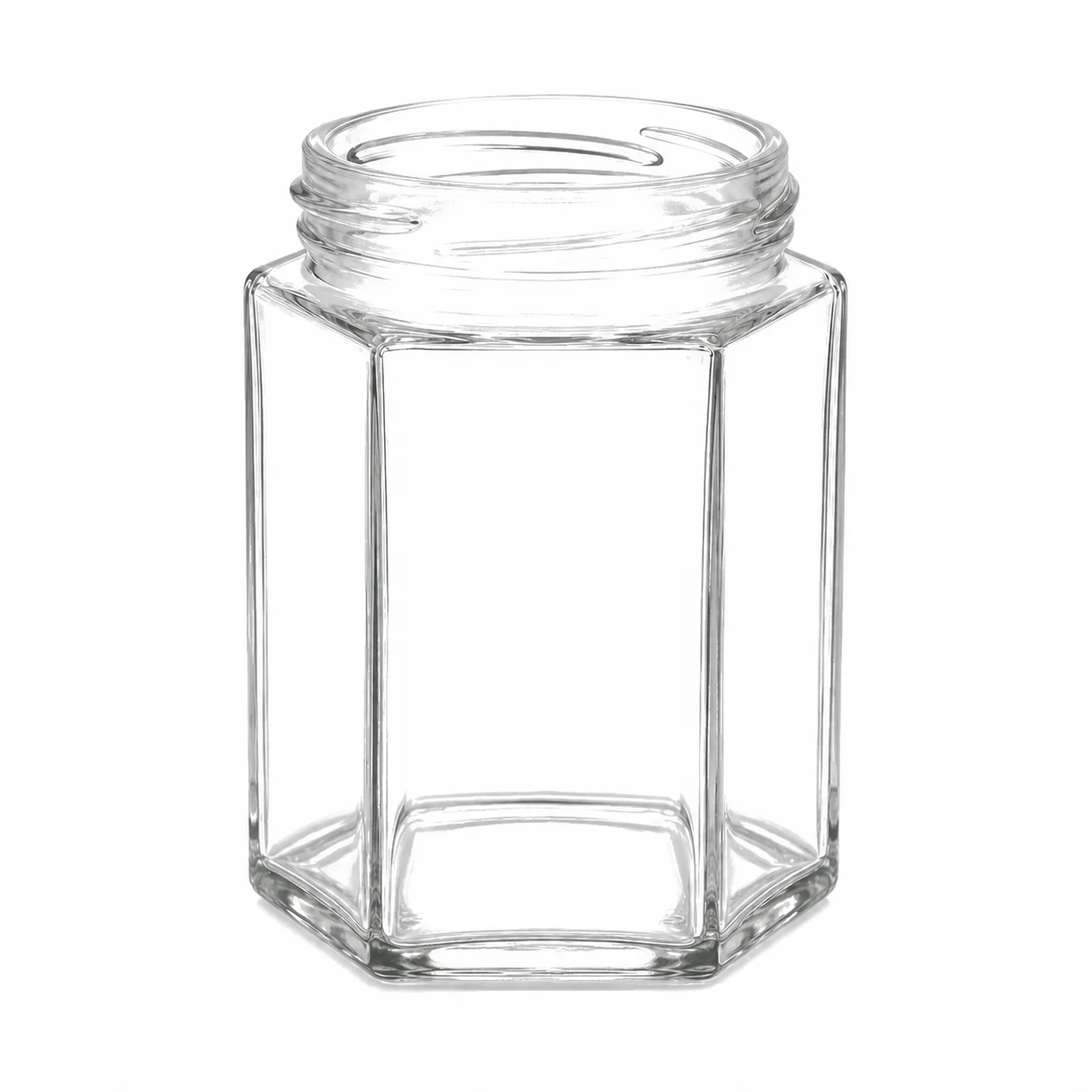
Hexagonal Honey Jar
Configuration shown · Empty clear faceted jar; cap and liner not shown

Food & Sauce

Hexagonal Honey Jar

A 280 mL brimful hexagonal glass jar with six flat display panels and a 63 mm twist-off finish. Approx. 390 g of honey is a starting fill estimate; verify the net weight with the required headspace.

280 mL brimfulSix label faces63 mm twist-off
Stock status
In stock
Lead time
2–3 weeks

Final availability, dimensions, materials, assembled components and commercial terms are confirmed against the selected drawing and approved sample.

Distinctive retail size

Approx. 390 g reference honey weight; confirm the actual fill

Panel-led branding

Six faces separate product name, origin and required copy

Efficient range building

Matching smaller hex jars can extend the same visual family

Hexagonal Honey Jar profile

Six flat faces organize honey branding and product information.

Honey weight, facets & twist-off closure

Sizing, labeling and closure choices for the 280 mL hexagonal jar.

The 280 mL hexagonal jar provides a distinctive format for farm shops, delicatessens and gift collections. Its panels separate branding and origin information while leaving space to show the honey’s color.

01

Convert volume to a validated honey fill

A 280 mL brimful volume corresponds to roughly 390 g of honey at typical density, before allowing for the intended headspace. Moisture content and filling temperature affect the relationship. Establish the commercial net weight by weighing filled samples and checking the fill line.

02

Choose a primary display panel

The front panel can carry the brand, floral source and net weight without wrapping around a corner. Use adjacent faces for the producer story, serving notes or required information, while leaving a clear panel to show the honey’s color.

03

Use the facets to frame the product

The six vertical edges catch the light and emphasize the faceted shape. This presentation suits varietal honey, chutney and preserves for independent retail or curated gift collections.

04

Check the effective mouth opening

The 63 mm closure sits above a body measuring close to 80 mm at its widest points. Check the actual inner opening against the product consistency, fruit pieces, serving utensil and filling nozzle.

05

Match the exact twist-off finish

The 63 mm lug finish closes with a short twist. It requires a cap matched to that finish and the filling process; a 63-400 continuous-thread cap is a different component and must not be substituted.

06

Protect the corners and label alignment

Tight carton cells can bring corners or labels into contact with partitions. Trial dividers that protect the widest points and limit rotation, particularly where a primary display panel needs to remain aligned in a tray or gift set.
Application guide

Use the facets to organize your product story.

Assign a primary display face, supporting information and a clear product-viewing panel. Match the closure and protective packing to the finished product.

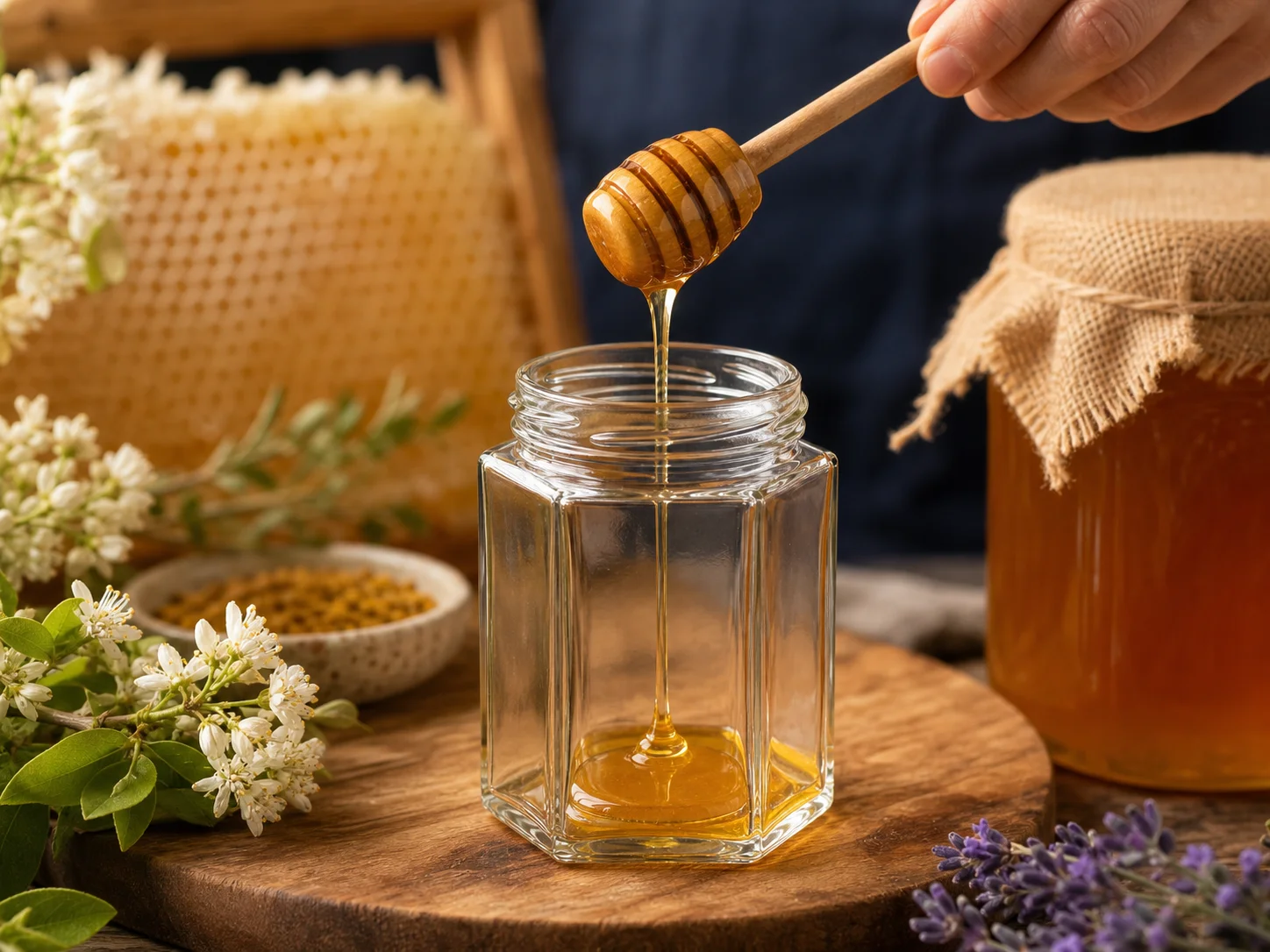
Honey dripping from a dipper into a clear hexagonal jar

Origin-led honey

Single-floral & regional selections

For honey marketed by floral source, region or harvest. The facets divide producer and batch information into readable panels, while a clear area shows the honey’s natural color.

  • Reserve a primary display panel
  • Plan batch and origin copy
  • Validate cap and liner with fill
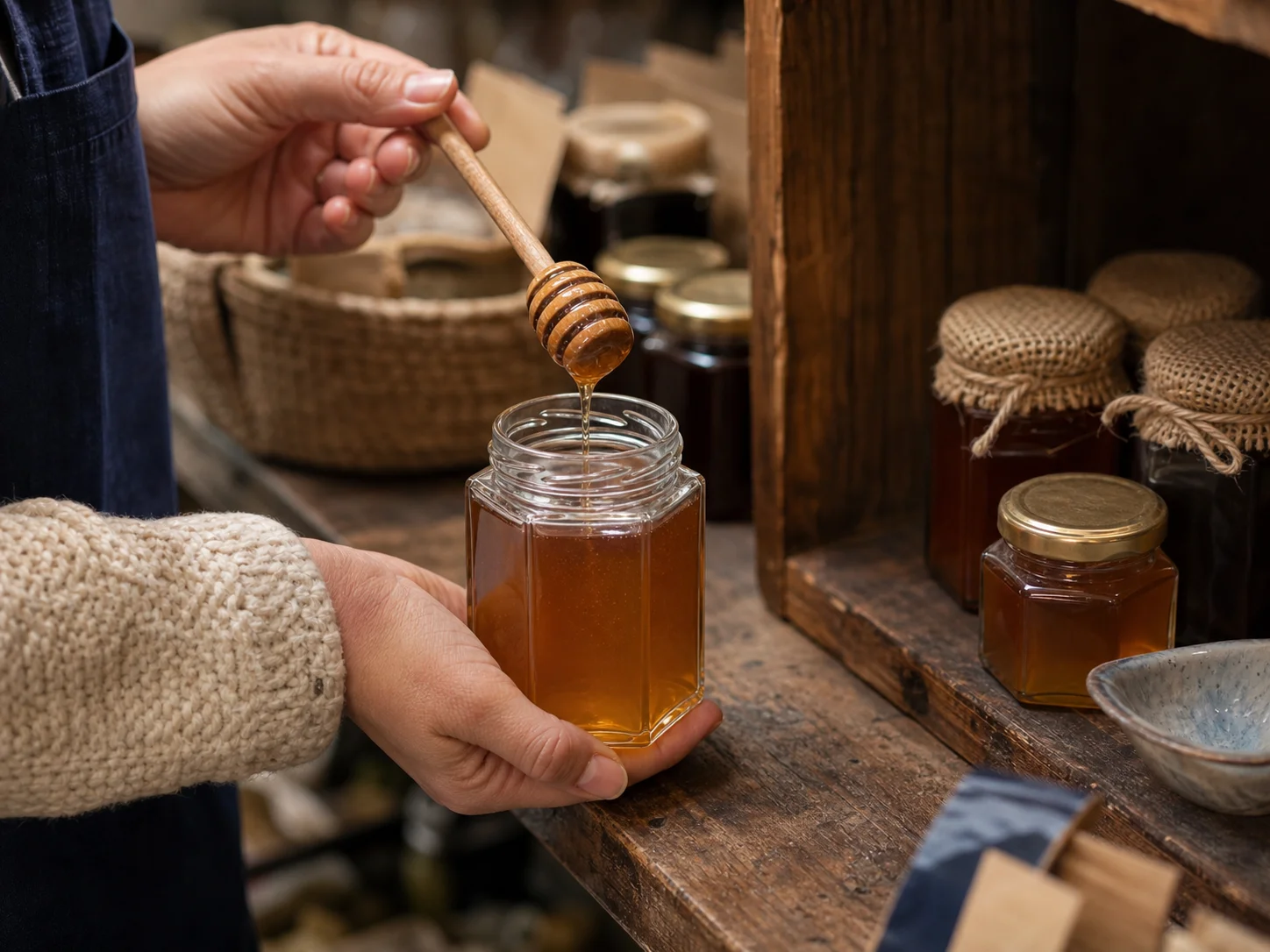
Hexagonal honey jar being presented at a retail counter

Specialty retail

Farm shops & delicatessen shelves

For honey ranges seeking a distinctive silhouette and practical spoon access. Check label registration, barcode placement and case orientation so the intended front panel stays visible in retail displays.

  • Test label registration
  • Choose access for actual serving
  • Confirm carton orientation
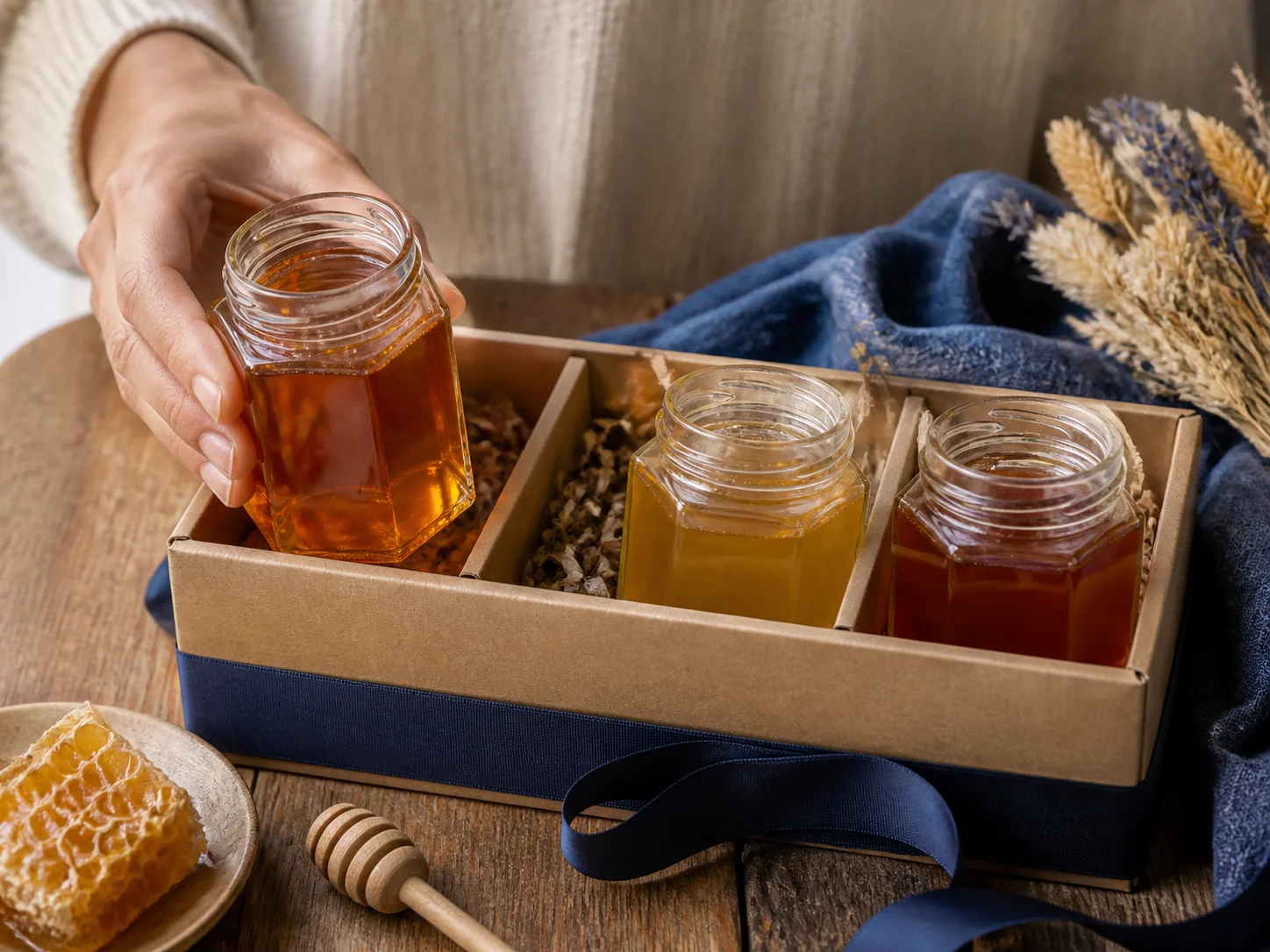
Hexagonal honey jars arranged in a divided gift box

Curated gifting

Honey sets & seasonal assortments

For gift packs combining several honey varieties or seasonal selections. Review carton cells, cap appearance and label alignment together on the assembled, filled pack.

  • Align faces across the set
  • Protect corners and labels
  • Trial finished gift packing

Use the 280 mL volume as a packaging reference and establish the declared honey weight from the actual batch density and intended fill height.

FAQ

Practical questions about the 280 mL hexagonal format.

Answers for brands evaluating BGP-FS-5353, its 63 mm twist-off closure and six individual decoration faces.

How much honey fits in a 280 mL hexagonal jar?

Approx. 390 g is a useful starting estimate at typical honey density. The exact weight varies with moisture content and temperature, so production should fill by calibrated weight and confirm that the selected net quantity leaves the intended headspace.

Is a 63 mm twist-off lid the same as a 63-400 cap?

No. A twist-off finish uses discrete lugs and closes with a short rotation; a 63-400 finish uses a continuous thread. Specify the exact jar finish and matching cap rather than ordering by diameter alone.

Can labels wrap over the six corners?

A wrap is possible only when the label stock, adhesive and application method tolerate repeated corner transitions. Individual panel labels usually give cleaner alignment and preserve more of the faceted glass effect.

How should the jar face forward in a gift set?

Choose a primary display face, align lid artwork with it if needed, and use fitted cells or dividers to limit rotation. Trial the complete set with filled jars, since their weight affects how the pack settles.

Is the 63 mm opening wide enough for creamed honey?

Check the effective inner opening, rather than using the 63 mm closure diameter alone. The body is close to 80 mm across, so the shoulder reduces access. Test creamed honey, fruit pieces and the intended spoon or filling nozzle with samples.

Next step

Send us the Hexagonal Honey Jar brief.

Share your product, fill volume, preferred closure and destination market. We will review the matching drawings, available configurations and sample options before preparing a quote.

  • 01Send the briefProduct, volume, closure and market
  • 02Get the optionsMatching drawings and configurations
  • 03Approve the sampleConfirm the pack before production