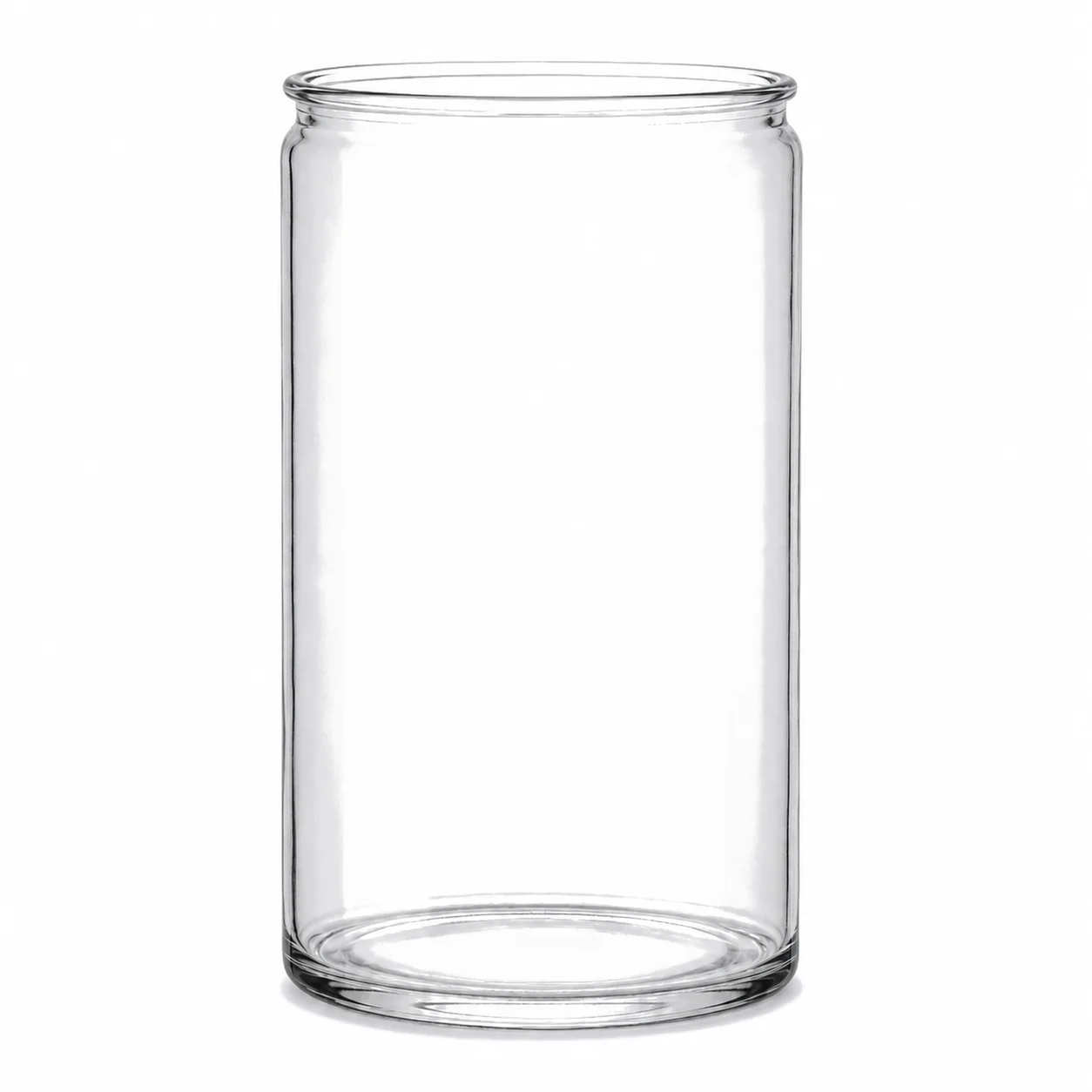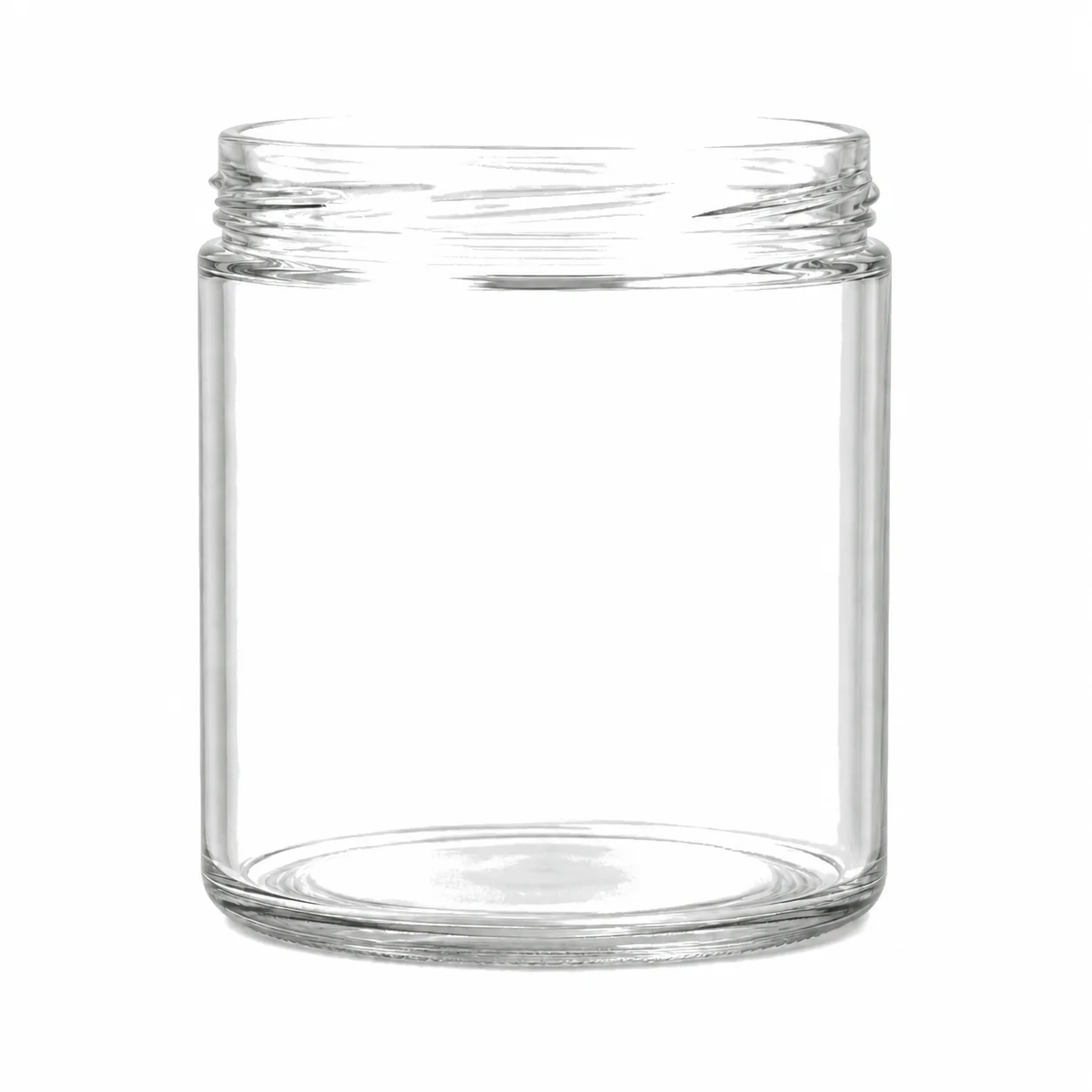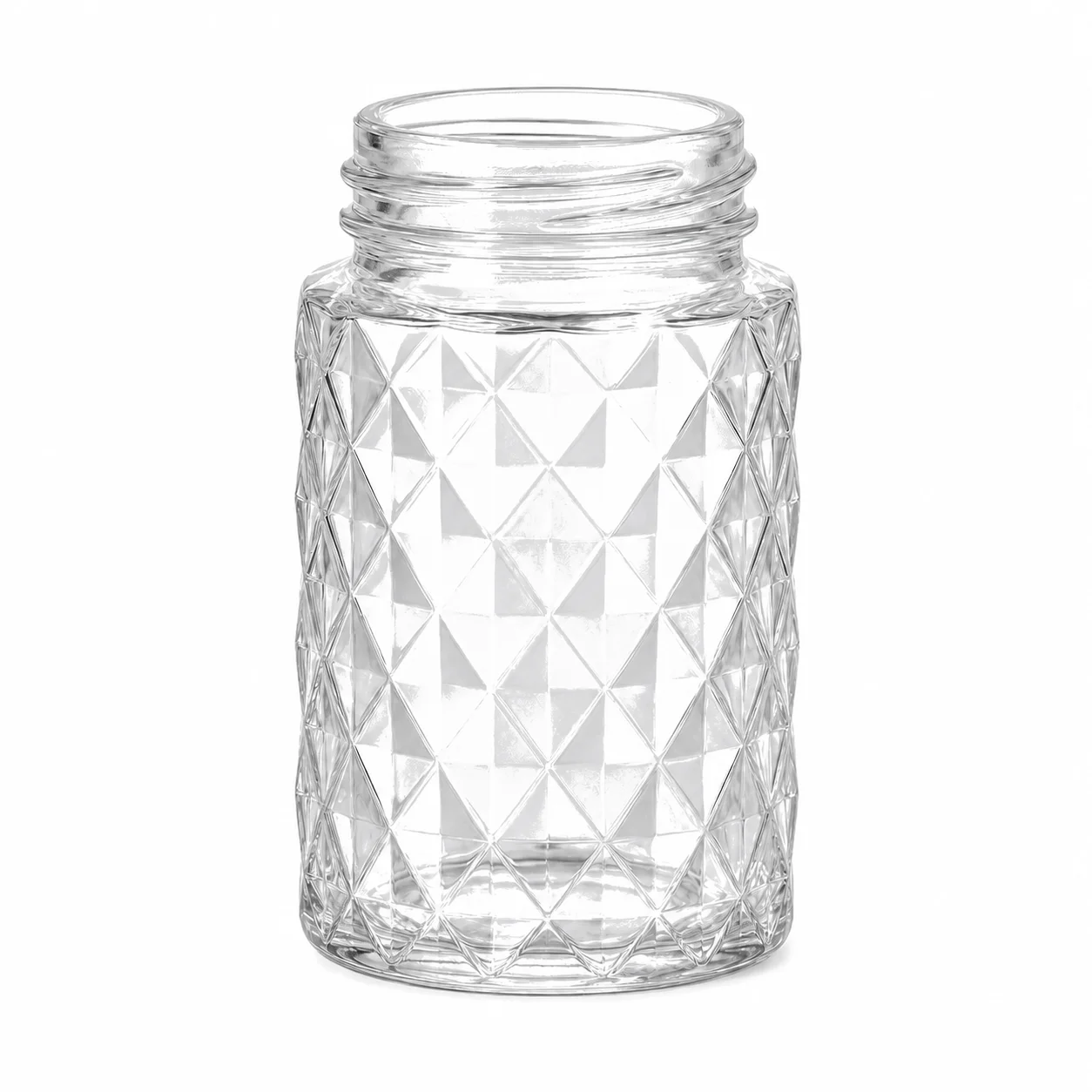
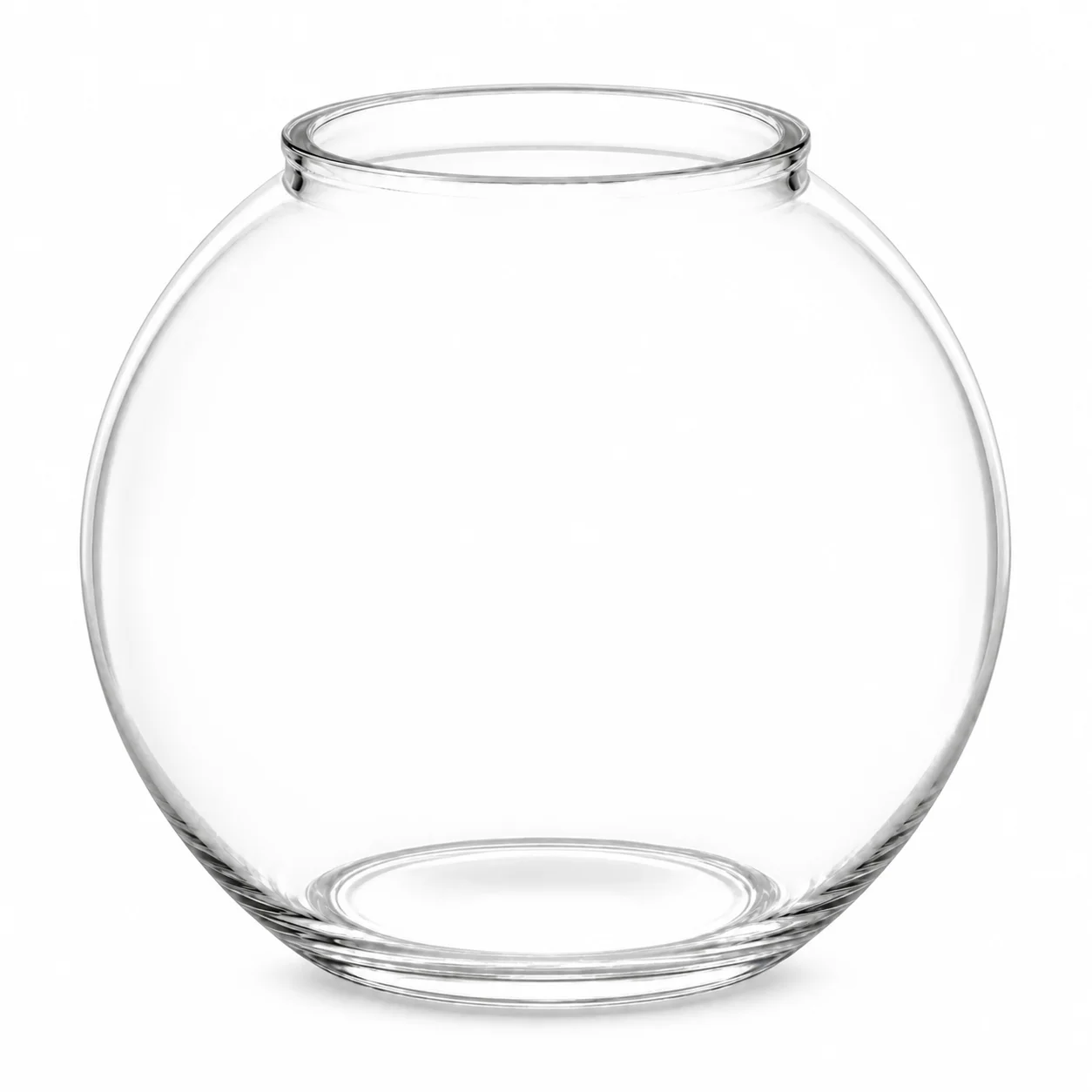
Clear 800 mL hand-blown borosilicate globe jar for bamboo mushroom lid
Shown configuration · bare clear globe body / bamboo mushroom lid and silicone band not shown

Sculptural borosilicate storage for countertop ingredients

Mushroom-lid Jar

An 800 mL hand-blown borosilicate-glass globe jar with broad open rim and an optional overhanging bamboo mushroom lid with silicone sealing band for sweets, tea, coffee and dry ingredients.

800 mL reference sizeHand-blown borosilicateBamboo + silicone lid route
Stock status
In stock
Lead time
2–3 weeks
FOB price / pc
$0.30 - $0.65
MOQ
3,000 pcs

Final availability, dimensions, materials, assembled components and commercial terms are confirmed against the selected drawing and approved sample.

Sculptural globe body

The expanded middle turns dry ingredients into a visible countertop display

Short wide access

The opening supports hand refill, small scoops and serving tongs

Lift-off mushroom lid

An overhanging bamboo cap supplies the defining silhouette and grip

Mushroom-lid Jar profile

An 800 mL hand-blown globe whose wide bamboo cap completes both the mushroom silhouette and the closure interface.

Globe geometry, lift-off lid & countertop service

Six practical details behind a jar whose shape is intentionally more decorative than modular.

BGP-FS-7977 follows the JY-V2307281 mushroom-shaped storage family, offered in 400 and 800 mL capacities. The reference uses a hand-blown borosilicate body, bamboo lift-off lid and soft silicone band. The image deliberately shows only the glass vessel: the lid overhang, band compression and finished height belong to the selected assembly and should be confirmed on the production sample.

01

Eight hundred milliliters fills the globe, not a standard cylinder

The widest volume sits below the shoulder, so product level changes rapidly through the curved wall and slows near the middle. Establish fill grams with the real ingredient: wrapped sweets leave large voids, rolled tea settles, and coffee beans occupy a different mass at the same visual height. Keep the product below the rim and silicone contact zone.

02

The mushroom cap is a lid and the main handhold

The overhanging bamboo top gives the set its recognizable cap shape and a broad surface for lifting. It is not a screw closure; retention comes from the fitted silicone band and rim geometry. Opening force should be high enough to resist casual displacement but low enough that the jar is not lifted unexpectedly by the lid alone.

03

A round belly needs deliberate countertop stability

The base footprint is smaller than the maximum body width, concentrating visual mass above it. Test tipping with the heaviest intended fill and with a user pulling the lid sideways. On shelf and in cartons, prevent the widest globes from touching even when the bases appear adequately spaced.

04

Hand-blown glass needs dimensional tolerances at the rim

Borosilicate hand forming can produce small variations in height, roundness and rim size. The silicone band must accommodate the approved range without becoming loose on the small extreme or excessively tight on the large extreme. Lid sampling should cover several glass lots, not one presentation sample.

05

The curved wall is a poor home for a conventional label

A broad rectangular label will wrinkle as it crosses compound curvature and will hide the ingredient display. Use the bamboo cap, a small conformable medallion, hang tag or secondary carton for identity and instructions. If multiple foods share the same jar, keep allergen and product information attached to the individual unit rather than only to a shelf card.

06

Bamboo, silicone and glass follow different cleaning routes

The nonporous glass body and removable silicone band can be cleaned separately, while a bamboo lid should not be assumed to tolerate prolonged soaking or the same dishwasher cycle. Instructions must explain disassembly, full drying and reassembly so moisture is not trapped between wood, band and rim.
Application guide

Match the globe jar to visible contents, serving tools and refill frequency.

The 800 mL mushroom form is designed for dry countertop service. Contents with strong color or recognizable shape make best use of its round viewing field.

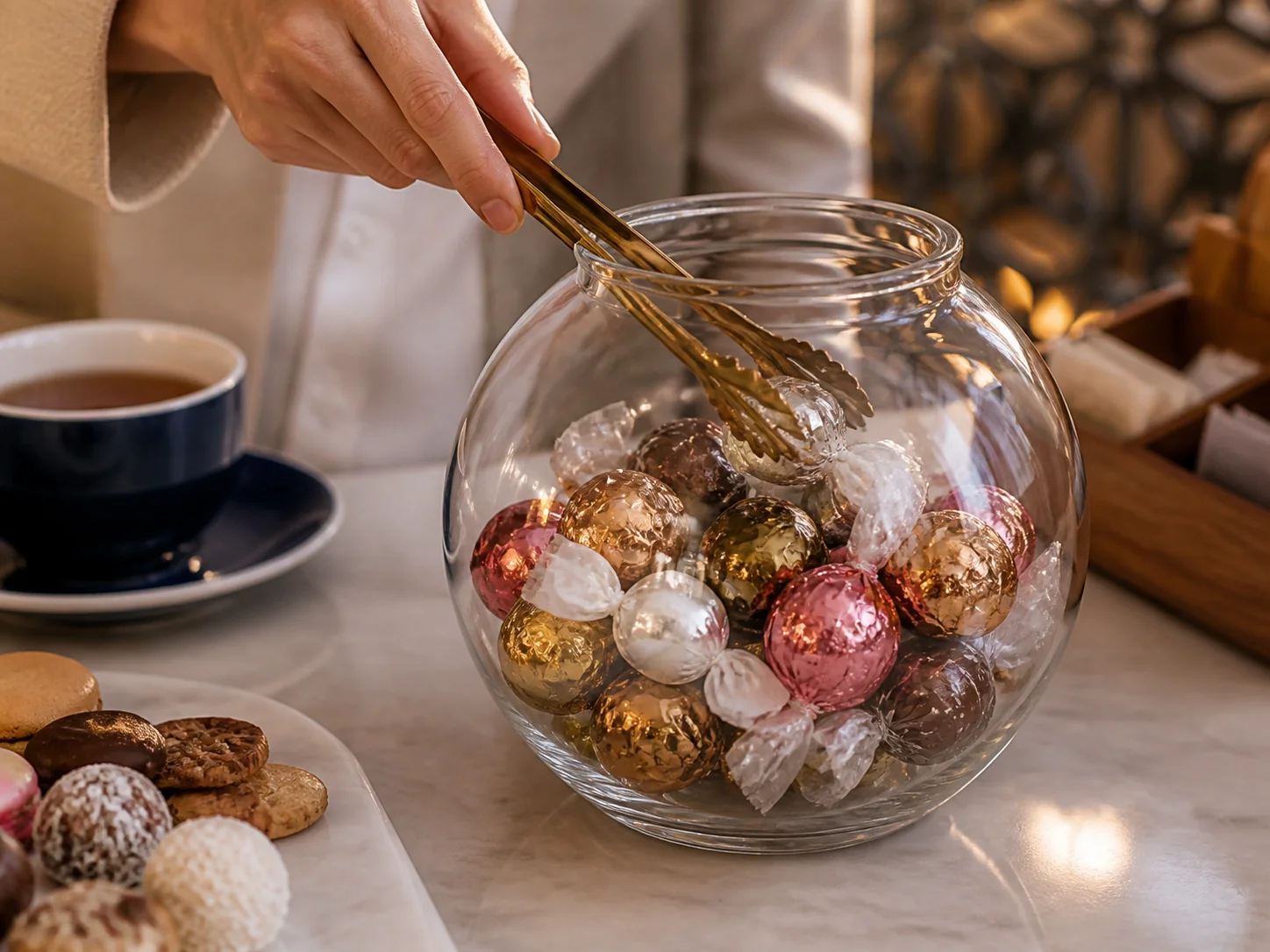
Mushroom-lid Jar used for wrapped sweets, biscuits & chocolates in a confectionery setting

Confectionery

Wrapped sweets, biscuits & chocolates

For colorful treats served from a counter or hospitality display. The round belly frames loose pieces well, while the bamboo lid creates an obvious open-and-serve gesture. Choose tongs that reach the lower curve without striking the glass and size the fill so the lid never compresses fragile confectionery.

  • Trial reach to the curved base
  • Keep wrapped products below the rim
  • Clean high-touch lid surfaces routinely
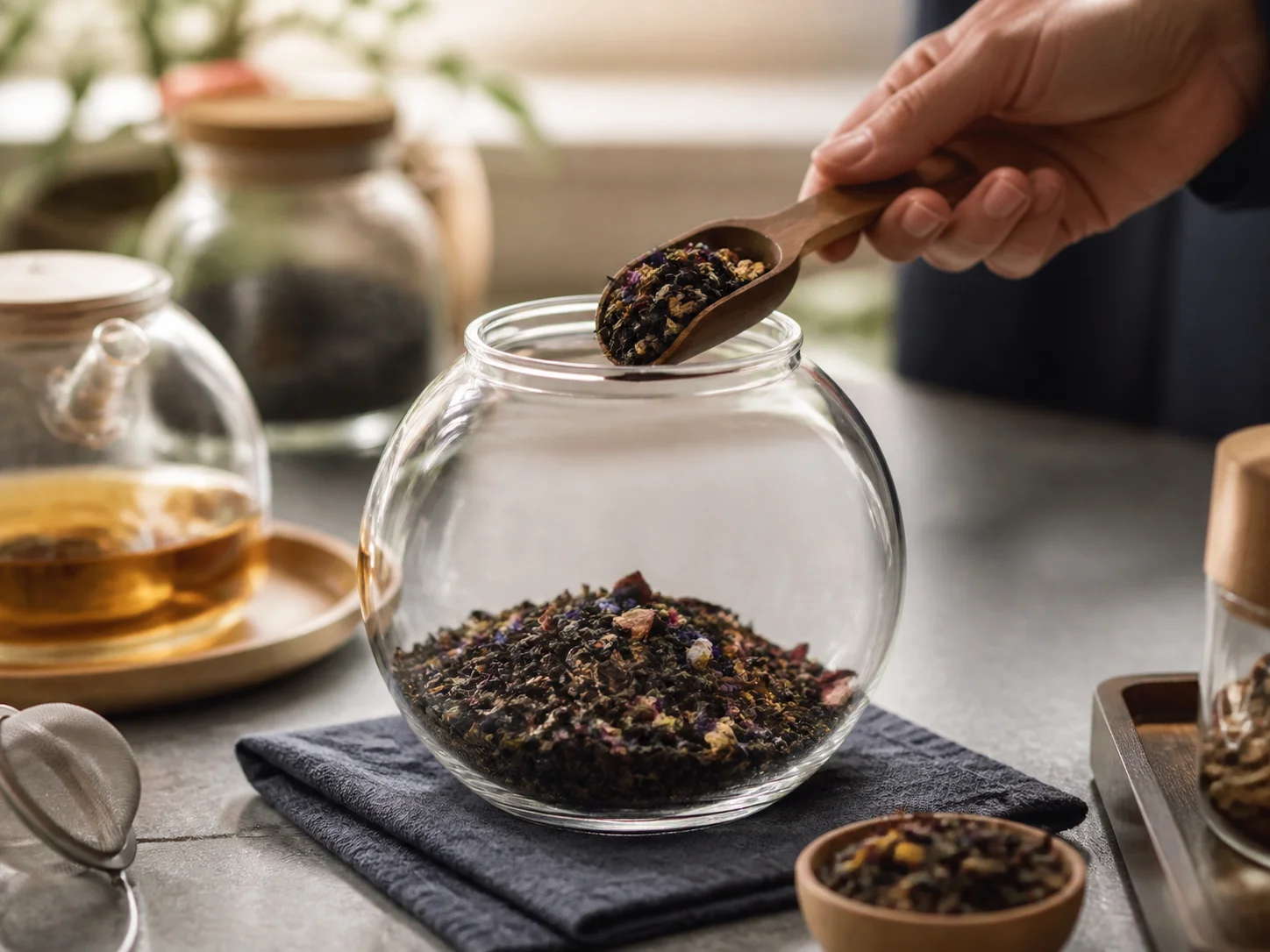
Mushroom-lid Jar used for loose leaf, beans & brewing ingredients in a tea & coffee setting

Tea & coffee

Loose leaf, beans & brewing ingredients

For short-cycle working stock where leaf shape or roast color is part of the presentation. Tea and coffee have different density, aroma and light-management needs, so use product-specific refill quantities and placement. Dedicate silicone bands to strongly aromatic contents to reduce flavor carryover.

  • Set fill grams by actual bulk density
  • Control exposure through placement
  • Separate strongly aromatic products
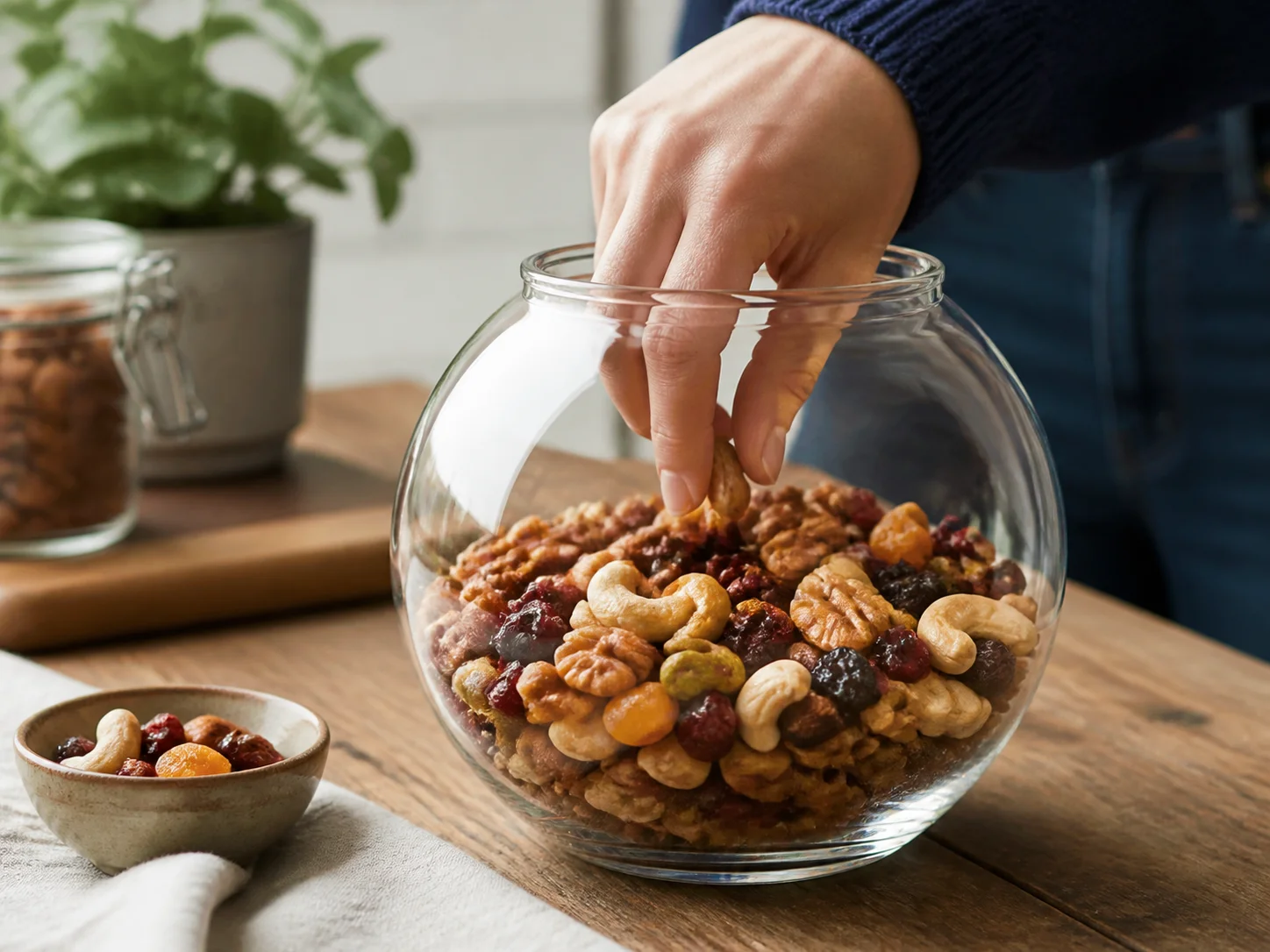
Mushroom-lid Jar used for nuts, dried fruit & snack mixes in a dry pantry display setting

Dry pantry display

Nuts, dried fruit & snack mixes

For recognizable foods that can be scooped or picked from a wide opening. Mixed products can segregate around the lower globe as the jar is moved, changing the top-layer appearance. Define allergen labels, utensil control and a full empty-clean-dry step between recipes.

  • Monitor mix segregation
  • Keep allergen identity on each jar
  • Disassemble lid and band for cleaning

This format is best treated as reusable dry storageware; any claim for liquid containment, hot filling or shelf-stable preservation needs a different, specifically validated closure and process route.

Mushroom-lid Jar FAQ

Technical questions about the 800 mL mushroom-shaped storage set.

Answers covering the reference family, materials, lid retention, dimensions, cleaning and suitable dry-food programs.

Why is the fill level hard to judge on this jar?

Because the widest volume sits below the shoulder. Product level moves quickly through the curved wall near the base and then slows through the middle, so a fill that looks generous in one jar can look short in another. Establish fill grams by weight and confirm the visible line on filled samples.

Why are exact jar height, diameter and net weight not listed?

The supplier publishes capacity, construction and only shipping-pack data—not a controlled jar drawing. A retail listing gives an approximate complete-set envelope, but that is not sufficient to claim jar-only dimensions. Those values must come from the approved BGP production sample and drawing.

Does the bamboo lid screw onto the glass?

No. The reference is a lift-off lid retained by a soft silicone band fitted to the rim. Opening force depends on band dimensions, glass tolerance and cleanliness, so it needs sample approval rather than cap torque.

Hand-blown glass — what does that mean for the fit?

Tolerances at the rim. Borosilicate hand forming produces small variations in height, roundness and rim diameter, and the silicone band has to absorb the approved range without going loose at one end of it. Agree the rim tolerance and check the band at both extremes rather than on one sample.

Next step

Send us the Mushroom-lid Jar brief.

Tell us the product, fill volume, closure preference and destination market. We will come back with the matching drawings, available configurations and a sample plan before anything is quoted.

  • 01Send the briefProduct, volume, closure and market
  • 02Get the optionsMatching drawings and configurations
  • 03Approve the sampleConfirm the pack before production