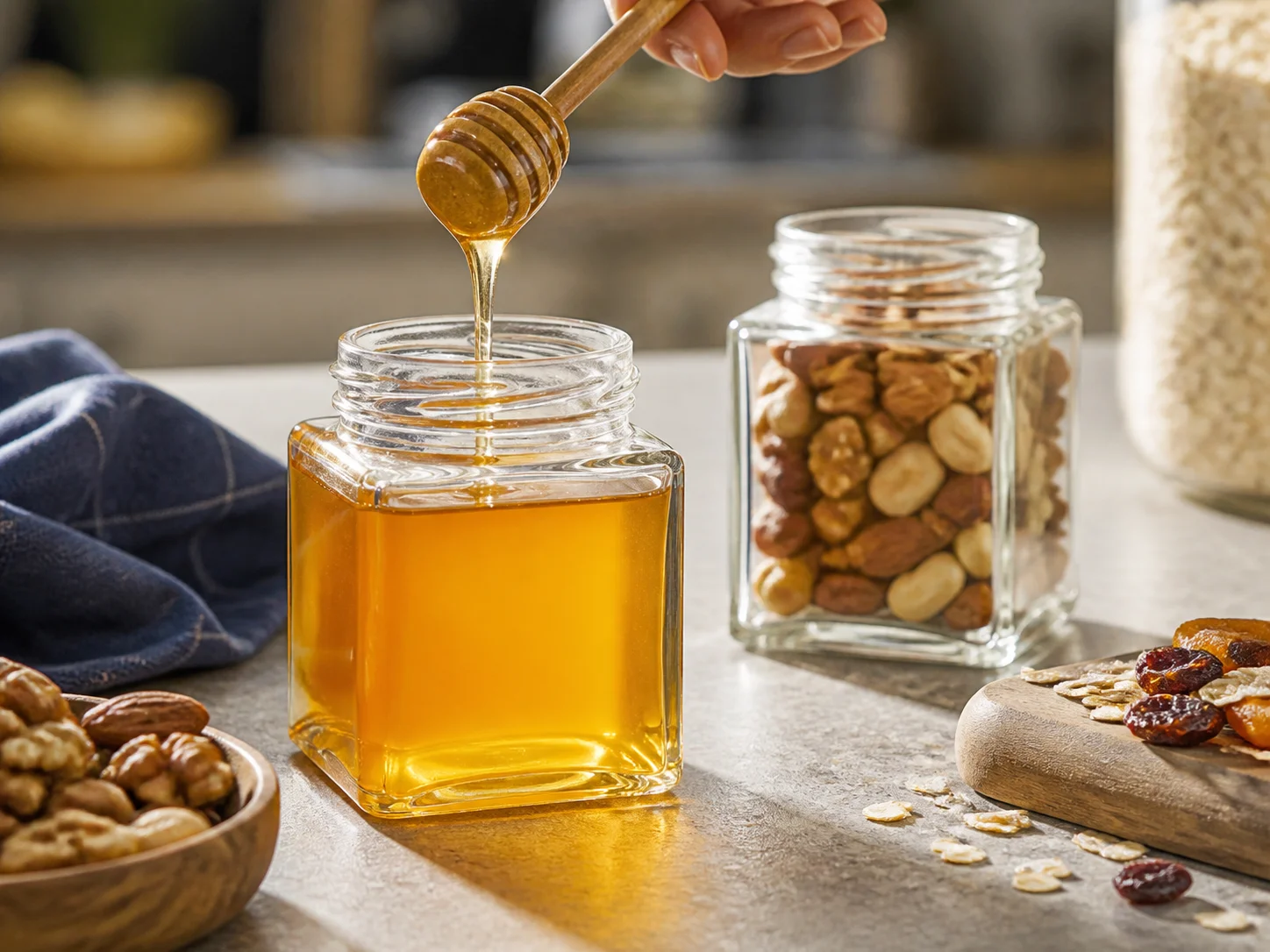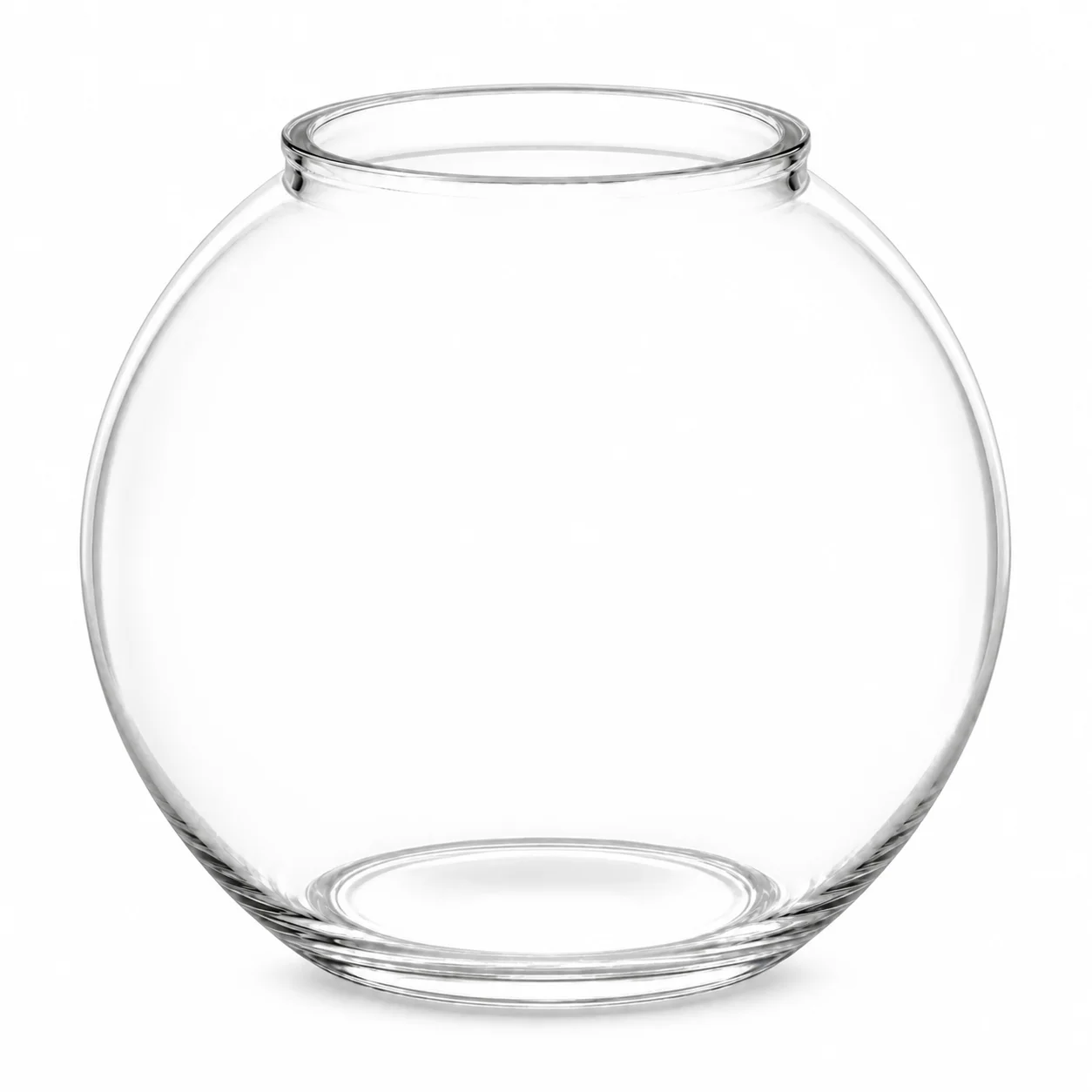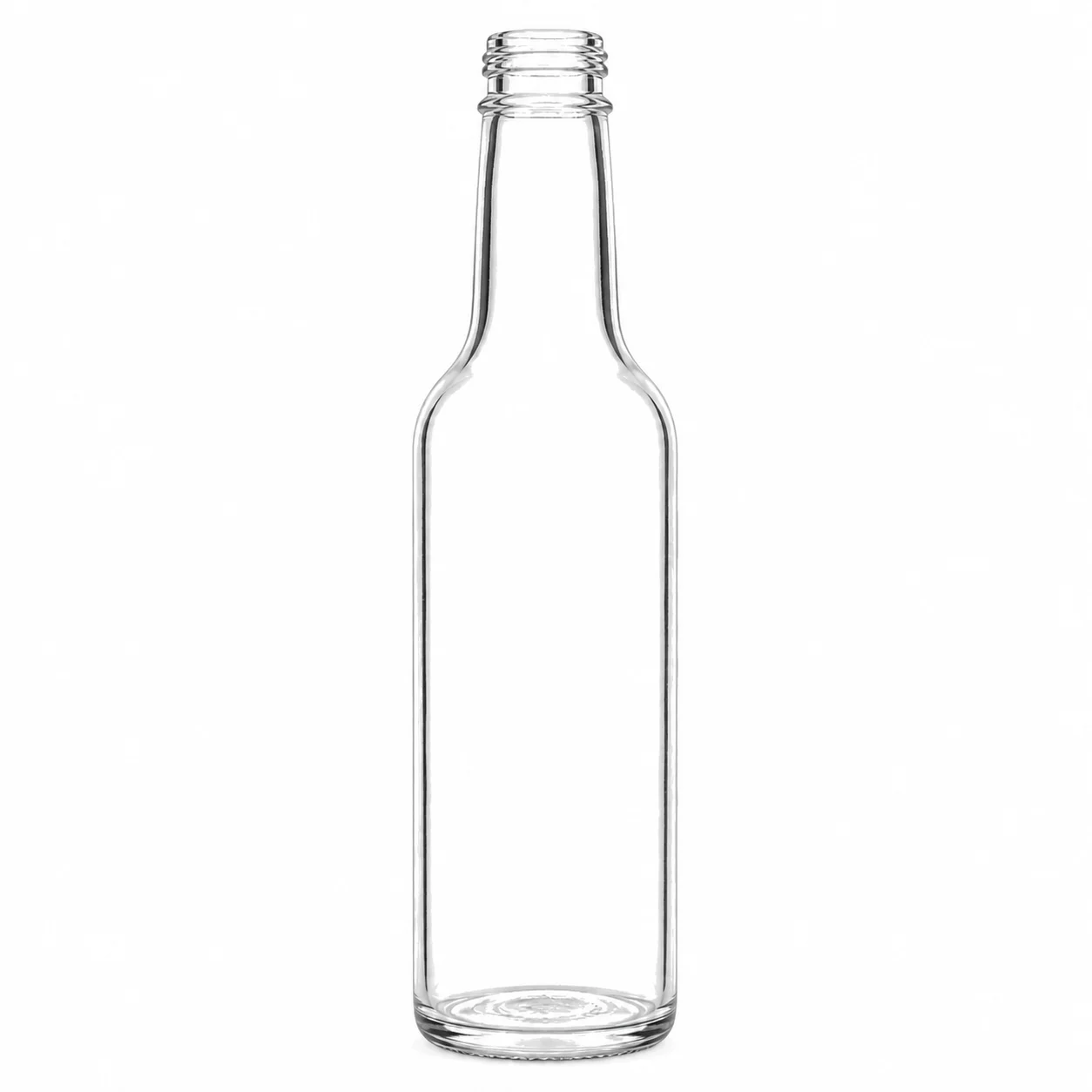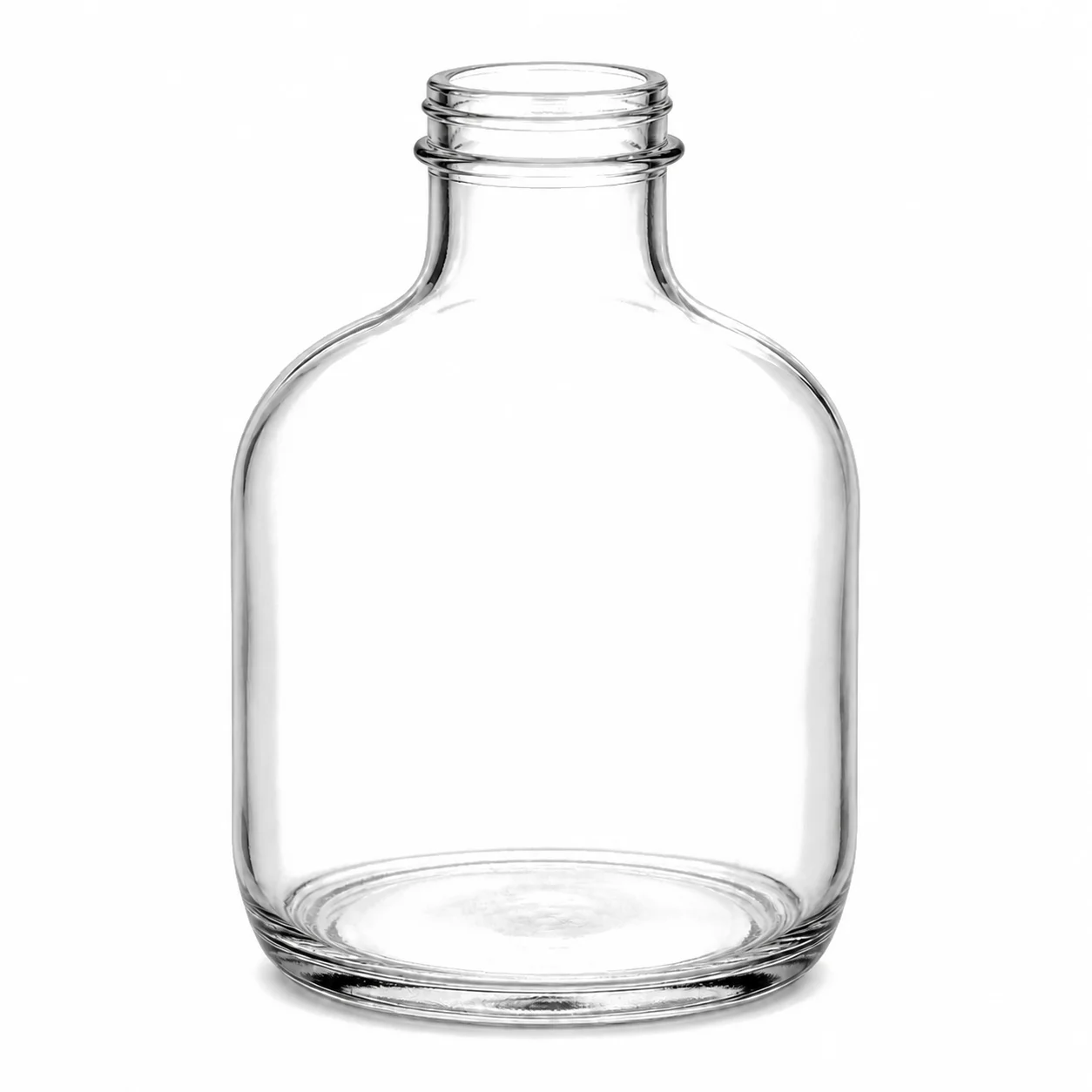
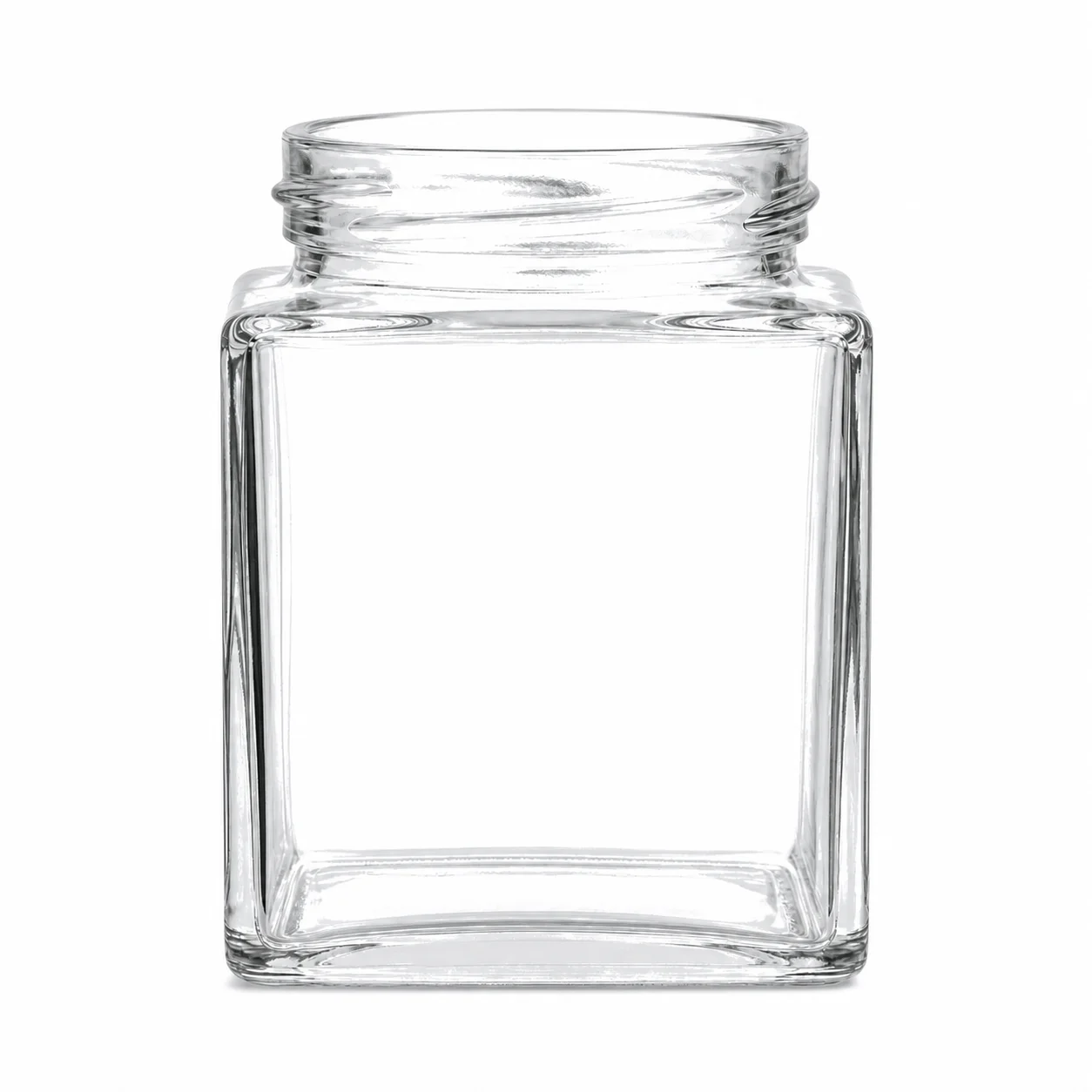
Clear 300 mL square glass food jar with 63 mm neck
Shown configuration · bare flint-glass jar / 63 mm twist-off lid not shown

300 mL square glass for preserves, honey & pantry foods

Paragon Jar

A compact 300 mL flint-glass square jar with four flat presentation faces and a 63 mm twist-off finish for jam, chutney, honey, relish and dry pantry ingredients.

300 mL nominal63 mm twist-off finishApprox. 174 g glass weight
Stock status
In stock
Lead time
2–3 weeks
FOB price / pc
$0.45 - $0.70
MOQ
2,000 pcs

Final availability, dimensions, materials, assembled components and commercial terms are confirmed against the selected drawing and approved sample.

Four usable faces

Front, back and side panels separate brand, recipe and regulatory information cleanly

Compact 65 mm footprint

The square body builds an orderly shelf block with less interstitial space than similar round jars

Spoon-friendly opening

A 63 mm mouth supports filling and consumer access for preserves and spreads

Paragon Jar profile

A short square food jar designed around panel control, spoon access and a 63 mm vacuum closure.

Square geometry, closure control & product presentation

Six decisions specific to a 300 mL square food jar.

BGP-FS-3161 follows the 300 mL square glass family sold for preserves and pantry foods. The closest published reference measures 120 mm high by 65 mm across the body, weighs approximately 174 g and uses a 63 mm twist-off lid. This square configuration matches the project image and Chinese product name; it is deliberately not assigned the dimensions of the tall, round 12 or 16 oz jar that North American suppliers also call a Paragon.

01

Separate nominal fill from brimful capacity

The 300 mL commercial size is the working volume class, not an instruction to fill to the lip. Jam, honey and chutney have different densities and thermal expansion, so the declared net weight and fill height must be set from the actual recipe. Record brimful capacity from the BGP production sample before fixing headspace or label copy.

02

Corners change product presentation

A square jar carries more glass and product into four corner zones than a round jar of similar width. Clear jam can show bubbles, fruit distribution and fill-level variation differently at those edges, while viscous spreads may remain in the corners during spooning. Review the filled jar from the front and diagonal, not only straight-on.

03

Use the 63 mm mouth as a process feature

The broad opening supports piston or positive-displacement nozzles and gives consumers useful spoon access. Nozzle outside diameter, insertion depth and withdrawal timing still need clearance from the neck and shoulder. For particulate chutney or relish, set the maximum piece size against both the fill nozzle and the finished mouth.

04

Twist-off is not continuous thread

The reference uses a 63 mm metal lug or twist-off finish, whose cap locks with a short rotational movement. It should not be quoted as 63-400 continuous thread. Choose the cap depth and plastisol compound for the exact finish, product chemistry and thermal process, then verify application position and removal torque after cooling.

05

Treat each face as its own label panel

A pressure-sensitive front label can remain on one flat face, while a wrap label must bridge radiused corners without lifting or whitening. Build artwork from a measured production jar: reserve the strongest face for branding, place dense regulatory copy on the back, and keep barcodes away from corner distortion.

06

Square packing needs controlled clearances

Square bodies use case area efficiently, but their flat sides can transmit contact loads and their corners can become high-pressure points. Partition design should prevent glass-to-glass contact, allow for dimensional tolerance and protect label edges. Confirm the 65 mm body width and finished lid diameter before locking the case grid.
Application guide

Three product families that make practical use of the square 300 mL format.

The jar works best when the product benefits from spoon access, strong front-facing graphics and compact shelf blocking rather than a pour-through neck.

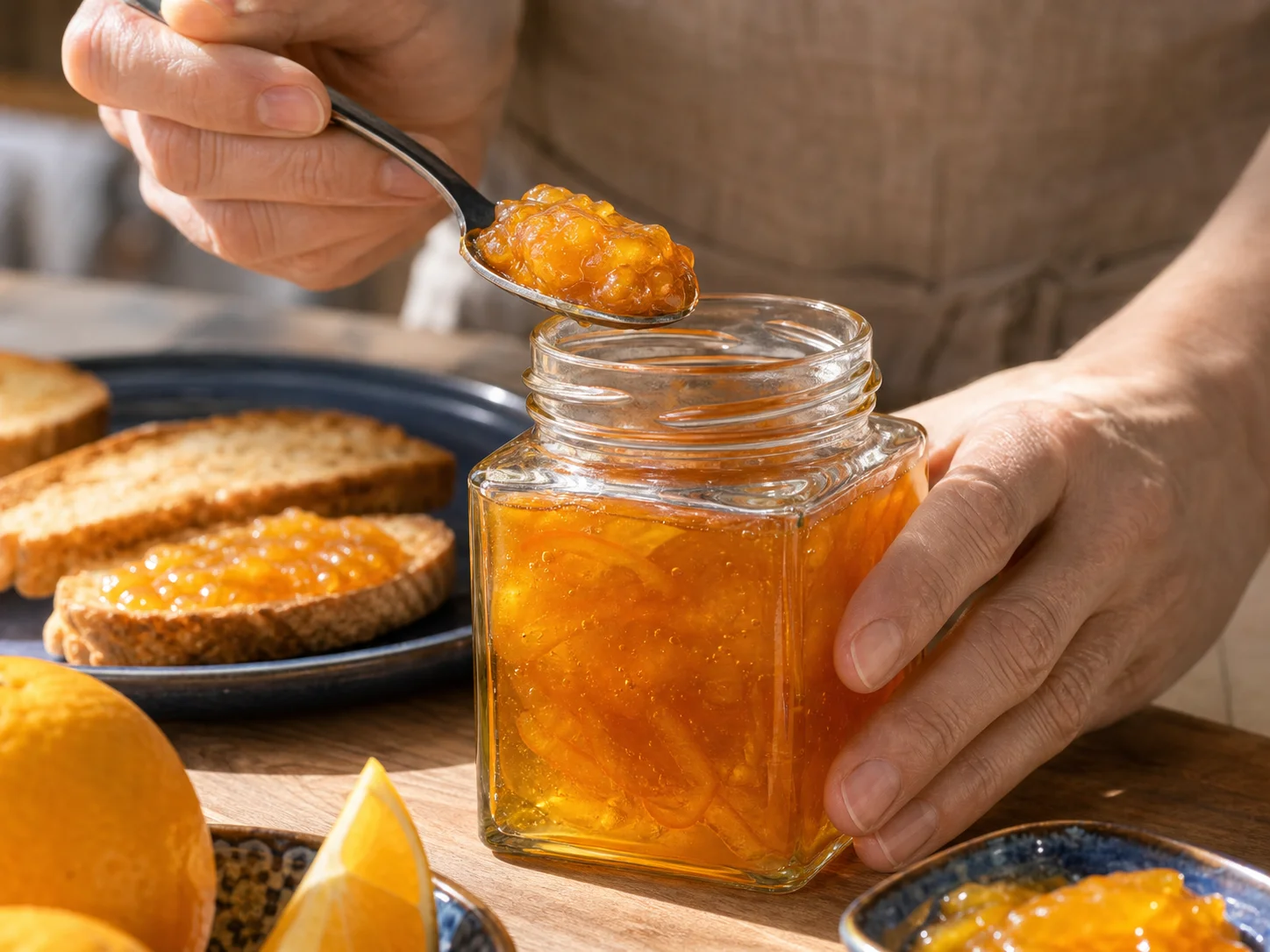
Paragon Jar used for jam, marmalade and fruit spread in a fruit preserve setting

Fruit preserve

Jam, marmalade and fruit spread

The clear cornered body gives fruit pieces, peel and color a premium display while a flat front face keeps the main label easy to read. Tune depositor cutoff to prevent strings on the 63 mm sealing land and inspect the diagonal view for trapped bubbles or uneven fruit distribution.

  • Control fruit distribution
  • Protect the sealing land
  • Inspect all four corners
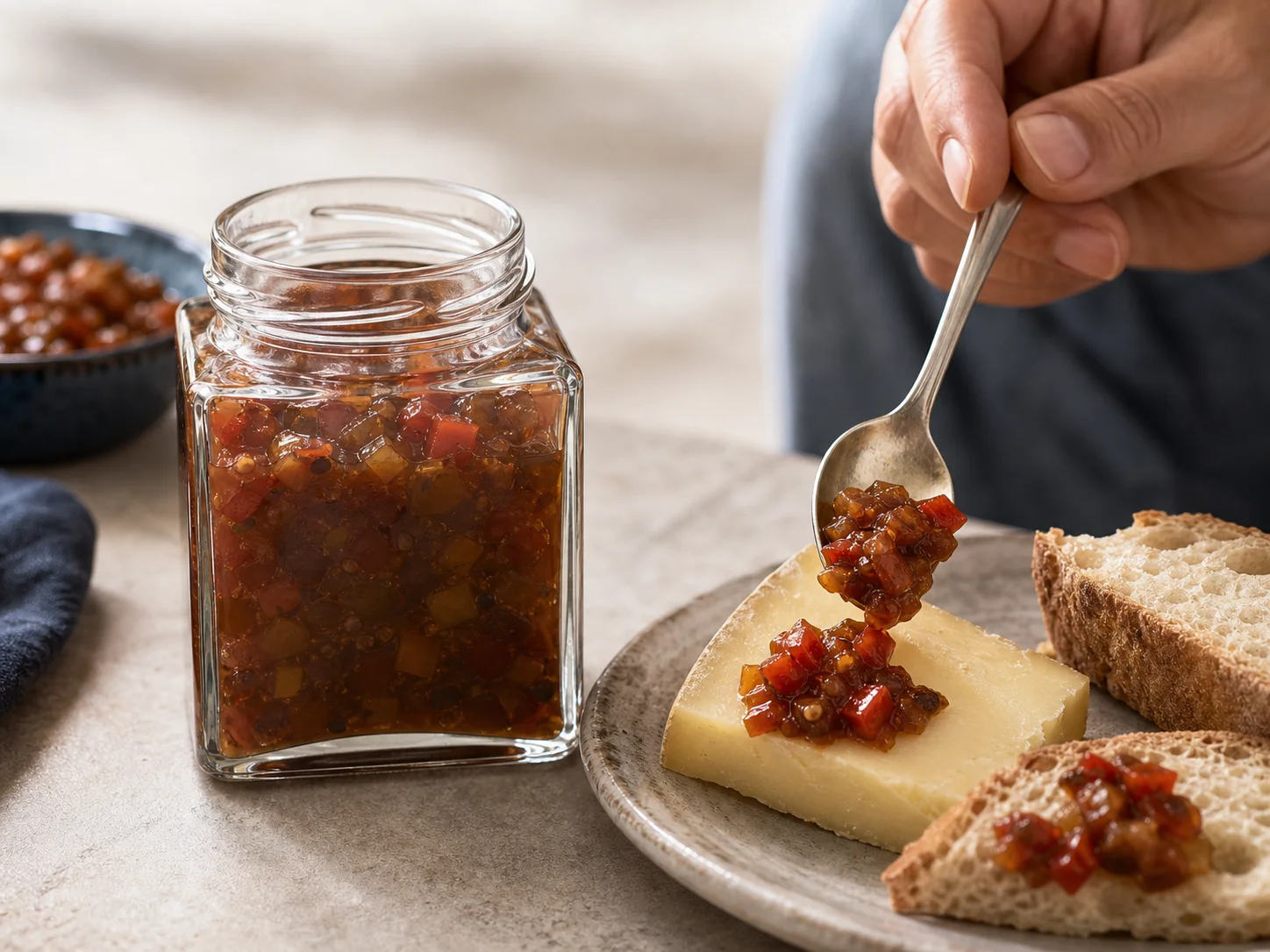
Paragon Jar used for chutney, relish and spoonable sauce in a savory preserve setting

Savory preserve

Chutney, relish and spoonable sauce

The wide mouth suits products that are spooned rather than poured, including recipes with diced vegetables or coarse inclusions. Set maximum piece dimensions for the nozzle, confirm hot-fill flow into the corners and choose a liner compatible with vinegar, oil and the scheduled thermal process.

  • Define inclusion size
  • Match acid-resistant liner
  • Check corner fill
Paragon Jar used for honey, nuts and dry ingredients in a pantry range setting

Pantry range

Honey, nuts and dry ingredients

Honey benefits from the uninterrupted front panel and clear product view; nuts, confectionery and dry mixes use the square footprint efficiently in gift sets. Use product-specific fill weight and secondary protection—dense honey and low-density nuts place very different loads into the same 300 mL jar.

  • Calculate recipe-specific weight
  • Build a coordinated label system
  • Use divided cartons

For vacuum-packed preserves, approve the 63 mm lug finish, cap depth, plastisol compound, steam-flow or capping conditions and cooling profile together. Dry-fill versions may use a different closure construction and should be quoted as a separate bill of materials.

Paragon Jar FAQ

Specification questions for the BGP-FS-3161 square Paragon.

Answers resolving the square-versus-round naming issue, the 63 mm finish and the data needed before labels, caps and cases are ordered.

Why does this Paragon Jar look different from a standard round Paragon?

Paragon is used inconsistently across markets. North American catalogs commonly apply it to tall round jars, but the BGP product image and Chinese name identify a compact square jar. This page therefore uses a matching 300 mL square-glass reference instead of importing round-jar dimensions.

What do the corners do to the product on shelf?

They carry more glass and more product into four zones a round jar does not have. Clear jam shows bubbles and fruit distribution differently in a corner than along a curved wall, so approve the filled appearance on the square body rather than on a round sample.

Can one label wrap around all four faces?

It can be developed, but the label stock and adhesive must negotiate the corner radii without lifting. For the cleanest geometry, many programs use separate front and back labels or a wrap die line measured directly from production glass.

Is the jar suitable for hot-filled jam and chutney?

The format is commonly used for preserves, but the production route depends on the actual glass specification, cap liner, recipe, fill temperature and scheduled process. Those inputs determine cap application and vacuum—not the jar name alone.

What do square bodies need from the case?

Controlled clearances at the corners. Flat sides use case area efficiently but transmit contact load directly, and the corners become the high-pressure points as soon as partitions are loose. Size the divider so jars never touch, and keep the front face aligned if the case ships to shelf.

Next step

Send us the Paragon Jar brief.

Tell us the product, fill volume, closure preference and destination market. We will come back with the matching drawings, available configurations and a sample plan before anything is quoted.

  • 01Send the briefProduct, volume, closure and market
  • 02Get the optionsMatching drawings and configurations
  • 03Approve the sampleConfirm the pack before production