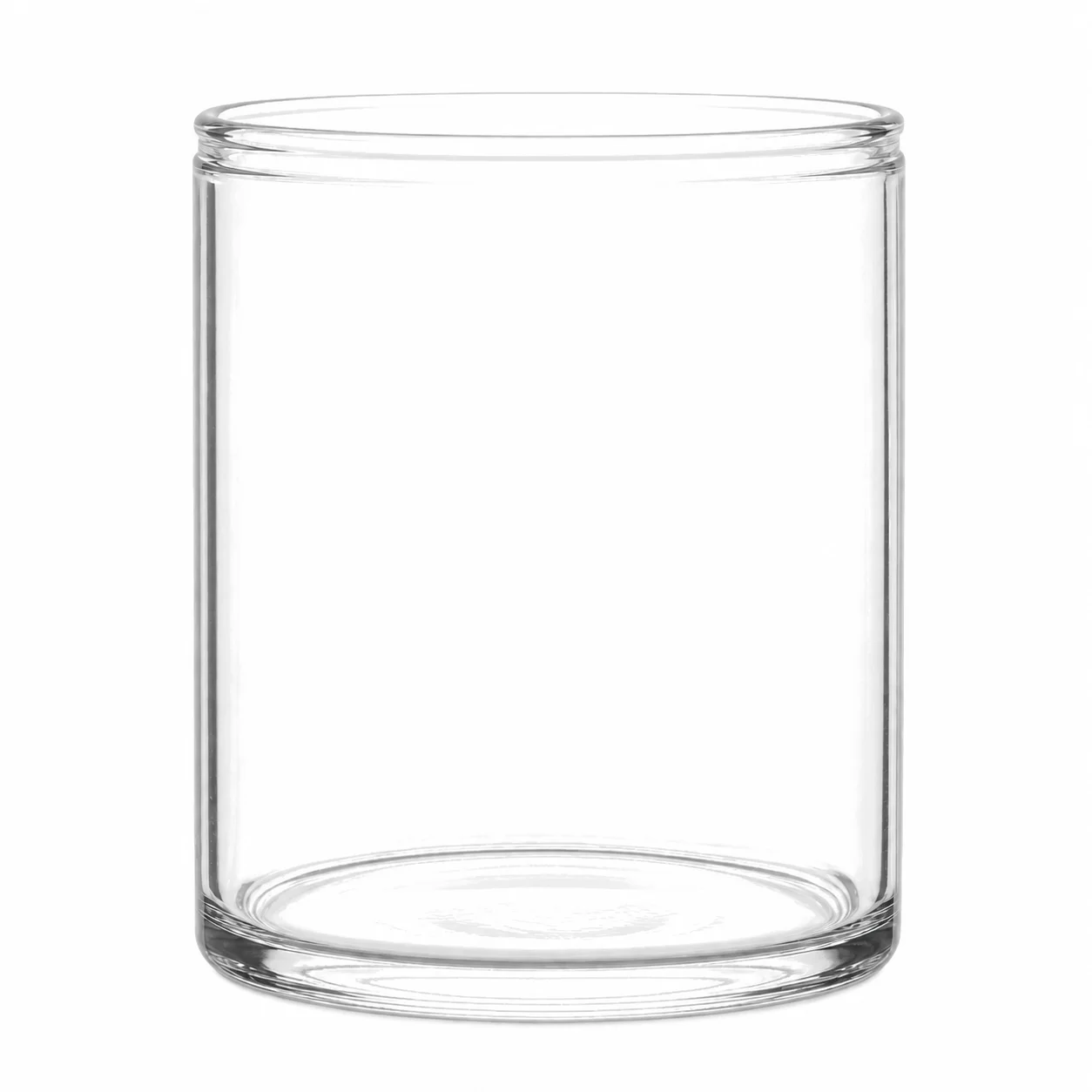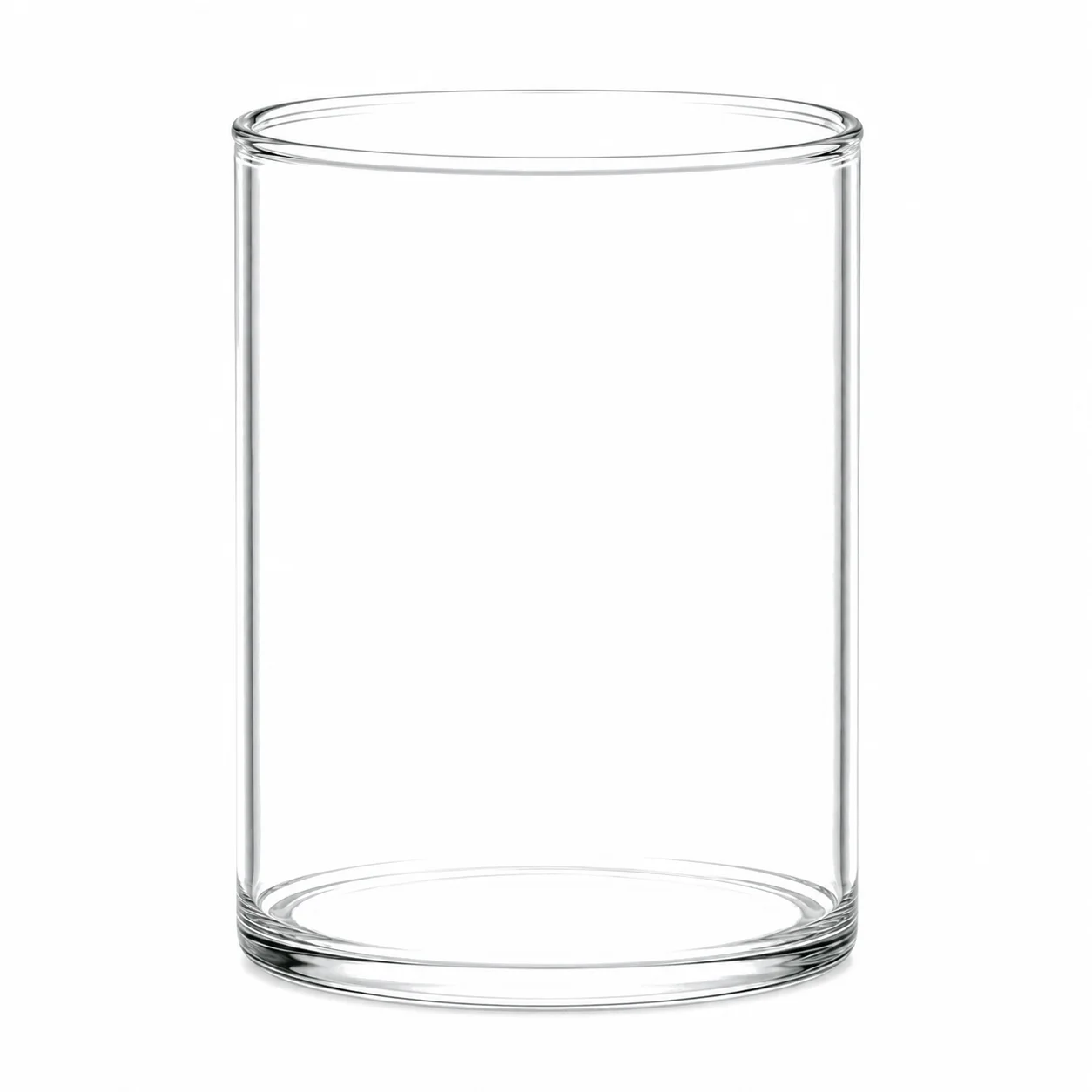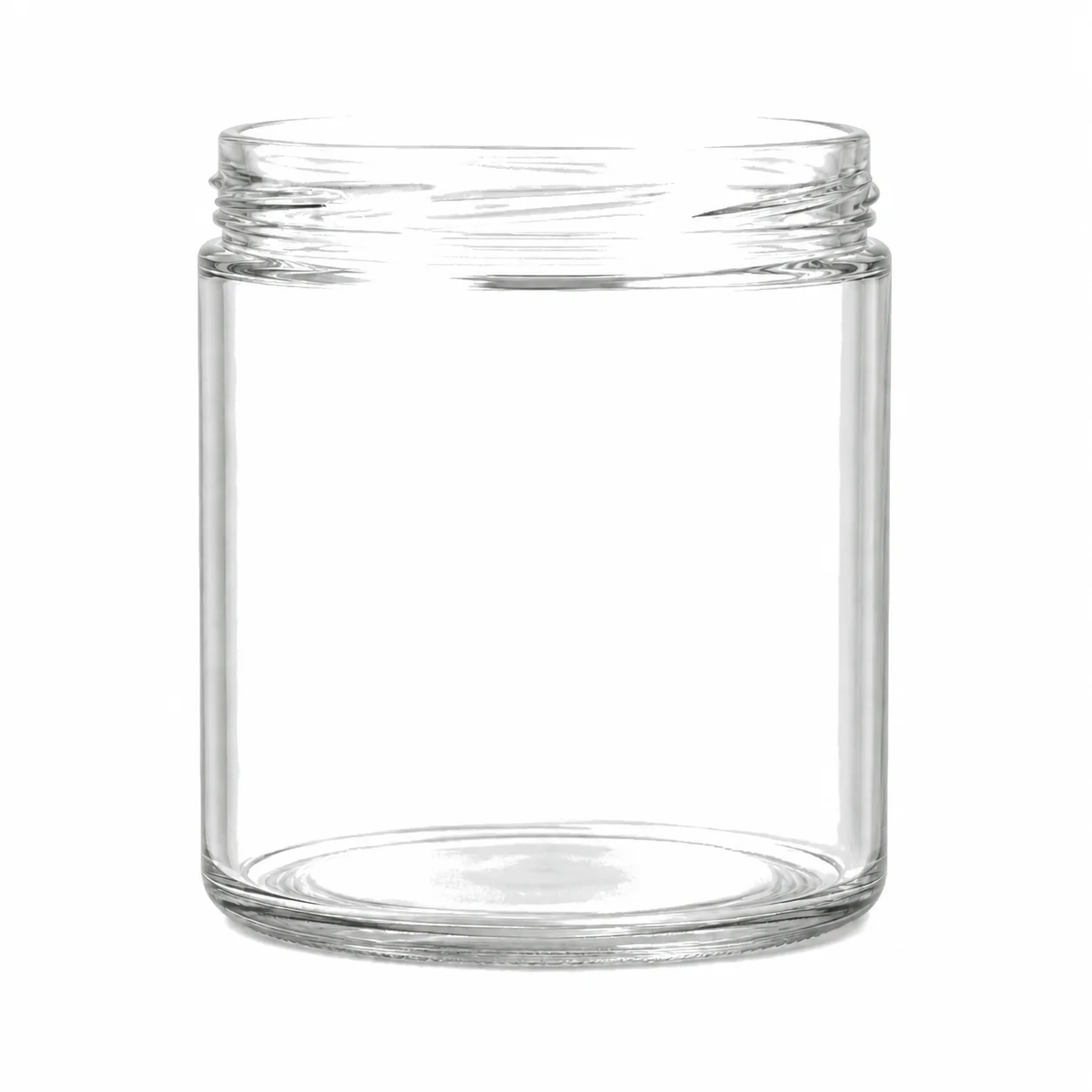
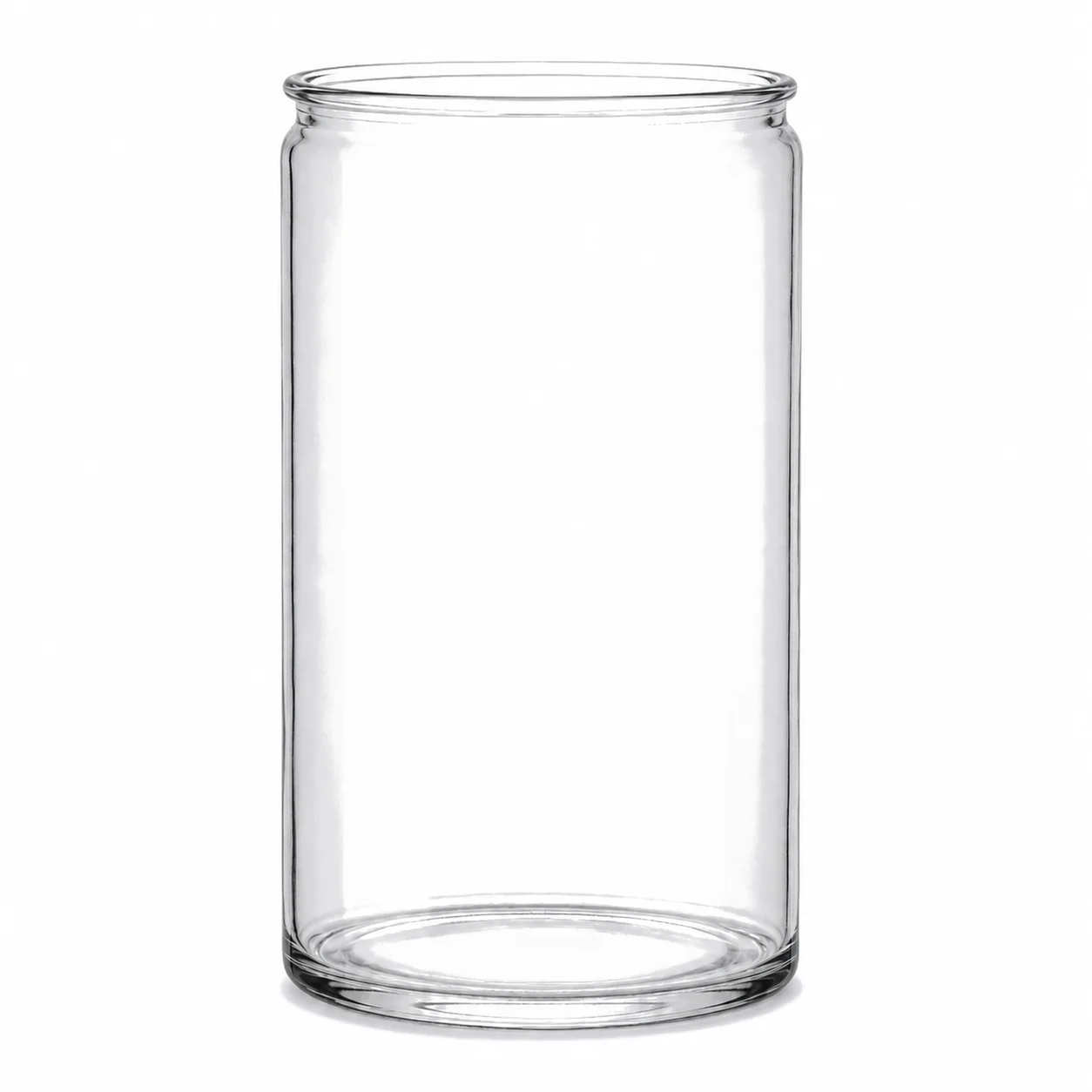
Clear 1.1 L tall cylindrical borosilicate glass dry goods storage jar
Shown configuration · bare clear glass canister / PP lid and silicone sealing ring not shown

Modular pantry storage for grains, pulses & dry ingredients

Dry Goods Storage Jar

A 1.1 L straight cylindrical borosilicate jar, 96 mm across the glass and 104 mm over its lid, standing 202 mm tall, with a matched PP-lid route for rice, oats, sugar and refill programs.

1.1 L capacity104 × 202 mm format305 g reference set
Stock status
In stock
Lead time
2–3 weeks
FOB price / pc
$0.15 - $0.60
MOQ
5,000 pcs

Final availability, dimensions, materials, assembled components and commercial terms are confirmed against the selected drawing and approved sample.

Vertical pantry capacity

The 202 mm-high body holds more stock without increasing the 104 mm modular footprint

Wide refill path

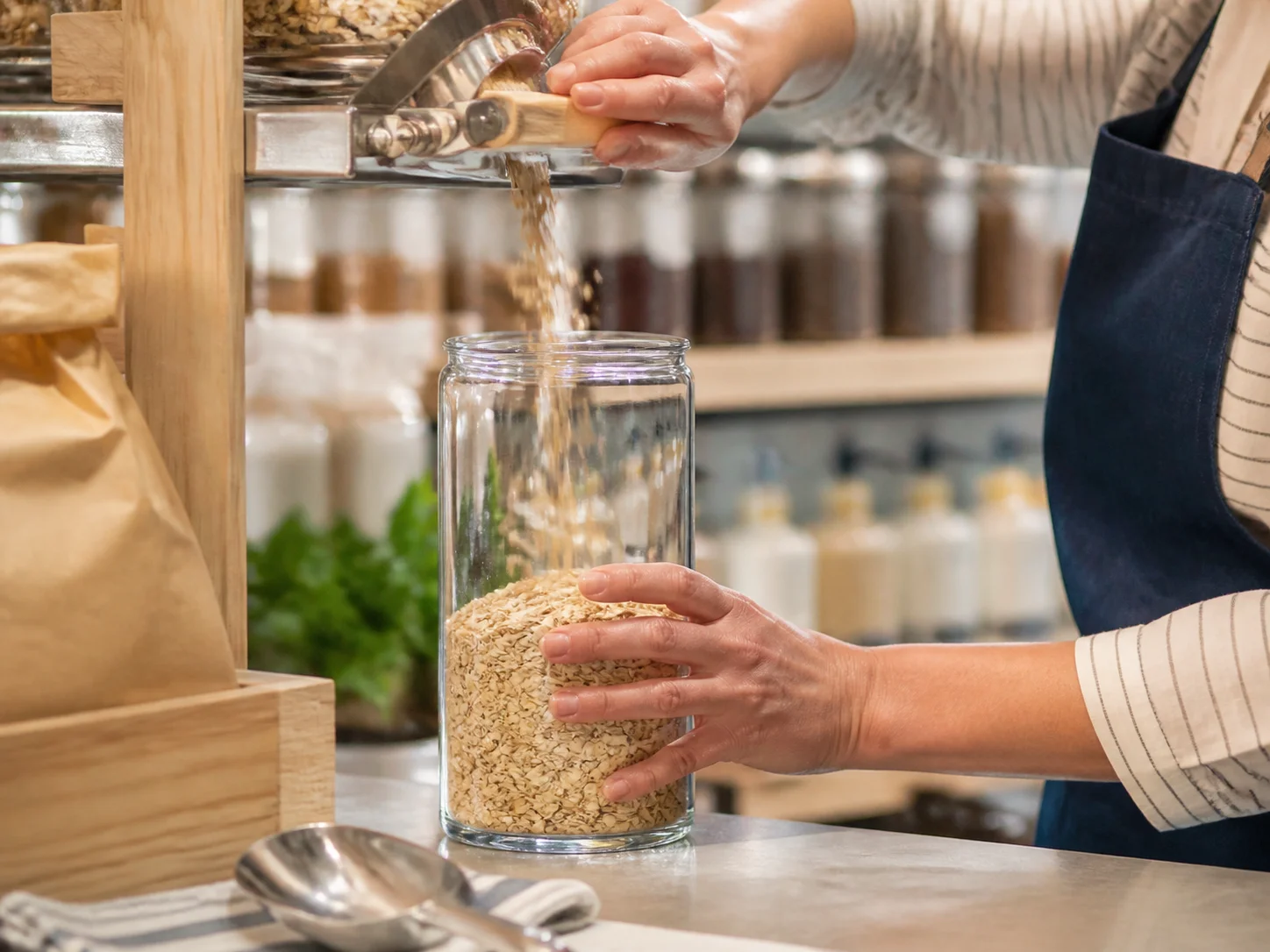
The open cylinder supports bag-to-jar transfer and measured scoop access

Stackable closure route

The reference family uses a PP lid with removable silicone ring

Dry Goods Storage Jar profile

A 1.1 L modular canister designed around real refill quantities, ingredient flow and visible stock control.

Bulk density, refill fit & pantry workflow

Six details that turn a tall clear jar into a usable dry-goods module.

BGP-FS-5051 works to the 1.1 L stackable canister envelope: a borosilicate body about 96 mm across under a 105 mm lid, 202 mm tall overall. That shared footprint lines up with the 0.3 L and 0.6 L modules while the extra height suits denser staples. A PP lid and silicone ring close it; the ingredient still decides fill grams, scoop and cleaning frequency.

01

One point one liters is not one universal refill weight

Rice, rolled oats, lentils, flour and breakfast cereal have very different bulk densities and settling behavior. Determine both the usable grams and visible fill line with the actual ingredient. A pack concept should also account for the remainder left in the source bag when the complete retail unit does not fit below the lid clearance.

02

The 202 mm body uses height while preserving shelf rhythm

It is the 104 mm lid diameter, not the 96 mm glass, that sets module spacing and lets this canister line up with the shorter sizes. Total height still has to clear a real shelf and the arm reaching for it, so dense goods belong low and cereals high. Stacking depends on the complete lid and load, not the bare rim in the photograph.

03

Free-flowing grains and powders need different access

Rice and lentils pour through the broad opening predictably; flour and fine meal create dust, compact under a scoop and settle into the sealing ring. Choose between pouring and scooping by product, and keep the working fill below the mouth zone so particles do not interfere with lid contact.

04

Transparent stock control needs disciplined labels

Clear glass lets users spot low inventory and distinguish products by appearance, but similar white powders or pale grains can be confused. Keep product identity, allergen status, lot or refill date and cooking instructions legible even when the jar is nearly empty. Never rely on appearance alone for flour, starch or allergen separation.

05

Refill systems require a clean-empty-dry cycle

Topping up indefinitely can bury old stock beneath new and hide residue at the base. Set a refill threshold that allows the jar, lid and removable silicone ring to be inspected, washed when required and dried fully. FIFO control matters in a retail refill station as much as it does in a household pantry.

06

A silicone ring is one interface in the storage system

The reference ring improves lid contact, but storage outcomes also depend on ring condition, particles on the rim, opening frequency and ambient humidity. Specify retention and closure checks with the production lid. Pest and shelf-life claims require evidence from the finished system and environment rather than an assumption based on a gasket's presence.
Application guide

Match the 1.1 L jar to ingredient density, dispensing action and refill interval.

Dense grains, bulky cereals and fine powders use the same volume very differently. Select the product and access method together before fixing pack weight or label layout.

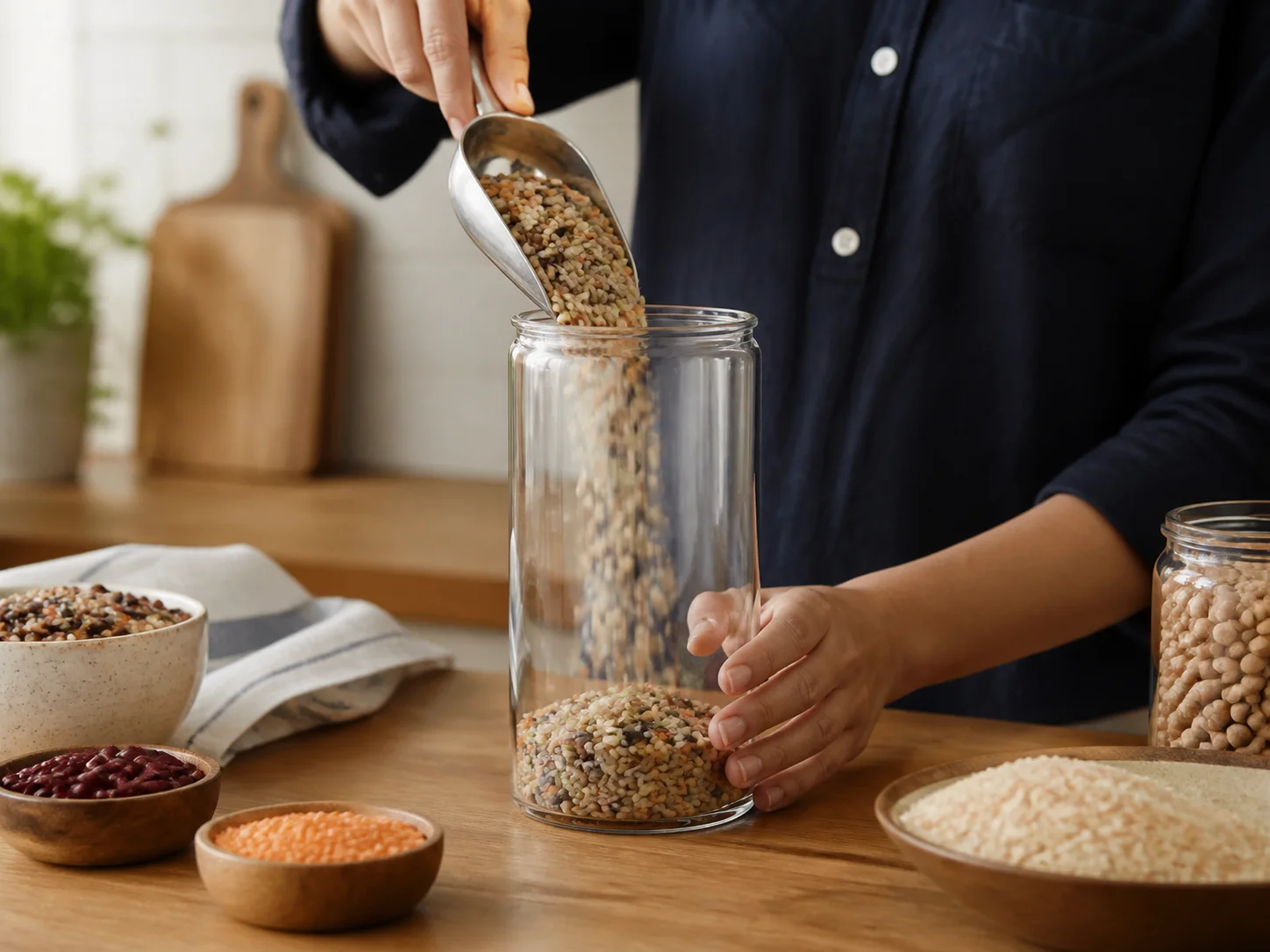
Dry Goods Storage Jar used for rice, lentils, beans & couscous in a grains & pulses setting

Grains & pulses

Rice, lentils, beans & couscous

For dense free-flowing staples where a 1.1 L jar may become relatively heavy when full. Verify the actual fill grams, shelf position and user grip, then choose a scoop or controlled pour that does not drag product across the silicone ring. Transparent walls make mixed varieties and foreign material easier to spot during refill.

  • Weigh the full handled load
  • Keep dense jars on accessible shelves
  • Clean grains from the rim before closing
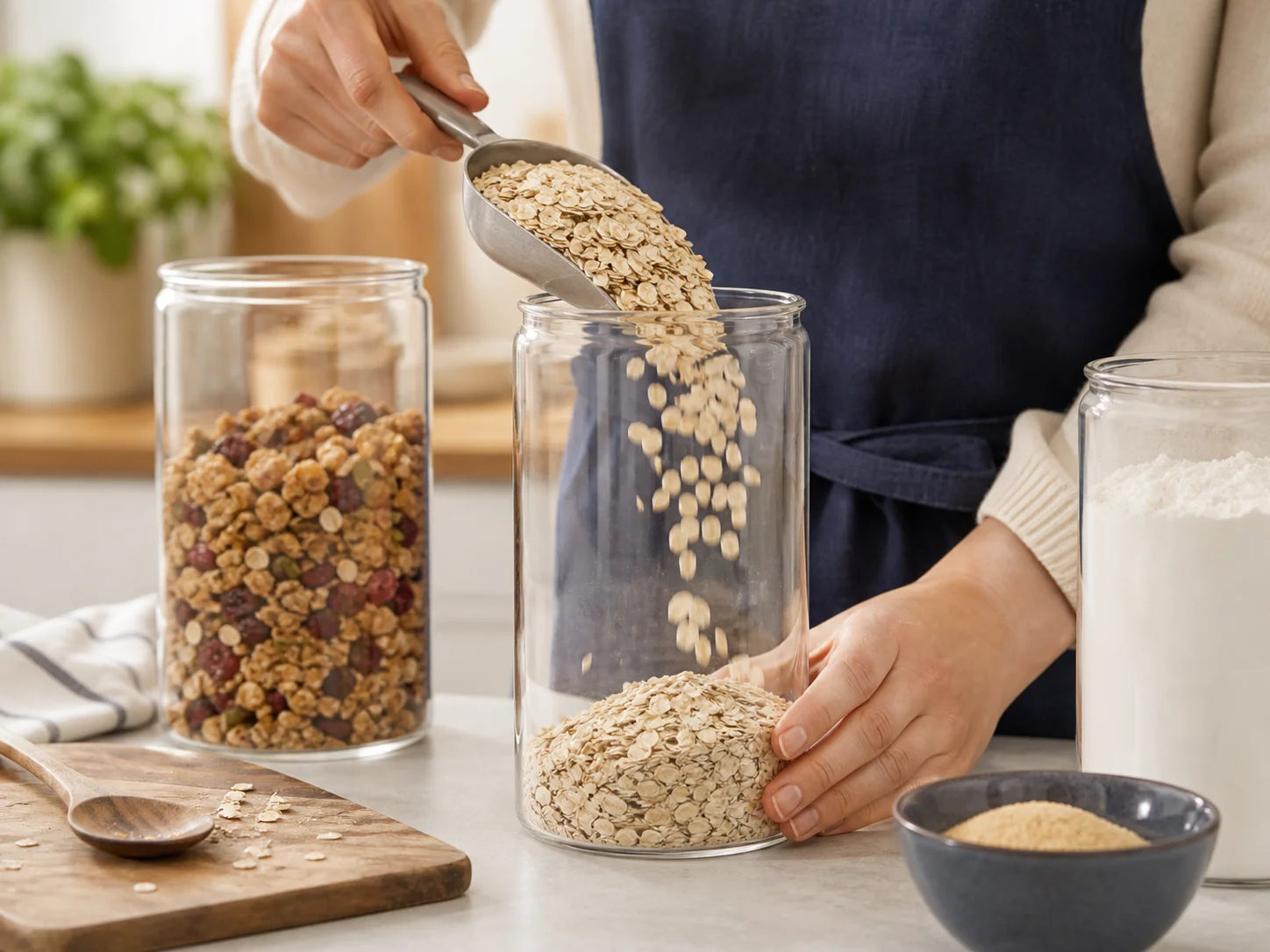
Dry Goods Storage Jar used for oats, granola, sugar & flour in a cereal & baking setting

Cereal & baking

Oats, granola, sugar & flour

For products ranging from bulky flakes to compact powders. Oats bridge around a narrow scoop while flour creates dust and compacts, so one utensil and fill height will not suit the whole range. Use explicit identity and allergen labels for visually similar baking ingredients.

  • Choose scoops by particle behavior
  • Allow powder-settling headspace
  • Separate allergen-controlled products
Dry Goods Storage Jar used for household decanting & managed retail in a refill programs setting

Refill programs

Household decanting & managed retail

For repeated transfer from a reserve pack or bulk dispenser. Define whether the jar is customer-owned storageware or part of an operator-controlled display, then document cleaning, lot traceability and FIFO. Avoid topping new stock over old product without an inspection point.

  • Match jar capacity to source-pack size
  • Record lot or refill identity
  • Build an empty-clean-dry checkpoint

The 1.1 L figure is a volumetric capacity; commercial net weight, closure performance and storage life remain ingredient- and program-specific.

Dry Goods Storage Jar FAQ

Technical questions about the 1.1 L modular pantry jar.

Answers covering the published reference, fill weights, wide mouth, lid system, stacking and refill control.

How many grams of rice, flour or oats fit in 1.1 L?

Each product has a different bulk density and settling response, so the jar has no single gram rating. Fill and weigh representative product below the required closure and scoop clearance, including normal vibration or settling before finalizing the label claim.

Can these jars be stacked when full?

The reference family is marketed as stackable, but a commercial stack height depends on the exact lid geometry, filled mass, shelf stability and dynamic handling. Confirm the intended load with the BGP production assembly rather than stacking bare open jars.

Does a silicone ring make the jar pest-proof?

A ring can support lid contact, but a pest-resistance claim also depends on closure retention, rim cleanliness, component condition and the storage environment. It should not be inferred from material presence alone.

Why does topping up a refill jar cause problems?

It buries old stock under new and hides residue at the base. A jar that is never emptied never gets cleaned, and flour or fine meal compacts into the sealing ring while it happens. Set a refill threshold that empties the jar first, so the glass, lid and removable ring go through a clean-and-dry cycle on a known interval.

Next step

Send us the Dry Goods Storage Jar brief.

Tell us the product, fill volume, closure preference and destination market. We will come back with the matching drawings, available configurations and a sample plan before anything is quoted.

  • 01Send the briefProduct, volume, closure and market
  • 02Get the optionsMatching drawings and configurations
  • 03Approve the sampleConfirm the pack before production