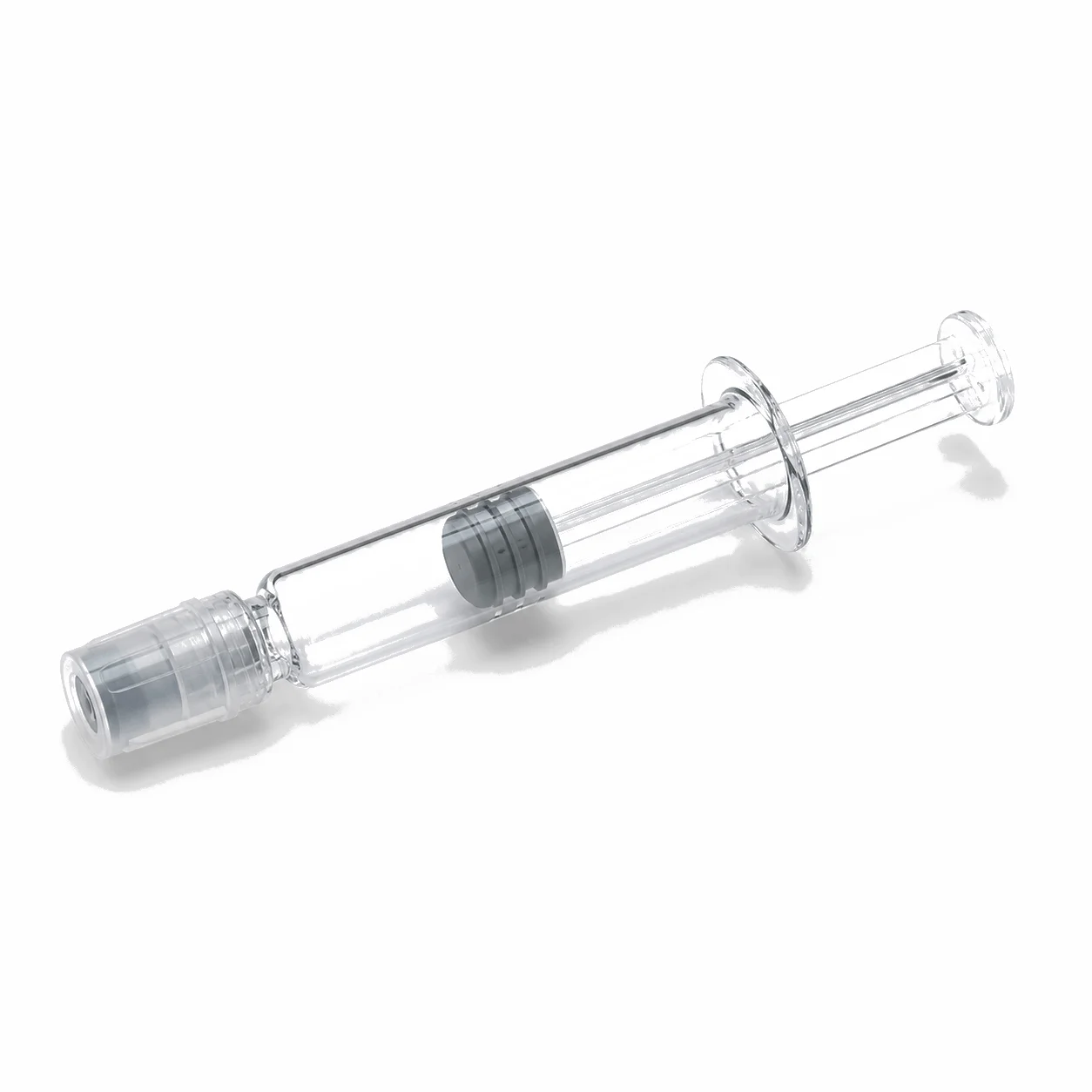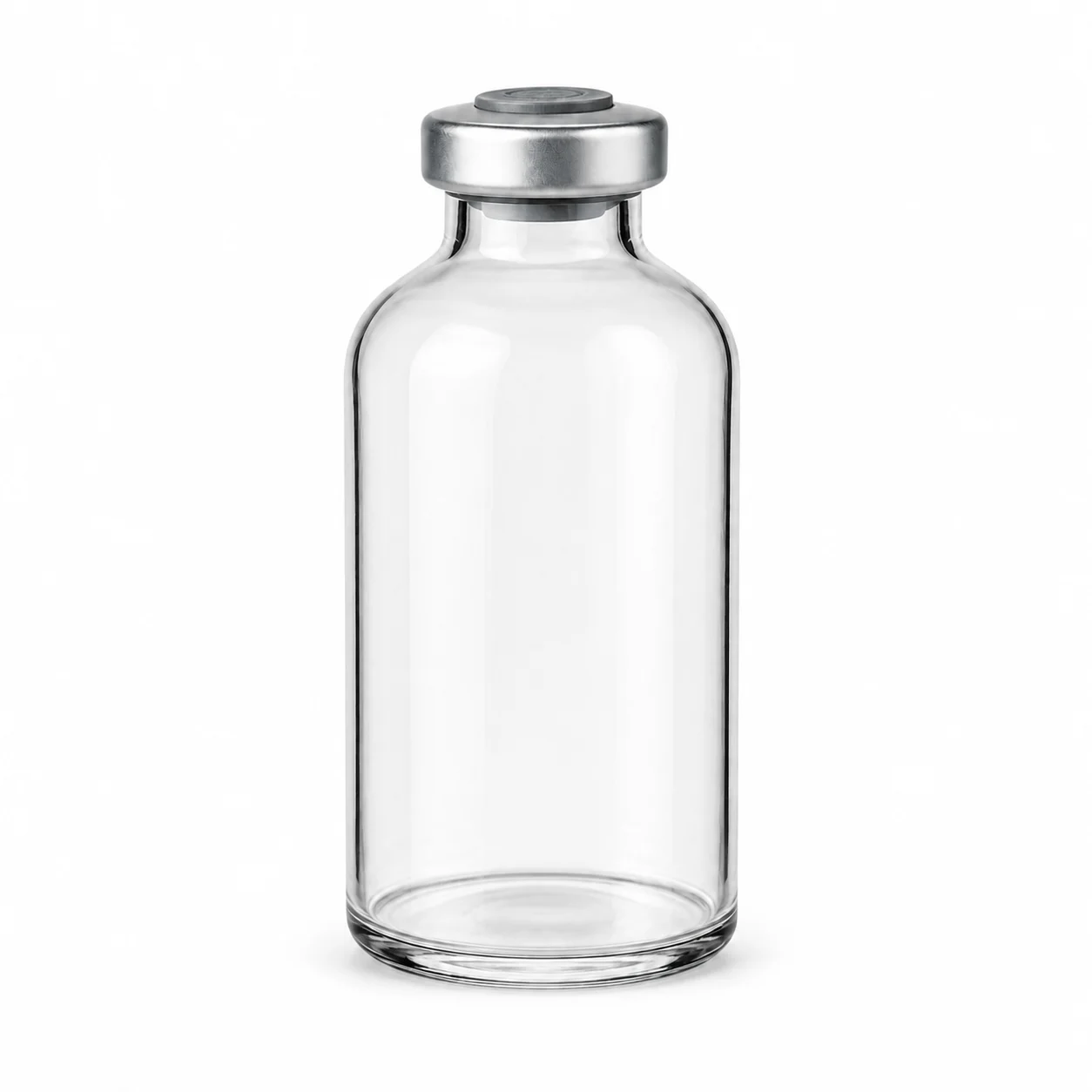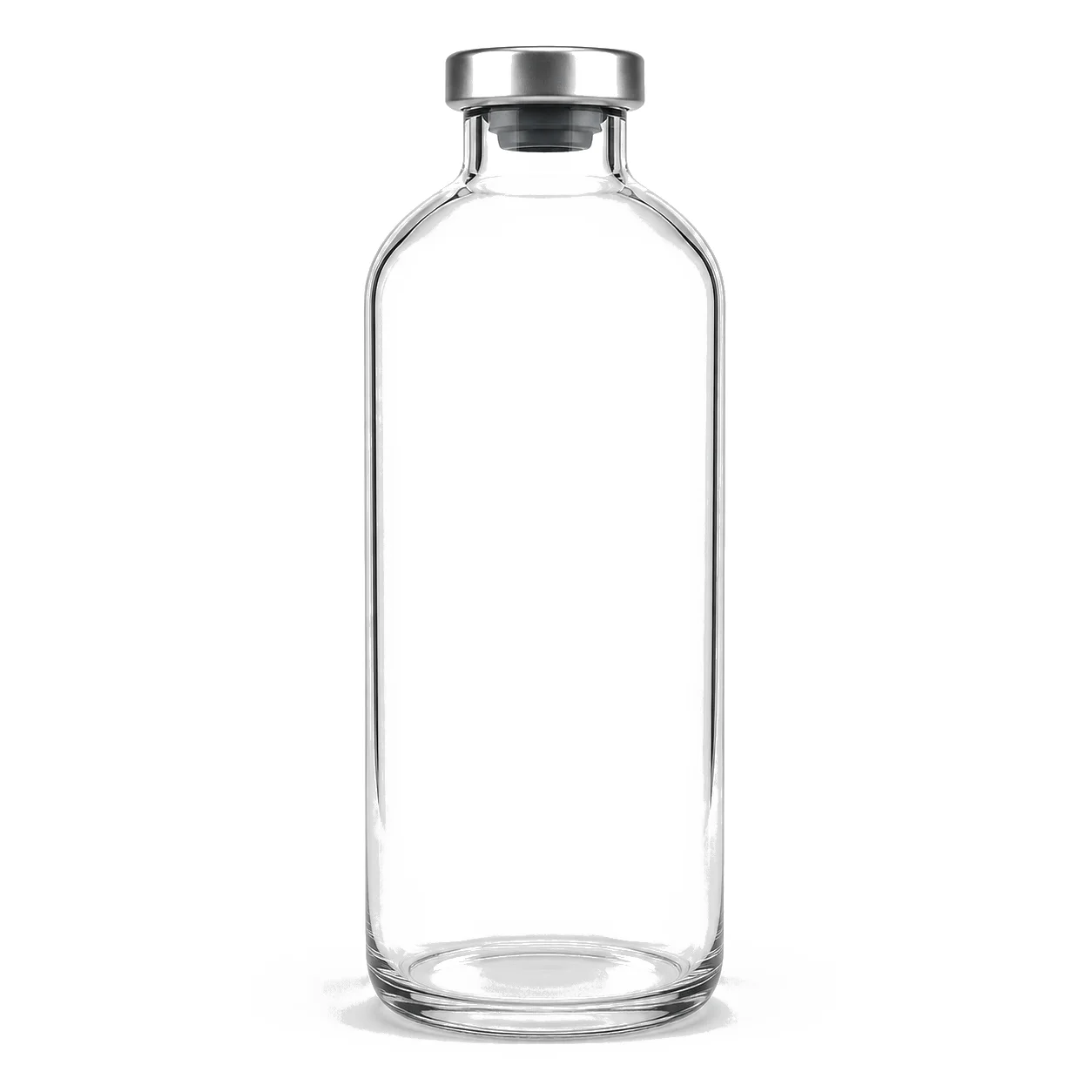
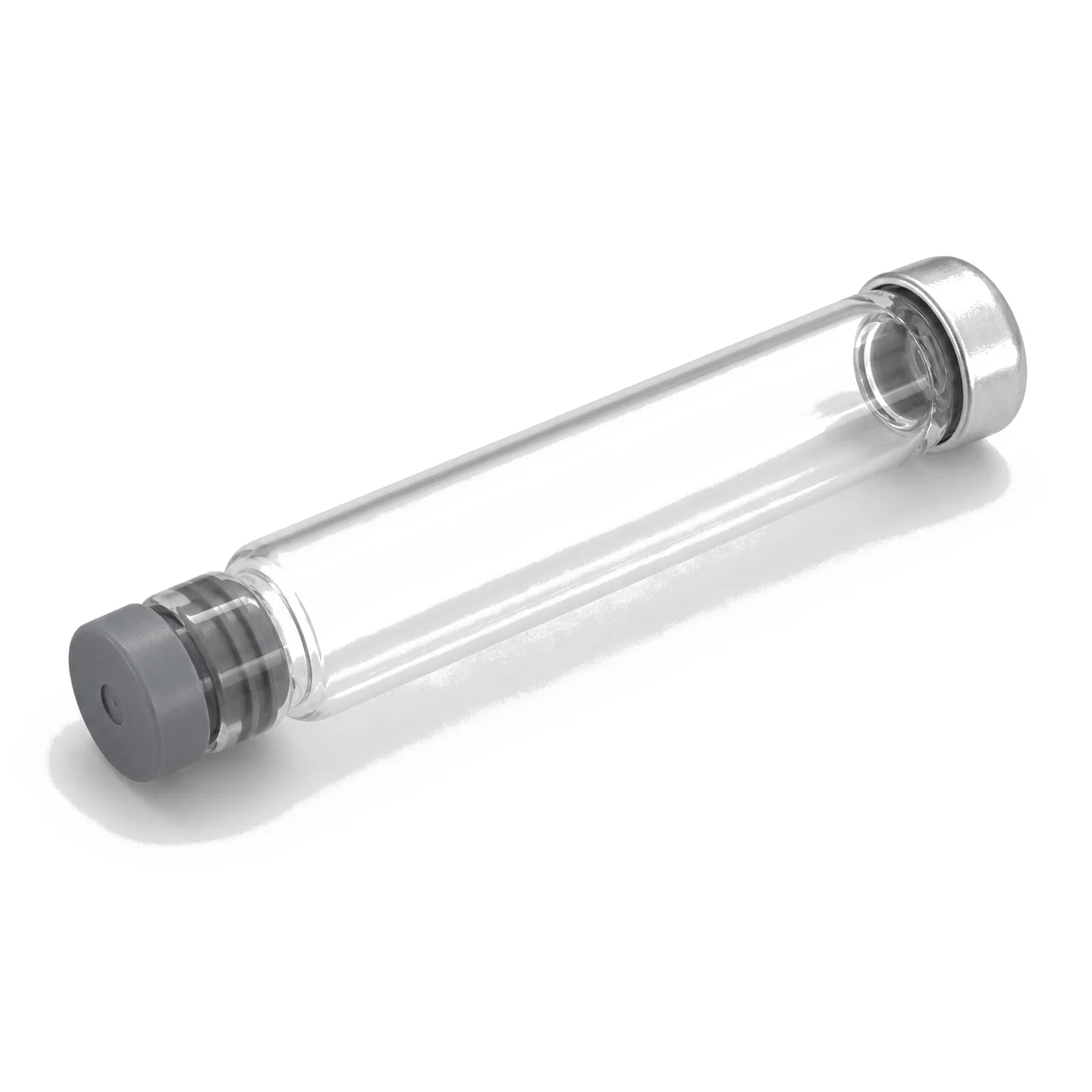
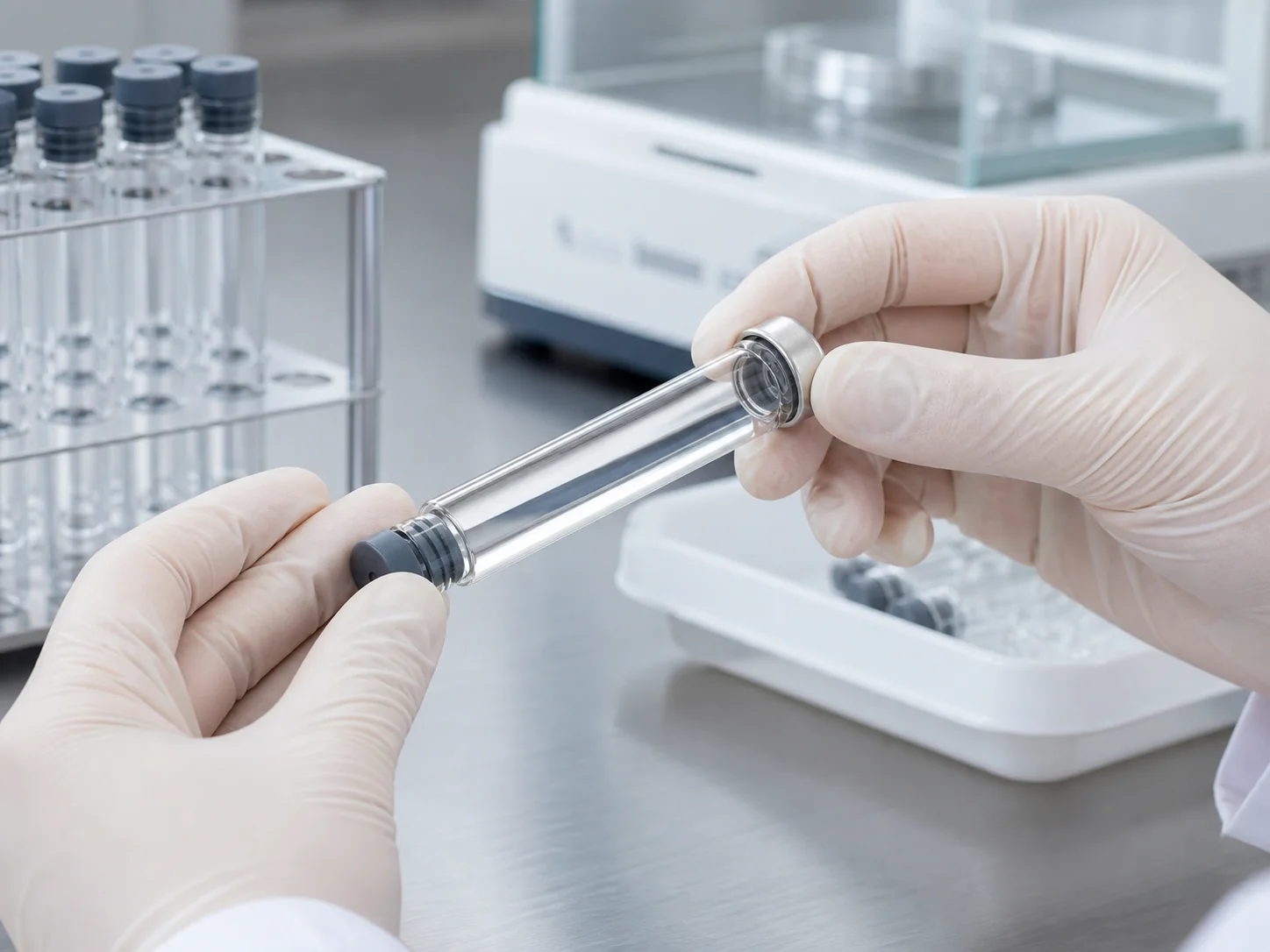
Clear glass cartridge with a gray plunger inside and a crimped metallic seal at the neck
Shown configuration · cartridge with plunger and seal / product, pen device, needle and label not shown

Device-filled containers

Cartridge

A glass cartridge sealed by a crimped septum at one end and a sliding plunger at the other, made to be loaded into a pen or an autoinjector rather than opened.

Septum one end, plunger the other1.5 and 3 mL formatsSiliconized bore
Stock status
In stock
Lead time
2–3 weeks
FOB price / pc
$0.65 - $1.05
MOQ
2,000 pcs

Final availability, dimensions, materials, assembled components and commercial terms are confirmed against the selected drawing and approved sample.

The device does the dosing

Container supplies a controlled bore

Bore uniformity matters

Plunger travel maps to delivered dose

Silicone is engineered

Too little binds, too much migrates

Cartridge profile

A container built to be a cylinder in someone else's machine.

Bore control, siliconization & device integration

Five properties that stop being packaging and start being metrology.

A cartridge is not opened by a user. It is loaded into a pen or pump that pushes its plunger a measured distance to deliver a dose. That makes internal diameter, bore straightness and plunger friction into dosing parameters, and it means the container is qualified with the device rather than on its own.

01

Internal diameter is a dose variable

The device moves the plunger a fixed distance; the volume delivered is that distance multiplied by the bore area. A bore a few hundredths of a millimeter wider therefore delivers proportionally more with no change to the device. Cartridges are held to tighter internal tolerances than most glass containers precisely because this arithmetic is unforgiving.

02

Siliconization is a specification with two failure directions

The bore is coated so the plunger slides evenly at low, consistent force. Too little silicone and the plunger sticks and releases in jumps, giving inconsistent dosing and a poor feel in the hand. Too much and it migrates into the product, where it can drive protein aggregation or show up as subvisible particles. Both directions are real failures.

03

The plunger seals against the wall along its whole travel

Unlike a stopper that seals against a finish, a plunger seals against the barrel wherever it happens to sit. That makes wall straightness, out-of-round and internal surface quality part of the closure system for the entire length of the cartridge, not just at one end. It is why cartridge glass is inspected differently from vial glass.

04

The septum end is a crimped closure like any other

At the front the cartridge is closed by a rubber septum under an aluminum ferrule, pierced by the device needle at each use. Coring, reseal and residual seal force apply exactly as they do on a vial, with the difference that the needle is chosen by the device manufacturer rather than the clinician.

05

The container is qualified with the device

Dose accuracy, gliding force, break-loose force and needle penetration are properties of the combination, not of the glass. Changing cartridge supplier without repeating that work is not a like-for-like substitution, even when every published dimension matches, because friction and silicone distribution differ in ways dimensions do not capture.

06

The finished device sets the tolerance, not the glass alone

A cartridge is loaded into a pen whose mechanism advances a fixed distance per click, so any variation in bore or in plunger position becomes a variation in delivered dose. The tolerance the glass has to hold is derived from the device geometry and is tighter than a general-purpose vial would ever need.
Application guide

A cartridge is not packaging; it is part of the device.

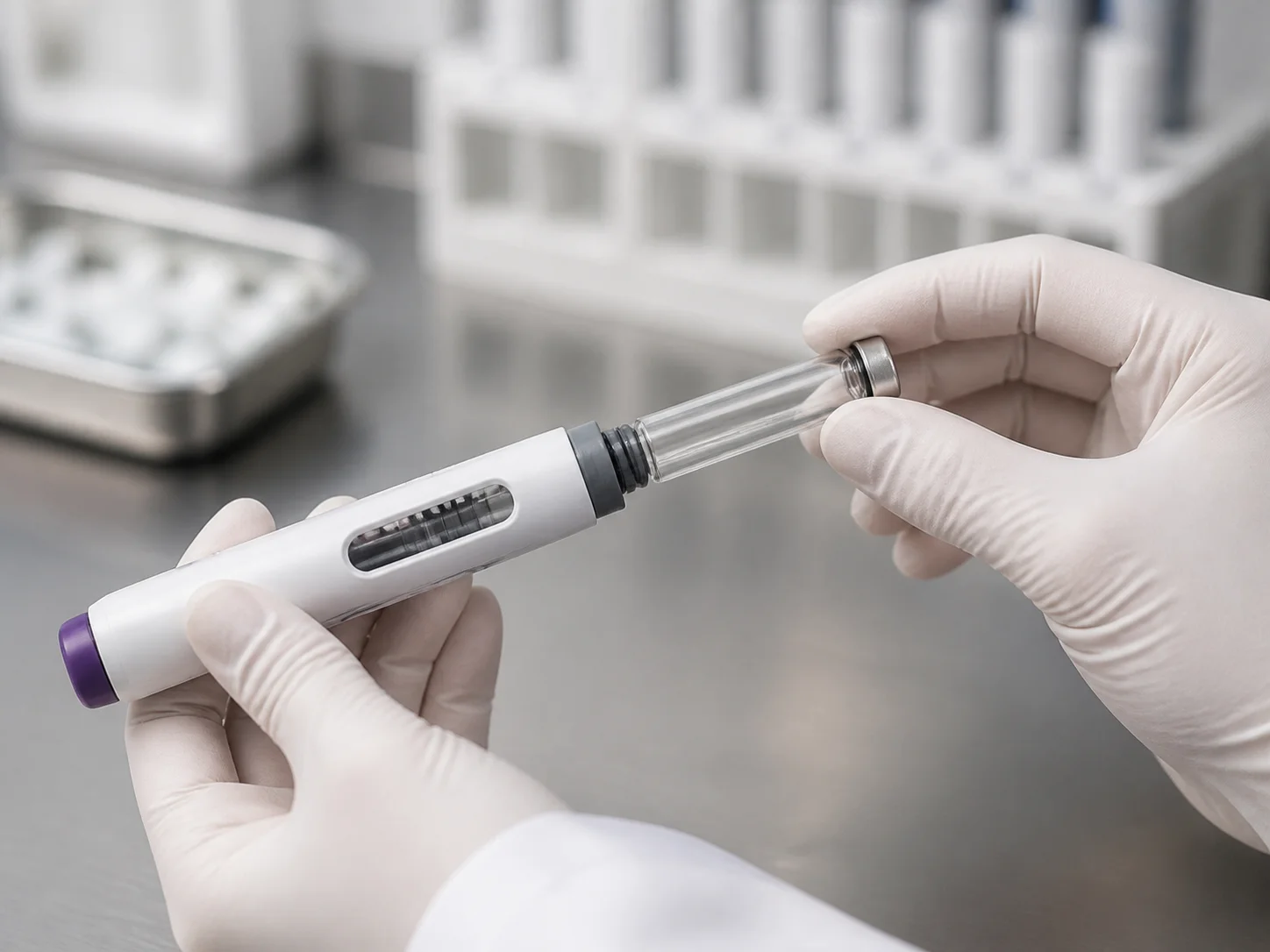
Unlike a vial, a cartridge is loaded into a pen or pump and the piston is driven by a mechanism, which means the glass and the device are engineered against each other. These are development directions confirmed with the qualified system.

Cartridge used for cartridges loaded into reusable devices in a pen injectors setting

Pen injectors

Cartridges loaded into reusable devices

For products a patient self-administers with a pen, where the device advances the piston a measured distance to deliver a dose. Bore consistency along the glass directly determines dose accuracy, so a cartridge that varies internally will dose incorrectly no matter how well the device is built.

  • Confirm internal bore consistency
  • Match glass tolerance to device travel
  • Qualify the cartridge with the device
Cartridge used for a seal that must slide, not stick in a piston movement setting

Piston movement

A seal that must slide, not stick

The piston has to move smoothly under device force across a shelf life during which it sits compressed in one position. Break-loose and glide forces are measured properties here, and siliconization affects both, so they are established for the assembled system rather than assumed.

  • Measure break-loose and glide force
  • Confirm behavior after long storage
  • Review siliconization with the device
Cartridge used for two seals a quality team has to sign for in a batch release setting

Batch release

Two seals a quality team has to sign for

For the people releasing a batch, where a cartridge is closed by a crimped septum at one end and a sliding piston at the other. The two interfaces fail in completely different ways and neither can be judged by looking, so both are qualified on filled units and the evidence is kept per batch.

  • Qualify both end interfaces
  • Confirm integrity after transport
  • Retain evidence per batch

Applications describe development directions. Injection suitability, delivery, dose, integrity, sterility and regulatory outcomes are confirmed for the selected program.

Common questions

Cartridge questions

A cartridge is a metrology part. These questions are where that shows.

Why are internal tolerances so much tighter than on a vial?

Because the bore is part of the dose. The device advances the plunger a fixed distance, and the volume delivered is that distance multiplied by the bore area, so a bore a few hundredths of a millimeter wider delivers proportionally more with no change to the device. That arithmetic is why cartridge glass is held to tighter internal dimensions.

Is the septum end the same as a vial closure?

In construction, yes: a rubber septum under a crimped aluminum ferrule, with coring, reseal and residual seal force applying as they do on a vial. The difference is that the needle piercing it is chosen by the device manufacturer rather than by a clinician, so penetration testing is done against that specific needle geometry.

Can we change cartridge supplier if the dimensions match?

Not as a like-for-like substitution. Dose accuracy, break-loose force and gliding force are properties of the container and device together, and friction and silicone distribution differ between suppliers in ways published dimensions do not capture. The device work has to be repeated, which is usually the largest part of the change.

Who sets the tolerance — the glass or the device?

The finished device. A cartridge only means something inside the pen or pump it was designed for, so dimensional limits come from that assembly rather than from the glass drawing alone. Qualify the pair, and requalify if either changes.

Next step

Send us the Cartridge brief.

Tell us the product, fill volume, closure preference and destination market. We will come back with the matching drawings, available configurations and a sample plan before anything is quoted.

  • 01Send the briefProduct, volume, closure and market
  • 02Get the optionsMatching drawings and configurations
  • 03Approve the sampleConfirm the pack before production