Front-end formats, forces & residues
Six properties that matter more here than in any other glass container.
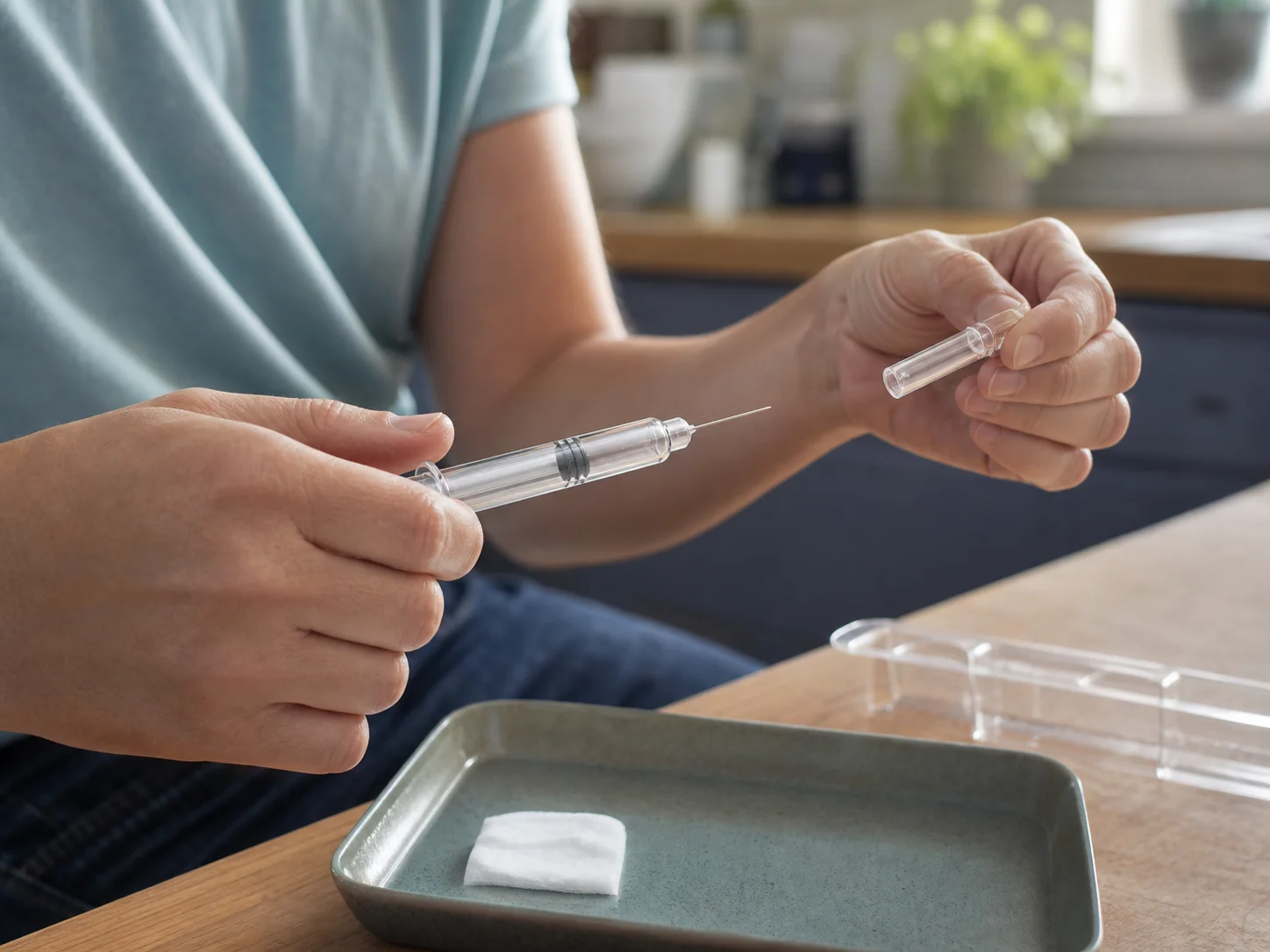
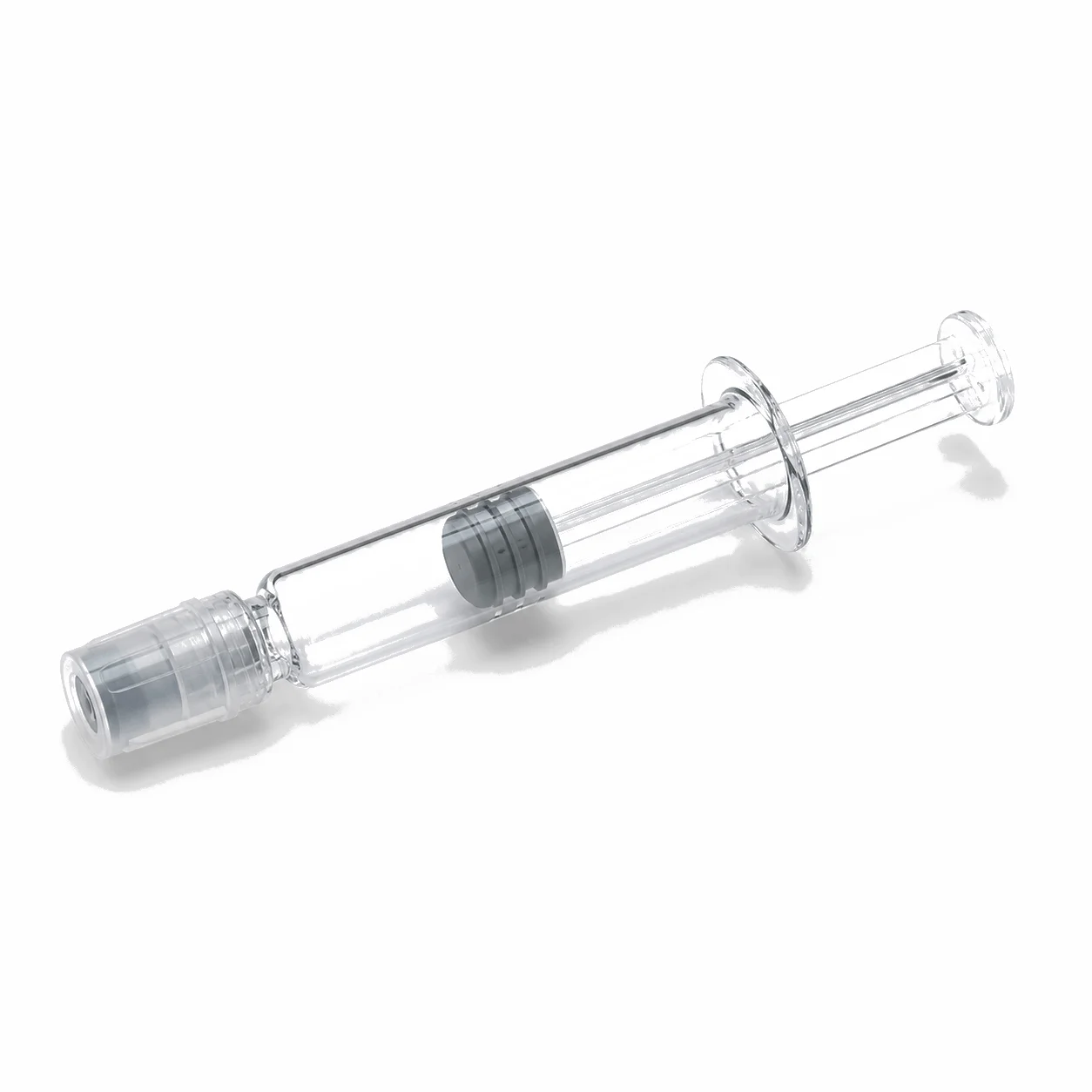
A prefilled syringe removes the preparation step: the dose is measured at filling and the patient or clinician only injects. In exchange, the glass barrel is simultaneously a primary container, a sliding seal, a metering cylinder and part of an injection device, and it has to satisfy all four roles with one specification.
Staked needle and luer cone are different products
A staked needle is bonded into the barrel at manufacture and covered by a rigid or soft shield; a luer cone accepts a needle or a device fitted at the point of use. The first gives a lower dead volume and a sealed fluid path; the second gives flexibility over needle choice. The decision changes the barrel, the closure and the adhesive.
Break-loose and gliding force are patient-facing numbers
Break-loose force is what it takes to start the plunger moving; gliding force is what it takes to keep it moving. Both are set by siliconization, piston design and barrel geometry, and both are experienced directly by whoever injects. A syringe that is fine on a test rig can be unusable for a patient with reduced hand strength.
Silicone is necessary and it is also a contaminant
Without silicone the piston will not move smoothly; with too much, silicone droplets enter the product, where they can seed protein aggregation and count as subvisible particles. Baked-on siliconization reduces free silicone at higher cost. For a biologic, this is usually the most consequential single decision in the container specification.
Tungsten and adhesive residues come from making the tip
The funnel of a staked-needle barrel is formed around a tungsten pin, which can leave trace residues, and the needle is bonded with an adhesive that is cured in place. Both have been implicated in protein aggregation. Low-tungsten processes and alternative adhesives exist, and the question belongs in the specification for sensitive molecules.
The tip cap is a closure and a fluid path component
A rigid needle shield or tip cap seals the front of the syringe for the whole shelf life, keeps the needle sterile and has to come off cleanly under moderate force. It contributes to container closure integrity in the same way a stopper does, and it is qualified alongside the piston rather than treated as packaging.
The plunger rod and stopper are matched, and the match is tested
Delivered dose depends on the stopper stopping where the rod stops, and a rod that threads incompletely into the stopper can leave part of the dose behind. The combination is qualified together, which is why a change of rod supplier is a change to the drug product presentation.