Grip, panel stiffness & labeling
Six effects of running ridges up a bottle body.
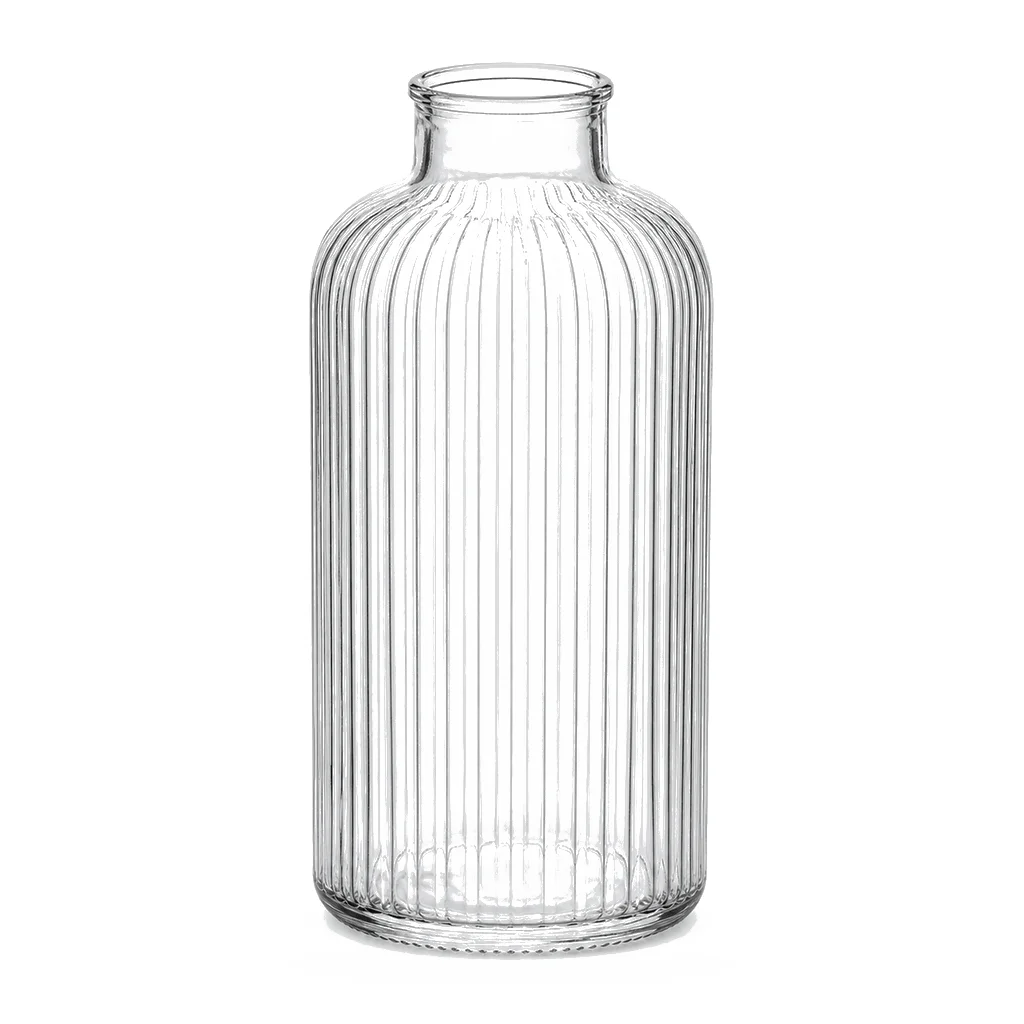
Vertical ridging looks like styling and behaves like engineering. It gives a chilled, condensation-covered bottle something for a hand to hold, it stiffens a flat panel through the same principle that makes corrugated sheet rigid, and it refracts light through the contents in a way plain glass does not. It also complicates labeling, which is the cost of all three.
Wet grip is where the benefit is real
A chilled bottle covers itself in condensation within minutes of leaving a cabinet, and smooth glass at that point is genuinely slippery. Ridges give fingers something to bear against, which is why the pattern persists on beverage formats that are held and poured rather than opened once and set down.
Ridges stiffen the wall through their geometry
A corrugated section resists bending far better than a flat one of the same thickness, and the same principle applies to a ridged bottle panel. That contributes to vertical load resistance in stacking and to resistance against squeezing, and it can allow a slightly lighter wall than a smooth equivalent would need.
The label has to have a smooth home
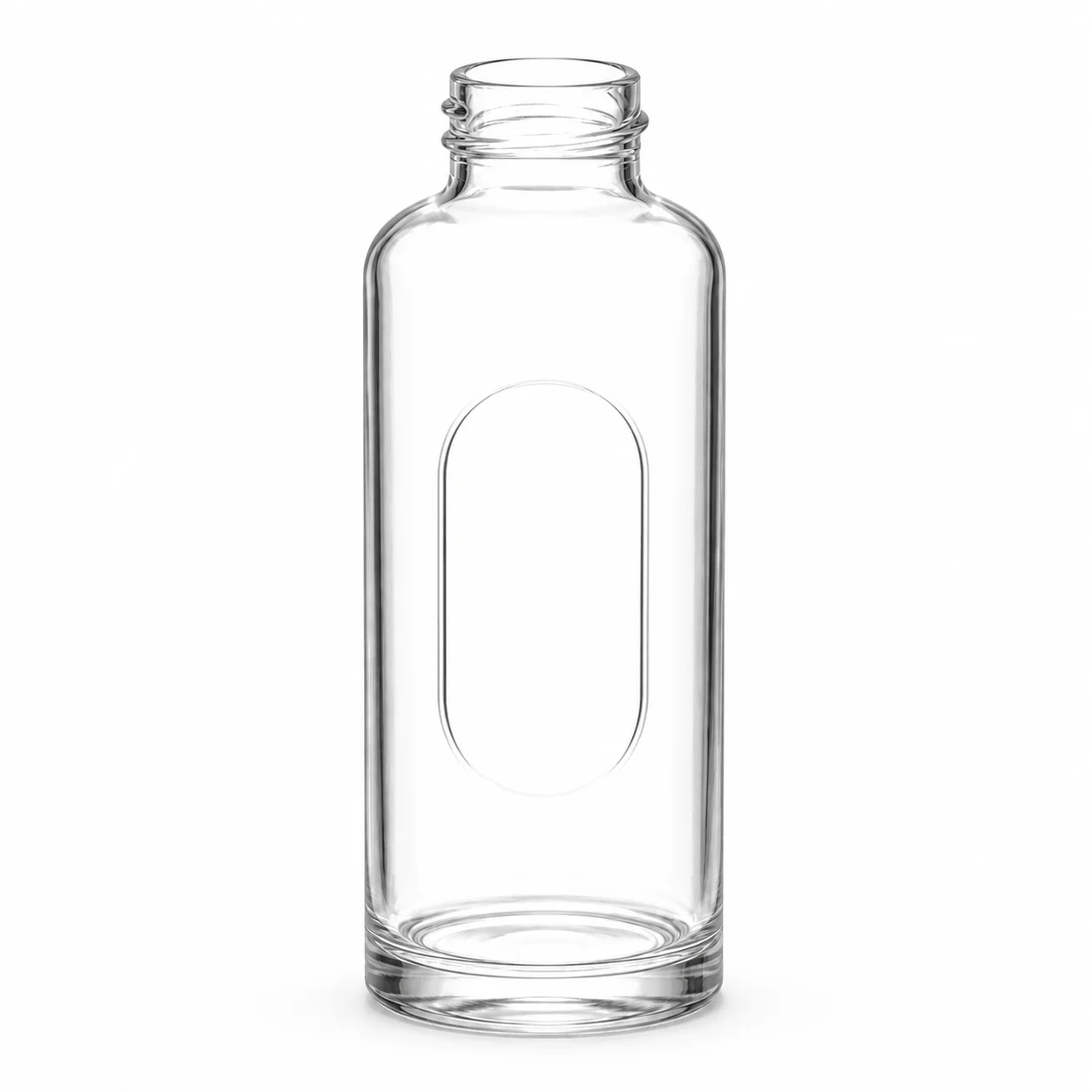
A paper label cannot span a ridged surface without bridging and creasing, so the design needs a smooth band where the label sits, with ridges above and below it. Setting that band's height and position from the label size at the design stage is trivial; retrofitting it means recutting the mold.
Ridge crowns take the wear
The high points of the pattern are what touch guide rails, crates and neighboring bottles, so scuffing concentrates there rather than spreading across the body. Surface coatings help considerably, and rounding the ridge crowns rather than leaving them sharp reduces both the abrasion and how visible it is.
Ridging changes how the contents look
Each ridge acts as a lens, so a ridged bottle makes the liquid inside appear to shift and repeat as the bottle is turned. On a clear or lightly colored drink that is an asset; on a product where the customer wants to judge clarity or color accurately it is an obstacle worth considering before committing.
The pattern has to release like any other mold detail
Ridges have to draft outward to leave the mold, which sets a limit on how deep and how sharp they can be. Deep, sharp ridges also create thickness variation between crest and valley, so the practical designs are moderate in depth with rounded profiles rather than fine and knife-edged.