Wall thickness, line contact & visual behavior
Six differences between pushing a design in and raising it out.
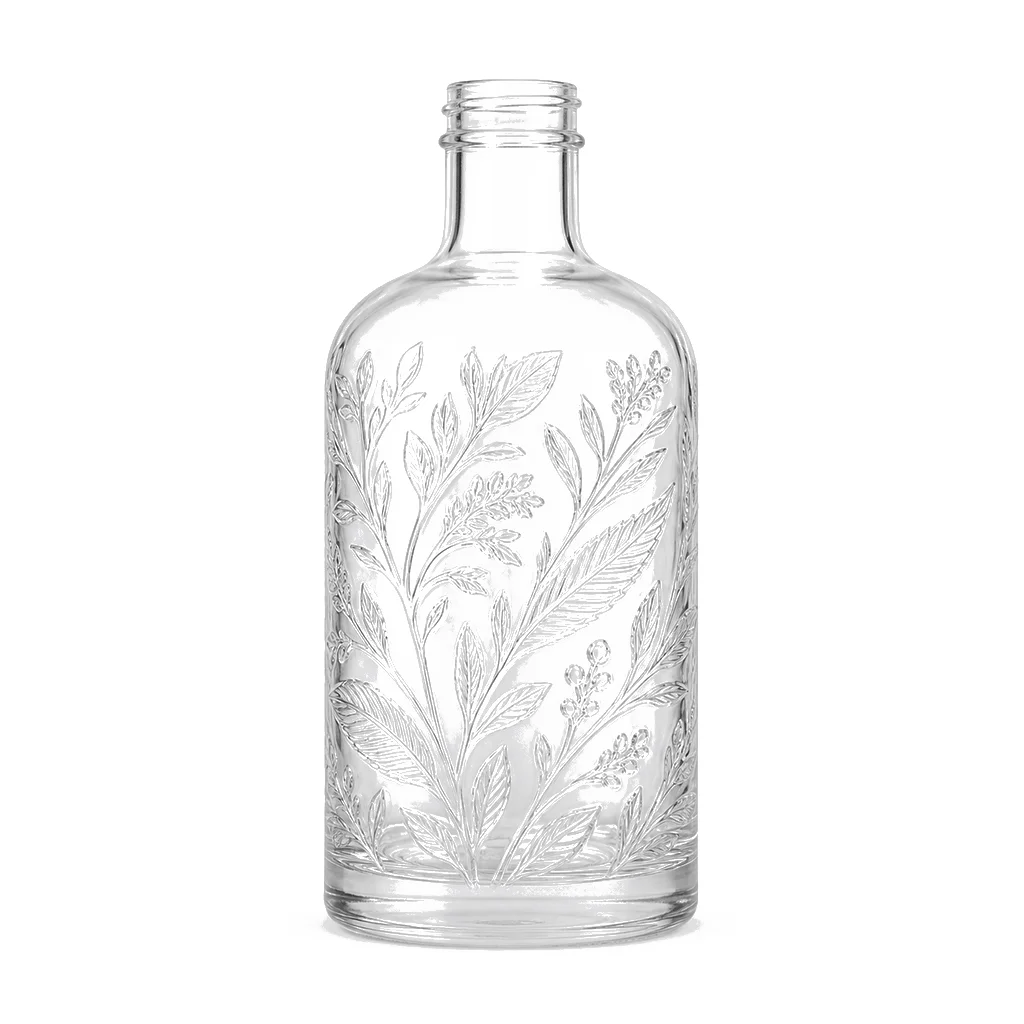
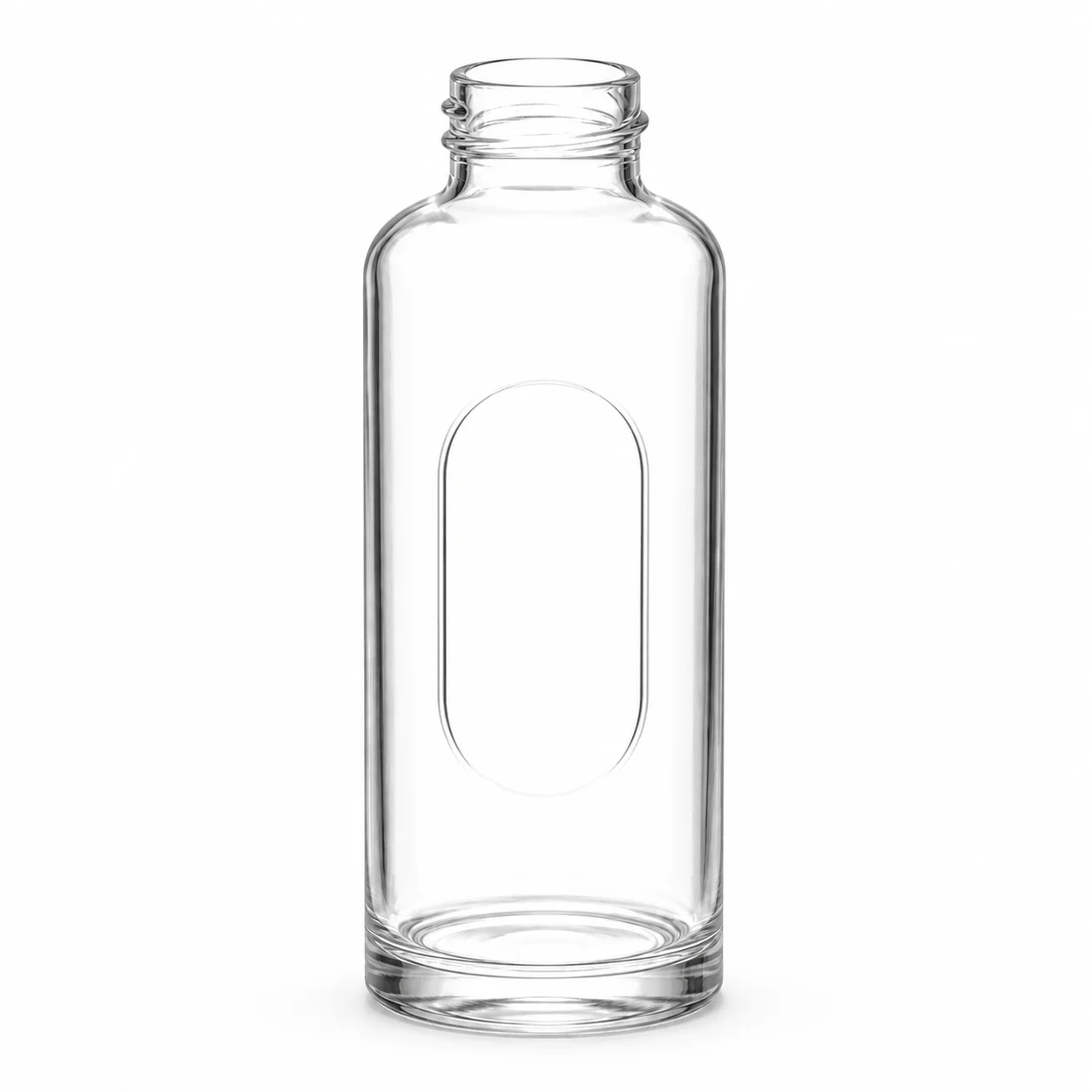
Debossing pushes the design into the glass instead of out of it. That gives a smooth outer profile, which is genuinely useful on a line and in a crate, and it also removes glass locally rather than adding it — which is why placement relative to stress-carrying areas deserves more thought than an embossed design needs.
Recessing removes glass where it is applied
A debossed area is thinner than the wall around it, and if that area sits where the bottle carries load — the shoulder, the heel, the base radius of a pressurized pack — the reduction matters. Keeping recessed decoration on the body panel, away from stress-carrying geometry, is the simple rule that avoids the problem entirely.
A smooth outside is easier on the line
Raised decoration rubs against guide rails, conveyor sides and neighboring bottles, and it is where scuffing appears first. A debossed bottle presents an uninterrupted surface to all of those, so it wears more evenly, which matters most in returnable systems and on high-speed lines with tight guiding.
It reads as shadow rather than highlight
Embossing catches light on its raised edges; debossing collects shadow in its recesses. That makes debossed work quieter and more legible on dark or heavily colored glass, where raised relief can disappear. Choosing between them is largely a question of what the glass color will support.
Recesses take a color fill
Because a debossed area is a well, applied color can be filled into it and wiped clean from the surrounding surface, giving a crisp two-tone effect that raised relief cannot easily match. It adds a decorating step and a cost per unit, and it turns a subtle detail into a clearly readable one.
It still has to release from the mold
A recess must widen toward the surface to let the glass out, exactly as a raised feature must narrow. That means no undercut recesses and no vertical-walled channels, and it means very fine recessed lines fill poorly and read faintly. Both are worth testing on a sample rather than assuming from the drawing.
Recessed surfaces need to be cleanable
Anything set into a surface can hold residue, which matters for a bottle that is washed and refilled or one used in a kitchen. Generous radii at the bottom of a recess, rather than a sharp cut, are what let it be cleaned and are worth specifying rather than leaving to the engraver's judgment.