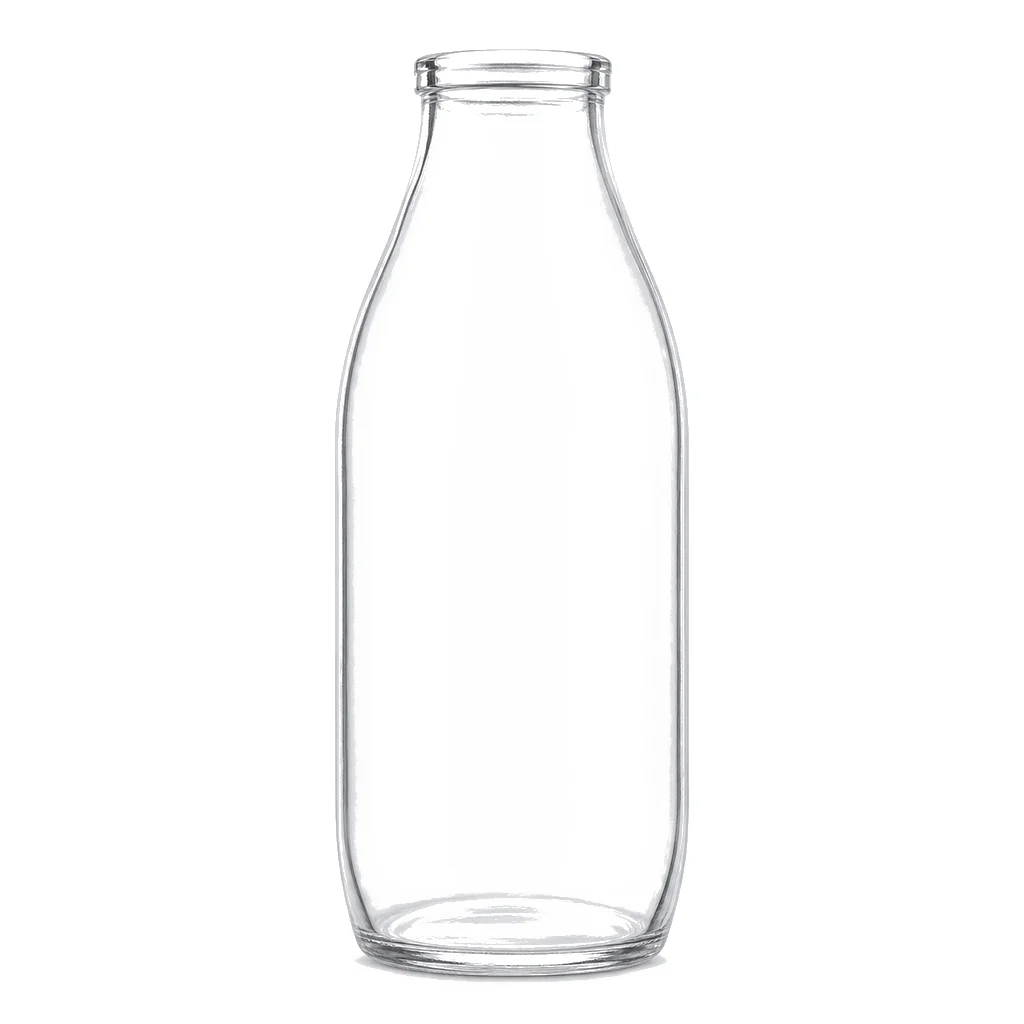
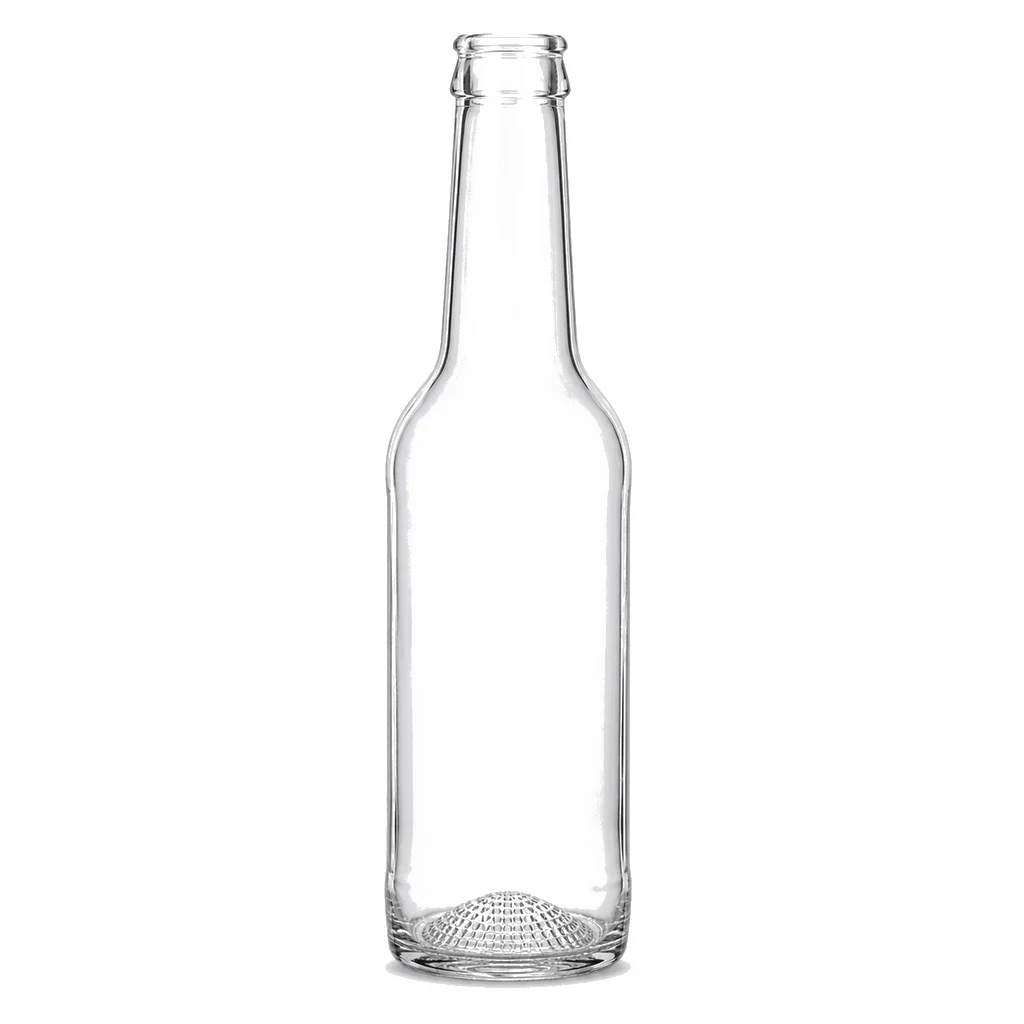
Bubble formation, visibility & base integrity
Six things to weigh before texturing the base of a bottle.
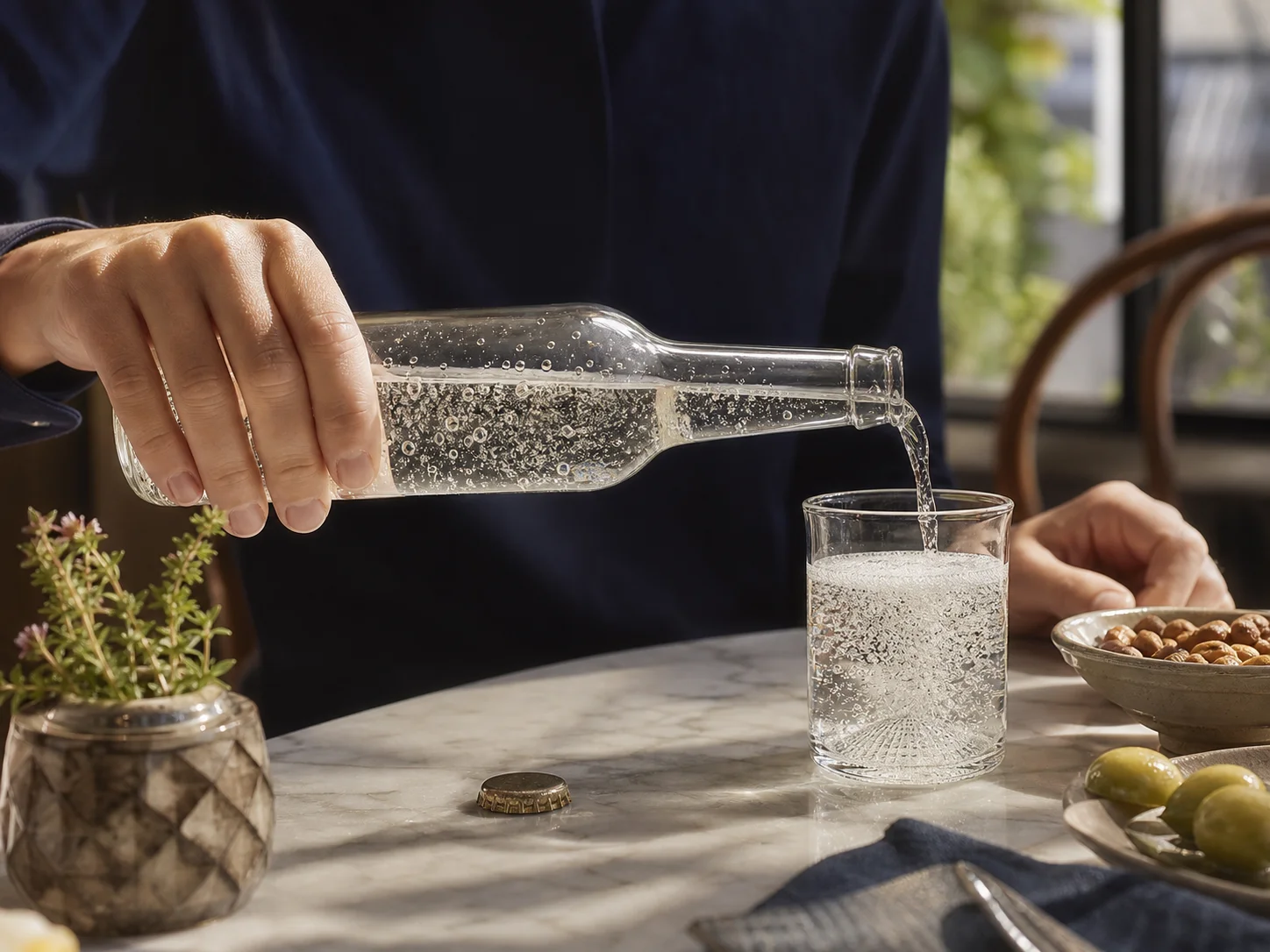
Dissolved carbon dioxide needs a surface irregularity to form a bubble on — smooth glass gives it almost nothing, which is why a spotless glass produces a still-looking beer. Etching or texturing the base creates thousands of those sites and produces a continuous rising bead. The technique came from drinking glasses, and that is where the customer can actually see it.
Bubbles form on imperfections, not in the liquid
Carbon dioxide leaving solution needs an existing gas pocket to grow from, and clean glass provides very few. Deliberate micro-texture supplies them in quantity, which is why a nucleated surface produces a steady visible stream while an untouched one produces almost nothing. The effect is genuine and repeatable, not a marketing claim.
In a sealed bottle it costs nothing
A closed bottle sits at equilibrium with a headspace already saturated with carbon dioxide, so texture in the base does not drain carbonation while the pack is sealed. The consumption happens after opening, when the gas has somewhere to go, which means shelf life is unaffected by the feature.
The customer usually cannot see it
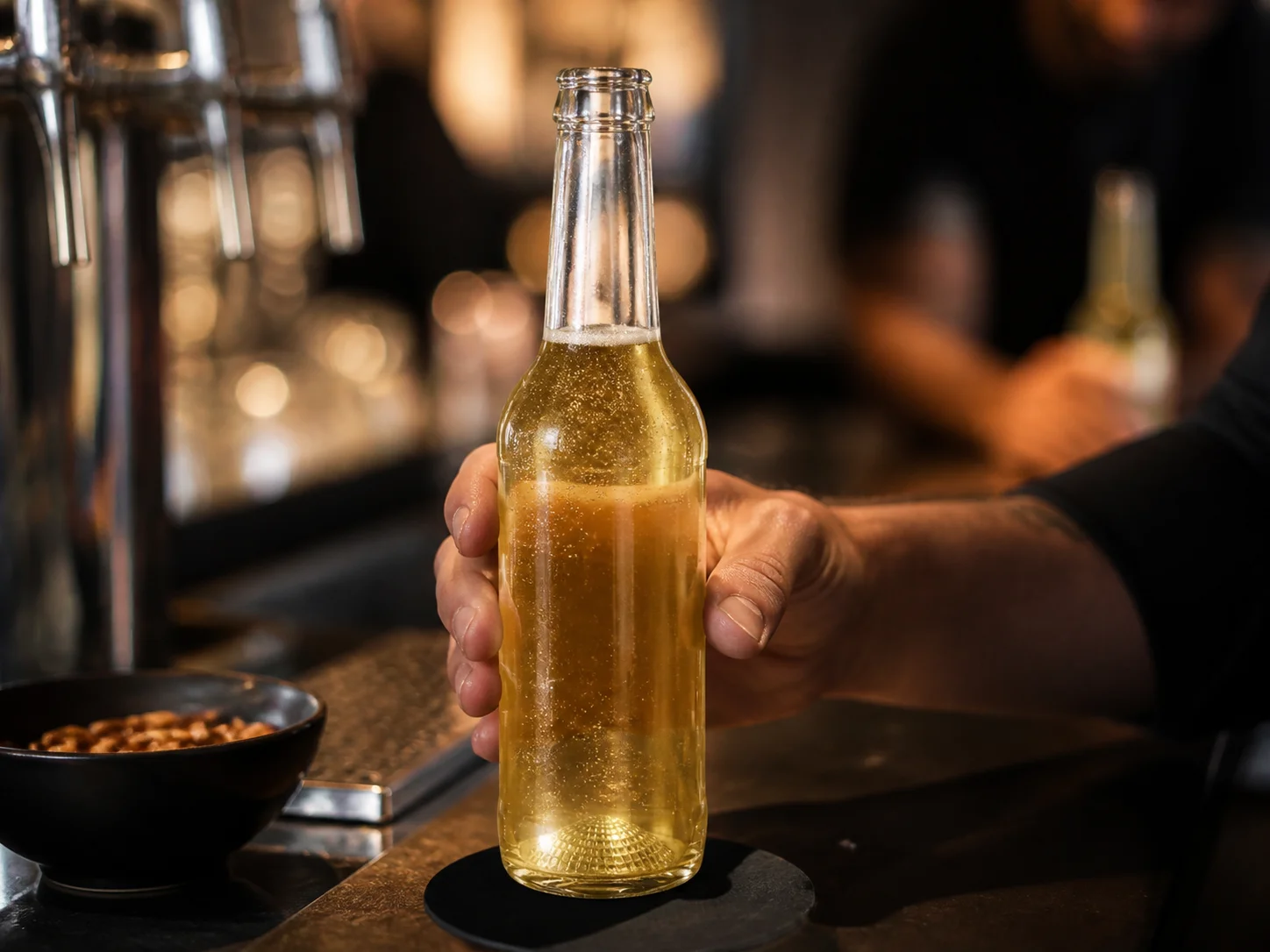
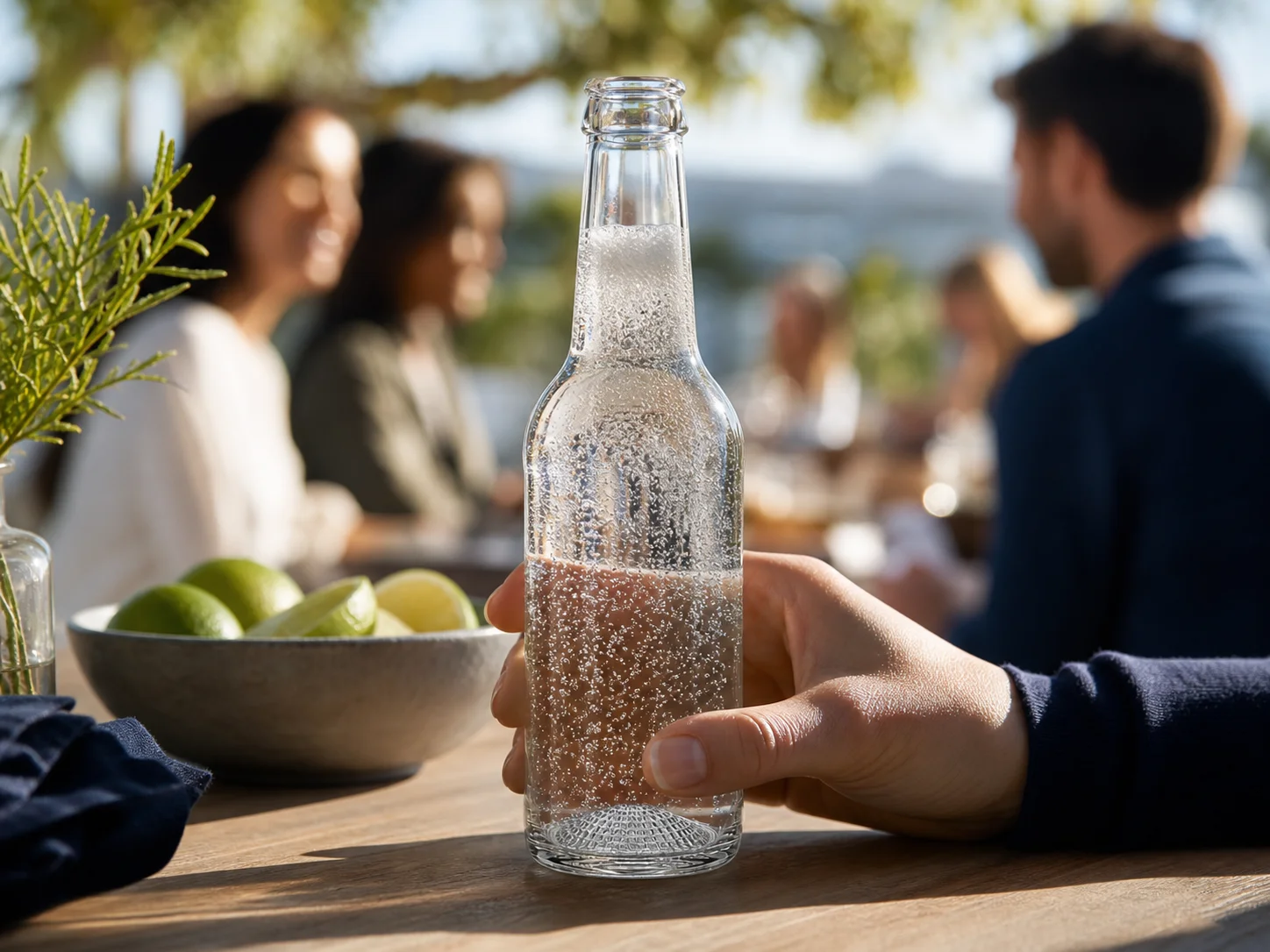
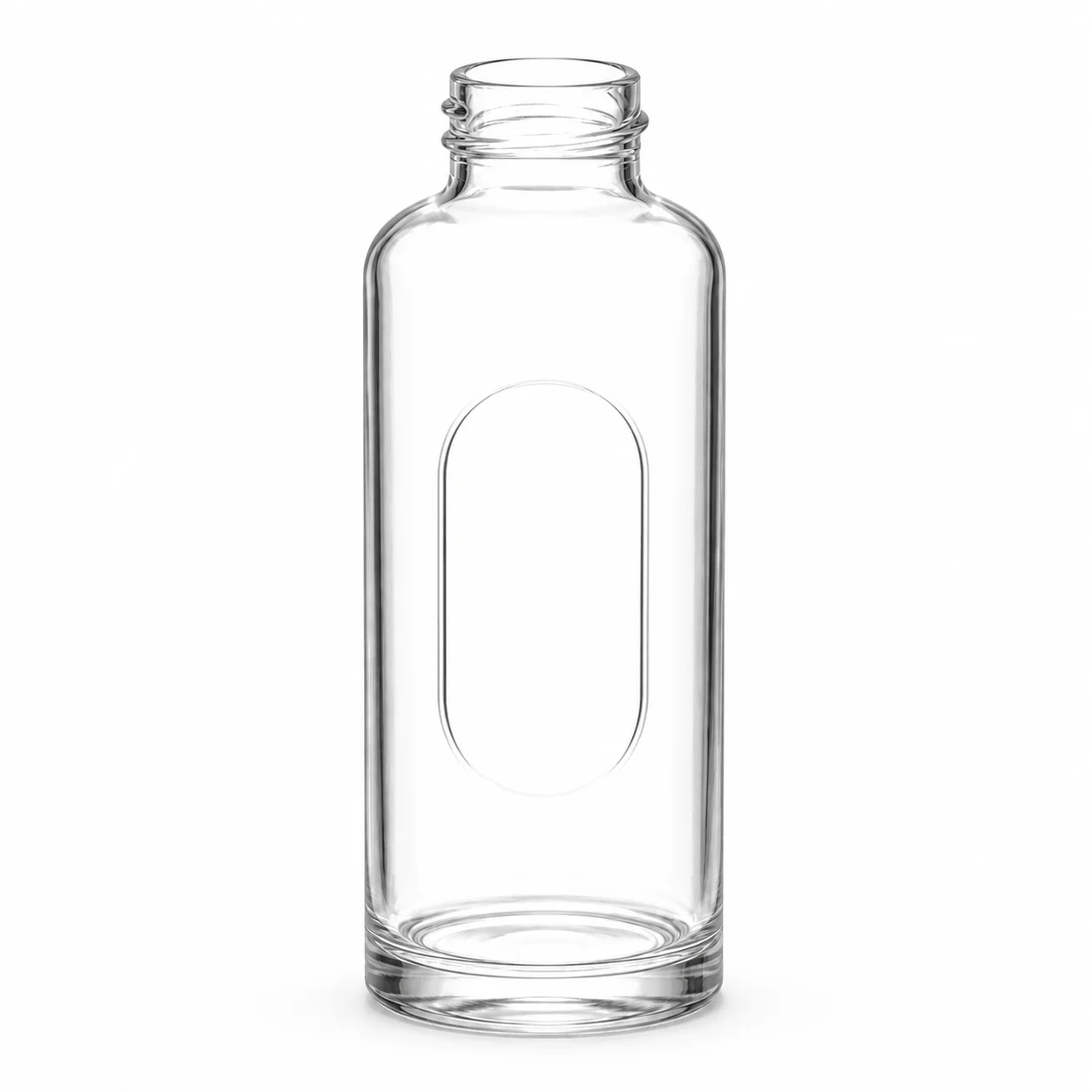
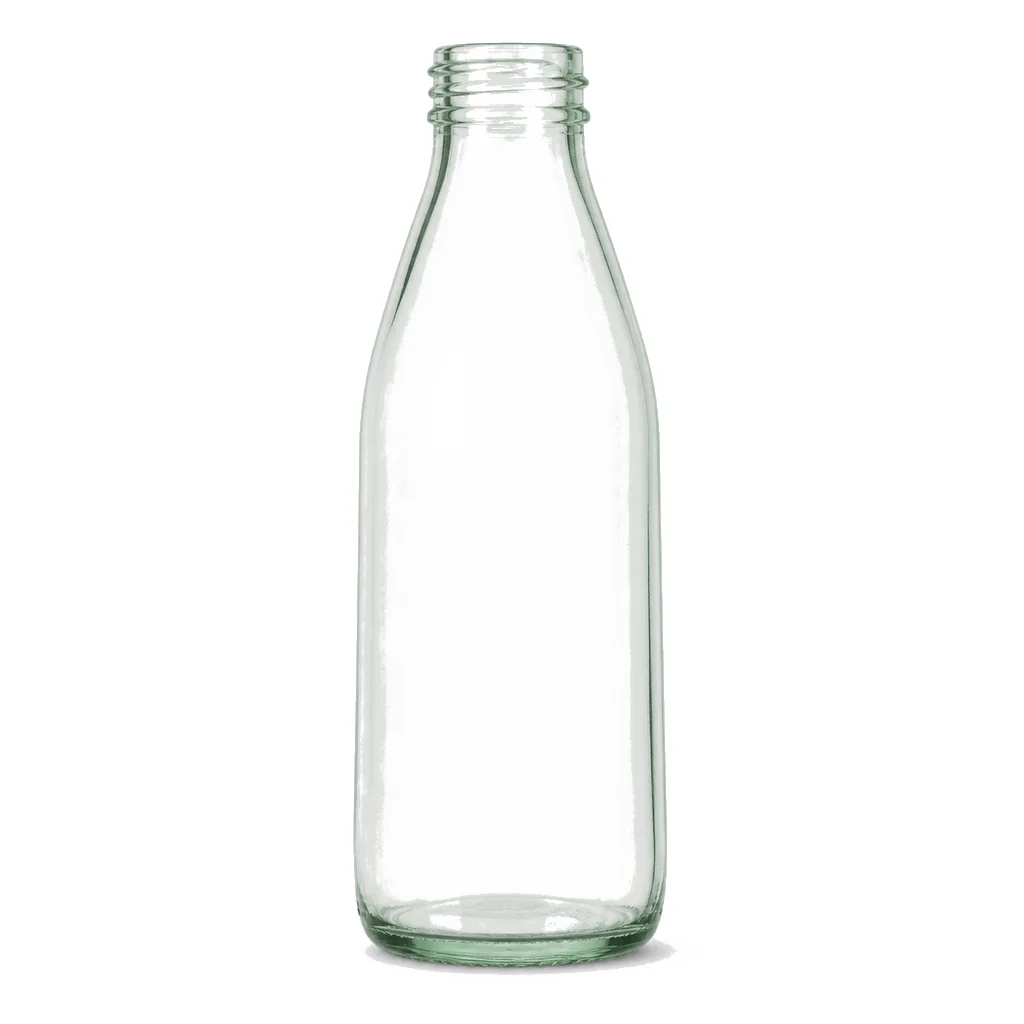
A drinker holds a bottle upright, at chest height, with a label around it and a hand across the lower body. The base is the one surface they never look at. That makes a nucleated bottle base largely a design story rather than a visible effect, and it is worth saying so before the tooling is paid for.
The base is where internal pressure concentrates
In a carbonated pack the heel and base radius carry the highest stresses, and that is exactly where the texture is applied. Any surface treatment in that region needs proving against burst and thermal shock rather than being assumed neutral, since a decorative feature in a structural zone deserves the same testing a structural change would get.
The effect only follows the drink into a textured glass
Where a brand serves into branded glassware, the same texturing does its intended job — a continuous bead rising through the glass and a head that renews as it is drunk. If the goal is visible carbonation, the money is better spent on the glass the drink is poured into than on the pack it arrives in.
Texture affects what a mold and a washer can do
Fine base texture is a mold detail that has to survive production and, in a returnable system, repeated caustic washing and crate abrasion. On a one-way bottle that is a straightforward requirement; on a returnable one it is a durability question that should be tested across a realistic number of cycles.