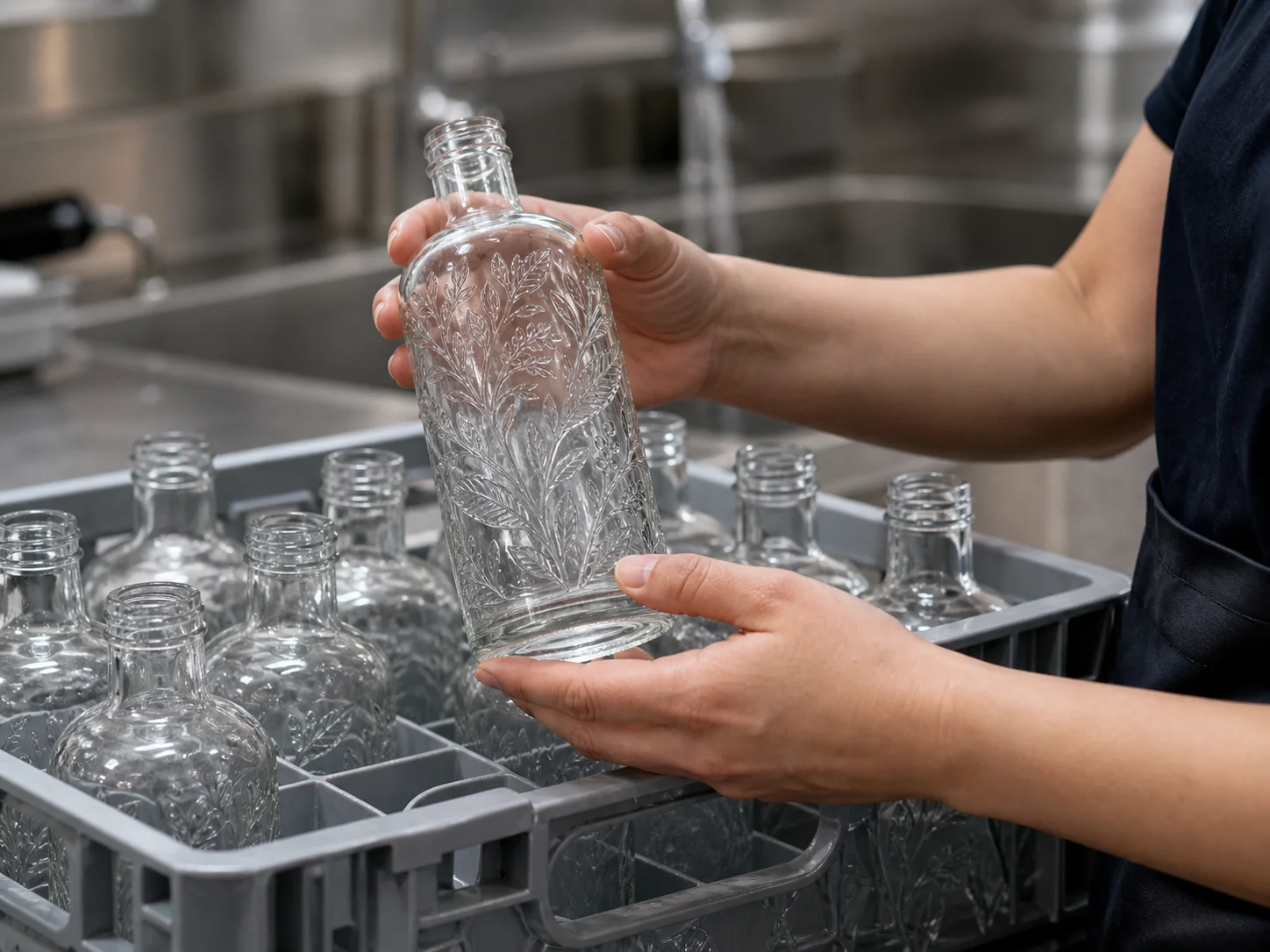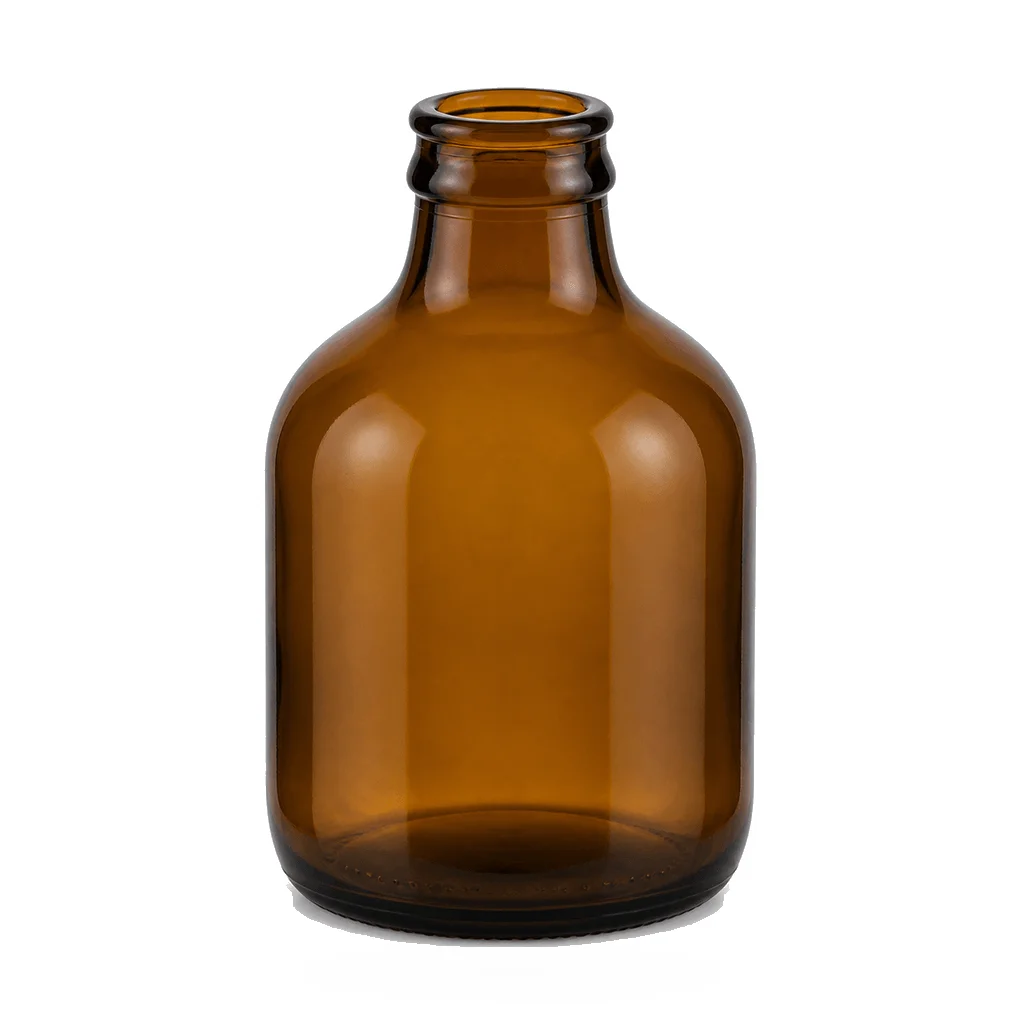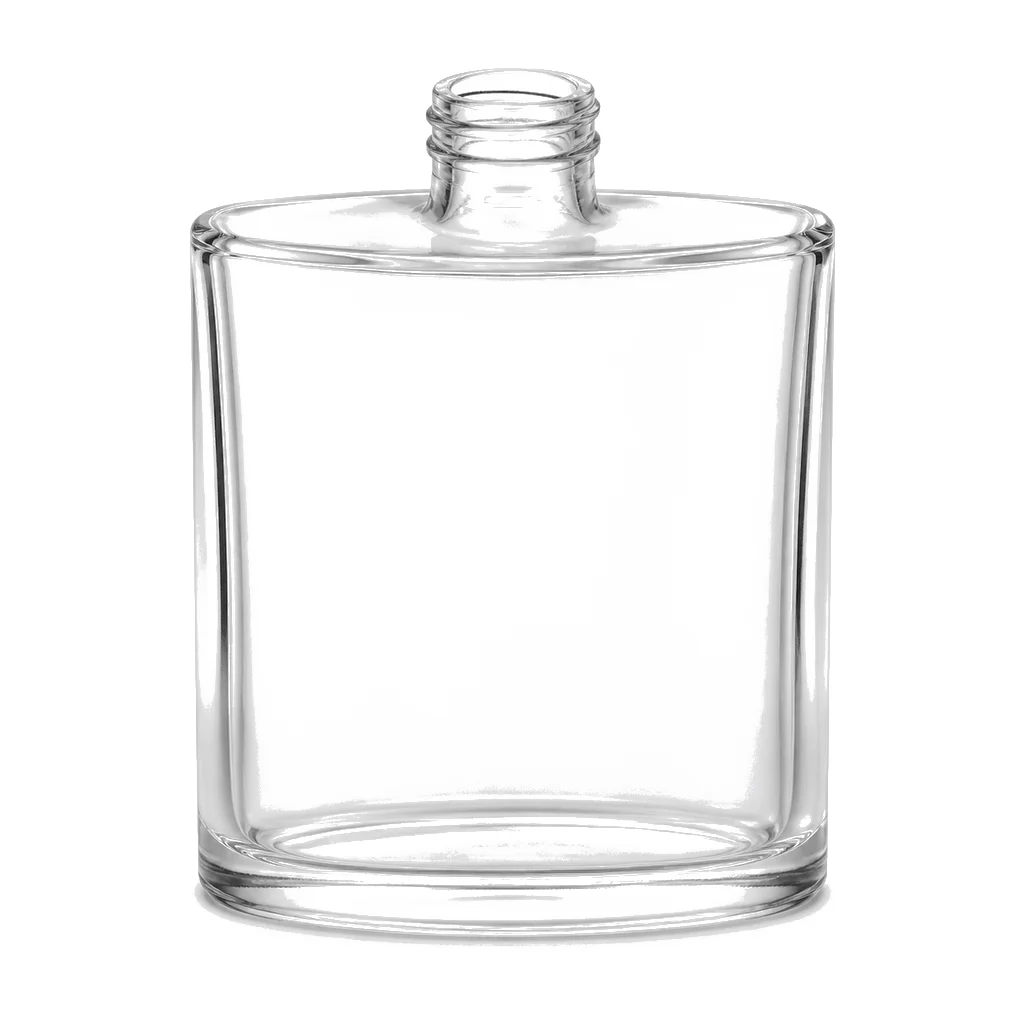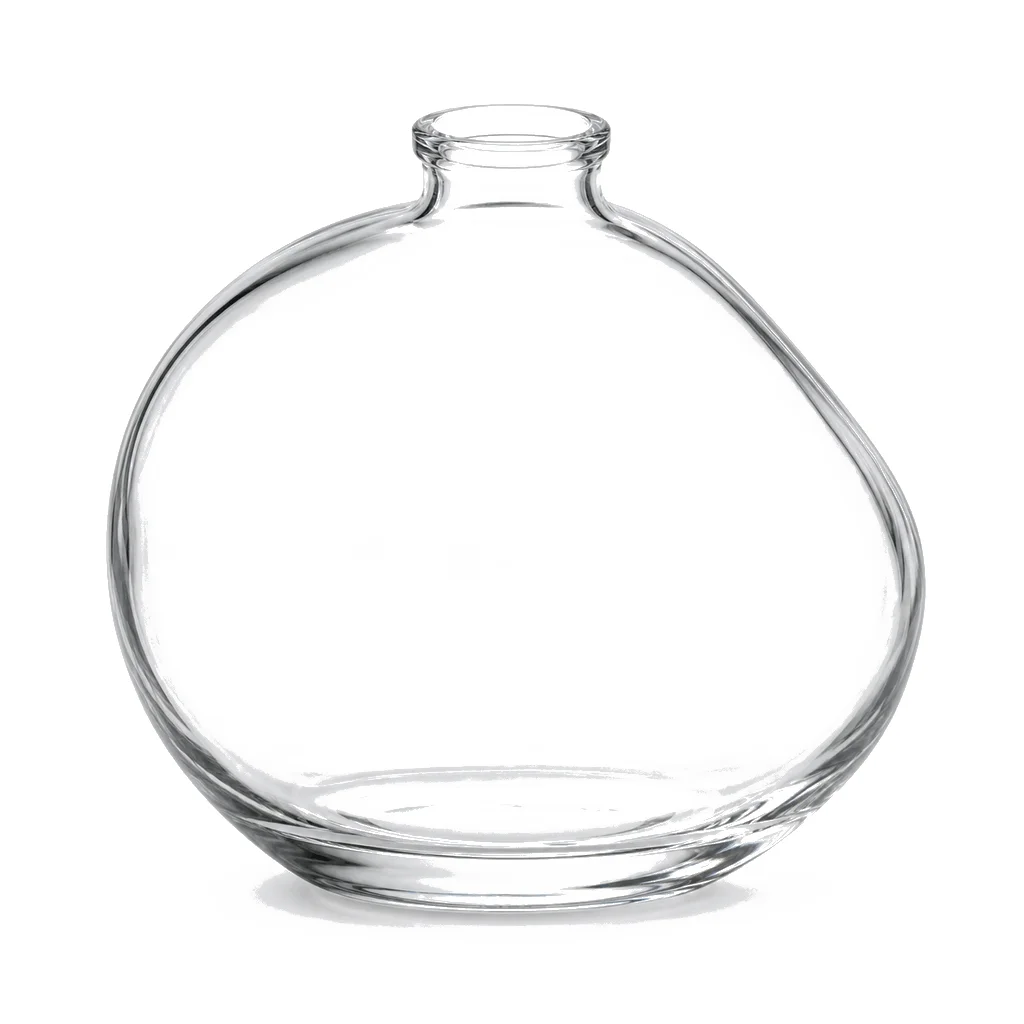
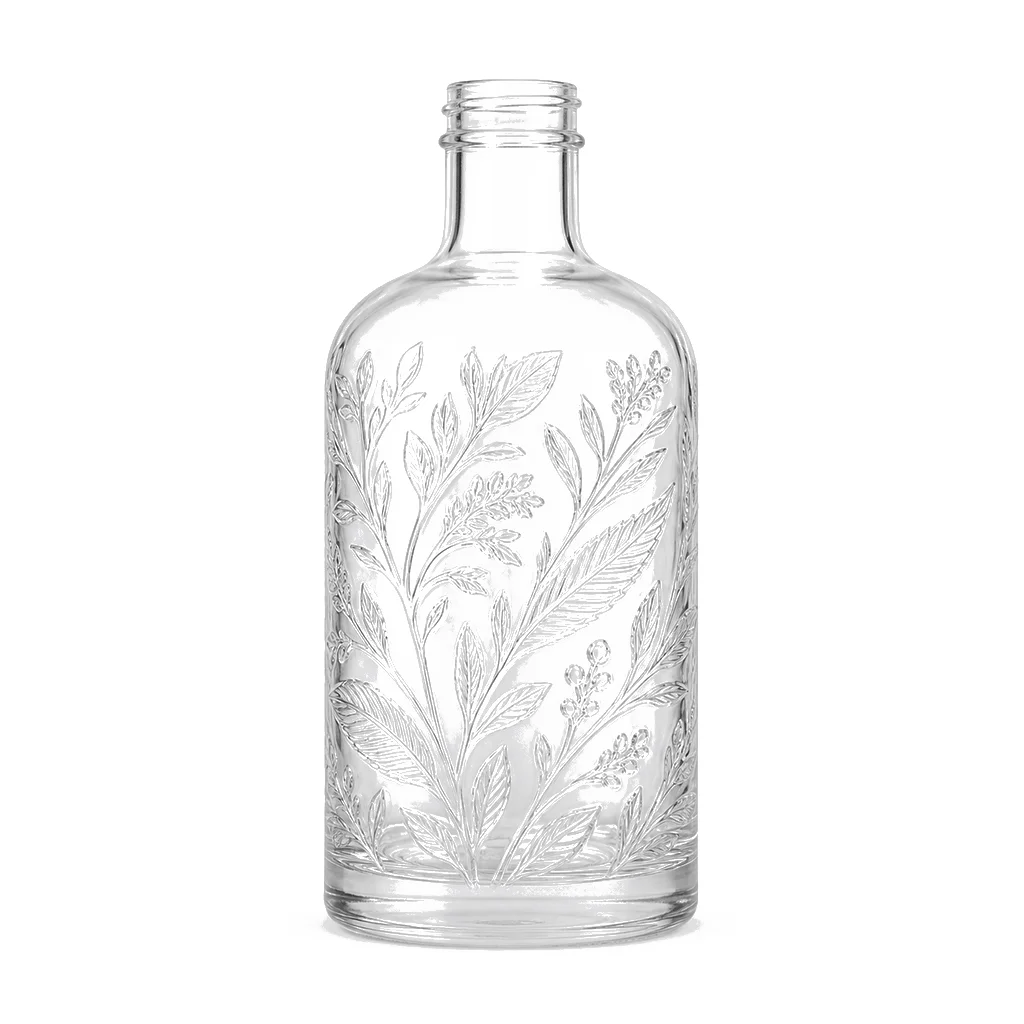
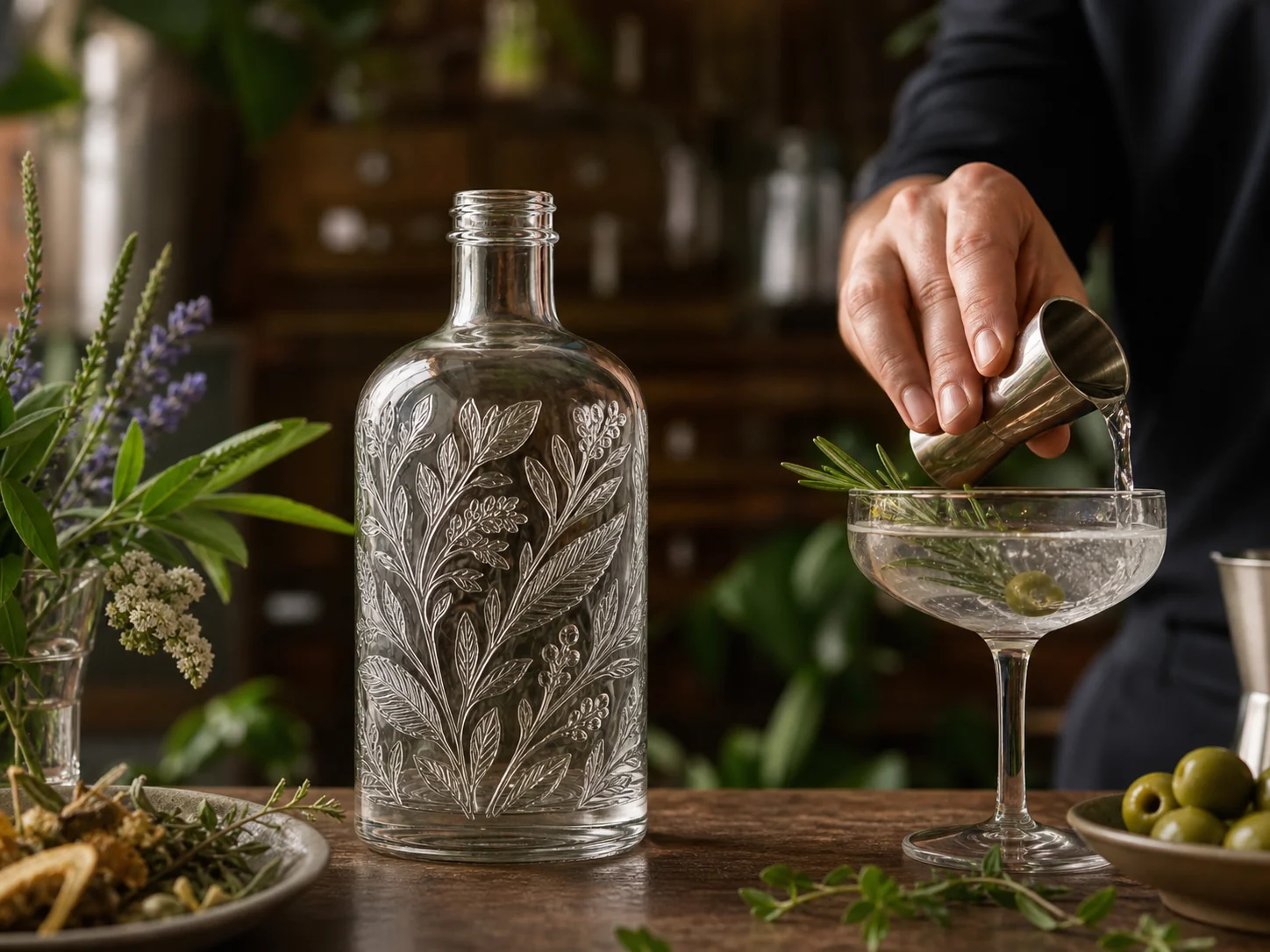
Clear bottle with raised leaf and stem relief molded into the glass surface
Shown configuration · bare bottle / closure, label and contents not shown

Decorated glass

Embossed Botanical Bottle

A bottle carrying raised botanical relief formed in the mold itself, so the decoration costs tooling once and nothing per bottle thereafter.

Cut into the mold, not appliedNo cost per unit after toolingRelief depth is limited
Stock status
In stock
Lead time
2–3 weeks
FOB price / pc
$0.90 - $1.15
MOQ
2,000 pcs

Final availability, dimensions, materials, assembled components and commercial terms are confirmed against the selected drawing and approved sample.

Permanent by nature

It cannot wear off or peel

Free at volume

Tooling amortizes; decoration does not repeat

Draft governs the design

Every edge must release

Embossed Botanical Bottle profile

Decoration that is part of the glass rather than something added to it.

Tooling, relief depth & label interaction

Six characteristics of decoration formed in the mold.

Embossing is cut into the mold cavity, so the relief forms as the bottle is blown. That single fact drives everything: the decoration is permanent, it adds nothing to the unit cost once the tooling exists, and it is constrained by what molten glass will flow into and what a mold will let go of.

01

The cost sits entirely in the tooling

Cutting relief into a mold cavity is a one-time engraving cost across the cavity set. After that, every bottle carries the decoration at no additional cost, no additional process step and no additional line time. At volume, embossing is the cheapest permanent decoration available; at low volume, the tooling dominates.

02

Relief depth is limited by glass flow

Glass has to flow into the engraved detail and then release, and it does neither indefinitely. Fine botanical work reads well as shallow, well-drafted relief and disappears if it is cut too fine or too deep. Reviewing artwork against realistic relief depths before engraving is what keeps the finished bottle looking like the drawing.

03

Every edge needs draft

The mold opens and the bottle comes out, so any feature that overhangs will not release. Botanical designs are forgiving here — leaves and stems adapt naturally to soft-edged, drafted forms — but an artwork drawn with vertical walls and sharp undercuts has to be reinterpreted, and it is better done during design than during tooling.

04

Embossing and labels compete for the same panel

A paper label will not lie flat over relief, so the label footprint has to be a smooth area and the embossing has to live around it. Deciding that layout at the start is straightforward; discovering it when the first labeled samples come back is a tooling change rather than an artwork change.

05

It survives everything the bottle survives

Because the decoration is glass, it cannot scratch off, fade or peel. That makes embossing the natural choice for returnable systems where caustic washing removes printed decoration, and for products that stay in a bathroom or a kitchen long enough for applied decoration to deteriorate.

06

Light does the work that ink would

Embossing has no color, so what makes it visible is the way light catches the raised edges. That means it reads strongly on clear and lightly tinted glass in good light, and weakly on dark glass or in a dim cabinet. Judging it under the lighting the product will actually be sold in is worth doing before signing off.
Application guide

Use embossing where the bottle should speak without a label.

Raised glass suits categories with a botanical or heritage story. These are directions, not approved outcomes.

Embossed Botanical Bottle used for gin, vermouth & herbal liqueurs in a botanical spirits setting

Botanical spirits

Gin, vermouth & herbal liqueurs

For categories where botanicals are the product story. A leaf and stem relief states that argument in the material itself, which reads as more considered than printing the same imagery onto a label and survives the bottle being handled or reused.

  • Match relief to the botanical story
  • Confirm legibility under shelf light
  • Plan the label area
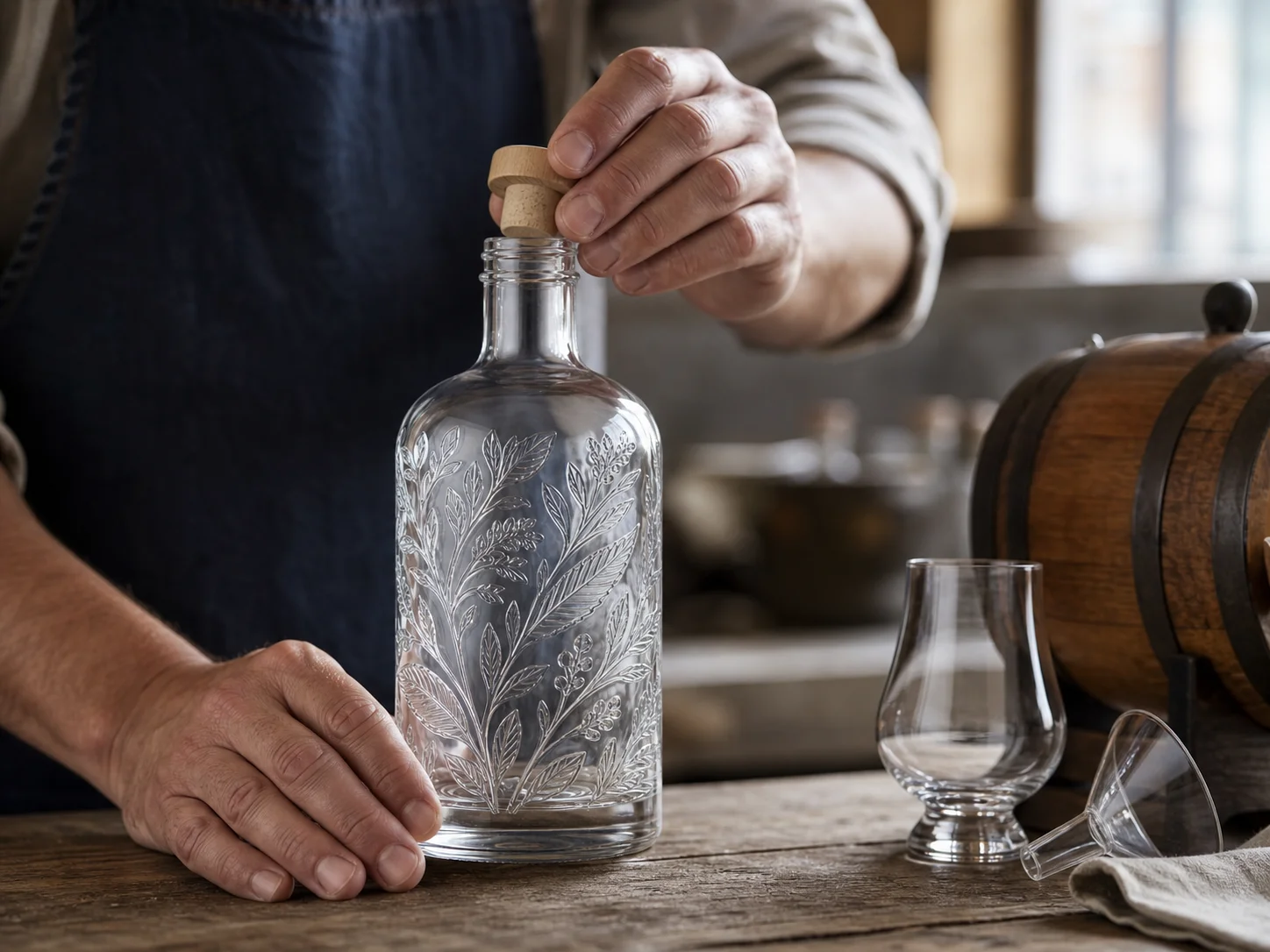
Embossed Botanical Bottle used for traditional & small-batch releases in a heritage & craft setting

Heritage & craft

Traditional & small-batch releases

For brands drawing on heritage, where formed glass signals permanence and craft. Embossing also lets a bottle stay recognizable when it is displayed empty behind a bar or repurposed at home, extending the brand's presence past the last pour.

  • Design for the empty state
  • Consider reuse and display
  • Balance relief against clarity
Embossed Botanical Bottle used for refill & returnable programs in a reusable formats setting

Reusable formats

Refill & returnable programs

For refillable and returnable systems where a bottle comes back from a customer, is washed and goes out again, stripping any applied decoration in the process. Formed relief survives those cleaning cycles intact, making it a practical identity route where labels and coatings would need reapplying every time the bottle re-enters service.

  • Confirm wash-cycle survival
  • Plan variable information separately
  • Assess relief wear over cycles

Actual spirit, closure, filling, decoration and distribution requirements are confirmed for the selected program.

Common questions

Embossed Botanical Bottle questions

Decoration made of glass behaves differently from decoration put onto glass.

Why does our fine detail disappear?

Because glass has to flow into the engraving and then release from it, and it does neither without limit. Fine botanical work reads well as shallow, well-drafted relief and vanishes when cut too fine or too deep. Reviewing artwork against realistic relief depths before engraving keeps the bottle looking like the drawing.

Can we emboss any artwork?

Any artwork that can be redrawn with draft on every edge. The mold has to open and release the bottle, so overhanging features are impossible. Botanical designs adapt naturally, since leaves and stems suit soft drafted forms, but a drawing with vertical walls and undercuts needs reinterpreting at the design stage.

Why choose embossing over printing?

Permanence. Because the decoration is glass, it cannot scratch off, fade or peel, which makes it the natural choice for returnable systems where caustic washing strips printed decoration, and for products that sit in a bathroom or kitchen long enough for applied decoration to deteriorate visibly.

Does embossing wear off?

It cannot — it is the glass. Relief survives washing, abrasion, ice buckets and everything else the bottle survives, which is the difference between molded decoration and an applied one. On a returnable or heavily handled pack that is the whole argument for it.

Next step

Send us the Embossed Botanical Bottle brief.

Tell us the product, fill volume, closure preference and destination market. We will come back with the matching drawings, available configurations and a sample plan before anything is quoted.

  • 01Send the briefProduct, volume, closure and market
  • 02Get the optionsMatching drawings and configurations
  • 03Approve the sampleConfirm the pack before production