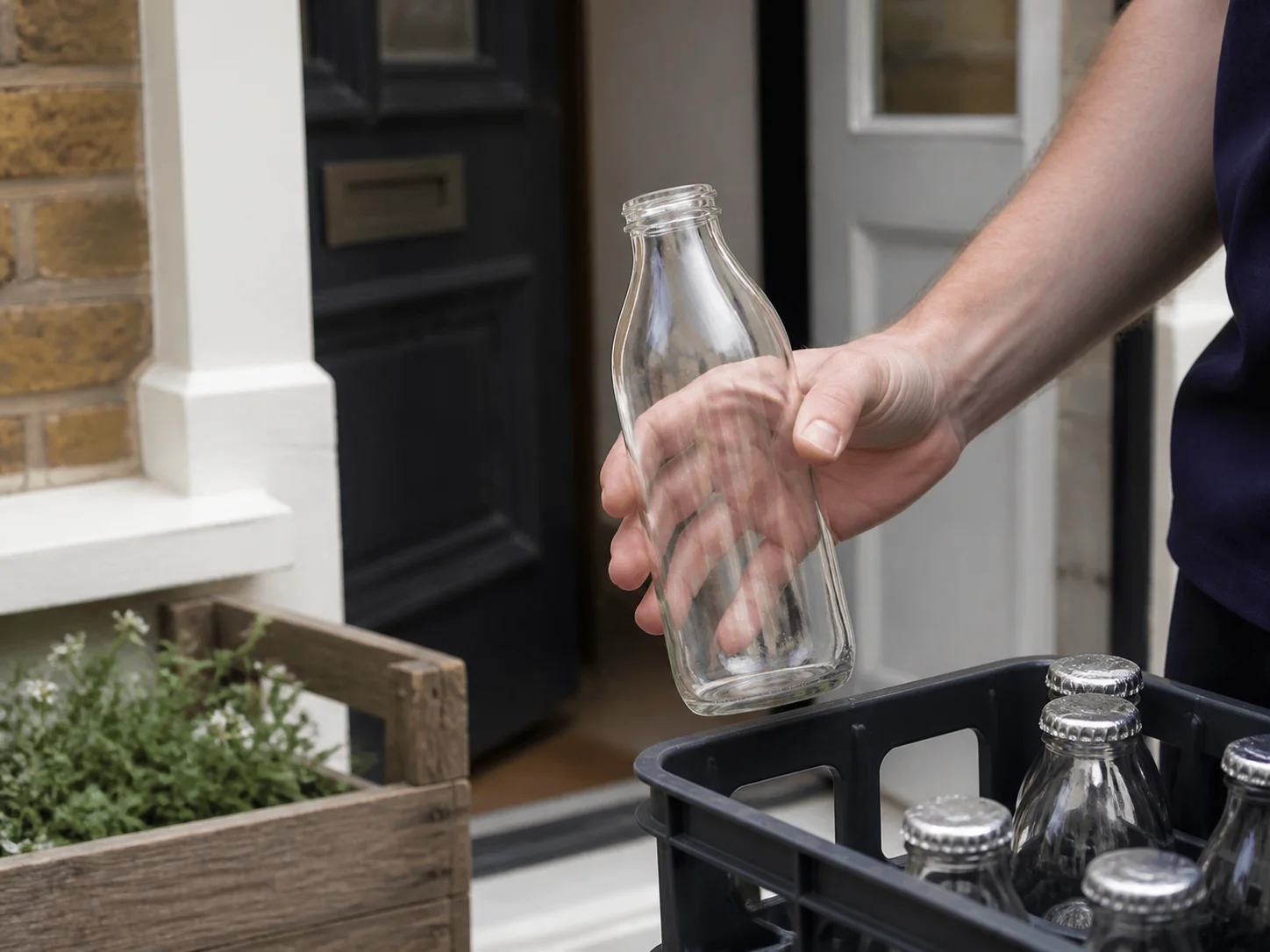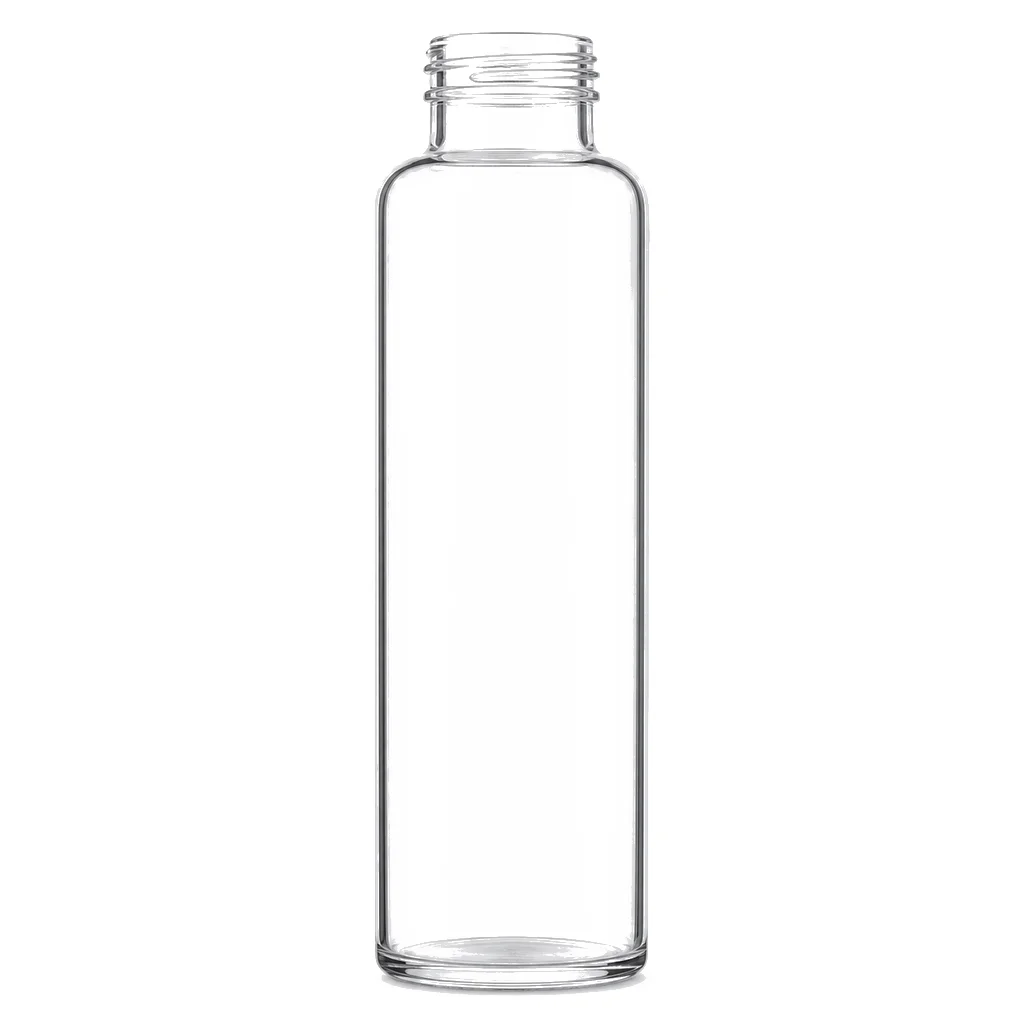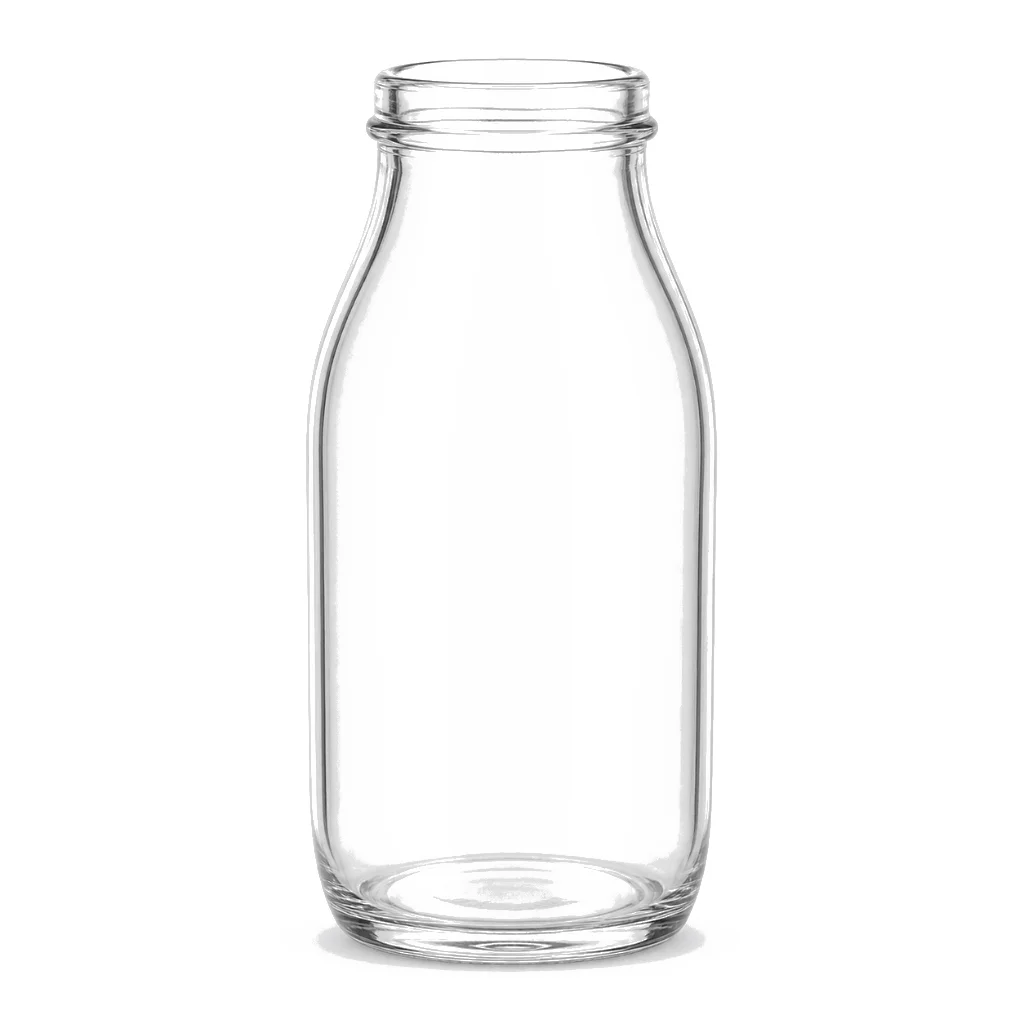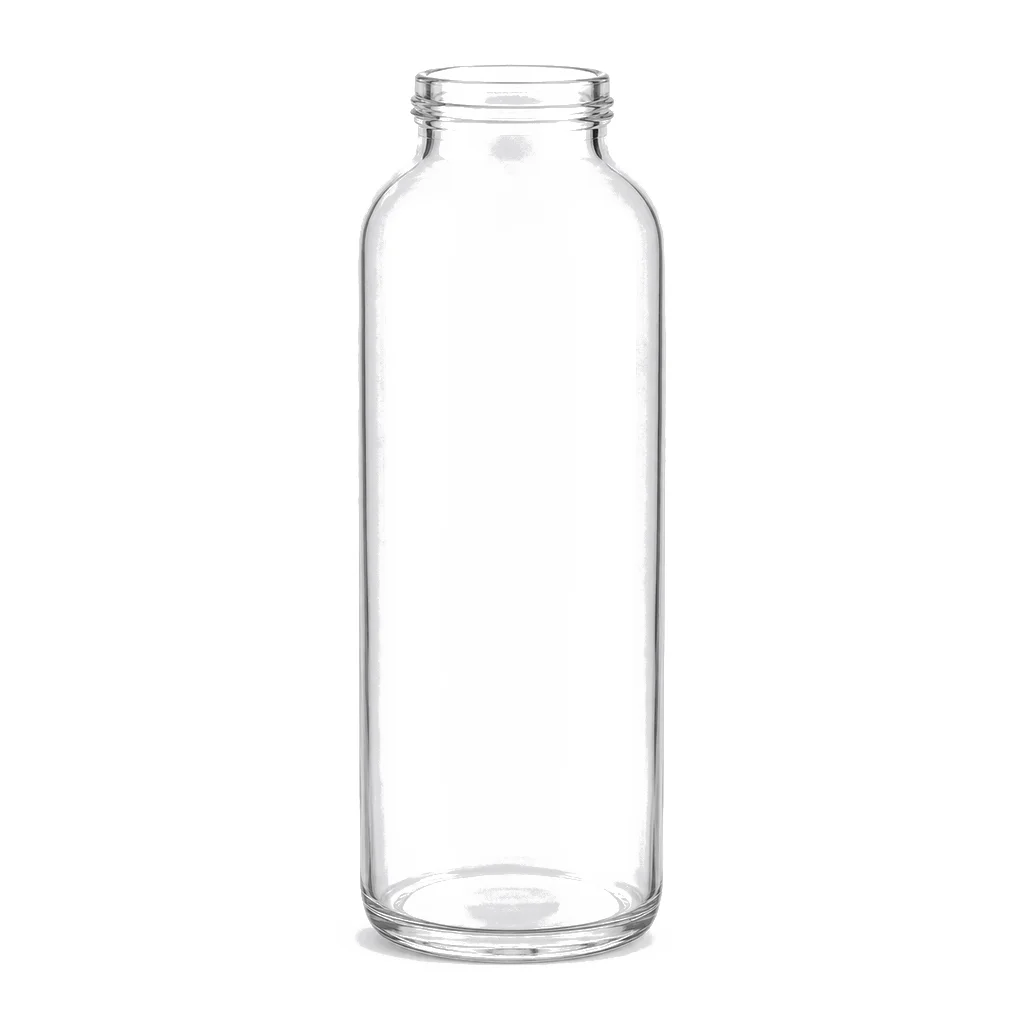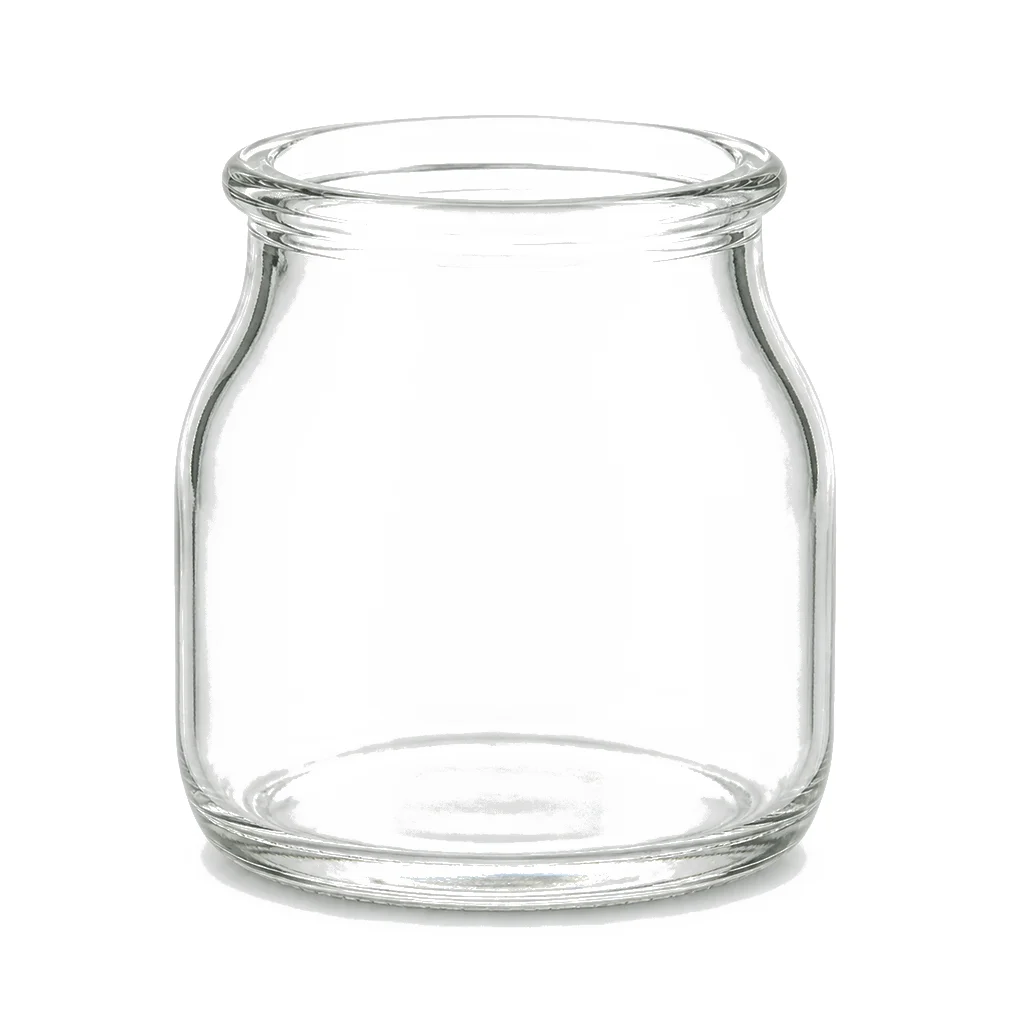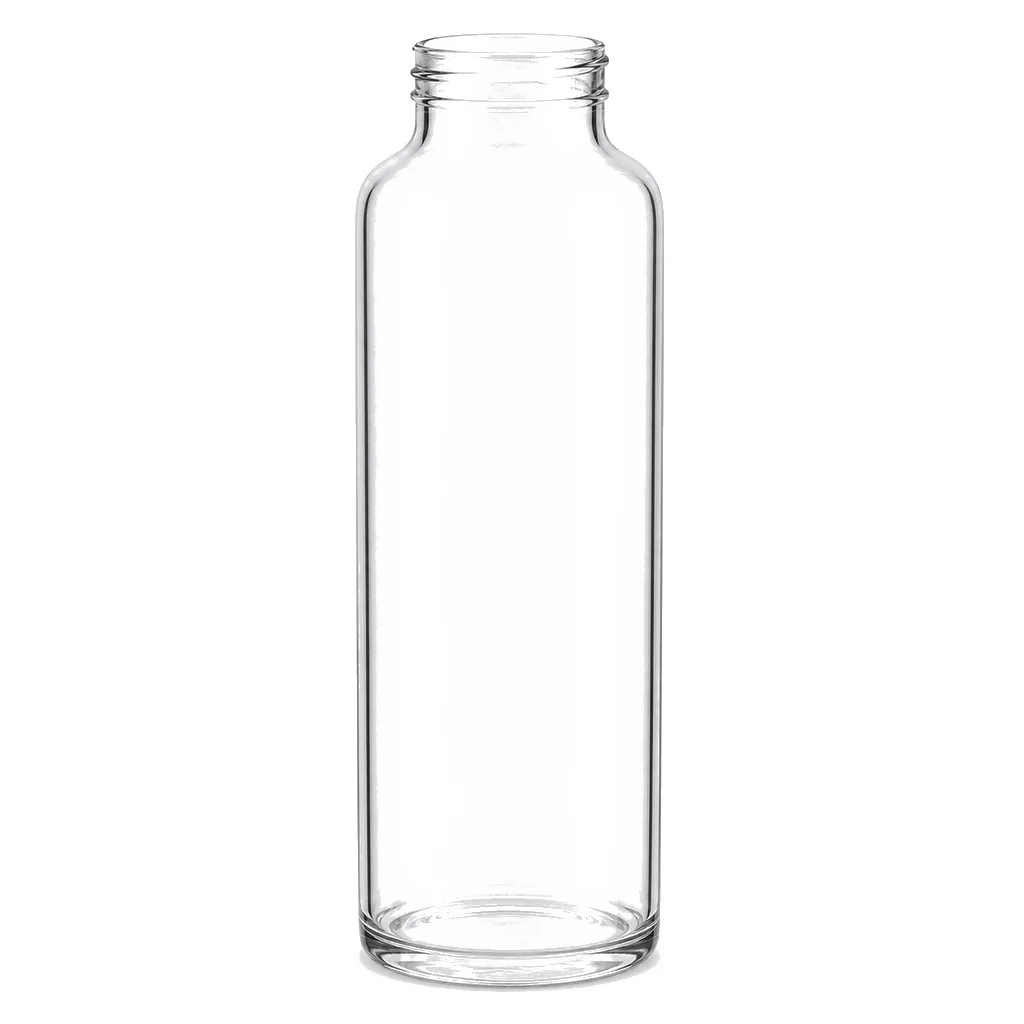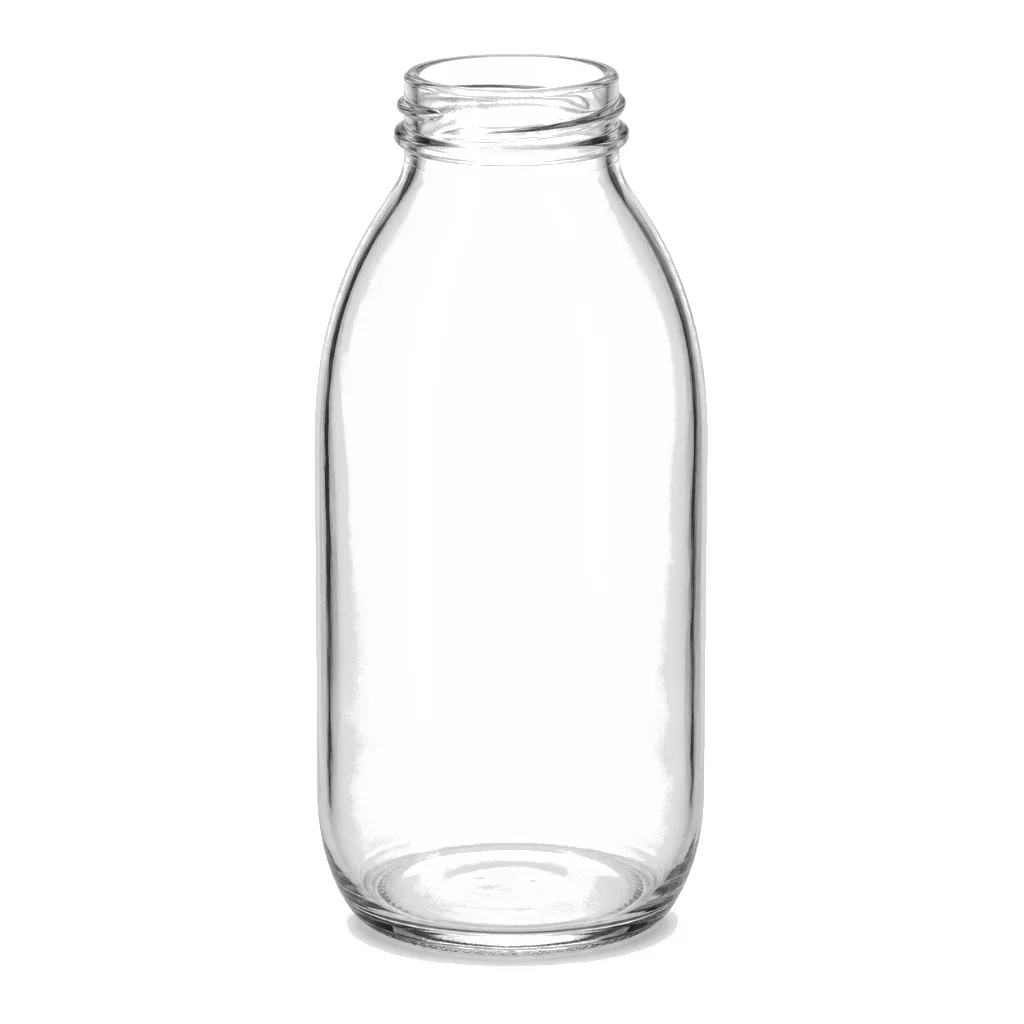
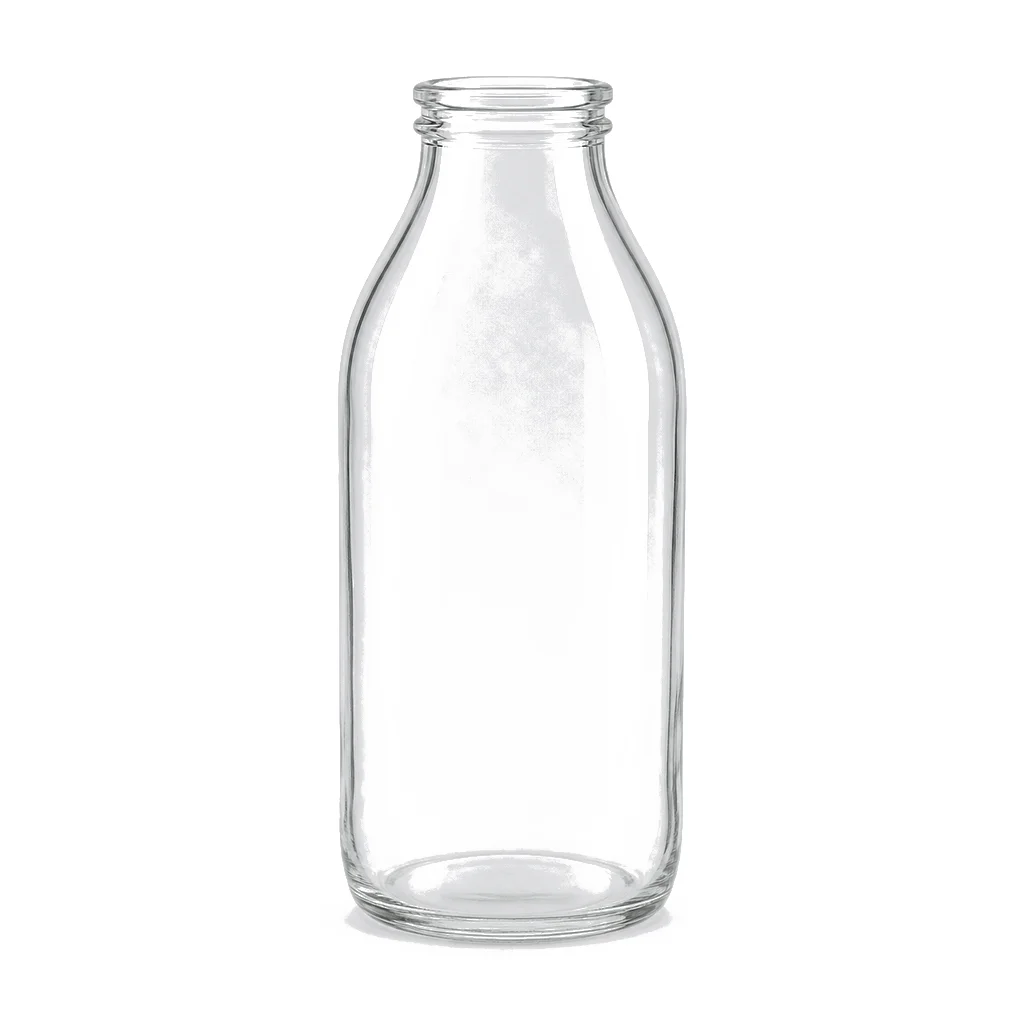
Clear straight-sided milk bottle with a wide mouth and a rolled lip
Shown configuration · empty bottle / foil cap, label and milk not shown

Dairy bottles

Vintage Milk Bottle

A returnable milk bottle designed for many trips through a washer and a doorstep, where wall thickness, scuff resistance and a wide mouth for cleaning define the format.

Built for repeated tripsWide mouth for washingScuffing ages the fleet
Stock status
In stock
Lead time
2–3 weeks
FOB price / pc
$0.40 - $0.70
MOQ
2,000 pcs

Final availability, dimensions, materials, assembled components and commercial terms are confirmed against the selected drawing and approved sample.

Heavy by intention

Trips, not grams, is the metric

Washer access matters

A brush has to reach everywhere

Scuff rings are the aging

Structural life outlasts appearance

Vintage Milk Bottle profile

A bottle designed to come back, which changes every number in the specification.

Trip life, washing & the economics of return

Six things that follow from a bottle designed to come back.

A returnable milk bottle is not a package that happens to be reused. It is designed for a defined number of trips through collection, washing, refilling and delivery, and its economics come from spreading its cost across those trips. That makes wall thickness, wash access and scuff resistance the specification rather than weight or unit price.

01

Cost is per trip, not per bottle

A returnable bottle costs several times a one-way equivalent and is used many times, so the number that matters is cost divided by trips achieved. That inverts the usual buying instinct: a heavier, more expensive bottle that survives more journeys is cheaper in use than a light one that chips out of the fleet early.

02

Washing sets the internal geometry

Bottles are cleaned in a caustic washer with jets rather than by hand, so anything a jet cannot reach stays dirty. A wide mouth, a straight wall and a base without a sharp internal corner are what let a bottle be cleaned reliably at line speed, and they matter more here than in any single-use dairy format.

03

Caustic wash attacks decoration

Repeated hot caustic cycles remove printed labels and most applied decoration, which is why returnable bottles are traditionally embossed or carry applied ceramic labeling rather than paper. Choosing decoration that survives the wash is what stops a fleet becoming visually inconsistent after a season.

04

Scuffing ends a bottle's life before breakage does

Bottles rubbing in crates develop white scuff rings at the contact points, and after enough trips they look worn while remaining structurally sound. Hot and cold end surface coatings reduce it substantially, and the point at which a dairy retires a bottle is usually appearance rather than any measurable weakness.

05

The closure has to suit a doorstep

A foil cap pushed into the finish is the traditional answer: cheap, tamper evident and easy for a customer to remove and discard. It also has to survive being carried in a crate and left on a step. Where a modern format uses a screw closure instead, the finish changes and the washer has to clean a thread.

06

The format carries meaning the glass does not

A glass milk bottle signals local supply and low waste in a way no carton does, and much of its commercial value is that association. That is a legitimate reason to run a returnable system, and it works only if the return rate is high enough to make the trip economics real rather than notional.
Application guide

The doorstep bottle everyone recognizes, whatever is in it.

The traditional milk bottle carries decades of association with freshness and daily delivery, which is why it now appears filled with everything from oat drink to cold coffee. These are development directions confirmed with the actual product.

Vintage Milk Bottle used for fresh milk and cream on a short shelf life in a dairy setting

Dairy

Fresh milk and cream on a short shelf life

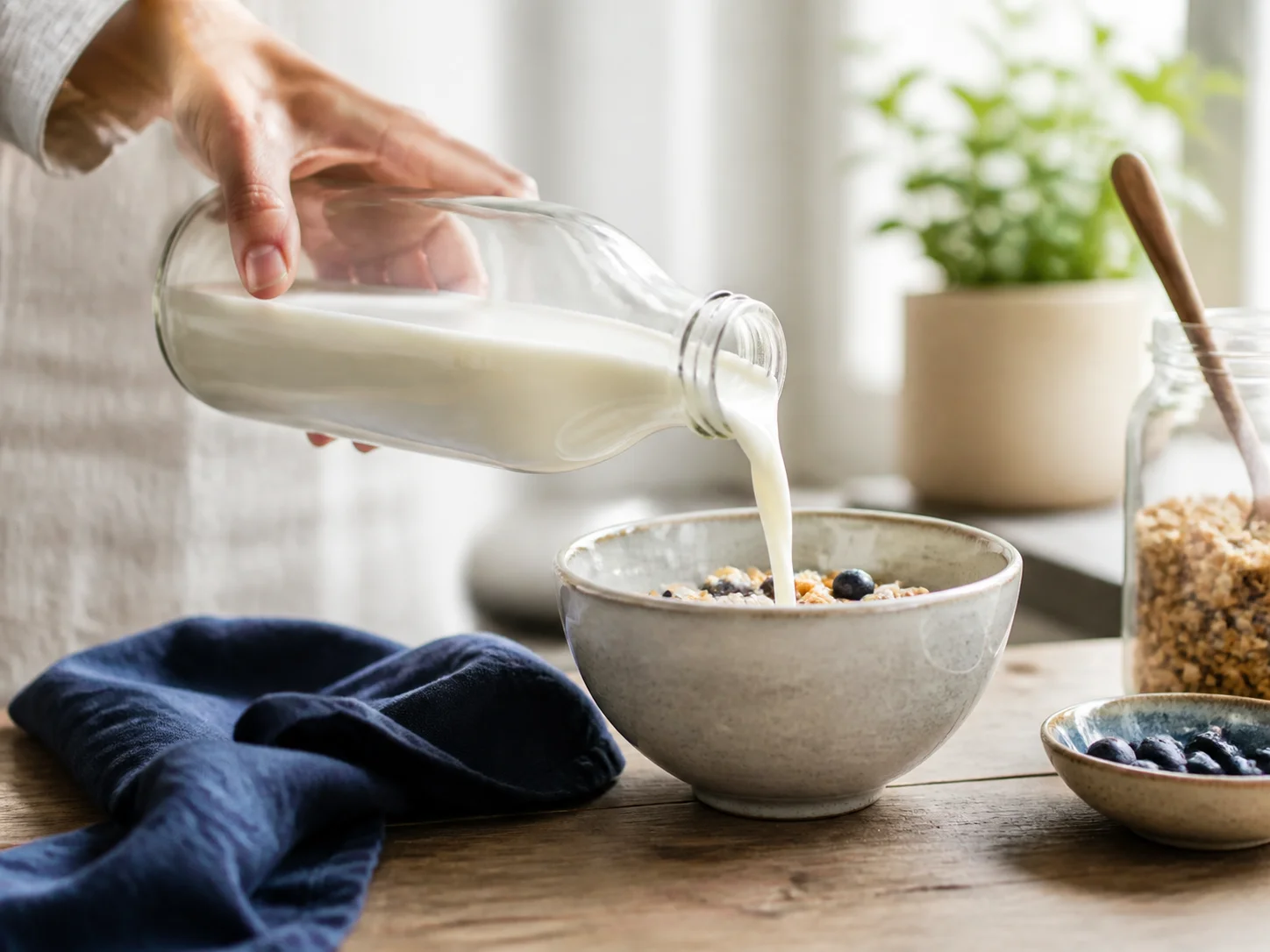
For fresh dairy sold on being local and recently bottled, where the familiar silhouette does the positioning work before a customer reads anything. Milk is poured over cereal and into coffee at speed, so the wide mouth and a neck that pours without glugging matter every single morning.

  • Confirm the pour does not glug
  • Match the size to a household week
  • Test opening with cold wet hands
Vintage Milk Bottle used for alternative milks borrowing the cue in a plant drinks setting

Plant drinks

Alternative milks borrowing the cue

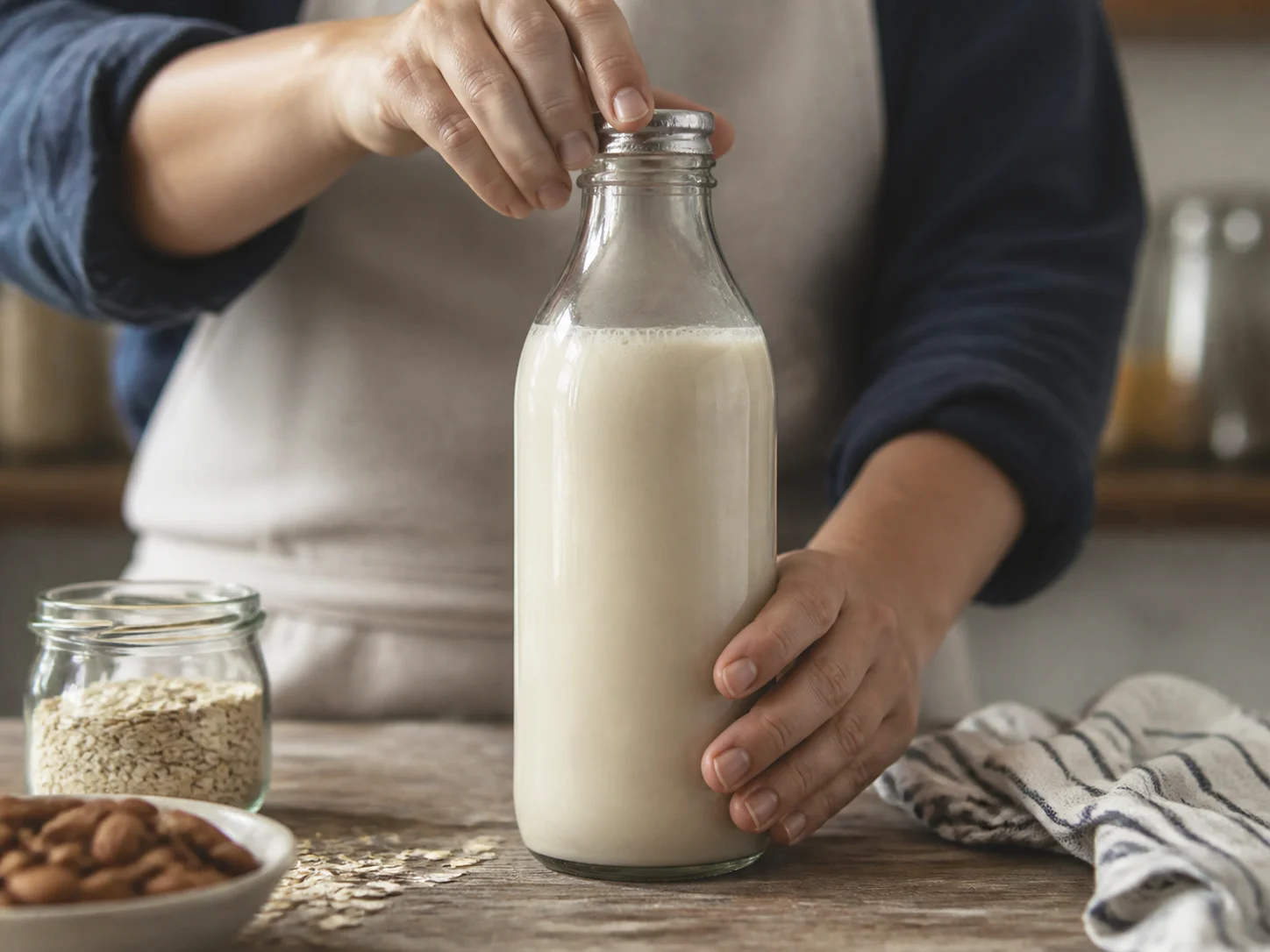
For oat, almond and other plant drinks using the dairy silhouette to signal freshness and a short ingredient list. These separate on standing and need shaking, so the closure has to hold against vigorous agitation rather than merely sitting on top of a still liquid.

  • Confirm the closure holds when shaken
  • Review how separation looks
  • Match the format to the fresh positioning
Vintage Milk Bottle used for bottles that come back and go out again in a returnable schemes setting

Returnable schemes

Bottles that come back and go out again

Doorstep and refill schemes send the very same bottle through washing, redelivery and a customer's fridge many times over, which makes wash-cycle durability and chip resistance at the rim the specification that decides whether the economics work. How reliably customers actually return them matters far more than unit packaging cost.

  • Confirm durability across wash cycles
  • Inspect rims for chipping
  • Model economics on return rate

Applications describe development directions. Product compatibility, process suitability, closure fit and distribution outcomes are confirmed for the selected program.

Common questions

Vintage Milk Bottle questions

A bottle designed to come back is a different product entirely.

Why is a returnable bottle so much heavier?

Because the number that matters is cost per trip rather than cost per bottle. A heavier, more expensive bottle surviving more journeys is cheaper in use than a light one that chips out of the fleet early. That inverts the usual buying instinct, and it is the single idea a returnable program has to be built on.

What does the washer require from the bottle?

Access. Cleaning is done by caustic jets rather than by hand, so anything a jet cannot reach stays dirty — which puts a wide mouth, a straight wall and a base without a sharp internal corner into the specification rather than the styling.

Does the closure need to change for a returnable system?

It has to suit both a doorstep and a washer. A push-in foil cap is cheap, tamper evident and easy to discard, which is why it persists. A screw finish is possible and means the washer has to clean a thread as well, which is an extra requirement rather than a free substitution.

How do we know when a returnable bottle should leave the fleet?

When it looks worn, which happens before it becomes unsafe. Bottles rubbing in crates develop white scuff rings at the contact points, and the pack starts reading as tired while remaining structurally sound. Set a visual retirement standard so the fleet is culled on appearance rather than on breakage.

Next step

Send us the Vintage Milk Bottle brief.

Tell us the product, fill volume, closure preference and destination market. We will come back with the matching drawings, available configurations and a sample plan before anything is quoted.

  • 01Send the briefProduct, volume, closure and market
  • 02Get the optionsMatching drawings and configurations
  • 03Approve the sampleConfirm the pack before production