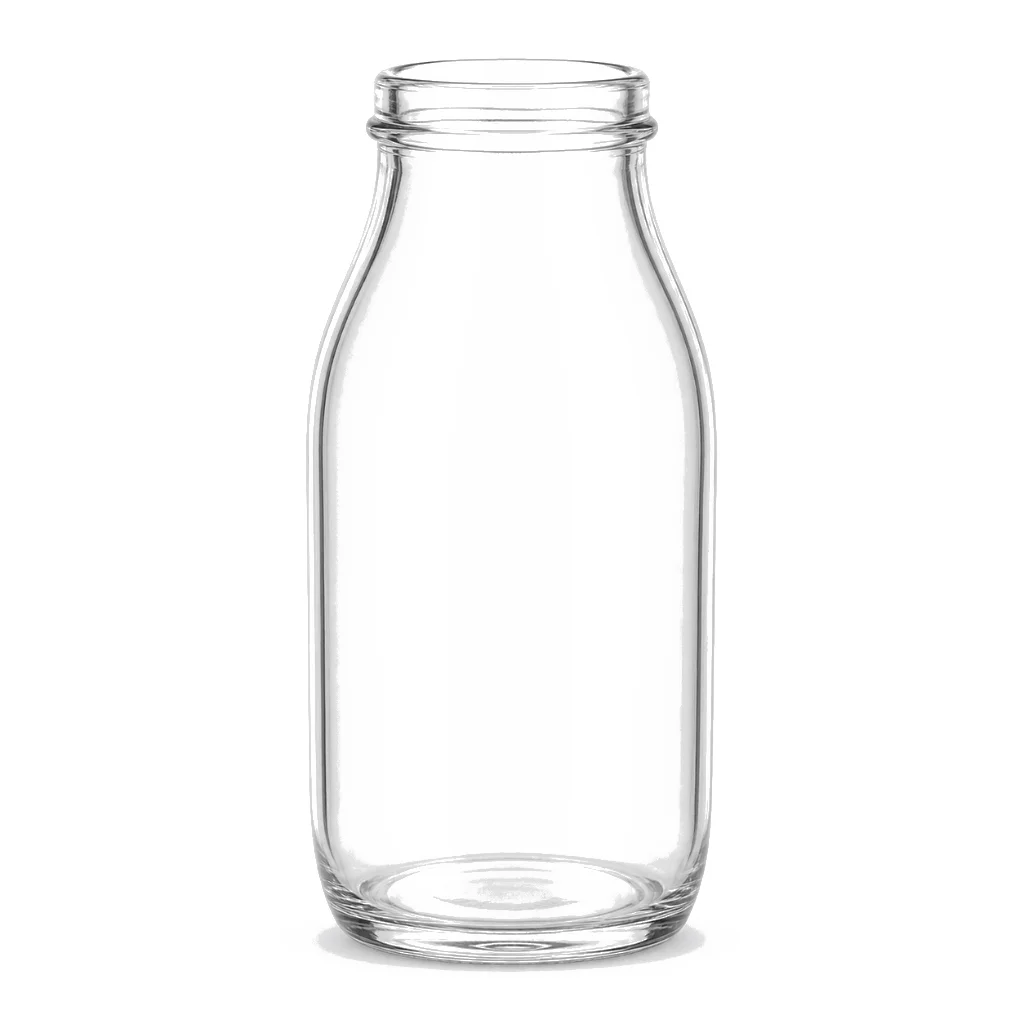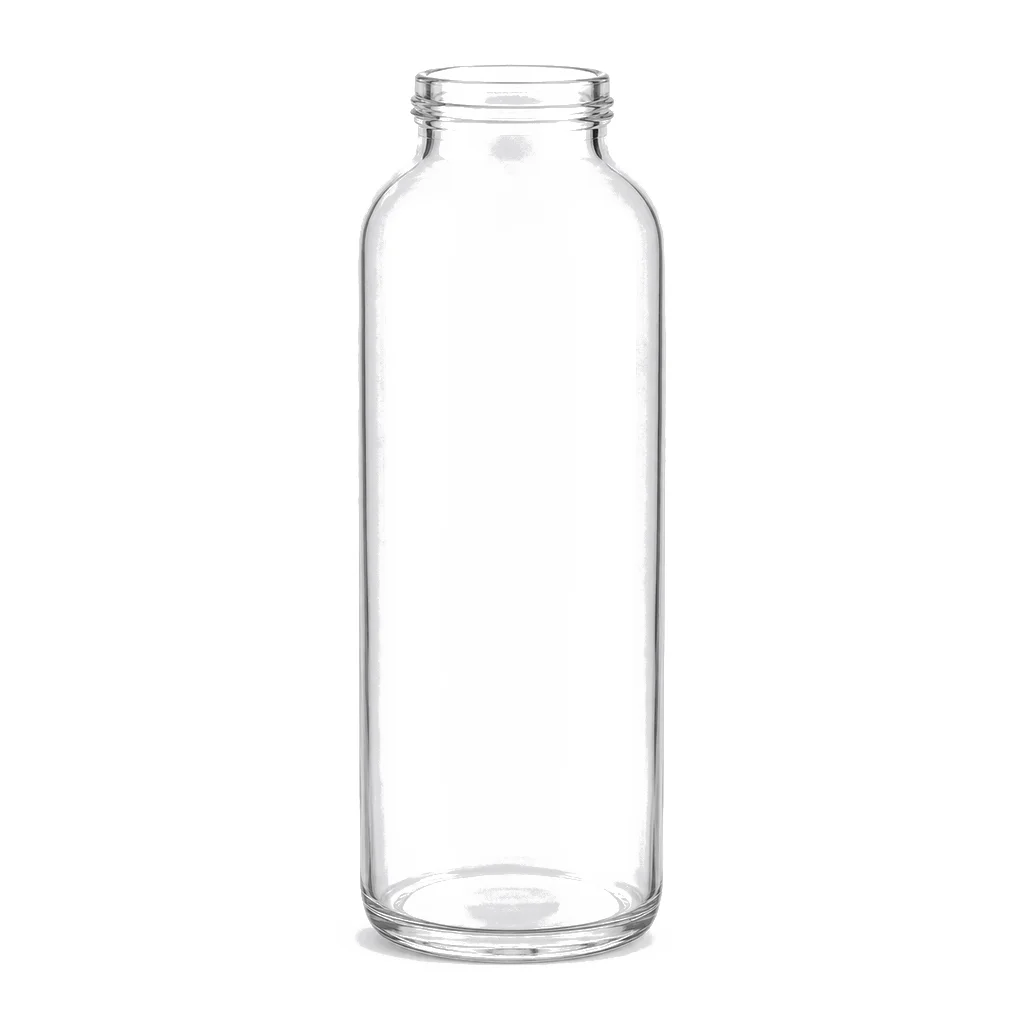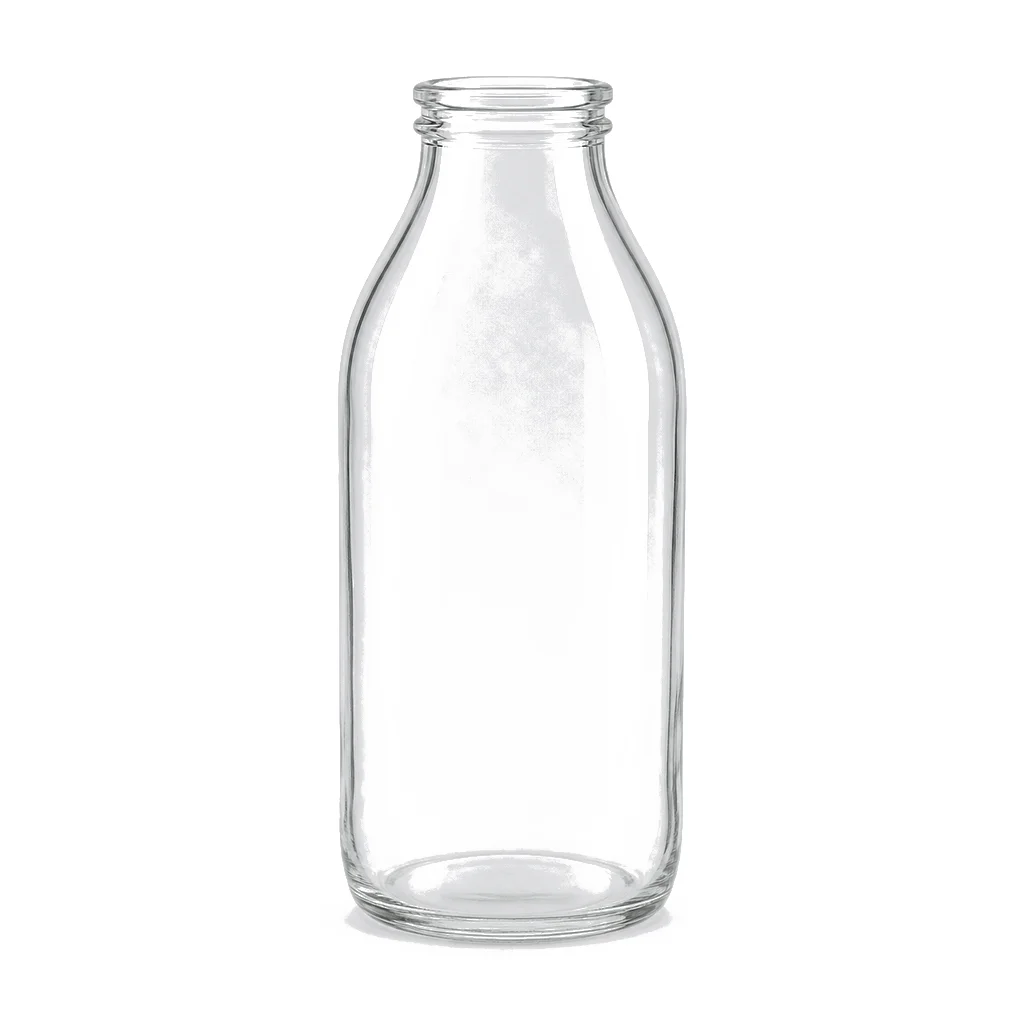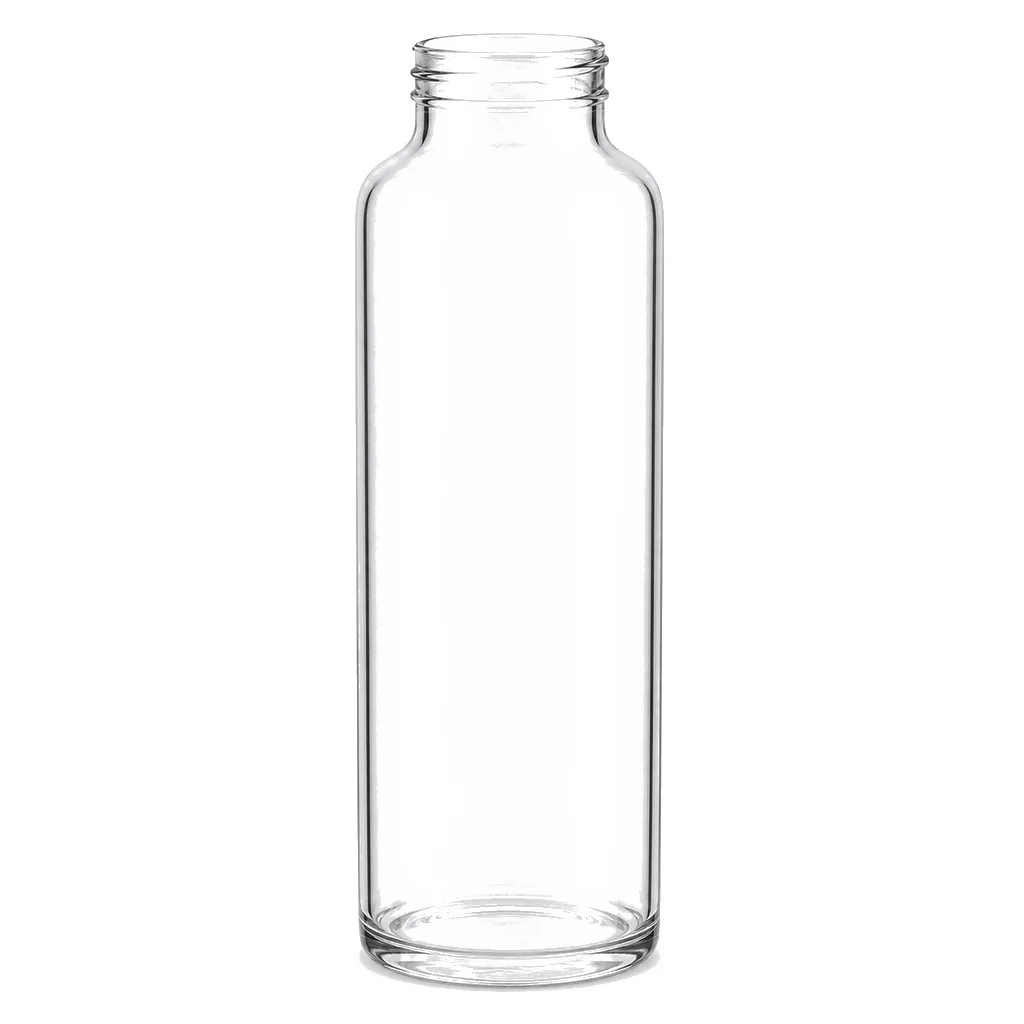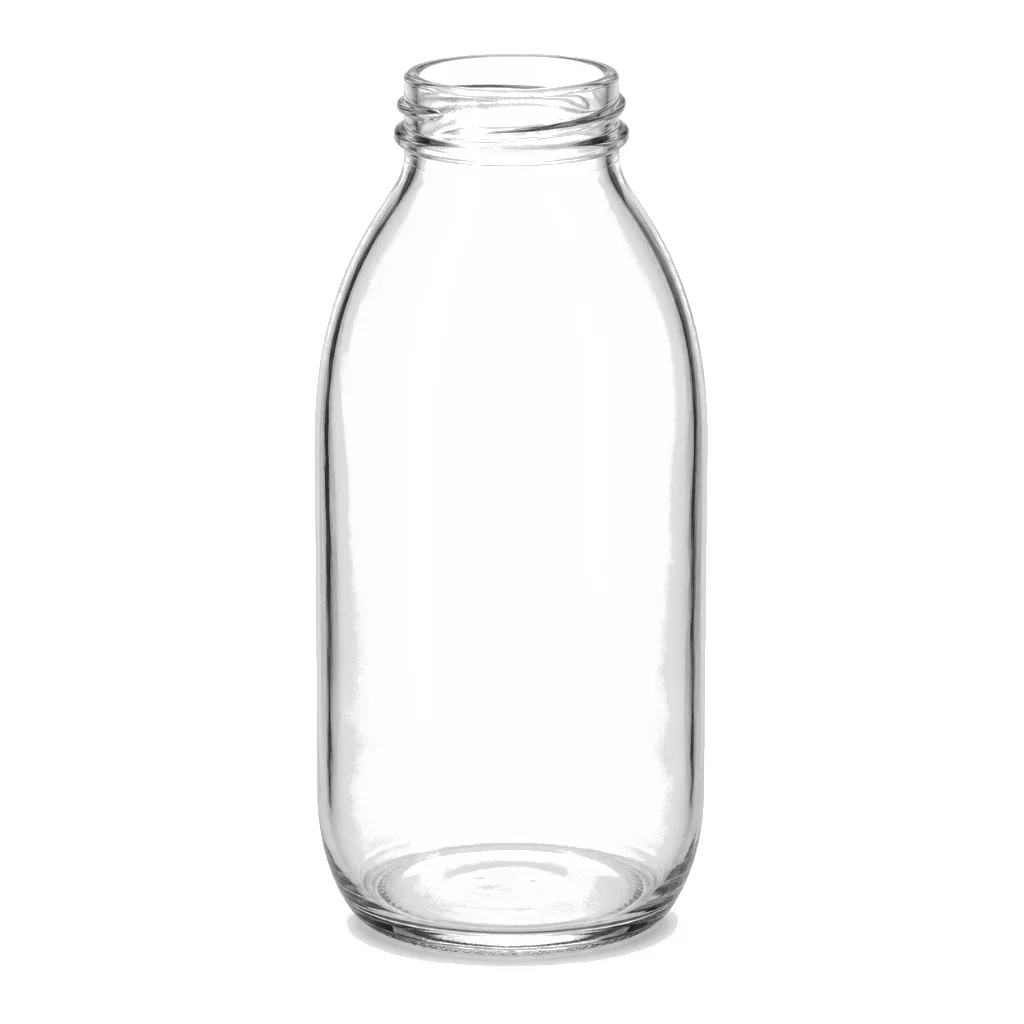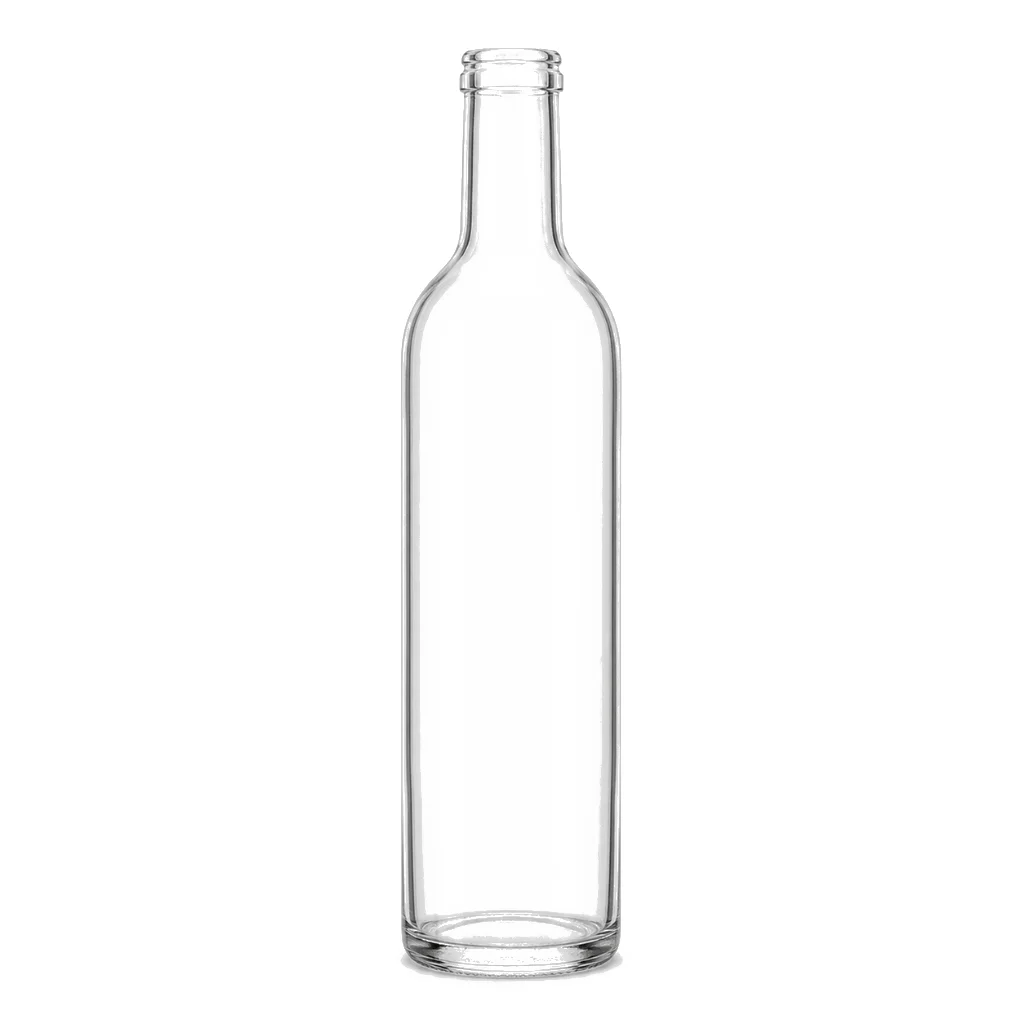
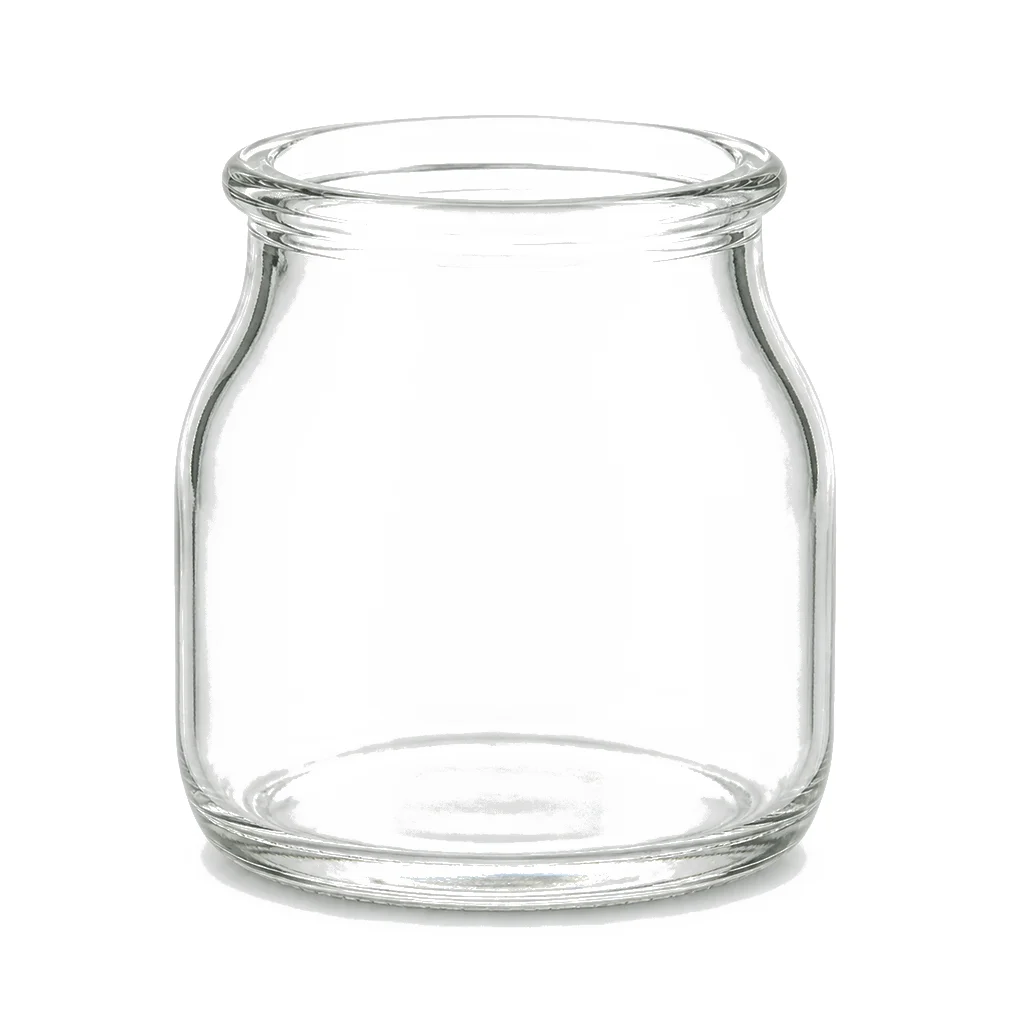
Short wide-necked bottle suited to a thick drinking yogurt
Shown configuration · bare bottle / closure, label and product not shown

Dairy bottles

Yogurt Bottle

A bottle for drinking yogurt, where live cultures keep acidifying in the pack and a thick product needs a finish wide enough to fill and to empty.

Acidity keeps risingViscous fill, wide finishGlass holds no flavor
Stock status
In stock
Lead time
2–3 weeks
FOB price / pc
$0.45 - $0.80
MOQ
3,000 pcs

Final availability, dimensions, materials, assembled components and commercial terms are confirmed against the selected drawing and approved sample.

The product keeps working

Sourness increases with time

Wide bore, thick product

Narrow necks leave residue

No flavor scalping

Plastic absorbs; glass does not

Yogurt Bottle profile

A living product in a rigid container, getting more sour every day it sits in a chiller.

Post-acidification, viscosity & flavor retention

Six consequences of packaging a live cultured drink.

Drinking yogurt continues to ferment slowly at refrigerated temperature, so the pH at filling is not the pH the customer meets. It is also thick, sticky, and holds fruit and flavor compounds that plastic packaging quietly absorbs. Those three behaviors — ongoing acidification, viscosity and flavor retention — decide most of what the bottle has to do.

01

Acidity continues to rise after filling

Live cultures stay active at chilled temperature, so the product becomes progressively more sour across its shelf life. Producers manage this through culture selection and tight temperature control, and the pack contributes by not adding thermal delay — a container that cools quickly after filling reaches the stable state sooner.

02

Some cultures produce gas as well as acid

Certain culture combinations generate carbon dioxide, which can build slight pressure and, in an extreme case, lift a closure. It is a formulation question rather than a packaging fault, and where it is a known characteristic the closure has to be selected knowing that a small pressure can develop.

03

Viscosity sets the bore, at both ends of the process

A thick product fills slowly through a narrow opening and empties badly through one, leaving product the customer paid for stuck to the shoulder. A wide finish addresses both, which is why drinking yogurt bottles are proportionally wider in the neck than a juice bottle of the same capacity.

04

Glass does not absorb flavor compounds

Fat-soluble flavor and fruit aroma compounds migrate into some plastics over time, weakening the taste of the product in the pack — an effect that becomes noticeable in a long chilled shelf life. Glass is inert, so what was filled is what is tasted, which is a specific and demonstrable advantage in this category.

05

Residues dry hard and complicate the finish

Protein and fat films set firmly on glass, so any product carried onto the sealing surface during filling interferes with capping. Fill level control and a finish geometry that does not encourage splash-back are what prevent it, and the problem is easier to design out than to inspect out.

06

The pack is opened, part-used and returned to a refrigerator

Larger drinking yogurt formats are rarely finished at one sitting, so a closure that reseals cleanly onto a sticky finish is worth more than a tamper-evident foil alone. Testing reclosure after several openings, with product on the thread, reflects how the pack is actually used.
Application guide

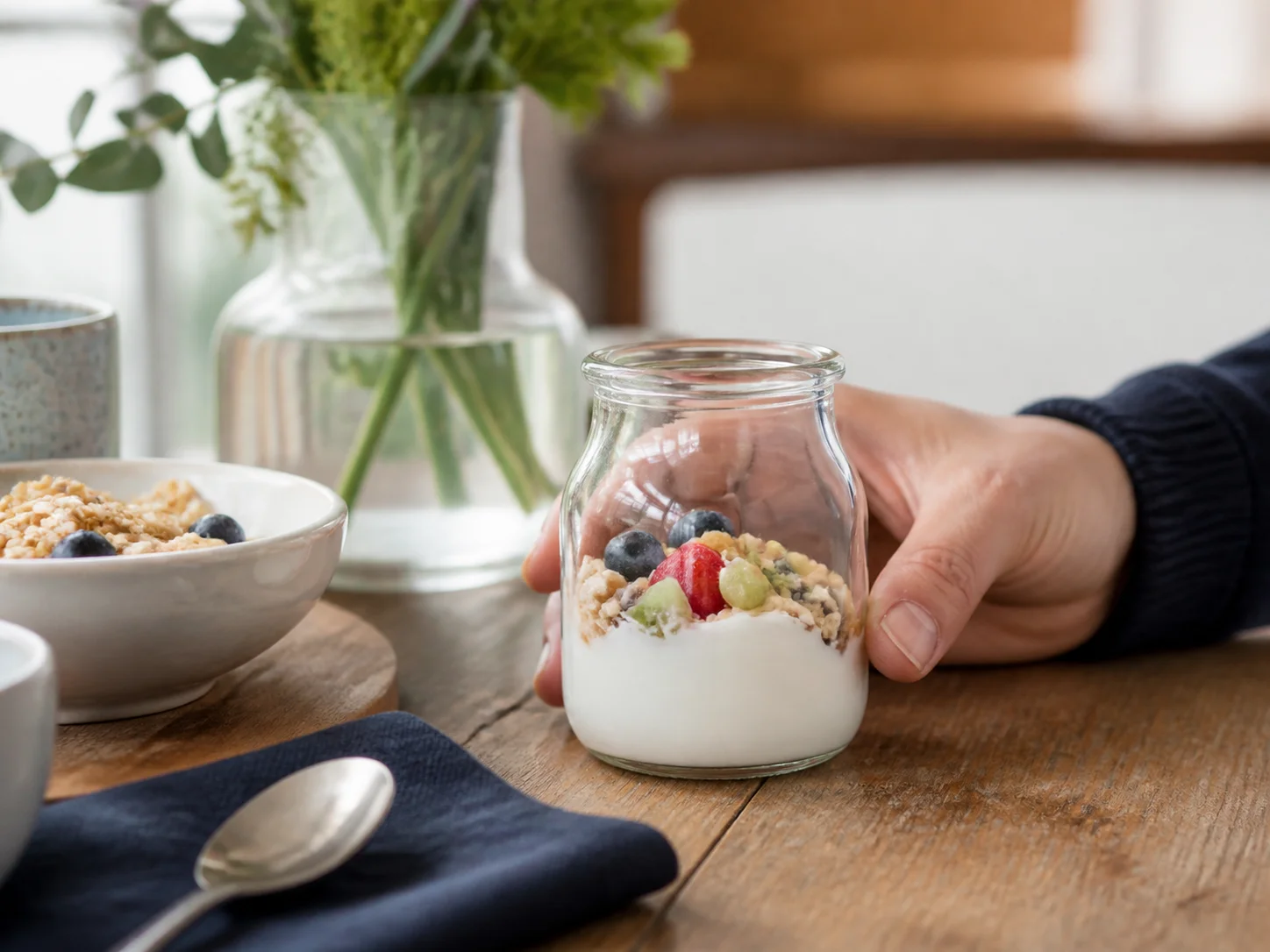
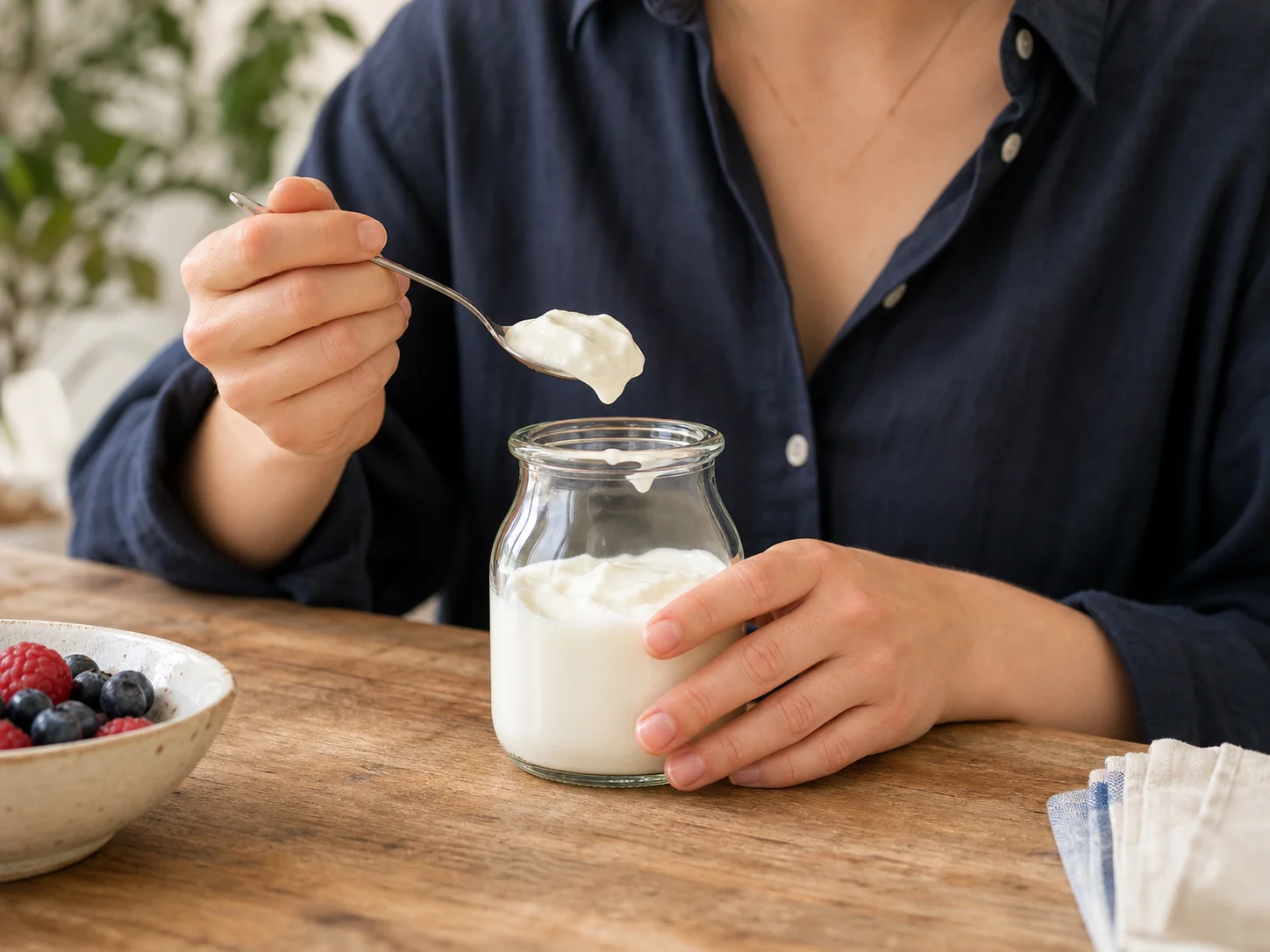
Yogurt is eaten from the pot with a spoon.

Unlike a drink, this product is consumed directly out of its container, which makes the rim, the mouth width and how cleanly a spoon reaches the base part of the eating experience rather than packaging details. These are development directions confirmed with the actual product.

Yogurt Bottle used for pots eaten straight from the glass in a spoonable yogurt setting

Spoonable yogurt

Pots eaten straight from the glass

For set and stirred yogurts a customer eats with a spoon at a desk or a breakfast table. The mouth has to admit a spoon comfortably and the base has to let it scrape clean, since any yogurt left in a corner the spoon cannot reach is product the customer paid for and could not eat.

  • Confirm a spoon reaches the base
  • Check the rim is comfortable to eat from
  • Size the pot to a single serving
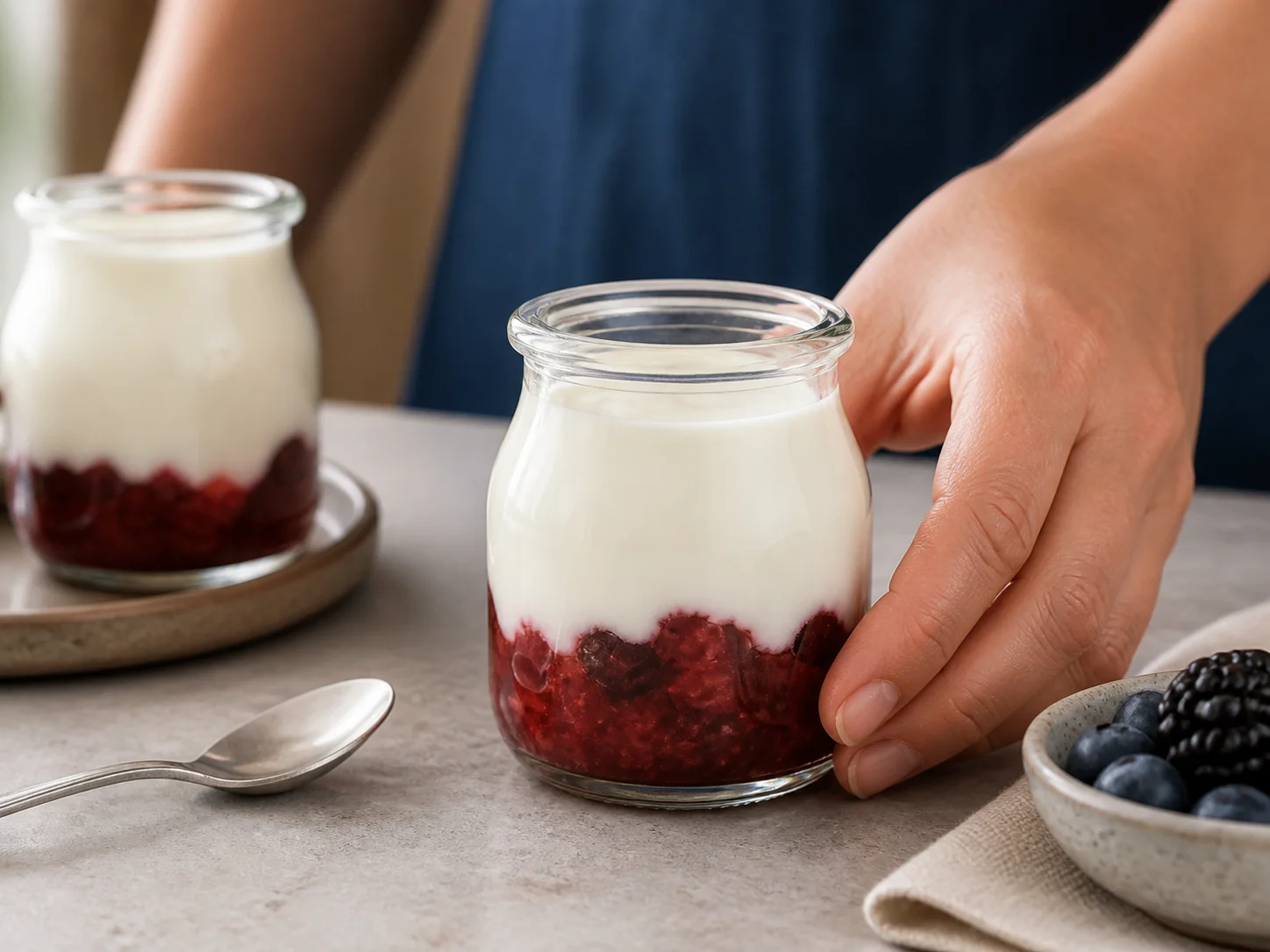
Yogurt Bottle used for fruit and cream visible through the wall in a layered desserts setting

Layered desserts

Fruit and cream visible through the wall

For layered products where compote sits under yogurt and the layers are the reason to choose glass over plastic. That visibility only works if the layers stay distinct through distribution, so how the product looks after a delivery journey matters as much as at filling.

  • Confirm layers survive distribution
  • Review appearance after transit
  • Use clear glass to show the layers
Yogurt Bottle used for glass pots kept and reused in a premium and café setting

Premium and café

Glass pots kept and reused

Glass yogurt pots are widely washed and reused as small tumblers or storage jars, which extends brand presence and helps justify the price against plastic. A rim finished for drinking and a shape worth keeping turn that into a deliberate feature.

  • Finish the rim for reuse
  • Design a pot worth keeping
  • Confirm the seal suits chilled transit

Applications describe development directions. Product compatibility, process suitability, closure fit and distribution outcomes are confirmed for the selected program.

Common questions

Yogurt Bottle questions

The product carries on working inside the pack, and the pack has to allow for it.

Why does the product get more sour on the shelf?

Because the cultures stay active at chilled temperature and keep producing acid, so the pH at filling is not the pH the customer meets. Producers manage it through culture selection and tight temperature control, and the pack helps by cooling quickly after filling so the product reaches its stable state sooner.

Can pressure build up in the bottle?

With some cultures, yes. Certain combinations generate carbon dioxide, which can create slight pressure and in an extreme case lift a closure. It is a formulation characteristic rather than a packaging fault, and where it is known, the closure needs selecting on the basis that a small pressure may develop.

Does the container affect the taste?

It can. Fat-soluble flavor and fruit aroma compounds migrate into some plastics over time, weakening the product's taste noticeably across a long chilled shelf life. Glass is inert, so what was filled is what is tasted — a specific, demonstrable advantage in a category with delicate flavor loading.

We are getting capping failures. Why?

Usually product on the sealing surface. Protein and fat residues dry hard on glass, and anything carried onto the finish during filling interferes with the seal. Fill level control and a finish geometry that does not encourage splash-back prevent it, which is far more reliable than trying to inspect the problem out afterwards.

Why do dried residues cause more trouble here than elsewhere?

Because they set on the sealing surface. Cultured product left on the finish dries hard, and a capper that seats correctly on clean glass will not on a contaminated land. Rim wiping belongs in the line specification for this format rather than being treated as housekeeping.

Next step

Send us the Yogurt Bottle brief.

Tell us the product, fill volume, closure preference and destination market. We will come back with the matching drawings, available configurations and a sample plan before anything is quoted.

  • 01Send the briefProduct, volume, closure and market
  • 02Get the optionsMatching drawings and configurations
  • 03Approve the sampleConfirm the pack before production