Etching routes, contrast & where it fails
Six things to know about decoration made by removing glass.
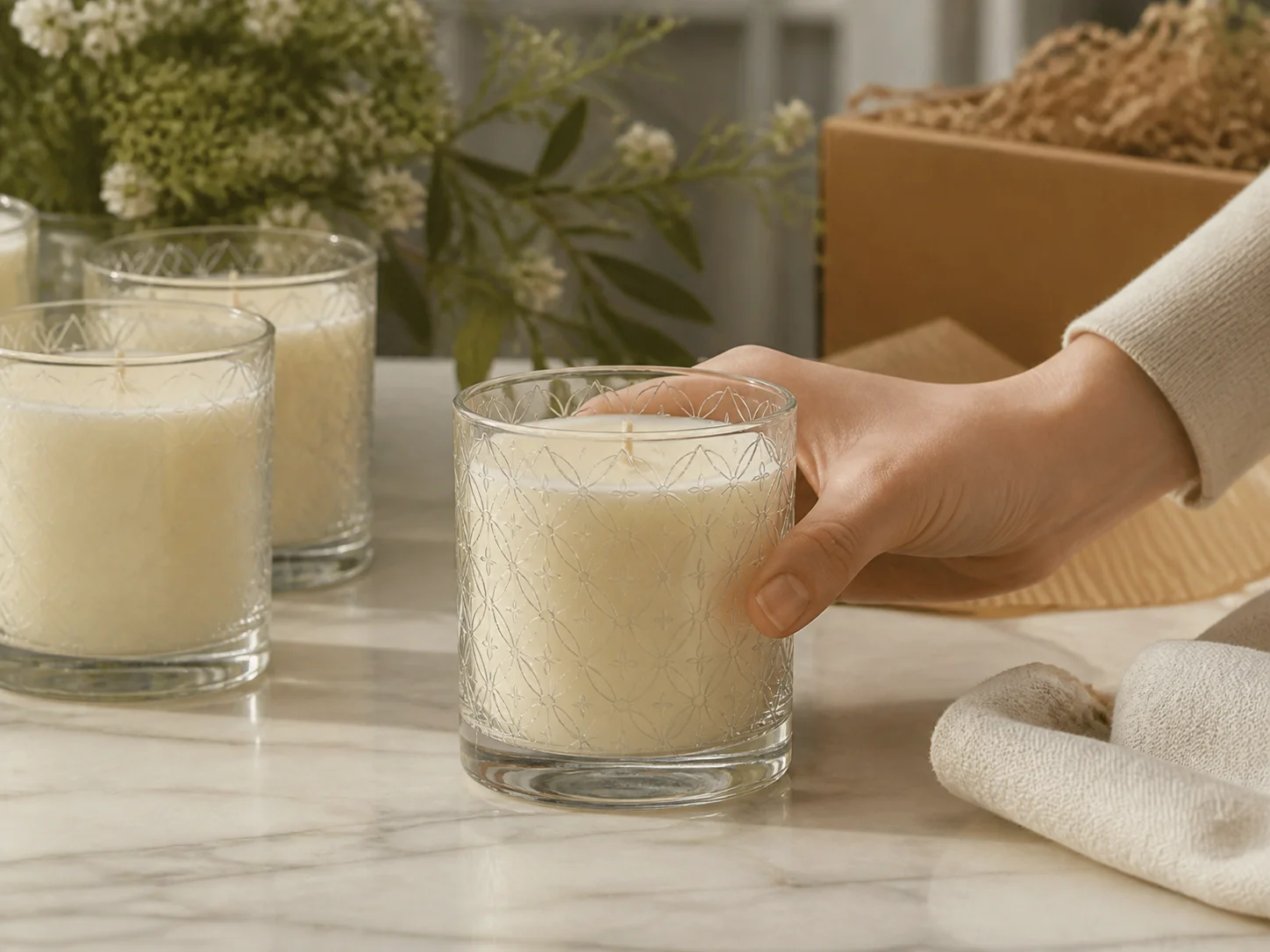
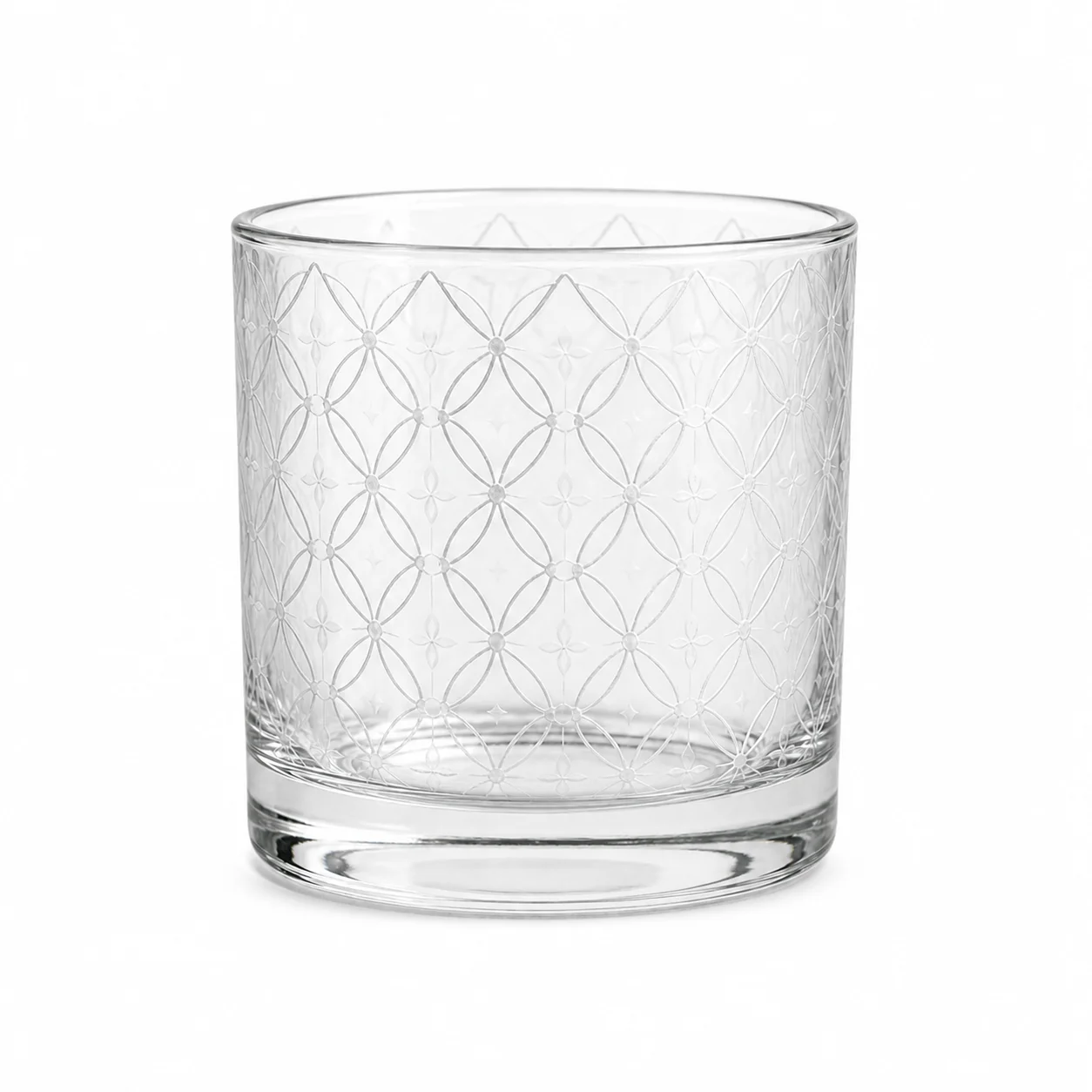
Etching removes a microscopic layer of glass to leave a matte pattern against a clear ground. Because there is no applied layer, there is nothing to lift, craze or discolor when the vessel is heated, which makes it the most robust decoration available for a candle and the reason it survives at the top of the category.
Acid masking and laser etching have different economics
Acid etching masks the areas to stay clear and treats the rest, which suits large areas and repeated designs at volume. Laser etching writes the pattern directly, which suits fine detail, variable data and short runs with no tooling. The choice usually follows quantity and detail rather than appearance, since the finished look is similar.
Contrast is created by light, not color
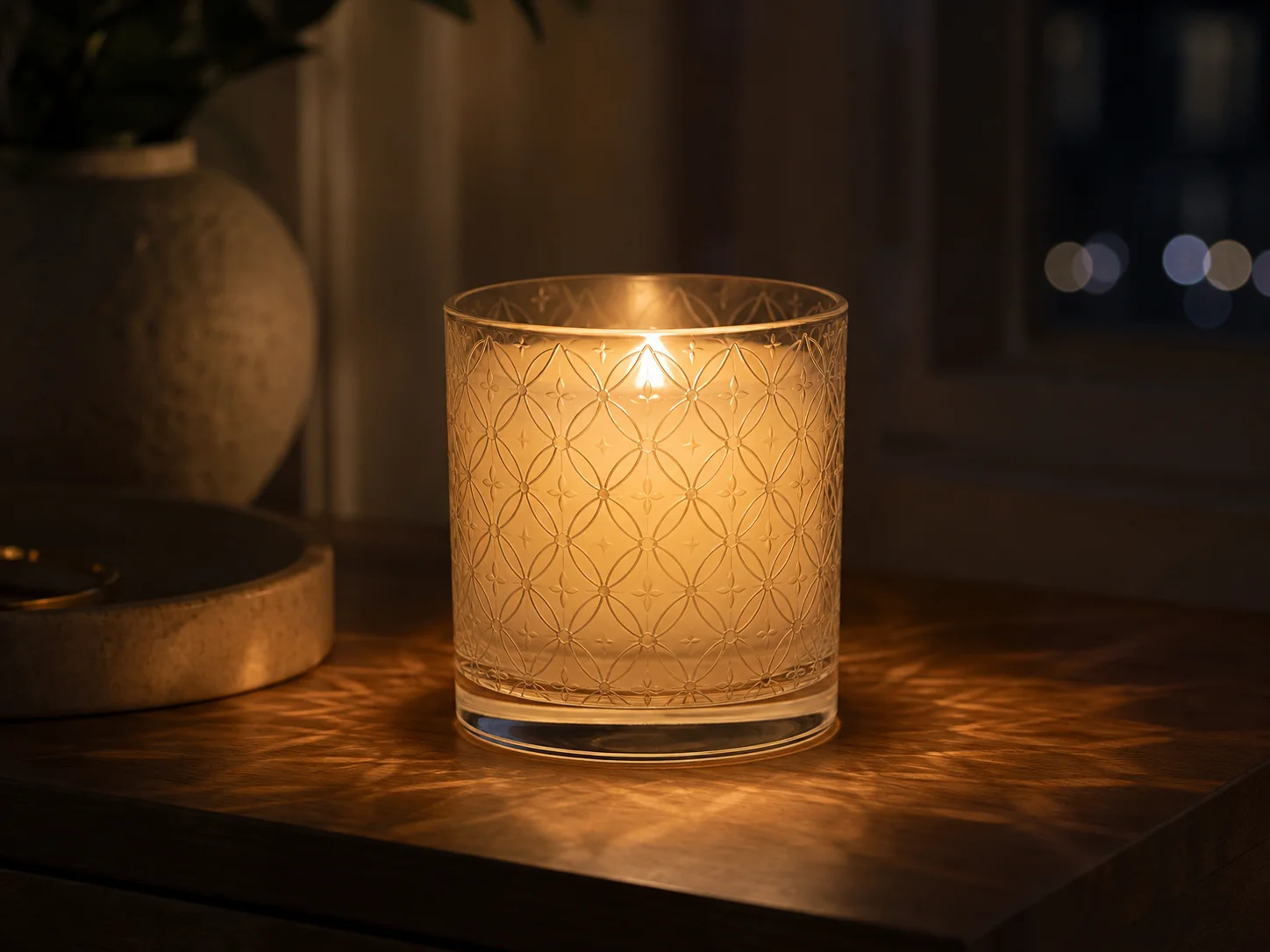
An etched area scatters light while clear glass transmits it, so the pattern reads as matte against bright. With a candle behind it the effect inverts and intensifies: the etched areas glow while the clear glass stays sharp. Designs that rely on that inversion have to be judged lit as well as unlit, because they look quite different.
Fine detail needs the right route and a real sample
Very fine lines can close up in acid etching and can look harsh under laser, so a design that works as artwork may not translate. A physical sample at production settings, not a rendering, is what tells you whether a serif, a hairline or a gradient survives. It is quick to do and it prevents a compromise at the last stage.
Etched surfaces hold fingerprints
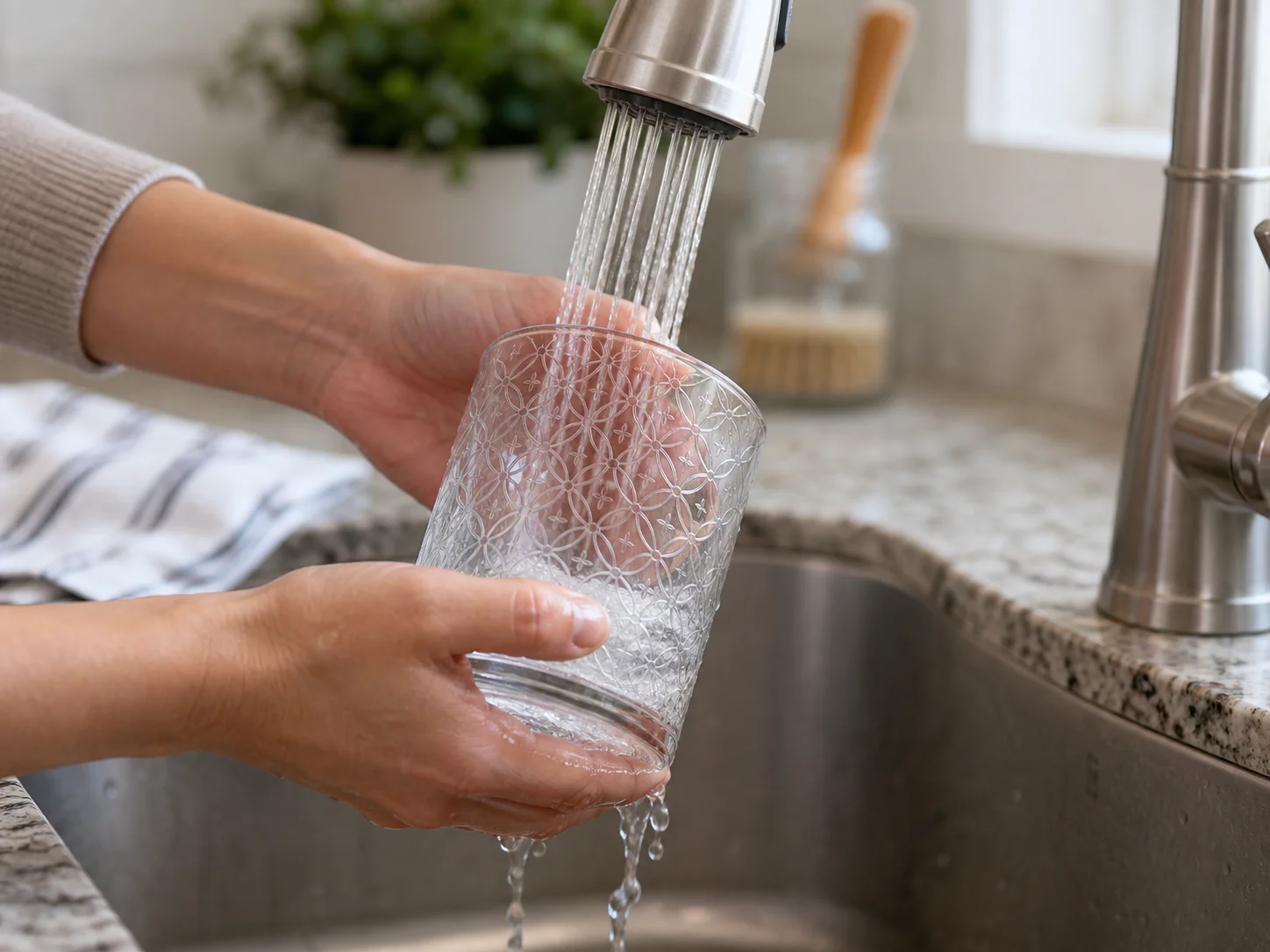
A matte area is microscopically rough and picks up oil from handling, showing as a darker patch until cleaned. Retail units that are handled will show it, and the answer is either accepting it, placing the etch where hands do not go, or supplying with a cloth. It is the one drawback of an otherwise durable finish.
It is the safe choice where coatings are a risk
For a program that has had a coating fail, or that ships into hot climates, or that cannot afford a cosmetic recall, etching removes the entire category of coating problems. The decoration is the glass. That reliability is worth paying for on a flagship product even where a coating would be cheaper per unit.
Etching removes glass, so it thins the wall where it is deepest
An acid or laser pattern takes material away, and a deep pattern near the heat of the wax line reduces the section exactly where thermal stress concentrates. Depth is specified against wall thickness rather than against the visual effect alone.