Two radii, label sites & packing
Six practical differences between a polygon and a cylinder.
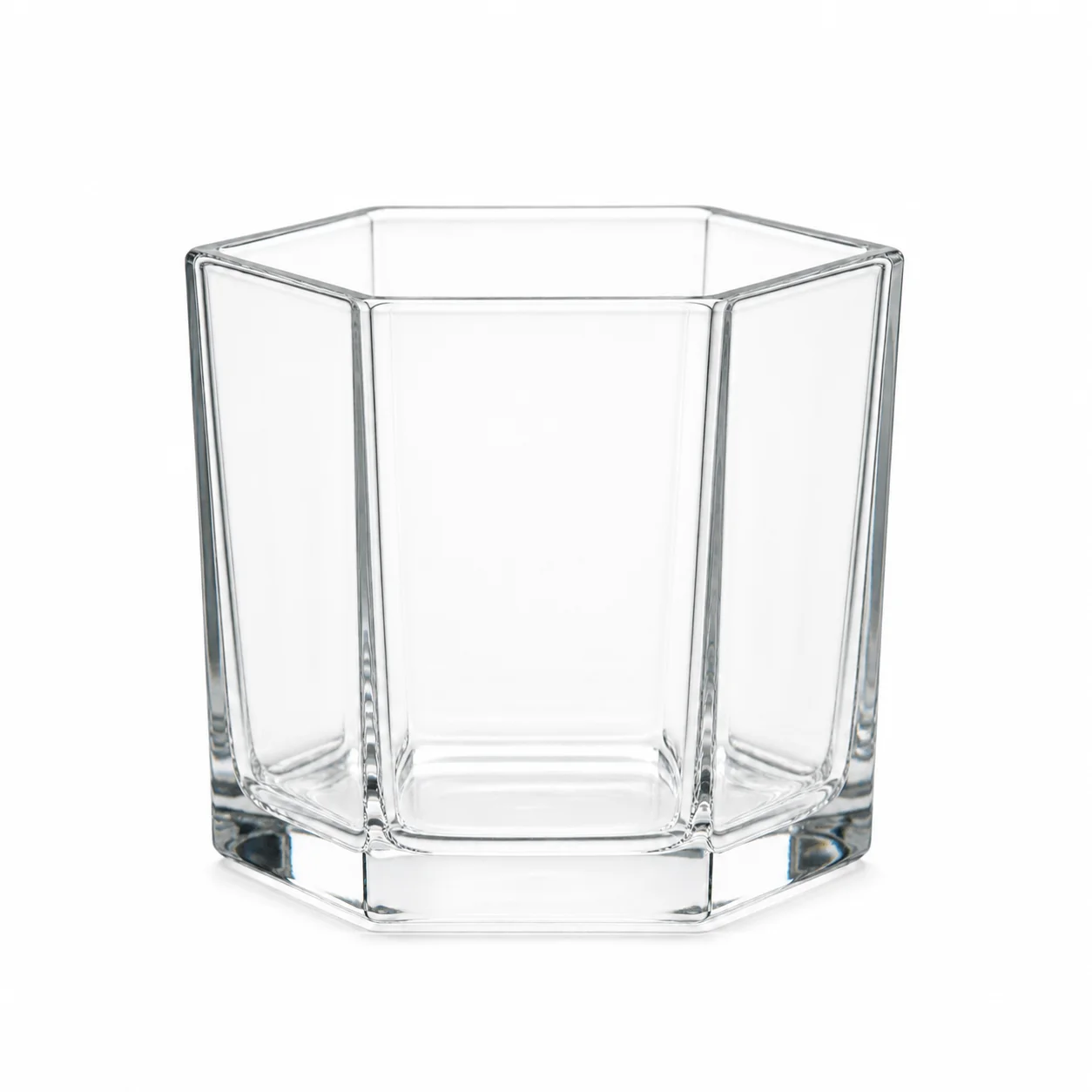
Faceting a vessel into flat panels gives every side a natural label position and lets units pack without rolling. It also means the distance from the wick to the wall is shorter at the middle of each panel than at the corners, so the melt pool reaches the flats before it reaches the vertices — a difference that grows as the polygon gets simpler.
Wick to the corner, not to the flat
A hexagon's corner sits further from the center than the middle of its panels, and on a pentagon the difference is larger still. A wick sized to the panel distance leaves wax in the corners for the whole life of the candle. Sizing to the corner radius and checking glass temperature at the flats is the working approach.
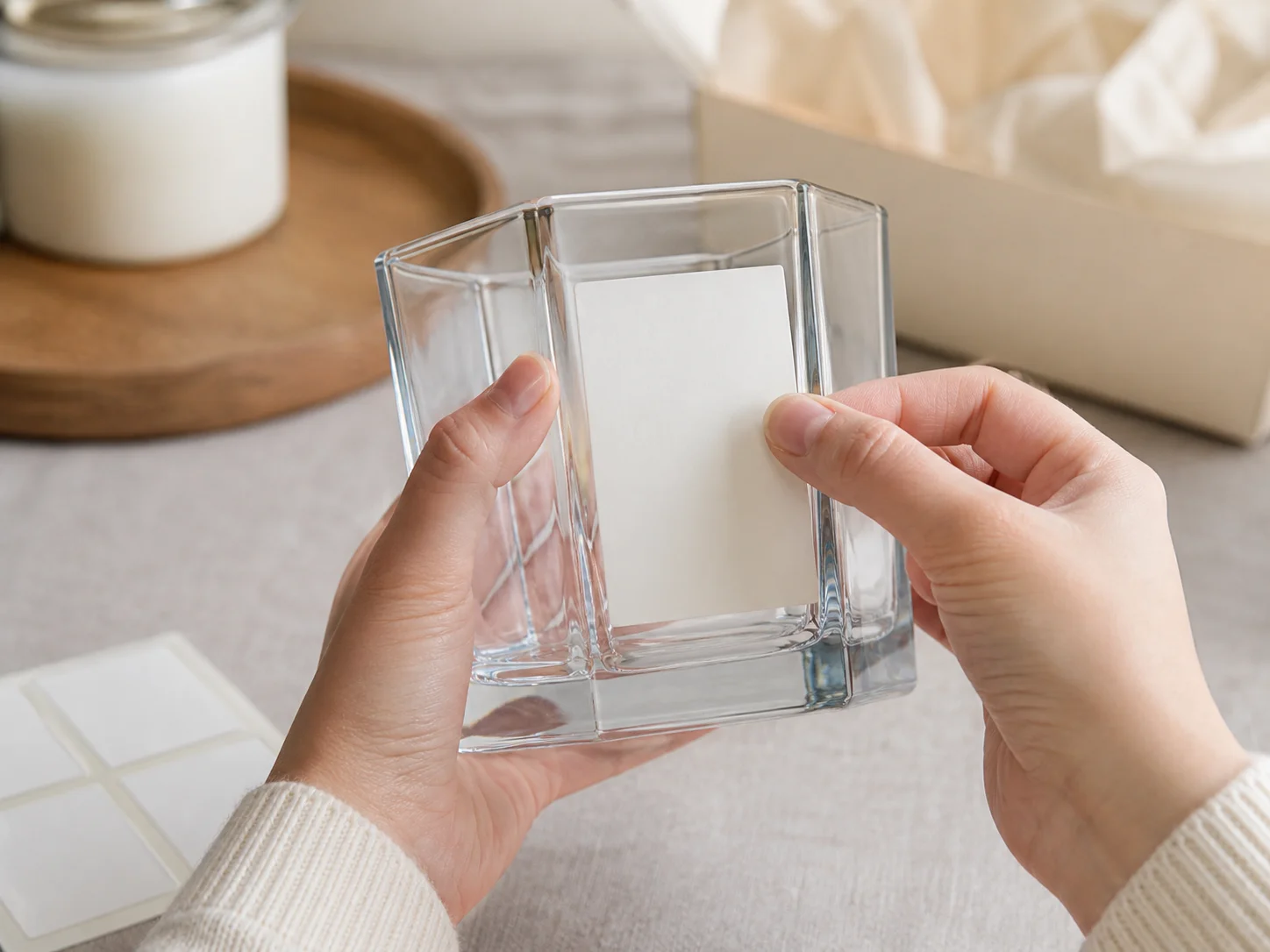
Every panel is a ready-made label site
Flat vertical panels take rectangular pressure-sensitive labels with no die-cutting and no distortion, which is a real saving on artwork and on application. It also allows different information on different faces — brand, fragrance, care instructions — without the wrapping that a cylinder forces on the design.
Corners are where the glass takes knocks
Vertical edges are the most exposed feature in a carton and the first place a chip appears. A small radius on each corner reduces that considerably without softening the geometric character, and it also removes an edge that can feel unpleasantly sharp on a vessel customers pick up warm.
Flat faces pack tighter and do not roll
Polygonal vessels sit against each other in a carton without partitions doing all the work, and they do not roll on a shelf or a bench. On a range shipping in volume that translates into denser cartons and fewer transit losses, which is one of the quieter reasons the shape appears so often at higher volumes.
The number of sides is a design decision with technical weight
More sides approach a cylinder, reducing the corner-to-flat difference and easing the wicking, while fewer sides make the geometry more striking and the burn harder. Six is the usual compromise; five is noticeably more demanding. Choosing the count with the wicking consequence understood avoids a surprise at burn testing.
An odd number of sides means no two faces are opposite
On a pentagon there is no flat directly behind the front face, which changes how a label reads from the back and how the vessel sits against a wall. It is a small thing that decides whether a design with front and back artwork is workable at all.