Solid versus plated, aging & finish consistency
Six things to settle before a brass lid goes into a range.
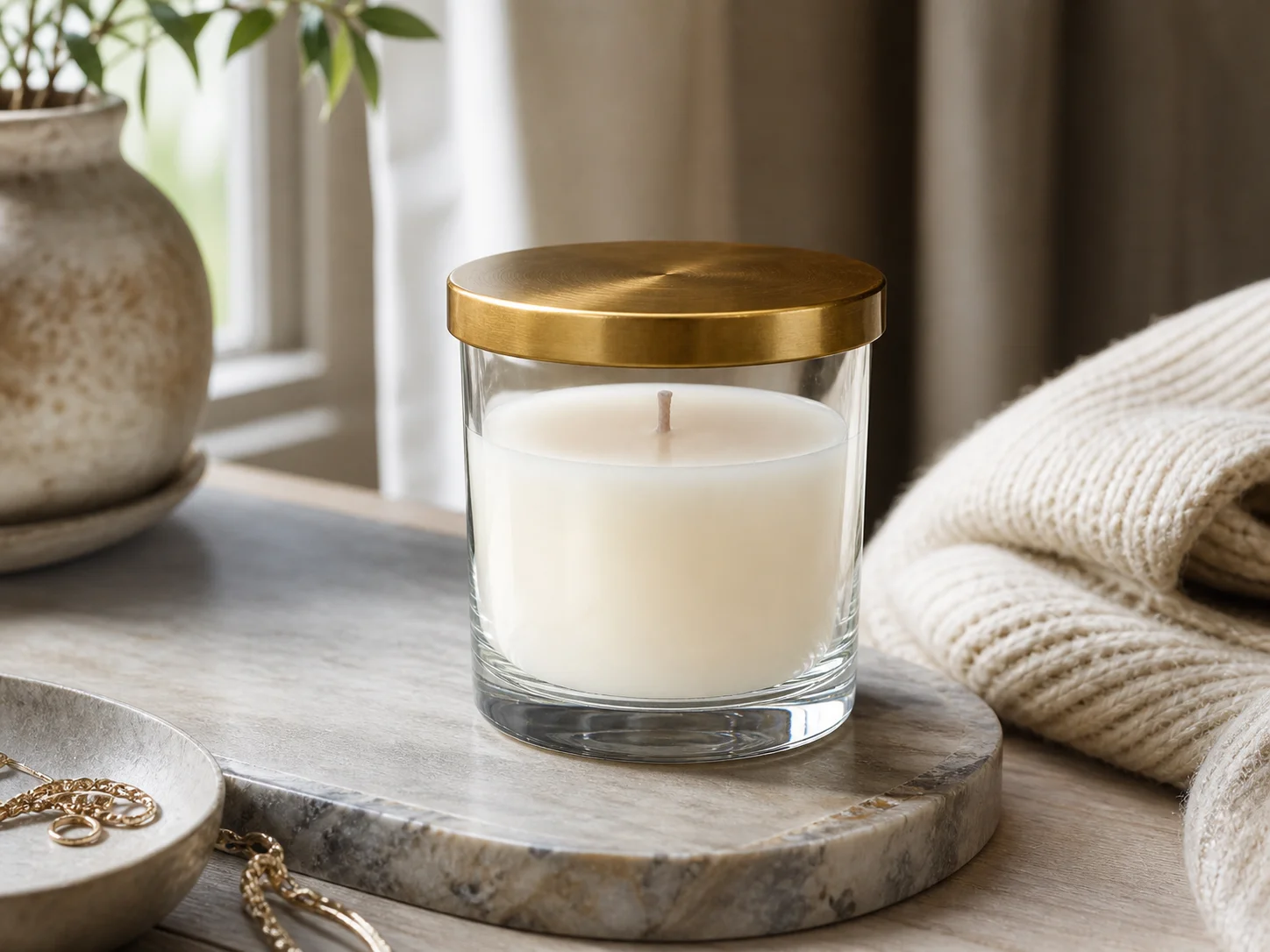
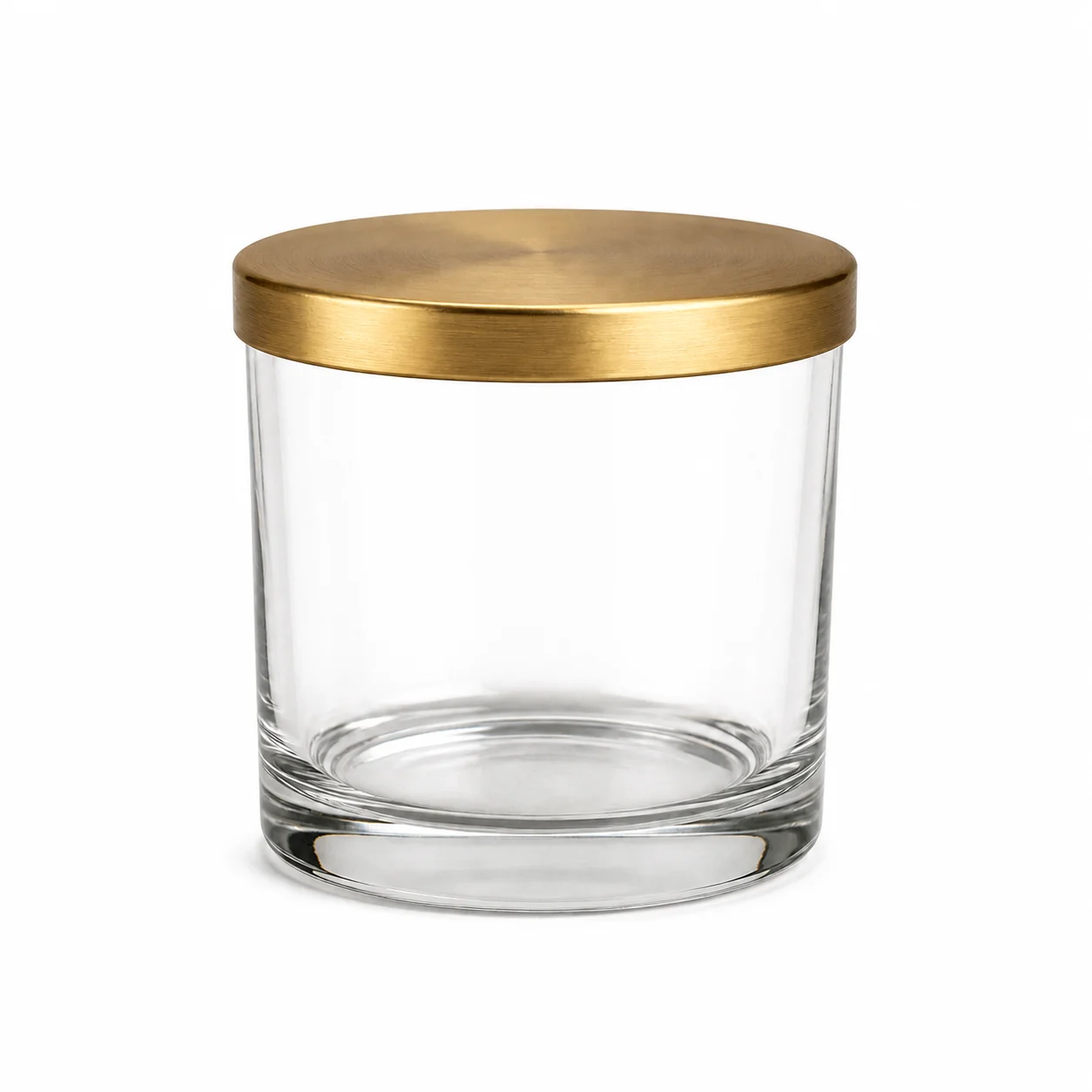
A brushed brass lid does more for a candle's perceived value than almost any other single component. It also introduces a set of questions that a painted or wooden lid does not: whether the brass is solid or plated, how it changes with handling and soot, and whether the brushed grain looks the same on every unit in a carton.
Solid brass and brass plating age in opposite directions
Solid brass patinates: it darkens unevenly with handling and can be polished back. Plated steel or zinc keeps its color until the plating wears through, after which it shows the substrate and cannot be recovered. Neither is wrong, and a brand should know which it is buying, because the ten-year appearance is completely different.
Lacquer decides whether it patinates at all
Most decorative brass is lacquered to hold its color, which prevents tarnishing and also prevents the developing patina that some brands actually want. The lacquer can craze near a candle's heat. Deciding between a lacquered stable finish and an unlacquered living one is a positioning choice as much as a technical one.
Brushed grain has to run the same way on every unit
A directional brushed finish looks wrong when adjacent units in a display have grain running at different angles. That consistency is a manufacturing control rather than an inspection criterion, and it is worth agreeing explicitly, because a supplier optimizing for throughput will not necessarily hold it without being asked.
Soot marks warm metal visibly
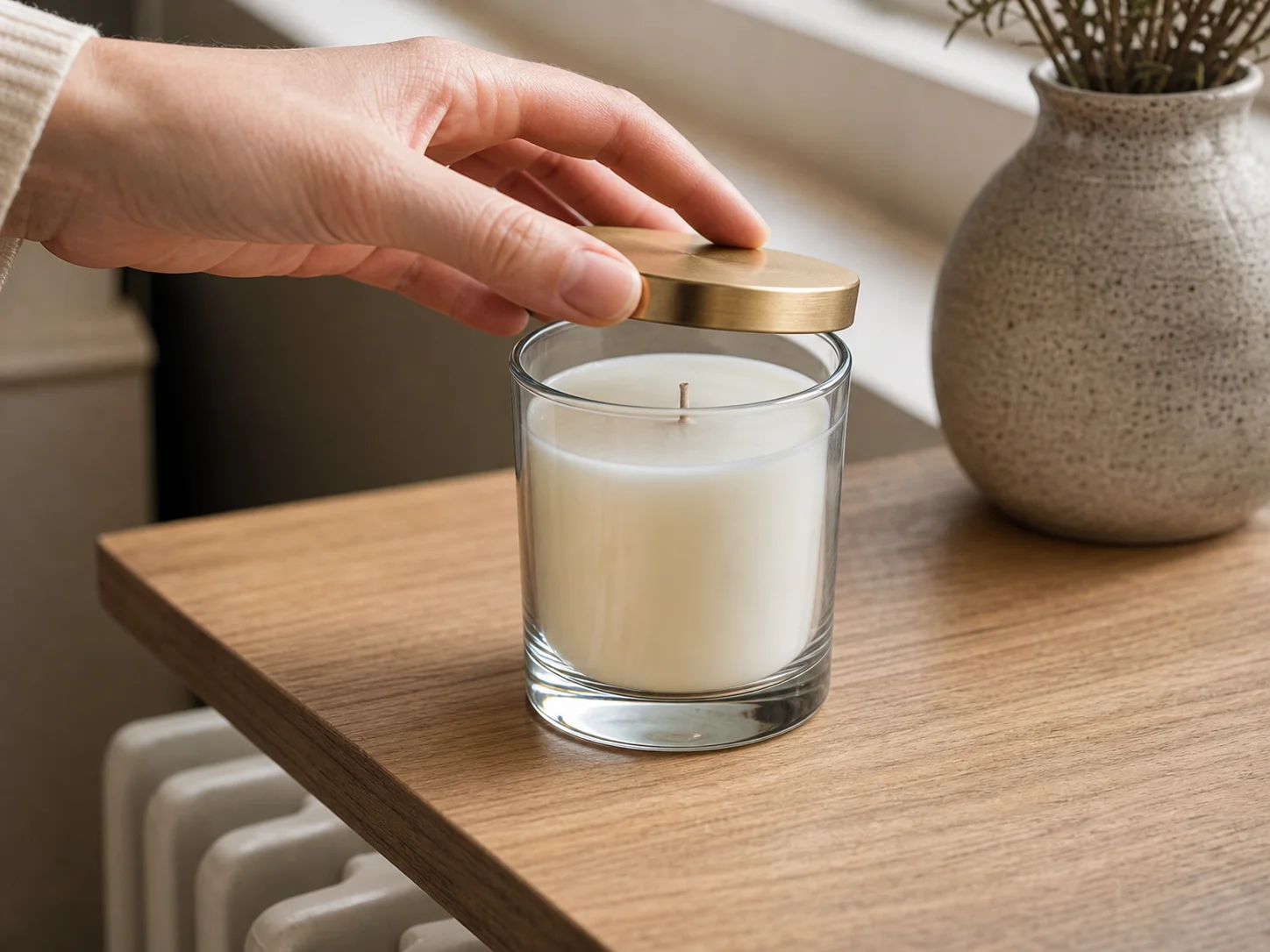
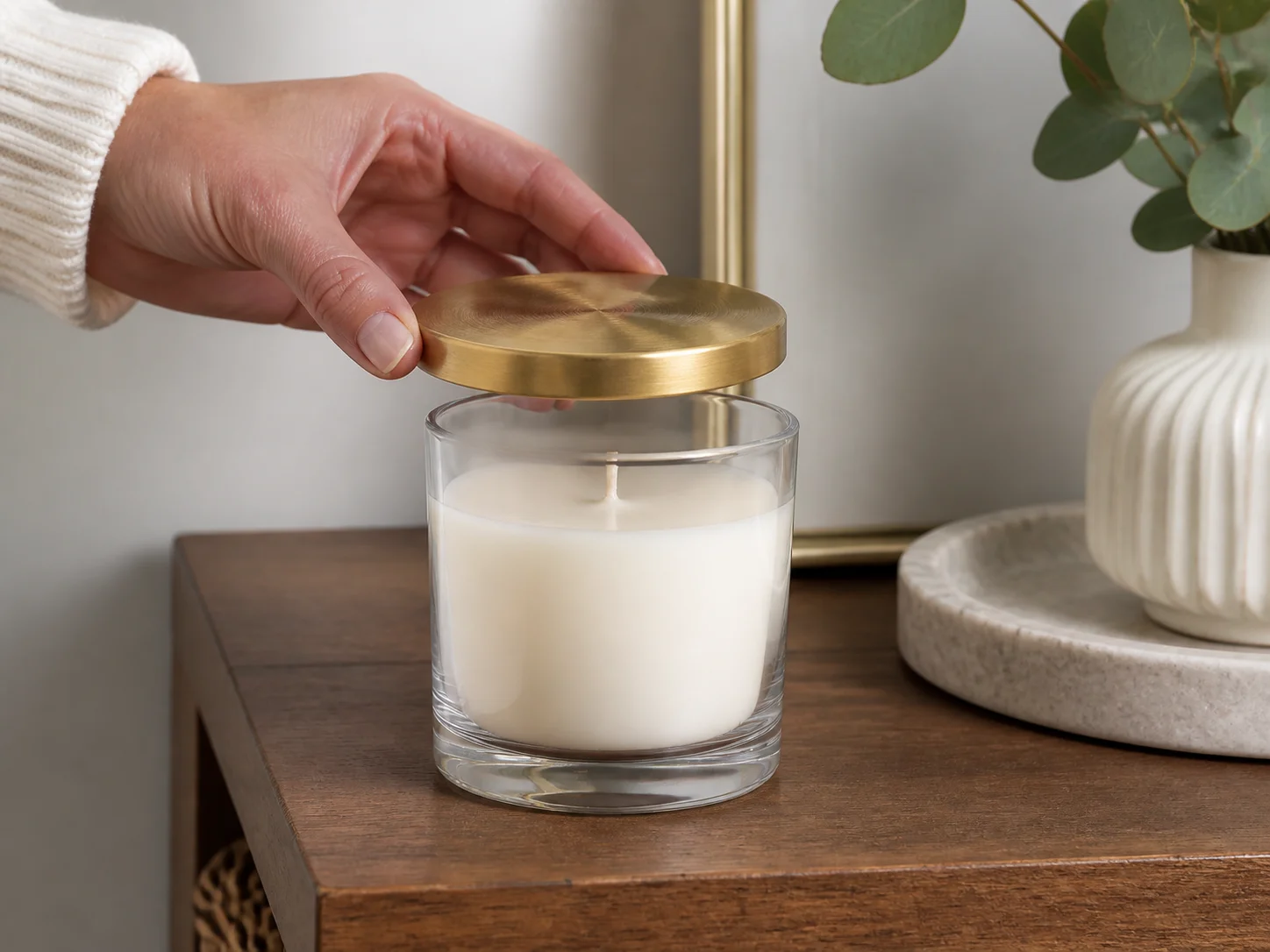
Customers snuff candles with the lid, and soot on a warm brass surface shows as a dull gray film that does not simply wipe away. A lid intended to be used that way needs a finish that can be cleaned, and one that is not should be paired with a clear instruction and, ideally, a snuffer in the box.
The liner is still where fragrance is lost
Whatever the metal, the seal comes from the disc inside the lid, and it sits above fragranced wax for months. A metal lid with an inadequate liner retains no better than no lid at all, which is an expensive way to buy appearance. The liner is specified against the fragrance rather than assumed with the lid.
Metal and glass expand at different rates, and the fit changes when warm
A lid that seats cleanly on a cold jar can bind or rattle on one that has been burning for hours, because the metal moves further than the glass beneath it. Checking the fit warm as well as cold is what stops a lid that will not go back on at the end of an evening.