Neck bore, reed behavior & solvent compatibility
Six things the bottle actually controls in a reed diffuser.
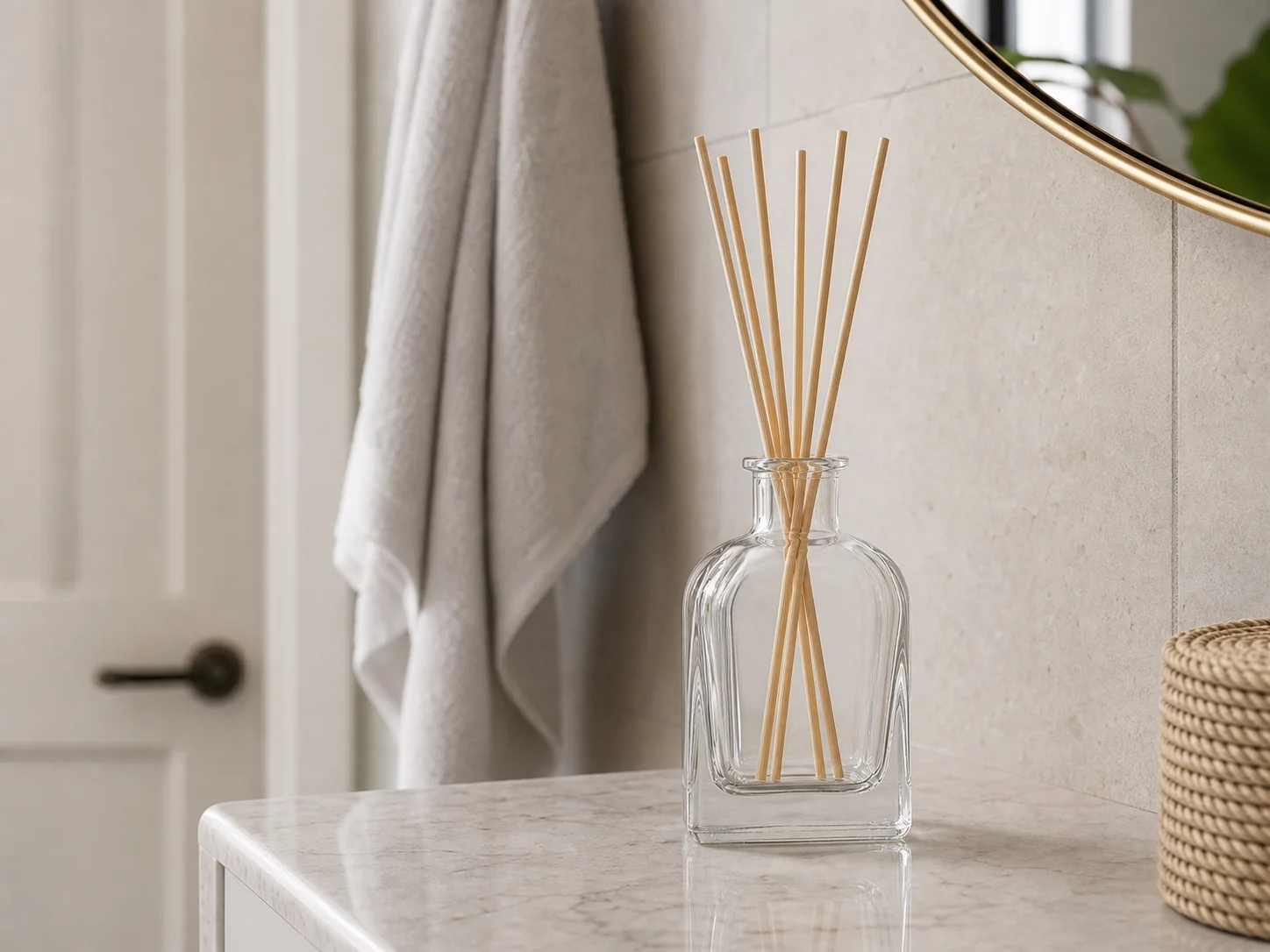
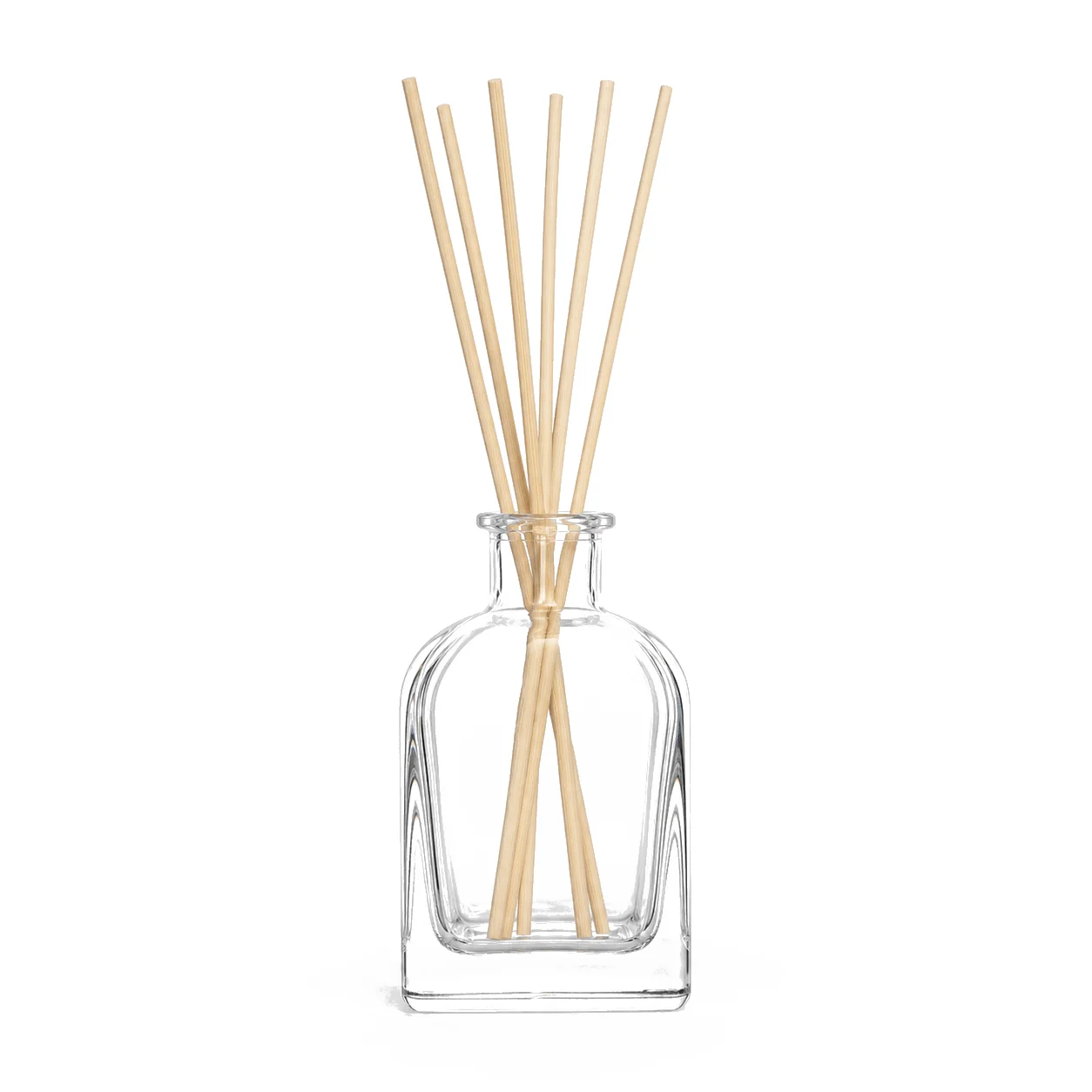
A reed diffuser works by capillary action: oil climbs the porous core of a rattan reed and evaporates from its exposed length. The bottle contributes two things — the bore of the neck, which limits both evaporation from the surface and how many reeds can be fitted, and a base broad enough to stay upright once a fan of reeds is leaning out of it.
A narrow neck is the main scent control
Two identical fills in bottles with different bores give noticeably different throws, because the opening limits both direct evaporation and the number of reeds that fit. That makes neck diameter the primary lever a brand has over strength after the formulation is fixed, and it is worth choosing deliberately rather than inheriting it from a bottle shape.
Reed count is a dose the customer controls
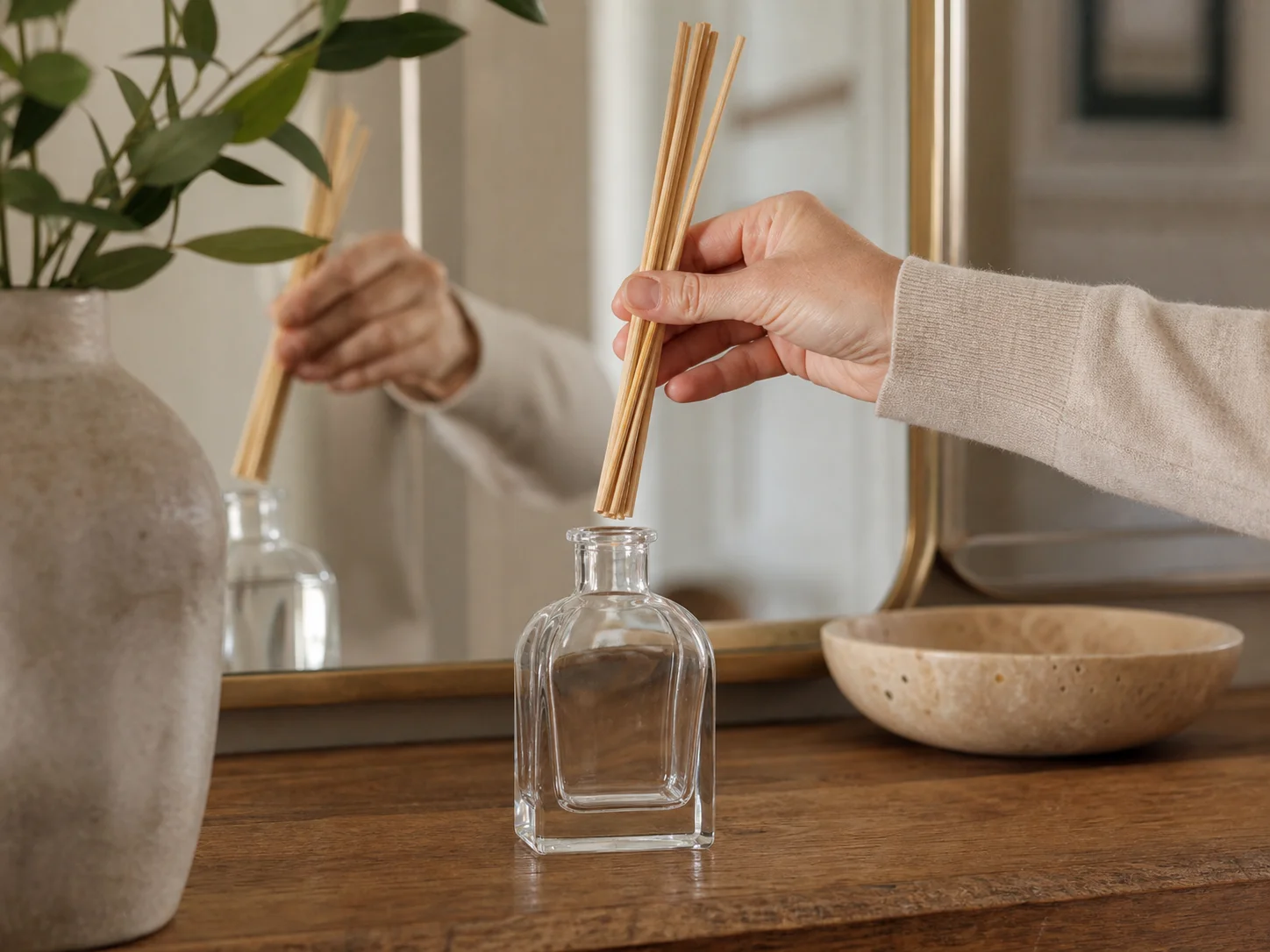
More reeds means more evaporating surface and a stronger, shorter-lived diffuser. Because customers adjust reed count themselves, the instruction on the pack is doing real work: telling someone to start with half the reeds and add more is the difference between a diffuser that lasts a season and one that empties in a month.
Solvent choice reaches the bottle and the label
Reed diffuser bases are usually alcohol or a glycol ether type solvent, both of which attack some plastics and can lift printed labels and adhesives. Label stock, any plastic collar and the closure used for transport all have to be selected against the base rather than against water, and spillage onto a finished surface is a known complaint.
The transport closure is not the in-use closure
A diffuser ships sealed and is opened permanently at first use, so it needs a tight, often tamper-evident closure for transit and a decorative collar afterwards. Those are two different components with different requirements, and a program that specifies only one usually discovers the gap when the first pallet leaks or the first customer cannot open it.
Center of mass moves when the reeds go in
A fan of rattan leaning out of a narrow neck shifts the center of mass sideways and upward, and a bottle that stands perfectly empty can tip once dressed. Base diameter is checked with the reeds in place and at an angle, which is how the product actually sits on a shelf in a bathroom rather than on a bench.
The bottle will be knocked over, and the volume that escapes is the whole fill
Reeds make the pack top-heavy and there is no closure in use, so a knock empties it onto whatever is below. A wide, heavy base and a neck small enough to slow the flow are the only protections available, and they are worth more here than on any closed pack.