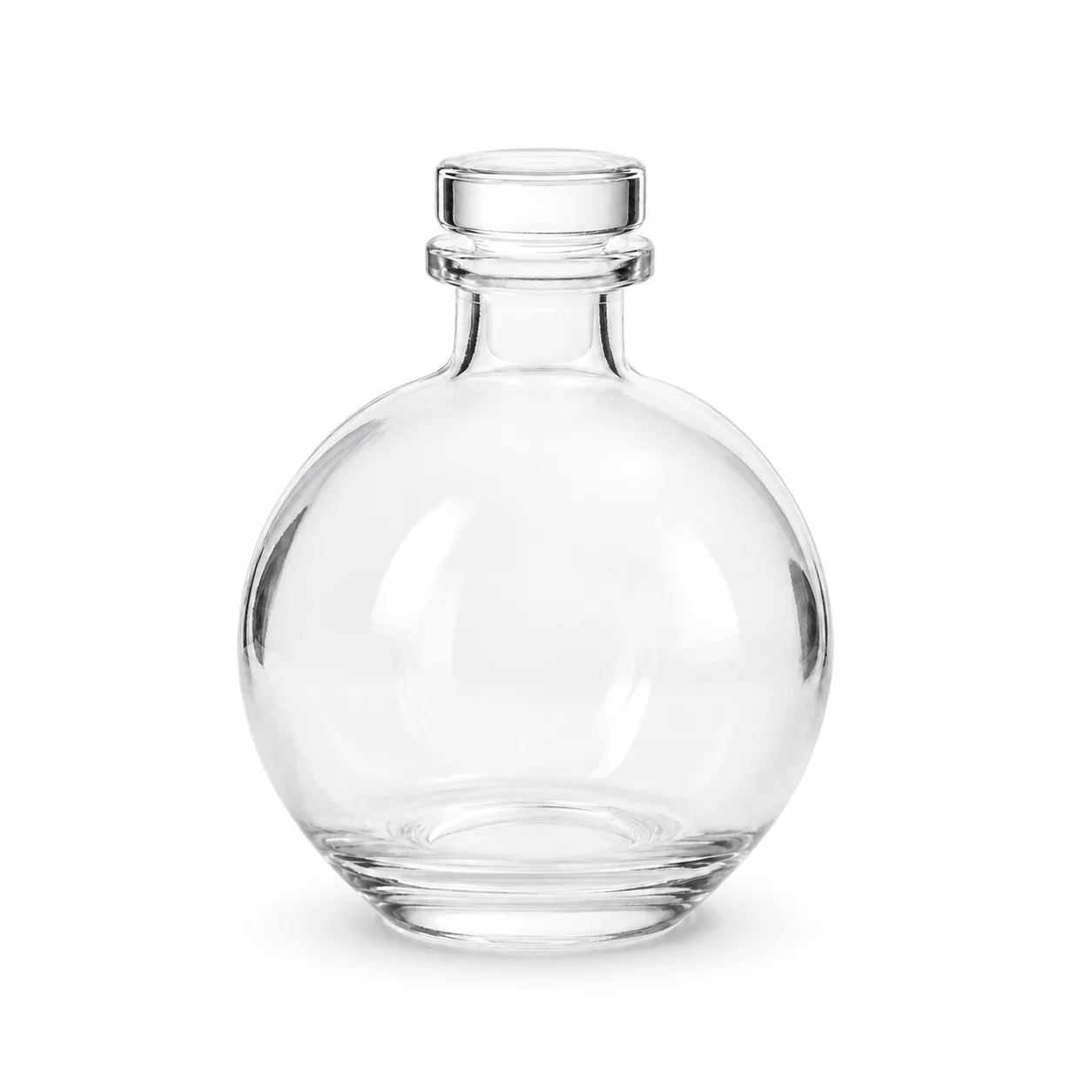
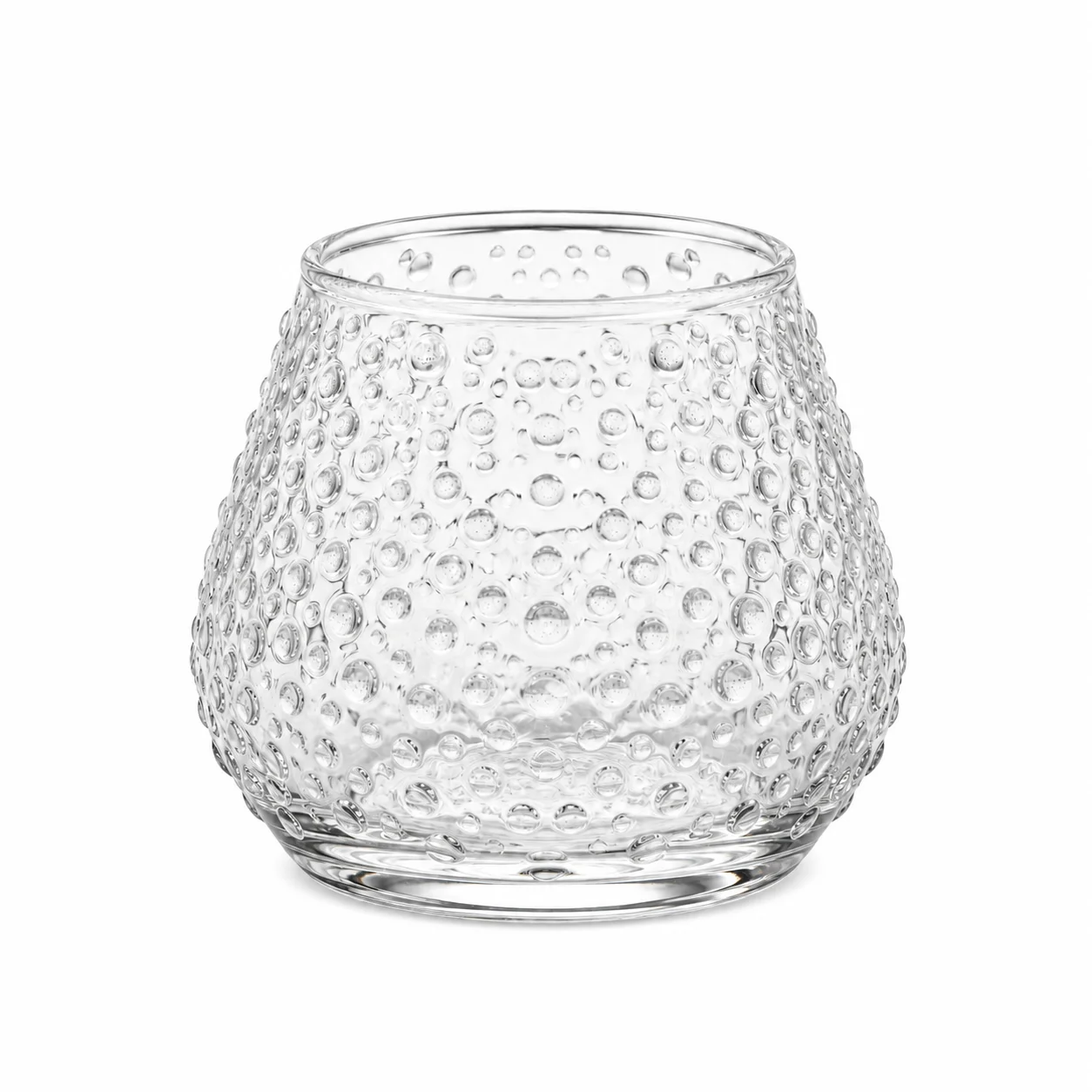
Recessed flame, air restriction & fragrance release
Six consequences of putting a narrow neck above a wide body.
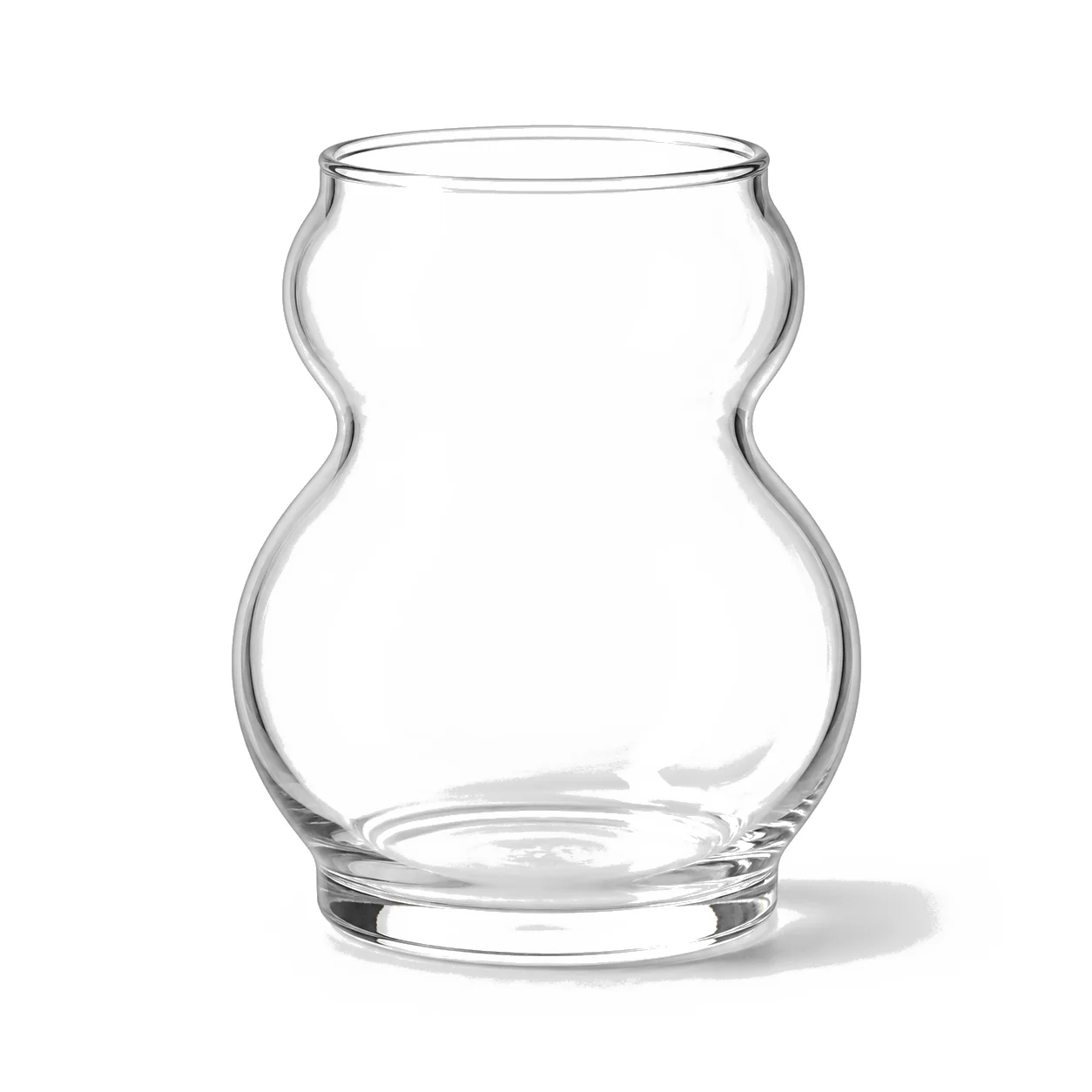
The bubble or volcano form puts a wide rounded body under a narrow raised neck. It looks sculptural, it shields the flame from drafts, and it creates the most restricted air path of any common candle vessel. Wicking it means sizing to a body diameter the opening never reveals, and then checking that the flame can still breathe.
The wick serves a diameter you cannot see
The melt pool spreads across the widest part of the body, well below the opening, so the wick has to reach a diameter the rim gives no indication of. Sizing from the visible opening under-wicks the candle badly, and the resulting wax collar is invisible until the candle has burned down far enough for someone to look inside.
Air supply is the binding constraint
A narrow raised neck restricts the exchange of fresh air and combustion products more than any other common form, and the restriction worsens as the pool descends. Flames lengthen, soot and can extinguish. That behavior appears in the second half of a burn, so a test that stops at a full melt pool has not tested this shape at all.
Fragrance release is limited by the same opening
Hot throw depends on evaporation from the melt surface escaping into the room, and a narrow neck restricts it in the same way it restricts air. A bubble vessel will generally throw less than an open jar with the same wax and load, which has to be accepted as a property of the shape rather than corrected with more fragrance.
The recessed flame is a genuine advantage
Shielding the flame below a raised neck makes the candle far less susceptible to drafts, which is why the form appears in outdoor-adjacent and bathroom products. It also keeps the flame away from a knocked hand or a sleeve. Those benefits are the reason to accept the restricted airflow rather than to design around it.
Filling and lighting both need thought
A narrow opening above a wide body makes the pour splash onto the shoulder and makes the candle difficult to light once it has burned down. Long matches or a lighter with a reach are practically required, and saying so on the pack is more useful than a customer discovering it with a burnt thumb.
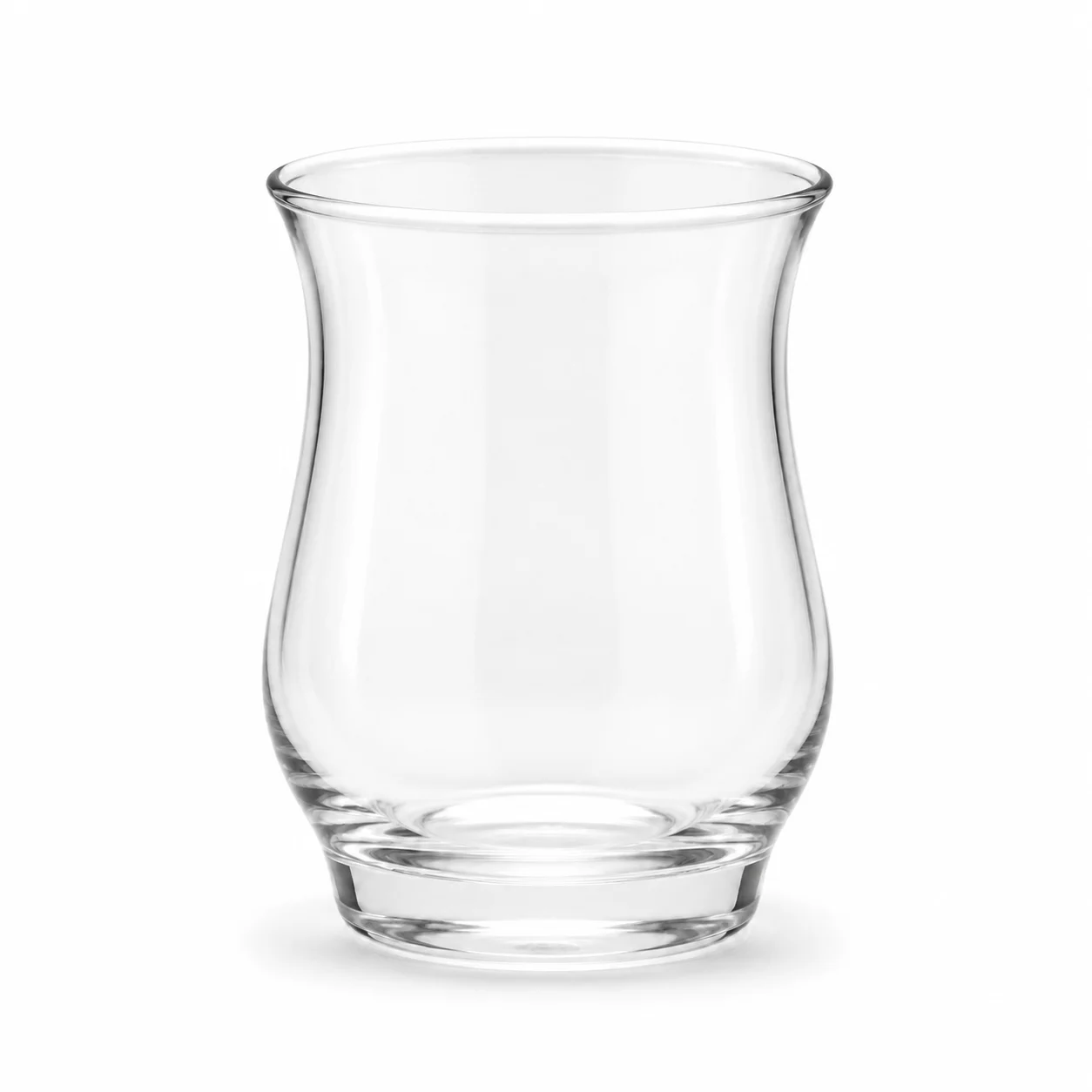
Wax climbing the flared rim is the failure this shape invites
The outward flare gives molten wax a surface to creep up and solidify on, leaving a pale ring the customer reads as a defect. Wick size, fill height and how sharply the flare begins all feed into it, and it is judged on a full burn cycle rather than on a first light.