Solvent compatibility, droplet behavior & surfaces
Six things that decide whether a room spray works and keeps working.
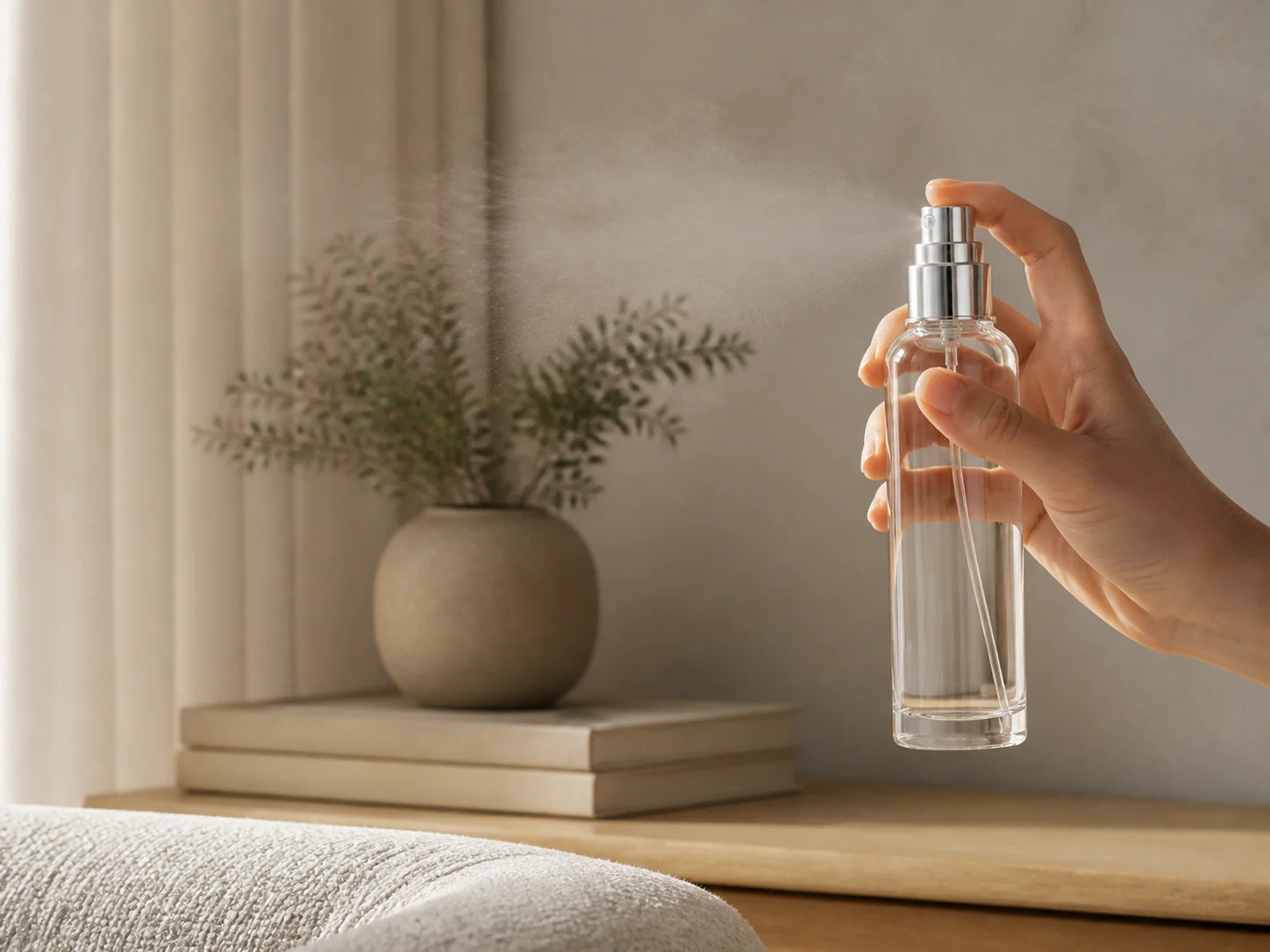
Room sprays are typically fragrance oil in a high proportion of alcohol, sprayed upward into a room. The bottle and pump have to hold a solvent that attacks common materials, deliver droplets fine enough to hang rather than fall, and survive a customer who will occasionally aim at a sofa.
Every wetted component is chosen against alcohol
Ethanol swells or hardens many elastomers, extracts additives from some polyolefins and escapes through seals that hold water perfectly. Gasket, dip tube, pump internals and any inner cap have to be selected for the solvent rather than accepted as stock. A sprayer specified on water performance can degrade within weeks in service.
Droplet size decides whether the fragrance hangs
A fine mist stays airborne long enough to disperse through a room; a coarse spray falls quickly and lands on whatever is below. Actuator and nozzle choice therefore control the perceived quality of the product as much as the fragrance does, and it is judged by spraying into a real room rather than by inspecting a plume on a bench.
Overspray on furniture is a predictable complaint
Alcohol-based sprays can mark polished wood, some paints and certain fabrics, and customers will spray toward soft furnishings because that is where they want the scent. A clear instruction to avoid spraying directly onto surfaces belongs on the label, and it is cheaper than the correspondence that follows when it is missing.
Evaporation changes the fragrance, not just the level
A poorly sealed sprayer loses alcohol faster than fragrance oil, so a part-used bottle becomes progressively more concentrated and can start to smell heavier or spray unevenly. Closure fit and the overcap matter for that reason, and a bottle stored for months between uses is the case worth testing rather than one used weekly.
The overcap is doing more than looking neat
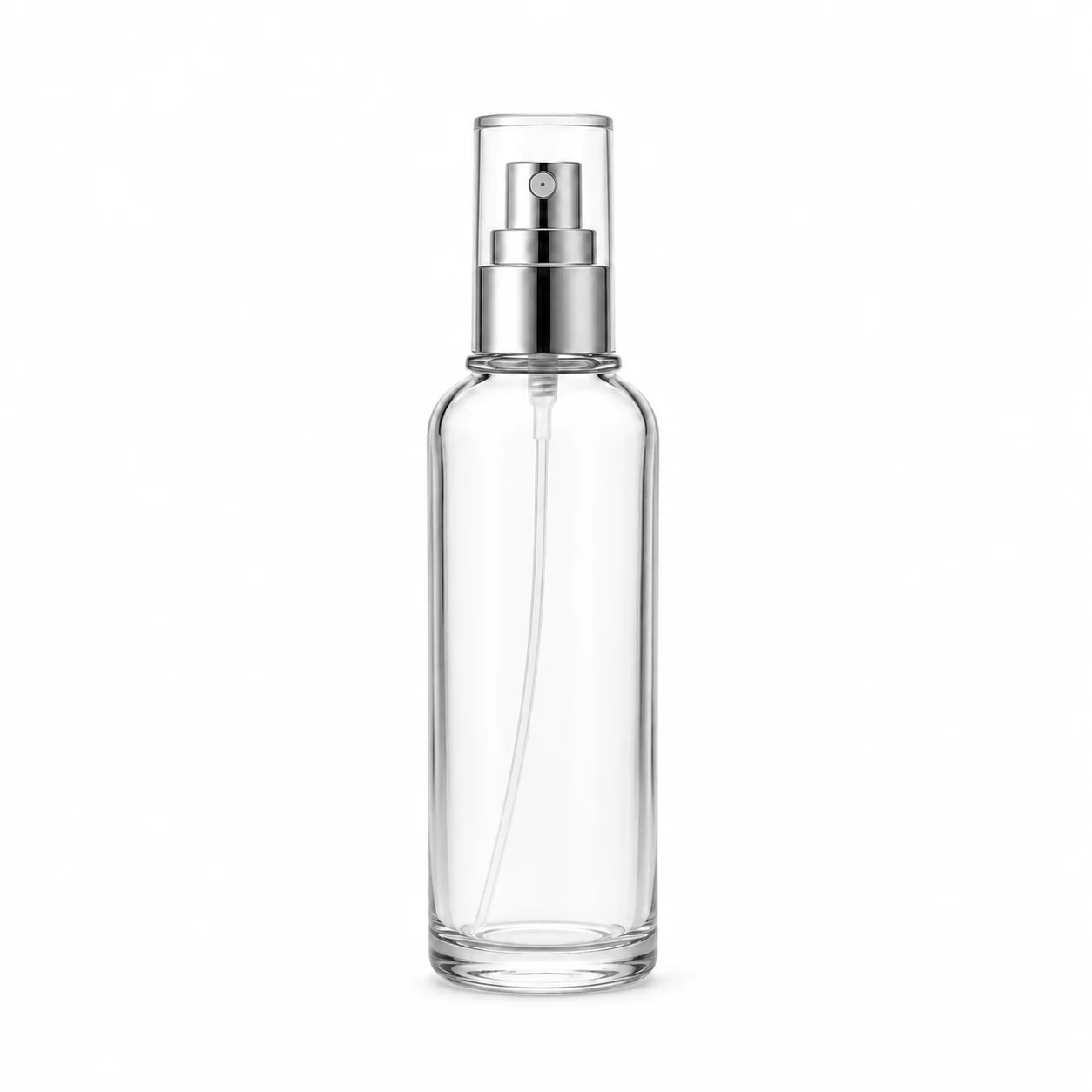
It keeps dust off the actuator, prevents accidental spraying in a cupboard or a bag, and slows evaporation through the nozzle. A room spray sold without one usually generates two complaints — an unexpected spray and a fragrance that faded — that are both traceable to the missing part rather than to the formulation.
The dip tube has to clear a base that is often shaped
Decorative bases on this format leave the tube standing in a recess or clear of the liquid, and either way the last of an expensive fragrance is unusable. Tube length is set against the actual internal profile on filled samples rather than against nominal height.