Drop metering, liner chemistry & headspace
Six things that decide whether the oil is still good at the end of the bottle.
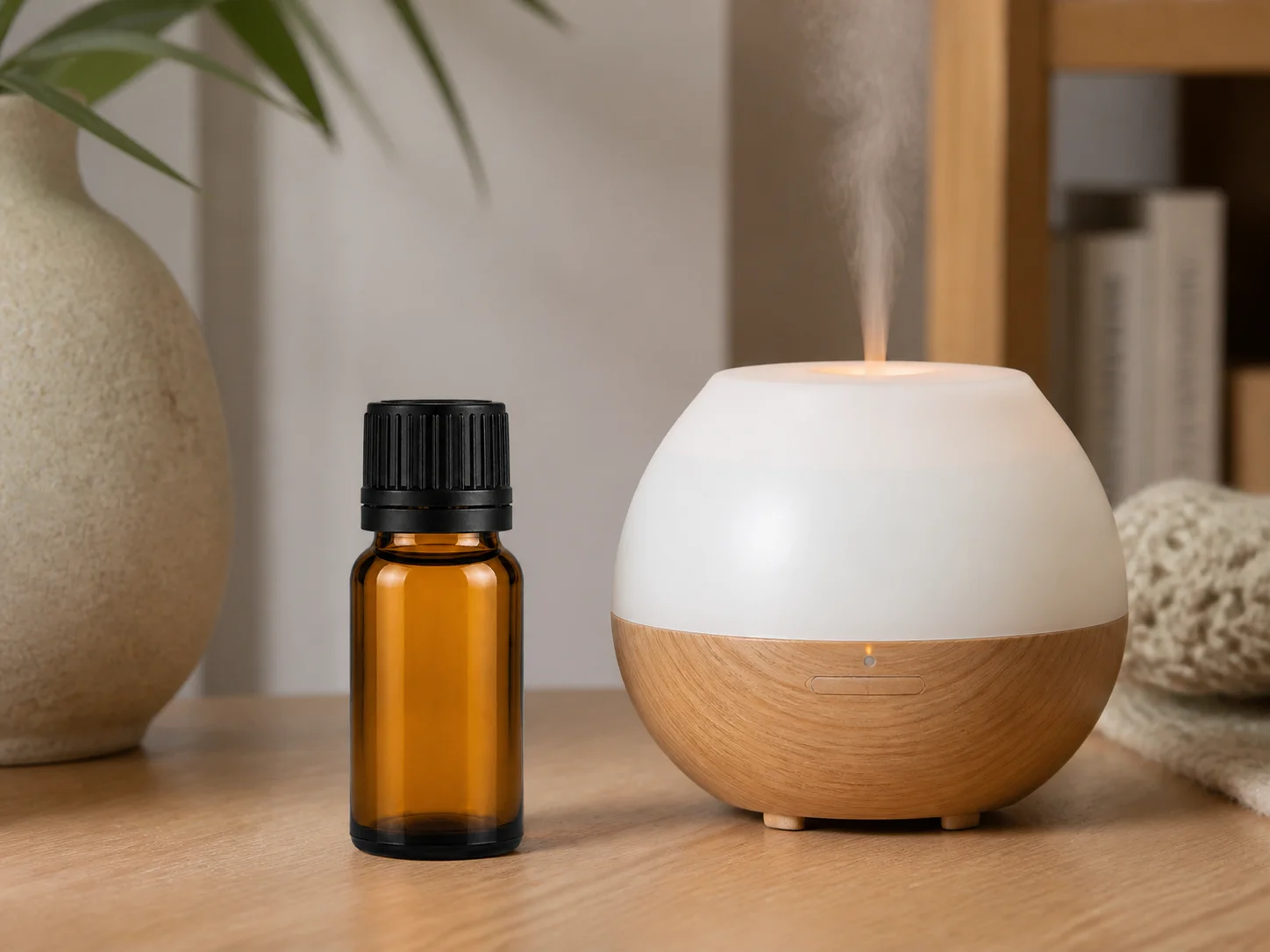
Neat essential oils are used a few drops at a time into diffusers, burners and blends. That means a bottle opened repeatedly over months, an orifice reducer that has to meter reliably, and a closure system in permanent contact with undiluted terpenes — which is a far harsher duty than a diluted room fragrance imposes.
The orifice reducer is the dosing device
A press-in reducer meters the oil into countable drops, and its bore diameter sets the drop size along with the oil's own surface tension and viscosity. A thin citrus oil and a thick resinous absolute give different drops from the same reducer, so recipes written in drops carry an implicit assumption about which oil they were developed with.
Neat oil defeats ordinary liners
Undiluted terpenes swell foam liners, dissolve some pulp backings and can extract additives from polyolefins. PTFE-faced liners are the standard answer and a cone liner is the alternative. A liner adequate for a diluted blend can fail within weeks on the neat version of the same fragrance, which is the mistake that recurs most often.
Headspace grows every time it is used
Because the bottle is used a few drops at a time over months, the volume of air above the oil increases steadily while the oil is exposed to it repeatedly. Oxidation of terpenes into less pleasant compounds is driven by that, which is why small bottles bought more often preserve quality better than one large bottle used slowly.
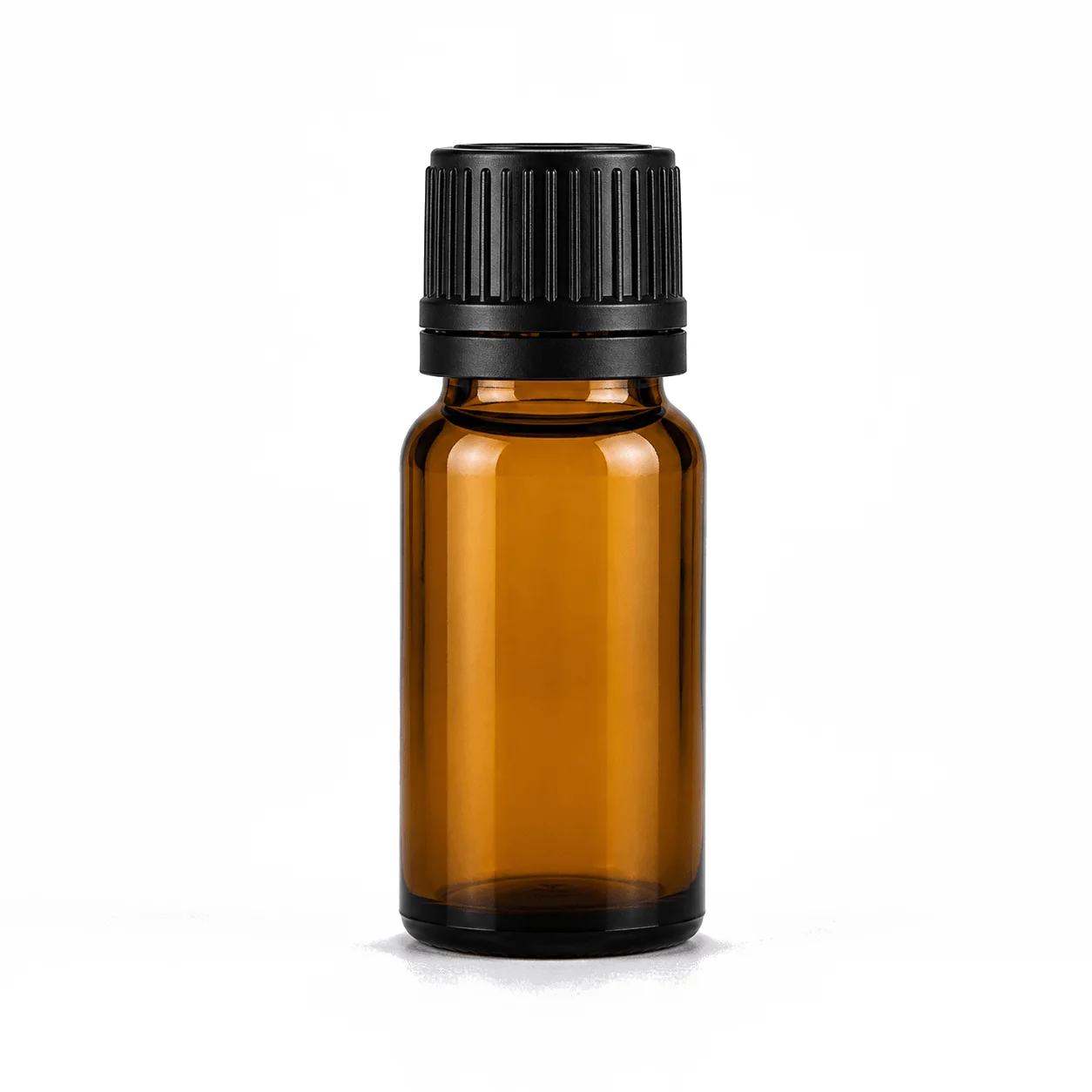
Amber is doing real work here
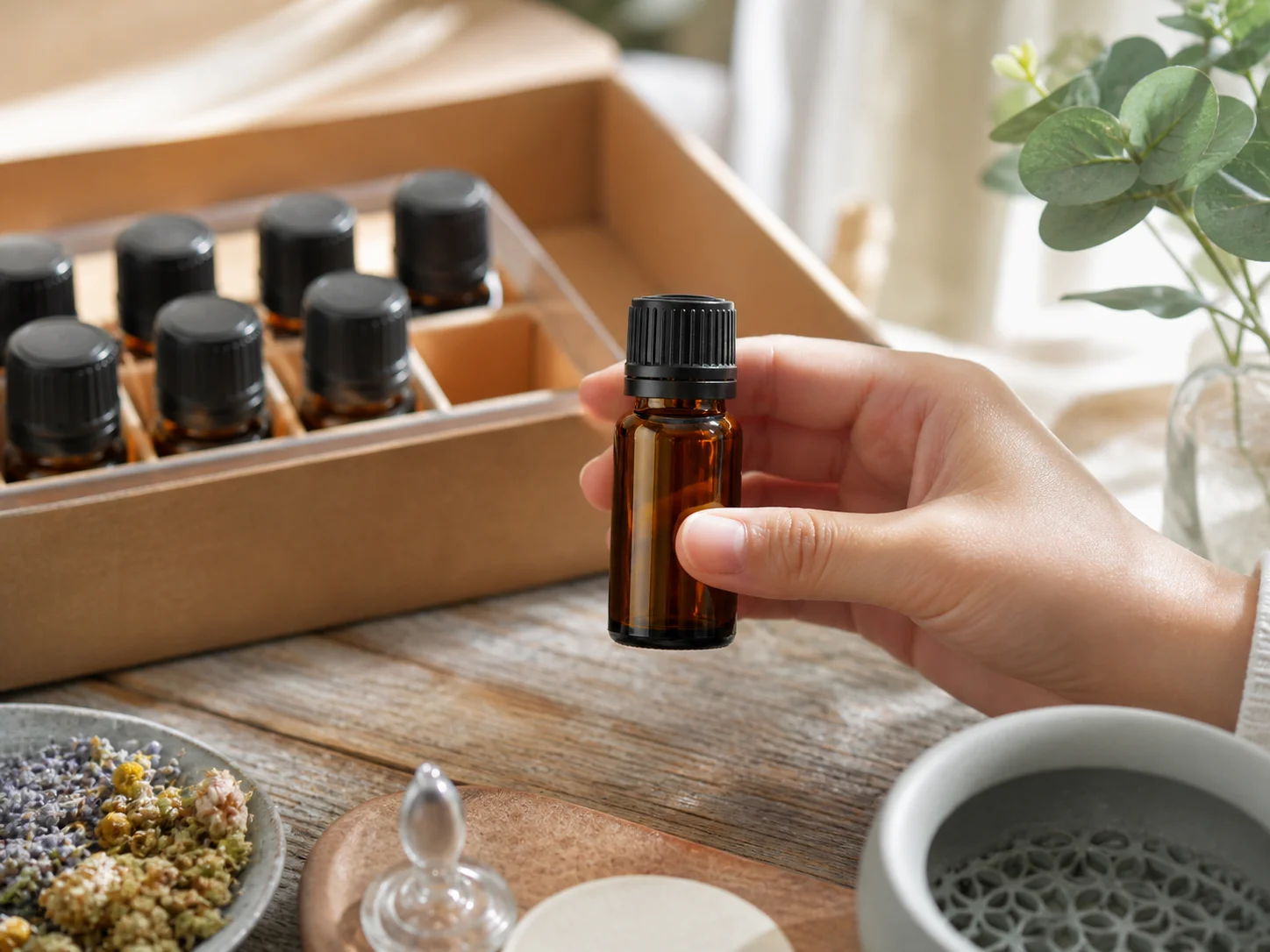
Photo-oxidation of citrus and conifer oils is well established, and these bottles sit on benches and worktops rather than in cupboards. Amber absorbs the short wavelengths that drive it. The visibility lost matters little on a bottle whose level is judged by weight or by shaking, which is how people actually check them.
The tamper band has to survive daily use
A bottle opened every few days needs a tamper feature that is unmistakable once and irrelevant thereafter. A bridged band on the closure does that; shrink over a small neck tends to look poor after a week. It matters because these oils are frequently repackaged and resold, and an intact band is what distinguishes an original.
Batch color varies with the harvest, and clear glass shows it
Steam-distilled oils change shade between crops and between distillations, which is normal and which customers read as inconsistency when they can see two bottles side by side. Amber hides it, and where a brand wants clear glass the variation is worth stating on the label rather than being explained one complaint at a time.