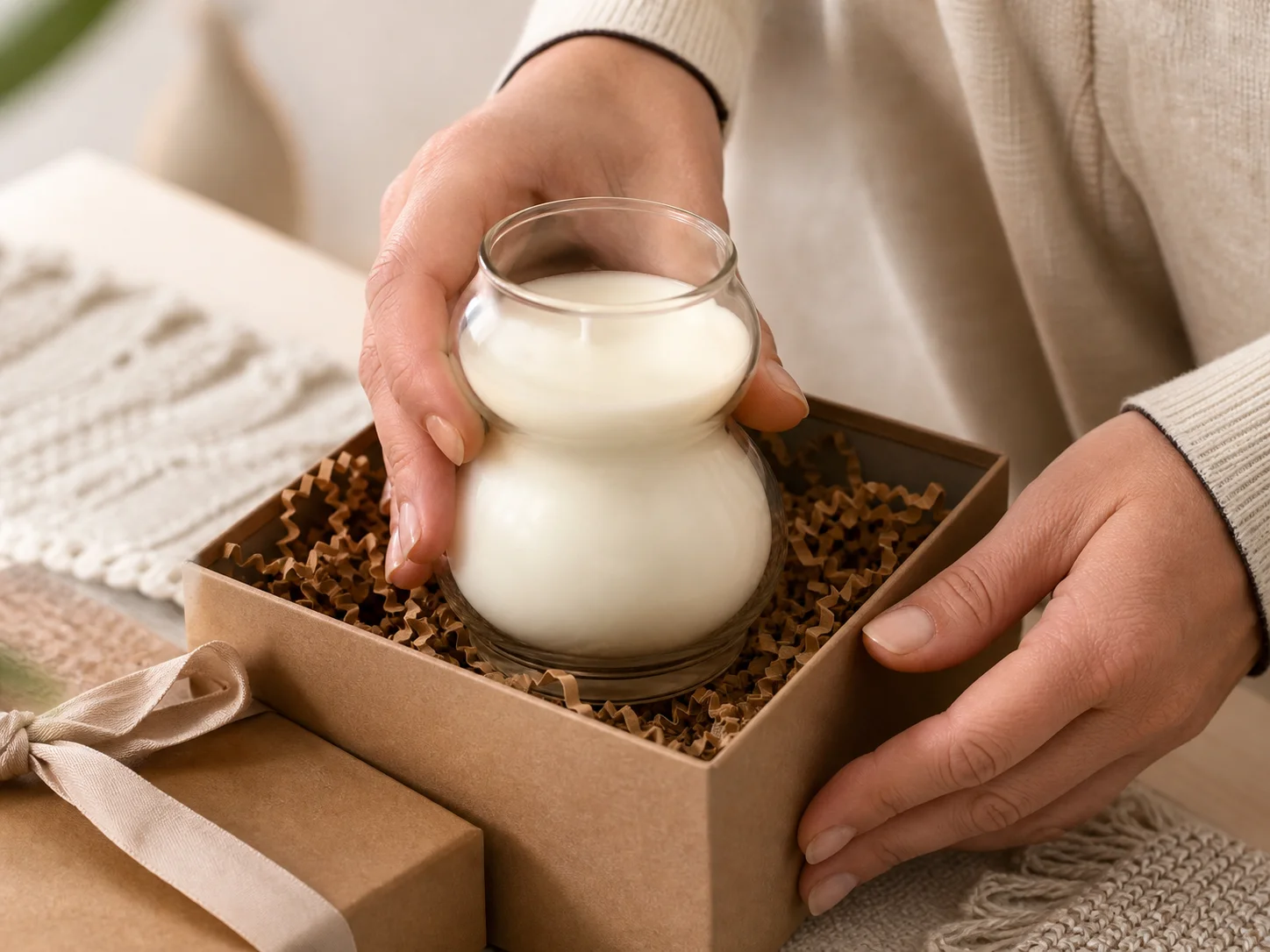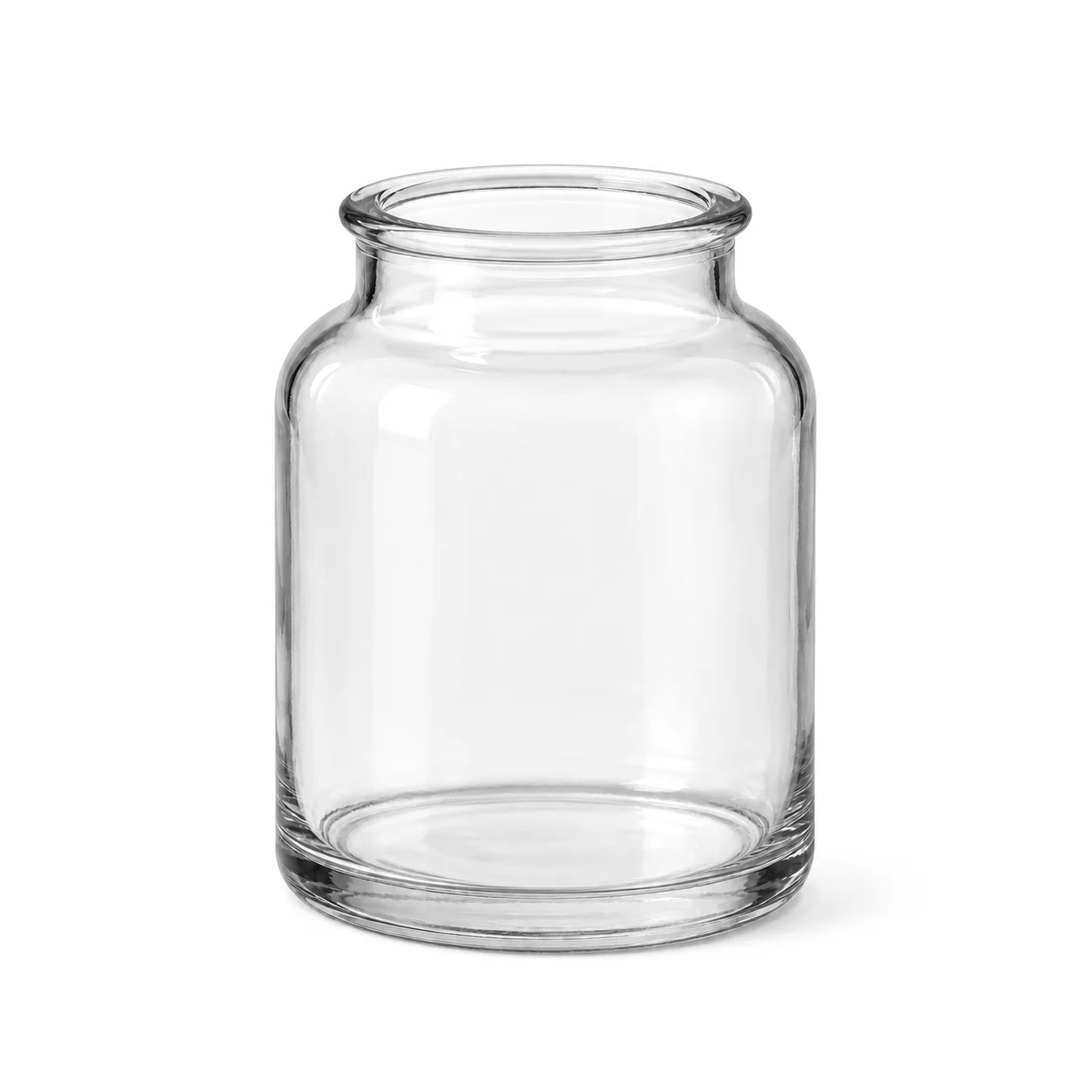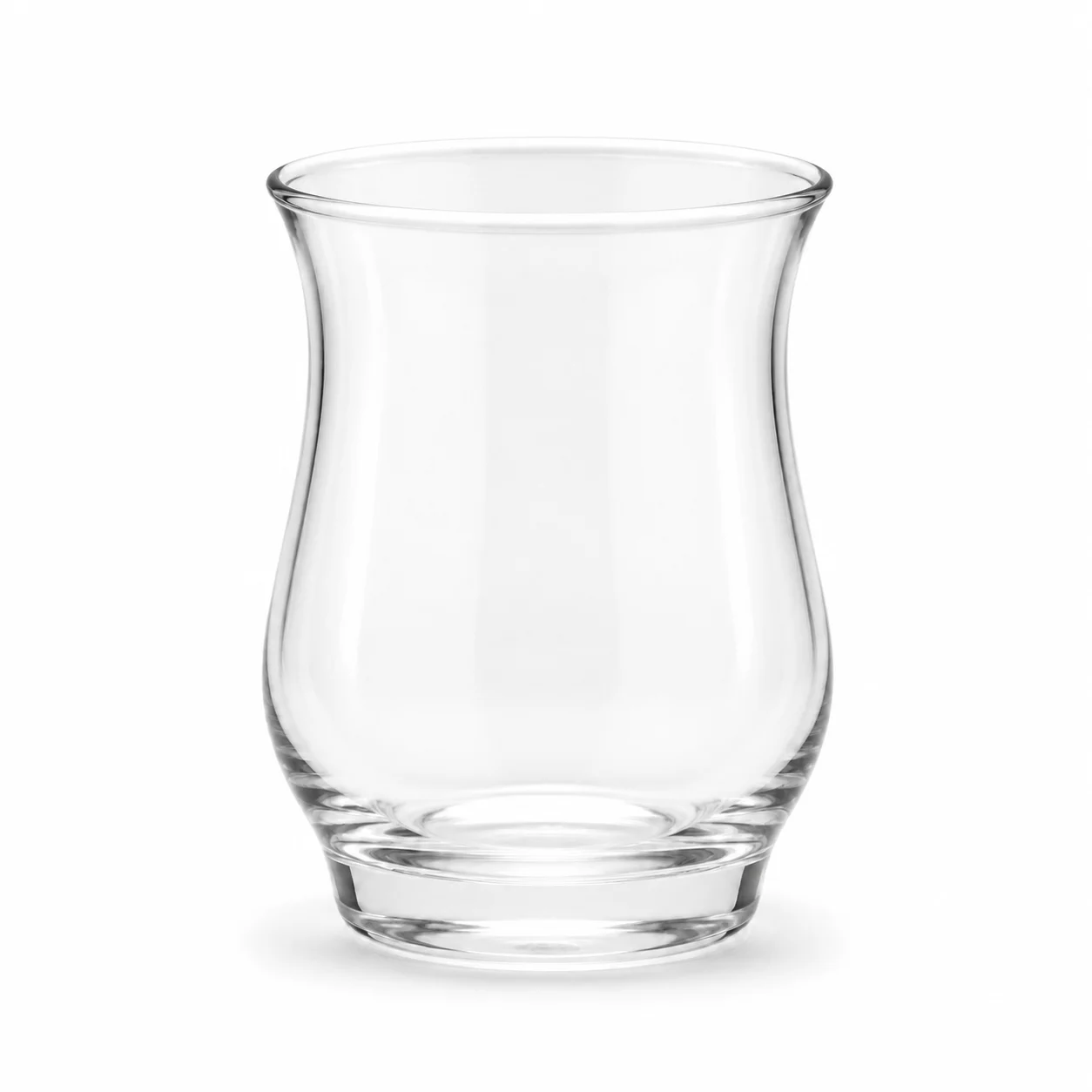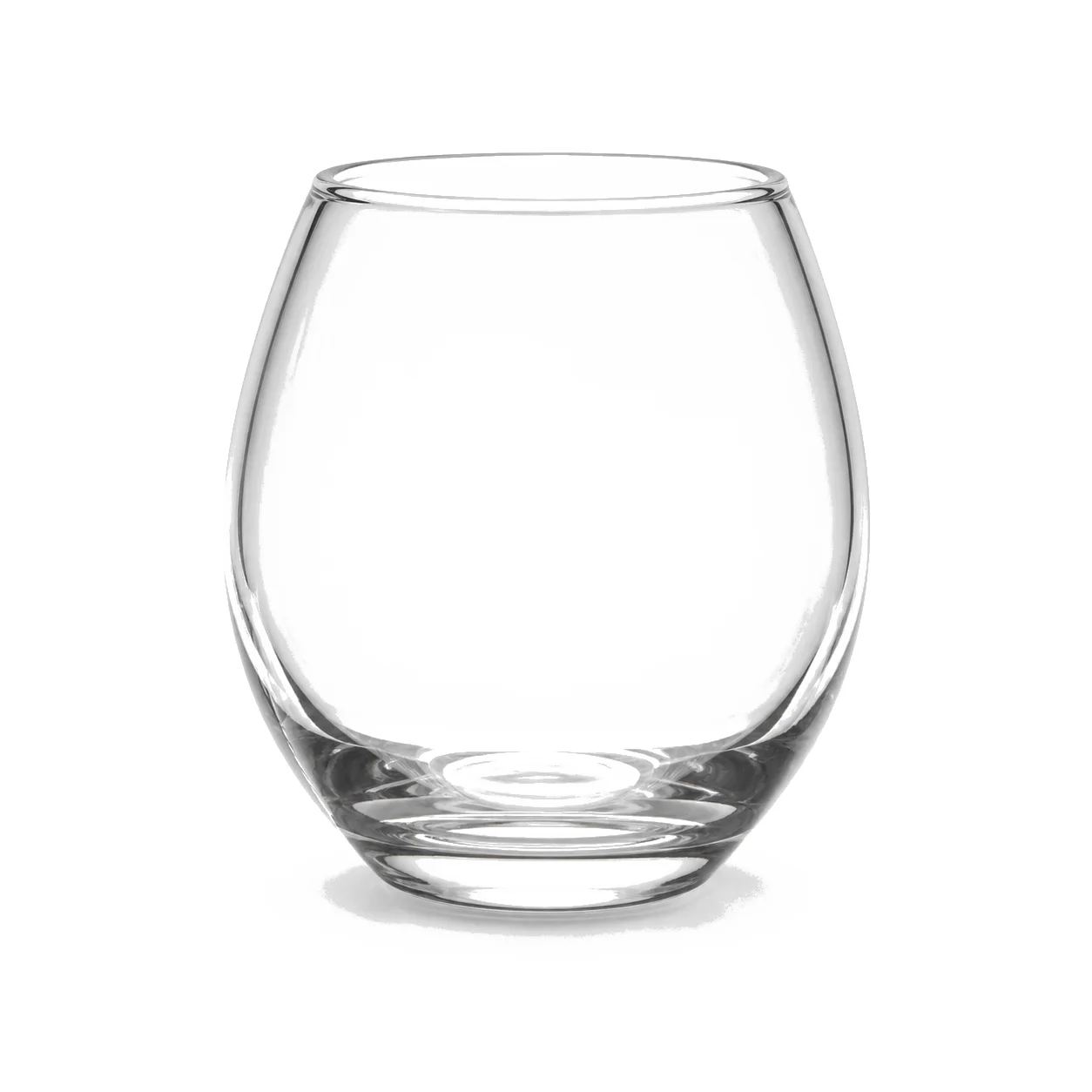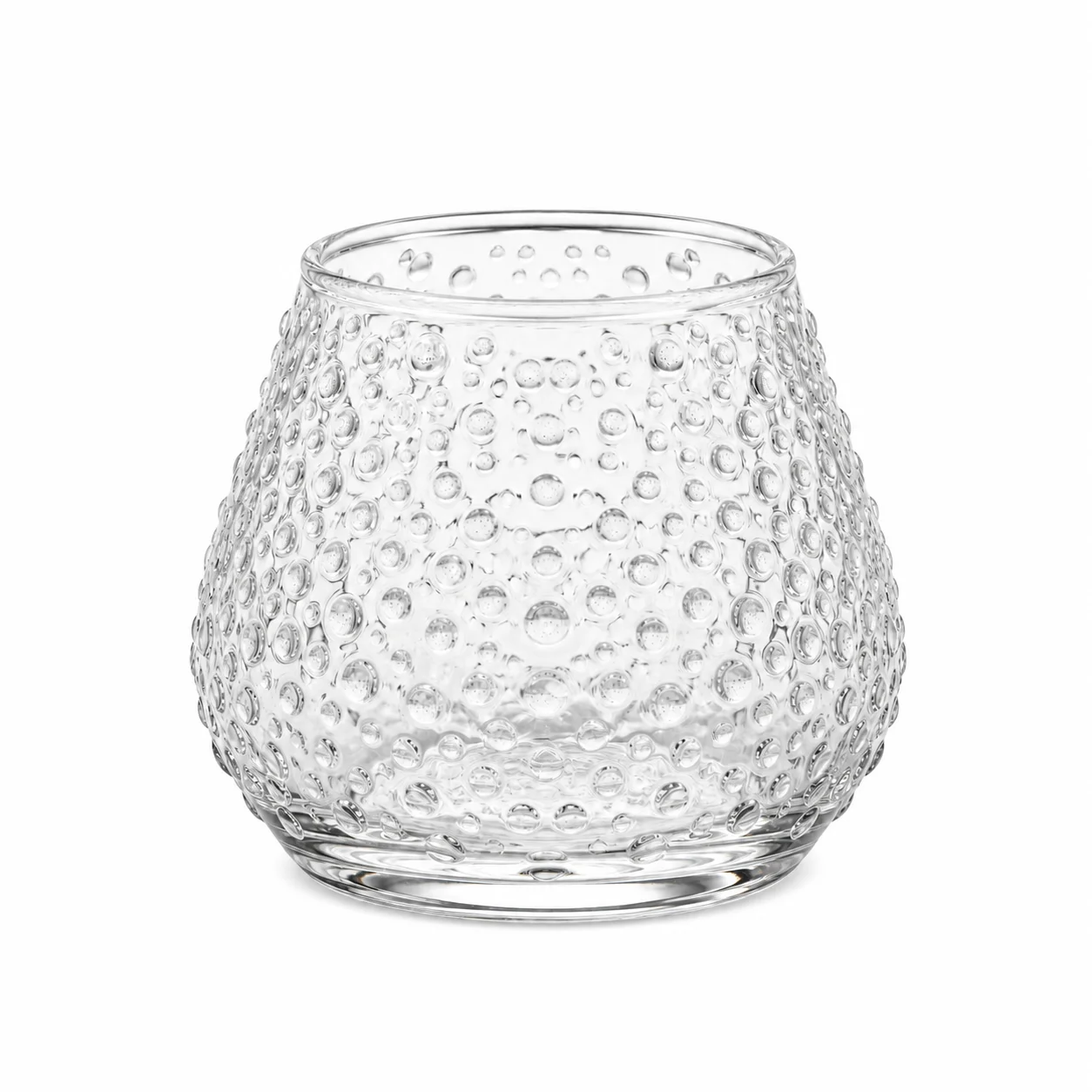
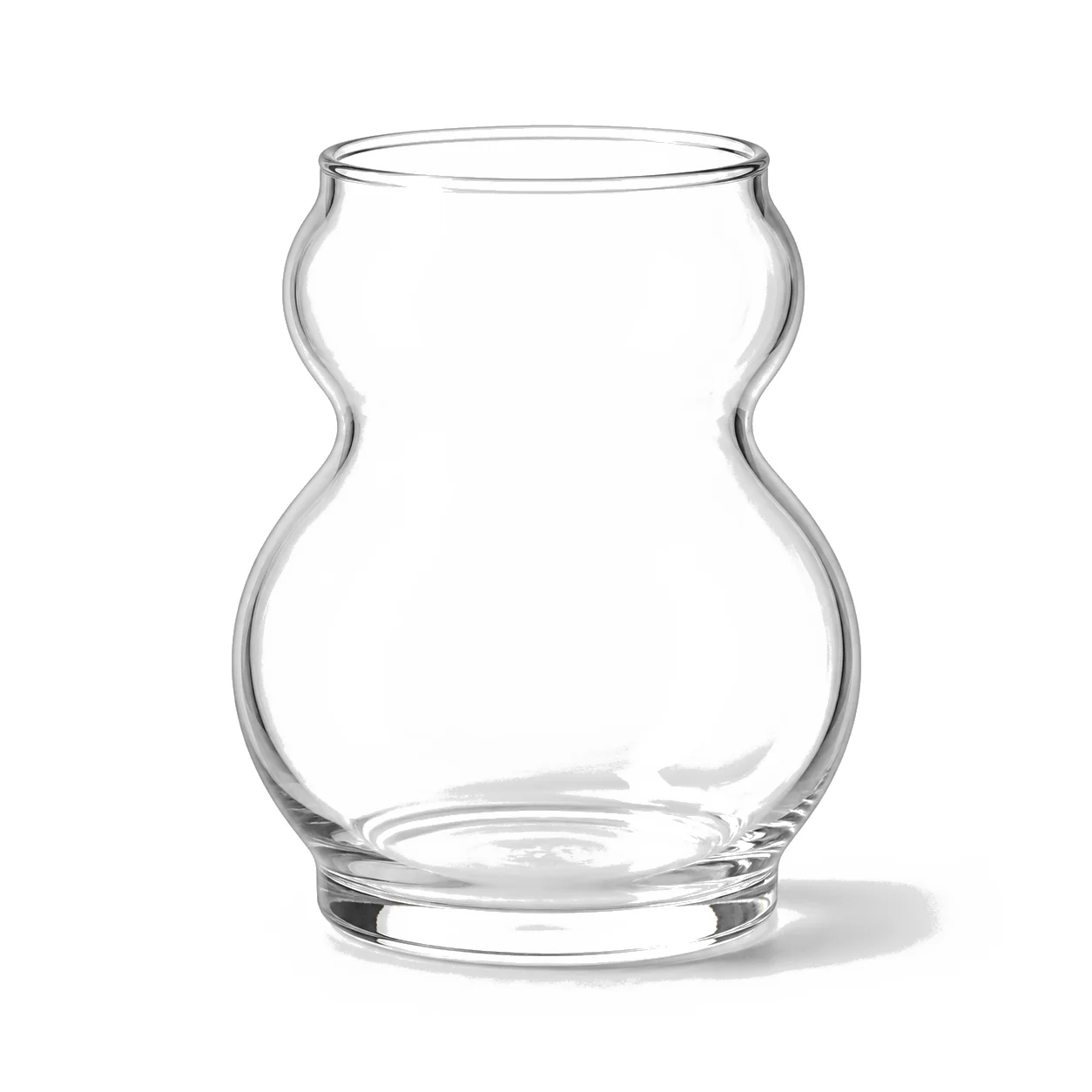
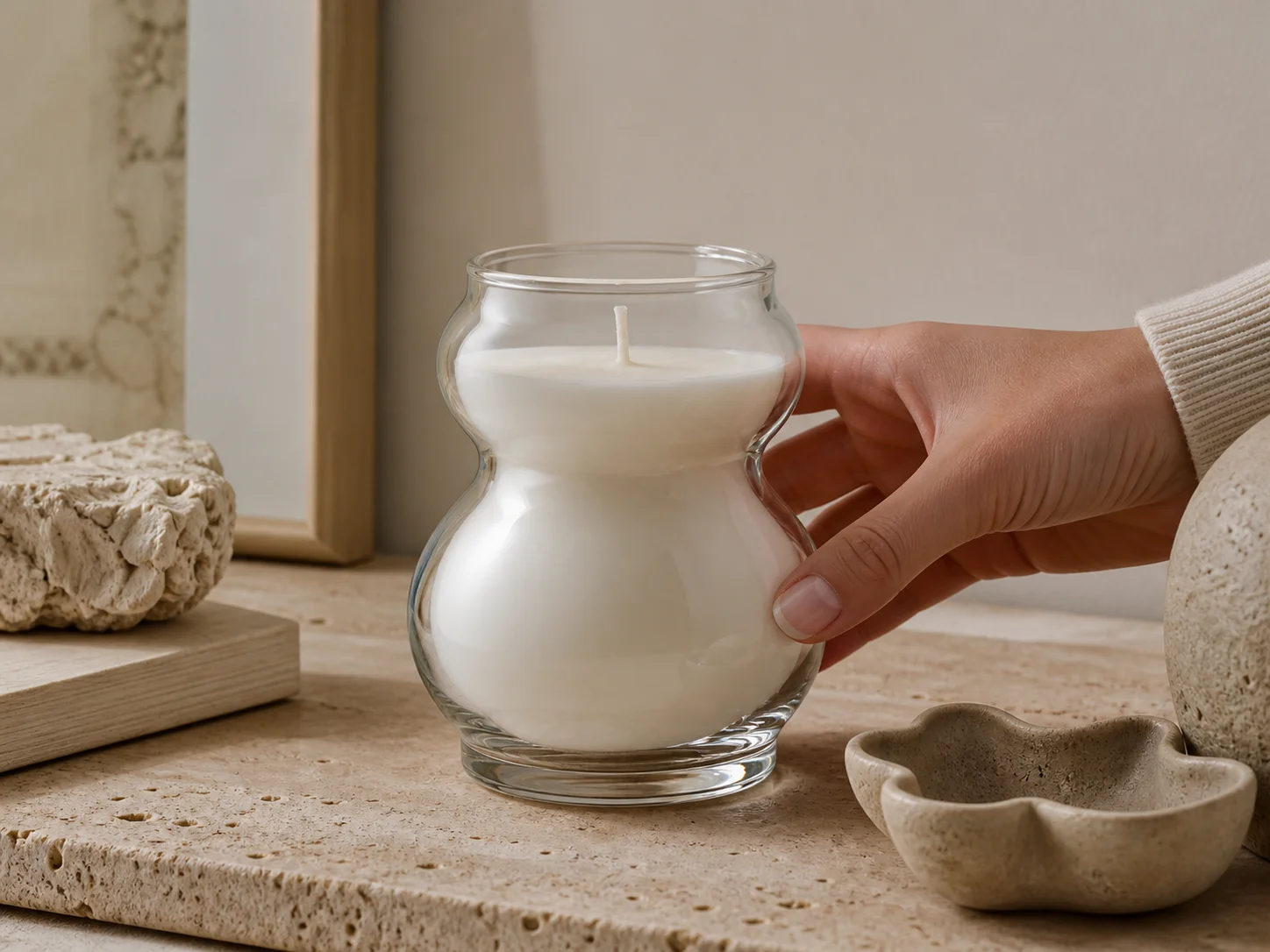
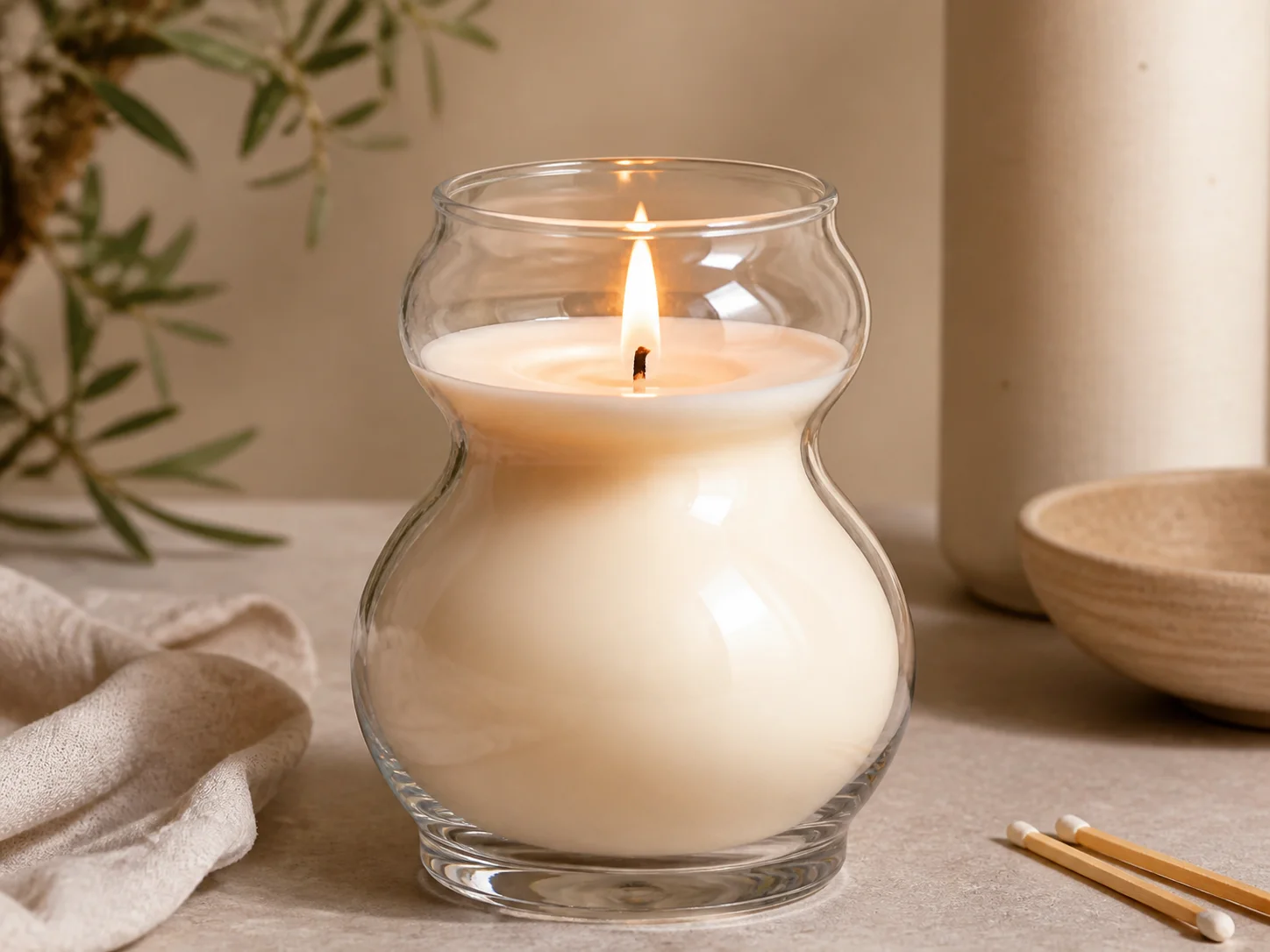
Clear glass vessel with an undulating wall alternating between bulges and waists
Shown configuration · empty vessel / wax, wick, lid and label not shown

Candle vessels

Wavy / Gourd Candle Vessel

A wavy or gourd-form vessel whose wall undulates in and out, so the internal diameter changes several times between the base and the rim.

Diameter changes repeatedlyWaves catch and bend lightEach waist retains wax
Stock status
In stock
Lead time
2–3 weeks
FOB price / pc
$0.80 - $1.20
MOQ
10,000 pcs

Final availability, dimensions, materials, assembled components and commercial terms are confirmed against the selected drawing and approved sample.

Several diameters, one wick

Every bulge is a place wax can stay

Waves distort the flame

Curved wall bends the light attractively

Nothing flat for a label

Branding moves to tag or carton

Wavy Gourd Vessel profile

The hardest common shape to wick, and one of the most attractive unlit.

Multiple diameters, heat concentration & labeling

Five reasons this shape needs more development than it looks like it should.

A wavy or gourd form alternates between bulges and waists, so the melt pool passes through several different diameters as it descends. Each bulge is somewhere wax can be left behind, and each waist concentrates heat. It is a genuinely demanding vessel to burn well, and it is bought because unlit it looks like glassware rather than packaging.

01

Every bulge is a potential wax ring

A wick sized to reach the wall at a waist will not reach it at the bulge below, and one sized for the bulge burns hot in the waist. Practical wicking targets the largest diameter and then verifies that the narrowest section does not overheat, which usually means the vessel is on the warm side for part of its burn.

02

Waists concentrate heat against less glass

Where the wall pinches inward the flame sits closer to it, and there is less glass and less wax mass to absorb the energy. Those sections are where surface temperature peaks and where any coating or decoration is most stressed. Burn tests should measure temperature at the narrowest points rather than at the widest.

03

Fragrance throw rises and falls through the burn

Melt surface area grows through each bulge and shrinks through each waist, so hot throw is not a steady decline but a series of steps. Customers may describe the candle as inconsistent when it is behaving exactly as its geometry dictates, which is worth understanding before reformulating in response.

04

There is nowhere to put a label

An undulating wall offers no flat panel and no consistent radius, so a conventional label wrinkles wherever it is placed. Hang tags, base-printed information, carton branding or a small label on the narrowest cylindrical section are the practical answers, and the choice should be made before artwork rather than after a wrinkled first sample.

05

It is bought unlit, which is a legitimate reason

A gourd vessel is chosen because it reads as decorative glass on a shelf, candle or not. That perception is the product, and it justifies the additional wicking development in the same way a sculptural vessel does. The mistake is treating it as an ordinary jar with a decorative profile and budgeting for it accordingly.

06

Every waist is a place the glass thinned during blowing

An undulating profile stretches the parison unevenly, so the narrow sections are consistently the thinnest glass on the vessel and they sit closest to the flame. Wall thickness is mapped on samples rather than assumed, because the visual rhythm and the stress pattern coincide.
Application guide

A gourd profile is two vessels stacked in one piece of glass.

The waisted outline gives a candle a hand-formed, organic quality, and it also creates an upper and lower volume that a single flame has to serve. These are development directions confirmed by burn testing.

Wavy / Gourd Candle Vessel used for organic forms for design-led interiors in a sculptural candles setting

Sculptural candles

Organic forms for design-led interiors

For customers choosing a candle the way they would choose a small vase, where the wavy outline signals craft rather than manufacture. The form is what sells the piece, so proportion and the smoothness of the curve deserve review on real glass before anything about fragrance is settled.

  • Approve proportions on real glass
  • Review the curve for smoothness
  • Judge it beside plain vessels
Wavy / Gourd Candle Vessel used for a flame serving two volumes in a burning a waisted body setting

Burning a waisted body

A flame serving two volumes

The pool has to widen, narrow at the waist and widen again as the candle burns down, which no single wick handles perfectly. Whether the lower volume melts at all, and how hot the narrow section runs, are questions only a full burn test answers.

  • Burn through the waist to the base
  • Check whether lower wax melts
  • Monitor temperature at the narrow point
Wavy / Gourd Candle Vessel used for distinctive pieces bought as presents in a gifting setting

Gifting

Distinctive pieces bought as presents

Irregular forms photograph well and unbox memorably, which suits gifting, but they fit no standard divider and concentrate impact at the waist. The insert has to be developed with the vessel, and drop testing should target that narrow section specifically.

  • Develop the insert with the vessel
  • Drop test aimed at the waist
  • Plan the reveal in the box

Applications describe design directions. Filling, burning, safety, handling, compatibility and distribution outcomes are confirmed for the selected program.

Common questions

Wavy Gourd Vessel questions

Several diameters in one vessel make this the hardest common shape to wick.

How do we wick a wall that changes diameter repeatedly?

Target the largest diameter, then verify that the narrowest sections do not overheat. A wick sized for a waist will not reach the wall at the bulge below it, and one sized for a bulge runs hot in the waist. The result is usually a candle that is on the warm side for part of its burn, deliberately.

Where does the glass get hottest?

At the waists, because the flame sits closer to the wall and there is less glass and less wax mass to absorb the energy. Those sections are also where any coating or decoration is most stressed. Burn tests should measure surface temperature at the narrowest points rather than at the widest, which is the instinctive place to check.

Why does the scent seem inconsistent?

Because melt surface area grows through each bulge and shrinks through each waist, so throw rises and falls in steps rather than declining smoothly. The candle is behaving exactly as its geometry dictates. It is worth understanding that before reformulating in response to a complaint that the fragrance is uneven.

Is the shape worth the development?

If it is being chosen because the vessel reads as decorative glassware rather than as packaging, yes — that perception is the product, and it justifies the extra wicking work as a sculptural vessel would. The mistake is treating it as an ordinary jar with a decorative profile and budgeting the development accordingly.

Where does the glass end up thinnest?

At the waists. Each narrowing is a place the glass stretched during blowing, so the wall is thinnest exactly where the melt pool later concentrates heat against it. Check wall distribution on production samples rather than trusting the drawing.

Next step

Send us the Wavy / Gourd Candle Vessel brief.

Tell us the product, fill volume, closure preference and destination market. We will come back with the matching drawings, available configurations and a sample plan before anything is quoted.

  • 01Send the briefProduct, volume, closure and market
  • 02Get the optionsMatching drawings and configurations
  • 03Approve the sampleConfirm the pack before production