
Shoulder geometry, lid seating & brand shorthand
Five things this silhouette gives you and one it takes away.
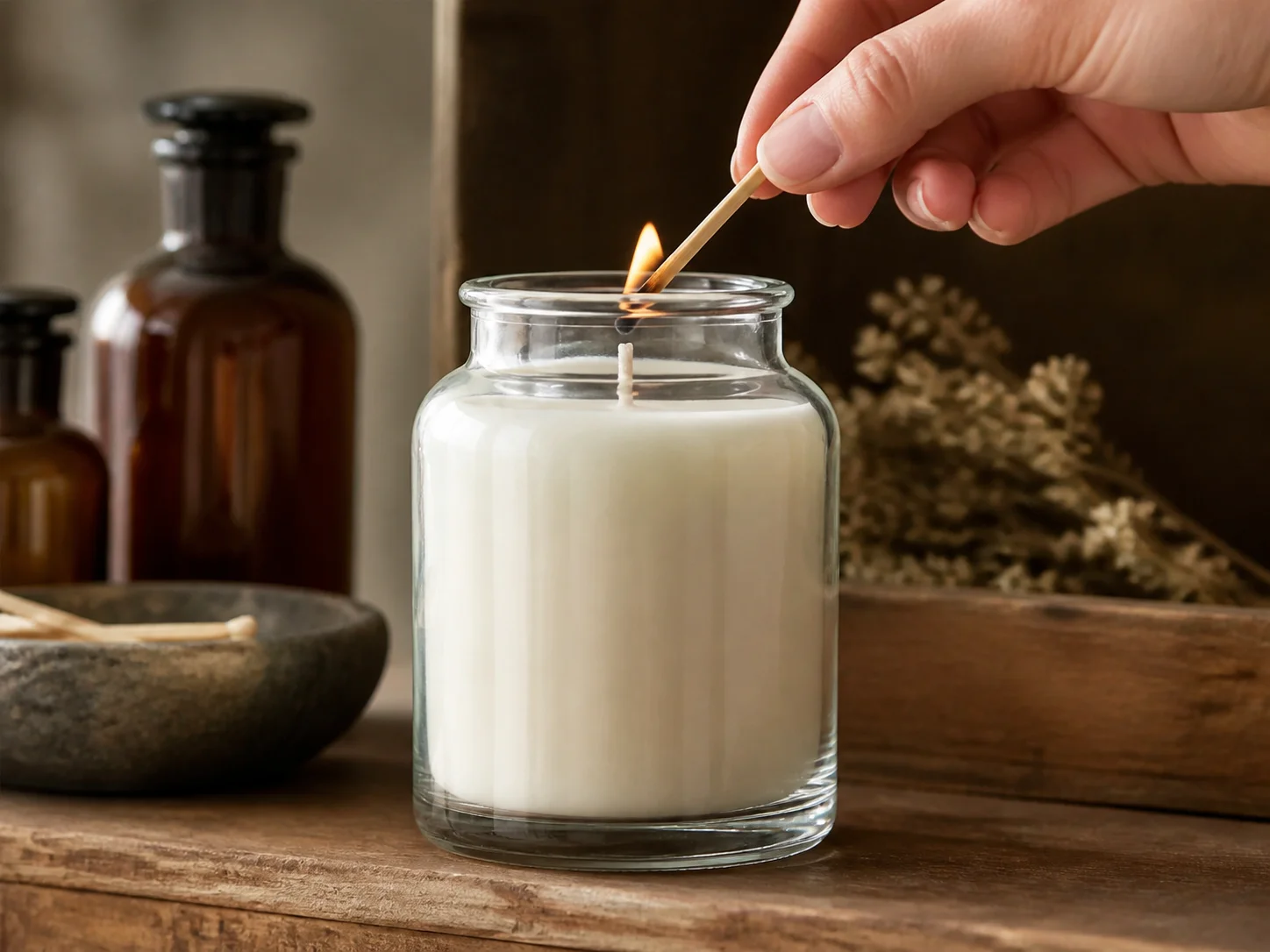
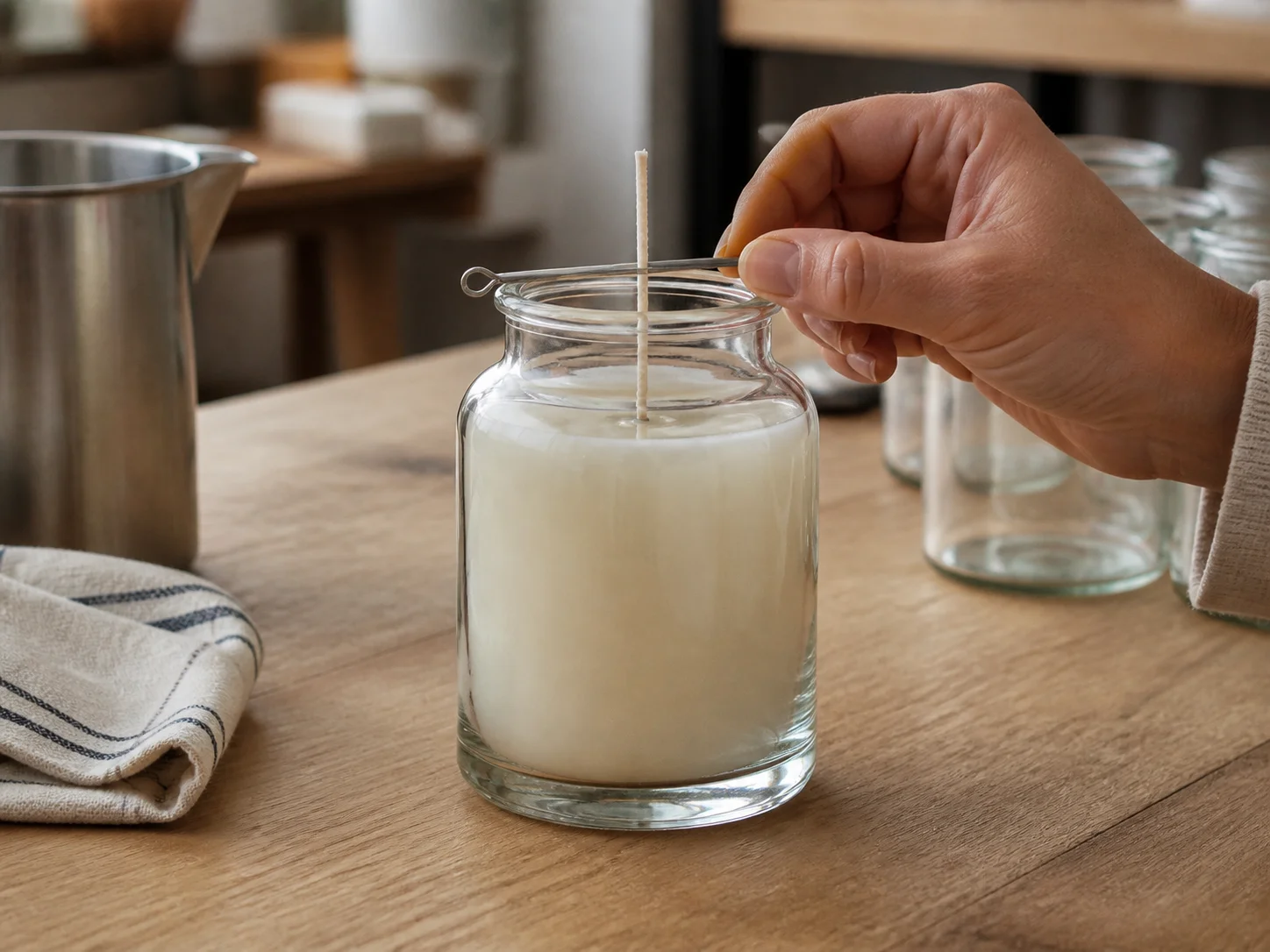
The apothecary profile is a straight body, a defined shoulder and a stepped rim, borrowed from nineteenth-century pharmacy jars. It carries an enormous amount of visual meaning for very little cost, and it introduces one technical issue: a shoulder above the body that the melt pool has to reach before the candle can burn clean.
The shoulder is where wax gets left
Filling above the shoulder puts wax in a section wider than the flame's effective reach at that height, so the first burn can leave a collar of unmelted wax on the step. Filling to just below the shoulder avoids it entirely, at the cost of some capacity. That is a filling decision the vessel forces, and it is better made deliberately.
The stepped rim exists to seat a lid
A step or flange gives a lid a positive location rather than balancing it on a flat land, which is why the silhouette suits domed glass and heavy metal lids that would slide on a plain rim. It also gives the label a clean upper boundary, which is a small thing that makes a finished candle look deliberate.
Straight body, easy labeling
Between the base and the shoulder the wall is parallel, so a rectangular label applies without die-cutting and a shrink sleeve behaves predictably. That is a genuine practical advantage over sculptural vessels, and it is one reason the apothecary shape persists in ranges where artwork changes seasonally.
It signals heritage without any decoration
The profile is legible as pharmacy, herbalist or laboratory before a customer has read a word, which lets a brand spend less on decoration and still communicate a position. That is real value in a category where differentiation usually costs money per unit, and it is why the shape appears across price points.
Wicking targets the body, not the rim
Because the opening is narrower than the body, sizing a wick to the rim diameter under-wicks the candle. The working diameter is the body, checked with a burn that runs long enough for the pool to establish itself below the shoulder rather than judged from the first hour when the pool is still small.
The tall column empties from the top down, and the last third is a different candle
In a jar this deep, the flame sits progressively further below the rim as it burns, so the air reaching it and the heat reaching the wall both change through the life of the candle. Testing the throw only on a fresh jar describes an experience the customer has for a week and then loses.