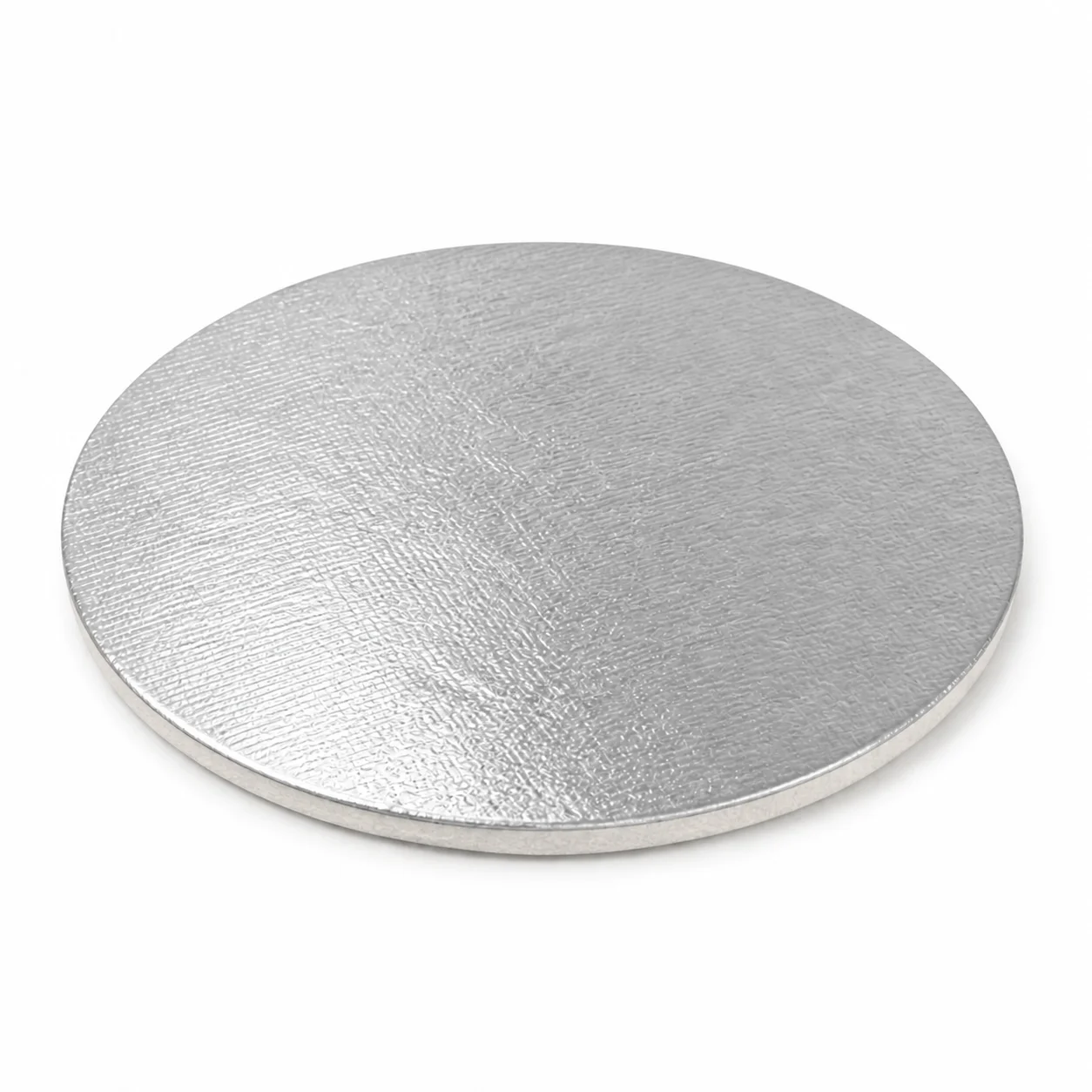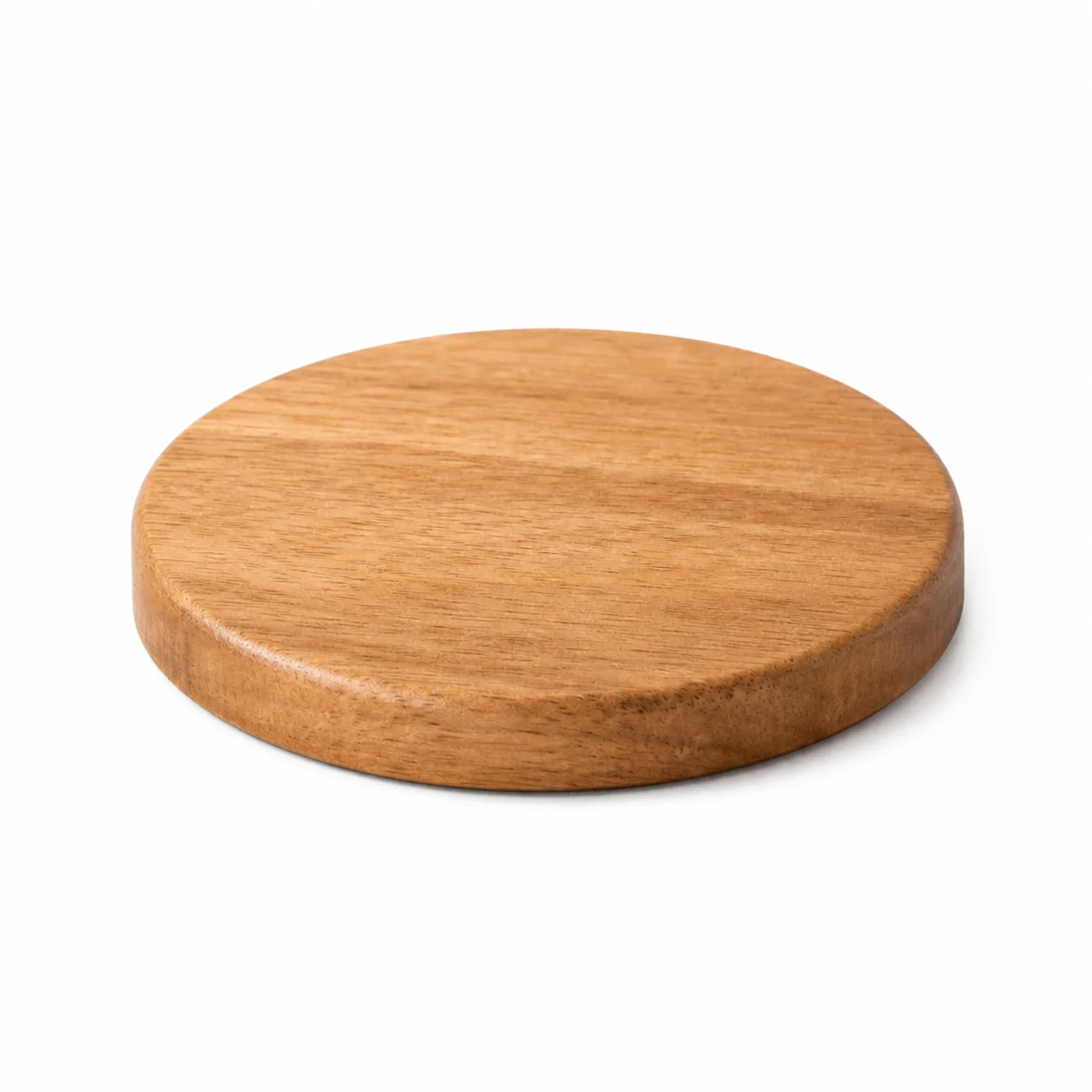
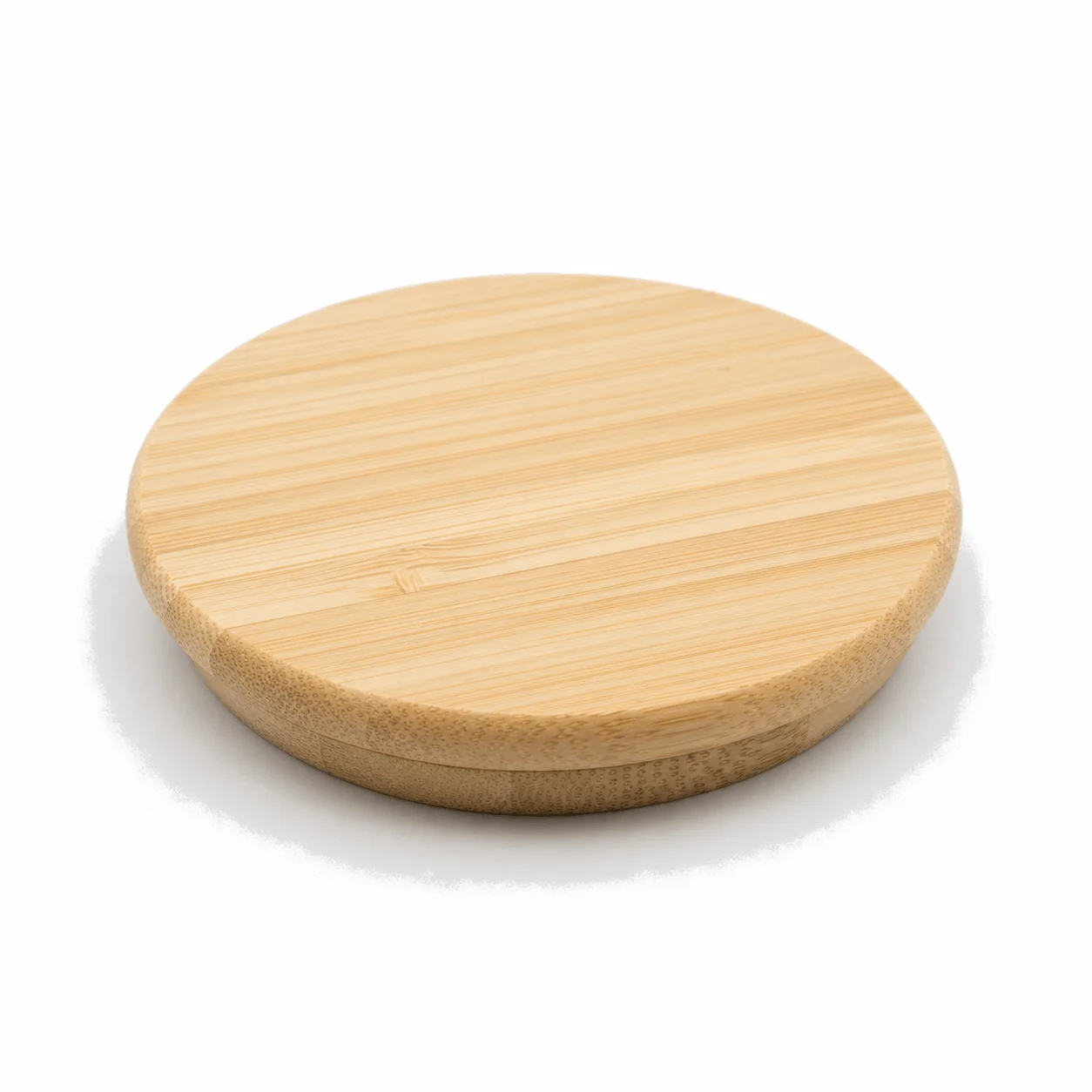
Pale bamboo lid with a linear grain top, flat face and rounded speckled wall, shown alone
Shown configuration · bamboo body only / jar, silicone fitment and underside not shown

Natural material lids

Bamboo Lid

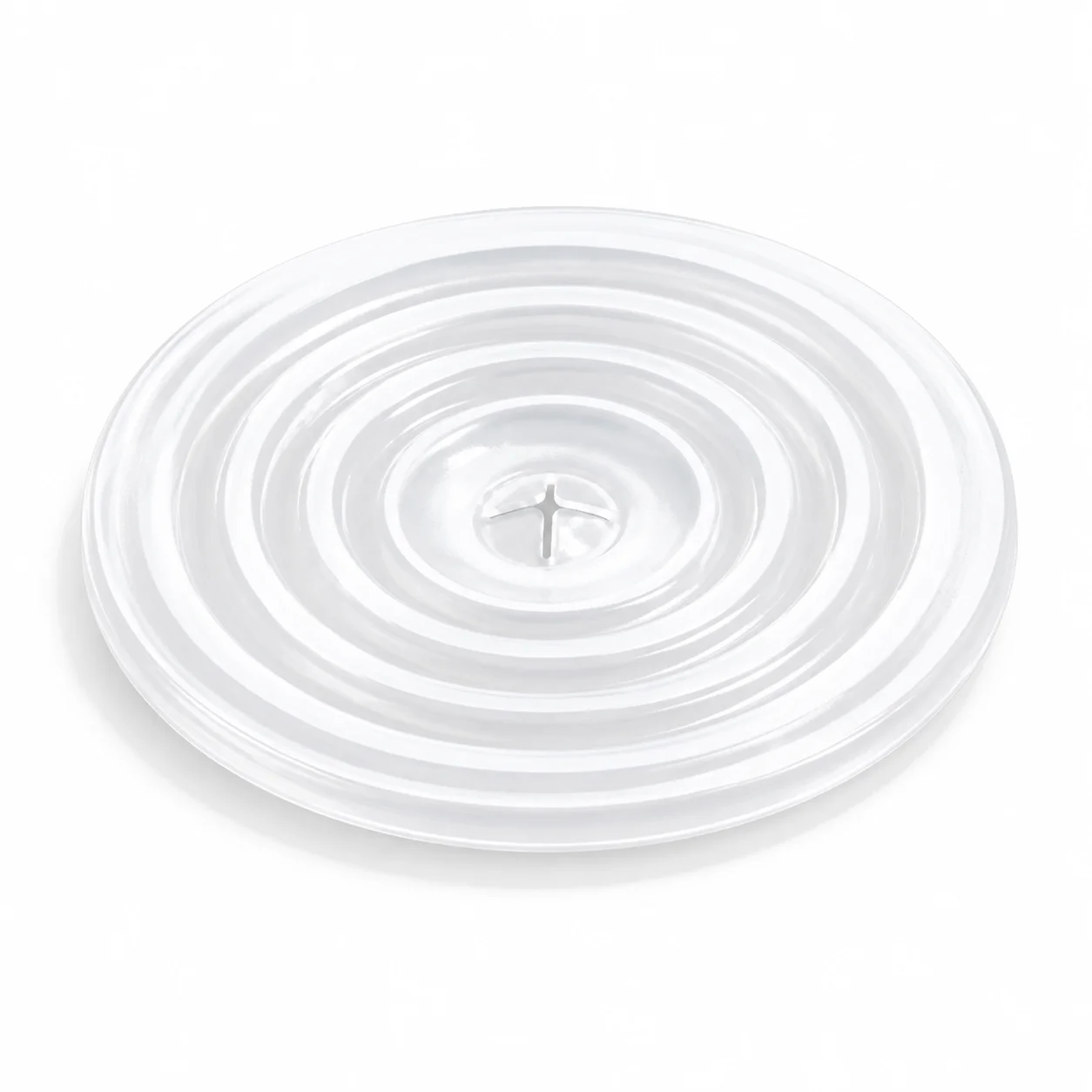
A lid pressed from laminated bamboo strip rather than turned from solid timber, carrying a silicone fitment and sold on a fast-renewing grass rather than hardwood.

Laminated strip constructionSilicone fitment insetGrass, not timber
Stock status
In stock
Lead time
2–3 weeks
FOB price / pc
$0.90 - $1.35
MOQ
2,000 pcs

Final availability, dimensions, materials, assembled components and commercial terms are confirmed against the selected drawing and approved sample.

Grain runs in lines

Laminated strips give the striped face

Consistent tone

Less color variation than hardwood

Adhesive matters

Laminate is only as good as its glue line

Bamboo Lid profile

It looks like a wooden lid and it is manufactured like plywood.

Laminate construction, adhesive & moisture

Why bamboo and hardwood lids are bought on different questions.

Bamboo is a grass with a hollow culm, so a lid cannot be turned from it the way one is turned from acacia. Strips are cut, dried, glued and pressed into a board, and the lid is machined from that. Everything distinctive about bamboo lids — the striped face, the tighter color consistency, the glue line to worry about — comes from that construction.

01

The grain pattern is a manufacturing signature

Strips laid flat give the wide, linear stripe most people recognize as bamboo; strips stood on edge give a narrower, denser pattern with more visible nodes. Neither is more authentic than the other, but they photograph differently and cannot be mixed in one order without the difference showing on a shelf. Deciding it early avoids a mismatch nobody notices until display.

02

The glue line is the weak point, not the fiber

Bamboo fiber is strong; a laminate fails at its bonds. Prolonged wetting, a dishwasher cycle or steam from a hot jar will creep into the glue lines and delaminate a lid at the edge, which shows as a fine dark crack that opens over weeks. This is why bamboo lids are specified hand wash even more firmly than hardwood ones.

03

Consistency is the reason buyers choose it

Because the board is engineered from many strips, tone and figure average out, and a run of bamboo lids matches far more closely than a run of acacia. For a brand that photographs one product and ships thousands, that predictability is worth more than the character of solid timber, and it makes limit-sample approval a narrower conversation.

04

The silicone fitment carries the seal here too

As with any natural-material lid, the bamboo provides appearance and grip while an inset silicone ring or fitment closes the jar. What differs is dimensional stability: a laminated board moves less with humidity than solid timber, so the fitment can be dimensioned with slightly less allowance, which usually gives a crisper, more repeatable close.

05

Sustainability claims need to name what is being claimed

Bamboo grows quickly and regenerates from its rhizome without replanting, which is a genuine advantage. It says nothing about the adhesive, the finish, the transport or whether the lid is separable for recycling. Claims that stay specific — fast-renewing raw material, separable silicone — hold up; claims that jump from that to environmental performance do not.

06

Engraving reads differently across a striped face

Laser engraving darkens bamboo well, but the strip pattern means a mark can cross light and dark bands and vary along its length. Small type suffers most. Designs that sit inside a single band, or use a solid engraved panel instead of fine linework, survive the variation, and it is easiest to test on production board rather than on a sample offcut.
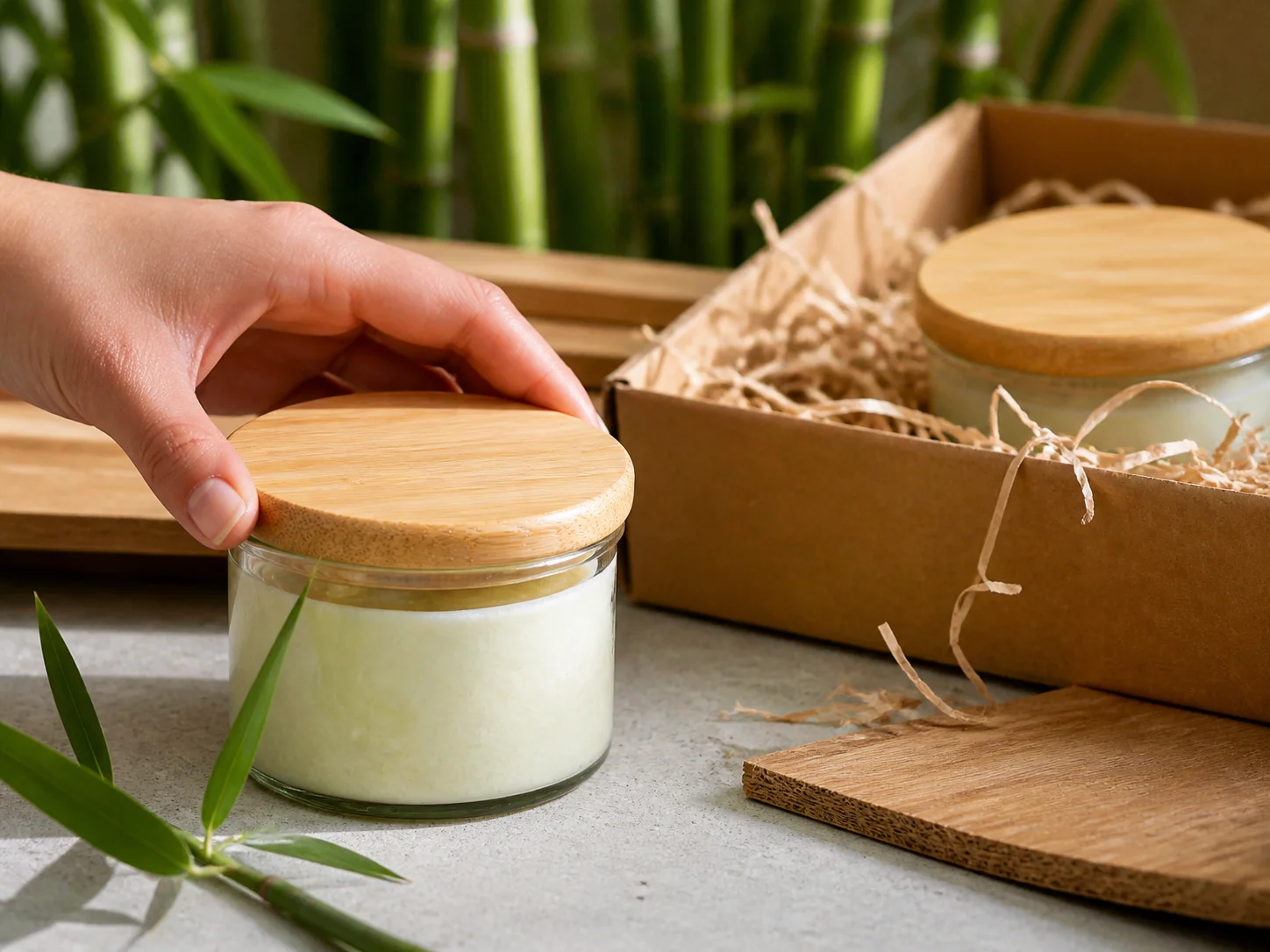
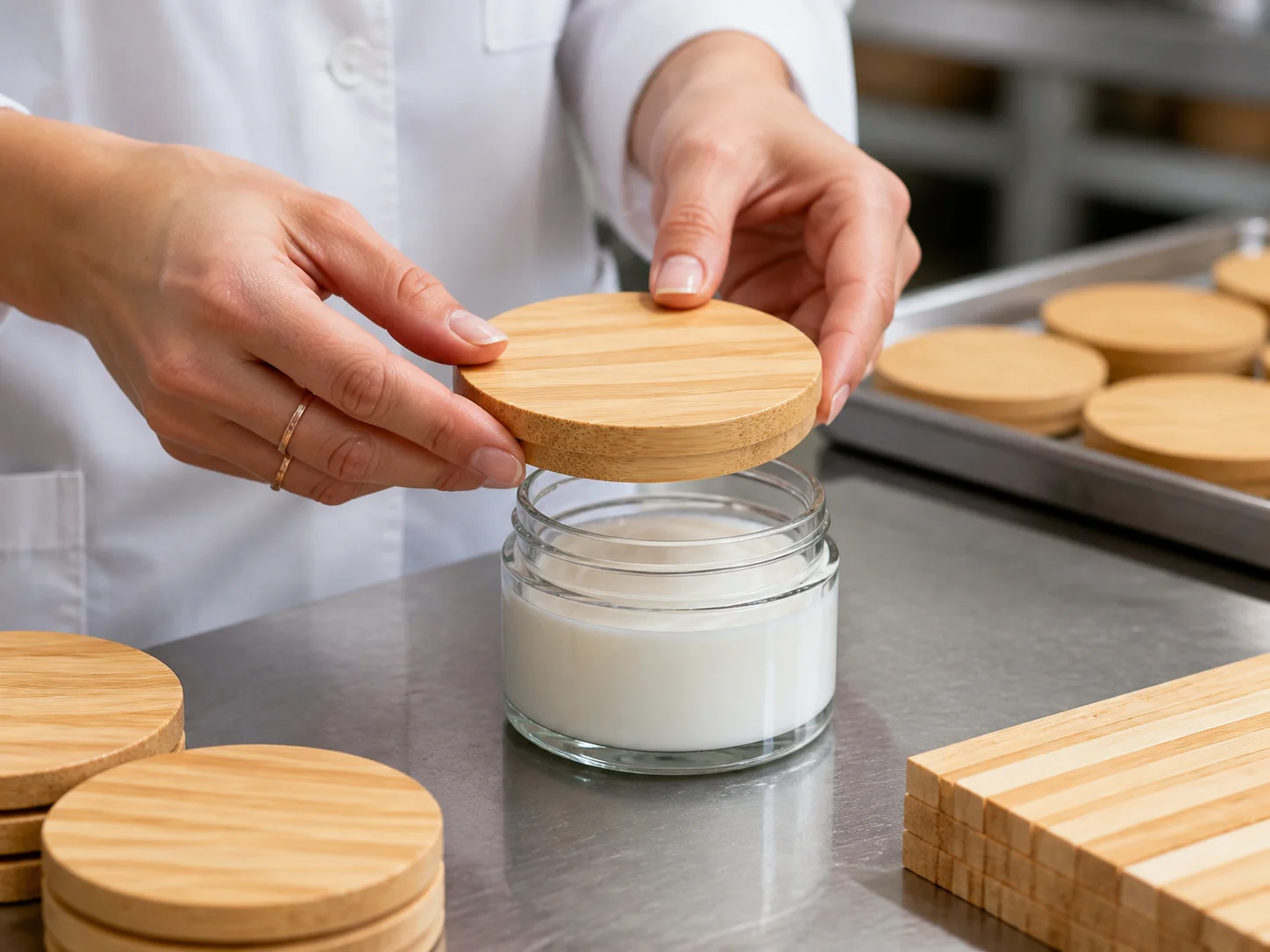
Application guide

Bamboo is a grass, and it is bought for that reason.

Bamboo is specified where a brand wants a renewable material with a visibly different character from hardwood: paler, more uniform, with the speckled nodes that mark what it is. These are development directions confirmed against approved reference pieces.

Bamboo Lid used for products chosen for a renewable material in a sustainability-led ranges setting

Sustainability-led ranges

Products chosen for a renewable material

For brands whose customers actively look for alternatives to plastic, where bamboo's fast growth and renewability are part of the purchase reason. That argument only holds if the sourcing can be documented, so the supply claim belongs with the specification rather than on the label alone.

  • Document the sourcing claim
  • Keep wording within the evidence
  • Confirm the material is what it claims
Bamboo Lid used for strips pressed together, not solid stock in a laminated construction setting

Laminated construction

Strips pressed together, not solid stock

Bamboo lids are typically built from strips bonded under pressure rather than turned from solid material, which gives them their linear top pattern and their dimensional behavior. The adhesive used is part of the specification, particularly where the lid sits above food or cosmetics.

  • Confirm the adhesive used
  • Review the construction with the supplier
  • Check the bond survives humidity
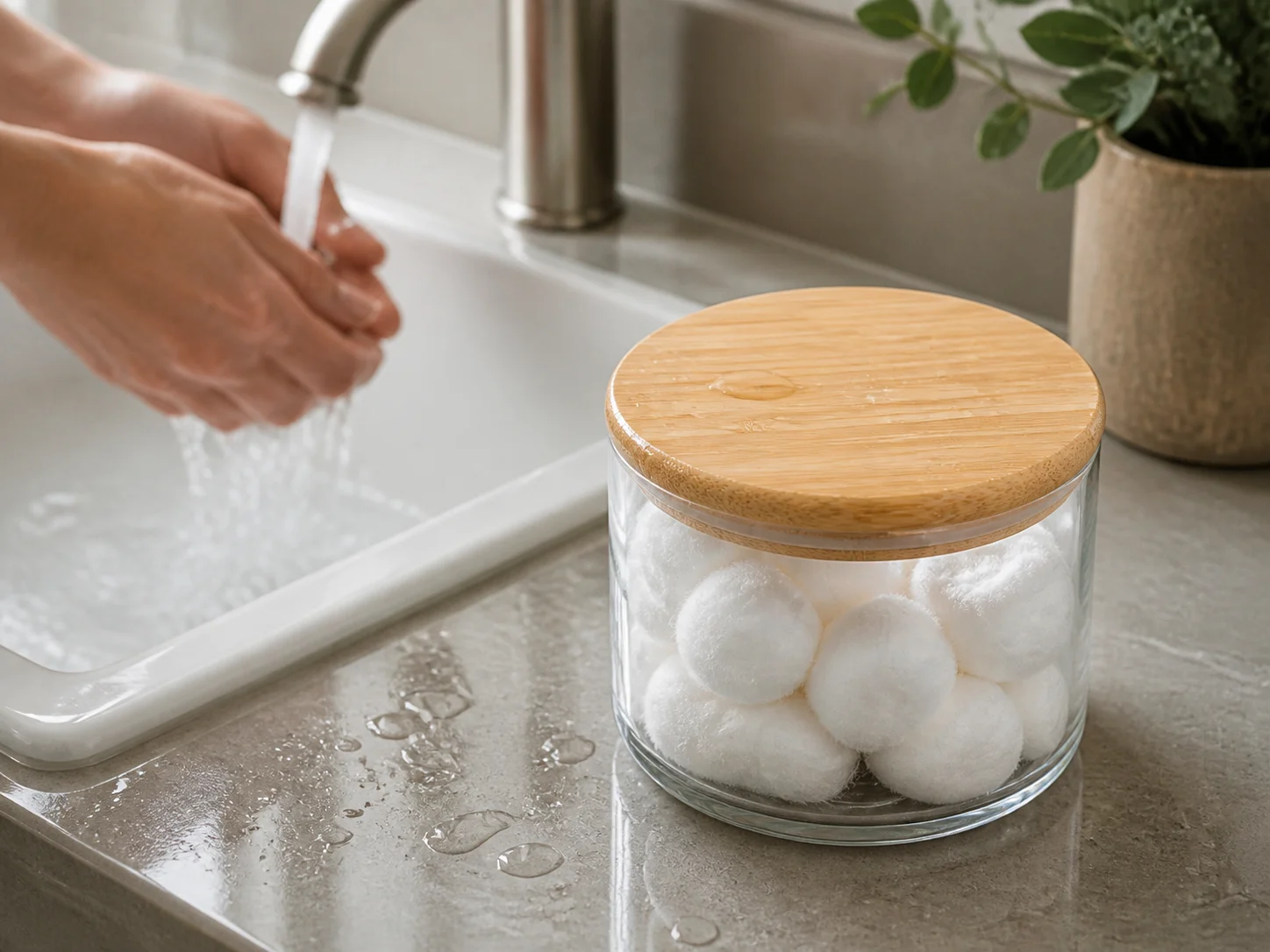
Bamboo Lid used for a pale lid that meets splashes daily in a beside the basin setting

Beside the basin

A pale lid that meets splashes daily

For jars kept next to a tap, where someone washes their hands and water lands on the lid several times a day. Pale bamboo shows those marks far more readily than a dark hardwood, so the surface treatment decides whether the jar still looks cared for after a month in a family bathroom.

  • Test water marking on the finish
  • Confirm the treatment resists staining
  • Review appearance after a month in use

Applications describe visual and closure development directions. Material, sealing and regulatory outcomes are confirmed for the selected program.

Common questions

Bamboo Lid questions

Bamboo is bought for consistency and sustainability. Both need qualifying.

Can bamboo lids go in a dishwasher?

They should not. The fiber is strong but the laminate fails at its glue lines, and steam or a full wash cycle creeps into those bonds and delaminates the edge. It shows as a fine dark crack that opens over weeks rather than as immediate damage. Bamboo lids want a hand-wash instruction stated at least as firmly as hardwood ones.

What sustainability claim can we actually make?

That bamboo grows fast and regenerates from its rhizome without replanting, which is genuine and specific. What it does not cover is the adhesive, the finish, transport or end-of-life separation. Claims that name the raw material and the separable silicone hold up; claims that leap from fast growth to overall environmental performance are the ones that attract challenge.

Will our logo engrave cleanly?

Solid marks will; fine linework is where trouble starts. Laser engraving darkens bamboo well, but the strip pattern means a mark crossing light and dark bands changes appearance along its length, and small type suffers most. Designs that sit within one band, or use an engraved panel rather than hairlines, survive it. Test on production board, not on an offcut.

Does engraving read cleanly on bamboo?

Less evenly than on hardwood, because the face is striped. An engraved mark crosses light and dark bands and the contrast changes along it, so simple bold marks work and fine detail does not. Approve the engraving on the actual laminate.

Next step

Send us the Bamboo Lid brief.

Tell us the product, fill volume, closure preference and destination market. We will come back with the matching drawings, available configurations and a sample plan before anything is quoted.

  • 01Send the briefProduct, volume, closure and market
  • 02Get the optionsMatching drawings and configurations
  • 03Approve the sampleConfirm the pack before production