Materials, application methods & finish
Three materials, three price points, and the machine you already have decides much of it.
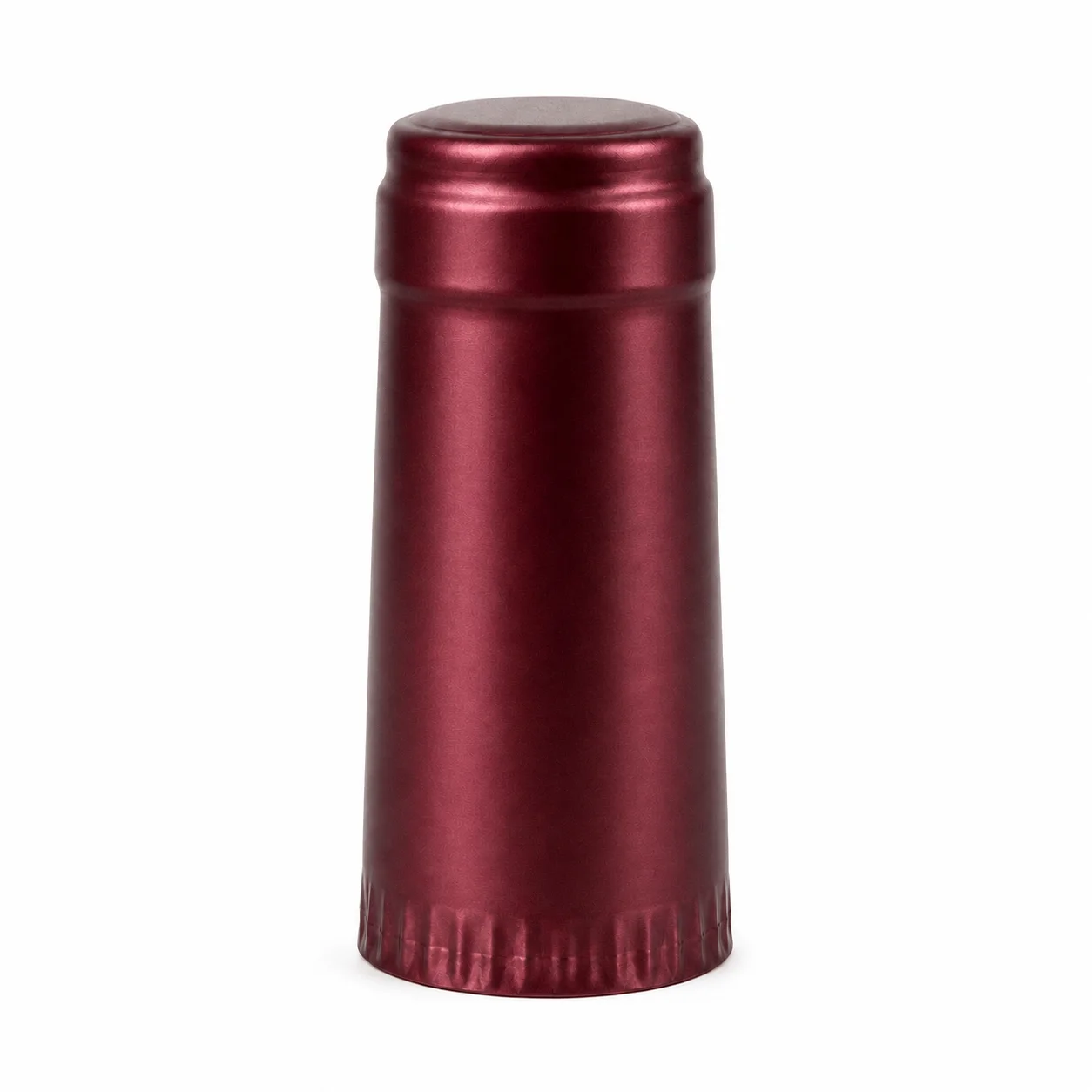
A capsule covers the cork and the top of the neck. It has not been a functional seal since bottles stopped being dipped in wax, and everyone in the trade knows it. What it does instead is signal price tier at three meters, protect the cork face from dust and mold in a cellar, and give the bottle a place to carry a tear tab and a duty mark.
The material ladder is steeper than it looks
Heat-shrink PVC is the entry point and the workhorse of volume wine. Polylaminate — aluminum, polyethylene and aluminum bonded into a sheet, typically around 100 micron — reads as metal and takes a deep emboss. Tin is the traditional premium answer, soft, heavy and expensive enough that it appears mainly on wines whose price can absorb it. Each step multiplies unit cost rather than adding to it.
Application method follows the material
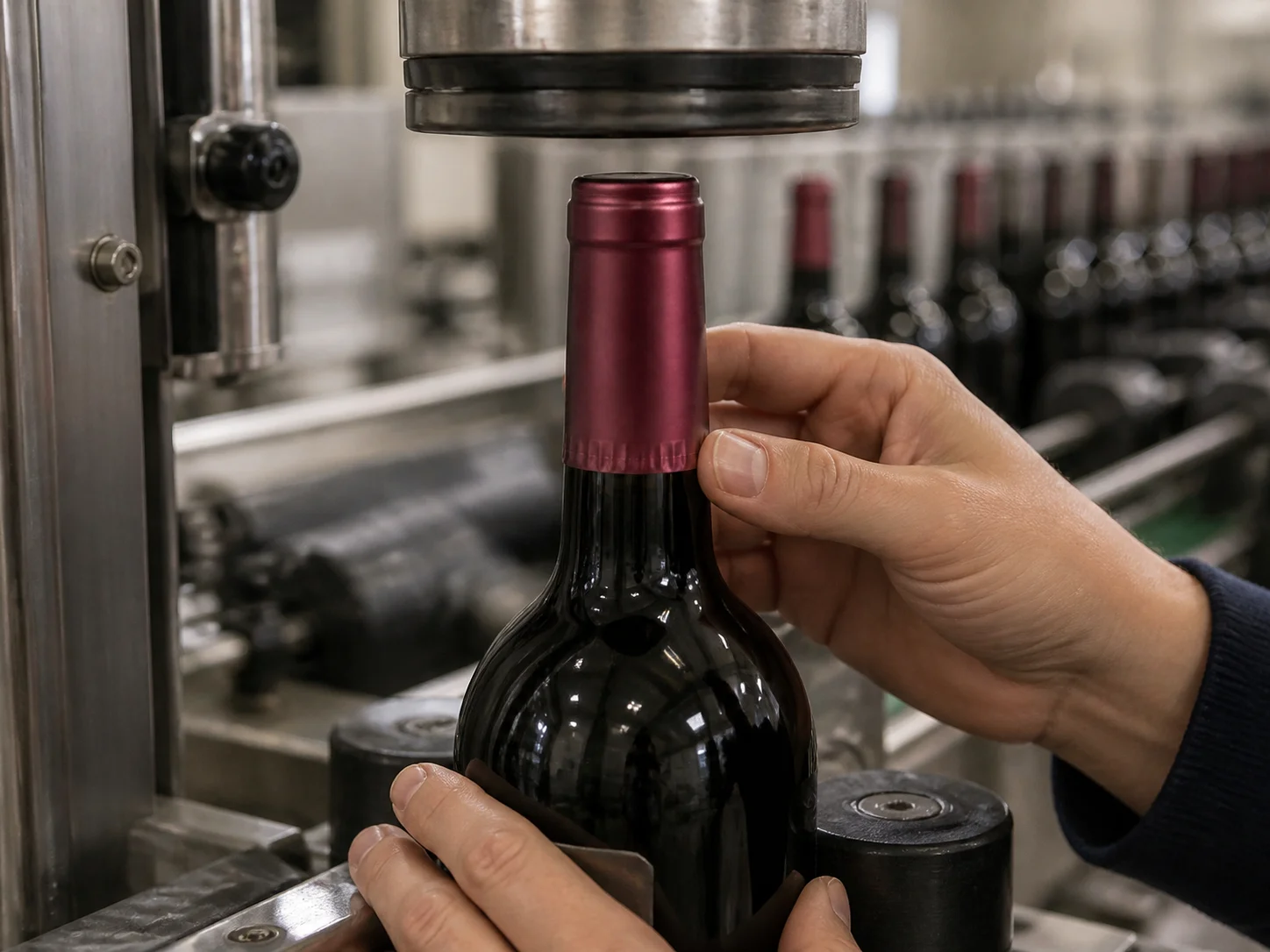
Shrink capsules are dropped over the neck and passed through a heat tunnel or under a steam jet, which draws the film onto the profile. Polylaminate and tin are formed down by a spinner head that rolls the skirt against the glass. The two require different machines, so a winery's existing equipment usually narrows the material choice before aesthetics are discussed.
The top disc is the part people see
Looking down a shelf or a rack, the customer sees the head of the capsule rather than the label. That disc carries the embossed estate mark, the printed logo or the plain color that places the wine, and it is the reason capsule artwork gets the attention it does. Polylaminate and tin hold an emboss; PVC takes print but flattens detail as it shrinks.
Design the tear tab into the top, not the skirt
Most capsules are opened by cutting with a foil knife, but a tear tab lets a customer open one without a tool. Its position matters: a tab set into the shoulder leaves a ragged edge across the visible part of the capsule, while one under the top disc opens cleanly and leaves the skirt intact. Sommeliers notice, and so do people opening a bottle at home.
Length follows the neck profile, not the bottle size
A capsule has to cover the cork and finish on a straight section of neck, so bordeaux, burgundy and flute bottles need different lengths and skirt diameters even at the same 750 mL volume. Reference polylaminate runs around 55 mm long. Trying to run one capsule across a mixed range is where wrinkles, exposed corks and skirt splits come from.
Ventilation matters more than the trade admits
A capsule tight against a cork in a humid cellar keeps moisture there, and mold on the cork face is a common complaint on wines aged in bond. Perforated or vented capsules let that dry, at some cost to appearance. Wines going straight to retail rarely need it; anything intended to lie in a cellar for years usually does.