Air exclusion, dose fixing & the opening problem
Six things that follow from a container with no closure.
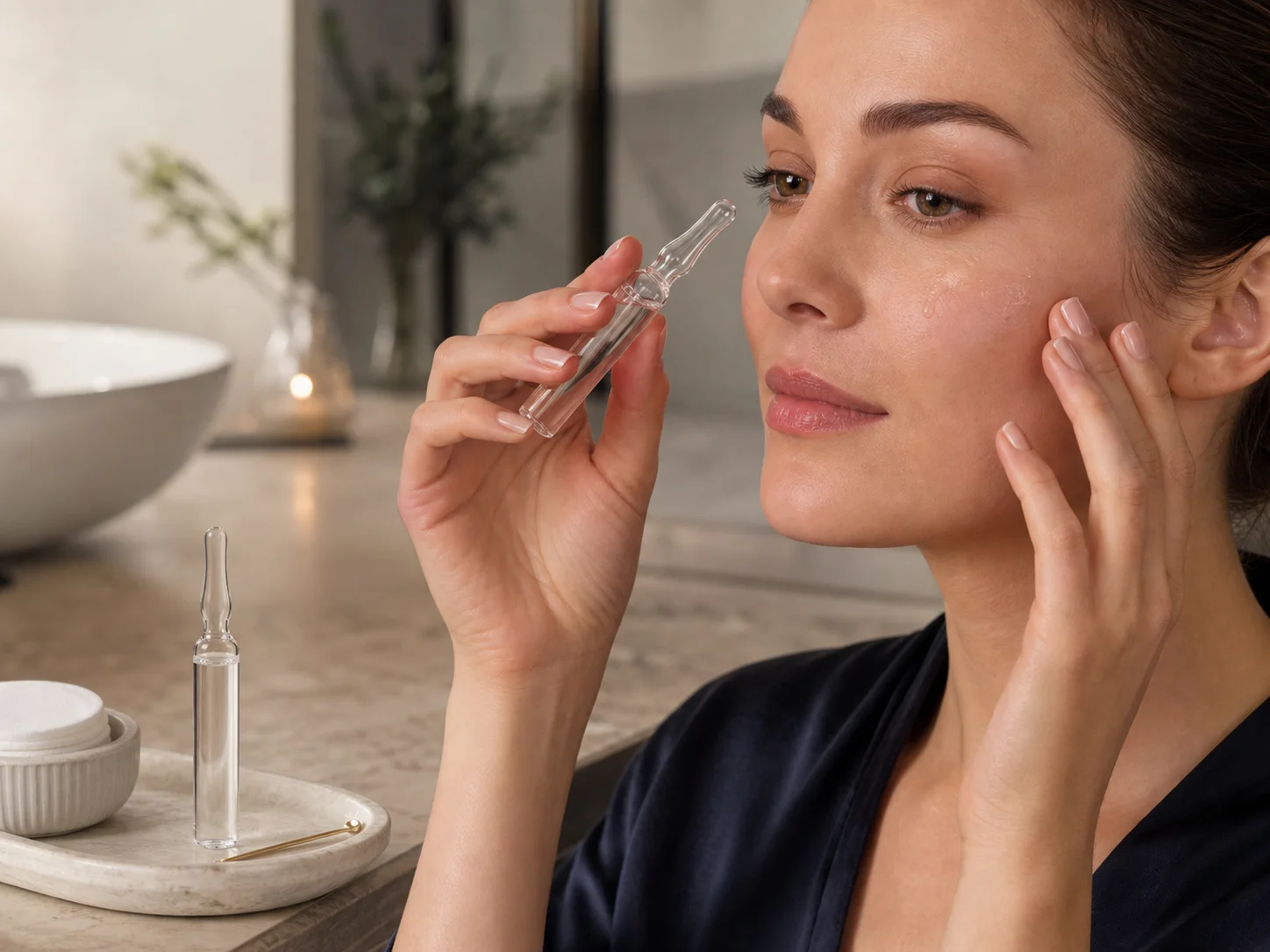
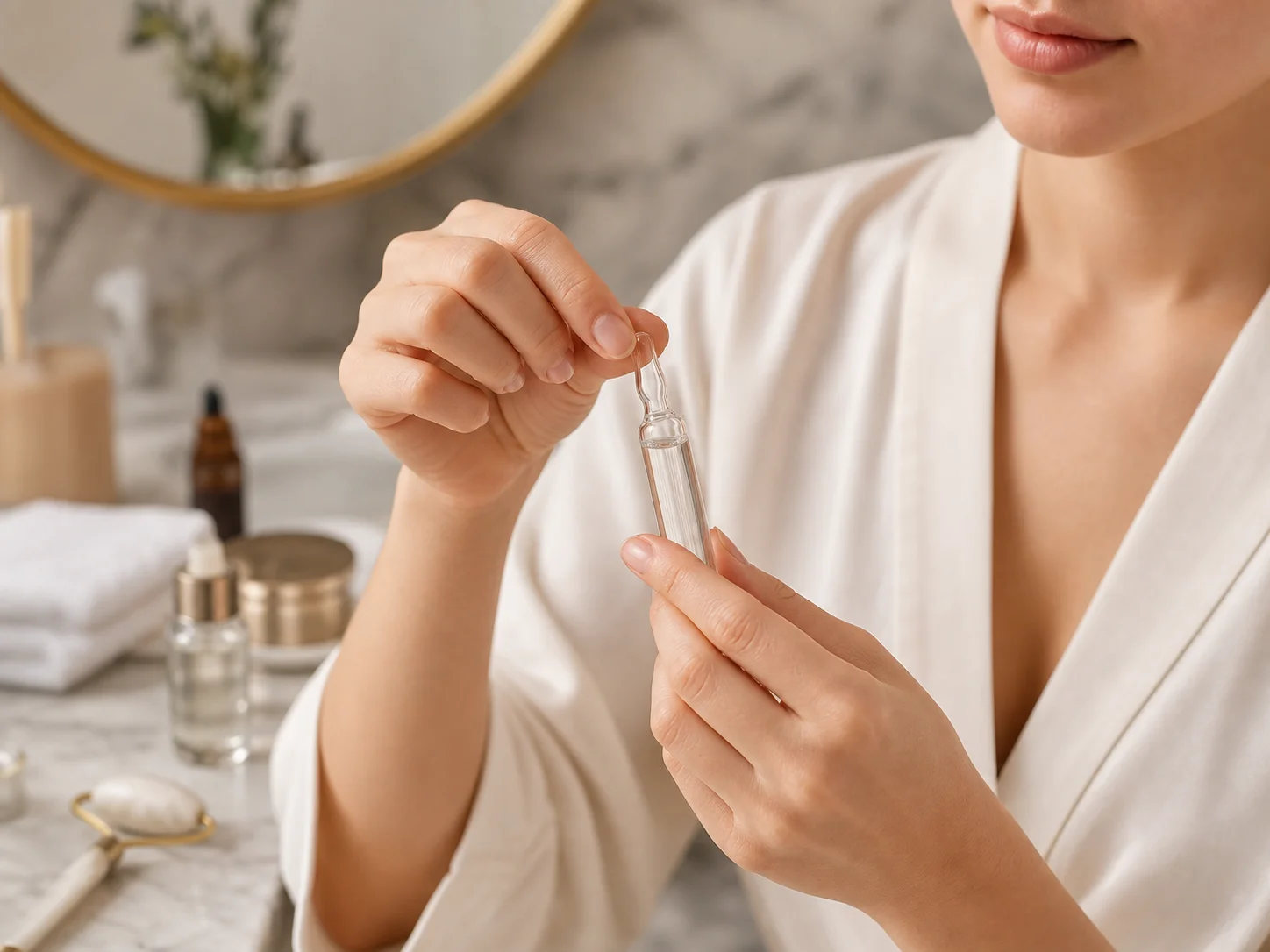
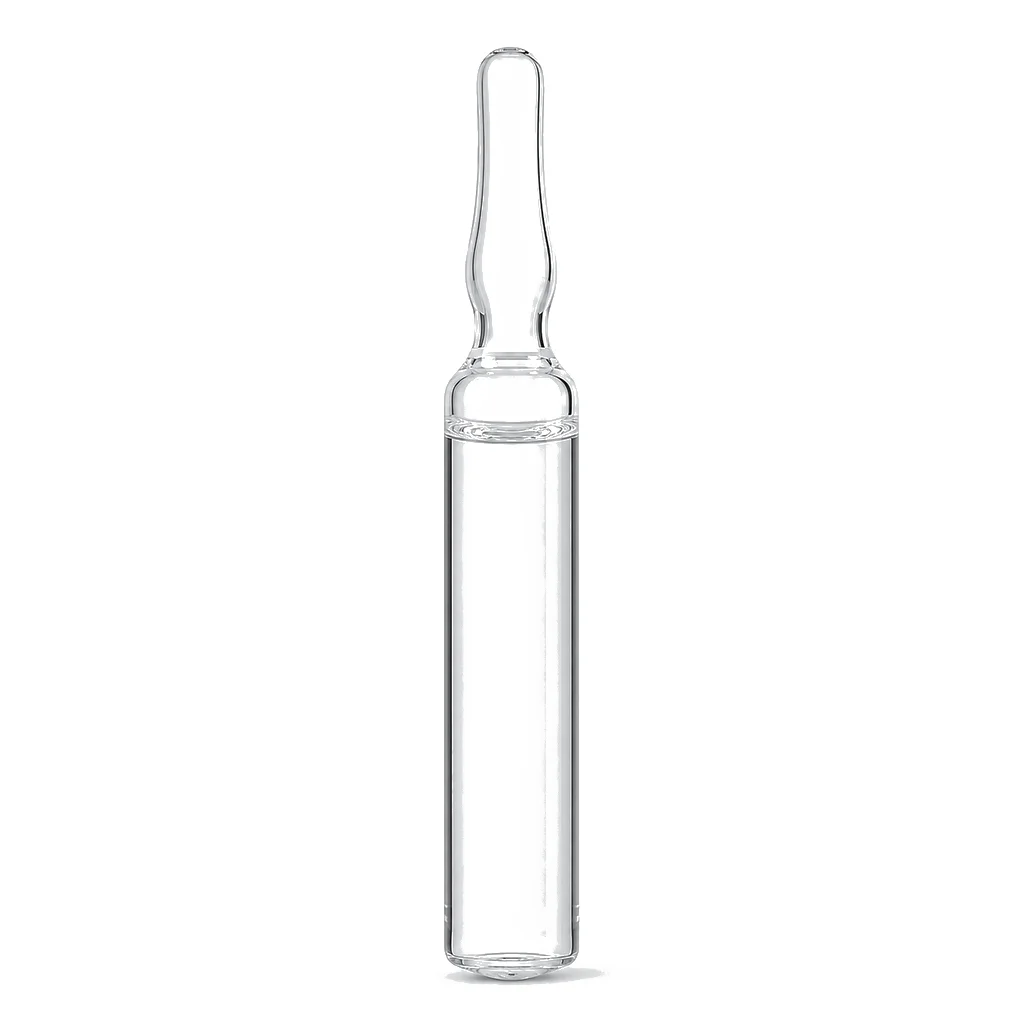
A beauty ampoule is filled and then closed by melting its own glass shut. There is no cap, no liner, no pump and no path for air to enter; the small headspace can be nitrogen-flushed before sealing. For an unstable active that is the most protective format available, and it comes with two costs: the dose is fixed at filling, and opening it means breaking glass in a bathroom.
Nothing can leach in and nothing can escape
Every other treatment pack has a closure that contributes extractables, admits some air and loses some volatiles. A fused ampoule has none. For ascorbic acid, retinaldehyde and similar unstable actives, that removes the packaging variable from the stability equation entirely, which is why the format persists at the clinical end of skincare.
The dose is decided at filling and cannot be adjusted
The customer uses the whole ampoule, so the fill volume is the dose. That suits a defined course — a week or a month of treatment — and it removes the under-dosing that happens when someone rations an expensive serum. It also means anything left in the ampoule is waste, so fill accuracy matters more than usual.
Opening is the format's weak point
Snapping glass in a bathroom, sometimes with wet hands, is the objection customers raise. A one-point cut score with a marked break ring lets the stem part cleanly under light pressure without a file, and a supplied opener or a protective sleeve removes most of the remaining risk. Skipping those is where the format gets its bad reputation.
Fragments are a real consideration, not a theoretical one
Any glass break produces fragments, and this is a product applied to a face. Score design and opening technique determine how much debris is generated and whether it can enter the liquid. It is the reason ampoule programs specify the score rather than accepting a plain stem to be broken however the customer manages.
The pack is a set, not a single unit
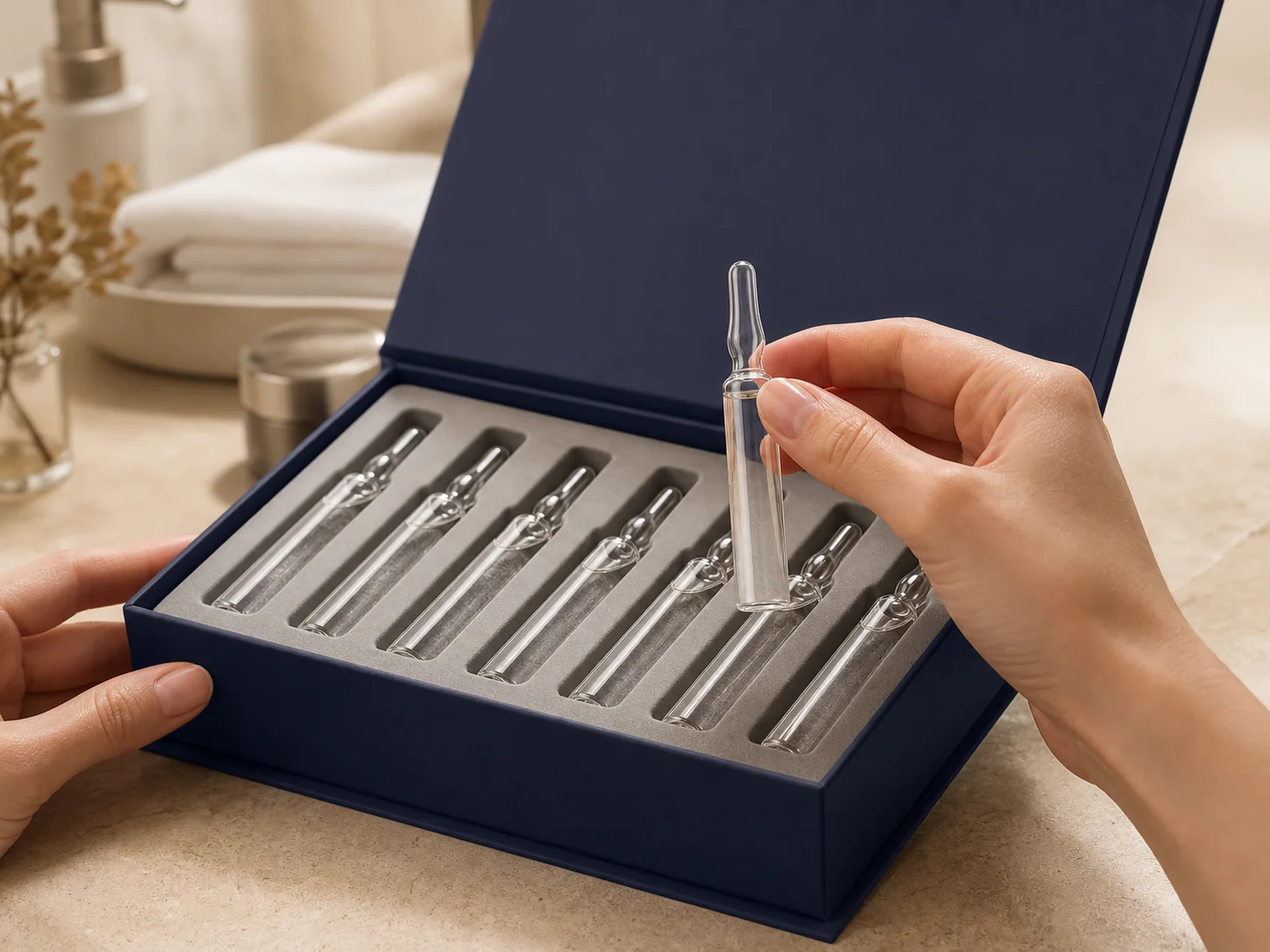
Ampoules are sold as courses, so the carton, the tray and how a customer stores a part-used set are as much the product as the glass. A tray that keeps unopened ampoules upright and separated, with the count visible, does more for the experience than any refinement of the individual ampoule.
Sold in a set, they are handled as a set and packed as one
A course of ampoules travels and is stored as a tray rather than as individual units, so the insert carries the protection and the tray decides how easily one can be lifted out. Designing the tray with the ampoule, rather than after it, is what stops the second one breaking as the first is removed.