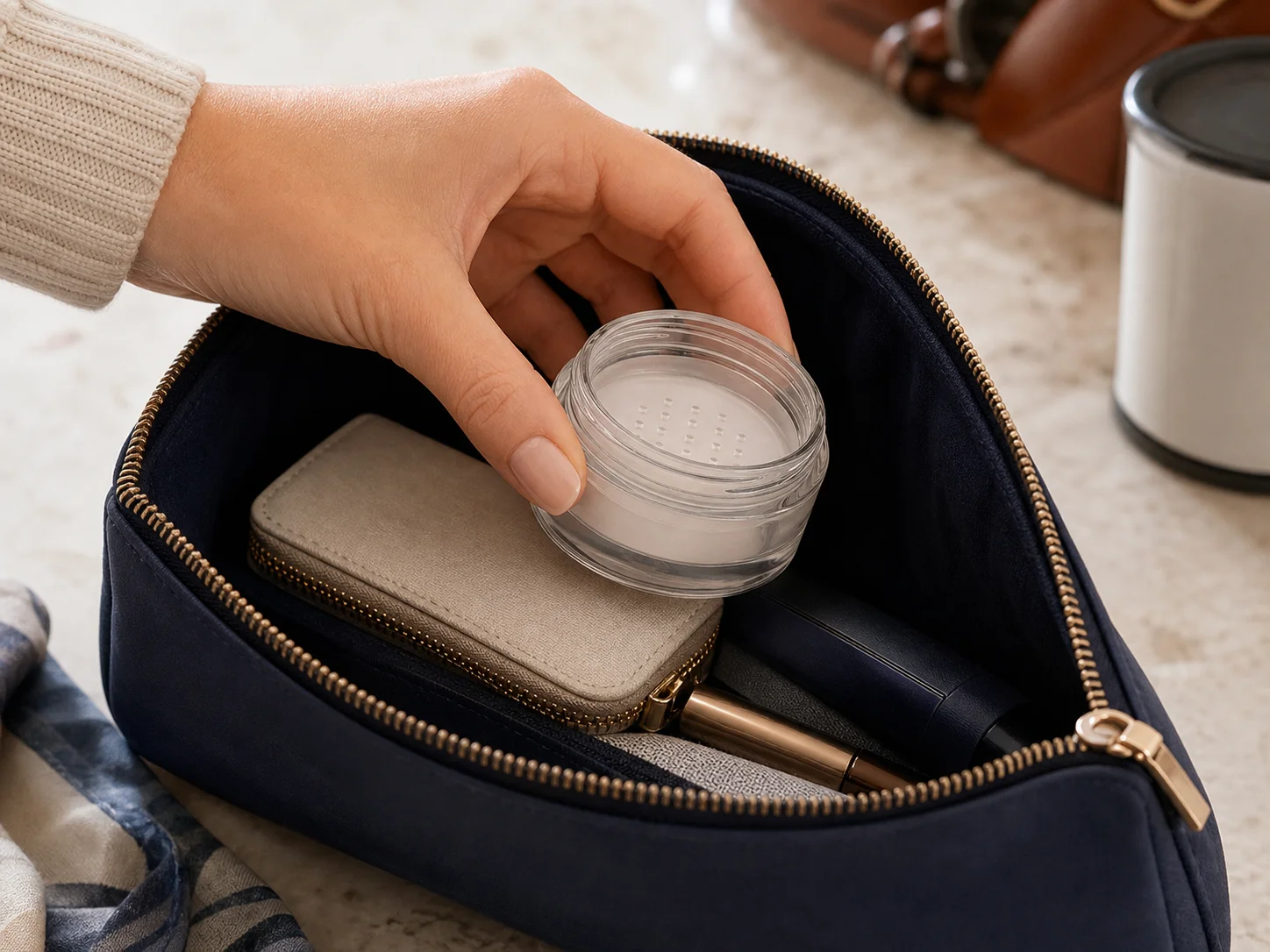
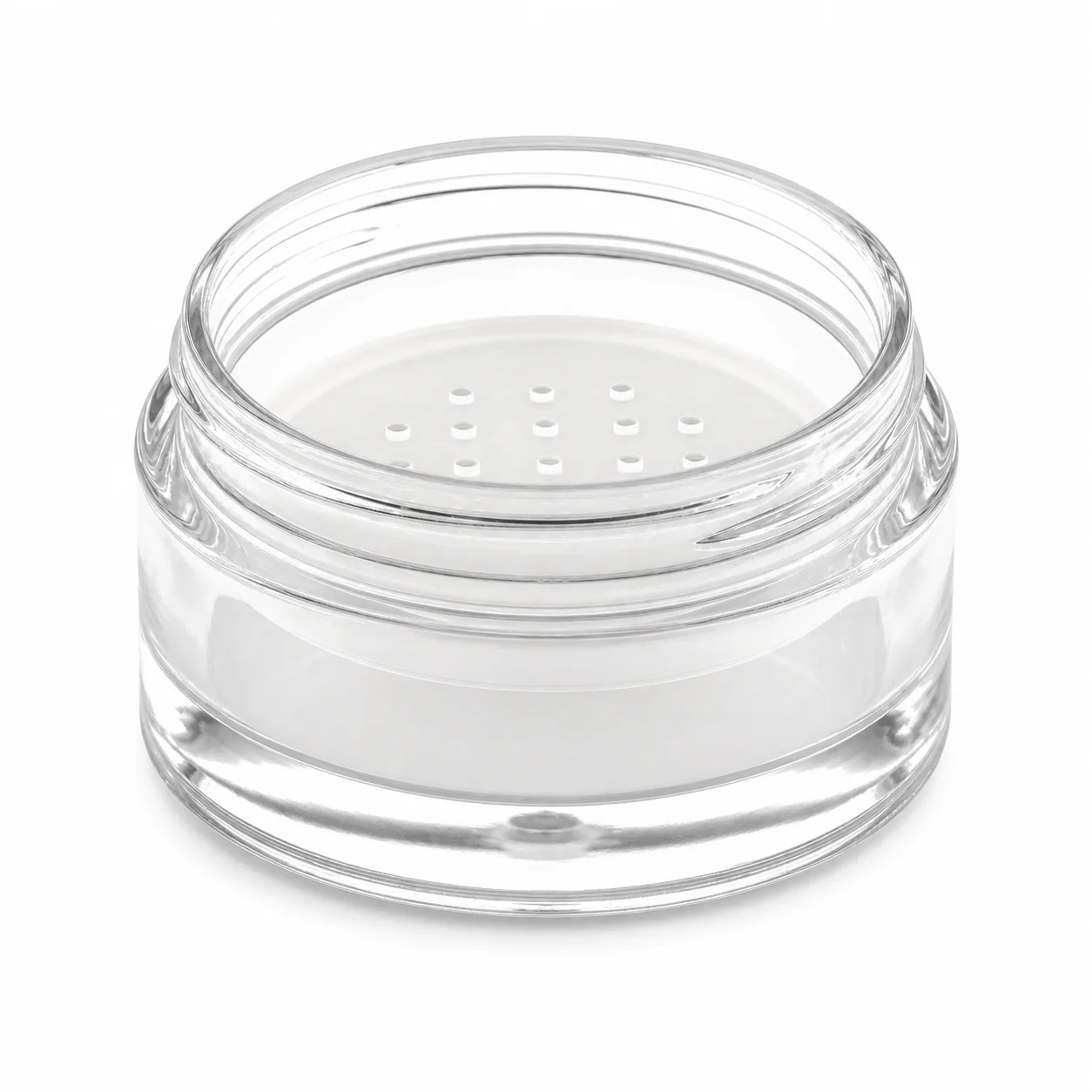
Squat clear glass powder jar with a wide mouth and a screw cap
Shown configuration · jar with cap / powder, sifter, liner and label not shown

Color cosmetics

Loose Powder Jar

A jar for loose powder, where a sifter disc controls how much escapes, and the real design problem is powder that migrates into every thread and seal.

Sifter disc meters releasePowder finds every gapStatic works against you
Stock status
In stock
Lead time
2–3 weeks
FOB price / pc
$0.40 - $0.70
MOQ
3,000 pcs

Final availability, dimensions, materials, assembled components and commercial terms are confirmed against the selected drawing and approved sample.

Sifter is the dispenser

Hole pattern sets the dose

Threads collect powder

Seals degrade as they fill

Spills are the complaint

Transit is where they happen

Loose Powder Jar profile

A very fine solid in a threaded container is a harder packaging problem than a liquid.

Sifter design, contamination of seals & transit

Five things that separate a powder jar from a cream jar.

Loose powder gets everywhere. It works into threads, sits on sealing lands, rides on static into places a liquid never reaches, and escapes through any gap during transit. The sifter disc that controls dispensing is also the component that decides how much powder reaches those places, which makes it the center of the whole design.

01

The sifter meters the product and protects the pack

A perforated disc between the powder and the opening controls how much is released when the jar is tipped or a brush is pressed onto it. Hole count and diameter set that dose, and the same disc keeps the bulk of the powder away from the thread. Choosing it is both a use decision and a containment decision.

02

Powder on a sealing land stops it sealing

Fine powder settling on the rim or in the thread prevents the closure seating fully, so the jar leaks a little more each time it is opened. That progressive failure is the characteristic complaint in this category, and it is addressed by sifter design and by a closure that clears rather than traps residue.

03

Transit is where the spills happen

A jar that behaves on a dressing table can shed powder through a carton after two days of vibration, arriving with a dusted interior and a customer's first impression ruined. Shipping tests with the sifter in place and the jar filled are the check that matters, and they are frequently skipped because the pack looks fine on a bench.

04

Static moves powder where gravity does not

Fine cosmetic powders carry static and cling to plastic sifters, cap interiors and label faces, which is why a jar can look dusty despite never having leaked. Material choice and any antistatic treatment on the sifter reduce it, and it is worth understanding as a distinct phenomenon rather than as evidence of a leak.

05

The customer wants to see the shade and the level

Loose powders are bought partly on color, and a clear jar shows both the shade and how much is left. That argues against opaque decoration on the body and puts branding on the cap or a small label, in the same way as a foundation bottle — one of the few things these two very different formats share.

06

The sifter has to be removable for filling and not removable afterwards

Production needs the disc out to fill and the customer must not be able to lift it once it ships, which are opposite requirements met by the same component. Retention force is specified for both conditions, and it is verified by trying to prise one out.
Application guide

The sifter decides whether powder lands on skin or on the floor.

Loose powder is dispensed by tipping and tapping, and the perforated insert controls how much escapes. Get the hole pattern wrong and the customer either wastes product or cannot get any out. These are development directions confirmed with the actual powder.

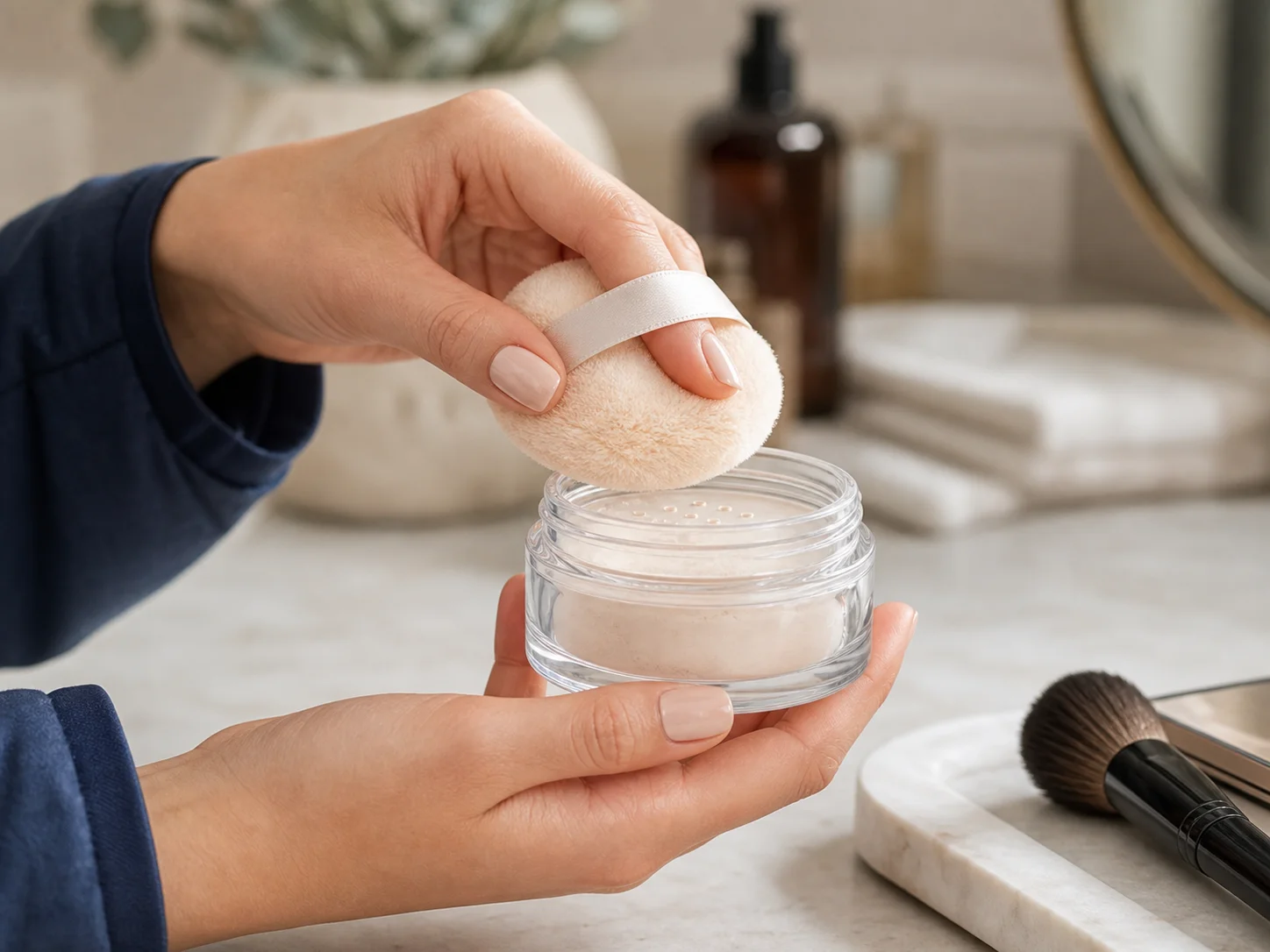
Loose Powder Jar used for translucent and finishing powders in a setting powder setting

Setting powder

Translucent and finishing powders

For the powder someone taps onto a puff over a bathroom counter before pressing it into the face. Hole size and count have to suit the particular grind: too open and a tap dumps a week's worth, too fine and the customer shakes the jar until they give up and remove the sifter entirely.

  • Match hole pattern to the grind
  • Test a single tap onto a puff
  • Confirm the sifter stays seated
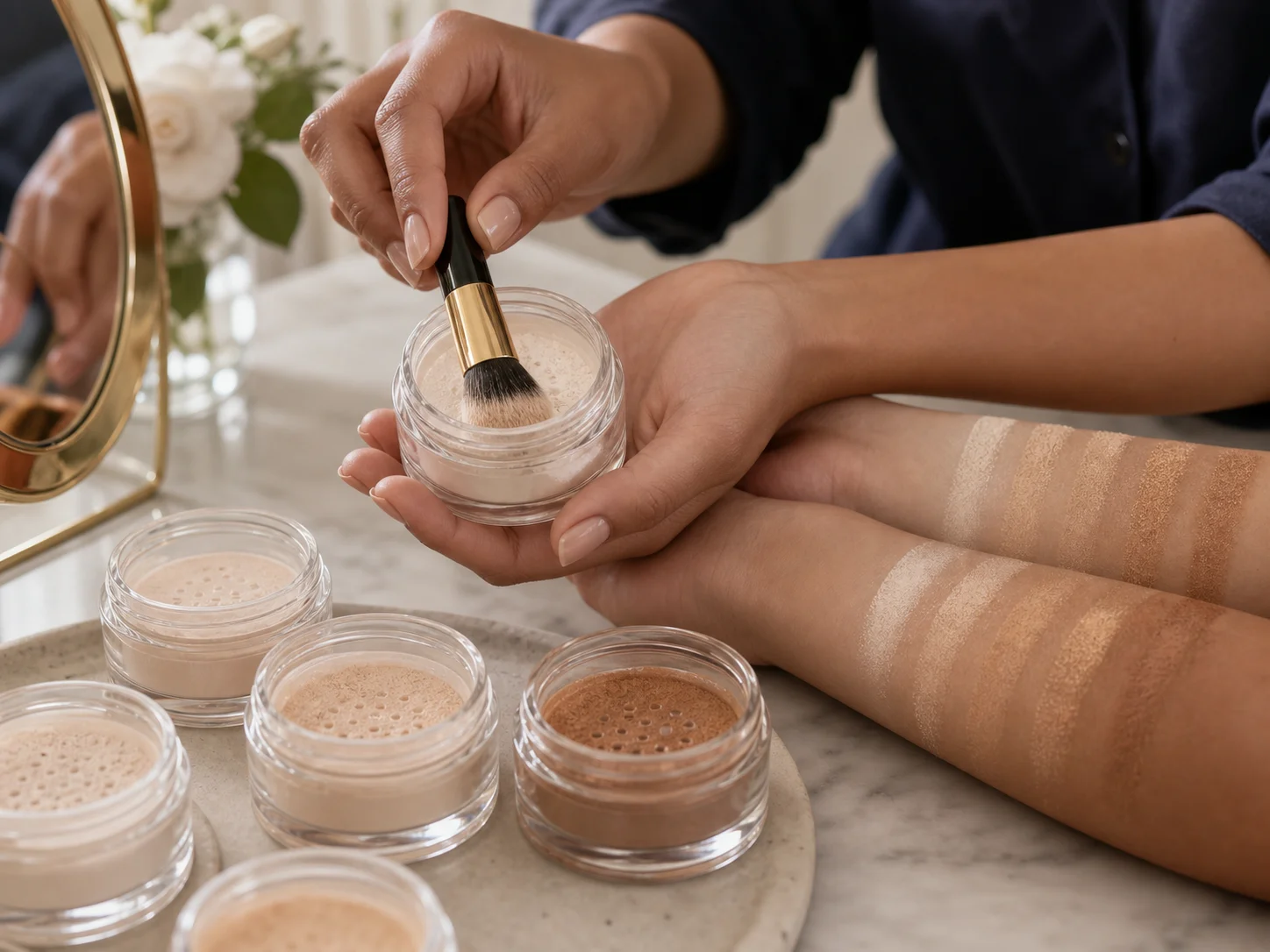
Loose Powder Jar used for complexion powders across skin tones in a shade ranges setting

Shade ranges

Complexion powders across skin tones

Where a range runs many shades, a clear jar lets the customer compare the powder itself against their own skin, which matters more here than in any other makeup format. Shade name legibility on a small curved base becomes the practical constraint on how the range is coded.

  • Make shade names readable on the base
  • Let the powder itself be visible
  • Code shades consistently across the range
Loose Powder Jar used for handbag and travel formats in a travel & spill setting

Travel & spill

Handbag and travel formats

Loose powder in a handbag is one knock away from coating everything around it, so the closure system carries real risk. An inner cover or a sealing lid that holds through being dropped and jostled is what separates a travel-worthy pack from one that stays on the dresser.

  • Add a seal for handbag transit
  • Drop test the closed jar filled
  • Confirm no powder escapes the thread

Powder compatibility, claims, sifter, puff and lid system, filling, stability and distribution are confirmed for the selected program.

Common questions

Loose Powder Jar questions

A fine solid in a threaded jar behaves nothing like a cream.

What does the sifter actually do?

Two things. It controls how much powder is released when the jar is tipped or a brush is pressed onto it, through its hole count and diameter, and it keeps the bulk of the powder away from the thread. Choosing it is a dispensing decision and a containment decision at the same time, not just a dosing one.

Why do powder jars leak more over time?

Fine powder settles on the rim and in the thread, so the closure stops seating fully and a little more escapes at each opening. That progressive failure is the characteristic complaint in this category. It is addressed through sifter design and a closure that clears residue rather than trapping it against the sealing land.

Powder clings to everything even though nothing leaked. What is that?

Static. Fine cosmetic powders carry charge and cling to plastic sifters, cap interiors and label faces, which makes a jar look dusty without any leak at all. Material choice and antistatic treatment on the sifter reduce it. Understanding it as a separate phenomenon prevents chasing a leak that does not exist.

Does the jar have to be clear?

Usually. Loose powders are bought partly on shade, and a clear jar lets a customer see both the color and how much is left. That argues against opaque decoration on the body and pushes branding onto the cap or a small label — the same constraint that a foundation bottle faces, for the same reason.

How can the sifter be removable for filling but not afterwards?

By designing the retention around the two different moments. The disc has to drop out for the line to fill the jar and then stay in place against a customer prising at it, so the fit is specified for both — a press that assembles cleanly and resists removal once seated.

Next step

Send us the Loose Powder Jar brief.

Tell us the product, fill volume, closure preference and destination market. We will come back with the matching drawings, available configurations and a sample plan before anything is quoted.

  • 01Send the briefProduct, volume, closure and market
  • 02Get the optionsMatching drawings and configurations
  • 03Approve the sampleConfirm the pack before production