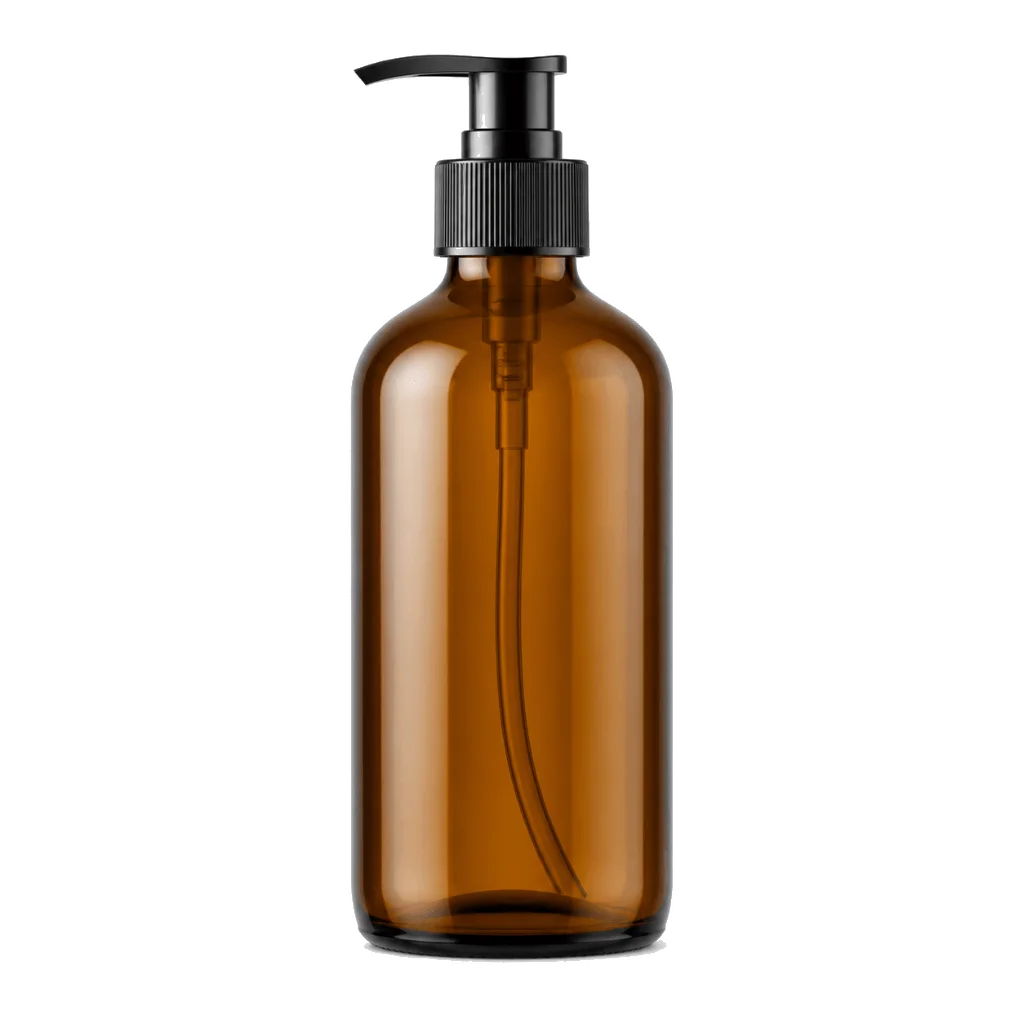
Wet handling, viscous dispensing & the glass question
Six requirements the shower imposes.
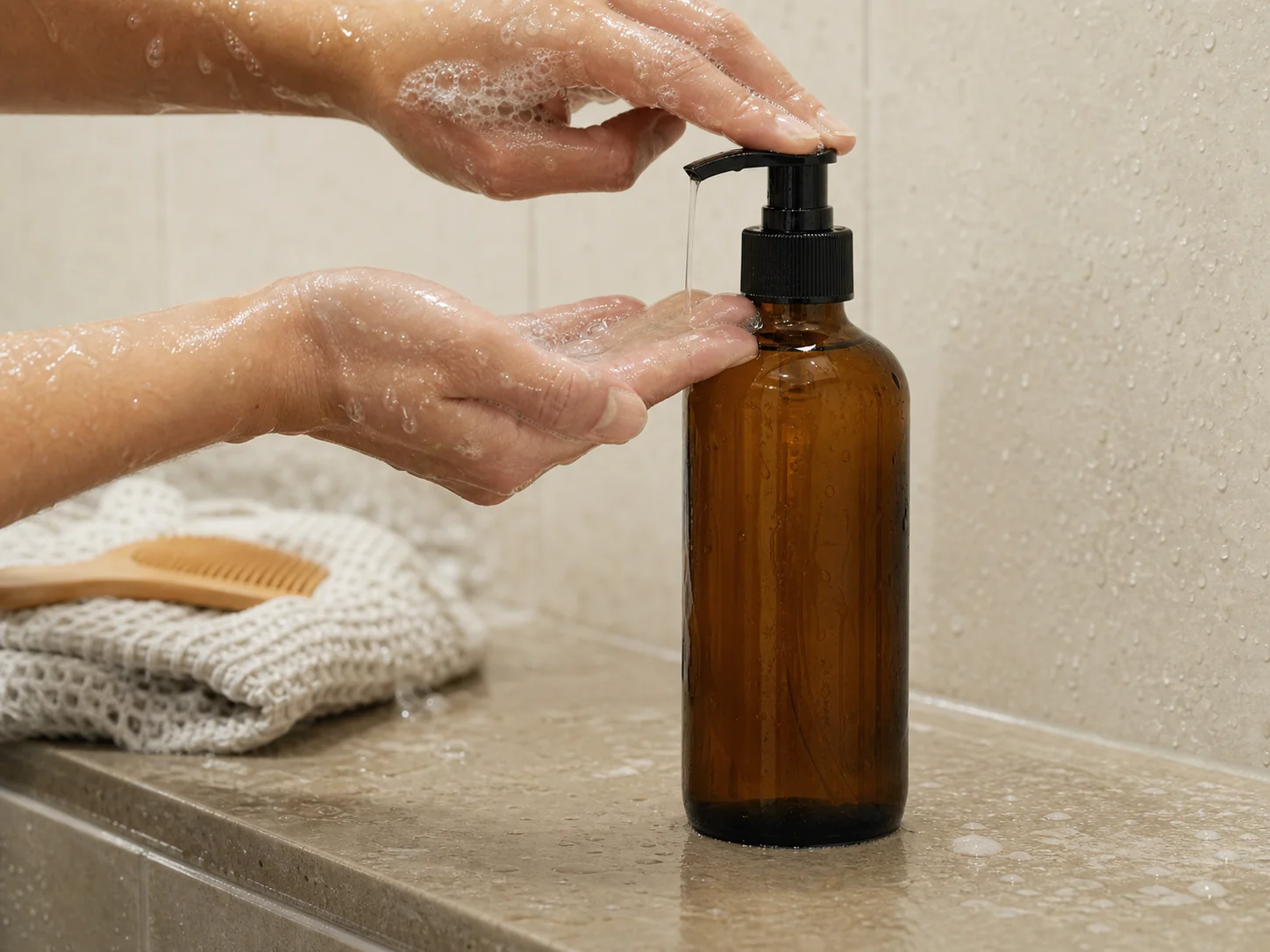
Shampoo is dispensed in a shower, with soap on the hands, onto a tiled or acrylic surface that breaks glass and hurts feet. That environment dominates the specification: grip before aesthetics, a base that resists tipping, a pump that moves a thick surfactant without stalling, and a label that survives daily steam.
Grip is the first specification, not a finishing touch
A smooth cylinder held by a soapy hand is a bottle waiting to be dropped. Ribs, a waist, a flat panel or a textured coating all give purchase, and the consequence of getting it wrong is broken glass underfoot in a shower. Few packaging decisions in personal care have a physical safety consequence this direct.
The pump has to move a thick liquid at shower temperature
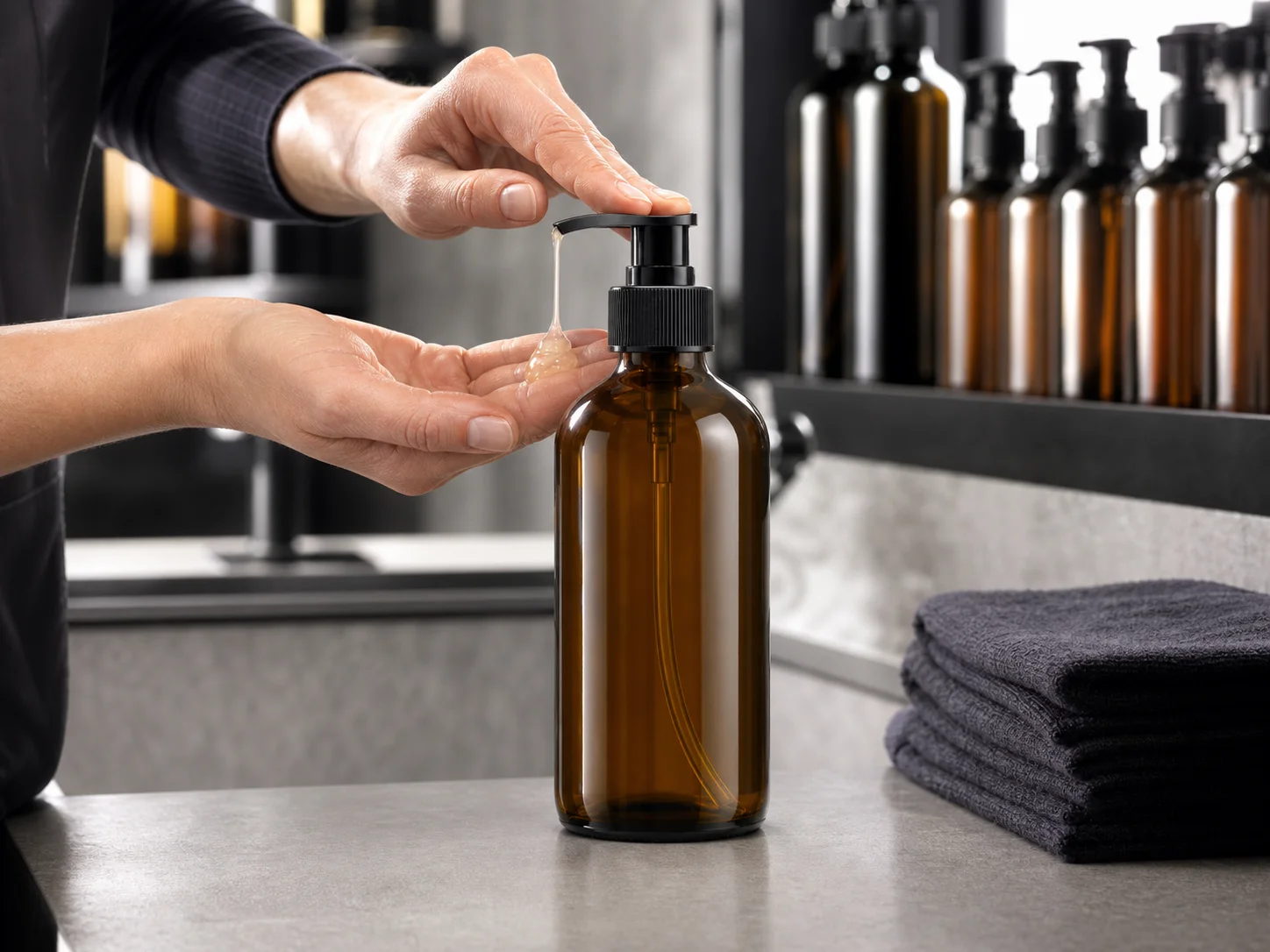
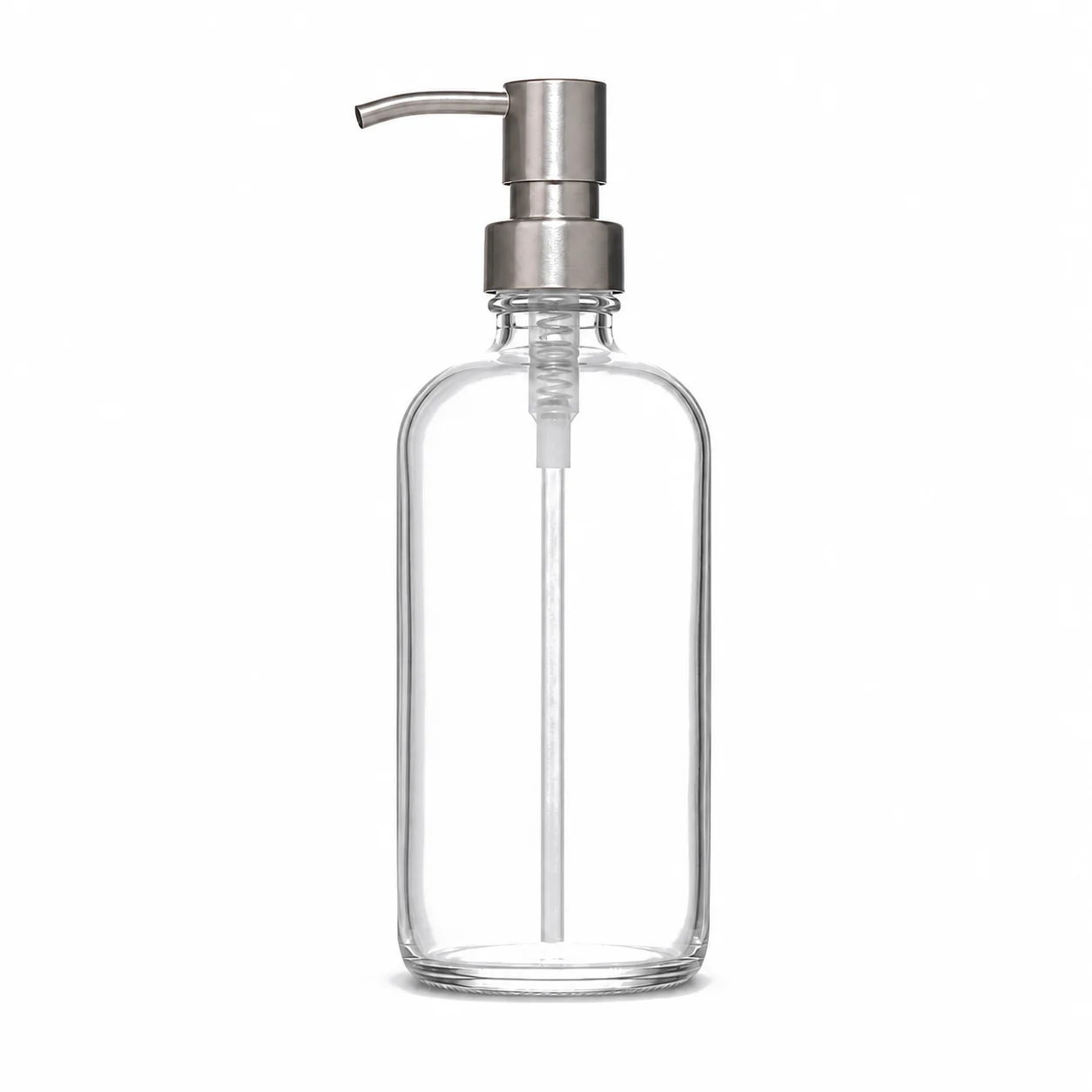
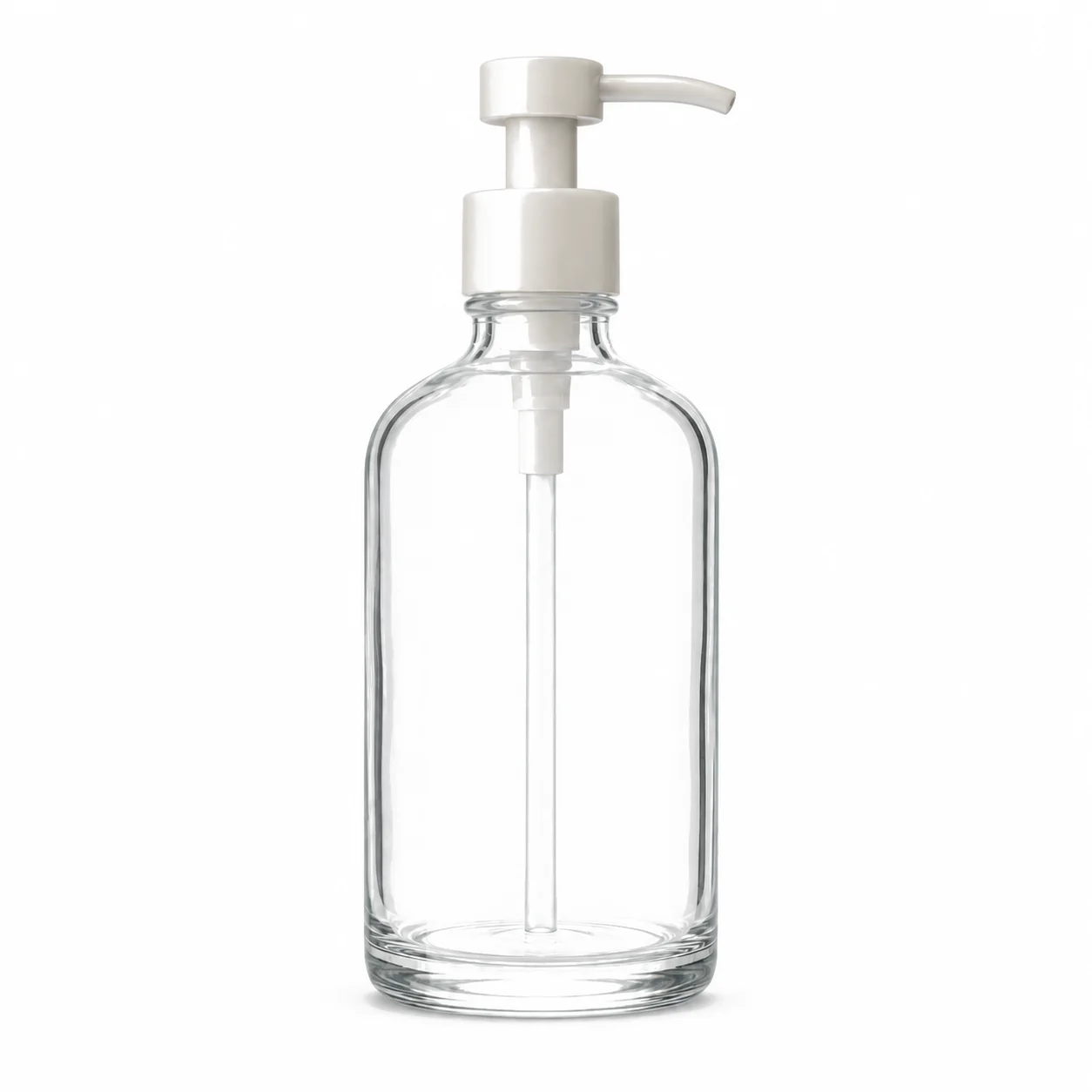
Shampoo is far more viscous than a toner and behaves differently again when a bathroom is cold. Output per stroke, spring force and dip tube bore are chosen against the actual formula at its coldest realistic use temperature, and a pump specified on a warm bench sample will disappoint every winter morning.
Glass in a shower is a deliberate risk
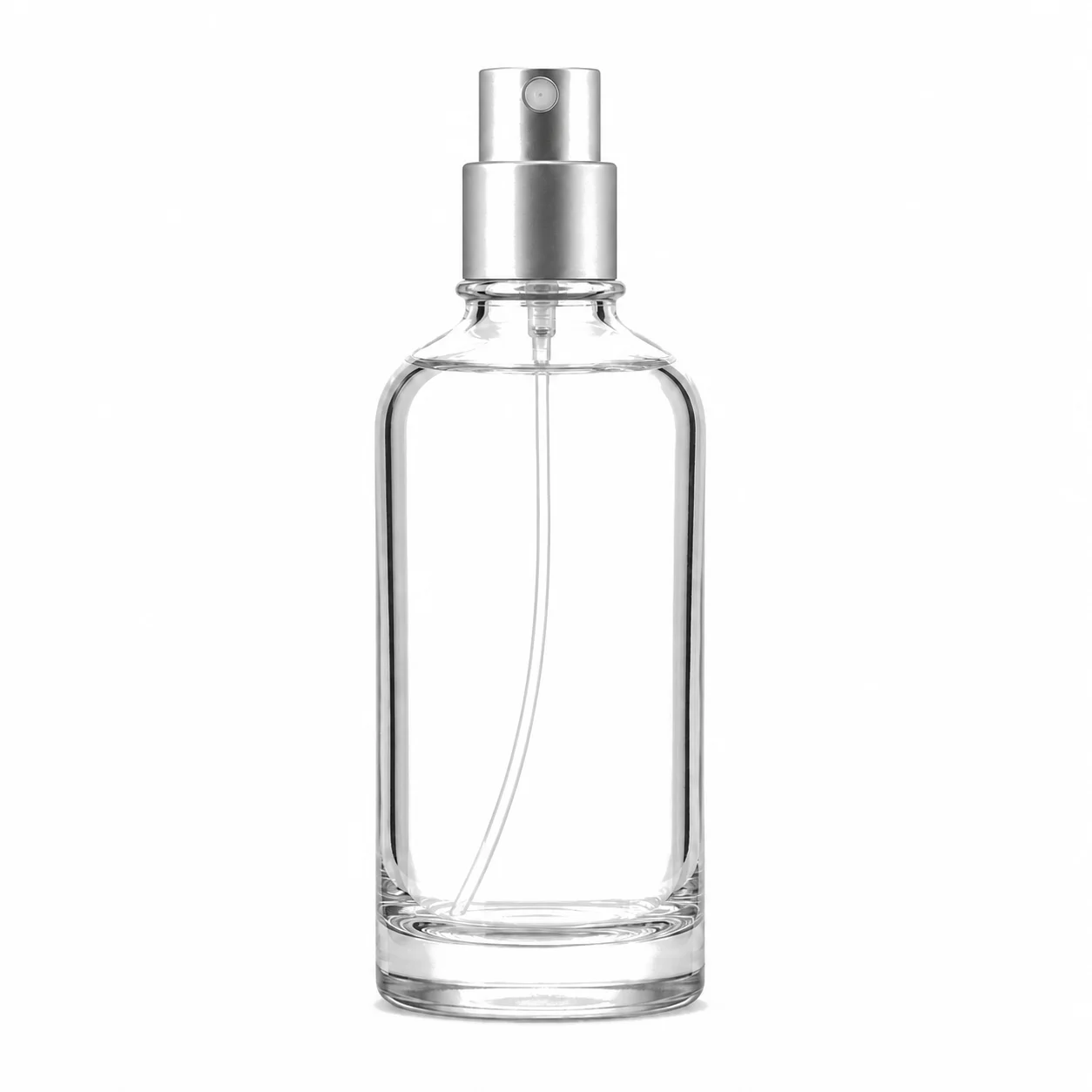
Plastic dominates hair care because a dropped bottle in a wet room is a genuine hazard. Glass is chosen for weight, recyclability and a premium impression, and the honest response is to design for the risk rather than ignore it: a grippy body, a stable base, a smaller fill and packaging that says something about where to keep it.
Labels live in constant steam
A shower label is wetted and dried daily, sometimes with product running over it. Ordinary paper stock curls and lifts within weeks, and the pack starts looking neglected even when the product is fine. Synthetic stock with a suitable adhesive costs little and is the difference between a pack that ages well and one that does not.
Refill formats change the bottle's job
Where a brand sells refills, the shower bottle becomes a durable object rather than a consumable, and the questions shift toward how easily it can be topped up, whether the pump can be removed and refitted, and whether the label survives years rather than months. That is a different specification from a single-use pack.
It is used with eyes closed, so the pack has to be identified by feel
In a shower the customer cannot read the label and often cannot see the bottle, which makes shape, texture and closure type the way shampoo is told from conditioner. Designing that difference in deliberately is more useful than any amount of front-panel clarity.