Size limits, orientation & accidental actuation
Six requirements the bag imposes.
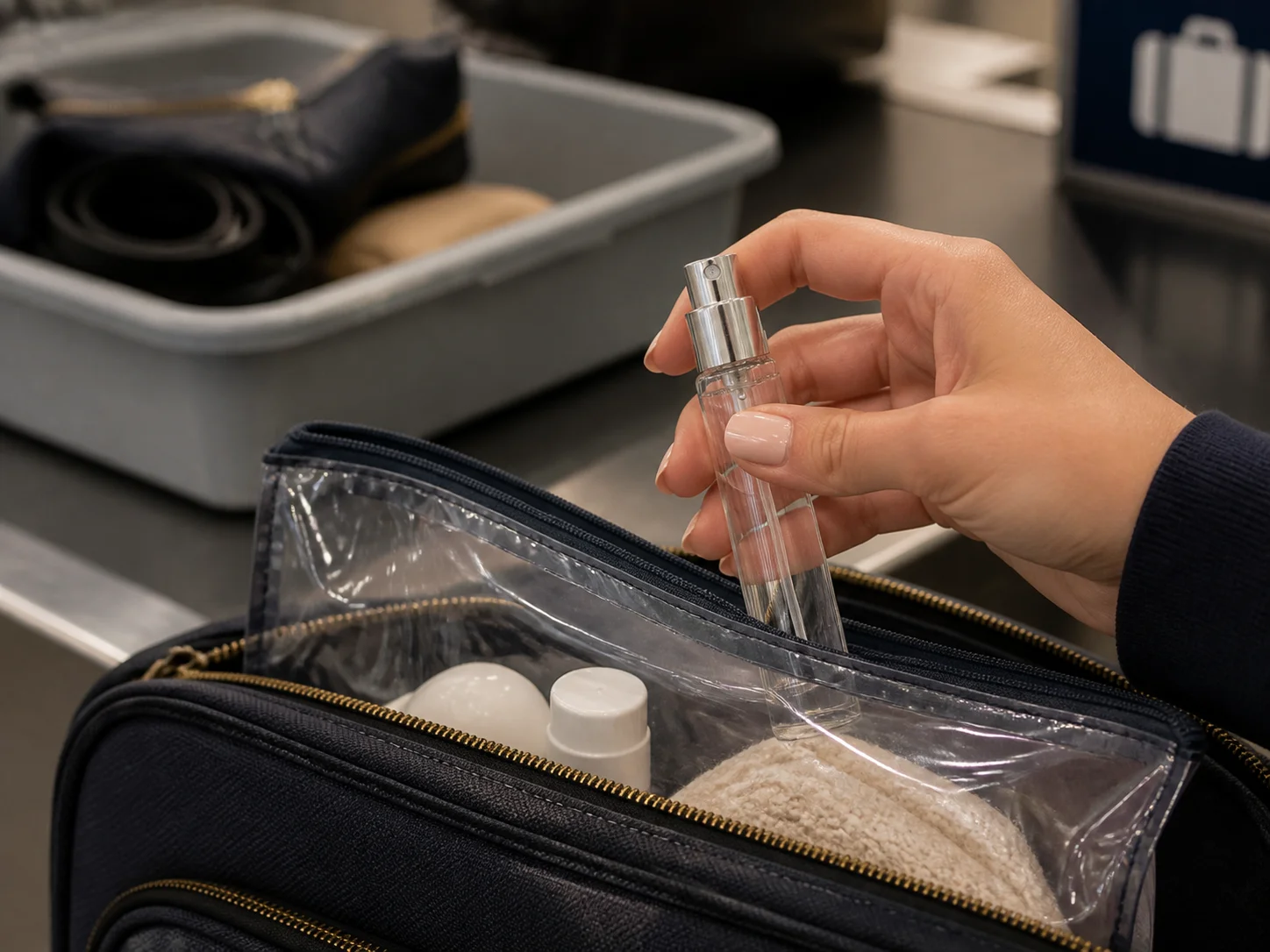
A travel fragrance spends its life horizontal, pressed against other objects, in temperatures that swing from a cold hold to a hot car. Its size is constrained by cabin liquid rules, its actuator will be pressed by whatever else is in the bag, and any leak reaches things the customer values more than the perfume.
Cabin liquid rules set the ceiling
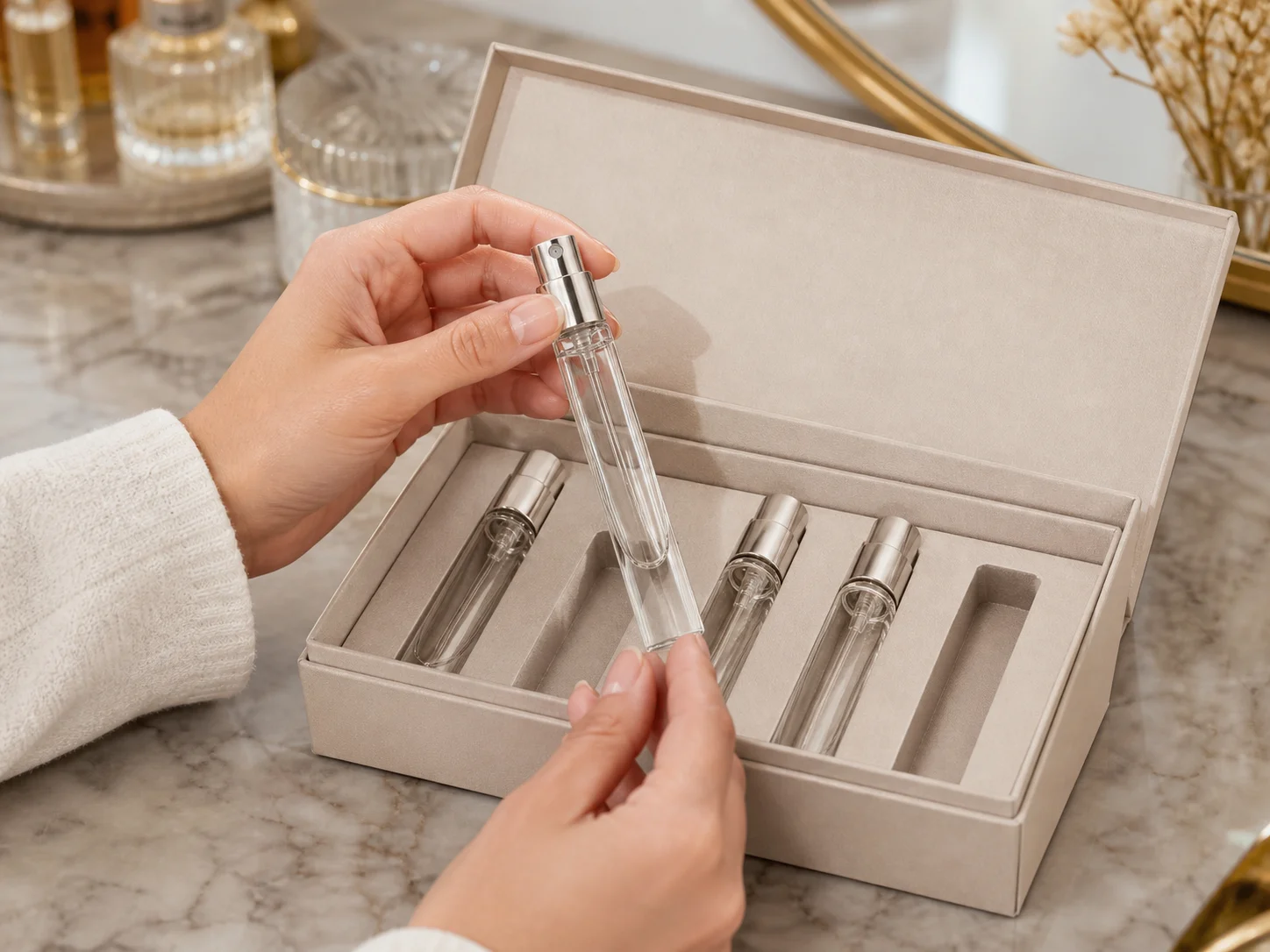
Travel fragrances are sized well under the hand-baggage liquid allowance, which in most jurisdictions caps individual containers at 100 mL. Sizes of 10 to 30 mL are typical, both to sit comfortably inside that rule and because a travel bottle is a supplementary purchase rather than a primary one.
It is carried in every orientation
A dressing-table bottle stands upright; a travel bottle lies on its side, upside down, and wedged against a book. Leak testing therefore has to cover all orientations at elevated temperature, since a fragrance that seeps into a bag lining creates a complaint about far more than the lost juice.
Accidental actuation is the characteristic failure
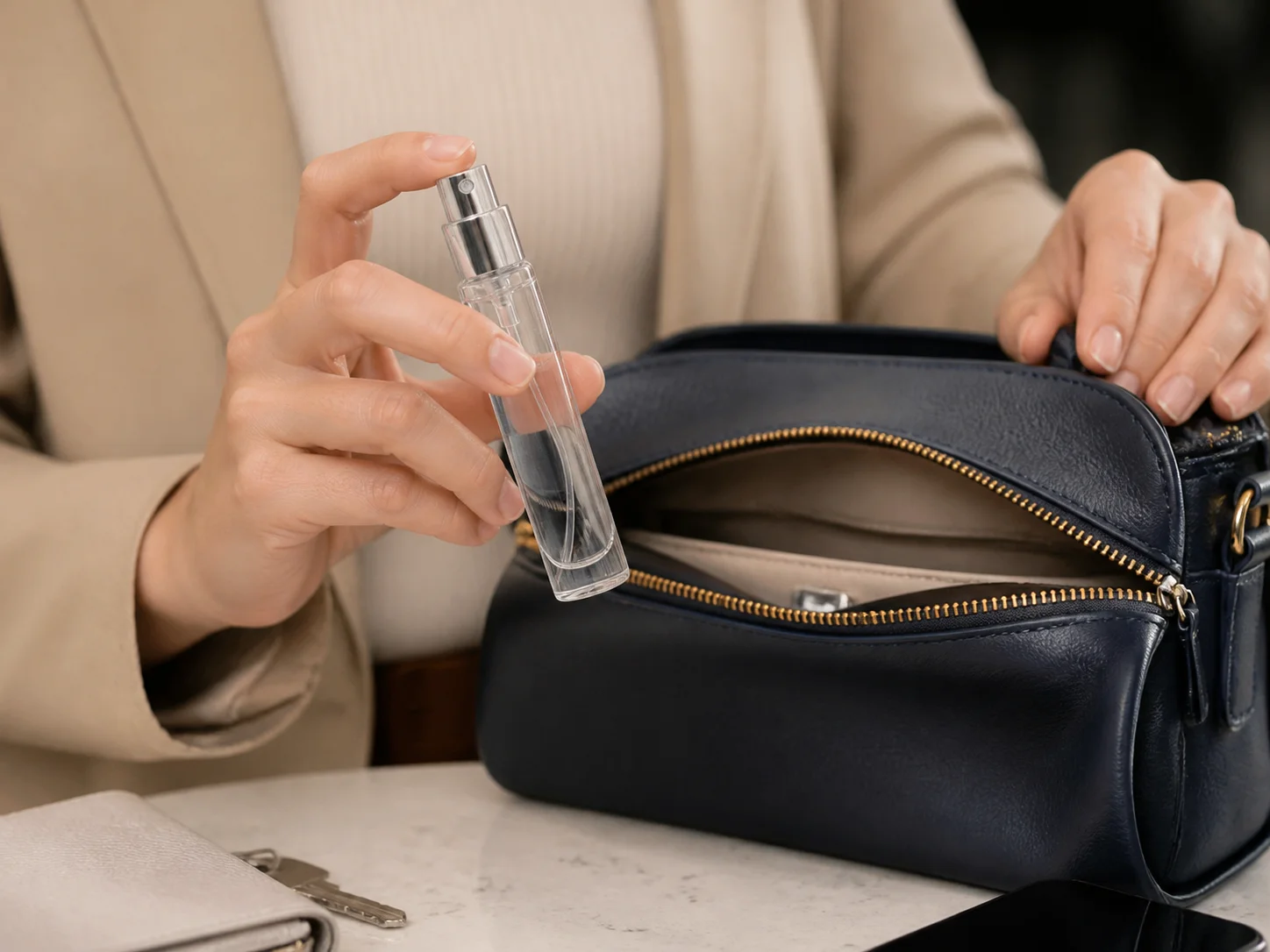
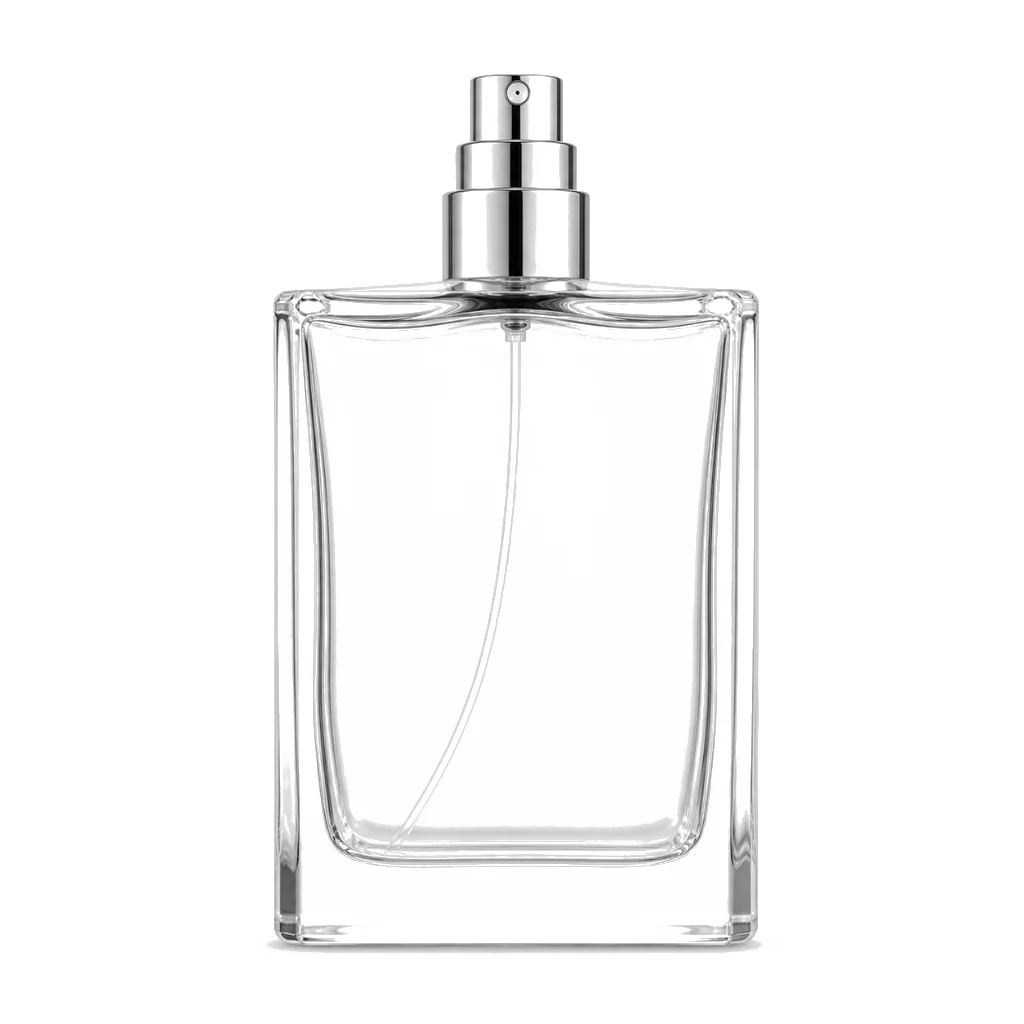
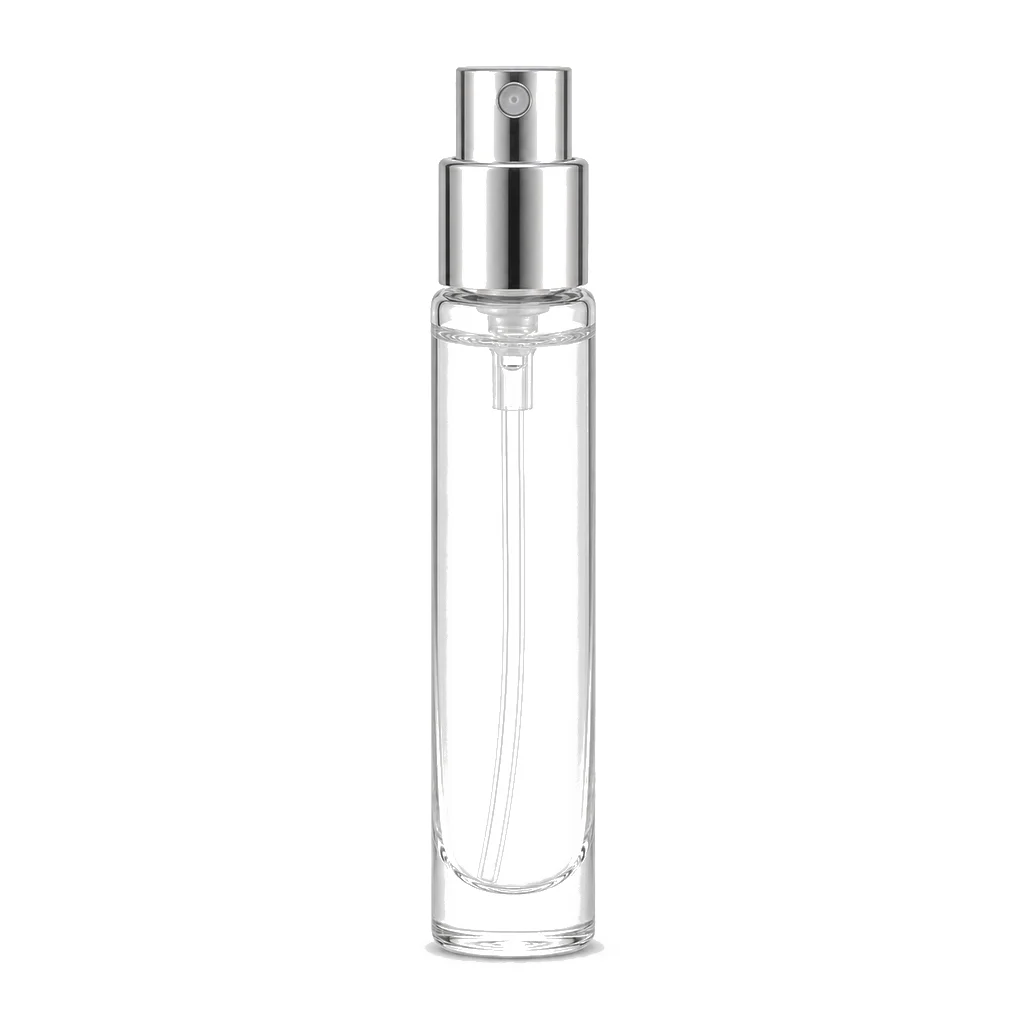
An unprotected atomizer in a bag presses against keys and cases and empties itself. A firmly retained cap or a lock-down actuator prevents it, and on a travel format one of the two is not optional. It is the most common reason a travel fragrance generates a complaint, and it is entirely preventable at specification.
Temperature swings are wider than at home
A bag goes from an aircraft hold to a sunlit car within hours, and alcohol-based fragrance expands and builds pressure through that. Closure and crimp specification are chosen against that range rather than against room conditions, which is a tighter requirement than a full-size bottle on a dressing table ever faces.
Refillable travel bottles are a different product
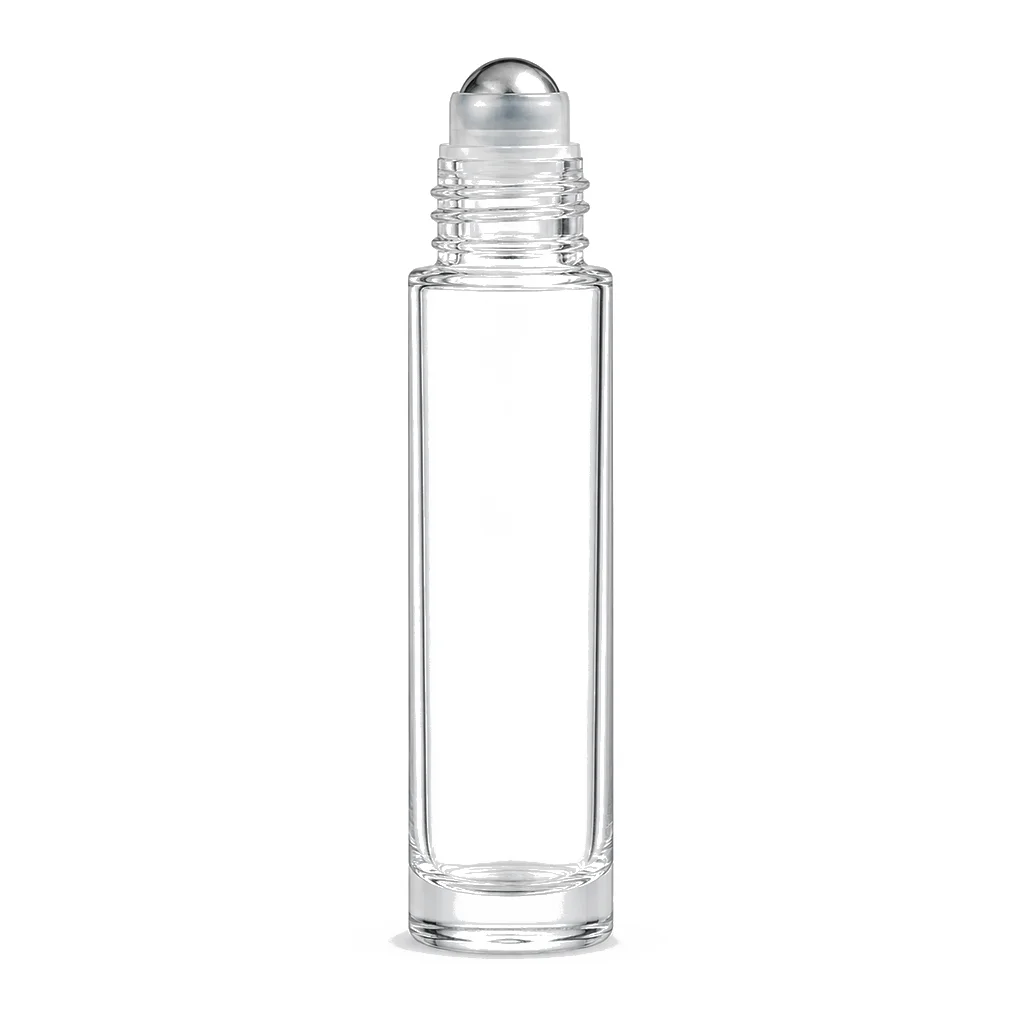
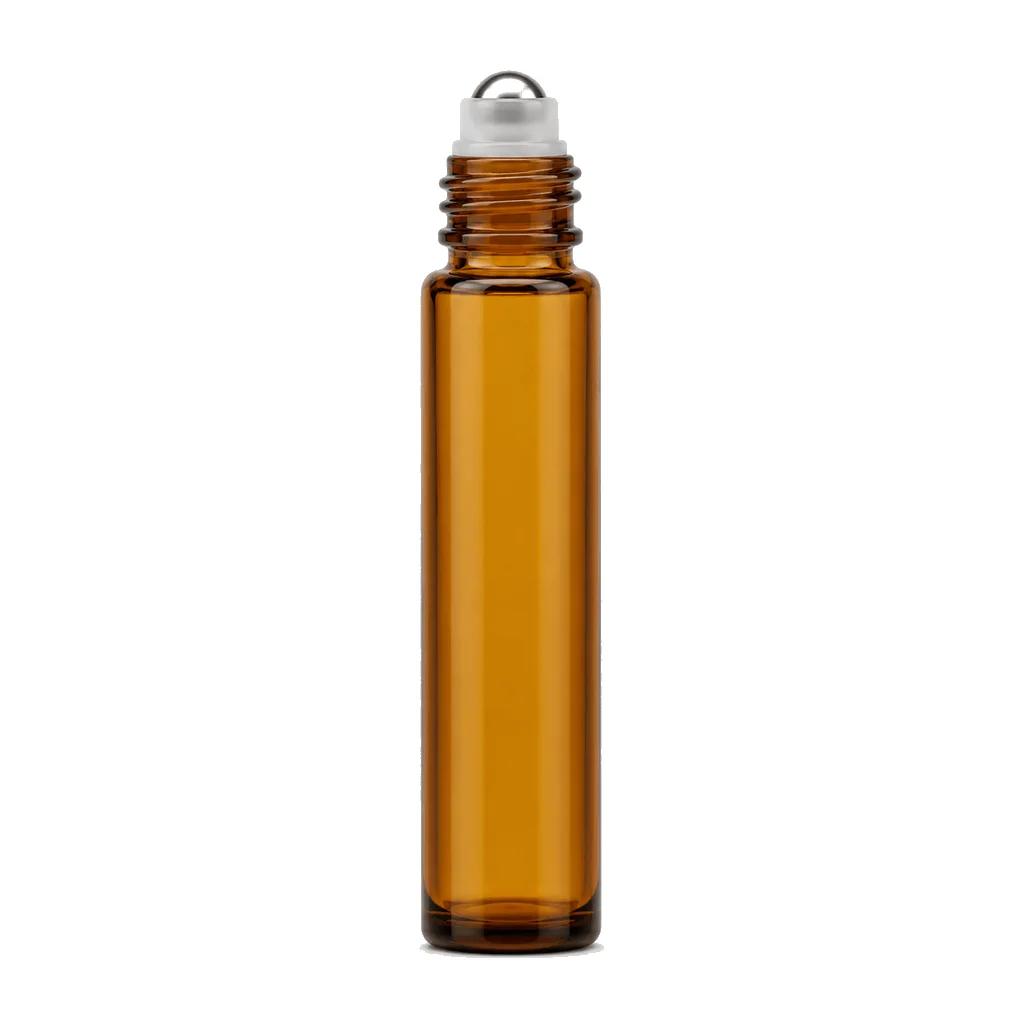
Some travel formats are sold empty for the customer to fill from a full-size bottle, which introduces a filling interface, a valve or funnel arrangement and the risk of decanting spills. That is a distinct product from a sealed, pre-filled travel spray, and conflating the two in a brief leads to a pack that does neither well.
Cabin pressure changes push liquid out past a sprayer
Reduced pressure in a hold or a cabin makes a partly full bottle vent through the pump, which is why fragrance arrives having leaked into a bag. A locking actuator or an overcap that restrains the button is the practical defense, and it is what the format is bought for.