Cooking use, stout geometry & flavor communication
Why the 16 oz stout format works for barbecue sauce.
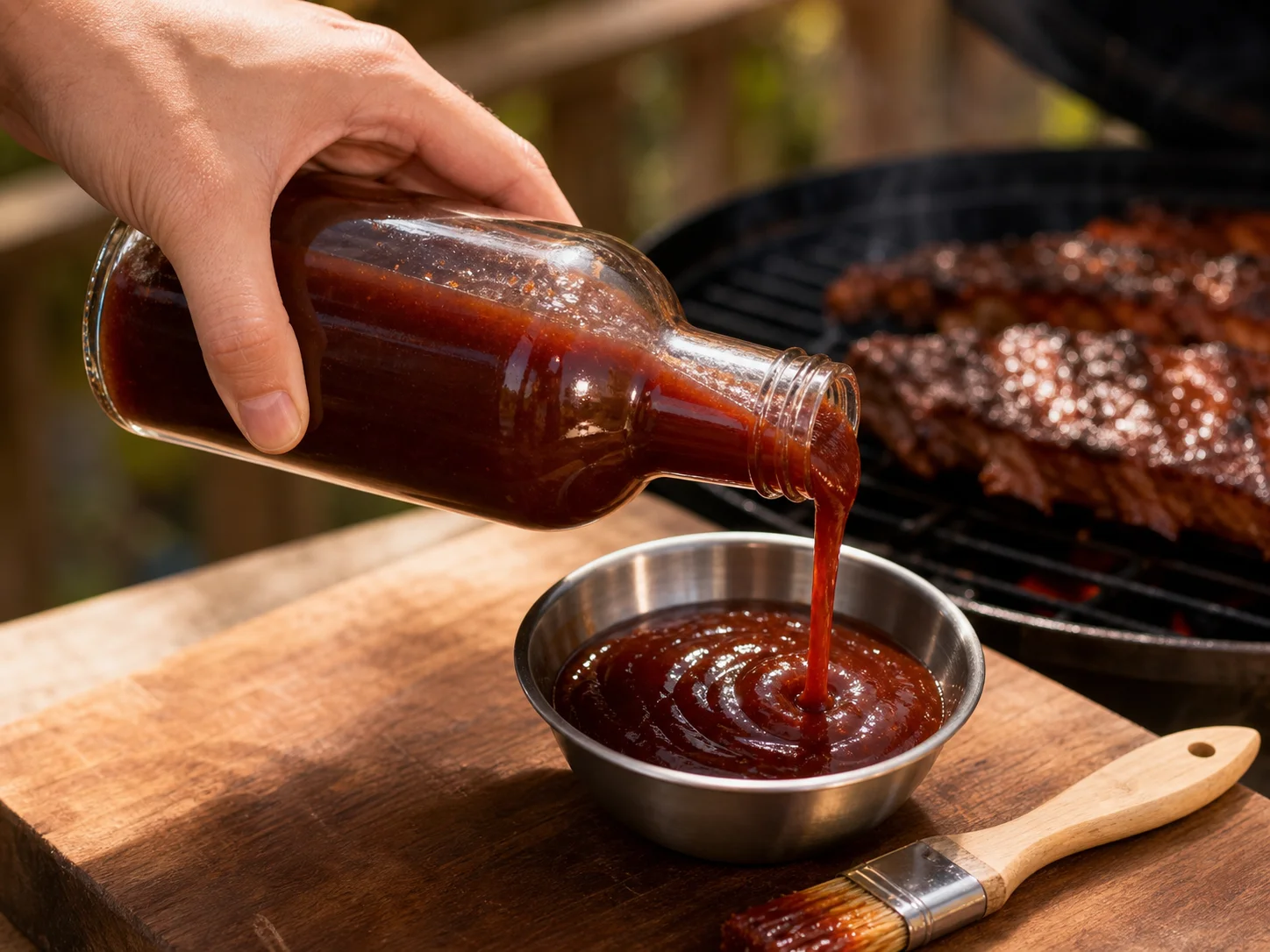
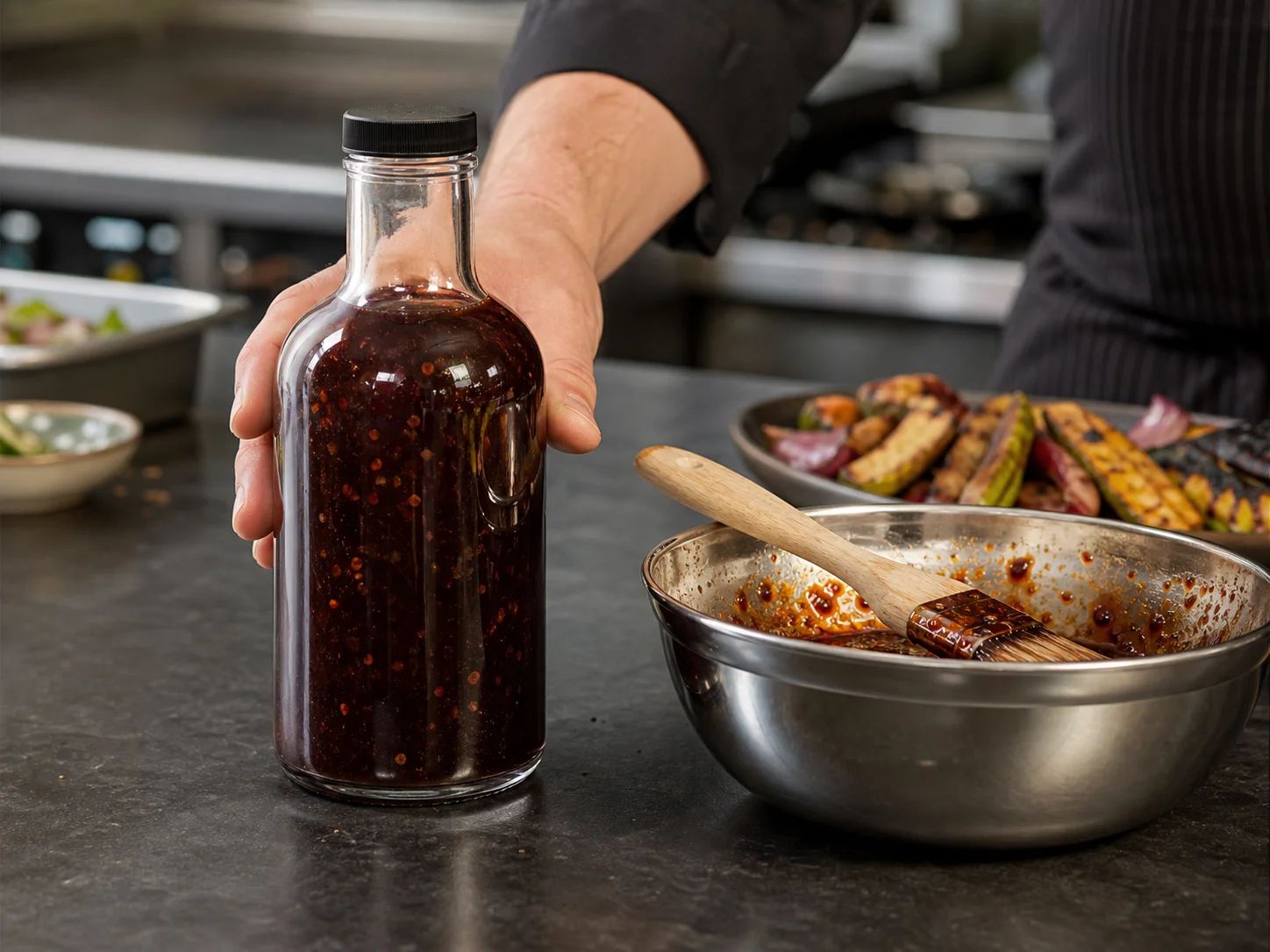
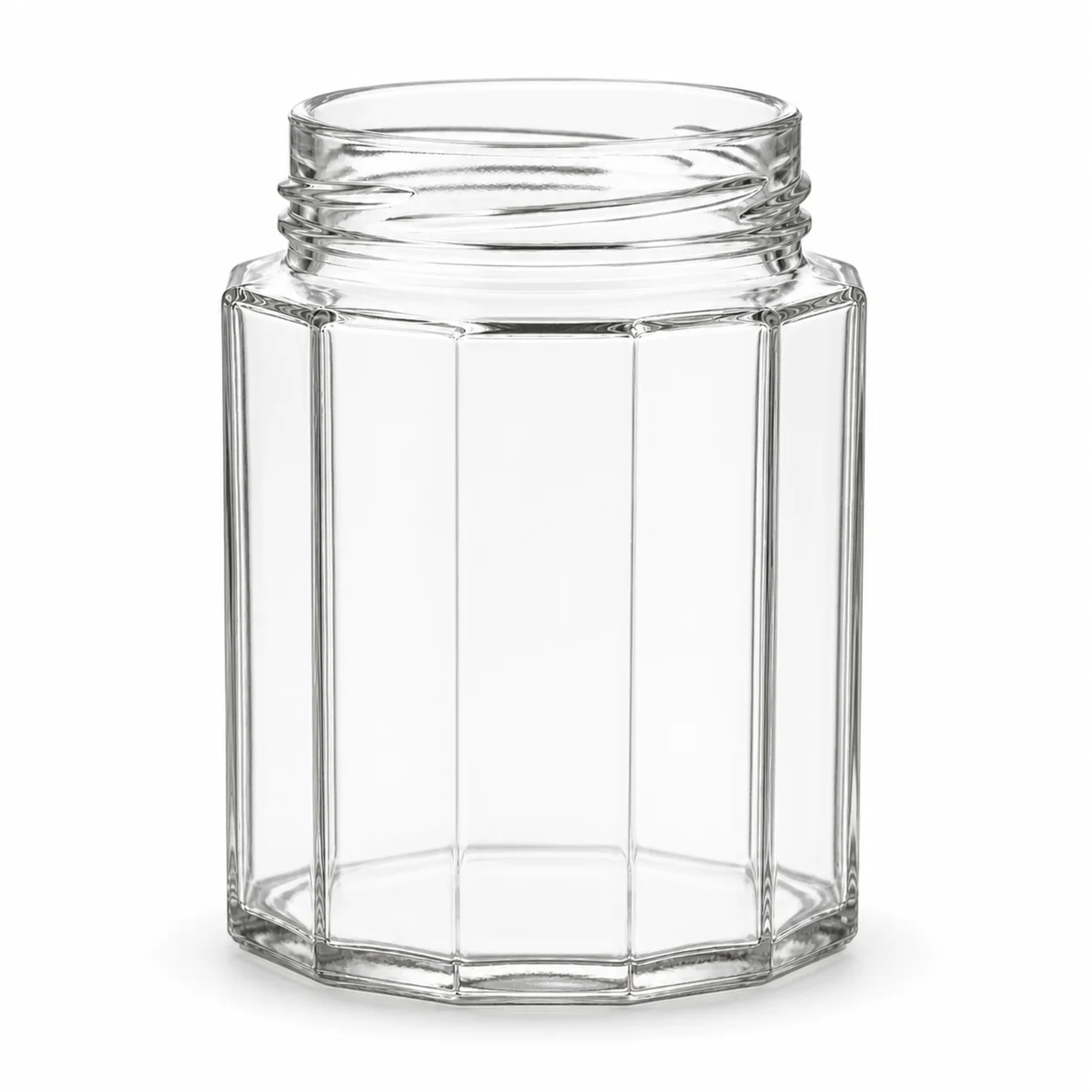
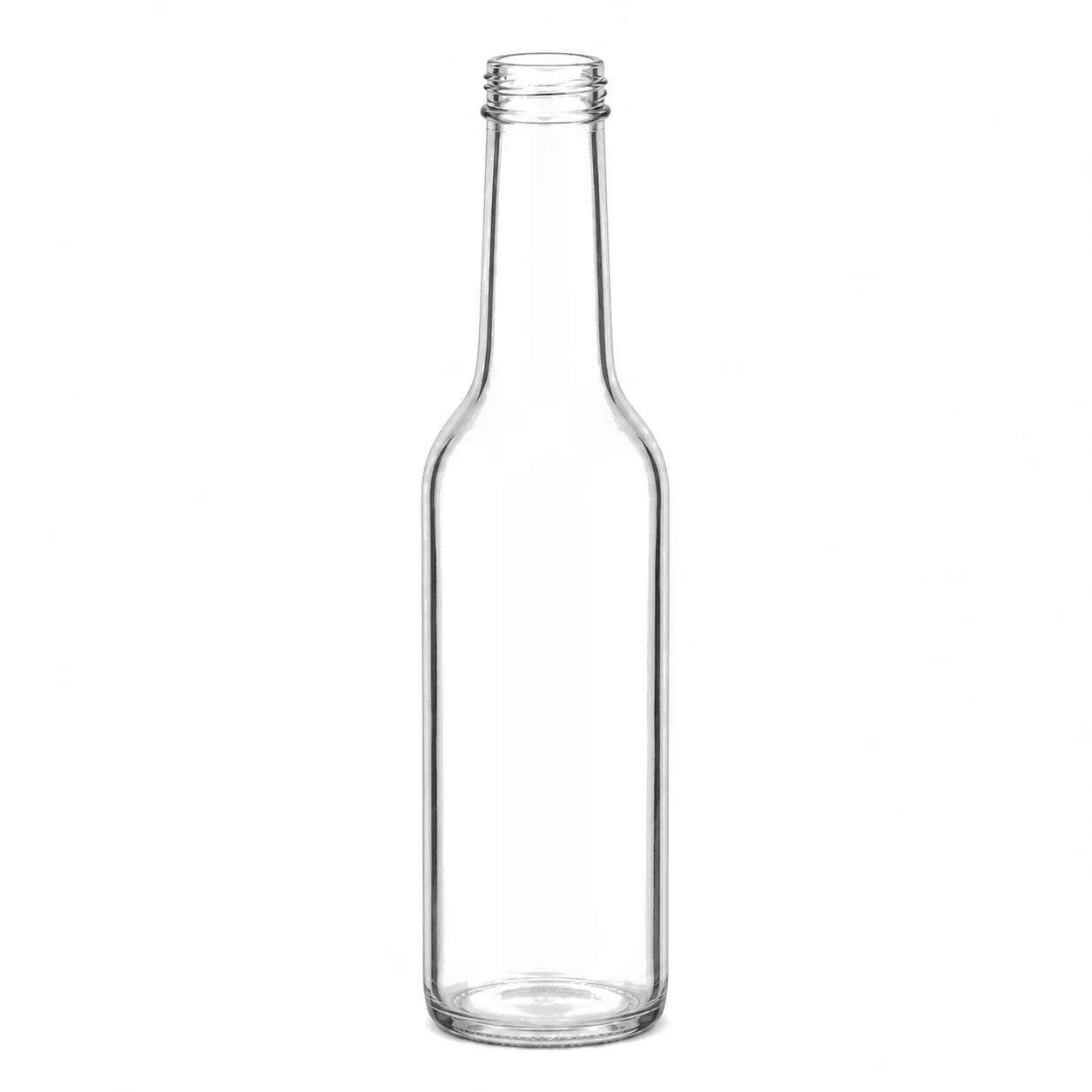
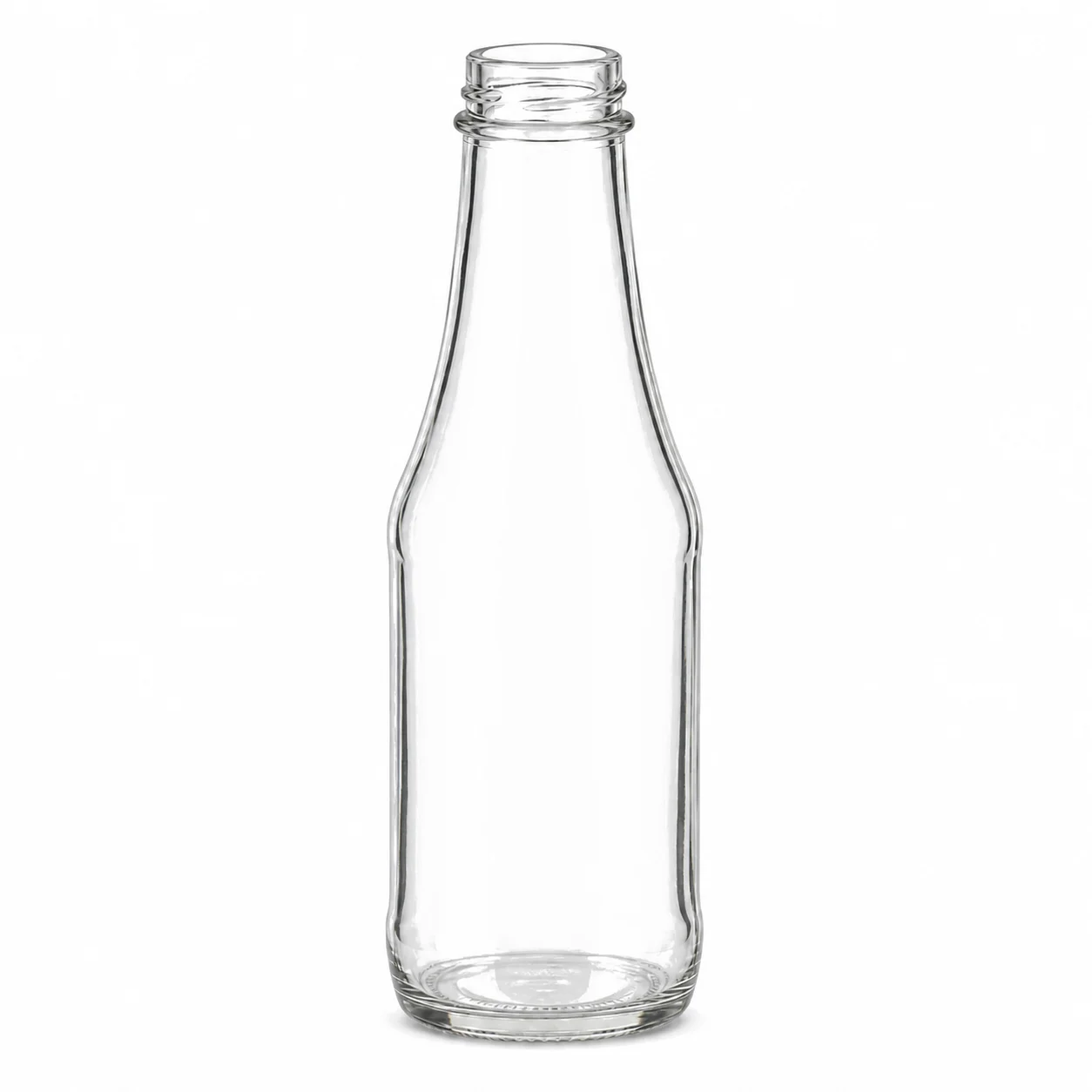
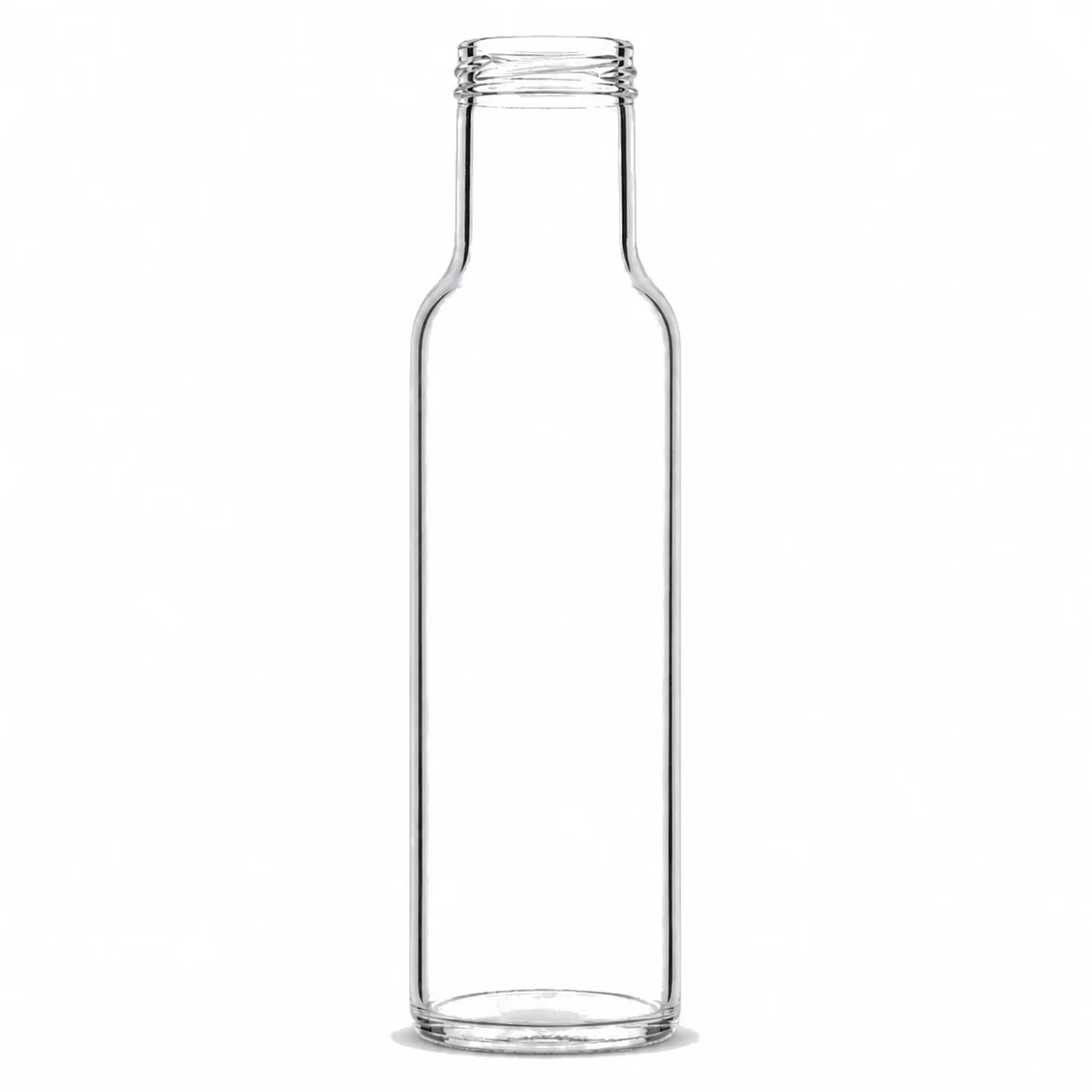
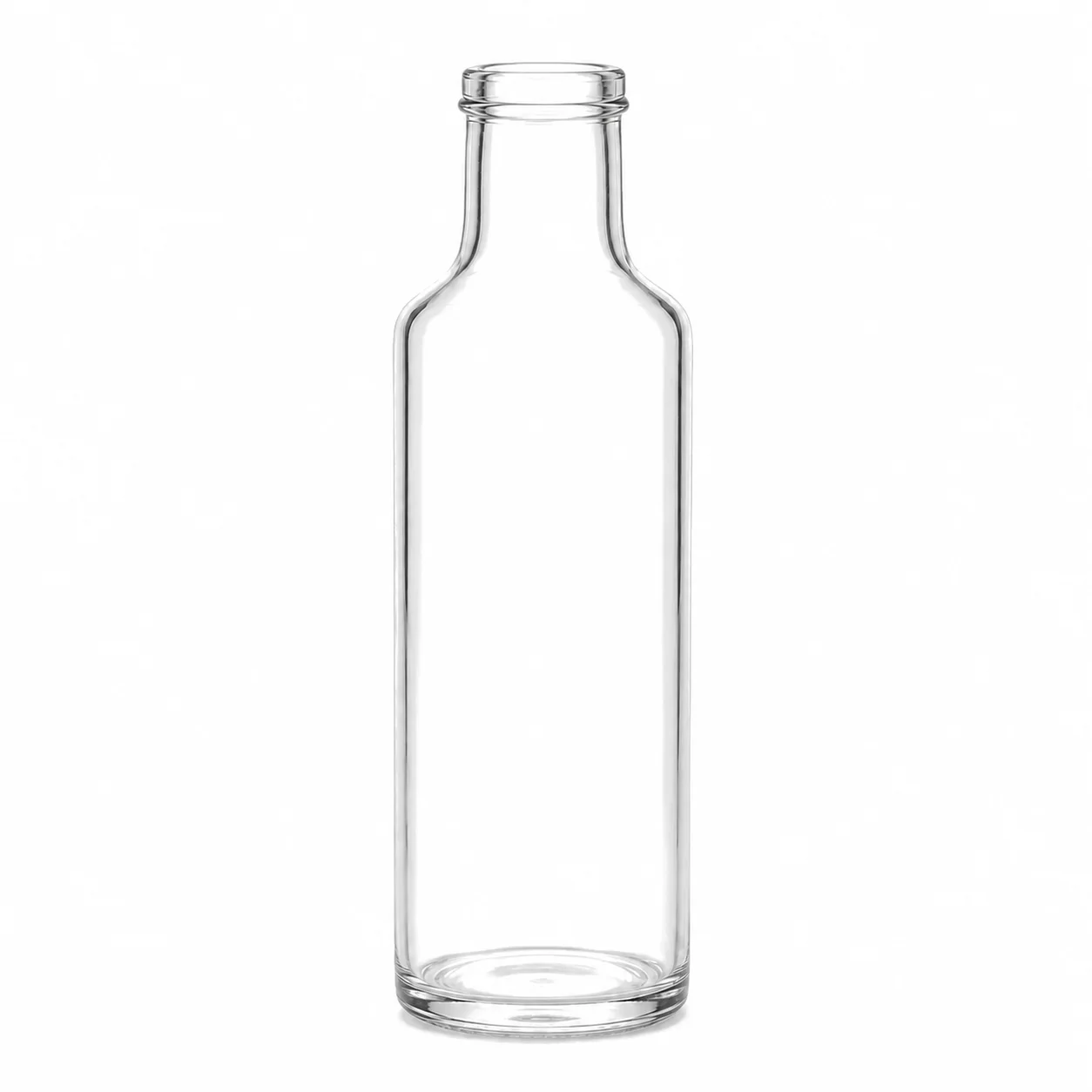
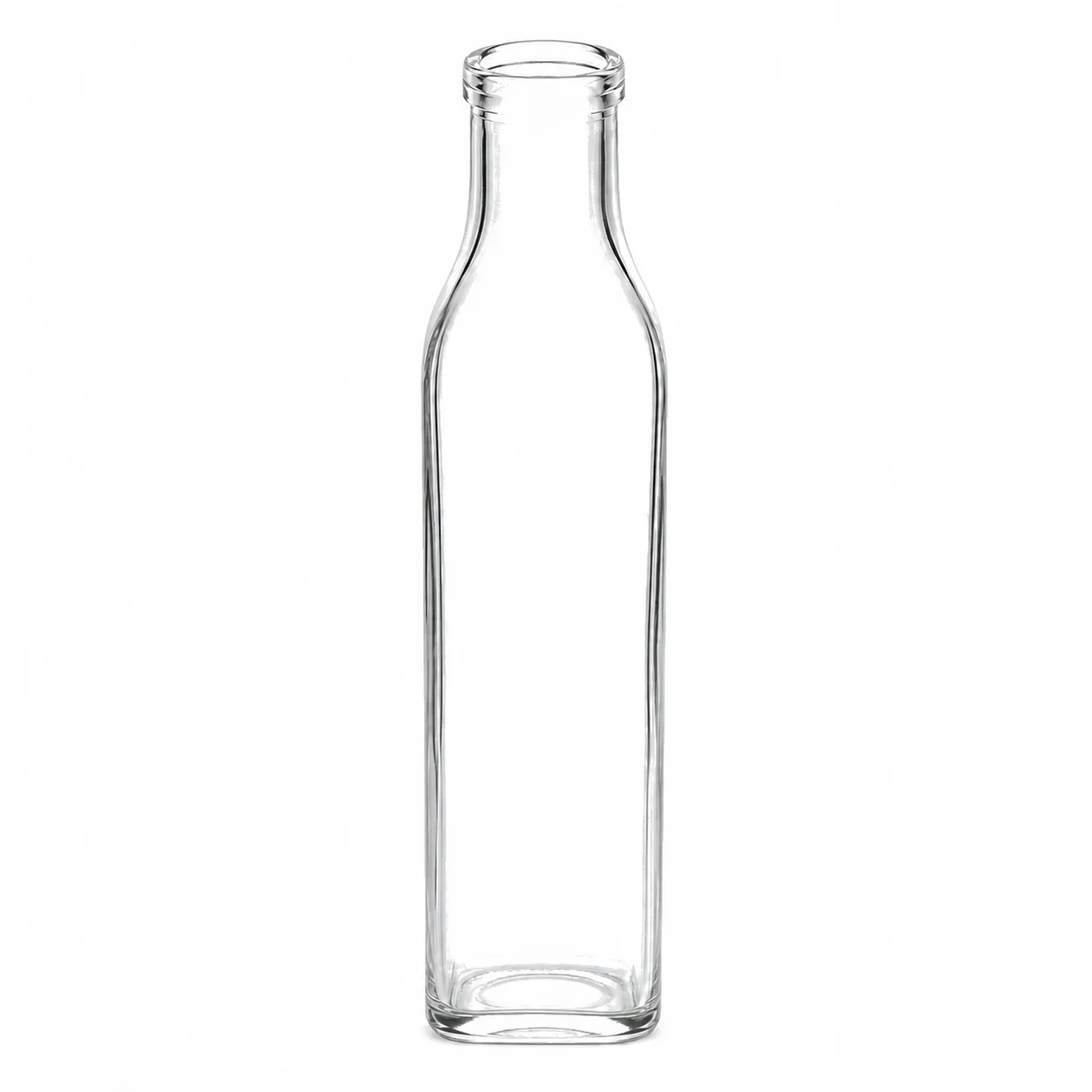
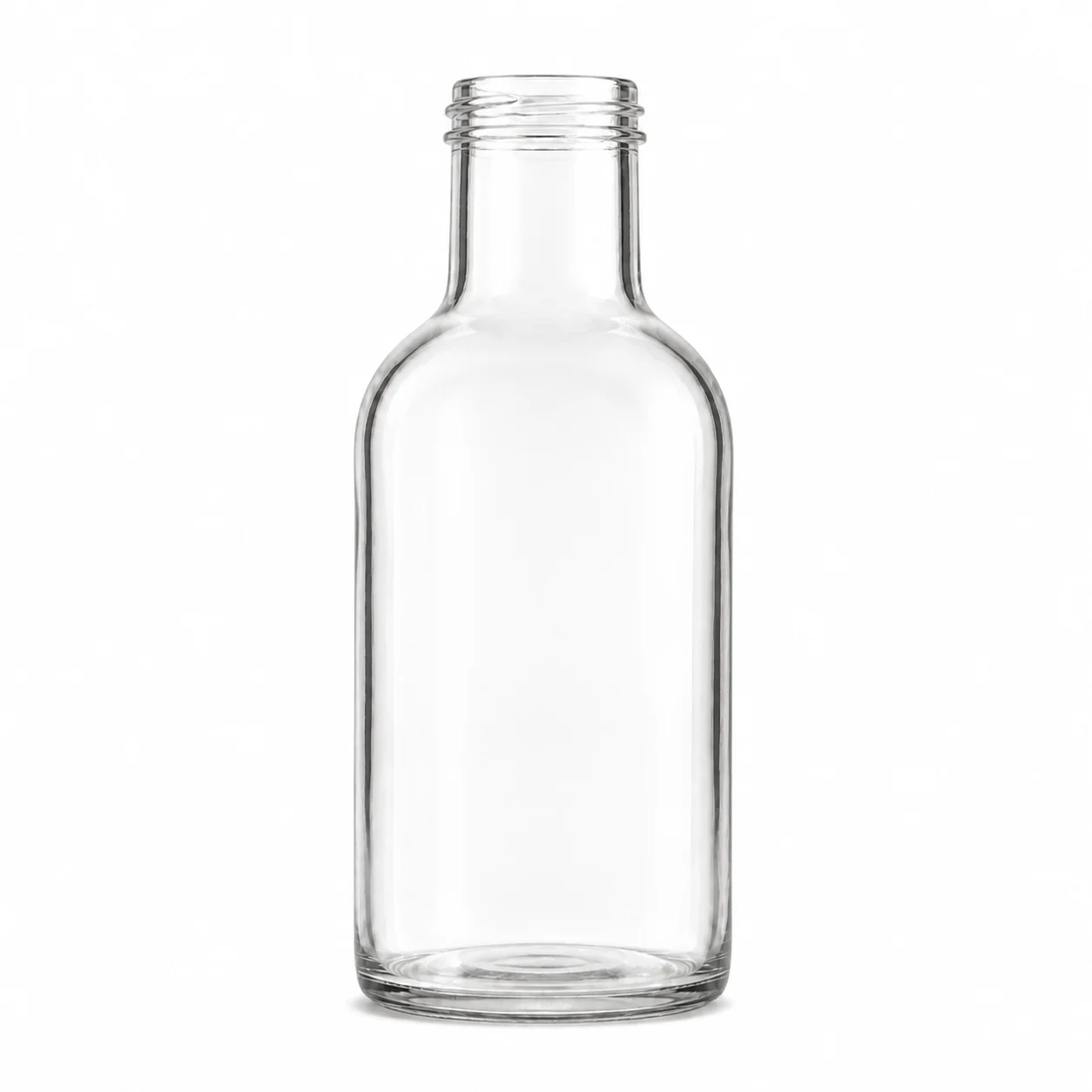
BGP-FS-3029 is based on the 16 oz stout sauce bottle, a format shorter and wider than the ring-neck ketchup bottle. Its 38-400 mouth supports dense pourable recipes, while the rounded shoulder and large body suit sauces handled beside a grill, prep bench or family table.
Stout proportions separate it from table ketchup
The 76.2 mm body is visibly fuller than a 12 oz ring-neck bottle, while the overall height remains close to 179 mm. That squat proportion communicates a substantial cooking sauce rather than a small table condiment and gives the filled glass pack a stable base during prep and serving.
Sixteen ounces supports several use moments
A 473 mL format provides enough sauce for marinating, brushing during cooking and serving at the table from one retail pack. It is large enough for repeat use without moving into an oversized foodservice bottle that dominates a household refrigerator or gift set.
The 38 mm finish accommodates richer flow
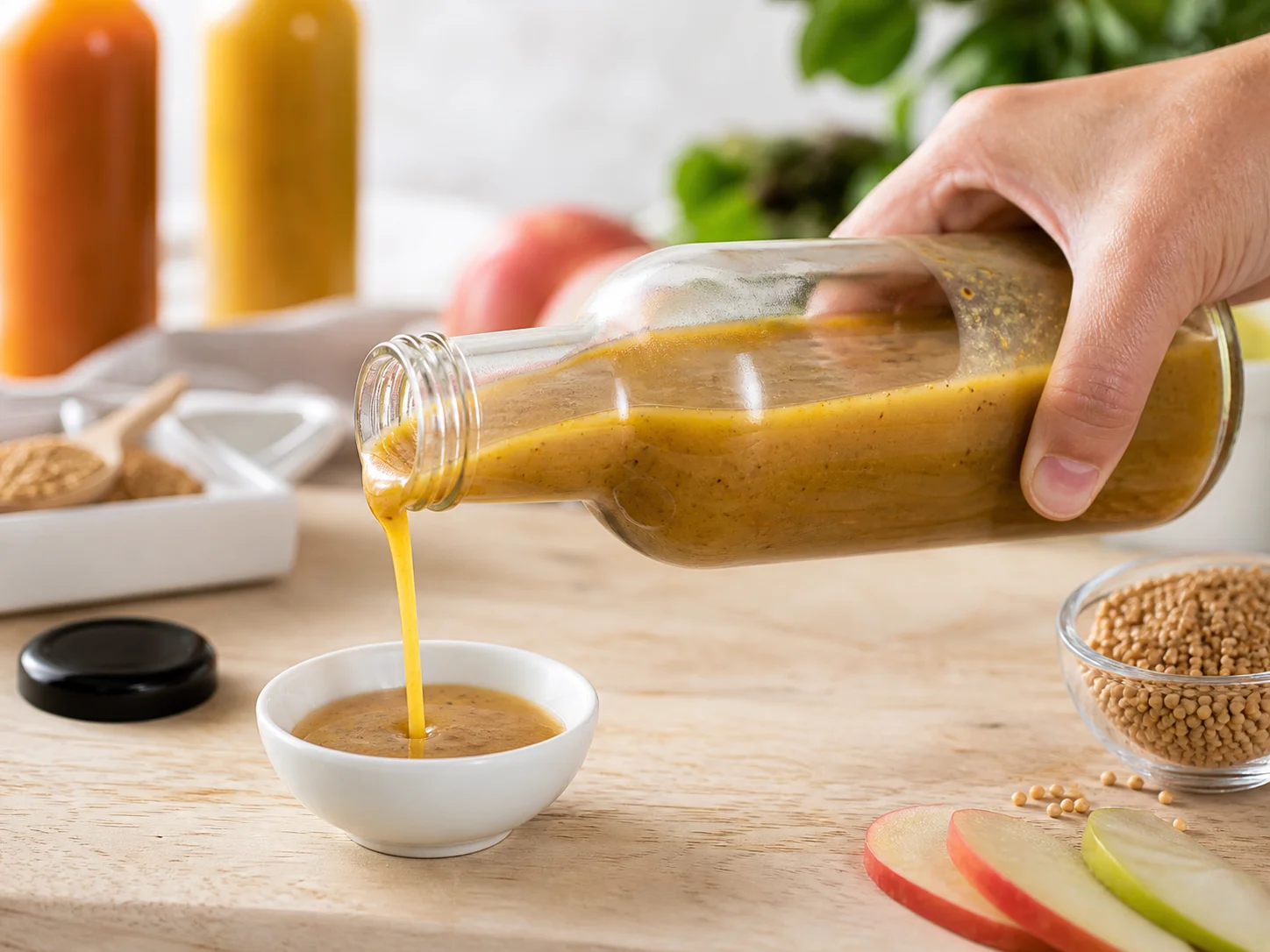
A 38-400 continuous-thread neck gives thick but pourable BBQ sauce more clearance than a narrow hot-sauce bottle. Smooth tomato-molasses recipes, thin vinegar sauces and textured spice blends still move at very different rates through it, and each behaves differently hot on a filling line than cold at a table.
Sugar changes the handling brief
Molasses, honey and reduced fruit can make BBQ sauces cling to the shoulder and dry around the rim. The closure area should be reviewed after repeated pouring and recapping, and label stock should be chosen for the grease, smoke, condensation and sticky drips common around outdoor or kitchen use.
A broad wrap label can tell the cooking story
The reference body provides about 87.9 mm of straight label height and 247.7 mm of circumference. That field can carry flavor profile, heat level, protein pairings and cooking directions in a deliberate sequence instead of compressing the information onto a small front panel.
Wide bottles need the right case pattern
Only twelve bottles occupy a relatively large carton footprint, and 180 cases make the published pallet. Partitions should prevent shoulder and label contact, while case strength must account for a reference empty-glass weight around 305 g before sauce and closure are added.