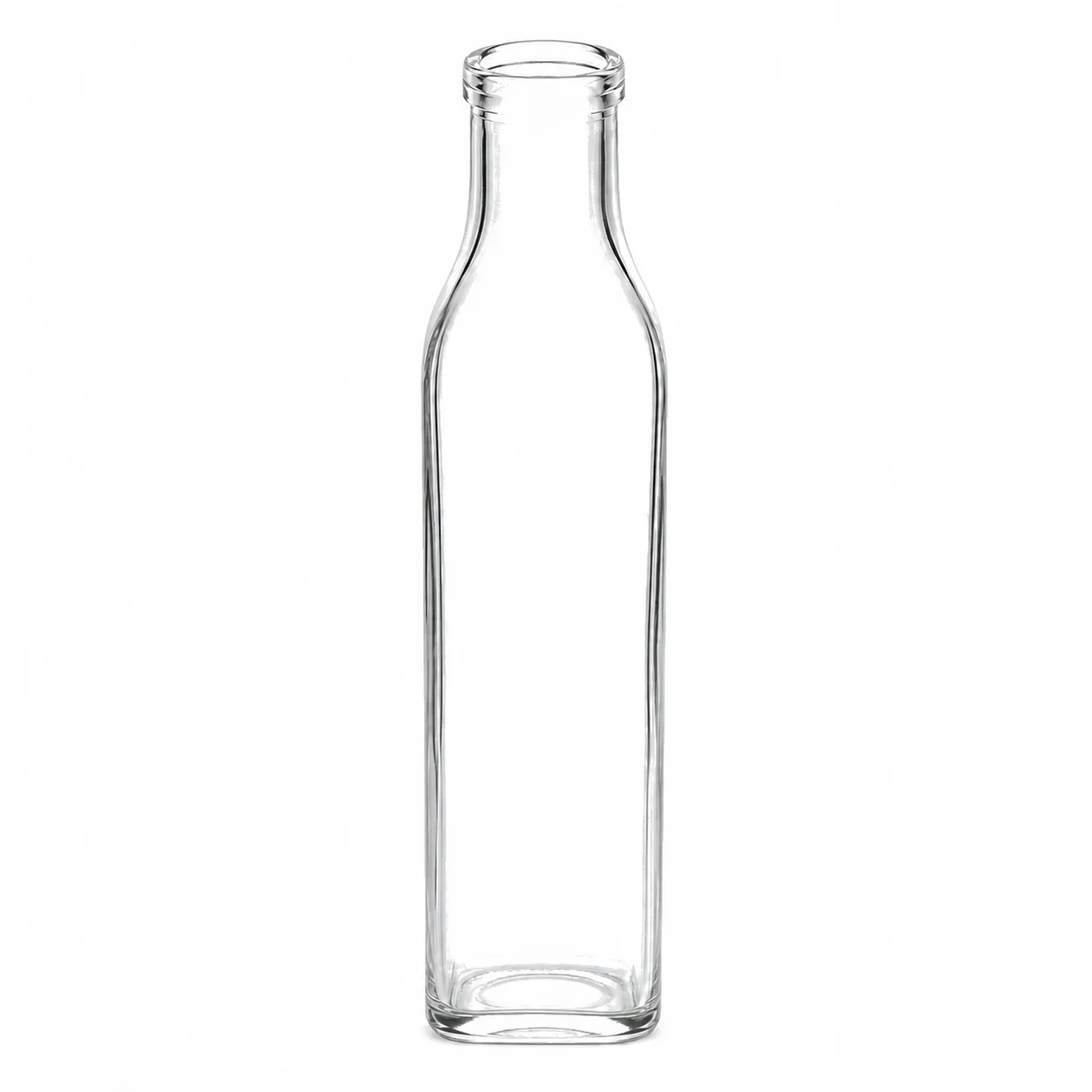
Pour rate, acidic product & culinary presentation
What makes a quarter-liter vinegar bottle work at the table and stove.
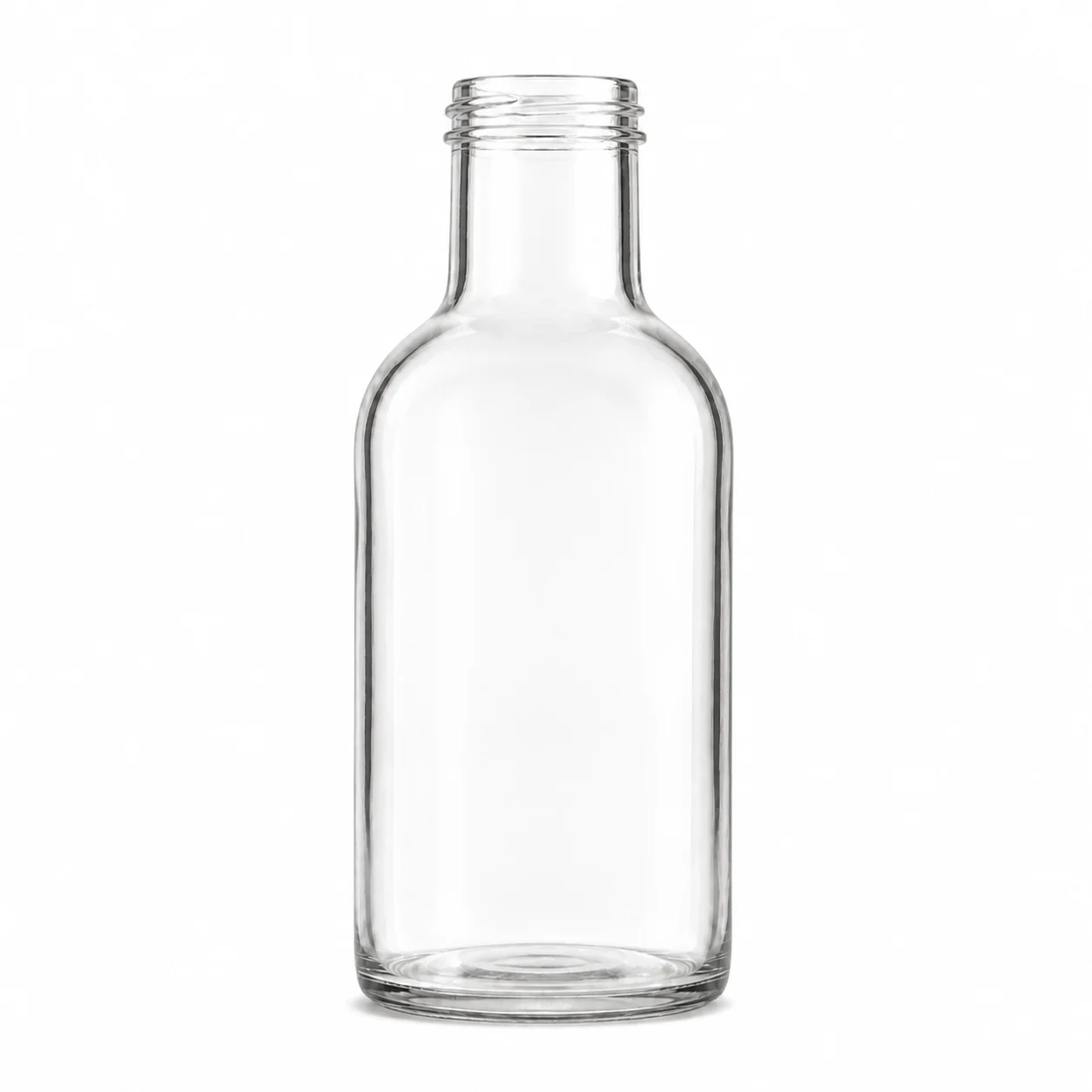
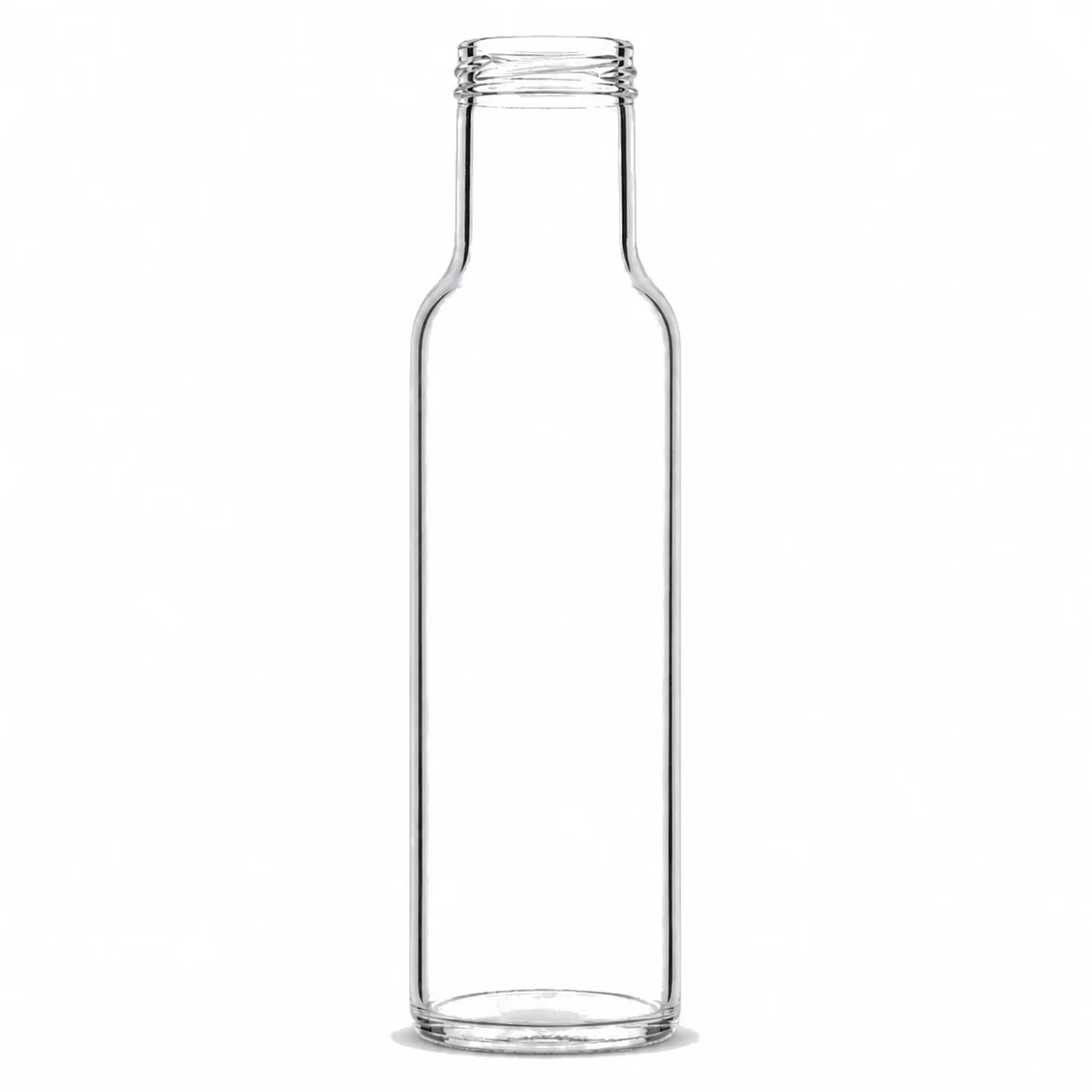
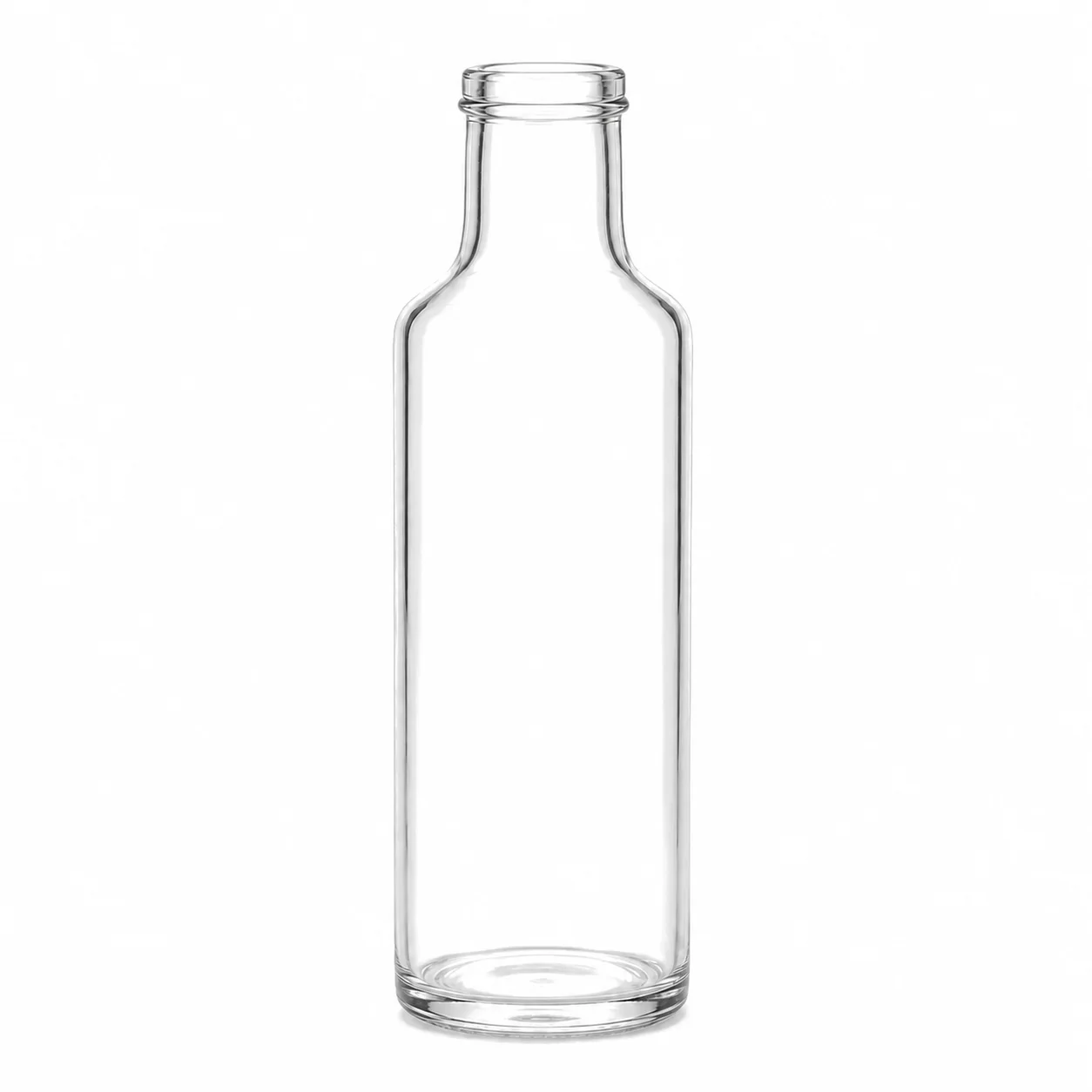
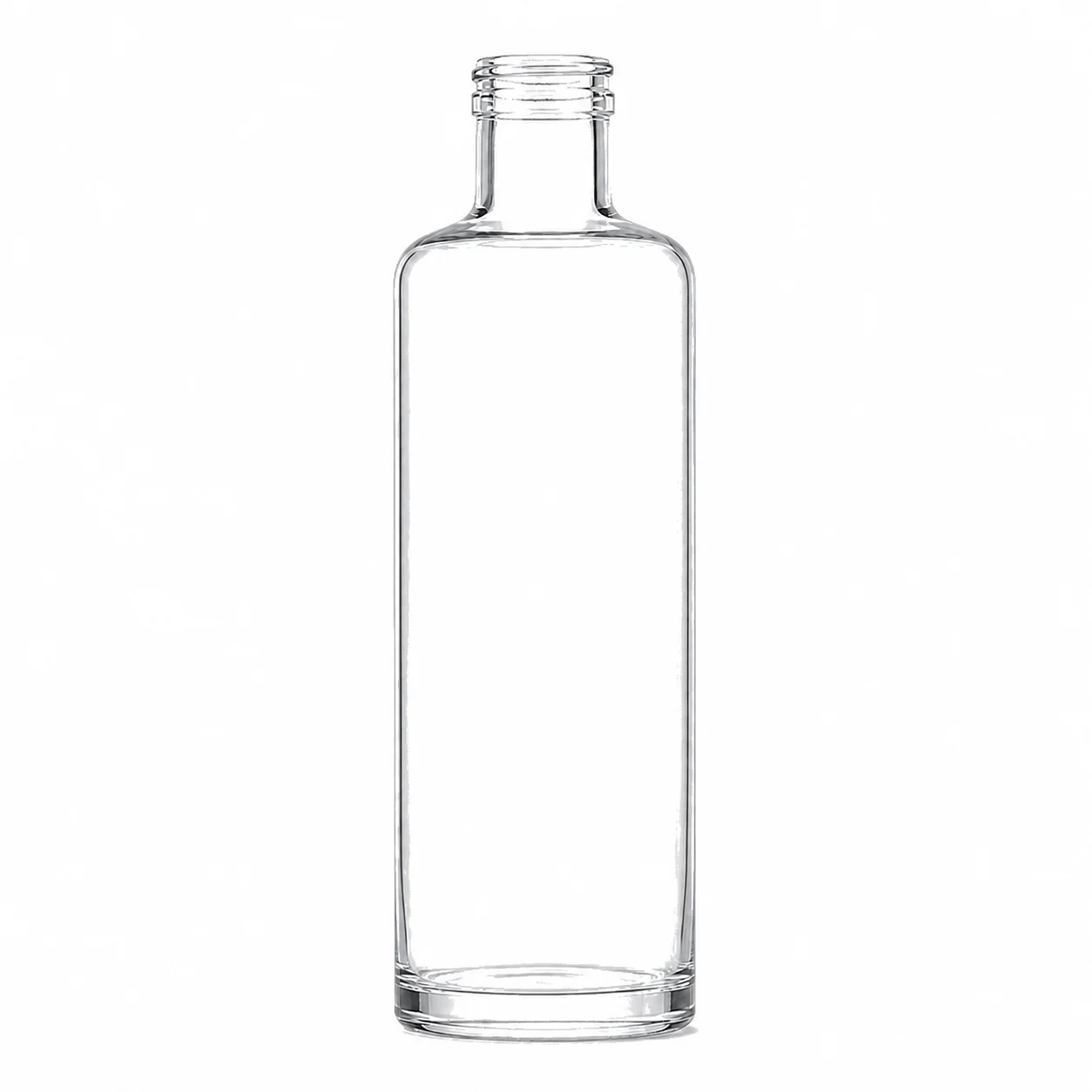
BGP-FS-4427 works to the 250 mL oil-and-vinegar envelope: a 168.8 mm clear round body, 53 mm across, 160 g empty, with a PP35 finish. The compact size suits finishing and recipe use, while the closure and any pour insert decide whether the product leaves as a controlled stream or an uncontrolled rush.
A quarter liter suits finishing and recipes
Two hundred and fifty milliliters is substantial enough for dressings, marinades and deglazing, yet compact enough to remain on a dining table. It positions specialty vinegar above a tasting miniature without competing with the heavier 500 mL pantry bottles used for higher-volume cooking.
Thin liquid needs a defined stream
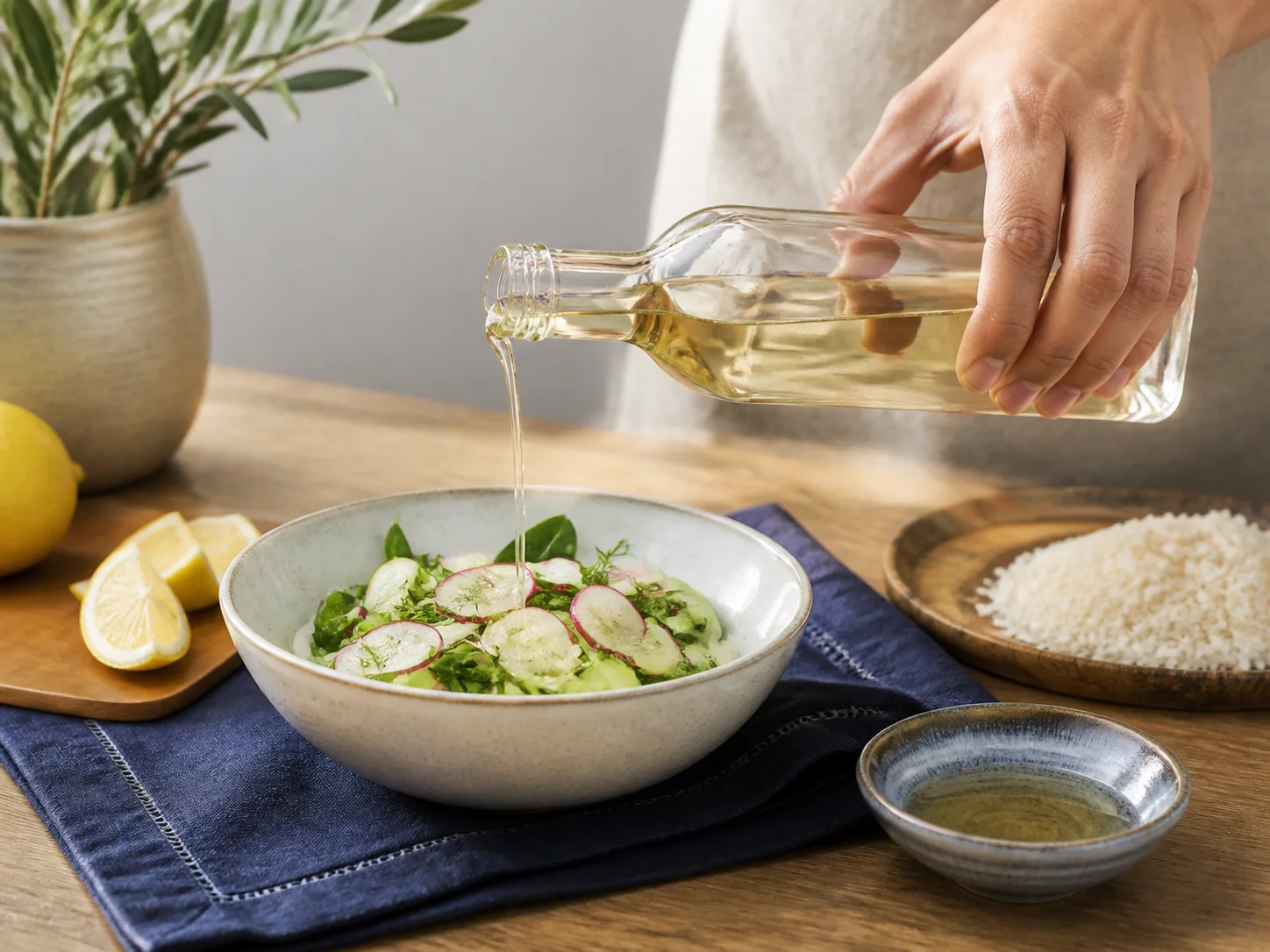
Wine, rice and distilled vinegars can flow much faster than ketchup or dressing. An unrestricted 35 mm neck may deliver more than the user intends, so the selected cap or pour insert should be evaluated for stream width, cut-off and drip return at typical serving angles.
PP35 is a finish specification
The 35 mm pilfer-proof neck is designed around a matched roll-on or screw closure system, commonly with visible first-opening evidence. It should be sourced as PP35 rather than as a generic 35 mm cap, and any dispensing insert must preserve the intended closure engagement.
Acidity moves component choice upstream
The bottle body is glass, but the vinegar also contacts the closure liner and any pourer. Acetic-acid level, flavor additions and filling conditions therefore belong in the component brief before cap material and liner construction are fixed, particularly for products intended for long pantry storage.
Clear glass distinguishes vinegar styles
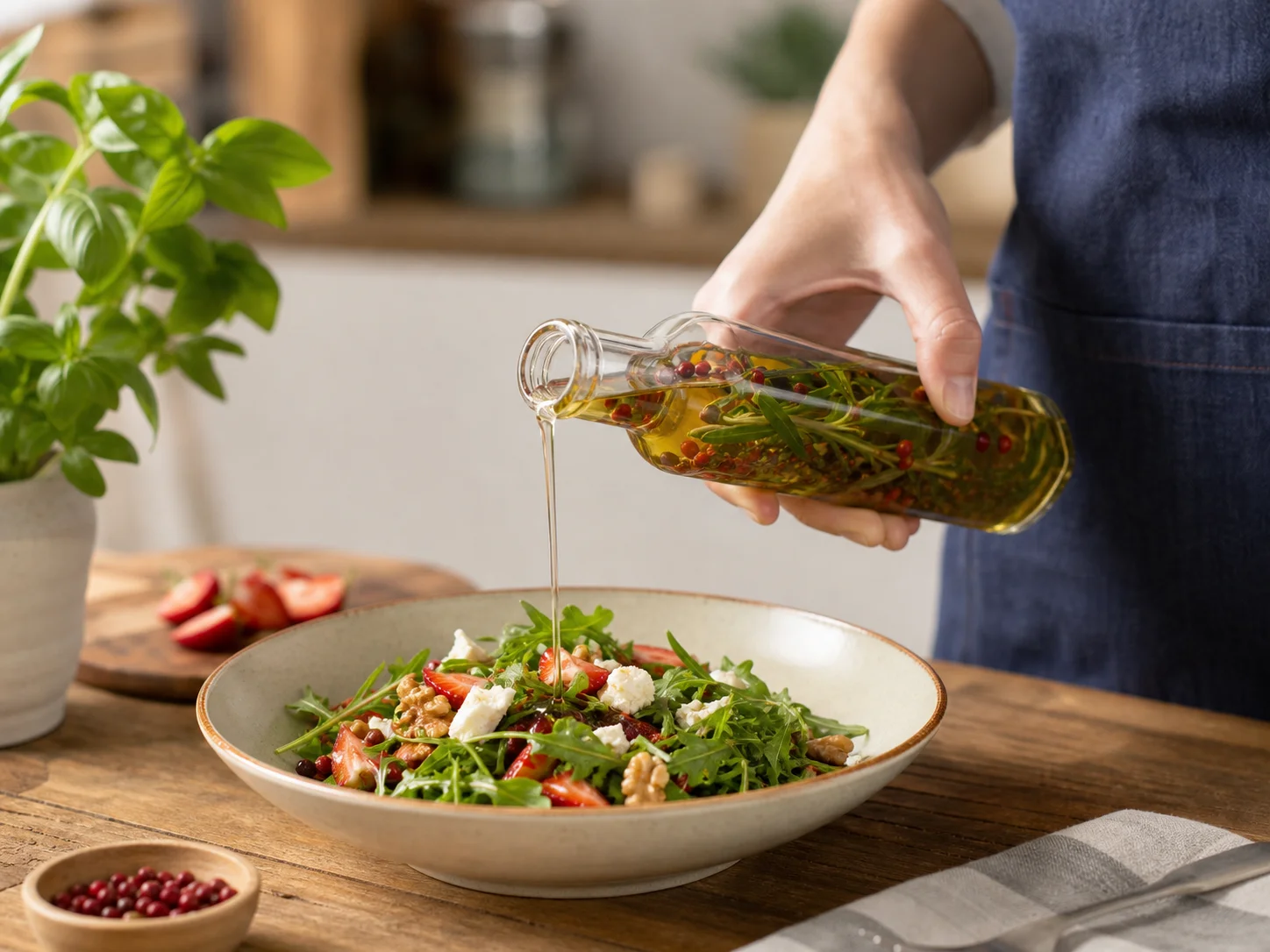
Pale rice vinegar, straw-colored white wine vinegar, amber cider vinegar and berry-infused products create very different shelf impressions. A restrained front-and-back label preserves that color distinction while leaving enough opaque space for origin, acidity and culinary-use information.
A light bottle supports dense pallet counts
At 160 g and 53 mm in diameter this bottle builds an unusually compact footprint, and the published bulk figure for the envelope runs to 4,598 units per pallet. Tall narrow containers at that density still need firm layer separation and neck protection through bulk transport and downstream case packing.