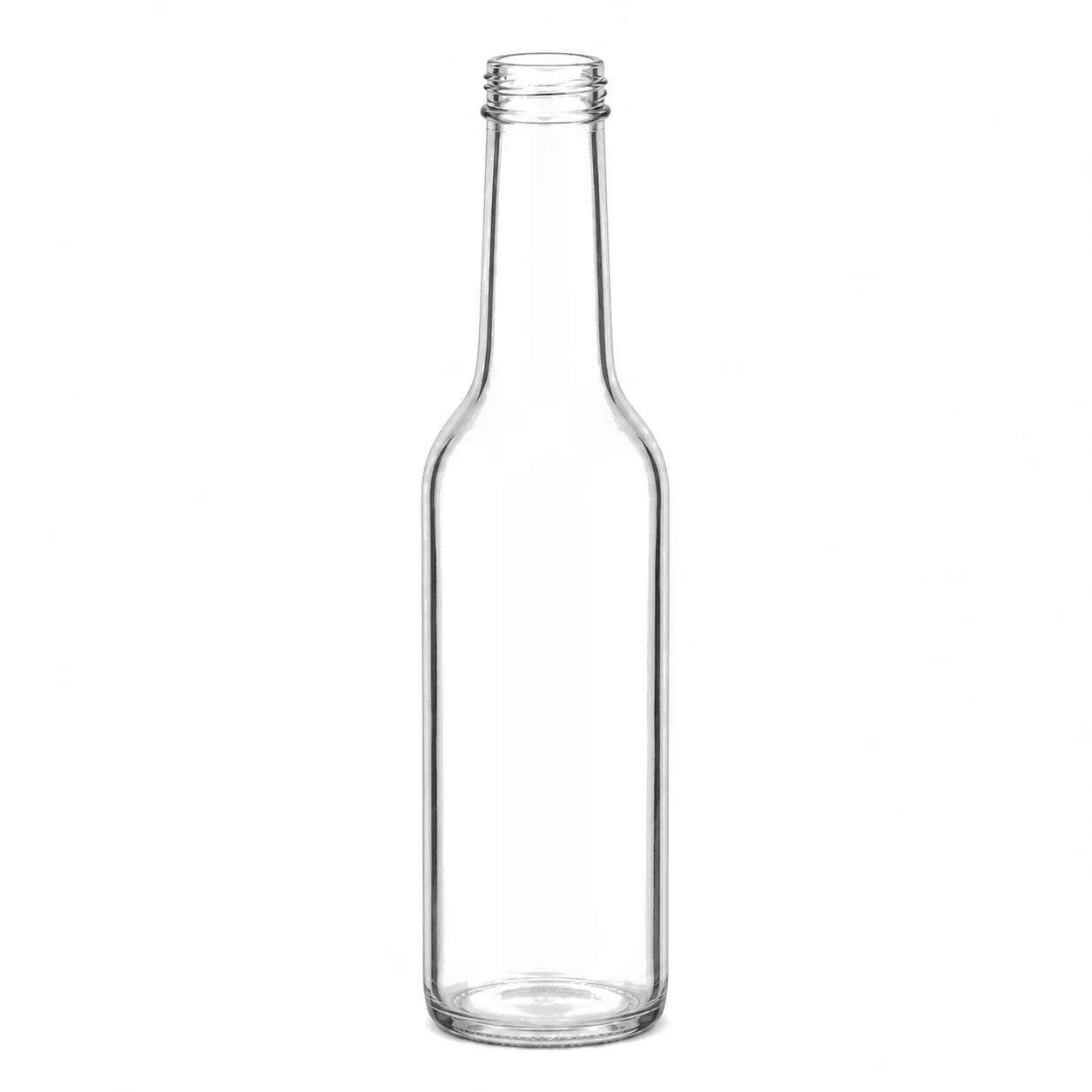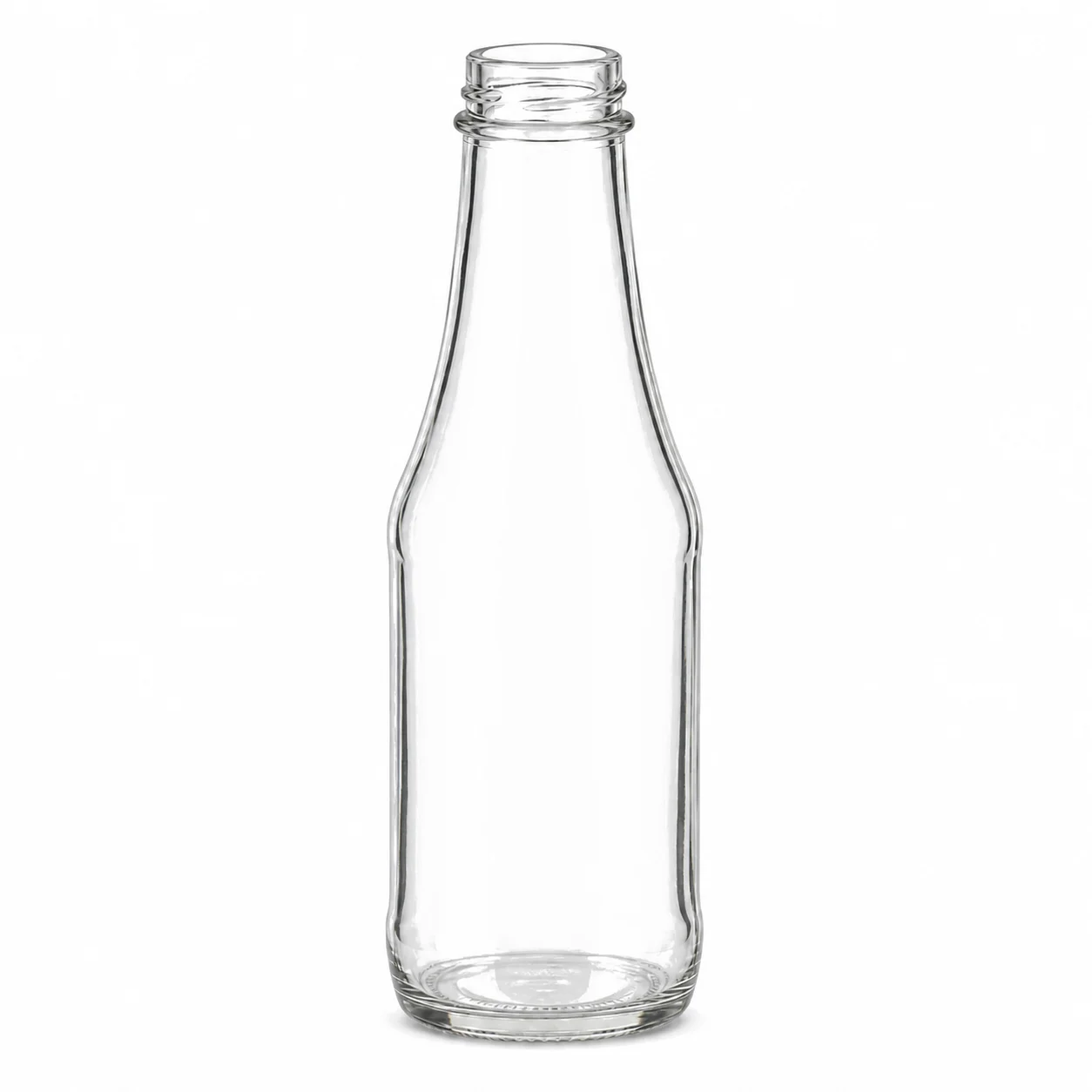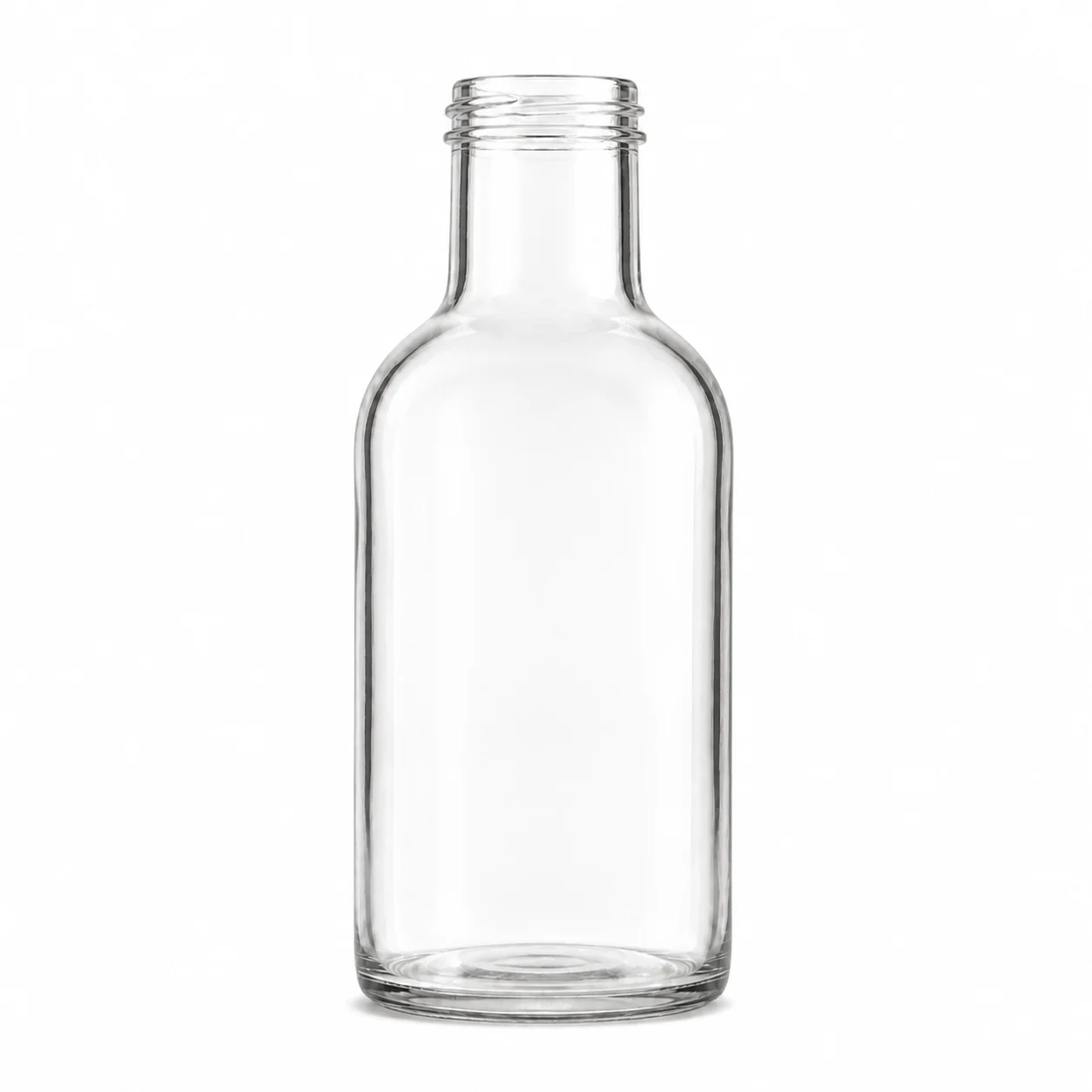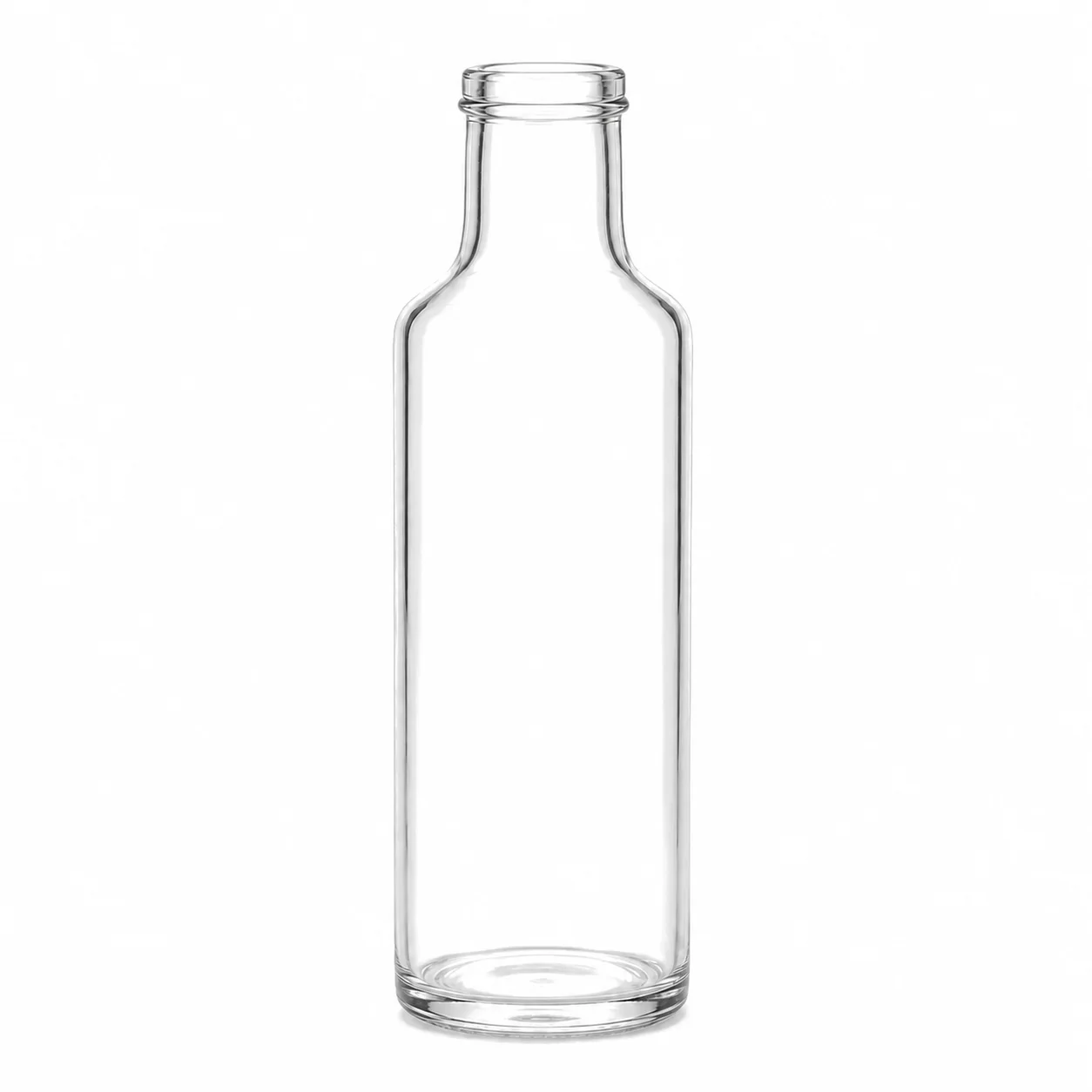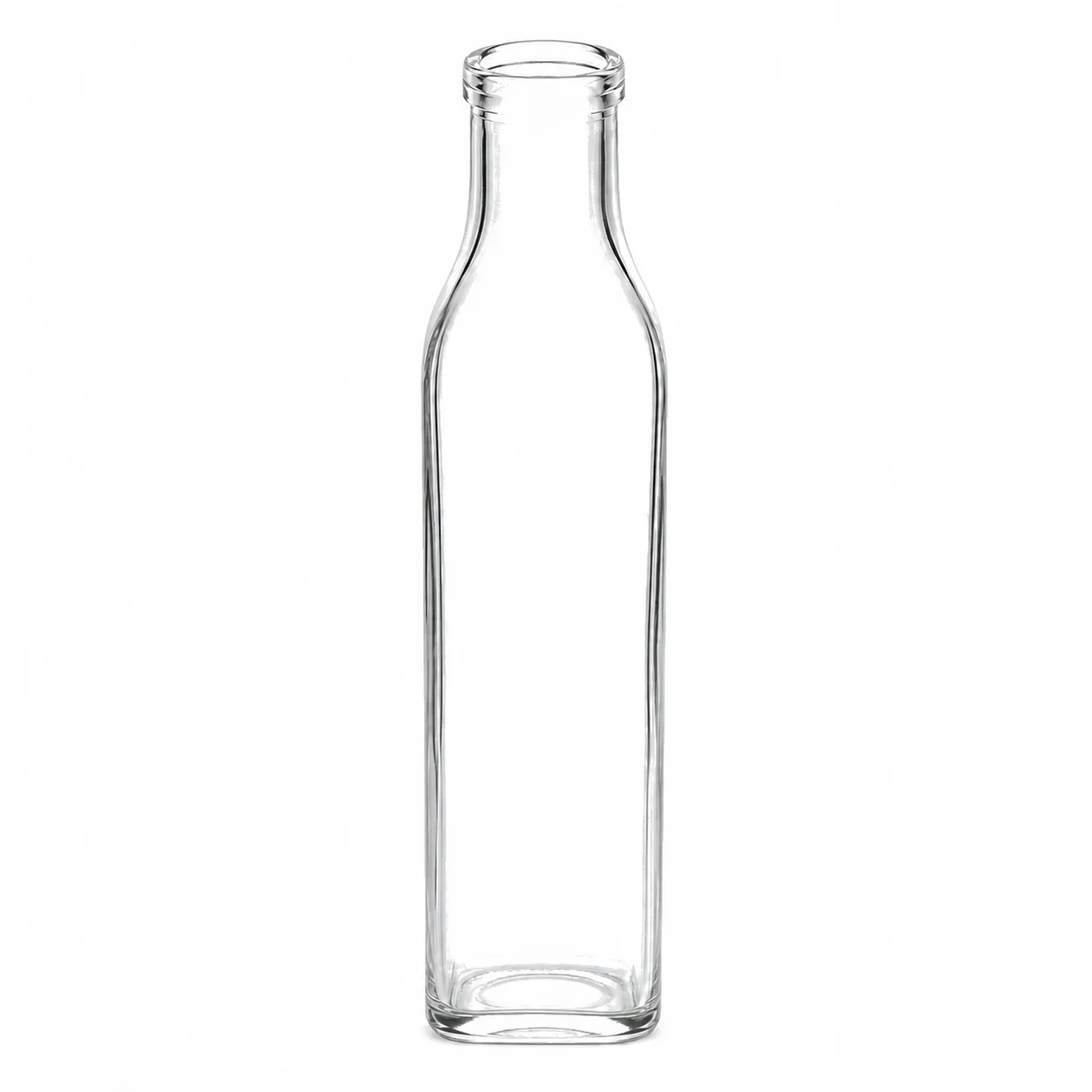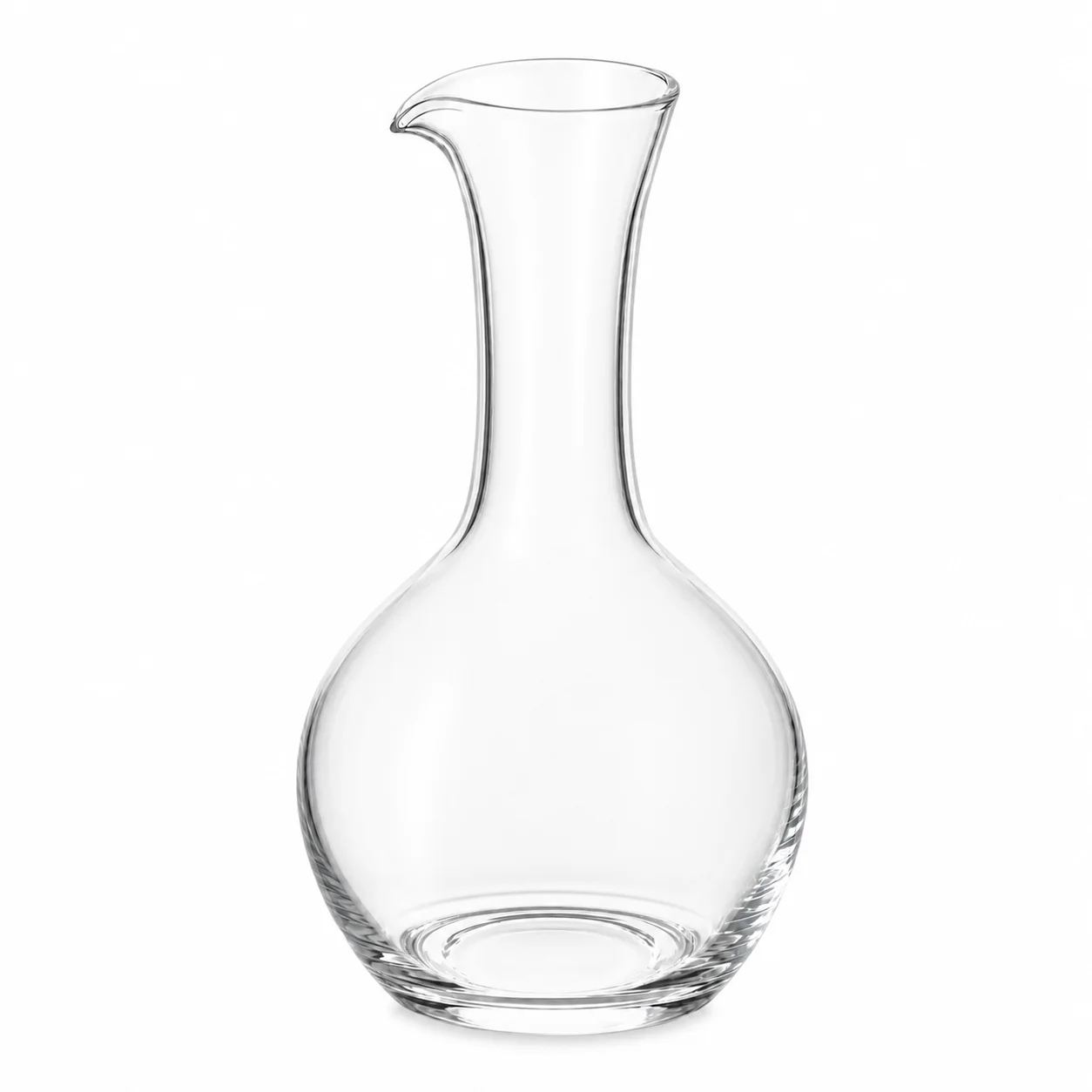
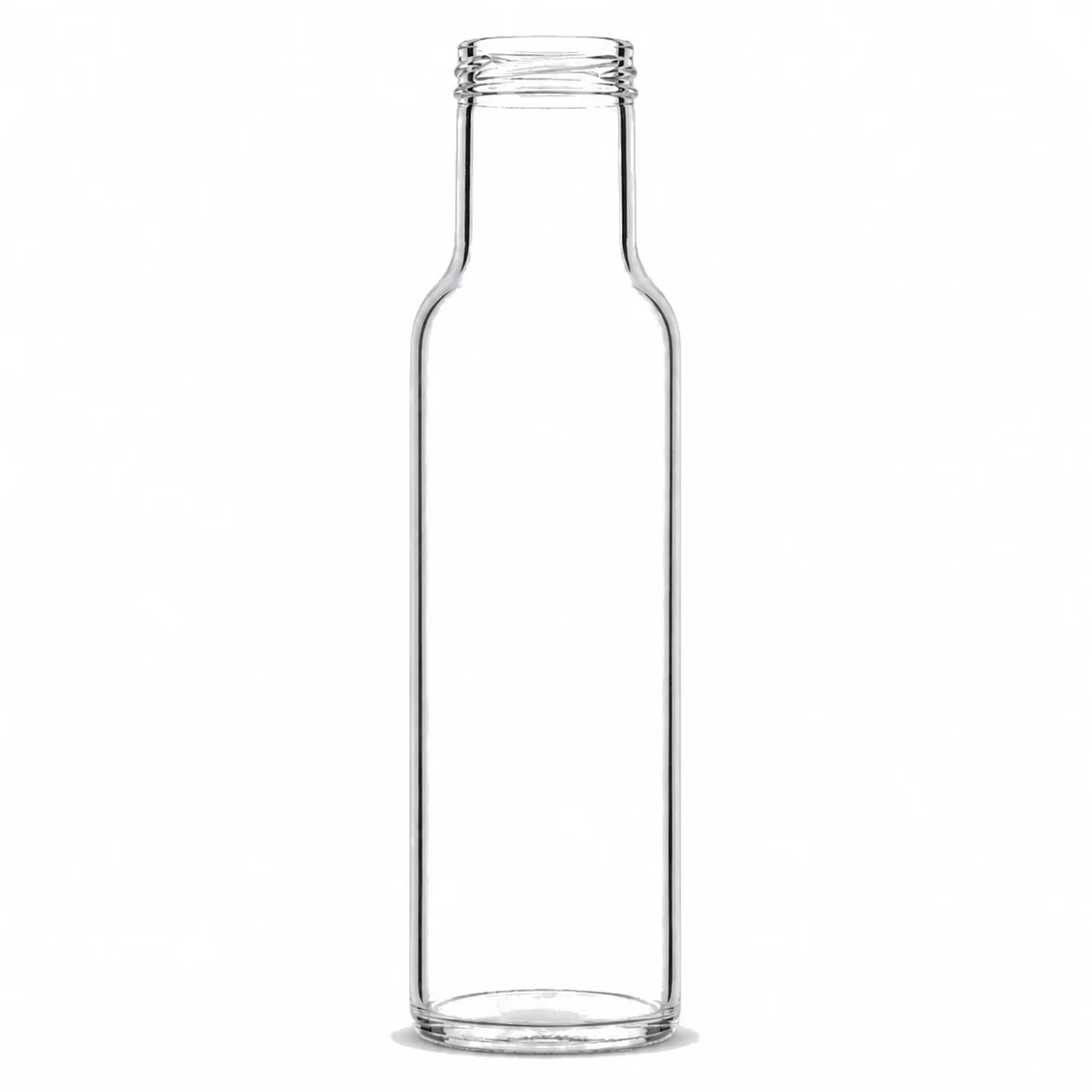
Clear glass salad dressing bottle shown empty and without its selected closure
Shown configuration · clear glass dressing bottle shown empty and without closure / selected cap and liner confirmed separately

Dressing, vinaigrette & marinade packaging

Salad Dressing Bottle

A slender 8 fl oz clear glass ring-neck bottle with a 38-400 finish for vinaigrettes, emulsified dressings and pourable herb marinades.

236 mL / 8 fl oz38-400 finishTall round profile
Stock status
In stock
Lead time
2–3 weeks
FOB price / pc
$0.70 - $1.00
MOQ
10,000 pcs

Final availability, dimensions, materials, assembled components and commercial terms are confirmed against the selected drawing and approved sample.

Visible formula

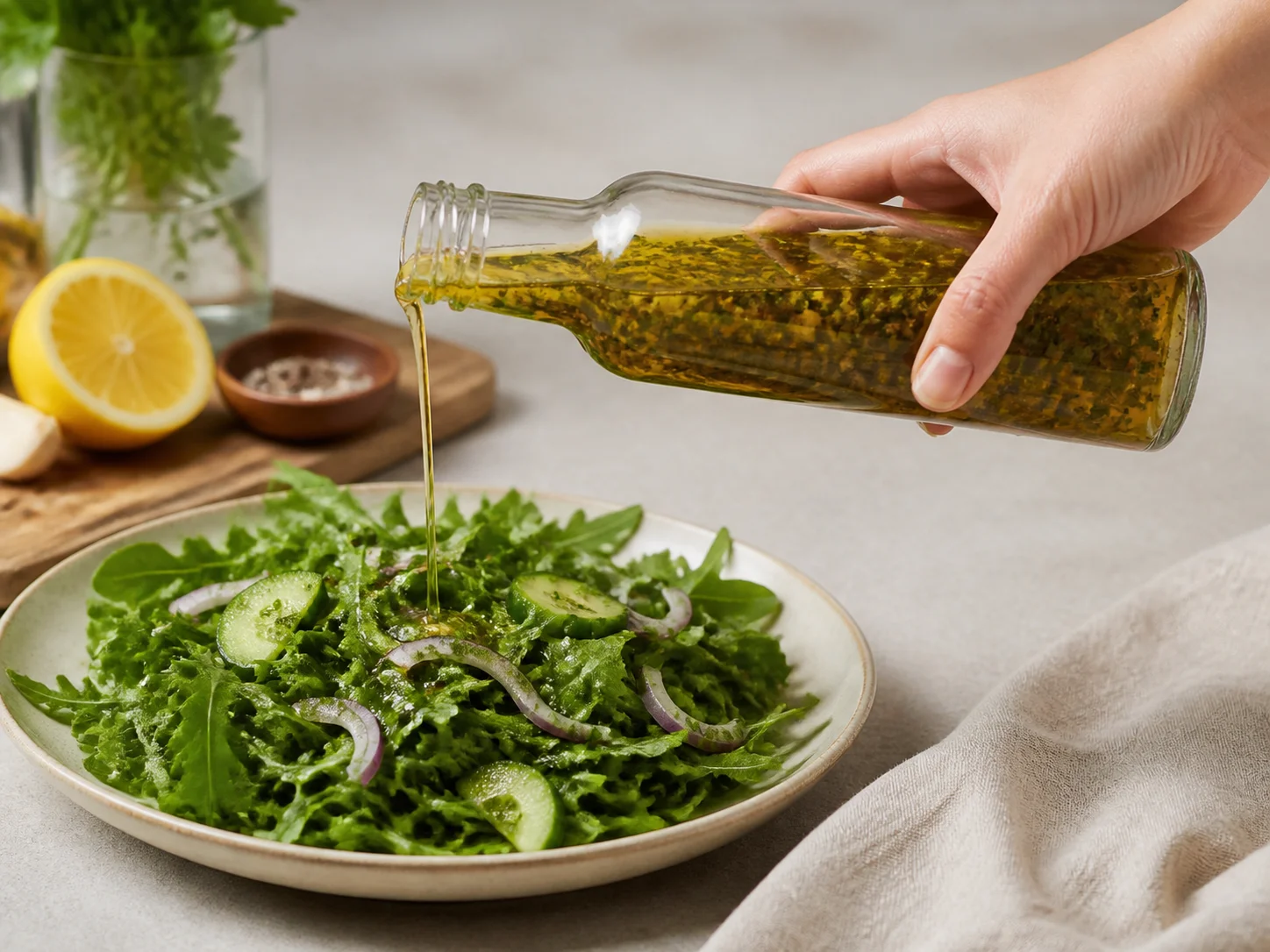
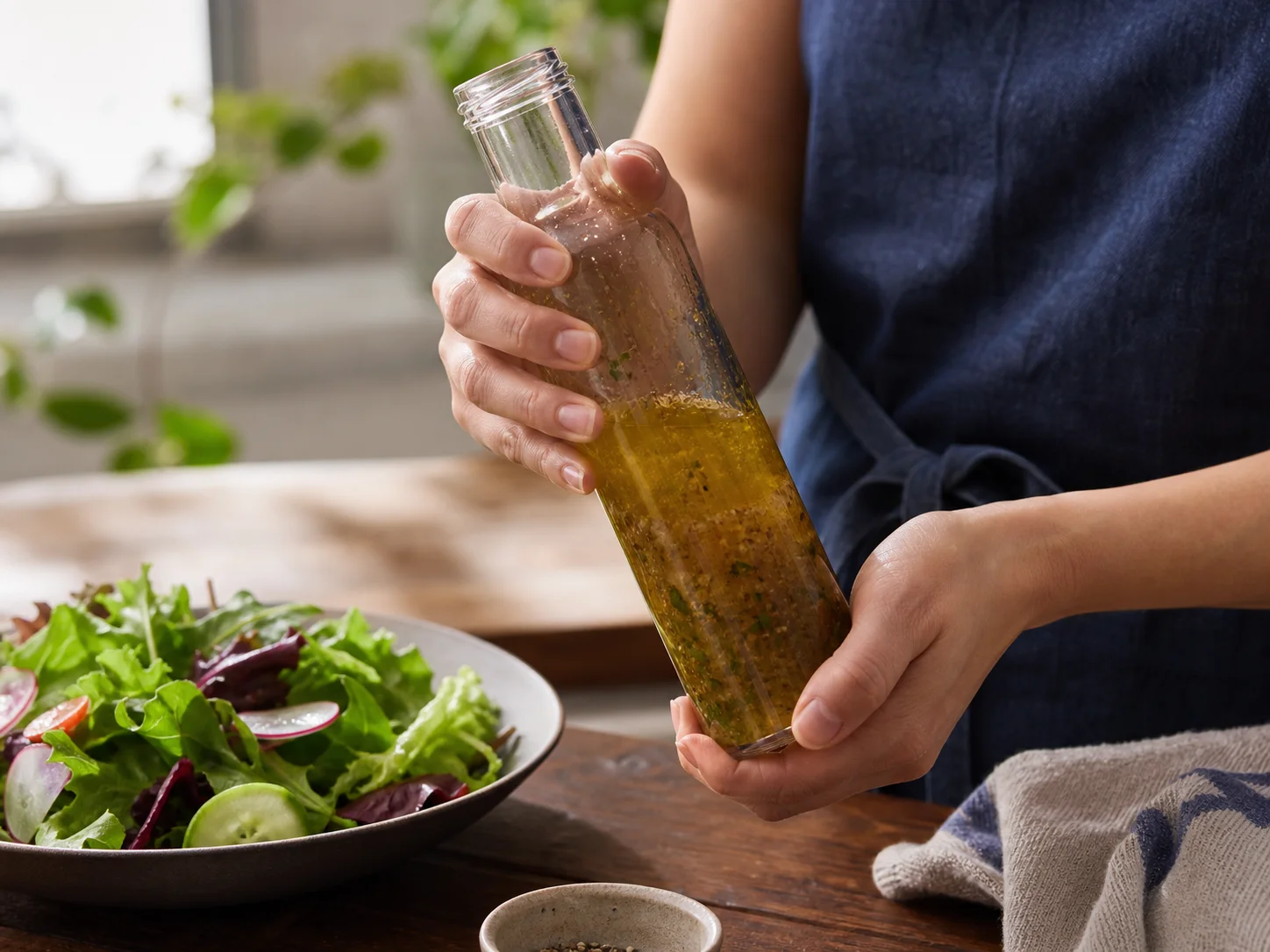
Clear glass shows color, herbs and natural phase separation

Shakeable portion

Eight ounces leaves a compact, manageable bottle for remixing

Controlled serving

The 38 mm finish supports dressings poured in a deliberate stream

Salad Dressing Bottle profile

A dressing bottle has two jobs: remix and pour.

Formula behavior, shaking & controlled serving

What an 8 oz glass bottle needs to do for dressing.

BGP-FS-9167 uses a tall 8 oz round body with a 38-400 neck. The clear glass makes separation and suspended ingredients visible, while the compact capacity is easy to shake before serving and leaves enough straight wall for instructions, flavor cues and nutrition information.

01

Separation can become useful communication

Oil-and-vinegar dressing may settle into visible phases, while herbs and spices collect at different heights. Clear glass lets customers see that behavior and know when shaking is needed. The label should explain the intended remix action instead of obscuring the formula with full coverage.

02

Eight ounces keeps shaking manageable

A 236 mL pack is large enough for several meals yet remains comfortable to grip and agitate. The fill target must preserve the headspace needed for the formula to move during shaking; filling close to the 258 mL brimful capacity would leave too little room for effective remixing.

03

The neck has to pass the largest ingredient

A 38-400 finish offers more clearance than a narrow oil bottle and can handle many emulsions, minced herbs and fine spices. The controlling measurement is the largest hydrated particle or cluster after storage, because settled inclusions can bridge even when the liquid phase pours freely.

04

Emulsions and vinaigrettes pour differently

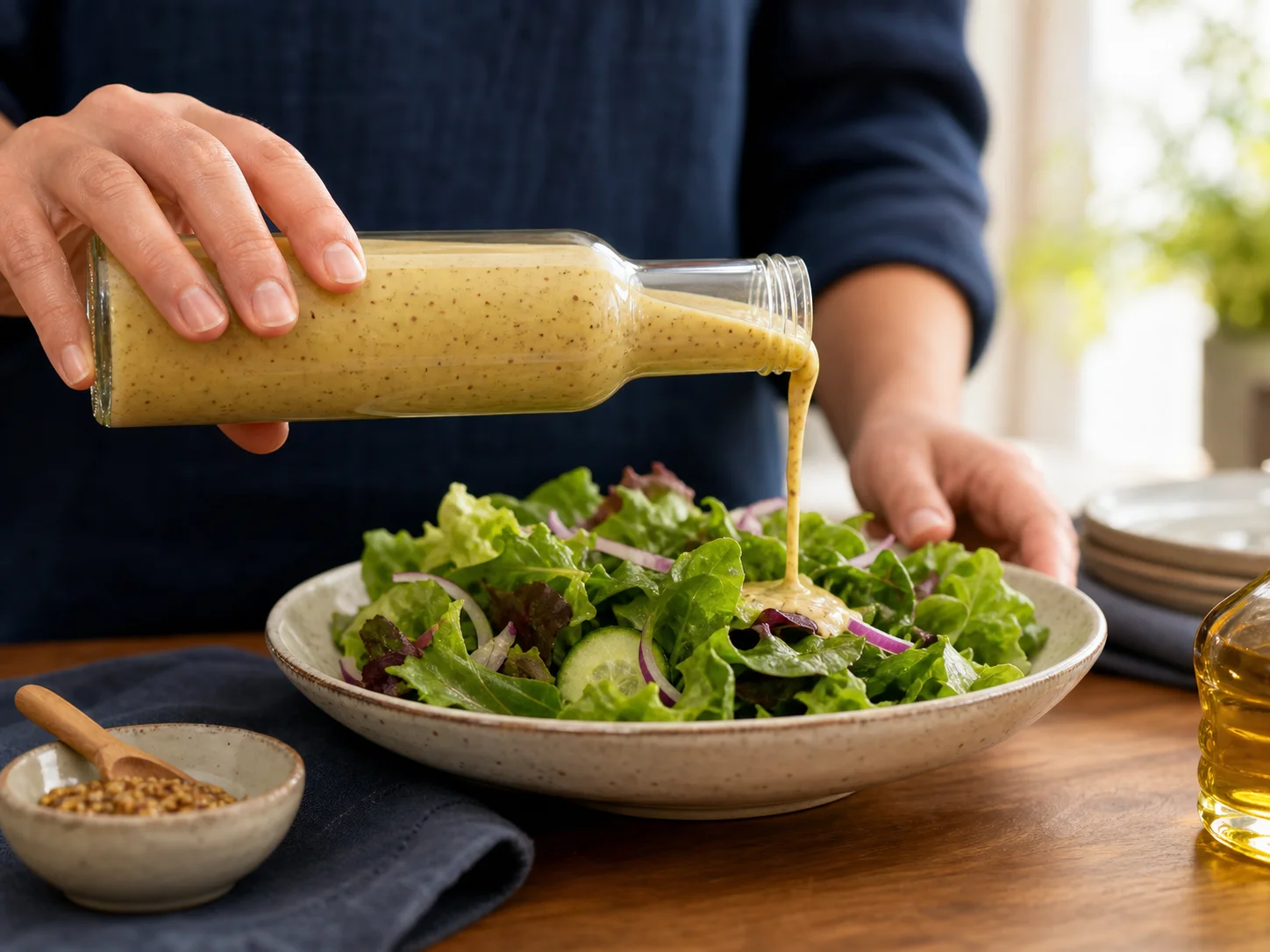
A thin vinaigrette can leave the bottle quickly and may need a controlled-pour closure, while a stable creamy dressing may require a broader unrestricted opening and steeper angle. One bottle can support a range, but the serving component should follow each recipe's measured flow.

05

The straight body supports instruction-led labels

A comparable commercial line allows roughly 94.5 mm of label height and 165 mm of wrap width. That area can give shake guidance, flavor name and serving ideas a clear hierarchy while retaining a deliberate window through which phase separation remains visible.

06

Reclosure matters after every pour

Dressing is commonly shaken, opened, poured and refrigerated again. The 38-400 cap must remain easy to grip when oil reaches the exterior, and the liner, neck band and label should be reviewed after repeated cycles rather than only on a clean unopened sample.
Application guide

Use this bottle for dressings that benefit from visible ingredients and a shakeable size.

The 8 oz format is particularly effective when customers can understand the formula through the glass and control it over a plate. The recipe determines whether the final interface is an open pour or a more restrictive dispensing closure.

Salad Dressing Bottle used for oil-and-vinegar vinaigrettes in a separated formula setting

Separated formula

Oil-and-vinegar vinaigrettes

For vinaigrettes a customer is expected to shake at the table, where the separated layers and suspended herbs are half the appeal. There has to be enough air above the fill for the phases to actually mix in three or four shakes, a body a wet hand can grip, and a stream that behaves in the few seconds before it separates again.

  • Reserve functional shake headspace
  • Make remix guidance prominent
  • Measure the post-shake pour rate
Salad Dressing Bottle used for creamy & mustard-led dressings in a stable emulsion setting

Stable emulsion

Creamy & mustard-led dressings

For smooth emulsions that flow more slowly and do not rely on visible separation as a cue. The 38 mm neck provides useful clearance, but rigid glass cannot be squeezed, so the final viscosity and refrigerated serving temperature must still allow the dressing to start without excessive waiting or tapping.

  • Trial at refrigerated temperature
  • Avoid an overly restrictive insert
  • Check clean product cut-off
Salad Dressing Bottle used for herb dressings & pourable marinades in a visible ingredients setting

Visible ingredients

Herb dressings & pourable marinades

For formulas containing chopped herbs, pepper, garlic or fine spice particles that make the product visually distinctive. The clear body displays distribution after shaking, while the neck and any dispensing component must pass the largest settled ingredient without trapping clusters.

  • Measure hydrated particle size
  • Observe settling over shelf time
  • Keep a clear ingredient window

Evaluate dressing flow after the product has been stored for the expected interval: freshly mixed samples can understate settling, clustering and the force required to remix the formula later.

Salad Dressing Bottle FAQ

Practical questions about the 8 oz ring-neck format.

Answers for teams evaluating BGP-FS-9167 capacity, shake headspace, 38-400 closures, ingredient clearance and label design.

Which cap fits the reference bottle?

The neck finish is 38-400 continuous thread. Standard lined caps and selected dispensing closures are available in that finish, but the final choice should match the formula's flow and the desired pour—not simply the bottle diameter.

Can it handle herbs and spices?

Finely chopped herbs and suspended spices can work when their largest hydrated clusters pass the neck and any dispensing opening. Review settled product after realistic storage, because particles that flow immediately after mixing may later collect at the shoulder.

How should the label show natural separation?

Leave a clear vertical window and position the shake instruction where it remains visible before opening. Use the remaining panel for flavor, ingredients and serving information rather than covering the product behavior the customer needs to assess.

What happens to the cap after the fifth pour?

It gets oily, and that is the real test. Dressing is shaken, opened, poured and refrigerated over and over, so the 38-400 cap has to stay easy to grip with oil on the fingers and the liner has to keep sealing through every cycle. Judge the closure on a used bottle, not a first opening.

Next step

Send us the Salad Dressing Bottle brief.

Tell us the product, fill volume, closure preference and destination market. We will come back with the matching drawings, available configurations and a sample plan before anything is quoted.

  • 01Send the briefProduct, volume, closure and market
  • 02Get the optionsMatching drawings and configurations
  • 03Approve the sampleConfirm the pack before production