Dense flow, table service & label design
What the classic ring-neck bottle contributes to a ketchup pack.
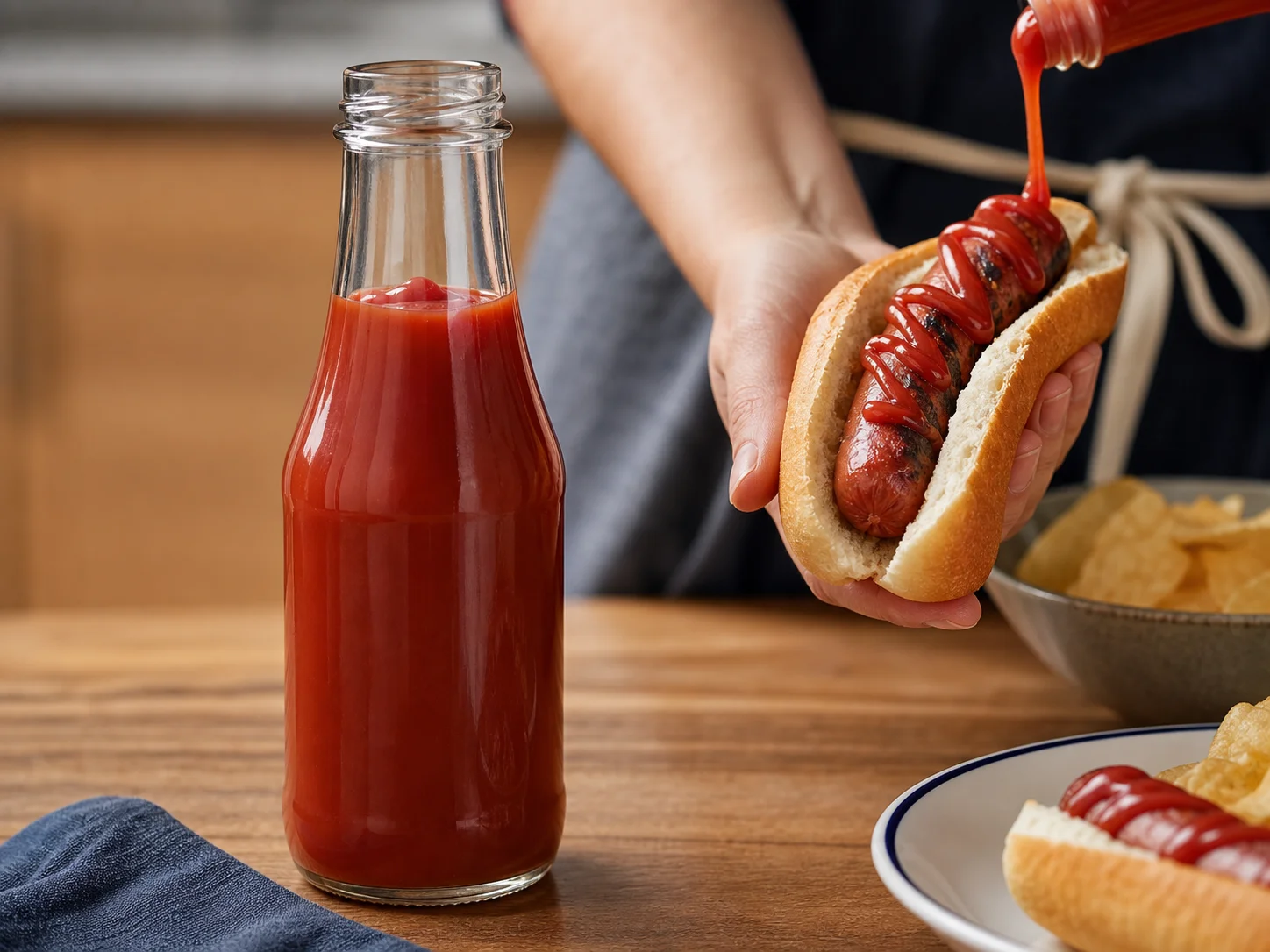
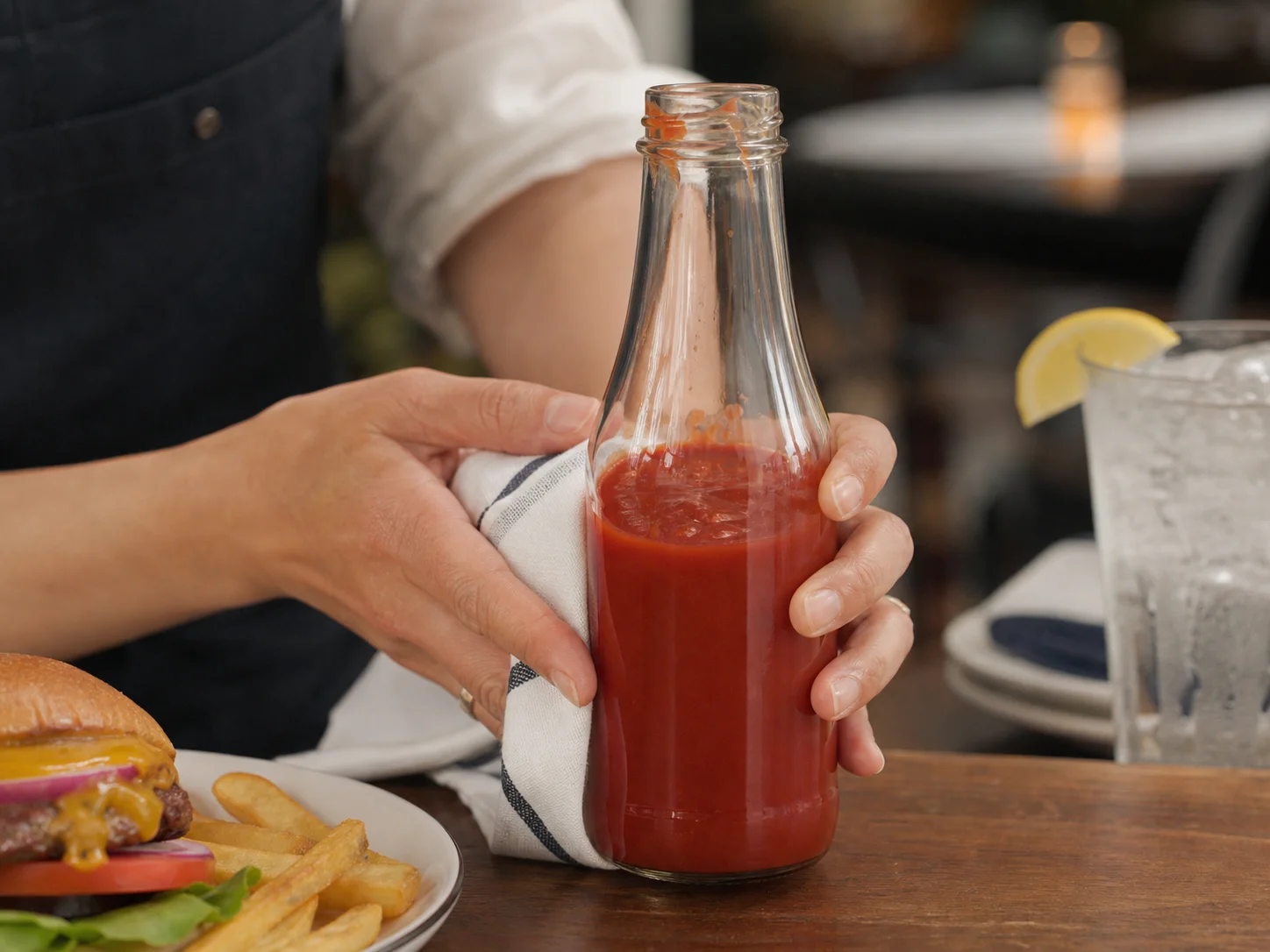
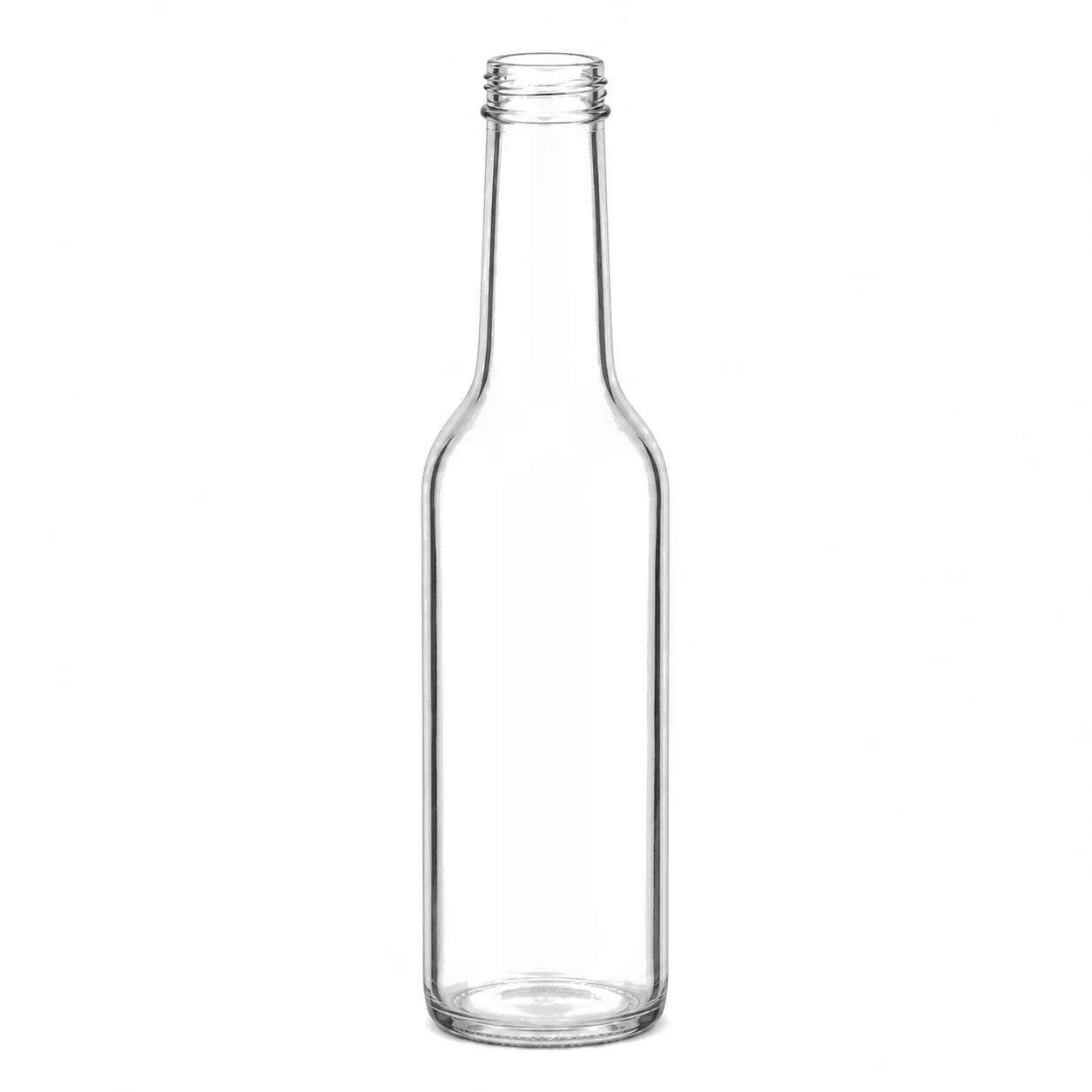
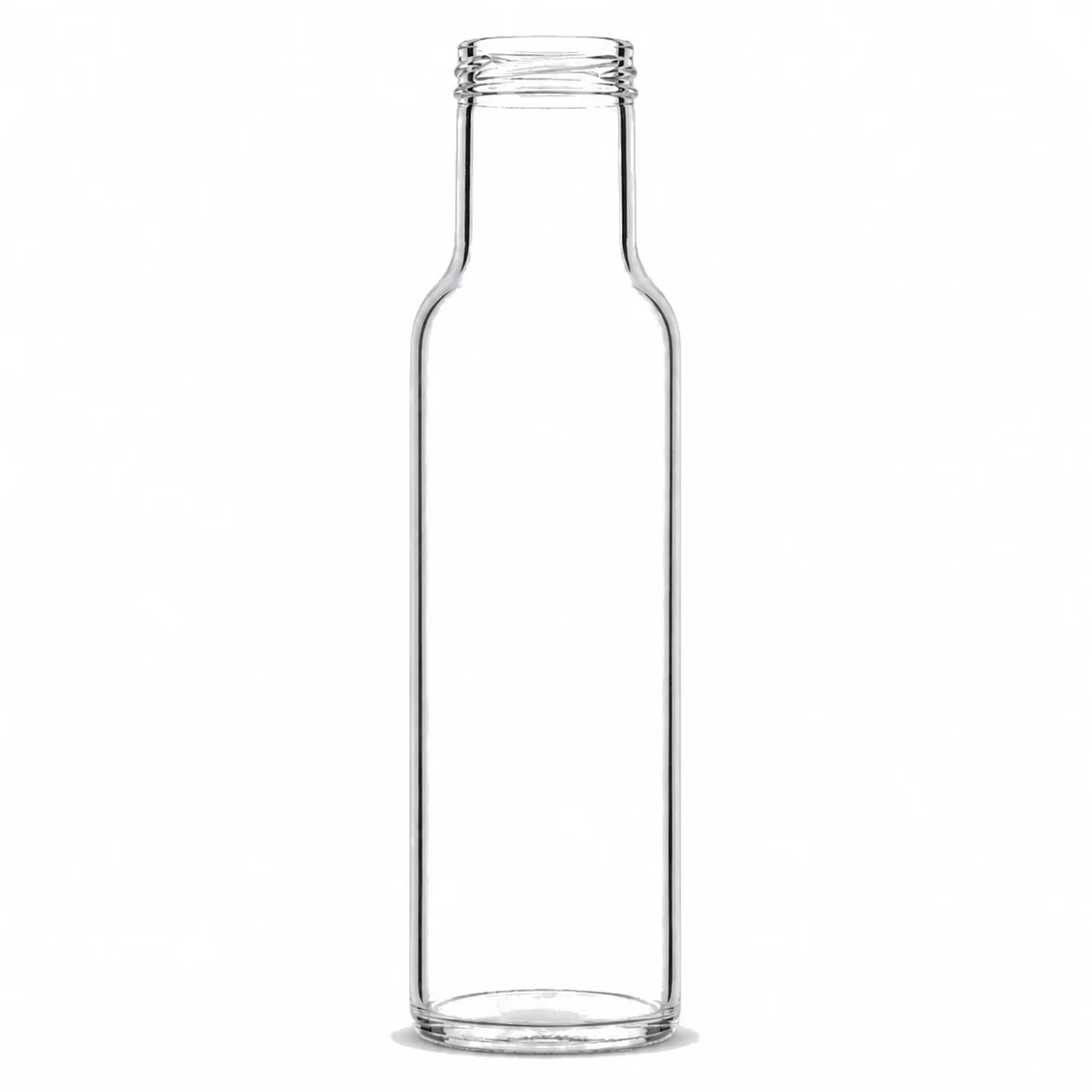
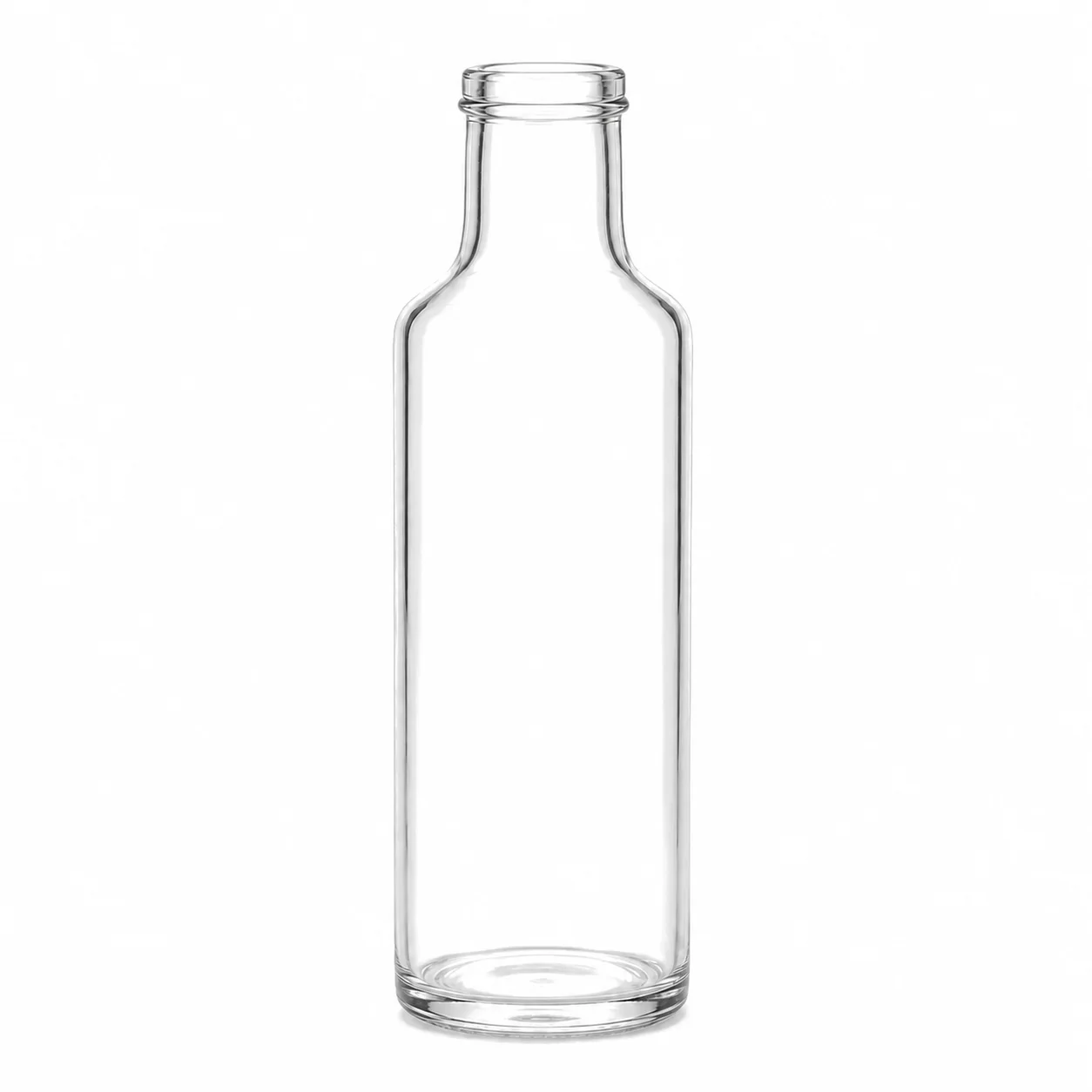
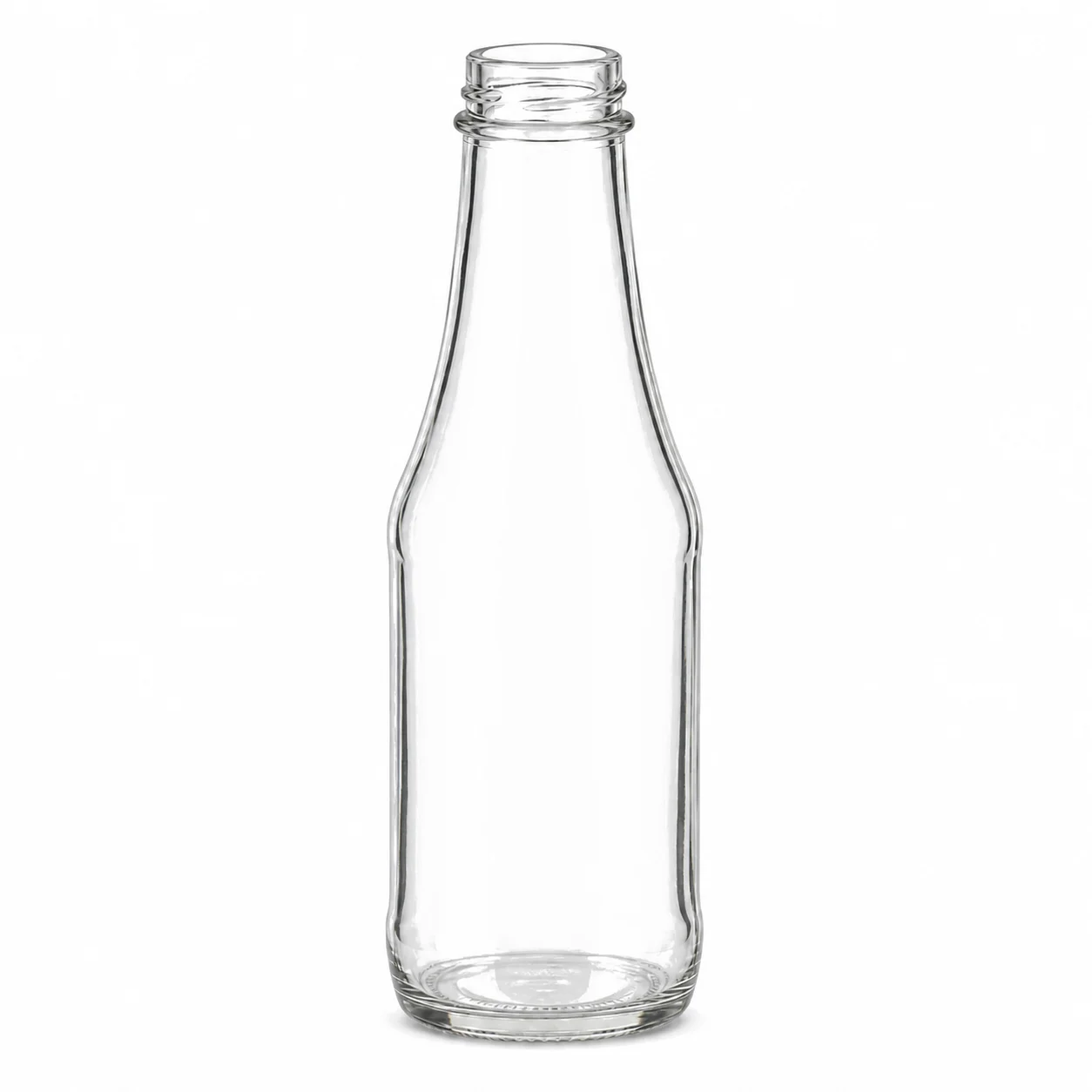
BGP-FS-5045 uses the established 12 oz ring-neck format: a stable cylindrical base for labeling and a long tapered shoulder leading to a 38-400 opening. The design suits ketchup that is poured and recapped repeatedly, provided the recipe can start flowing without the squeeze assistance of a plastic pack.
Ketchup needs a force to begin moving
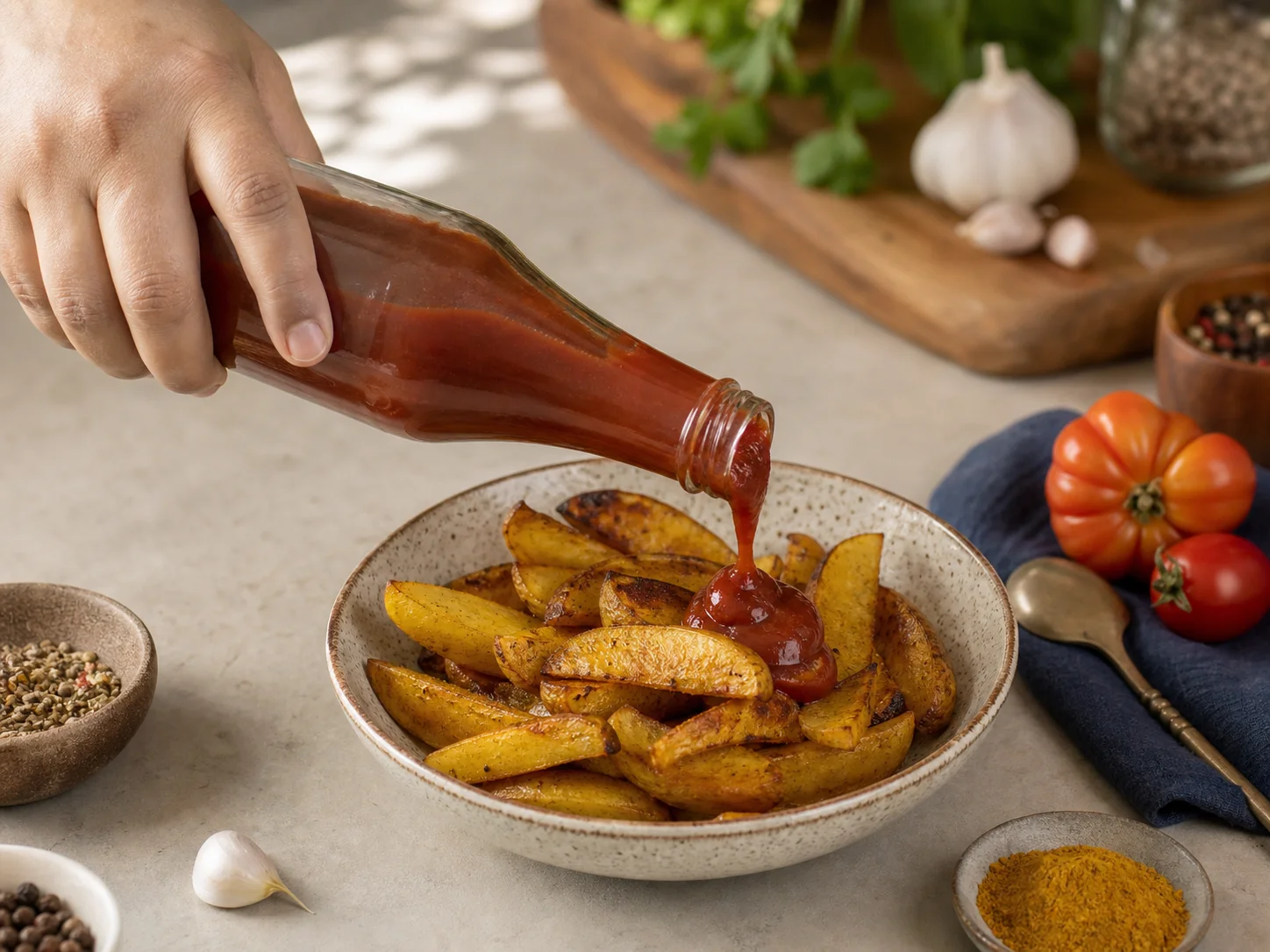
Tomato ketchup behaves as a yield-stress, shear-thinning food: it can sit firmly in the bottle until shaking, tapping or tilting supplies enough force, then flow more readily once moving. Tomato solids, stabilizers and serving temperature all change that response, so pour trials need the finished recipe rather than water.
A 38 mm finish improves access
The reference opening is about 28.6 mm, materially broader than a 5 oz Woozy neck. That extra clearance helps dense, smooth condiments move toward the outlet and makes commercial filling more practical, while remaining narrow enough to support a controlled table pour.
The shoulder controls product recovery
The long taper guides ketchup from the 62 mm body toward the neck when the bottle is inverted for serving. A smooth transition reduces ledges where sauce can remain, but glass cannot be squeezed; the pack should be assessed for start-up effort, serving angle and how much product remains near end of use.
Twelve ounces fits repeated service
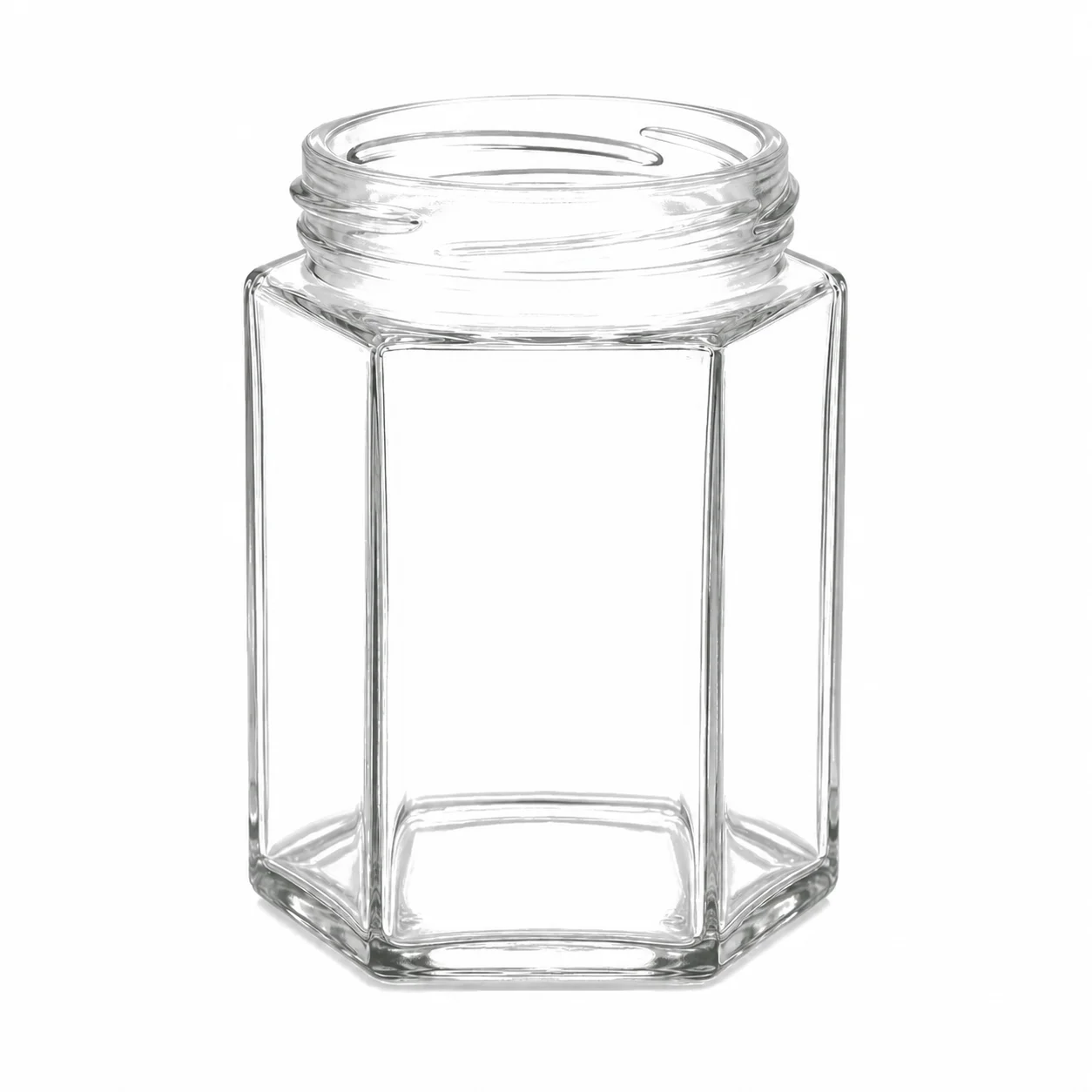
At 355 mL, the bottle holds enough ketchup for a household table, café or premium restaurant program without moving into a bulky foodservice format. The tall profile also gives a familiar visual cue that distinguishes the product from jam jars, dressing bottles and small high-heat sauces.
The ring supports tamper presentation
The raised neck ring provides a clear visual break beneath the closure and a defined location for a correctly sized shrink band. It should not be treated as the primary seal; the 38-400 cap and its liner form the closing interface, while the band provides visible opening evidence.
The body carries a substantial label
A published label height around 109.5 mm gives room for a strong front panel, nutrition information, ingredients and serving copy. Wrap artwork should stay on the straight wall, avoid the shoulder transition and account for the 193.8 mm reference circumference plus the applicator's overlap requirement.