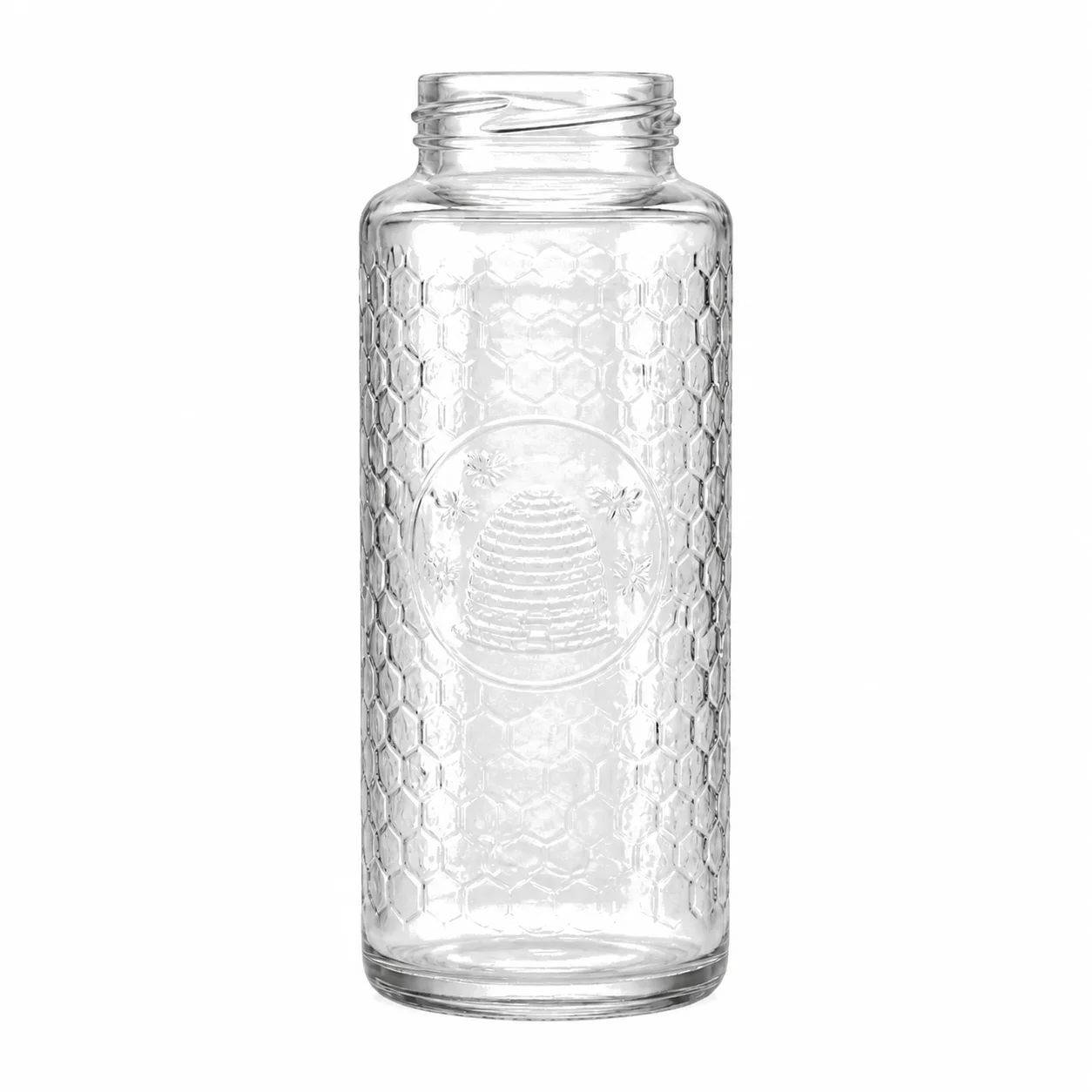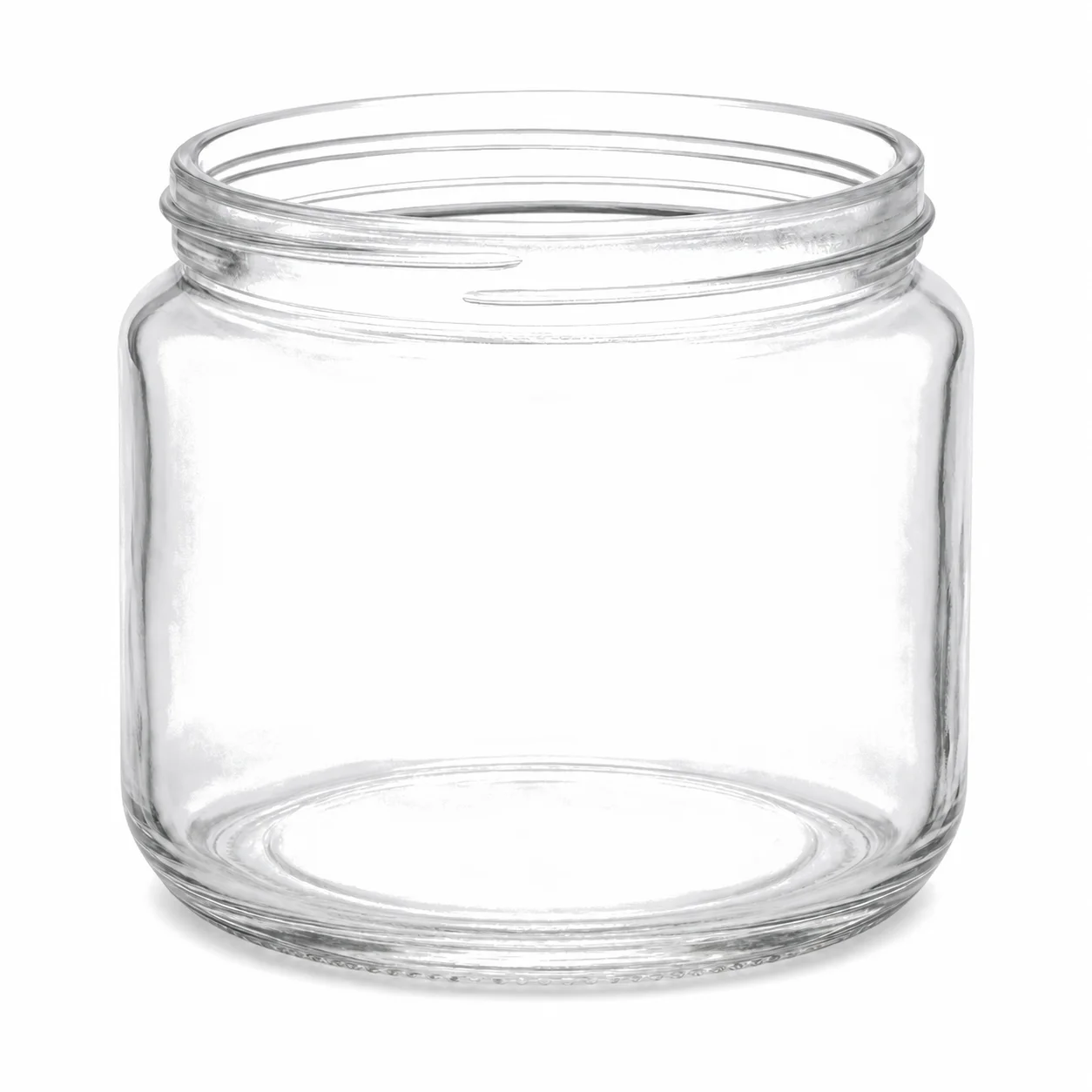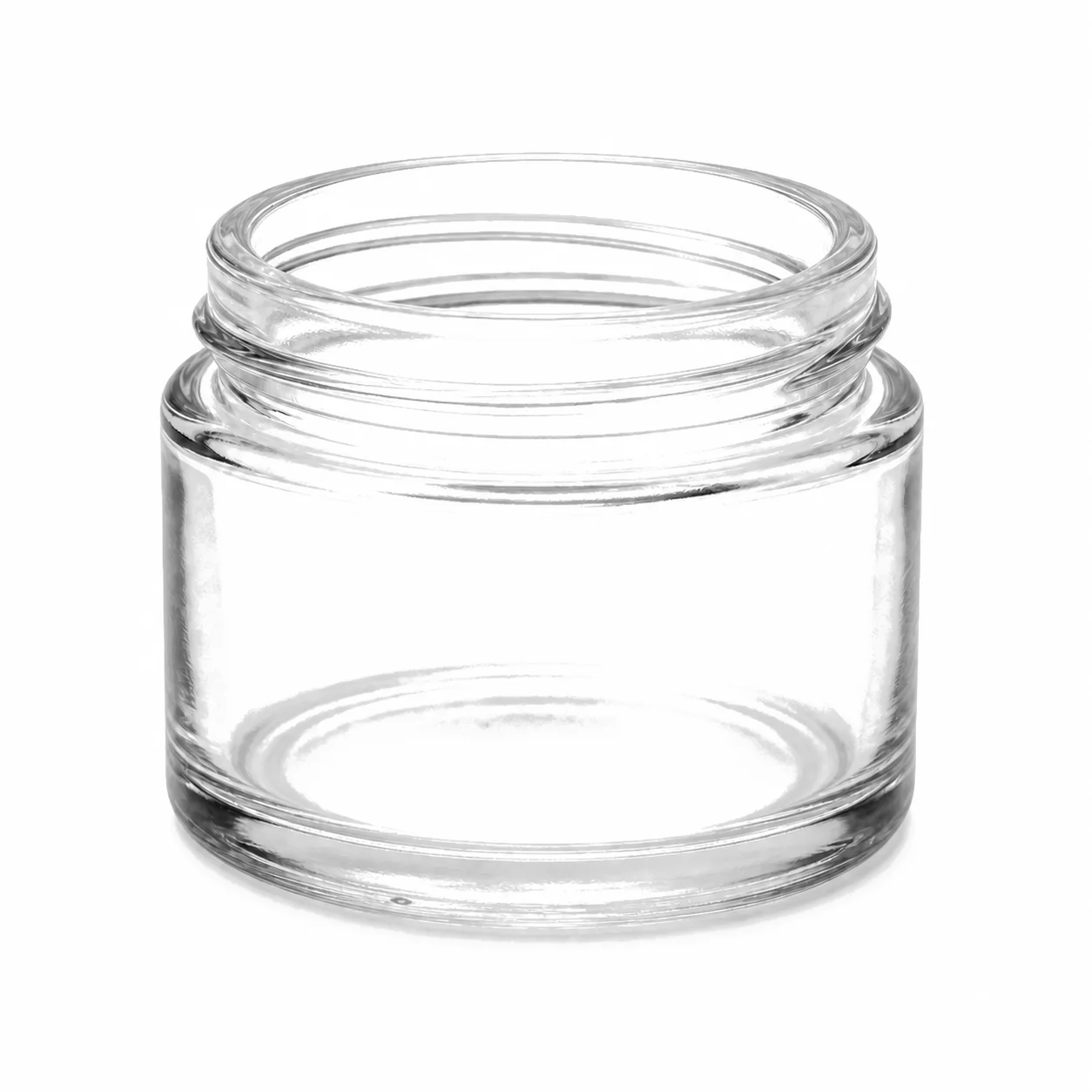
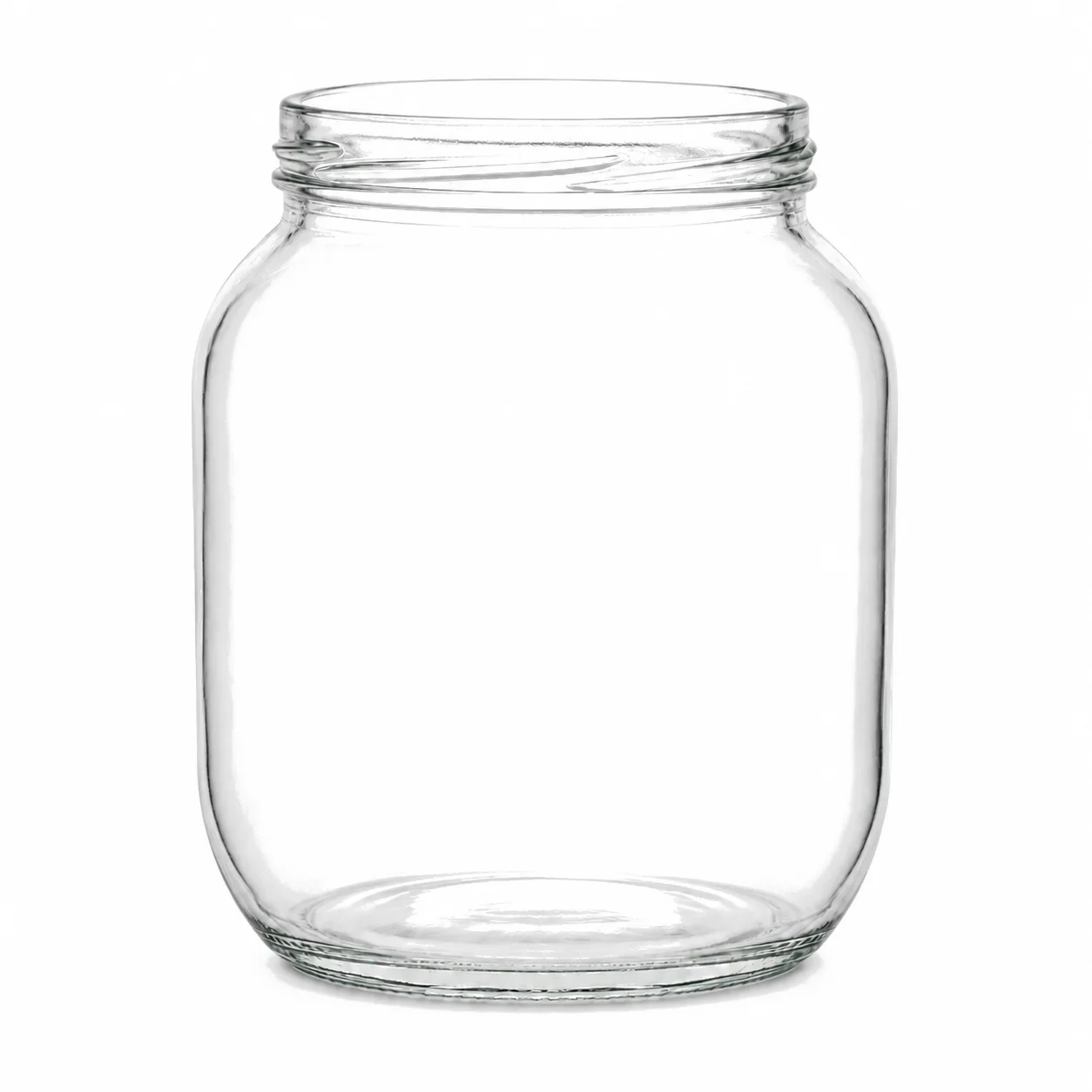
Clear 32 oz glass mayonnaise jar with 70 mm wide mouth
Shown configuration · bare flint-glass jar / 70-450 cap and liner not shown

32 oz wide-mouth glass for mayonnaise & spoonable dressings

Mayonnaise Jar

A 32 US fl oz flint-glass Mayo jar with 32.6 fl oz overflow capacity, a 70-450 deep-skirt finish and a broad 73.9 mm label panel for mayonnaise, aioli and deli condiments.

32 US fl oz nominal70-450 deep-skirt finish366 g glass weight
Stock status
In stock
Lead time
2–3 weeks
FOB price / pc
$0.70 - $0.95
MOQ
3,000 pcs

Final availability, dimensions, materials, assembled components and commercial terms are confirmed against the selected drawing and approved sample.

Direct utensil access

The 70 mm mouth gives spoons and spatulas practical access to thick emulsions

Quart-family volume

A 946 mL nominal pack supports retail family sizes and back-of-house condiment use

Broad wrap panel

A 314.2 × 73.9 mm wrap area supports full ingredients, nutrition and brand communication

Mayonnaise Jar profile

A quantified quart Mayo jar engineered around emulsion filling, utensil access and the 70-450 closure.

Emulsion filling, closure selection & consumer access

Six engineering decisions for a 32 oz mayonnaise pack.

BGP-FS-7392 works to the 32 oz Mayo/Economy envelope: 165.1 mm high, 98.4 mm in diameter, 366 g of glass and 964 mL overflow. Its 70-450 deep-skirt finish — historically called 70G — has to be matched to the exact cap. Treating it as an ordinary 70-400 thread is the single most common sourcing error on this jar.

01

Protect the emulsion during filling

Mayonnaise is a structured oil-in-water emulsion whose apparent viscosity changes under shear. Select a positive-displacement or similarly suitable filler that delivers weight accurately without unnecessary air incorporation or prolonged high shear. Product temperature, nozzle geometry and fill speed should be set from the finished recipe rather than from water trials.

02

Use the 70 mm mouth for clean access

The wide opening supports spoons, knives and flexible spatulas, which is valuable for a rigid glass pack that cannot be squeezed. Confirm the usable internal bore, shoulder reach and last-portion removal with representative utensils. A cap with an overly deep inner feature can also reduce the available headspace above the product.

03

Control headspace and shoulder smearing

The jar holds 32.6 fl oz at overflow, leaving only a modest margin above the 32 oz nominal class. Dense emulsions may mound, trap voids or touch the shoulder as the nozzle withdraws. Establish fill weight from density, allow for product leveling and keep the neck land free of oil before capping.

04

70-450 is a deep-skirt finish

The 70-450, also known as 70G-450, uses a deeper continuous-thread closure than a standard 70-400. Specify cap height, thread engagement and liner construction from the drawing. Metal caps with an appropriate liner and optional vacuum button are common food routes, but the finished process determines whether that indicator has a meaningful role.

05

Cold-chain condensation affects labels

Refrigerated mayonnaise can develop surface moisture during warehousing, merchandising or consumer use. Choose label stock, ink and adhesive for the real glass temperature and condensation cycle, not only dry application. The 12.37 × 2.91 inch wrap area supports broad communication but should remain clear of the shoulder and heel radii.

06

Plan the line for a heavy filled jar

A filled unit carries roughly one kilogram of product plus 366 g of glass. Confirm conveyor accumulation, guide-rail contact, capper handling and manual-lift limits with that mass. The cited 12-count pallet contains 1,560 jars, so case strength and pallet deflection matter substantially more than for small condiment packs.
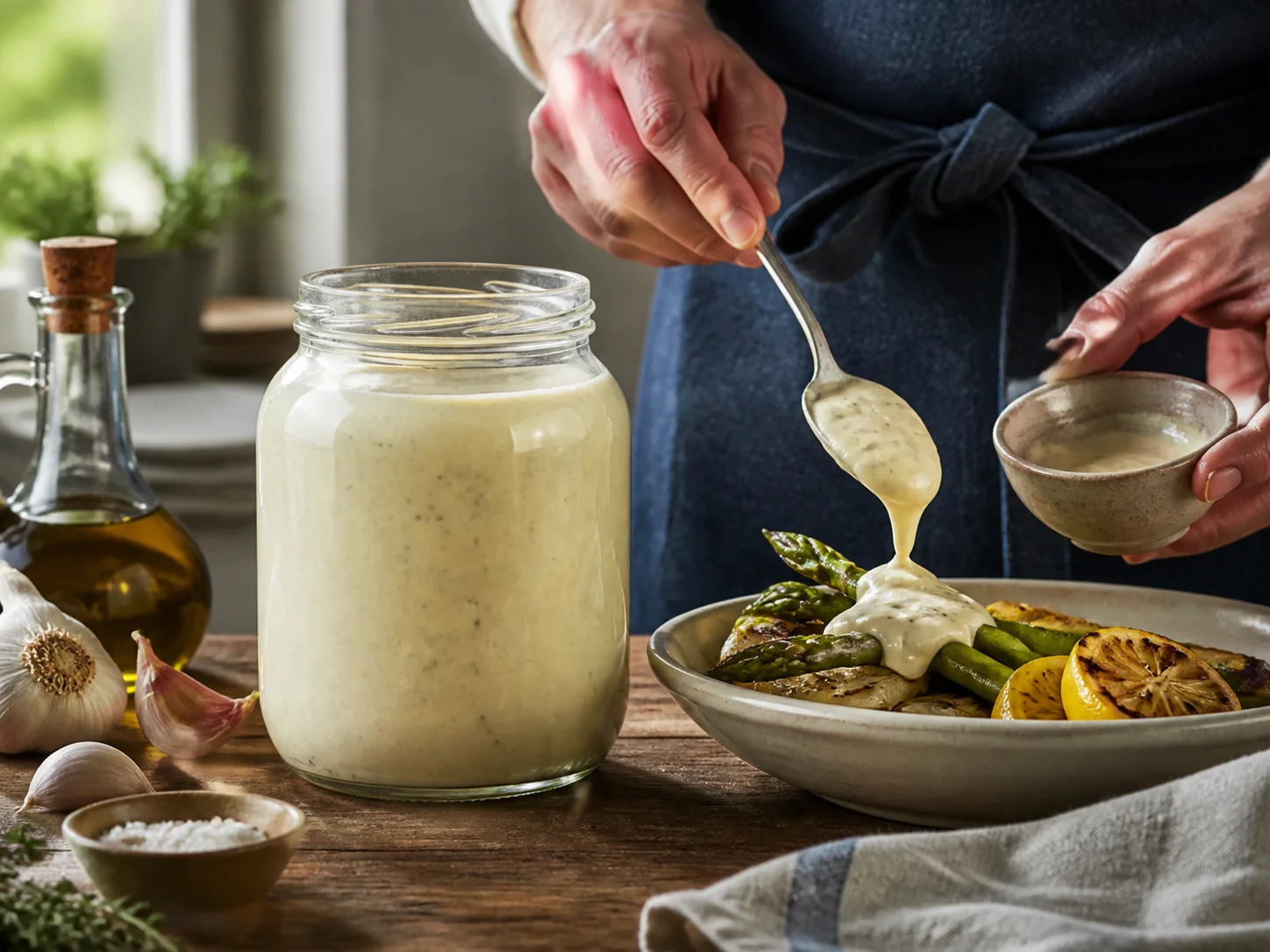
Application guide

Spoonable emulsions and deli condiments suited to the quart Mayo format.

The jar is strongest where a rigid wide mouth, family-size volume and full wrap label offer more value than squeeze dispensing.

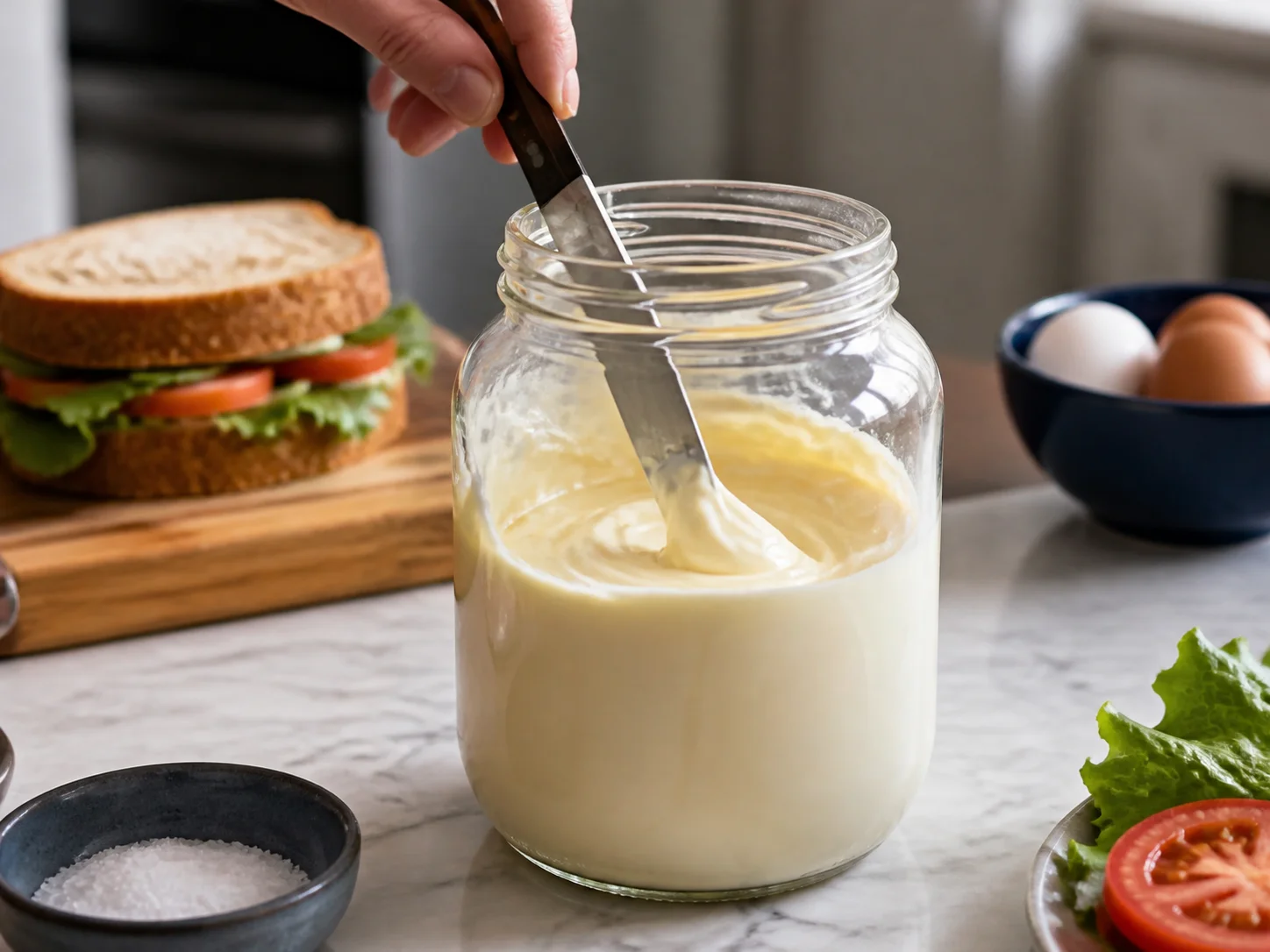
Mayonnaise Jar used for retail mayonnaise and sandwich spread in a classic emulsion setting

Classic emulsion

Retail mayonnaise and sandwich spread

For a quart jar that lives in a household fridge door and gets a knife put into it most days. A 70 mm mouth lets that knife reach the base and scrape the wall. Filling is tuned to the finished emulsion, the rim is kept clean because mayonnaise on a thread goes rancid, and labels are proved through fridge condensation.

  • Measure finished viscosity
  • Keep the finish oil-free
  • Test cold labels
Mayonnaise Jar used for aioli and flavored mayonnaise in a premium condiment setting

Premium condiment

Aioli and flavored mayonnaise

Garlic, herb, chili and truffle-style variants can share the same body while front labels and cap colors distinguish the recipes. Define particle size for the nozzle, monitor oil separation through shelf life and set a unique lot-code plan for each formulation.

  • Control inclusion size
  • Track emulsion stability
  • Separate recipe codes
Mayonnaise Jar used for coleslaw dressing and spoonable deli sauce in a deli & foodservice setting

Deli & foodservice

Coleslaw dressing and spoonable deli sauce

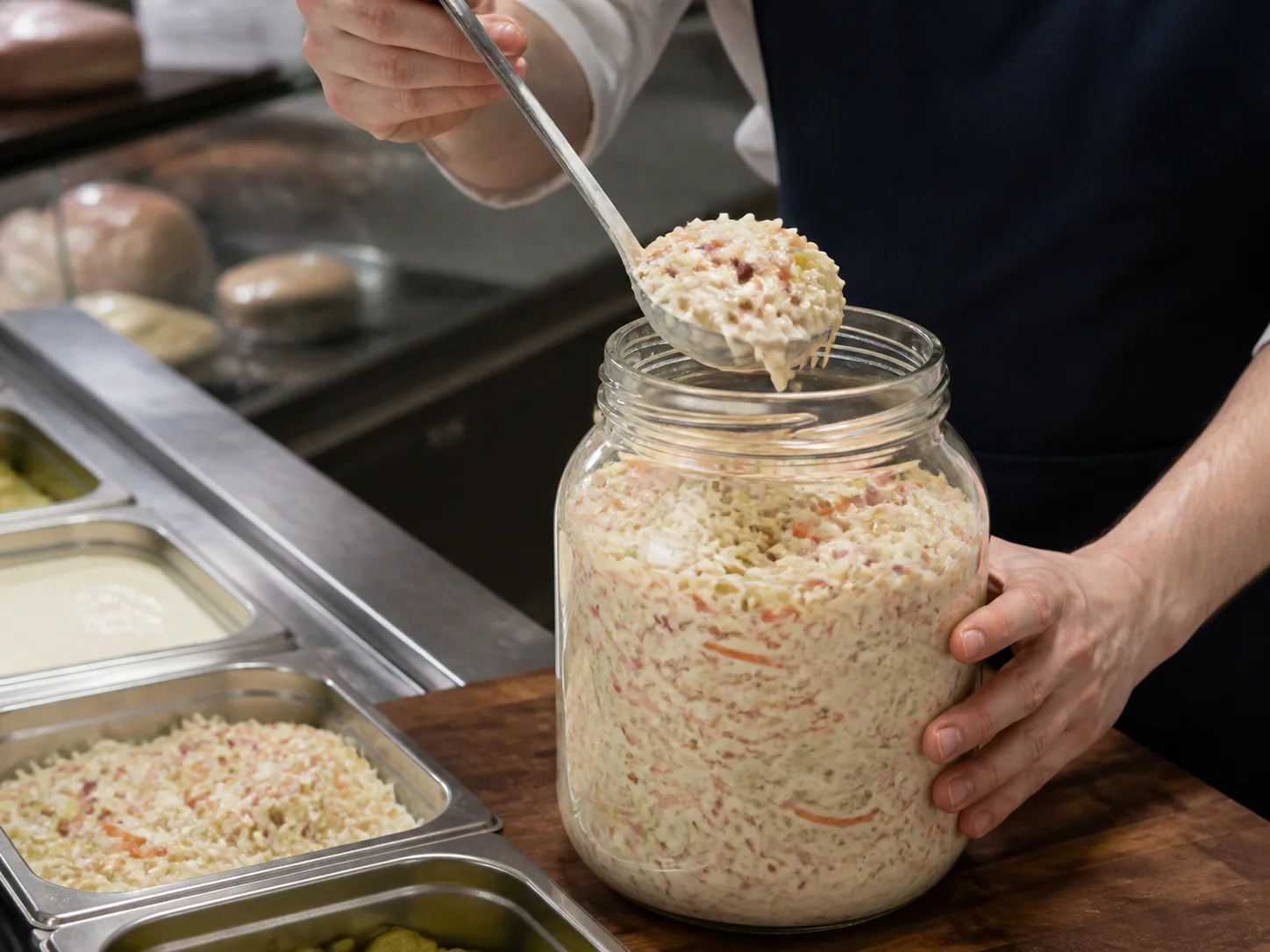
For deli prep stations where one jar is opened in the morning and scooped from all day. Filled, it is heavy enough that staff lift it two-handed and set it down hard, so what matters is the working weight, whether a ladle clears the opening, how it holds in a cold well, and how a case is opened at waist height.

  • Review utensil reach
  • Set refrigerated workflow
  • Manage heavy filled cases

Mayonnaise process design is recipe- and market-specific. Establish formulation controls, filling conditions and chilled or shelf-stable distribution with the responsible food-safety team; the jar's wide mouth and cap format do not determine the preservation method.

Mayonnaise Jar FAQ

Specification questions for the BGP-FS-7392 32 oz Mayo jar.

Answers about the 70-450 finish, nominal versus overflow volume, closure selection and viscous-product filling.

How should mayonnaise be filled without damaging it?

With a filler chosen for the emulsion. Mayonnaise is a structured oil-in-water system whose apparent viscosity changes under shear, so a positive-displacement or similarly gentle route protects the structure that the product is sold on. Nozzle and speed are part of the pack specification here.

Can the jar fill 32 oz by weight?

The jar is described by fluid volume. Net weight depends on mayonnaise density, so the filler and checkweigher must be set from the actual recipe rather than treating 32 fluid ounces as 32 ounces mass.

How large is the label area?

The published 100% wrap panel is approximately 12.37 inches wide by 2.91 inches high. Confirm the final die line on production samples and choose adhesive for refrigerated condensation if applicable.

Refrigerated jars are coming out of the warehouse wet — what does that hit?

The label. Condensation forms on a chilled jar through warehousing, merchandising and the customer's fridge, and stock, ink and adhesive chosen for a dry ambient pack will lift or blush at the edges. Specify the label system for the wet condition it will actually live in, and prove it on chilled samples.

Next step

Send us the Mayonnaise Jar brief.

Tell us the product, fill volume, closure preference and destination market. We will come back with the matching drawings, available configurations and a sample plan before anything is quoted.

  • 01Send the briefProduct, volume, closure and market
  • 02Get the optionsMatching drawings and configurations
  • 03Approve the sampleConfirm the pack before production