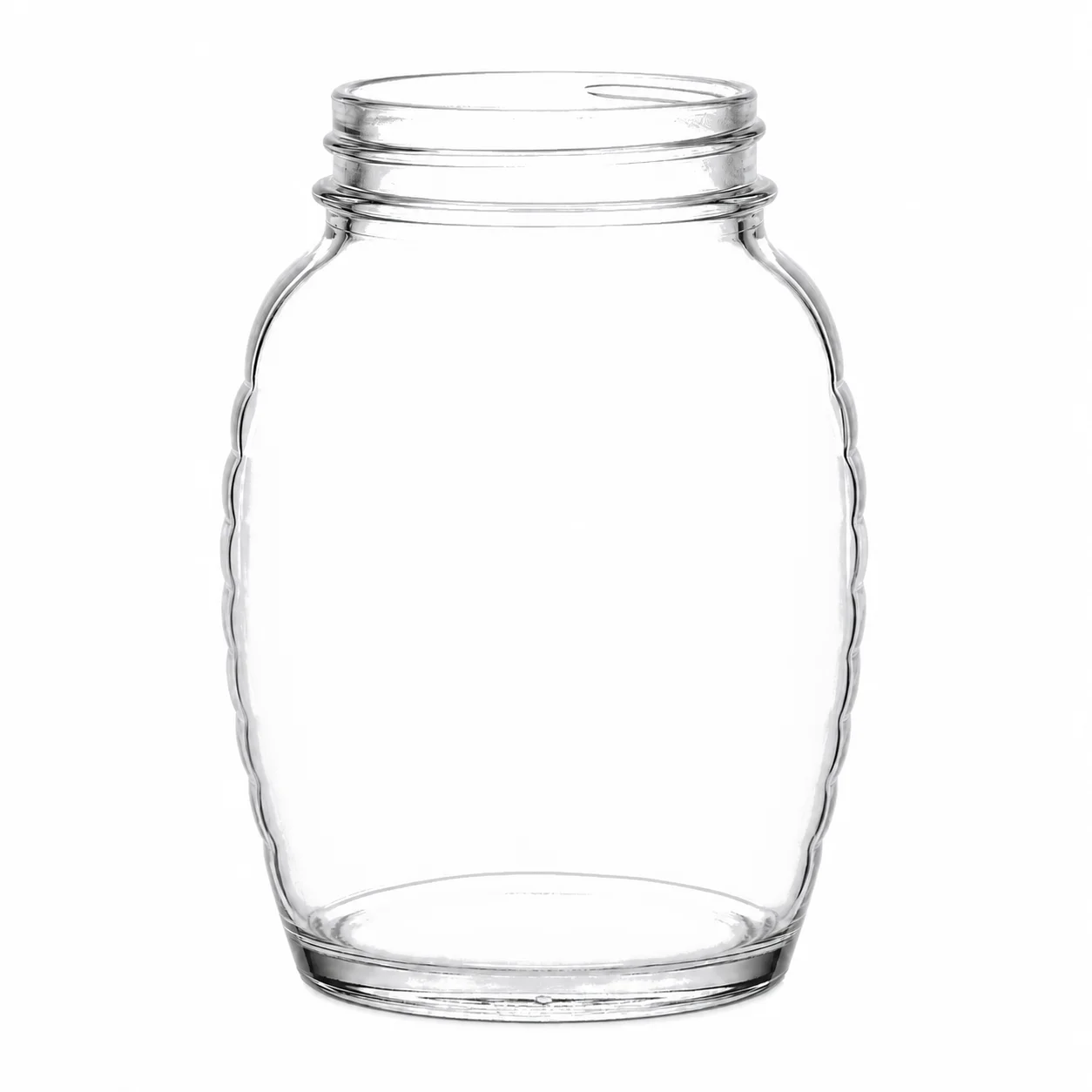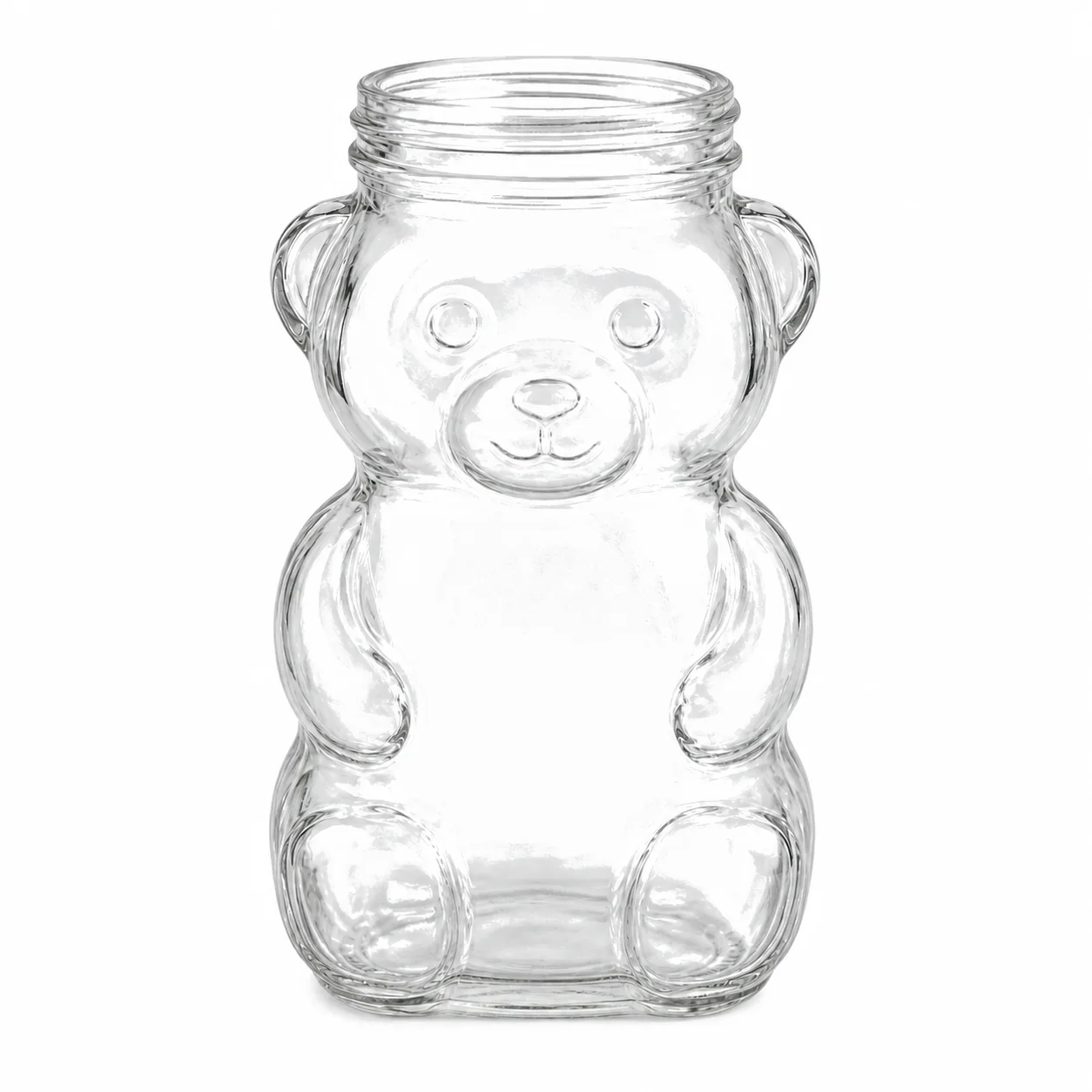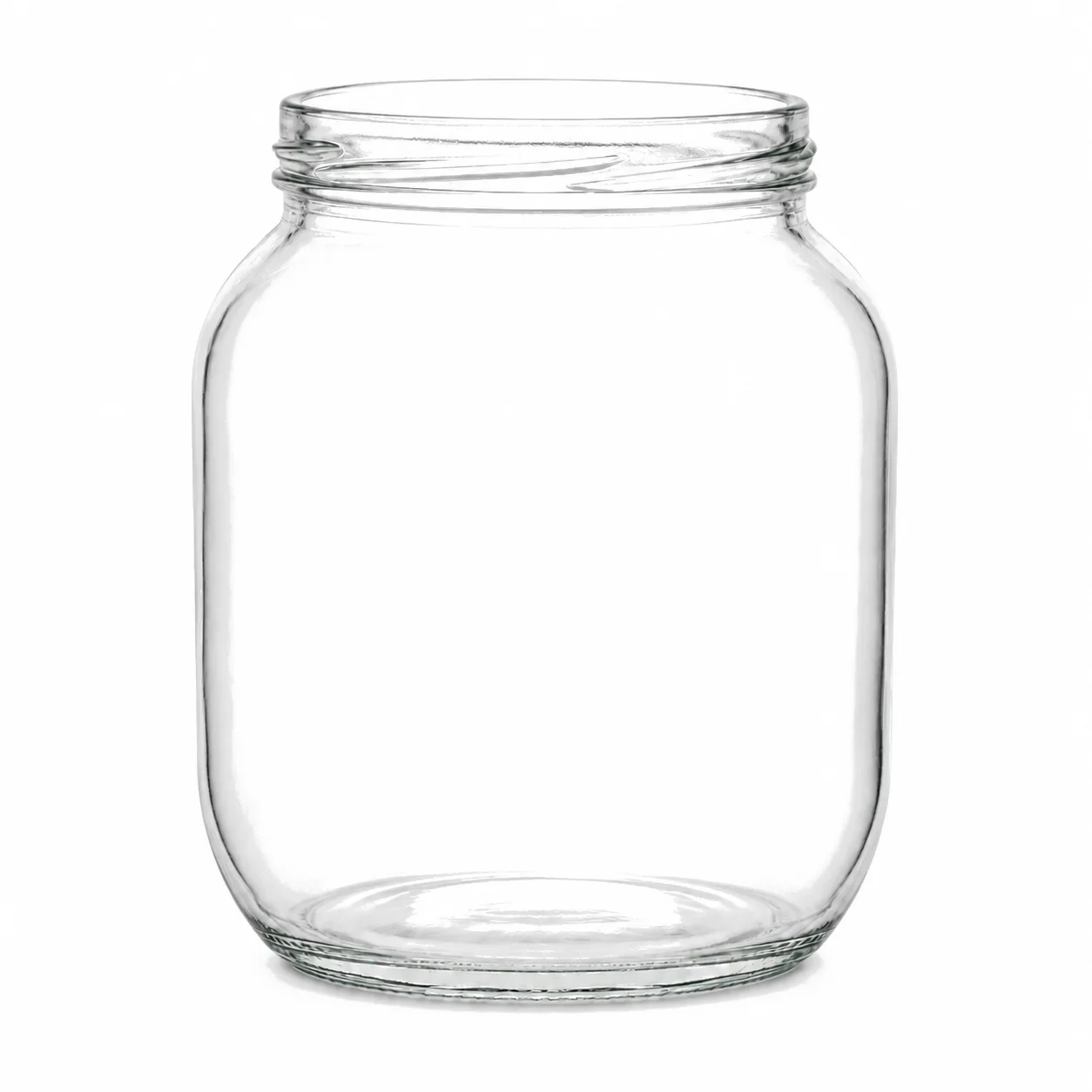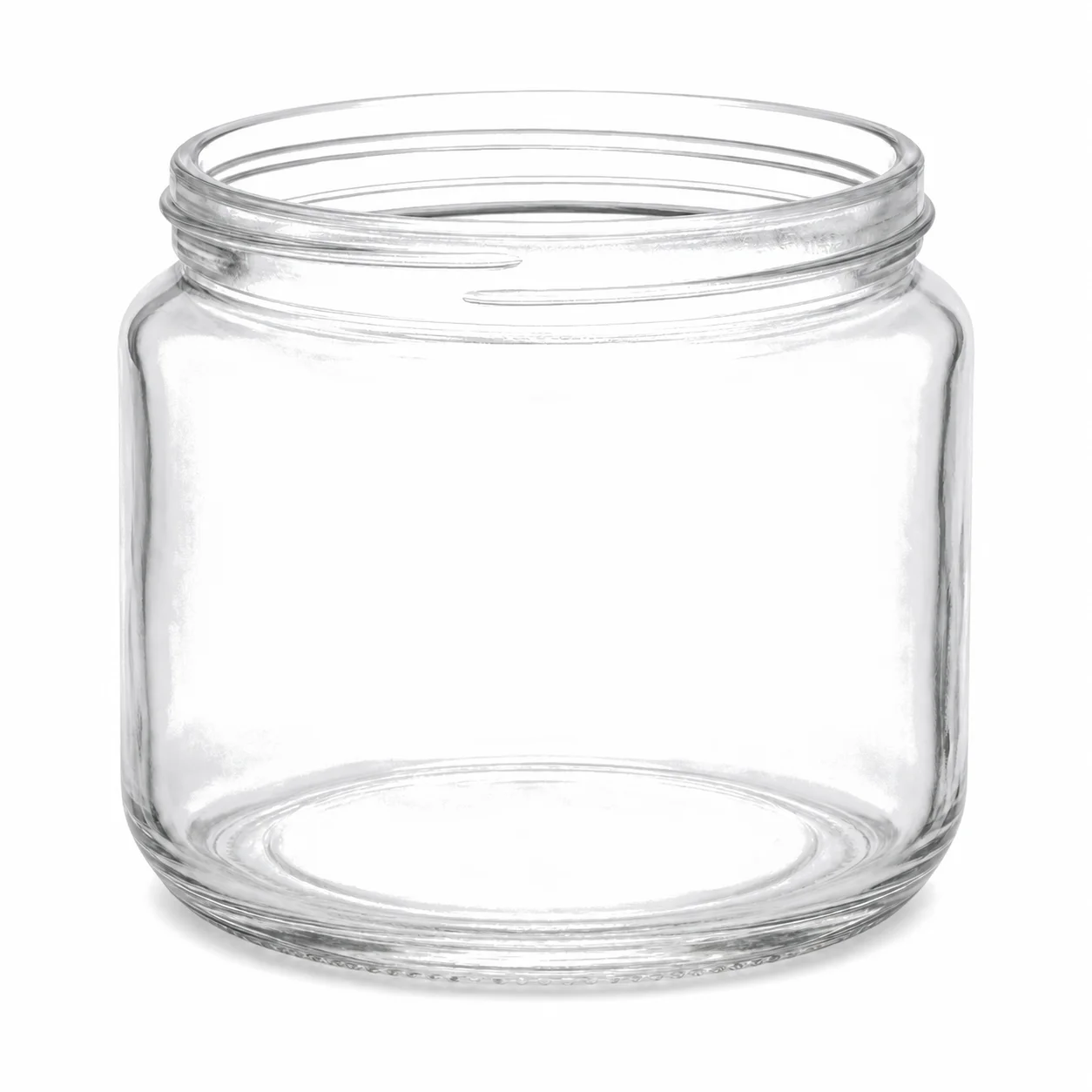
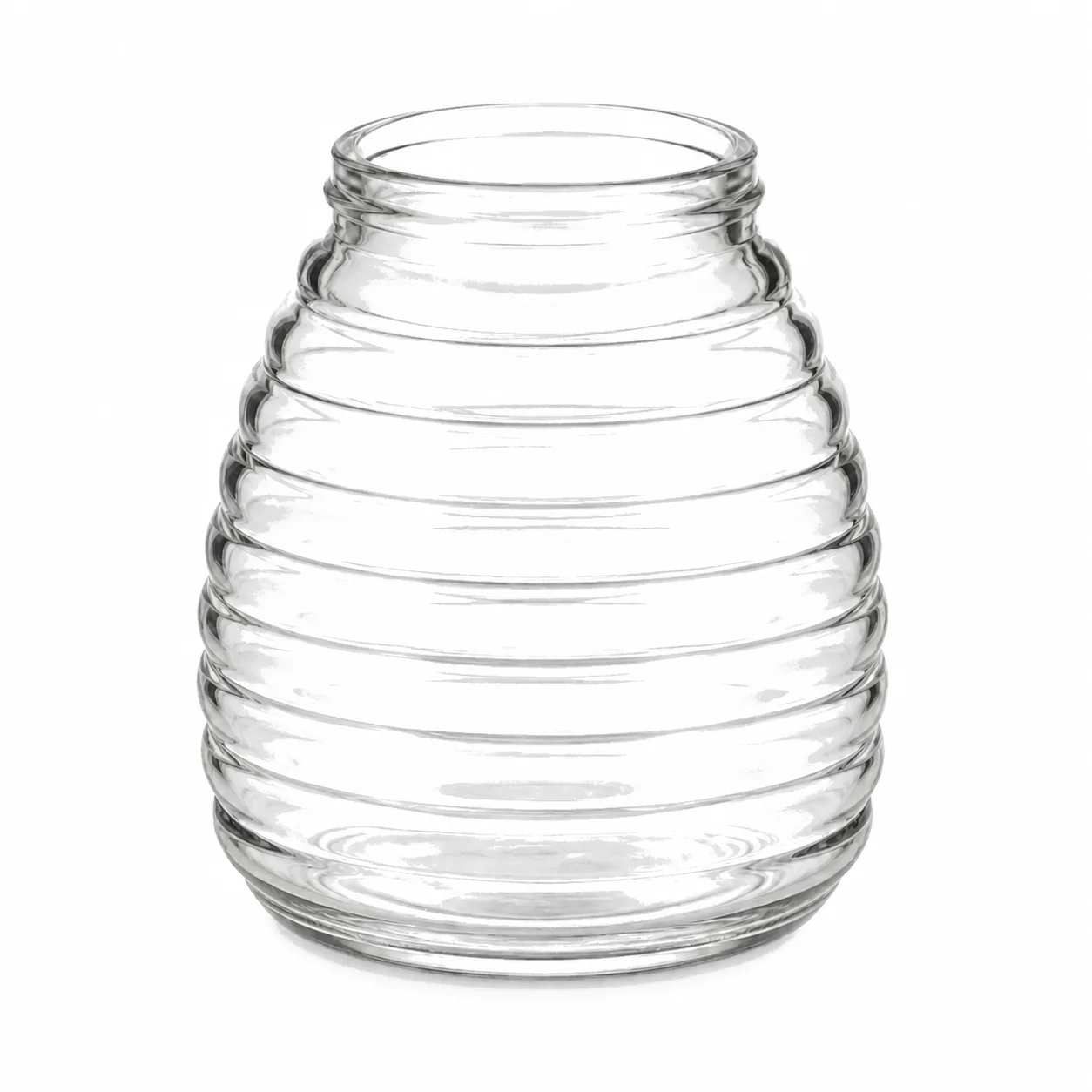
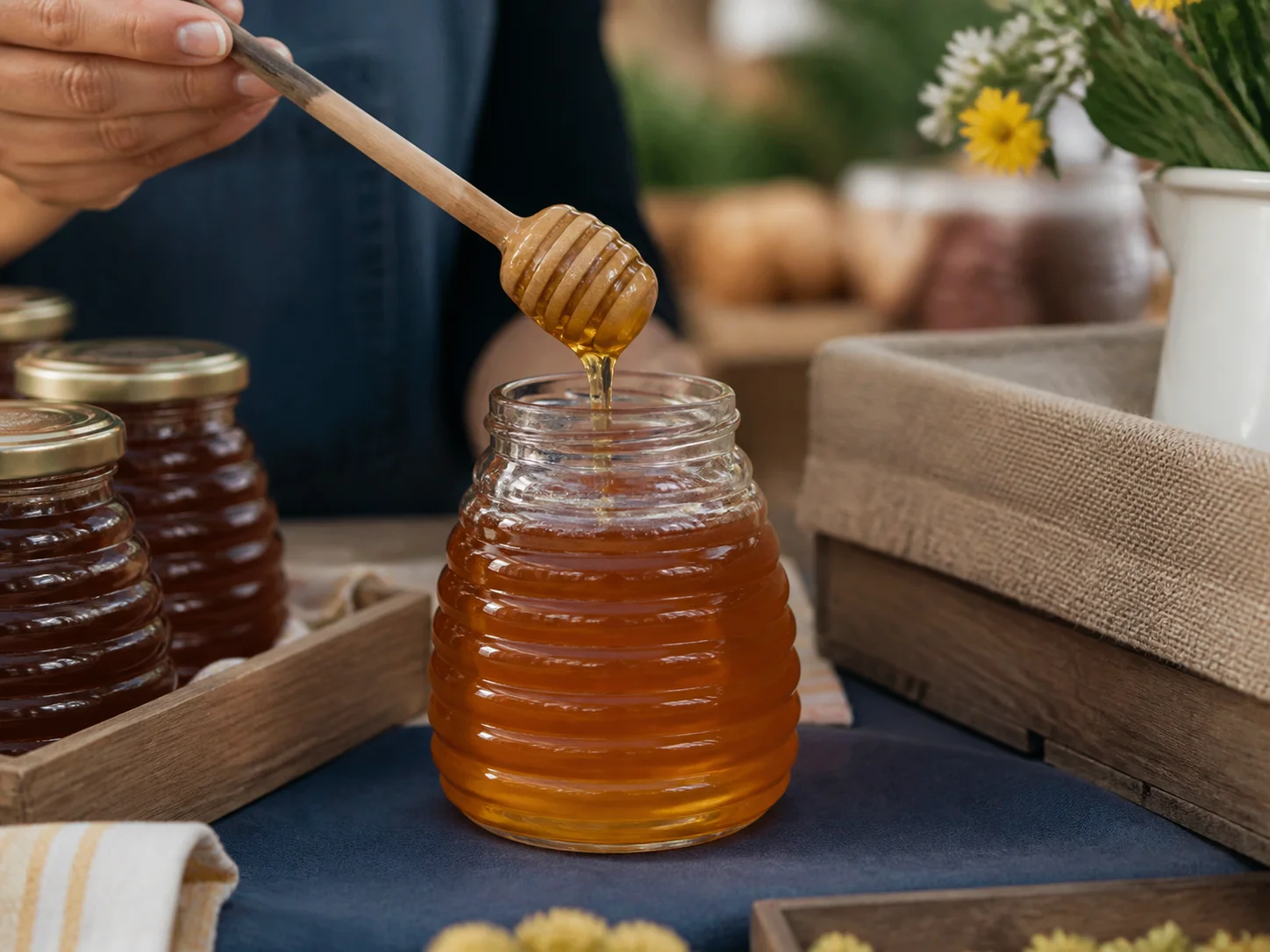
Clear 12 oz honey-weight glass skep jar with horizontal hive ribs
Shown configuration · bare flint-glass skep jar / 58 mm lug lid not shown

12 oz honey-weight glass shaped like a traditional skep

Skep / Hive Honey Jar

A 9 fl oz overflow flint-glass hive jar with stacked skep ribs, flat front and back label panels and a 58-2020 lug finish for 12 oz honey-weight retail and gift packs.

12 oz honey-weight size9 fl oz overflow58-2020 lug finish
Stock status
In stock
Lead time
2–3 weeks
FOB price / pc
$0.60 - $1.00
MOQ
10,000 pcs

Final availability, dimensions, materials, assembled components and commercial terms are confirmed against the selected drawing and approved sample.

Instant honey recognition

The stacked coil profile recalls the woven straw skeps historically used by beekeepers

Flat labeling zones

Front and back panels interrupt the ribs to provide a 76.2 × 44.5 mm label area

Shared specialty lid route

The 58 mm lug finish can align with compatible glass honey-bear programs

Skep / Hive Honey Jar profile

A measured half-skep format combining honey-weight sizing, flat label panels and a short-turn lug cap.

Honey weight, lug closure & ribbed-body design

Six practical decisions for the 12 oz honey-weight skep.

BGP-FS-3584 works to the familiar 12 oz honey-weight half-skep envelope. It stands 95.3 mm high, measures approximately 93.2 × 69.3 mm across its oblong body, and has 9 US fl oz overflow capacity. The 58-2020 finish accepts a metal lug lid—not a 58-400 screw cap—and the same distinction matters when consolidating cap inventory across an apiary range.

01

Honey weight and fluid capacity are different

The jar is sold for roughly 12 oz or 340 g of honey by weight, while its liquid overflow is only about 9 fl oz. Natural variation in moisture and temperature changes honey density, so establish the declared fill by checkweight and use the glass ribs as a visual fill reference only after testing the actual harvest.

02

The skep shape needs centered filling

The jar's oblong footprint and sloping ribbed shoulders bring the sidewall close to the 58 mm mouth. Center the nozzle and control insertion depth so honey does not track along the shoulder or sealing land. A clean cutoff preserves both cap application and the transparent product presentation between the ribs.

03

Use the correct 58-2020 lug lid

This finish closes with a short twist and a small number of lugs. A 58-400 continuous-thread cap will not engage correctly even though both are described as 58 mm. Specify lid depth, lug pattern and liner compound from the production finish drawing and verify applied position after the honey has reached its final temperature.

04

Ribs create grip and optical distortion

The horizontal coils give fingers a tactile purchase and amplify highlights through the honey, but they also distort fine artwork and can make small bubbles more visible. Keep branding and mandatory copy on the smooth front and back panels, and inspect filled jars under retail lighting before choosing transparent or metallic label stock.

05

Build artwork to the flat panel

The published panel is approximately 3 × 1.75 inches. Use it as the starting rectangle, then measure production glass and leave clearance from the raised rib edges so labels do not bridge changing curvature. A neck tag can carry seasonal storytelling without competing with the compact primary label.

06

Oblong jars need directional case packing

The reference body is about 93.2 mm long and 69.3 mm wide, so orientation changes case utilization. The reference 12-pack case measures 15.25 × 8.75 × 4.25 inches with 13 cases per layer. Keep every jar aligned, isolate the lug lids from top load and prevent raised ribs from rubbing adjacent glass.
Application guide

Honey programs that benefit from an unmistakable hive silhouette.

The skep earns its place where category recognition and gift appeal matter more than a large uninterrupted label or maximum pallet density.

Skep / Hive Honey Jar used for twelve-ounce raw and varietal honey in a farm retail setting

Farm retail

Twelve-ounce raw and varietal honey

The hive profile communicates category immediately at a farm stand, allowing a compact panel to focus on floral source, harvest and producer. Use filled samples to choose label contrast because ribbed glass throws bright highlights across pale and dark honey differently.

  • Checkweigh to 12 oz
  • Proof labels on filled glass
  • Use the correct lug lid
Skep / Hive Honey Jar used for apiary boxes and regional food hampers in a gift assortment setting

Gift assortment

Apiary boxes and regional food hampers

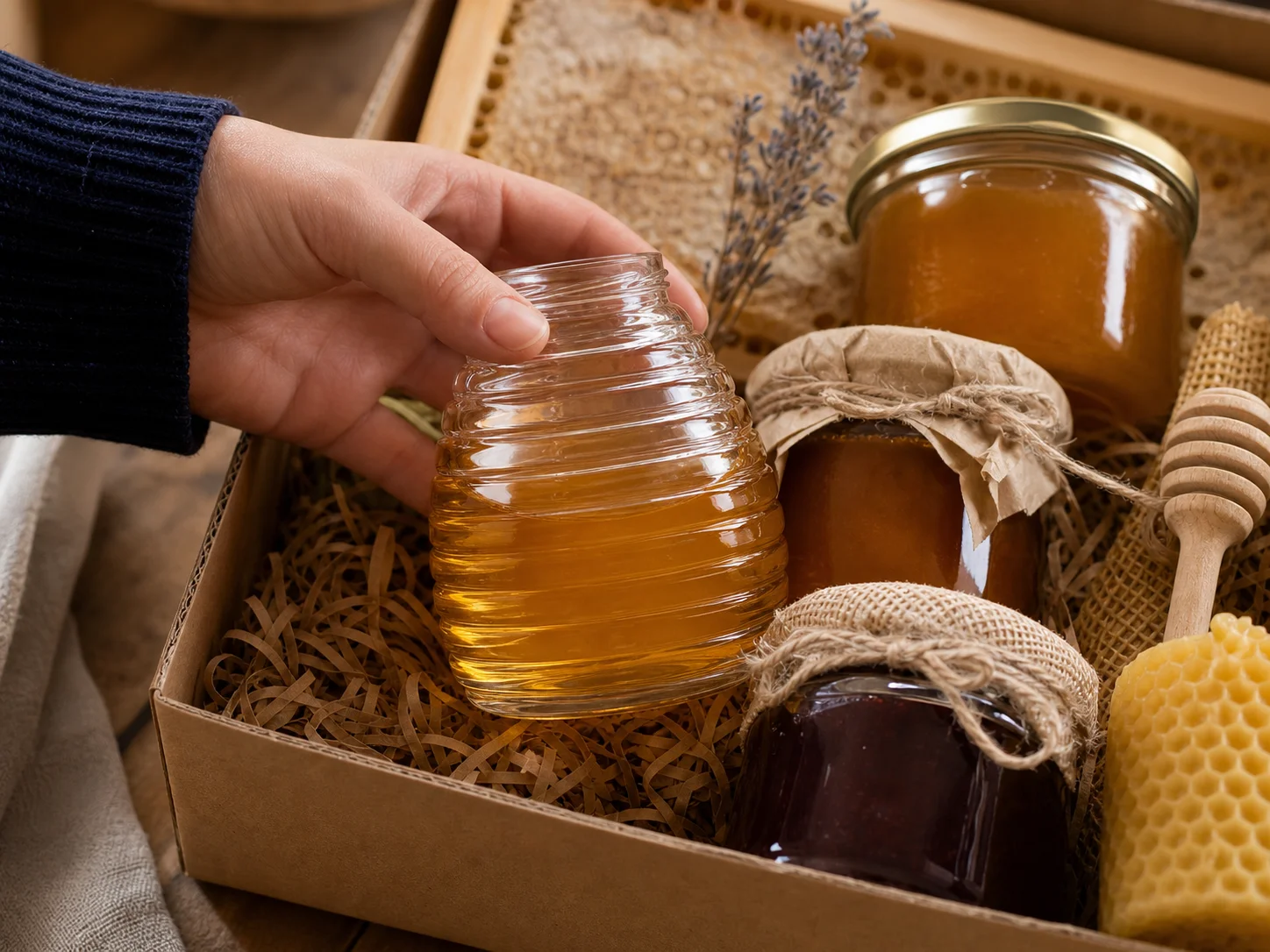
The low, rounded silhouette reads as a keepsake and fits curated gift sets differently from a tall Queenline or Muth. Design a shaped insert around the oblong body and stop vertical load at the glass base or carton structure rather than on the 58 mm lid.

  • Model the oblong cavity
  • Keep top load off the lid
  • Protect ribbed surfaces
Skep / Hive Honey Jar used for spring, summer and autumn harvests in a seasonal release setting

Seasonal release

Spring, summer and autumn harvests

A shared skep jar unifies several harvests while small front labels and neck tags carry the seasonal distinctions. Keep a separate fill-density and label-color record for each honey, and control lot coding on a smooth panel rather than across the ribs.

  • Separate harvest fill settings
  • Coordinate label hierarchy
  • Reserve a smooth code zone

The 58-2020 lug cap is a dedicated component. If the product range also uses 58-400 jars, maintain separate closure SKUs and line-clearance controls to prevent visually similar caps from reaching the wrong finish.

Skep / Hive Honey Jar FAQ

Specification questions for the BGP-FS-3584 half-skep jar.

Answers about honey-weight sizing, 58 mm lug compatibility, labeling and the oblong case footprint.

Are the front and back ribbed?

The hive ribs define most of the body, but the design provides flatter front and back panels for labels. The published starting panel is about 3 inches wide by 1.75 inches high.

What is the jar's actual footprint?

Approx. 3.67 inches long, 2.73 inches wide and 3.75 inches high. Its oblong orientation should be carried consistently into dividers, display trays and gift inserts.

Can the same lid be used on a glass honey bear?

Some commercial glass bears and skeps share a 58 mm lug lid, which can simplify sourcing. Confirm both production drawings and applied-cap trials before treating the component as common across BGP models.

Why does an oblong jar change the case count?

Because orientation does. The body runs about 93.2 mm long by 69.3 mm wide, so which way each jar faces decides how many fit a layer and whether raised ribs rub against a neighbor. Fix the orientation in the pack pattern, keep the lug lids clear of top load, and count the case from the aligned layout.

Next step

Send us the Skep / Hive Honey Jar brief.

Tell us the product, fill volume, closure preference and destination market. We will come back with the matching drawings, available configurations and a sample plan before anything is quoted.

  • 01Send the briefProduct, volume, closure and market
  • 02Get the optionsMatching drawings and configurations
  • 03Approve the sampleConfirm the pack before production