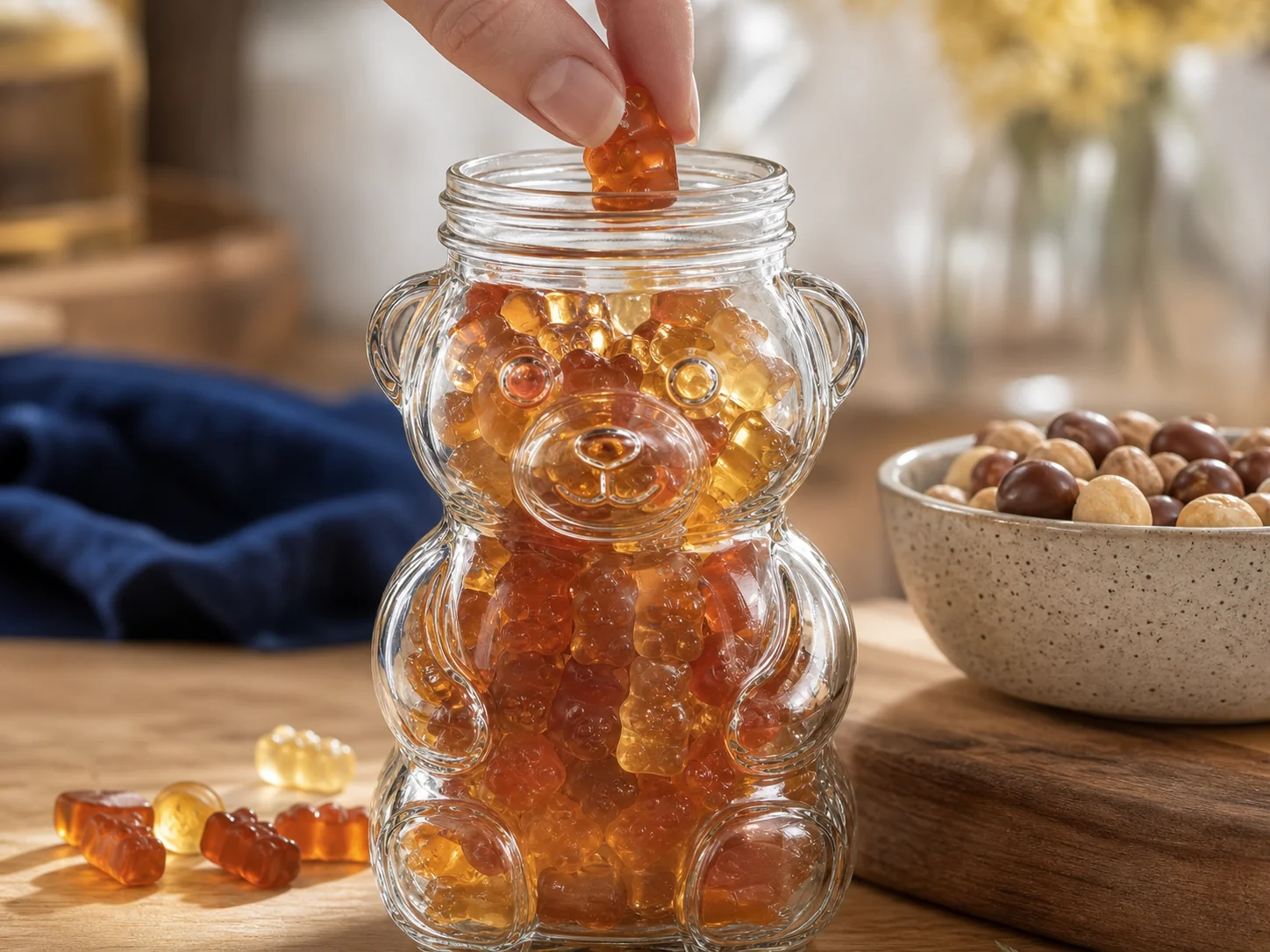
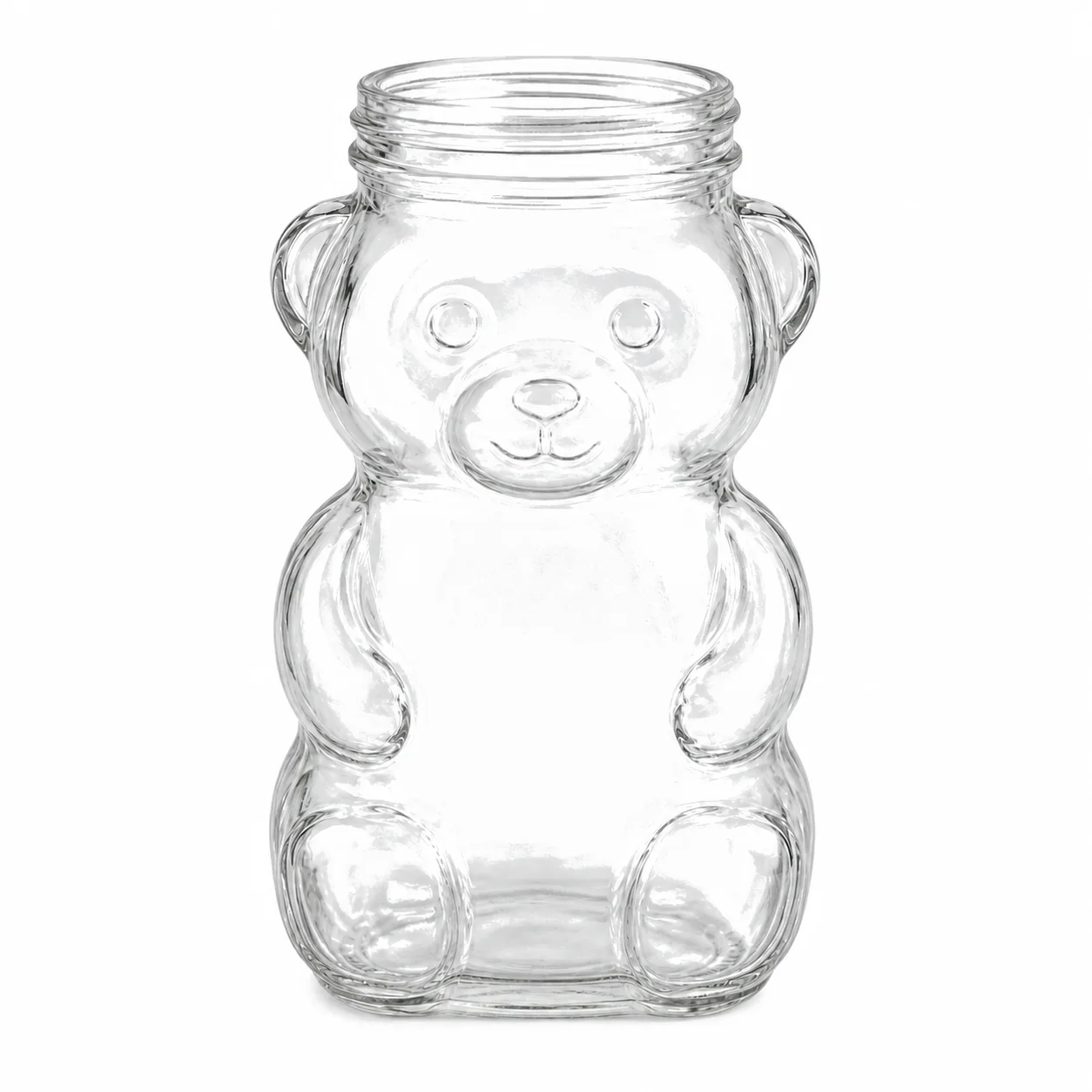
Clear 12 oz honey-weight glass bear jar with wide lug neck
Shown configuration · bare flint-glass bear jar / 58 mm lug lid not shown

12 oz honey-weight glass bear with a 58 mm lug lid

Honey Bear Bottle

A 9 fl oz overflow flint-glass honey bear jar with sculpted face, ears and paws, an 8 fl oz practical fill and a 58-2020 lug finish for premium apiary retail and gifting.

12 oz honey weightRigid glass, not squeezable58-2020 lug finish
Stock status
In stock
Lead time
2–3 weeks
FOB price / pc
$0.65 - $1.10
MOQ
2,000 pcs

Final availability, dimensions, materials, assembled components and commercial terms are confirmed against the selected drawing and approved sample.

Glass, not squeeze PET

The rigid sculpted jar creates a keepsake presentation intended for spoon or dipper access

Instant category cue

The bear face and paws identify honey before the shopper reads the label

Shared 58 mm platform

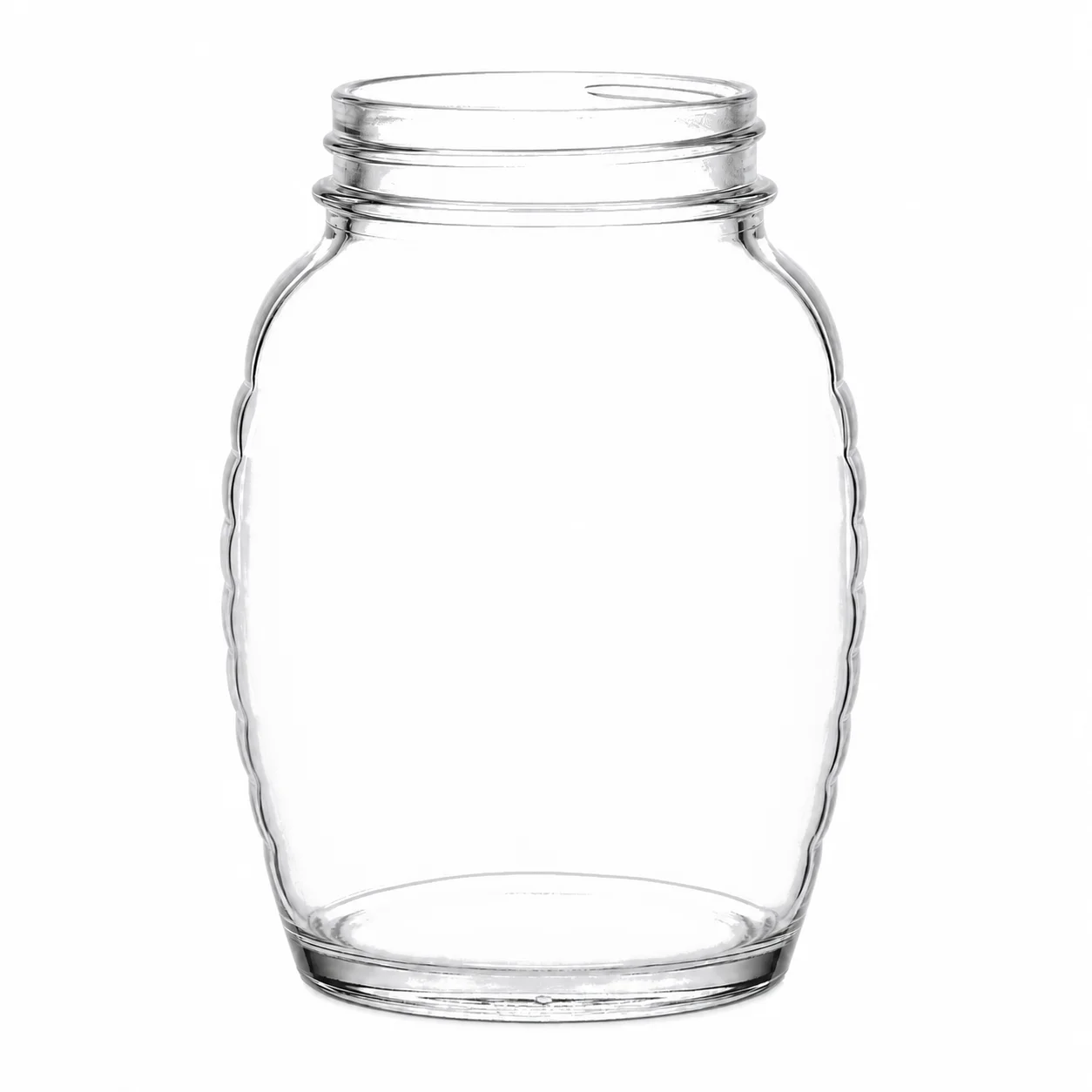
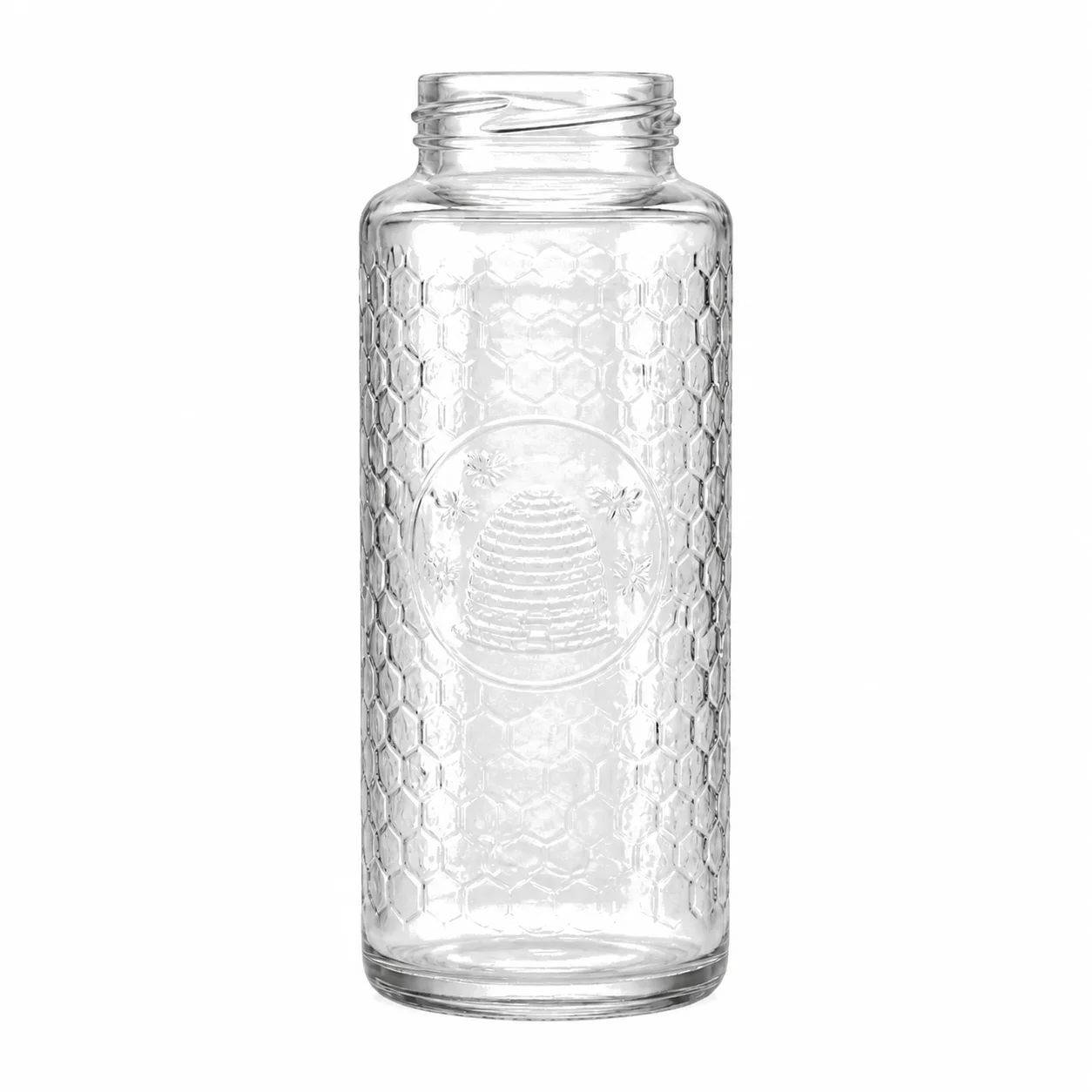
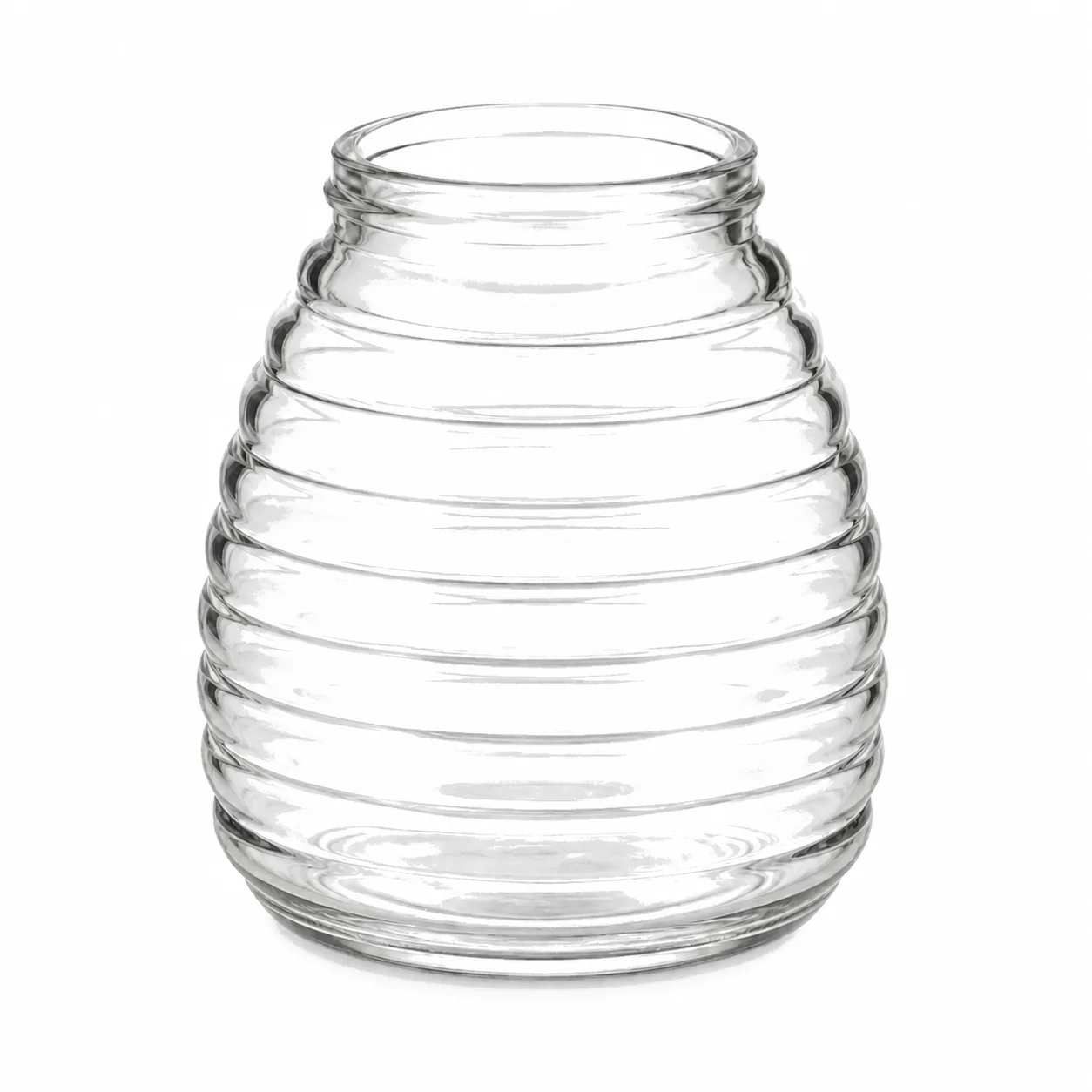
A matched lug lid may be common with compatible Skep and selected hexagonal honey jars

Honey Bear Bottle profile

A quantified glass honey bear whose use model is dipping—not squeezing.

Honey weight, rigid-glass use & character decoration

Six decisions specific to the glass bear format.

BGP-FS-1971 works to the 9 oz glass-bear envelope: 9 US fl oz overflow, 115.8 mm tall, approximately 79.5 mm wide and fitted with a 58-2020 metal lug lid. A practical 8 fl oz fill holds about 12 oz of honey by weight. Unlike the familiar flexible PET bear, this rigid glass version is opened at the wide mouth and served with a spoon or dipper.

01

Do not promise squeeze-bottle behavior

The molded bear resembles a plastic squeeze pack, but flint glass does not deform to dispense honey. The 58 mm mouth supports spooning, dipping or direct controlled pouring after the lid is removed. Product photography and instructions should show that real use pattern so buyers do not expect a flip-top nozzle.

02

Set 12 oz honey by checkweight

The jar's 9 fl oz brimful volume and approximately 8 fl oz practical fill are liquid measures; 12 oz is the intended honey weight. Determine the finished fill height with the actual harvest, then control net content by checkweight because honey density changes with moisture and temperature.

03

Fill through the head without wetting the rim

The wide neck accommodates a honey nozzle, but the sculpted head creates short shoulders close to the finish. Center the container positively, control nozzle withdrawal and stop strings before they reach the sealing land. Honey trapped under the lug lid can affect cap position and leave a sticky opening experience.

04

Use a 58-2020 lug closure

The metal lid turns through a short angle to engage the jar lugs; it is not interchangeable with 58-400 continuous thread. Select liner compound and application setting for the actual honey and process. If a heat process is used for another food, qualify vacuum formation and cooling rather than assuming the decorative jar follows a generic canning cycle.

05

Design around the face and belly

Facial relief, arms and feet leave limited uninterrupted label space. A shaped belly label, small back label or neck tag usually preserves the character better than a full wrap. Test barcode scan direction on the curved surface and keep fine copy away from the raised paws and changing wall angles.

06

Protect ears, lid and projecting details

The reference 12-pack case is 13 × 9.5 × 5 inches and palletizes at 135 cases. Dividers should control the main body without concentrating load on ears, muzzle or feet, while top clearance keeps the 58 mm lid from carrying case compression. Orientation also keeps every bear facing consistently at unpacking.
Application guide

Applications where rigid glass gives the familiar bear a more premium role.

This version suits products served from an open jar and programs that value keepsake character over the convenience of a squeezable dispensing bottle.

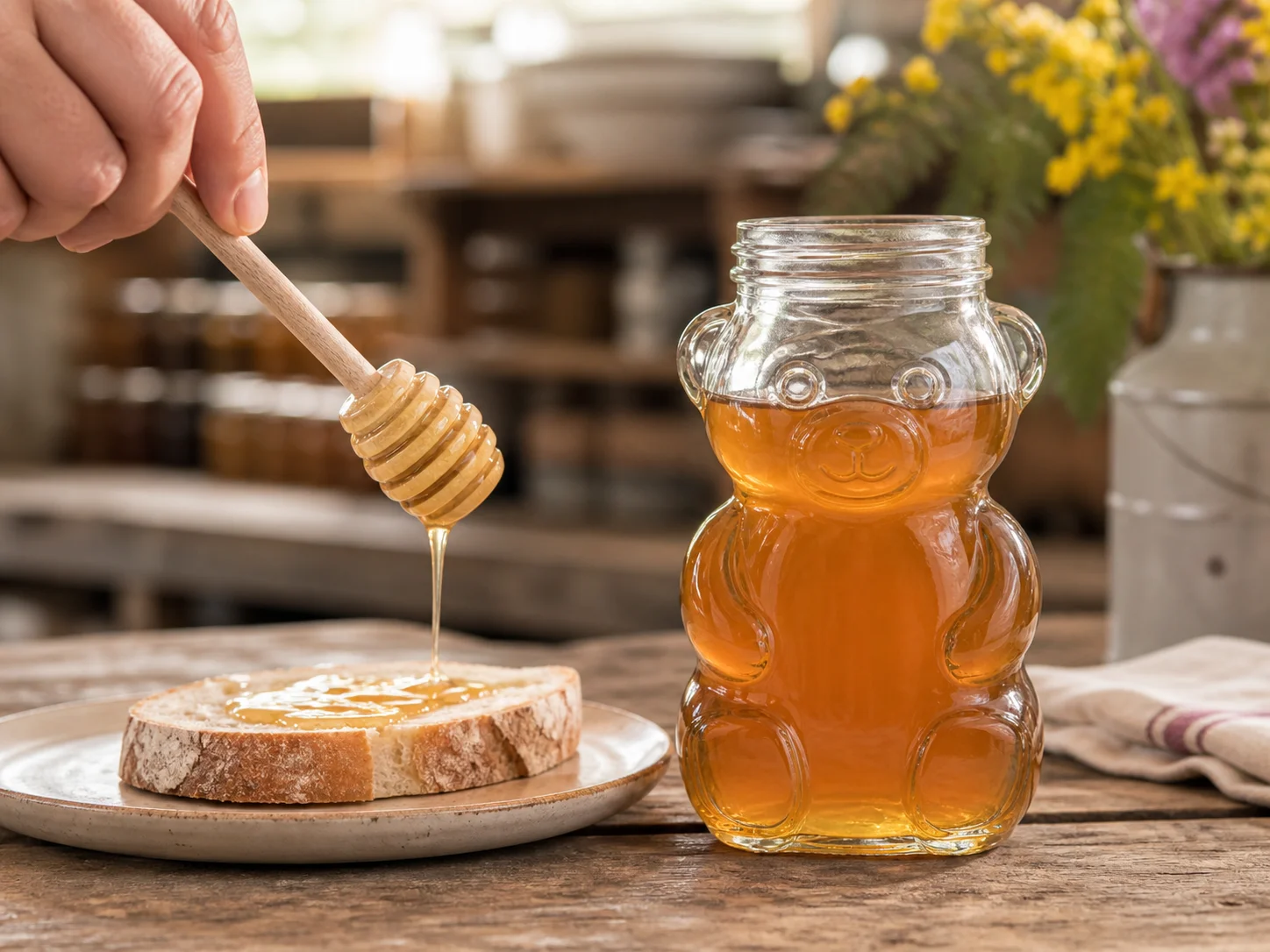
Honey Bear Bottle used for twelve-ounce everyday apiary pack in a farm-shop honey setting

Farm-shop honey

Twelve-ounce everyday apiary pack

The bear shape gives immediate recognition while clear glass elevates varietal color and texture. Position the label on the belly or back, calibrate the 12 oz honey checkweight, and communicate spoon or dipper use rather than borrowing squeeze-bottle graphics from PET packaging.

  • Show the real serving action
  • Checkweigh the honey
  • Preserve facial detail
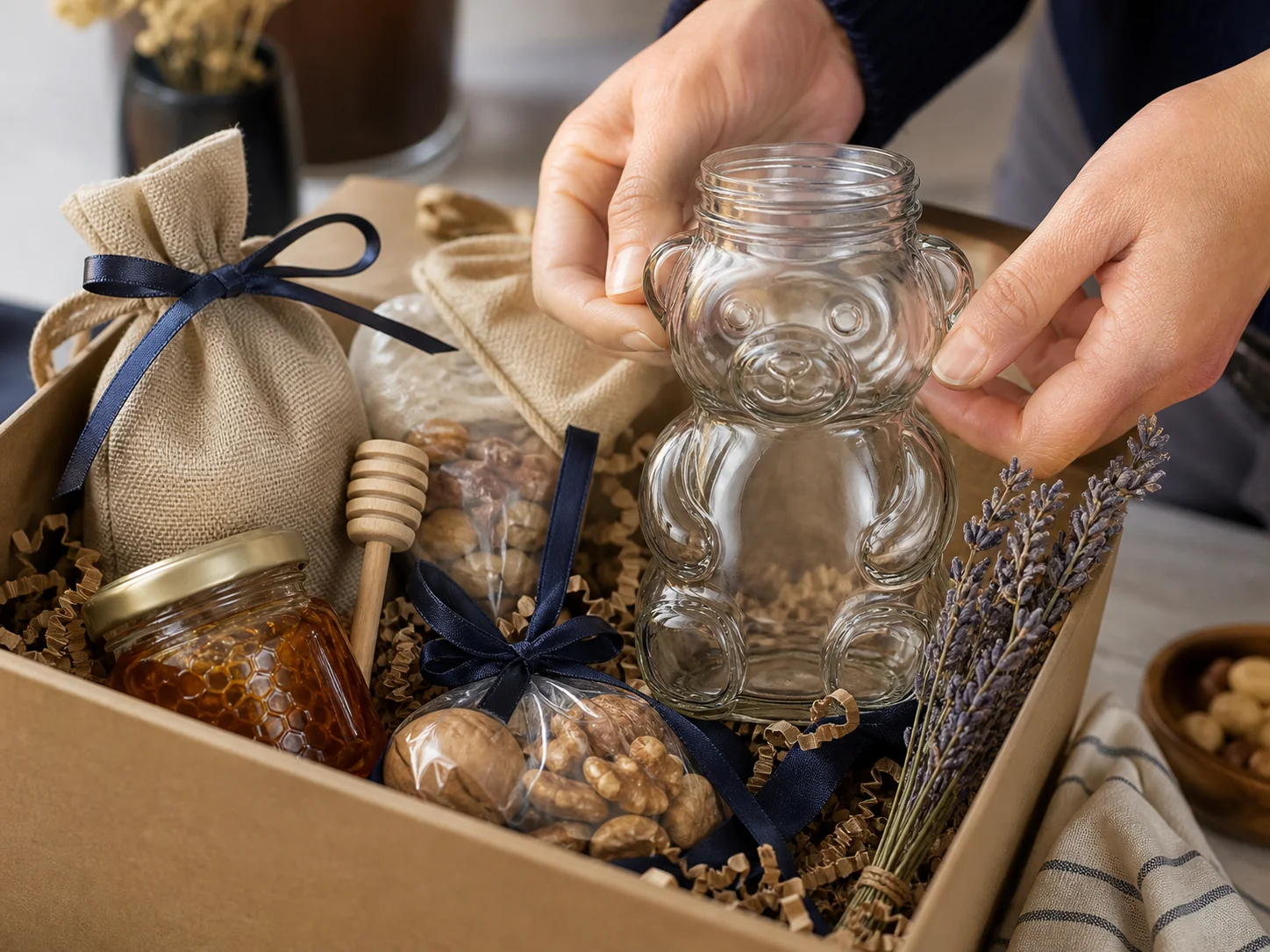
Honey Bear Bottle used for keepsake jars and food hampers in a gift honey setting

Gift honey

Keepsake jars and food hampers

The sculpted glass has enough object value to anchor a hamper or seasonal gift. Use a fitted cavity that protects ears and paws, pair the lug lid with a clean neck band if opening evidence is required, and keep decorative tags clear of the bear's face.

  • Protect projecting features
  • Coordinate tag and band
  • Control jar orientation
Honey Bear Bottle used for honey sweets and dry treats in a confectionery setting

Confectionery

Honey sweets and dry treats

The wide 58 mm opening also supports honey candies, coated nuts and small dry confections where the bear acts as a reusable character jar. Calculate fill by product bulk density, keep small pieces clear of the sealing surface and choose a liner suited to the dry-food moisture target.

  • Set bulk-density fill
  • Confirm piece clearance
  • Select dry-food liner

This glass bear is not a squeeze dispenser. If one-handed controlled dispensing is the primary user requirement, specify a flexible PET or HDPE bear with the appropriate dispensing closure instead of presenting the glass jar as an equivalent substitute.

Honey Bear Bottle FAQ

Specification questions for the BGP-FS-1971 glass honey bear.

Answers covering material, capacity terminology, serving method, lug-lid compatibility and decoration space.

Is this a squeezable honey bear?

No. BGP-FS-1971 is rigid flint glass. The lid is removed and honey is spooned, dipped or carefully poured from the 58 mm mouth; squeezing requires a separate flexible-plastic bottle design.

Can the cap be shared with the Skep jar?

The glass bear and the half-skep jar both use 58 mm lug finishes, so a shared lid may be possible. Approve the exact finish drawings, liner and applied-cap results on both jars before consolidating the SKU.

Where should the label go?

The central belly and back are the practical label zones. A shaped pressure-sensitive label or small back label preserves the face and paws; artwork should be proofed on production glass because the body curvature affects adhesion and barcode scanning.

What breaks first if the case is packed too tightly?

The ears, the muzzle and the paws. Those projections reach the divider before the body does, and the 58 mm lid takes case compression if the top clearance is short. Dividers should locate the main body and leave the sculpted detail untouched — and keeping every bear facing the same way is what makes that possible.

Next step

Send us the Honey Bear Bottle brief.

Tell us the product, fill volume, closure preference and destination market. We will come back with the matching drawings, available configurations and a sample plan before anything is quoted.

  • 01Send the briefProduct, volume, closure and market
  • 02Get the optionsMatching drawings and configurations
  • 03Approve the sampleConfirm the pack before production