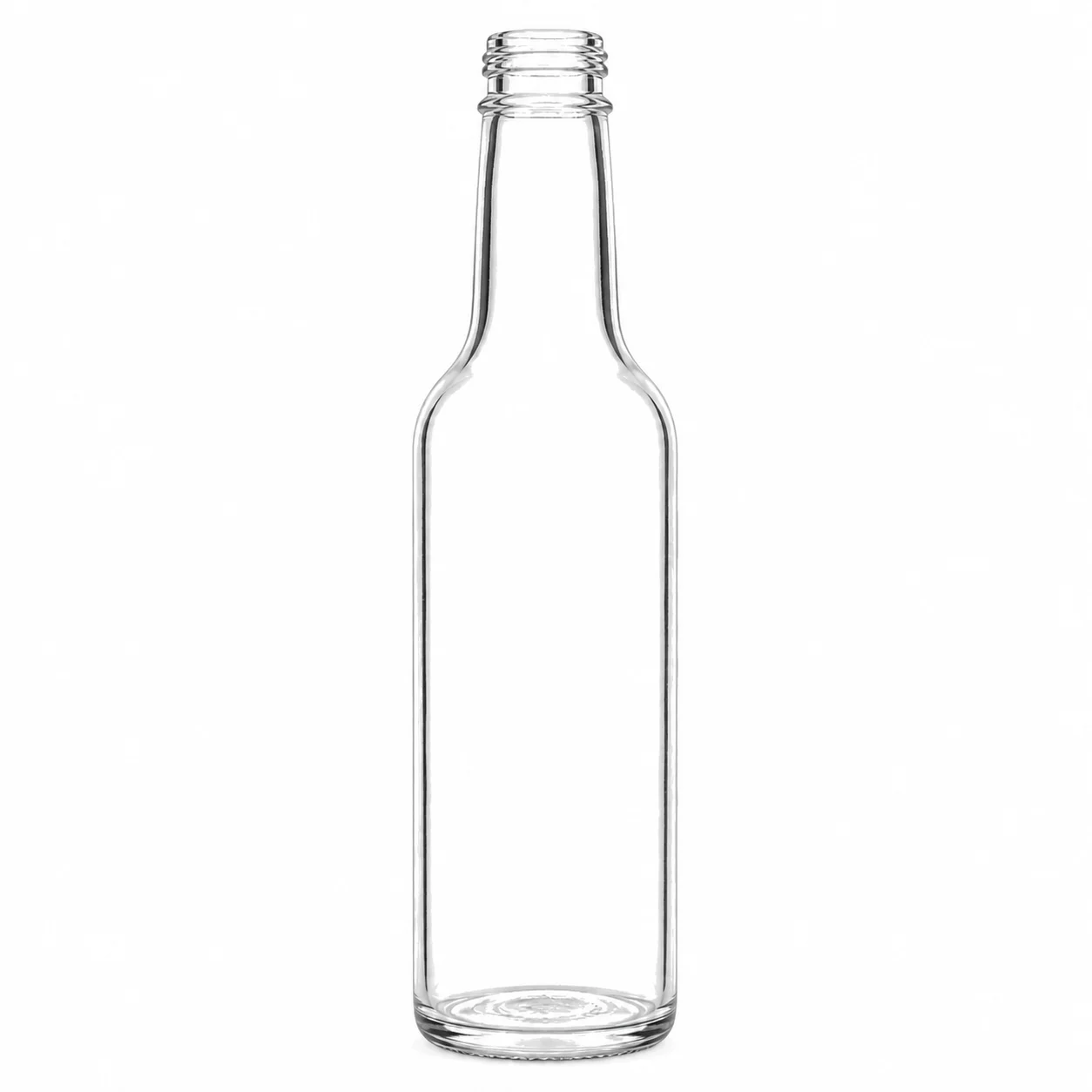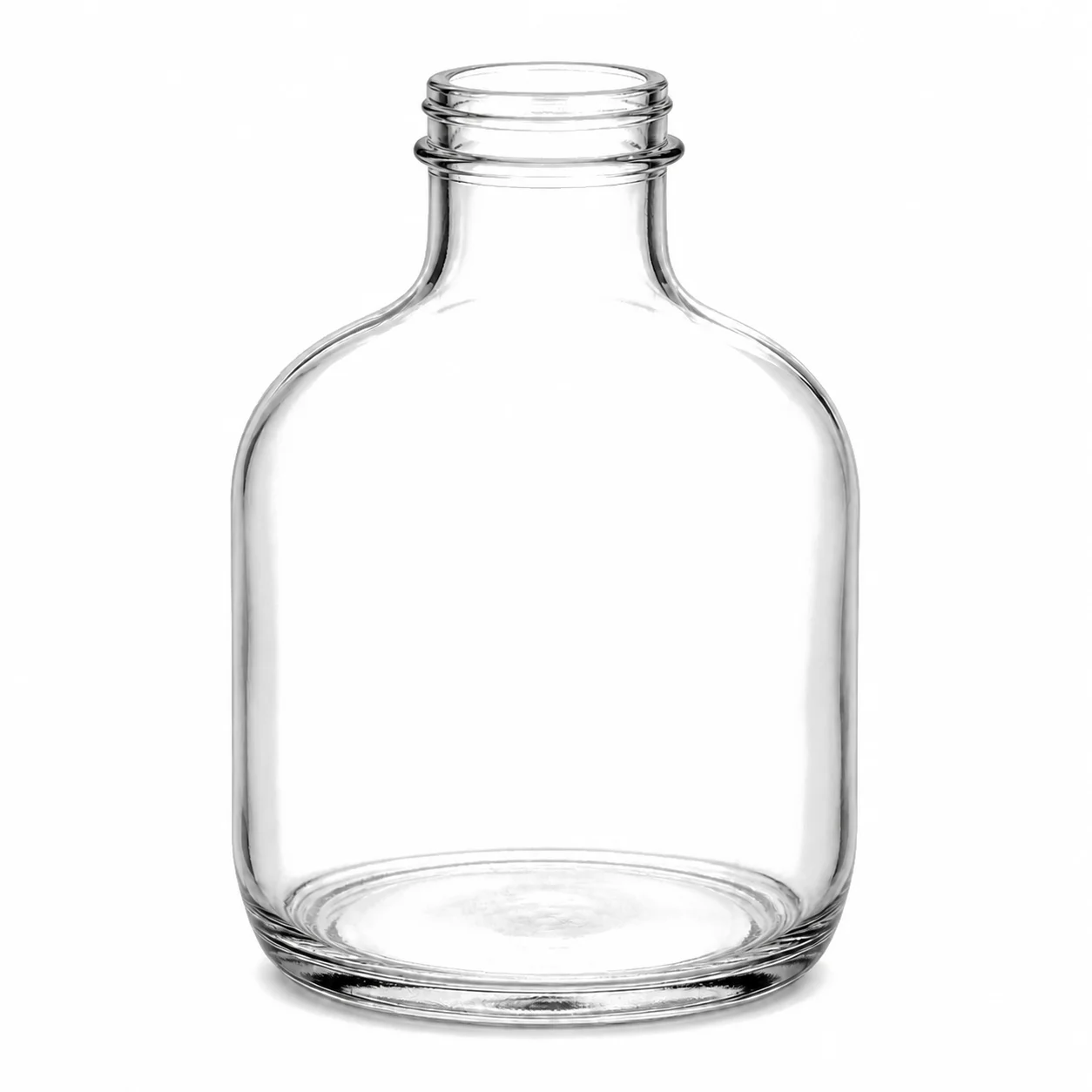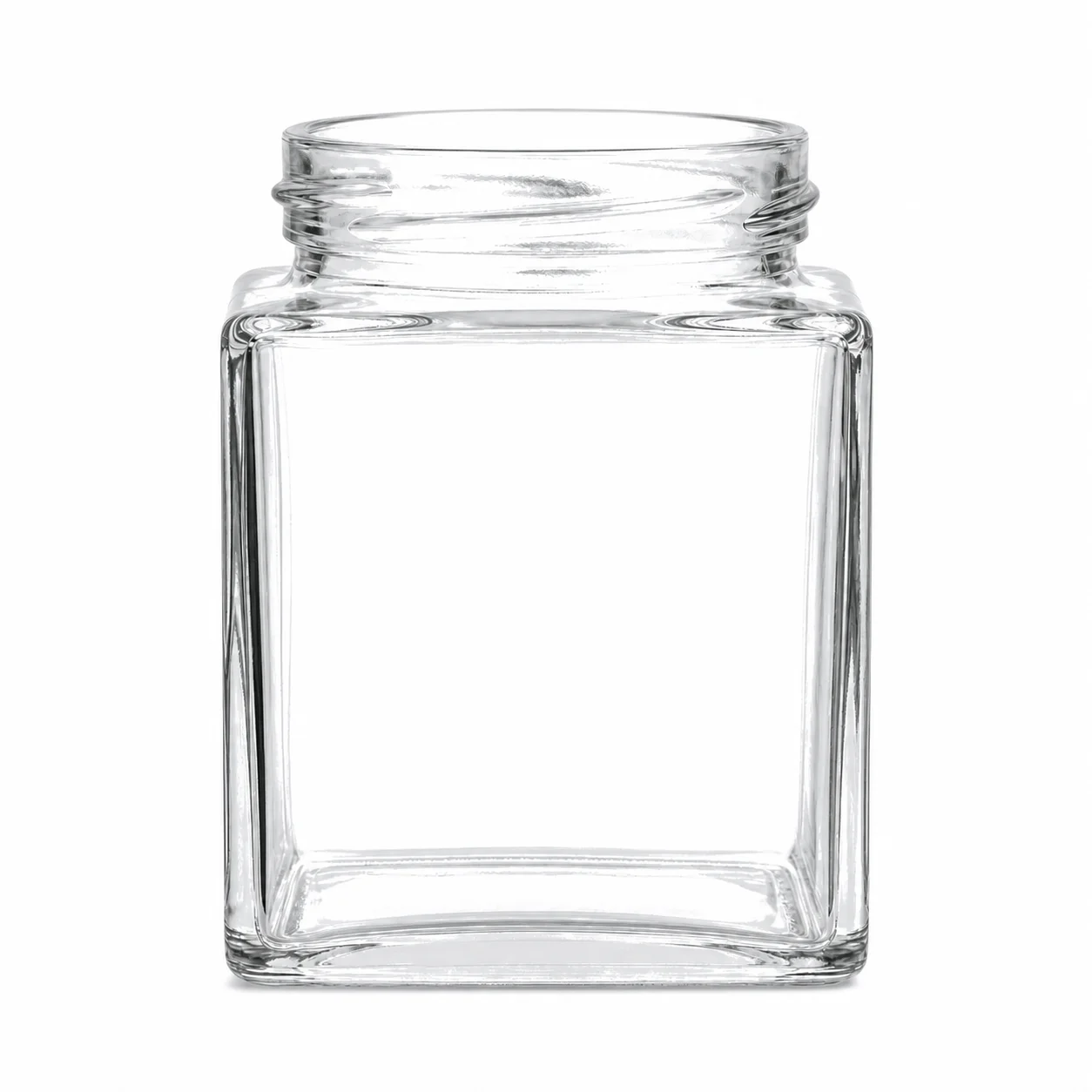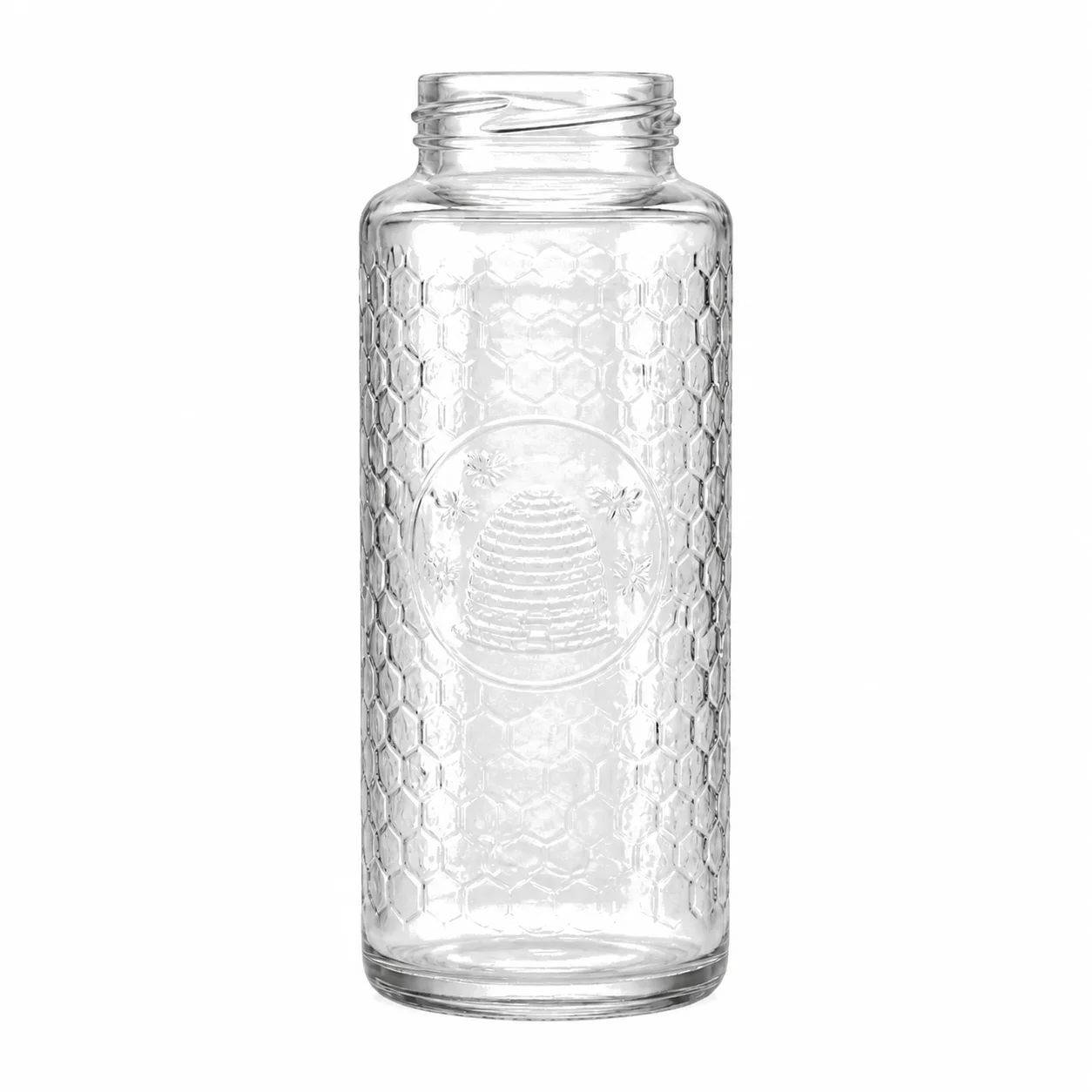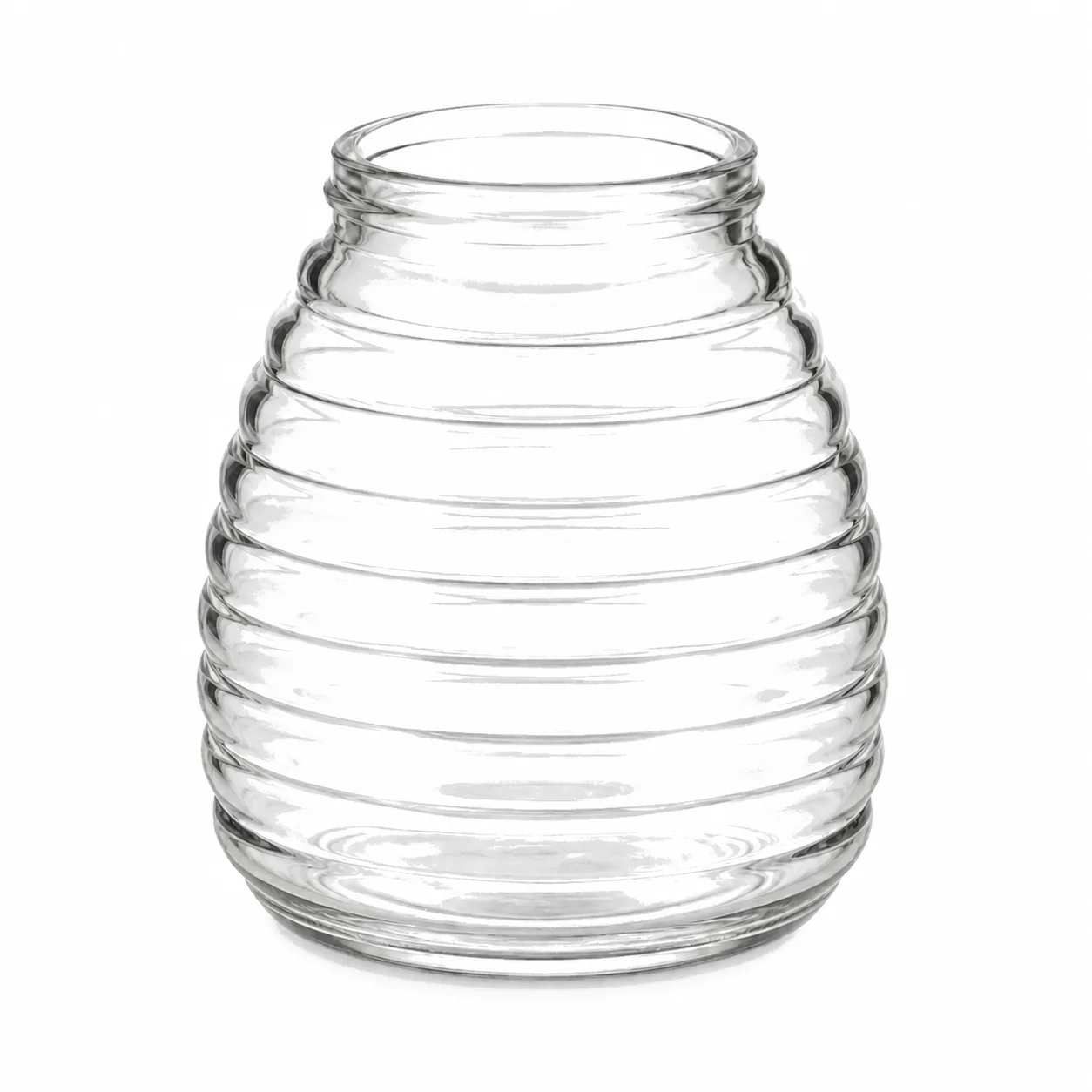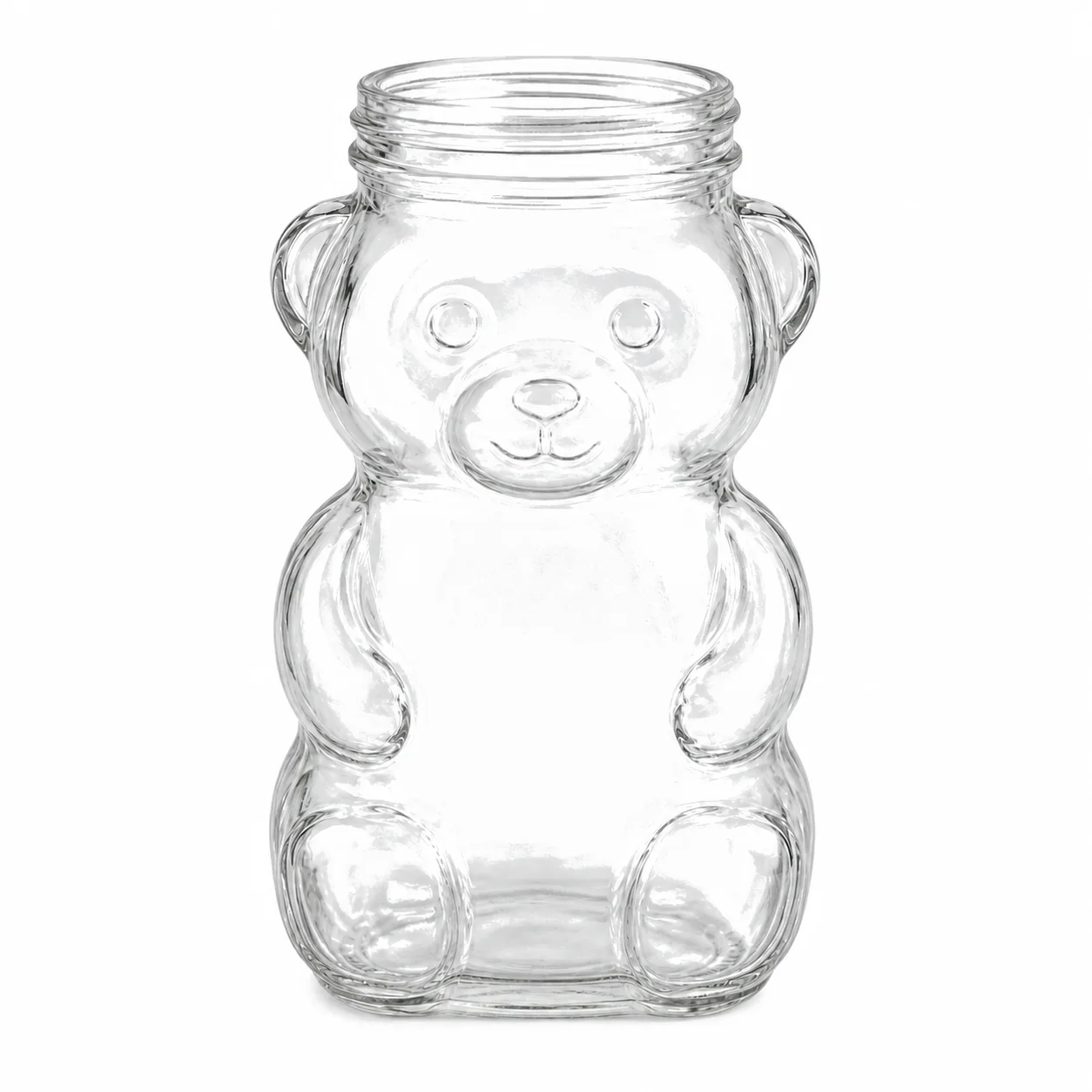
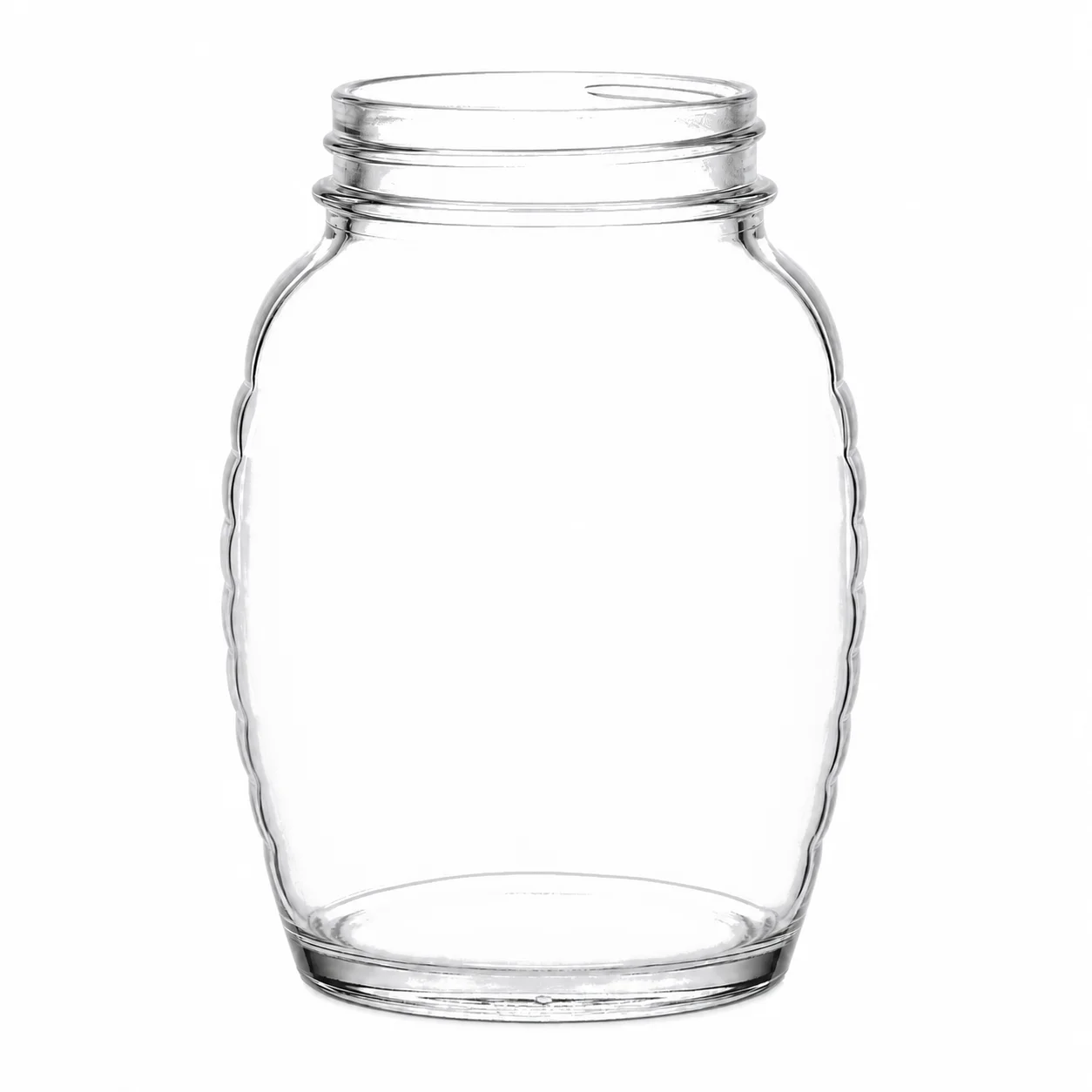
Clear one-pound Queenline glass honey jar with scalloped side grips
Shown configuration · bare flint-glass jar / 58-400 cap and liner not shown

Traditional 1 lb honey-weight glass with a 58 mm mouth

Queenline Honey Jar

An 11 oz liquid-capacity flint-glass Queenline jar sized for approximately 1 lb of honey, with a 58-400 finish, oval waist and scalloped grip edges for apiary retail programs.

1 lb honey-weight size11.5 fl oz overflow58-400 CT finish
Stock status
In stock
Lead time
2–3 weeks
FOB price / pc
$0.50 - $0.80
MOQ
3,000 pcs

Final availability, dimensions, materials, assembled components and commercial terms are confirmed against the selected drawing and approved sample.

Recognized apiary format

The Queenline profile is immediately associated with bottled honey in North American farm retail

Color stays visible

A broad clear front displays varietal differences from pale clover to dark forest honey

Useful filling access

The 58 mm mouth accepts practical honey nozzles and supports spoon access after opening

Queenline Honey Jar profile

The classic one-pound honey jar, expressed in both honey weight and liquid volume.

Honey weight, filling & retail presentation

Six decisions that matter specifically for a one-pound Queenline program.

BGP-FS-4227 works to the traditional one-pound Queenline envelope: 11 oz nominal liquid capacity, 11.5 fl oz overflow, 143 mm high, 82.6 mm at the widest point and a 58-400 finish. The familiar one-pound description refers to the net weight of honey—not 16 fluid ounces—because honey is substantially denser than water.

01

Quote honey by weight, glass by volume

A Queenline sold as a one-pound jar typically holds about 11 fluid ounces of liquid. Set the legal net quantity from a calibrated filled weight, not from the overflow figure or a water conversion. Honey density varies with moisture and temperature, so confirm the target fill level using the actual lot and keep adequate headspace below 11.5 fl oz brimful.

02

Warm only enough to fill cleanly

Gentle warming lowers viscosity and improves nozzle cutoff, but unnecessary heat can affect aroma, color and quality. Define a controlled product temperature and residence time, use a nozzle sized for the 58 mm mouth, and prevent honey strings from contaminating the sealing land before capping.

03

Crystals affect filling and shelf appearance

Fine crystals, seeded creamed honey and granulation during storage change both flow and visual texture. Clear glass makes those changes prominent. For liquid honey, manage filtration and storage temperature; for creamed honey, use a depositor that preserves the intended crystal structure and fills the shoulder without voids.

04

The 58-400 cap needs a honey-appropriate liner

The continuous-thread finish supports metal or plastic closures, but liner choice controls the contact surface and sealing behavior. Match liner material to honey, cap application and any induction or tamper-evidence route. Confirm removal torque after filled jars have equilibrated, because sticky neck residue can change the opening experience.

05

Use the scallops as grip, not label area

The shallow side ribs help distinguish the Queenline and provide purchase when the jar is sticky, while the central front and back carry the cleanest graphics. Keep label edges inside the flatter zone, proof transparent stocks against the honey color and reserve a readable lot-code location away from the curved shoulder.

06

Case design must carry dense product

A case of 24 one-pound honey fills contains roughly 10.9 kg of product before glass and carton are counted. The reference case is 20.25 × 9.75 × 6.25 inches and palletizes 130 cases. Divider strength, bottom closure and pallet pattern must be reviewed for the high filled mass rather than selected from empty-jar handling alone.
Application guide

Honey styles that benefit from the classic Queenline profile.

The one-pound format works across liquid, creamed and infused ranges when the fill method and label system are adjusted to the actual texture.

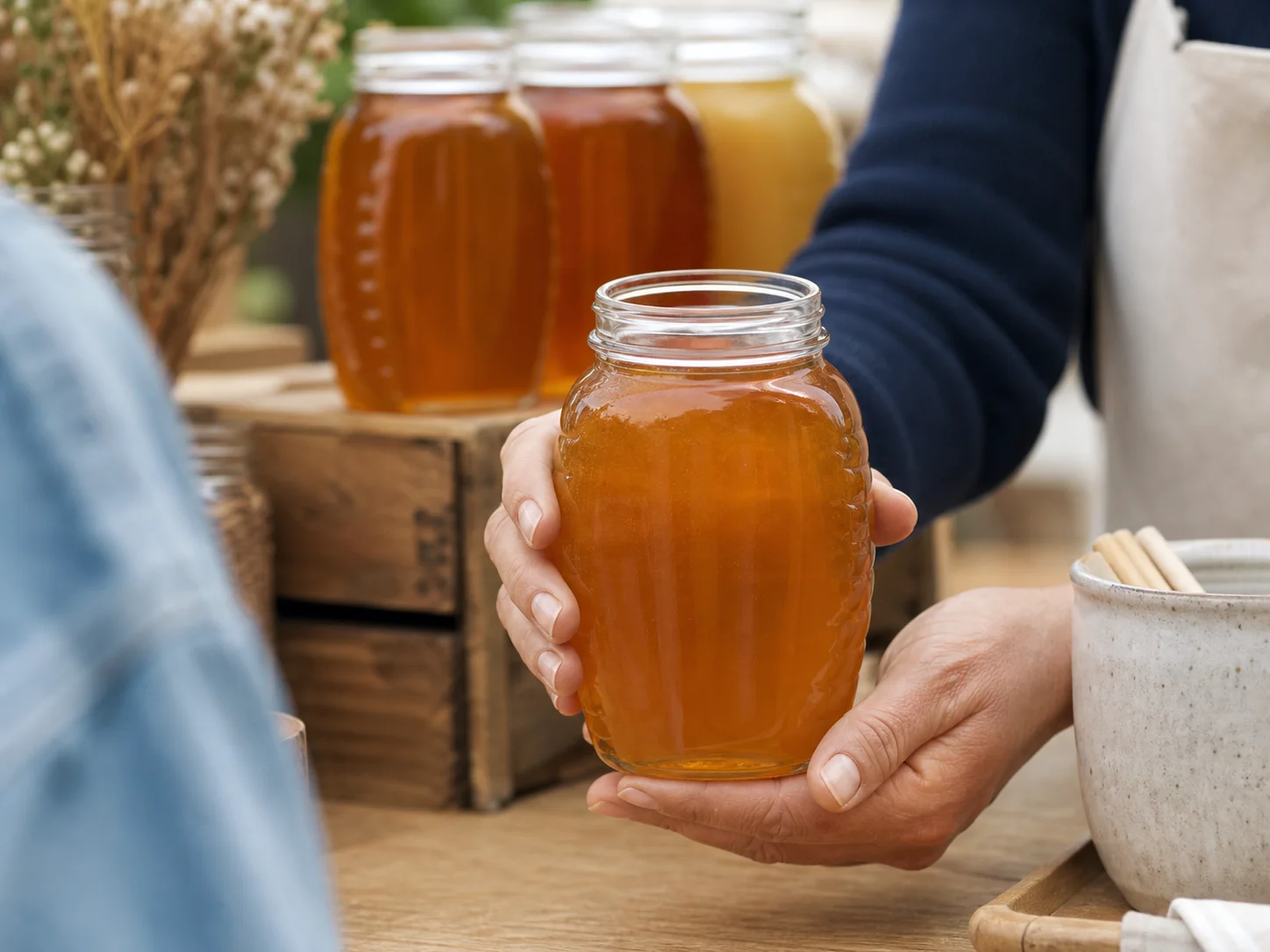
Queenline Honey Jar used for color-led apiary retail in a liquid varietal honey setting

Liquid varietal honey

Color-led apiary retail

The broad clear face makes varietal color part of the buying decision and the one-pound weight is familiar at farm shops and markets. Control filtration, filling temperature and cutoff so the glass remains clean enough for that transparency to work as intended.

  • Calibrate one-pound fill
  • Control nozzle strings
  • Keep front glass clean
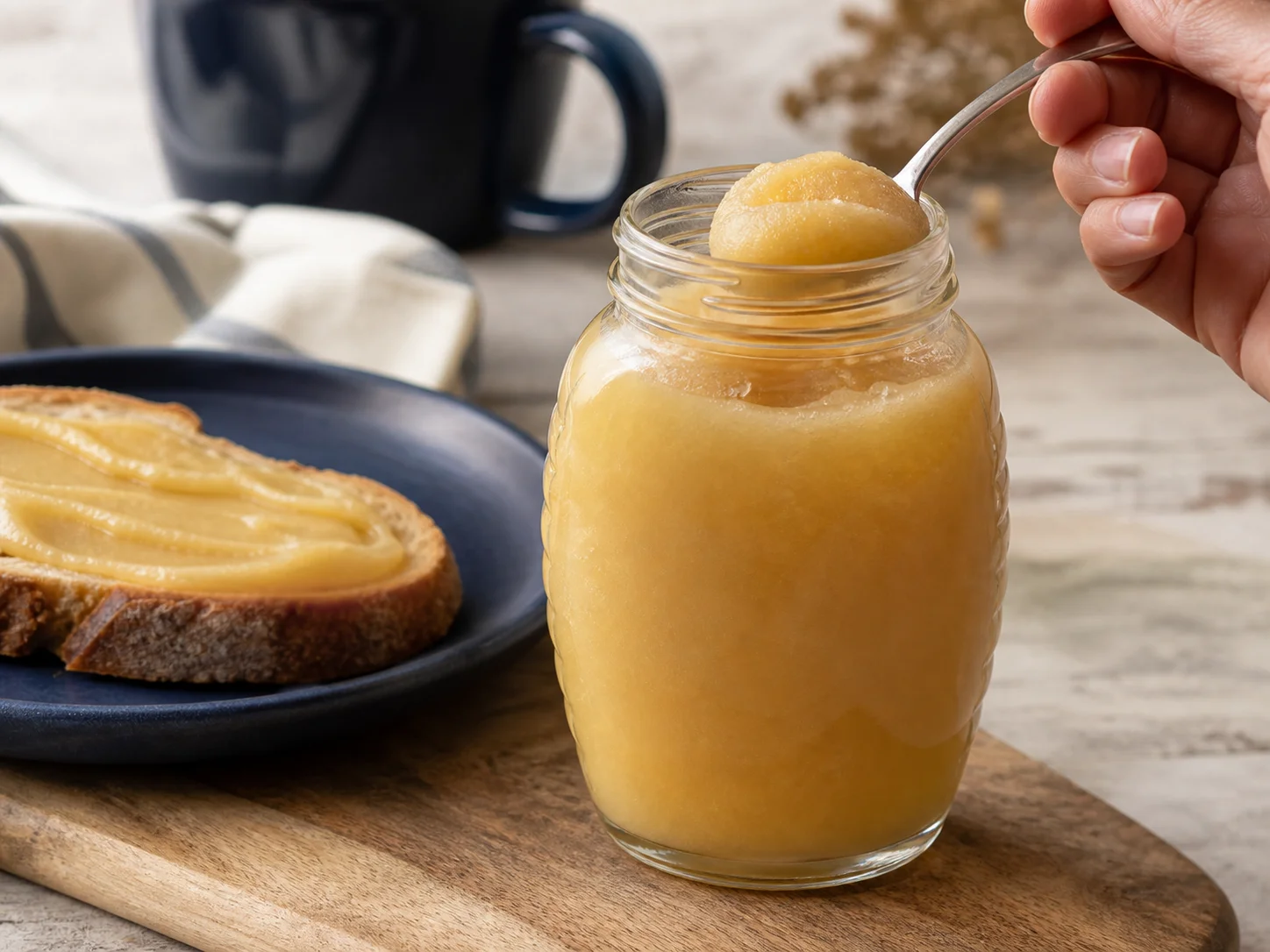
Queenline Honey Jar used for fine-crystal spoonable formats in a creamed honey setting

Creamed honey

Fine-crystal spoonable formats

The 58 mm mouth provides direct spoon access and adequate clearance for depositing a structured creamed honey. Fill at a condition that avoids large air pockets around the shoulder, then assess surface finish and crystal uniformity through the clear jar during shelf-life trials.

  • Preserve crystal structure
  • Minimize shoulder voids
  • Check spoon clearance
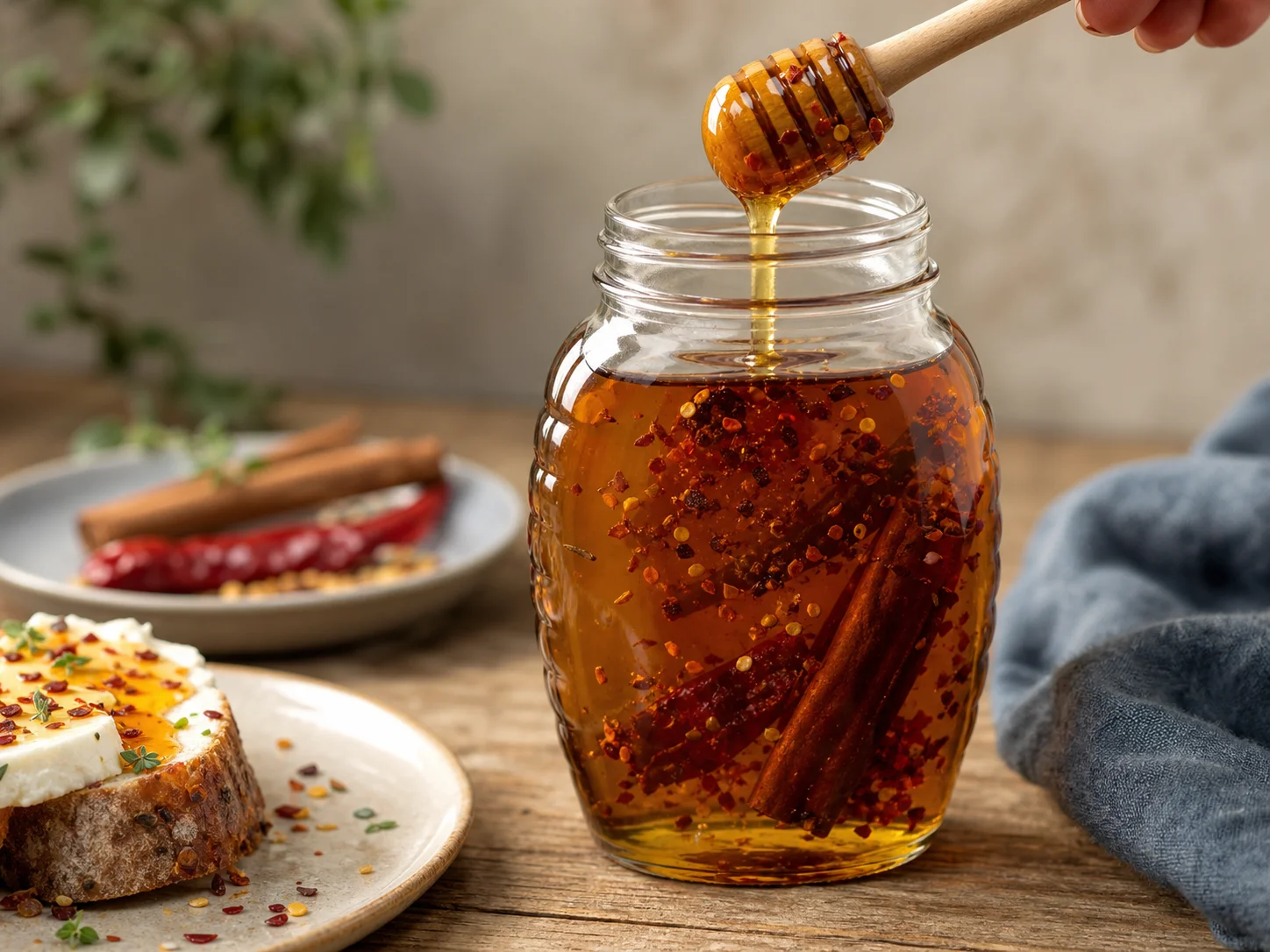
Queenline Honey Jar used for cinnamon, chili and botanical honey in a infused range setting

Infused range

Cinnamon, chili and botanical honey

The central panel supports strong flavor coding while the visible product reveals suspended spice or botanical material. Define particle settlement, oil migration and label claims for each recipe; the shared Queenline body can unify the range without treating all formulations as one filling specification.

  • Test ingredient distribution
  • Separate recipe specifications
  • Coordinate range labels

The 1 lb designation assumes the target net honey weight is established on the filling line. Because moisture and temperature affect density, use checkweighing rather than a fixed liquid-volume assumption to release production lots.

Queenline Honey Jar FAQ

Specification questions for the BGP-FS-4227 one-pound Queenline.

Answers about honey weight versus liquid volume, closure variation, filling temperature and the reference pack-out.

What are the side scallops for?

Grip, not artwork. The shallow ribs distinguish the Queenline and give fingers purchase when the jar is sticky, which is a real condition for honey. Keep labels on the clean central front and back rather than trying to bridge the ribbed zone.

Should honey be heated before filling?

Many packers use controlled gentle warming to reduce viscosity, but the appropriate temperature depends on the honey and desired quality. Establish the lowest practical filling condition with the honey producer, then verify nozzle cutoff, fill weight and closure performance.

Is a dipper supplied with the jar?

No dipper is part of the displayed configuration. The 58 mm opening can support a spoon or appropriately sized dipper, but any accessory and gift-pack retention method are separate sourcing decisions.

What does a case of 24 one-pound jars actually weigh?

Roughly 10.9 kg of honey before the glass and the carton are counted. That mass is what decides divider strength, case board grade, bottom closure and pallet pattern — a case specification carried over from an empty-jar handling test will fail under a dense product like this.

Next step

Send us the Queenline Honey Jar brief.

Tell us the product, fill volume, closure preference and destination market. We will come back with the matching drawings, available configurations and a sample plan before anything is quoted.

  • 01Send the briefProduct, volume, closure and market
  • 02Get the optionsMatching drawings and configurations
  • 03Approve the sampleConfirm the pack before production