Form, flow & daily service
Six details that make a cruet work at the table.
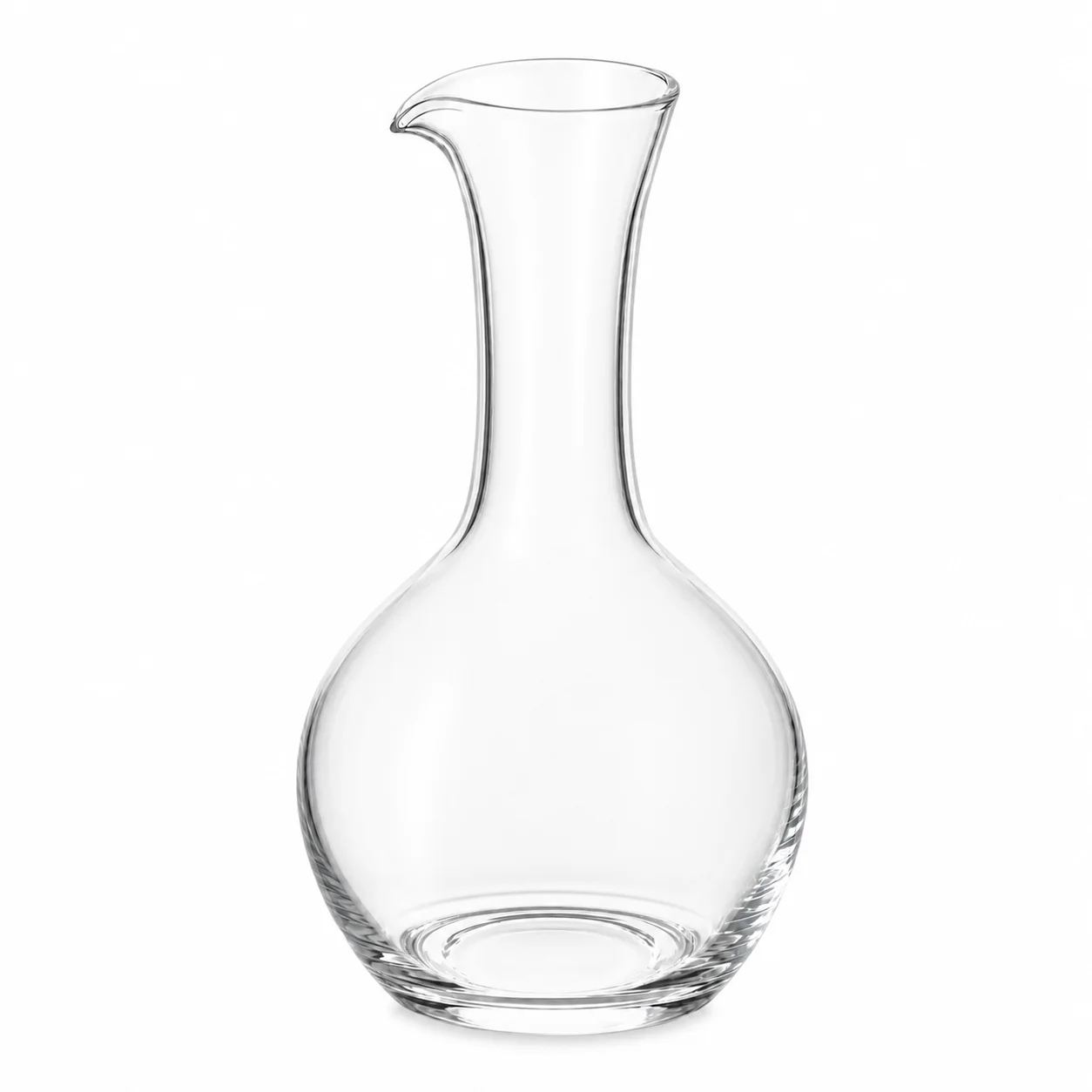
BGP-FS-8072 is an open glass cruet for controlled condiment service. The rounded lower body stores a practical table quantity, the narrow neck gives a natural handling point, and the drawn glass lip becomes the dispensing interface. Its success depends on pour quality, stability and an efficient refill-and-wash routine.
250 mL is a service volume
The reference capacity holds enough oil or vinegar for repeated table use without turning the cruet into a heavy pantry bottle. It is appropriate for dining tables, tasting counters and short service cycles where staff can monitor contents and refill regularly.
The rounded body anchors the pour
A broad spherical reservoir lowers the visual and physical center of the vessel. The 70 mm reference diameter gives the cruet presence on the table while remaining compact enough to pair with a second cruet or a small condiment tray.
The lip is the dispensing system
The asymmetric glass lip separates the stream from the rim as the vessel is tilted. Lip radius, opening geometry and return angle govern start, cutoff and exterior residue, so approval samples should be poured with the actual oil and vinegar rather than water alone.
Oil and vinegar do not pour alike
Oil clings to glass and leaves a slower film; vinegar is thinner and accelerates sooner. One cruet serves either product, but the stream you get and the drop left on the lip differ by recipe and by how full the bottle is.
A narrow neck improves control
The elongated neck separates the hand from the contents and gives a clear place to grip during service. Its internal diameter also affects refill speed and brush access, making cleaning method and filling tools part of the product brief.
Open service needs a defined routine
The pictured configuration has no cap or stopper, which makes access and refilling simple but does not create sealed storage. Restaurants and hotels should define fill quantity, service duration, overnight storage, washing, drying and inspection as one repeatable operating routine.